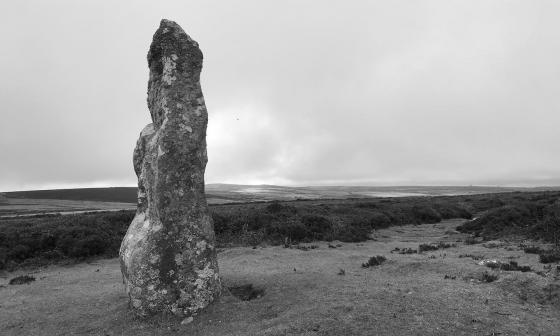
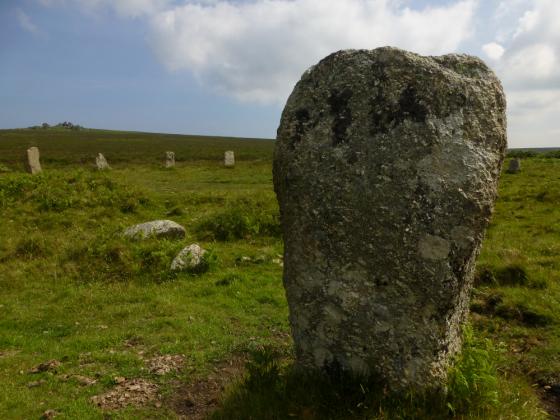
Well it’s still here in February 2025.
Image credit: [email protected]
Well it’s still here in February 2025.

The Blind Fiddler menhir at Trenuggo. Photographed from the east on 24 January 2004.


The Blind Fiddler menhir at Trenuggo. Photographed from the south-south-west on 24 January 2004.

The Blind Fiddler menhir at Trenuggo. Photographed from the south-west on 24 January 2004.

The Blind Fiddler menhir at Trenuggo. Photographed from the west-north-west on 24 January 2004.

The Blind Fiddler menhir at Trenuggo. Photographed from the north on 24 January 2004.

The Blind Fiddler menhir at Trenuggo. Photographed from the east on 24 January 2004.


Very tall standing near to Boscawen un stone circle – approximately 4 metres high.


October 2017


October 2017

October 2017

October 2017

October 2017

October 2017

September 2014

September 2014

September 2014

Photo taken 7th March 2014. The Blind Fiddler under welcome blue skies.


Photo taken 7th March 2014.


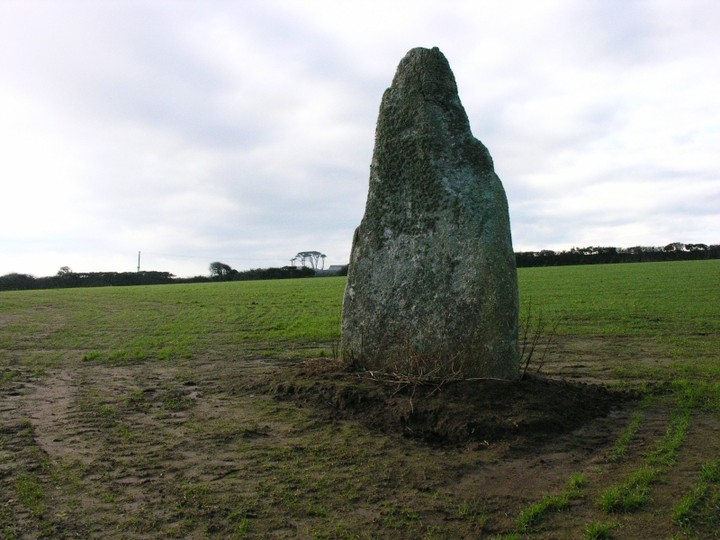
16th December 2009

16th December 2009

Looking NE-ish.


In perfect summer weather.

Don’t you love stones that are a completely different shape from each angle?

The thin (SW) side.

The Blind Fiddler – 10th May 2004

10th May 2004

Time the Bllind Fiddler had a shave???


Looking to the North. No lichens on this side.


Looking South. The lady by the stone shows just how large this is.

The thin edge of the stone

he may be a tall fiddler , but he sure is lean !


The Blind Fiddler – 23.12.2002


The Blind Fiddler – 23.12.2002

09/02


April 2002
Visited 7th March 2014
The Blind Fiddler is visible over the top of the hedge which borders the A30, just up the road from the Sisters at Drift. Also handily, almost directly opposite is a layby for convenient parking to visit the stone.
Once over the stile into the field the stone is satisfyingly chunky, and surprisingly tall. The sun glints from flecks of quartz embedded in the menhir, as I approach to give the stone a customary hug. The landscape is too enclosed with hedges to get a proper view so it’s difficult to see any alignments, but the Drift stones seem to be pretty much directly to the east, so I wouldn’t be surprised if there was a link in the past.
The top of the stone is shrouded in lichen, which wraps around its top, like a mossy blindfold, and the stone from one aspect almost resembles a hunched figure stumbling forward, like a petrified Blind Pew (although it has been said I anthropomorphise stones too much!) but standing in this lovely meadow the Fiddler has a lot of character, and deserves more attention than just a cursory glance on a hurried drive.
A perfect example of peoples laziness and unwillingness to walk long distances to see a stone or two, Altarnun’s nine stone circle has half as many pictures even though it’s not that hard to find or to get to.
That said this is a very fine and very tall standing stone, as easy to view as it gets, a little further from the road might have been nicer though. It’s been fifteen years since my first visit, ahhh those happy uncomplicated days, all gone now, but the stone remains happily the same.
This magnificent stone stands over 3m tall, one of the tallest in the peninsula. It’s one of those stones that assumes an entirely different character from each angle, being very thin on the southwest/northeast faces and broad and tapering on the others. The views are somewhat restricted by hedges and trees, and apart from Sancreed Beacon it doesn’t appear to be intervisible with any other obvious prehistoric sites (I’m not sure if the Drift stones would be visible if you removed all the intervening hedges). Great stone though.
Visited 12.4.10.
This is a HUGE standing stone visible behind the hedge on a bend on the A30. There is a layby opposite you can park in and a stone stile takes you into the field in which the stone stands. The standing stone is about 50 metres into the field from the stile.
This lovely lichen covered stone stands along the road from The Drift stones.You can park opposite in a layby. Take care crossing the road, remember these drivers are Cornish and dangerous!!!!! Access to the field is easy, just remember the country code and you will be amazed by this stone.
Whooo! This one’s a whopper! Amidst an area teeming with standing stones, this one really stands out – and its the sheer bulk and height that does it. It was flatter and wider than I first thought and perhaps 3 or 4 metres high.
When we saw it, it looked beautiful surrounded by rows of scented narcissus. Lovely!
The Blind Fiddler – 23.12.2002
There is a small lay-by on the North side of the bend in the road where you can pretty safely park. A small concrete stile leads into the field. The footpath leads through the field so officially you are trespassing by going to the stone, but considering that the footpath goes straight through the crops, whereas to look at the stone you can skirt round the field and do no damage at all, I would hope that any sensible landowner would take that into consideration. The field looked like it was planted with winter wheat.
The Blind Fiddler stands alone at the edge of the field, stunning in its quartz studded, triangular tooth-like grandeur. It measures 320cm (H) x 205 (W, at the base) x 50 (D). It’s’ also known as the ‘Trenuggo Stone’ or ‘Tregonebris Stone’.
Early 19th century excavations near its foot uncovered fragments of bone. Ian McNeil Cooke in his ‘Standing Stones of the Land’s End’ (1998 Men-an-Tol Studios) says that “cremated remains were found by a labourer while digging for treasure in the early 19th century”.
The stone gets its name from 18th century Methodist preachers telling their flock that the stone is a wayward musician, struck into stone for performing on a Sunday. Some people link The Blind Fiddler to the Higher Drift stones, and tell a similar tale of two sisters struck into stone for not obeying the Sabbath.
The Blind Fiddler is one of the most impressive stones in Cornwall, mostly for it’s sheer size (11.5 feet) and bulk and graceful triangular tapering shape. It stands just inside a field next to the main road to Land’s End and there’s a parking space very close by. Apparently it has never been officially excavated, but a trasure seeker in the 19th century dug up bones and ashes by the stone. Well worth a visit.

As to the searching beneath ancient monuments for treasure there was a story that years ago when search was made near the large stone just above Catchall for a crock of gold, the stone groaned fearfully and the pit was filled with blood.
Mentioned at the annual meeting of the Penzance Natural History and Antiquarian Society in 1881, and reported in the Cornish Telegraph (17th November).