Visited May 2013
Image credit: Uwe Häberle 05/2013

Visited May 2013

Visited May 2013

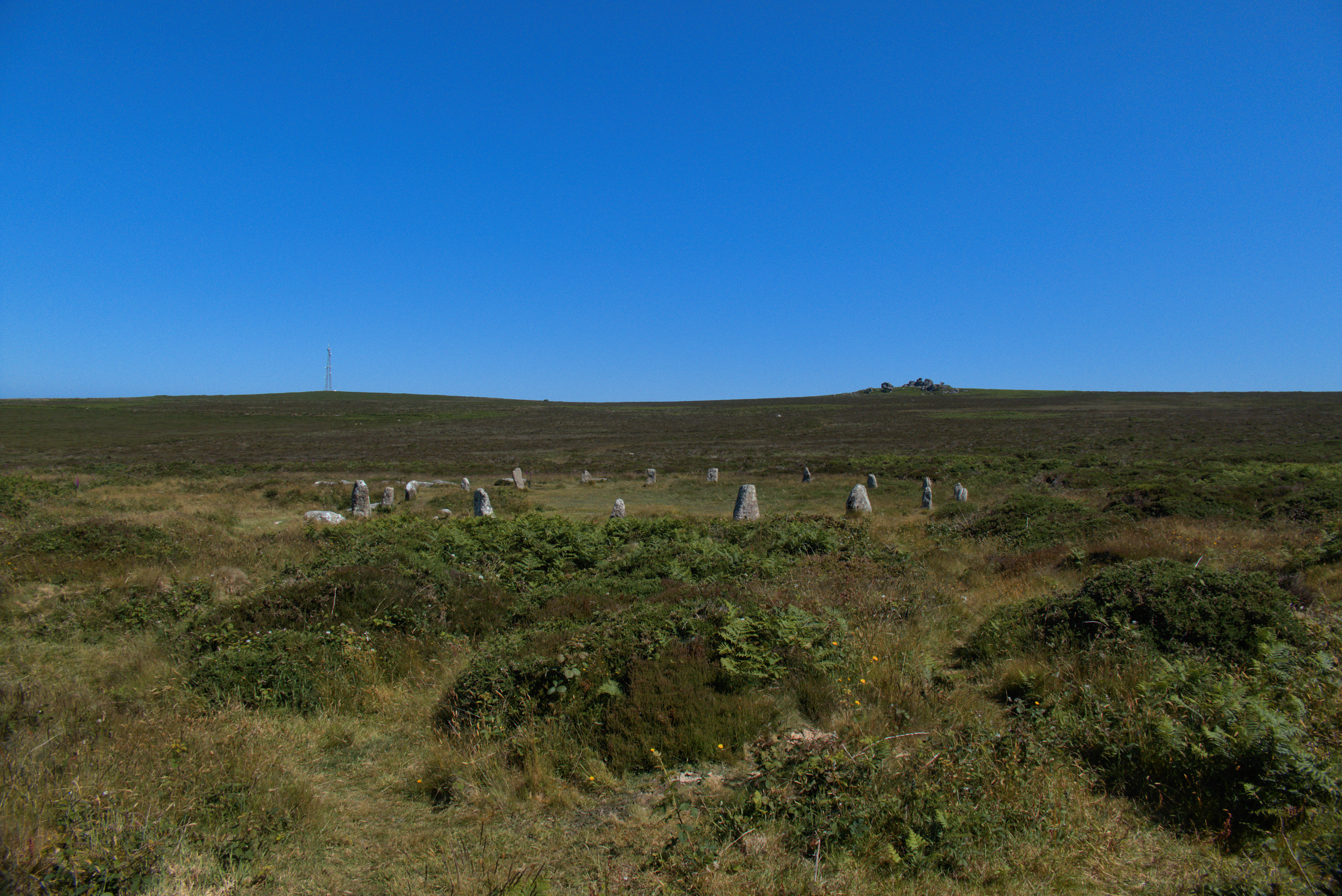


Midsummer, the surviving circle seen from the scant remains of the western circle.

From William Cotton’s “Illustrations of stone circles, cromlehs and and other remains of the aboriginal Britons, in the West of Cornwall: from drawings made on the spot, in 1826.”
Hoping this is the right spot. He says it commands a sea view and is between two ridges of hills.


Tregeseal East Stone Circle, Botallack Common. Cupmark on stone at the north. Photo taken 31 July 2004. © Chris Bond


Tregeseal East Stone Circle, Botallack Common, from the north-north-west. Photo taken 31 July 2004. © Chris Bond

Tregeseal East Stone Circle, Botallack Common, from the south-south-east. Photo taken 31 July 2004. © Chris Bond

Tregeseal East Stone Circle, Botallack Common, from the south-south-east. Photo taken 31 July 2004. © Chris Bond

Tregeseal East Stone Circle, Botallack Common, from the north-north-west. Photo taken 31 July 2004. © Chris Bond

Tregeseal East Stone Circle, Botallack Common, from the east. Photo taken 31 July 2004. © Chris Bond

Tregeseal East Stone Circle, Botallack Common, from the west-north-west. Photo taken 31 July 2004. © Chris Bond

Tregeseal East Stone Circle, Botallack Common, from the north-west. Photo taken 31 July 2004. © Chris Bond

Tregeseal East Stone Circle, Botallack Common, from the west-north-west. Photo taken 31 July 2004. © Chris Bond

Tregeseal East Stone Circle, Botallack Common, from the south-south-west. Photo taken 31 July 2004. © Chris Bond

Tregeseal East Stone Circle, Botallack Common, from the south-south-west. Photo taken 31 July 2004. © Chris Bond

Tregeseal East Stone Circle, Botallack Common, from the south-south-west. Photo taken 5 May 2003. © Chris Bond

Tregeseal East Stone Circle, Botallack Common, from the south east. Photo taken 5 May 2003. © Chris Bond

Tregeseal East Stone Circle, Botallack Common, from the south west. Photo taken 5 May 2003. © Chris Bond

Tregeseal East Stone Circle, Botallack Common, from the north west. Photo taken 5 May 2003. © Chris Bond

Tregeseal East Stone Circle, Botallack Common, from the north west. Photo taken 5 May 2003. © Chris Bond

Tregeseal East Stone Circle, Botallack Common, from the north. Photo taken 5 May 2003. © Chris Bond

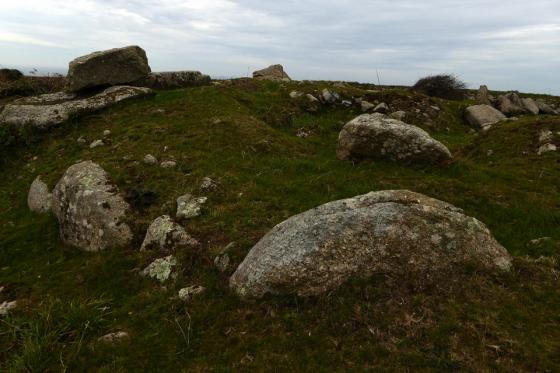
Focusing on the collection of recumbent stones around the edge of the circle. These intrigue me more each time I visit.

The stones that were scorched in the 2004 fire are still a bit sooty.


We arrived at our last site of the day to find some kind of survey underway, the circle criss-crossed with tapes and bedecked with flags.

There are many stones lying near to the circle – could some of these be from the mostly-destroyed second circle?

Summer Solstice at Tregeseal.


Summer Solstice 2018.


look at them legs, it’s no wonder I don’t often wear shorts.


Tregeseal – Into the Mystic 20/9/17

Tregeseal in its own Kingdom of the Clouds 20/9/17

A mist shrouded, rainswept Tregeseal 20/9/17


Perfect autumn afternoon, Tregeseal.


The large recumbent stone that sits just outside the arc of the circle.


Autumn colours at Tregeseal.


Wonderful granite textures.

September 2014


September 2014

September 2014

September 2014


Photo taken 5th March 2014. The Tregeseal dancing stones looking toward Carn Kenidjack, in the ten minute window of blue skies seen over West Penwith today!


Erosion at the base of one of the stones, a result of the grazing policy.

Heavy skies at Tregeseal. Looking west to Boswens Common.


Latest vegetation/grazing update: much of the bracken of previous years around the stones has been replaced by grass.

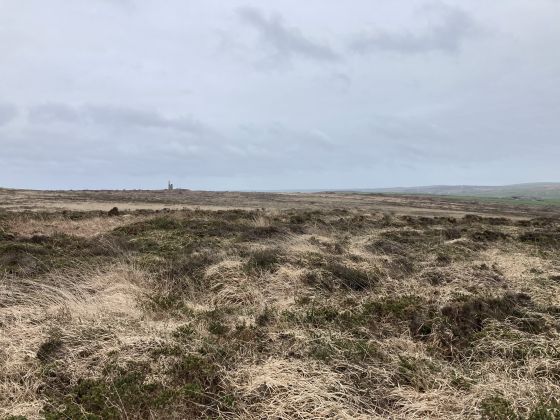
Towards Carn Kenidjack.

This summer’s effort is rather more overcast than usual. Note assorted scatter of stones in the foreground.

Heather and gorse still cover the common, although the bracken around the stones is much reduced, being easier grazing.


General overview, showing how low the midsummer bracken is, compared with previous summer visits. Ironically, the heather and gorse covering the main part of the moor (beyond, up to Carn Kenidjack) appears largely unaffected by the grazing policy.

Carn Kenidjack emerges from mist.... note the fallen outlier.


Samhain stones.

Midsummer stones.

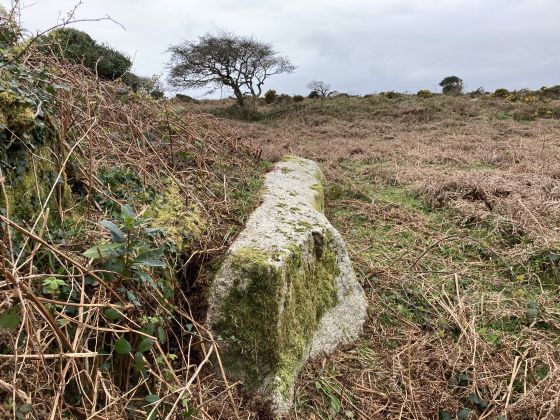
Remaining stones of the destroyed western circle protrude from the adjoining hedge. Perfect June weather...

Autumn circle, with greatly reduced bracken. Might well be the first signs of the grazing policy, I can’t recall the bracken being this low in previous autumn visits.

The circle seen from the destroyed western circle.

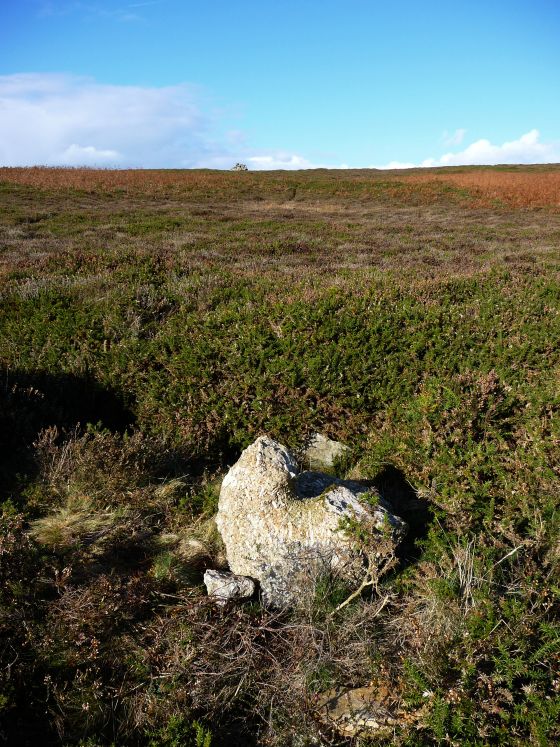
One of the remaining stones of the destroyed western circle.

The stones surrounded by summer bracken (which obviously isn’t much of an appetiser on the grazing menu).

Recovering from the fire

Tregeseal and Carn Bean (with radio mast).


The western arc of the circle looking north.


The eastern arc.

Looking south at the circle.

10th May 2004

You just don’t get this in Cheshire


Oh dear god why do I live in Cheshire


sunset at the dancing stones they did’nt but I did


May 2005. Although the gorse still displays evidence of the fire some 18 months on, the stones seem to have recovered well.


Scorching on the stones in March 2003

The recently cleared and scorched circle with bonus mini-circle!


I’d never realised St Just was so clearly visible, though I knew it was nearby. (Shows probably the least scorched angle on the blackened stones)


The ugly black stain on the land and the stones – I’d been REALLY looking forward to seeing this one again.... I only hope there’s no lasting damage


The stones after the 2003 blaze


Tregaseal, a must.


May 2002

6th September 2001

For the second time longhorn cattle introduced as part of a Higher Level Stewardship conservation grazing scheme onto Carnyorth Common near St Just have destabilised a stone of the ancient Tregeseal Circle.
From: https://heritageaction.wordpress.com/2011/03/24/cattle-damage-at-tregeseal-stone-circle/
Cattle damage at Tregeseal stone circle
For the second time longhorn cattle introduced as part of a Higher Level Stewardship conservation grazing scheme onto Carnyorth Common near St Just have destabilised a stone of the ancient Tregeseal Circle – two years ago some 4 or 5 stones were loosened – after only a week or so being back on the Common after their winter ‘break’. Clumps of cattle hair on many stones show that they are using them as rubbing posts. It is only a matter of time before this herd of about 16 animals create more havoc.
That this has happened shows our concerns, relayed to Natural England several years ago, are fully justified that the presence of these animals will not only damage this important archaeological site but, as has been witnessed by local regular walkers of this moor, has also caused a dramatic drop in the number of walkers and horse riders over the past two years.
Save Penwith Moors consider the current Higher Level Stewardship agreement covering this Common – declared in a Natural England document of 2007 to be in “good” condition -
· is an unnecessary and very expensive waste of public money (about £20,000 a year for 10 years) in an era of drastic public spending cuts;
· a ruin of the moor through visually intrusive new barbed wire fencing, gates and a cattle grid;
· intimidating and potentially dangerous presence of free-roaming cattle that can – and do – frequently graze on the north-eastern part of the Common for which there is no known ownership and is not part of the area for which HLS payment is currently being made, and where two new gates were installed under the Natural England HEATH project under very dubious legal circumstances.
It is high time that this scheme for Carnyorth Common is abandoned and all the new (and old mid-1980s) stock proofing removed. Most of these issues are now being assessed by the Parliamentary Ombudsman as part of a complaint of alleged maladministration by the Natural England HEATH project and Higher Level Stewardship agreement.
19th March 2011. Press Release by:
SAVE PENWITH MOORS
Ian McNeil Cooke (Co-ordinator)
Men-an-Tol Studio
Bosullow
Penzance
Cornwall TR20 8NRTel: 01736-368282
Email: [email protected]
A recent episode of BBC Radio 4’s Open Country reveals that a controversial grazing scheme is blighting the sacred and spiritual landscape of West Penwith and that cattle have destabilised the Tregeseal Stones:
BBC Radio 4 Open Country – Conservation grazing in Cornwall
Helen Mark is in Cornwall to find out why the reintroduction of cattle to graze the Penwith Moors of Cornwall and improve the area’s bio-diversity has upset some of the local community. She meets up with archaeologist Craig Weatherhill at the Tregeseal Stone Circle to hear about the damage he says is being caused to these ancient monuments by the horns of the non-native Longhorn breed of cattle being grazed on the moors. Craig also tells Helen about the difficulties faced by horses and their riders from the newly erected gates and fences which they have to pass through.
At Carn Galva, one of Cornwall’s most unique and pre-historic landscapes, Helen meets up with Peter Bowden from Natural England and Jon Brookes of the National Trust who explain the reasons for the conservation grazing scheme and how important it is to this ancient landscape. This heathland is of national and international importance and the grazing scheme is intended to open up footpaths the natural way, avoiding the need for heavy machinery and herbicides, and fences and cattle grids have been put there to keep cattle in and not people out. However, when Helen joins Ian Cooke and Steve Yandall of the Save Penwith Moors campaign, she hears about their concerns for the environment and how emotional they felt to have barbed wire fences appearing out on the moors. But when she arrives at Trengwainton Farm near Penzance, farmer Stephen Bone takes Helen to a part of his land that his father fenced and grazed 40 years ago and which soon became waist high in bracken when the cattle were taken in. Stephen is actually now busy re-fencing his land ready to graze animals there as part of the Conservation Grazing Scheme. He tells Helen that he has offered an olive branch to those opposed to the scheme by suggesting that he take his livestock in during the busy summer months and school holidays.
Finally, Helen meets up with Stephen Warman who has been brought in to try and resolve the situation and to narrow the gap between the two opposing sides. Where do they all go from here in order to manage the moors in the best way for all those who care about this landscape?.
Listen again: www.bbc.co.uk/programmes/b00tjvhj
For more information visit: www.savepenwithmoors.com
from The Cornishman
fuller version at thisiscornwall.co.uk
[Could be making a mountain out of a molehill if the stones are just sooty? There’s no mention of them being cracked. It’s surely likely the heather has been managed with fire for centuries..?]
“- The local farmer who had been asked to clear the gorse around the stones was retained fireman Station Officer Clive Williams, who has a management agreement with the county council’s Historic Environment Service to keep the circle and pathways clear of gorse.
He started the controlled fire to clear gorse that was encroaching on to the circle on the advice of Anne Preston-Jones, of the council’s environment service.
But angry locals and members of West Cornwall’s pagan moot, who have been caring for the circle over the past decades, say that five of the ancient standing stones have been scorched black as a result of the fire and four others have been partially blackened.
Gorse and heather have been stripped from around the stones, leaving them exposed in a blackened landscape. Slow growing lichens have also been stripped by the fire from the ancient monument.
Andy Norfolk, chairman of the Cornish Sacred Sites Protection Network, said that he feared the flames may have got into the fissures of the stones and may have caused irreparable damage. “But we won’t be able to tell how much damage has been done until the soot is washed off the stones,” he said. “We will probably get together a group of volunteers to clean the stones under the supervision of an archeologist in the coming weeks.”
Anne Preston-Jones said this week that she gave Mr Williams permission to burn the gorse around the monument. She said she visited the site after the fire and in her professional opinion she does not feel the stones have been too badly damaged.
“I accept that the blackened site does look awful as you approach it,” she said. “Twenty years ago the circle was completely blackened by a heavy burning of the gorse, but the area quickly recovered. I don’t think last week’s burning has damaged the circle, which isn’t perfect anyway, as part of it was reassembled some years ago from the bottom of tin pits.”
She added: “The lichens, gorse and heather will grow back again. In all honesty I don’t think the damage is as bad as it might at first look.” ”
It’s been twelve years since I was last here, and right from the start there is one glaring similarity, driving here is a real pain in the horse. Driving and navigating, with two kids and two dogs, it’s not easy, sometimes I get really confused, is it this way? that way? can I get my car up there? will there be a spot to park in? In the end I parked, I’m still not sure where, I could see a farm, and someone perhaps watching me. We went quickly in the direction I hoped was right.
A couple of fields later and I’m beginning to look for stones, a likely rocky outcrop will sort out their whereabouts for me. From on top of which they are indeed visible, wow, we made it, and with one of our number still wearing her slippers.
Over a stile or for what passes as one round here and we are in the presence of brilliance, a more or less complete and perfect circle, there are a couple of gaps, but there are also other stones on the general periphery of the ring, but there provenance is generally unknown.
A weird dip in the land sits on the edge of the circle, later I find out it was a quarry that threatened the ring. (Burl)
The kids sit in the middle of the ring with the dogs whilst I wander about taking pictures deftly omitting the squatters from any of them.
The sun was getting real low, any anxiety from our off beat approach had subsided and I settled into the magical scene. Now we were all squatting in the centre of the stones, a lone woman was approaching from Carn Kendjack but after she saw we were there she went off somewhere else, then returned when we left. That’s the way to do it.
There are moments in time, lots and lots of them, but most are none descriptive empty moments, some are quite bad, some are quite good, but just a few are perfect, the light, the view, the stones, the company, the moment when a plan comes together, when all is good with everything.
Moments to live for.
Visited 5th March 2014
Since we’ve been in Cornwall on this trip we’ve been stuck under a grey murk of low cloud, but this morning looked as if it might hold something different, with scattered cloud, and yes unbelievably some blue skies to be seen. Since we’re based in St. Just it seemed a good time to search out the nearby circle at Tregeseal.
We left the car in the town square at St. Just and decided to walk, taking the footpath at the side of the church which led to the village of Tregaseal, and then with the help of an O.S. map and the unmissable natural landmark of Carn Kenidjack guiding the way, we followed the lanes up toward Hailglower Farm, having to negotiate some very muddy lanes as we neared the gorsey moorland where the circle was situated.
It’s a walk of two miles, but pleasant in the warm sunshine. Although you could drive up the lanes to get much closer to the circle, I much prefer having a bit of a walk in to a site. It makes it feel a bit more of an adventure, or like a pilgrimage, and allows you to get much more of a sense of the landscape around you, and the monument’s situation within it. In this case the dominant feature of the granite tor of Carn Kenidjack, providing the focal point.
The circle must be West Penwith’s best kept secret, a fine ring of 19 stones, and I’m pleased to see they look in a pretty robust state with none of the erosion visible which was present on some of the earlier pictures posted, and also no barbed wire or nary a cow to be seen, something which greatly puts at ease Ellen’s bovinophobia.
It’s lovely and peaceful here high above the town, the sea just visible in the distance. The circle exudes an aura of peace and tranquillity and I sit within its precincts to write my fieldnotes. It’s not long though before grey clouds start to mass behind us, and within minutes they sweep over the moorland, the temperature dropping dramatically, and making it too cold to just sit around, so we press on to look for some of the other sites on the moorland, on our way up to Carn Kenidjack.
From the higher aspect of the rocky outcrop of the tor the circle can be seen on the edge of the moor, and the stones seem to have a sense of movement to them, the varying lean on the stones around the circle bring to mind the myth of a circle of swaying maidens dancing in a ring.
The wealth of sites which once were, or still are spread across this moorland only emphasize how sacred the area once was to the people who lived here, and the Dancing Stones are the jewel in the crown. It’s a shame the western circle no longer remains, but the monument doesn’t seem diminished by its loss, the stones merely dancing on proudly in their fine landscape above the mundane world, enticing you to join them for a turn.
This wonderful circle remains an absolute favourite, no matter how many other places I get to between our visits here. Its location offers a feeling of space and solitude, with views stretching away to the unmistakable Carn Kenidjack outcrop to the north. We rarely see anyone else here, although it’s easy enough to get to. Tregeseal has somehow escaped the tourist trail that takes in Men-an-Tol, Lanyon Quoit and Merry Maidens.
The summer bracken is much lower than usual and the stones are surrounded by large numbers of (thankfully dry) cow pats. The cows themselves are not in evidence. I can’t really say whether any of the stones are leaning more than in previous years. Although it’s nice to see the stones without the depth of bracken, it still seems that other ways of achieving this are available. I desperately hope that sense is seen and that a solution can be found to the issues presented by the longhorn grazing. This place is far too special to be mired in controversy or surrounded by barbed wire.
Tregeseal stone circle, or more properly the eastern circle, is the first stop-off today. Almost always deserted on our visits, today is no exception and we can sit undisturbed in the sunshine, breathing in sea air and generally chilling. I mess about in the bracken looking for the remnants of the western circle and g/f lets me get on with it – she has more sense. It’s only just gone 11 o’clock and it’s already shaping up to be scorcher, so sun-cream is liberally applied. I love this circle. If it wasn’t for one other (more of which later) it would be my favourite of all.
Visited 14.4.10.
Following the lanes through Tregeseal the circle is signposted near a farm. I parked at the sign and followed the path pretty much straight to the stone circle. You could drive further up the lane but the track becomes very bumpy and is possibly only suitable for 4X4s. The last section of the path, just as you approach the circle, is very muddy. It took me 15 minutes to walk from the sign to the circle. Despite the pressence of a couple of farm buildings in the distance this site feels very desolate and remote. I lioked this circle a lot. There is a certain ‘satifcation’ when you have to put in a bit of ‘leg work’ to get to a site. There is a handy horizontal stone on a bank next to the circle from which you can get a good ‘birds eye’ view. This stone circle is well worth the effort.
16.6.09: Our first visit since the decision to fence and graze the common (see West Penwith news item and forum discussion). Approaching from Tregeseal village, the first signs of the new policy was an ugly looking barbed wire fence crossing the landscape. However, once past that, there was no other sign until we reached the circle itself.
At the circle there were a few cow pats around the stones, but no cows. It was ironic to note that the cows had obviously cropped the grass around the circle, but had left the bracken in the centre – the whole reason for the grazing policy!
Oh well, at least we weren’t knee deep in dung or trampled.
I love this circle, along with Nine Maidens of Boskednan this is my favourite of all the ones I have visited.
For the first time I sought out the remains of the detroyed western circle – the high bracken growing all over the hedge made it difficult to see anything, but I did find one of the remaining stones of this circle (see photo). Obviously something to look for in the autumn.
All the photos of the circle after the fire made me quite worried about the possible state of these stones. Thankfully all seems to be well, indeed any signs of there having been a fire are gone. There don’t seem to be any cracks in the stones nor does there seem to be any shifting of them.
Yet another fabulous Cornish setting, fairly easy to get to, but remote enough not to be a casual place to visit.
Carn Kenidjack stands on the hill to the north of the site and the Scilly islands can be seen to the south west on a clear day, which it was when I was there.
22.10.05
Drove up through village to the end of the tarmac. parked and followed sign up track rather than cross fields on footpath. Passed the farm and hit the mud! Once out onto the open moor it is a short walk to the right to find the stones. There is now no sign of the burning from a year or so ago, infact the stones are now surrounded by a good covering of bracken. The sky over Keninjack was ever changing from gray to blue as the sun threatened to come out...I waited patiently and finally got my rewards. Behind me from atop of the wall the Scilly Isles stood out proud whilst St Just church tower gleamed in the sunlight...I would have loved to have walked up to the carn but time was against me...perhaps next time.
Visited 22/5/5
It’s a stiff old walk up from the bottom of the village, but just over a year on from the unintentional scorching the stones received (see News), they appear to be healing well. Most of the burnt lichen has been removed, and the stones look in good condition. I didn’t notice any obvious cracking on the stones I inspected closely.
I parked in the lane below Hailglower farm,it was a lovely day and the walk was most enjoyable.I was wondering how to find the circle but just past the farm on the right is a plaque with an arrow pointing the way.It is a beautiful place,the air was humming with insects and swallows and martins were swooping ,I found it very difficult to leave.
About half-a-mile to the south of Carn Kenidjack is an ancient stone circle, about sixty feet in diameter, consisting of twelve upright stones, which are on the average three feet in height above the surface of the ground. The country people generally call this circle of stones the Merry Maidens.
The map calls the area ‘Nine Maidens Common’.
From Rambles in Western Cornwall by the Footsteps of the Giants by J O Halliwell Phillipps (1861).

Lots of different fairy and devil tales for this one. One story tells of a local miner finding a Fairy Feast at the circle and was bound in gossamer thread and left there all night.There is another involving pixies enticing passers by and hosting “Little Folk” parties with dancing! There are stories of actual encounters with the Devil on nearby Carn Kenidjack, which dominates the horizon.

“I should not choose to walk the moor at night; but a neurotic modern would have had nothing to fear on that sunny September morning. Nevertheless, it was with a sensation, not entirely pleasant, of passing from the land of humans to the land of shades that I left the last farm behind and crossed the moor, near the barrow where the famous Tregeseal urn was found, now in the British Museum, in search of the Tregeseal stone circles – two circles seventy-five feet apart. In one, sixty-nine feet in diameter, eight stones are erect and five prostrate; in the other only two are standing, but three more may be found upright in the hedge.
The outlying landmarks or sighting-lines from the eastern Tregeseal circle, probably used by the astronomer priests, are, Sir Norman Lockyer suggests, the Longstone, a monolith ten feet high, on a hillside one and a half miles to the north-east, the apex of Carn Kenidzhek, barrows and holed stones.
He gives the following table as “the meanings of the various alignments”:-
Decl. N. Star
Apex of Carn...42d.33’0” Arcturus 2330B.C.
Barrow 800’ dist..40d.29’0” Arcturus 1970B.C.
Two Barrows 900’ dist. 25d. 20’21” Solstitial?
Holed Stones..23d. 2’20” Solstitial?
Longstone......16d.2’0” May Sun
Stone.............9d. 15’0” Pleiades 1270B.C.”
C. Lewis Hind – “Days in Cornwall” (1907)

After going to see Discover Odin on 4th/ 5th Oct 2001, British Museum there’s another state of affairs. The king stone is the World Tree and the nine stones either side represent the nine moons that Odin hangs on the World Tree looking for answers/ powers.
A note on the 19 stone type scenario that is so common in Penwith. I’ve heard tell that each one of these circles has a ‘sun’ stone or ‘king’ stone (quartz and set in the West it seems to me). Two crecents of nine stones representing waxing and waning moon and triple goddess type scenarios (virgin, mother, crone) advance on the sun/king stone. Some kind of ceremony. Hmmmm.
It is interesting to note that in Cornish the circles are known as Dauns Mein or stone dance, or as in the case of Trgaseal ,Daunsiow Mein -dancing stones.
Following our recent story about the damage being caused to Tregeseal Circle by the cattle being allowed to roam on the heathland, video evidence of the instability of the stones has been posted on YouTube. We think the video speaks for itself:
Couple of pics here. Originally one of a pair of circles.