|
 Log in |
Register Log in |
Register
|

|
|

The BridestonesBurial Chamber
|


 Show map (inline Google Map)
|
|
|
Images (click to view fullsize) |
 Add an image Add an image |
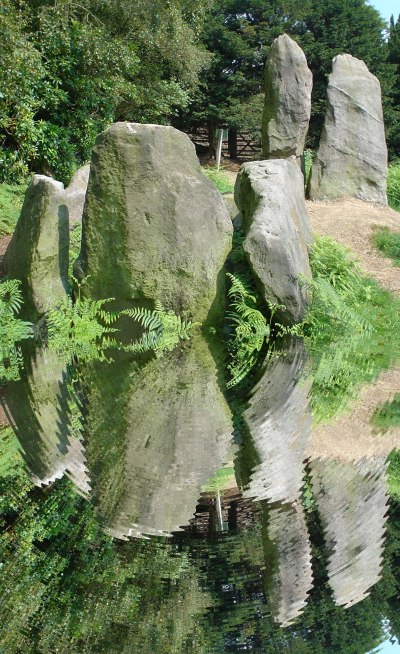
Photographs: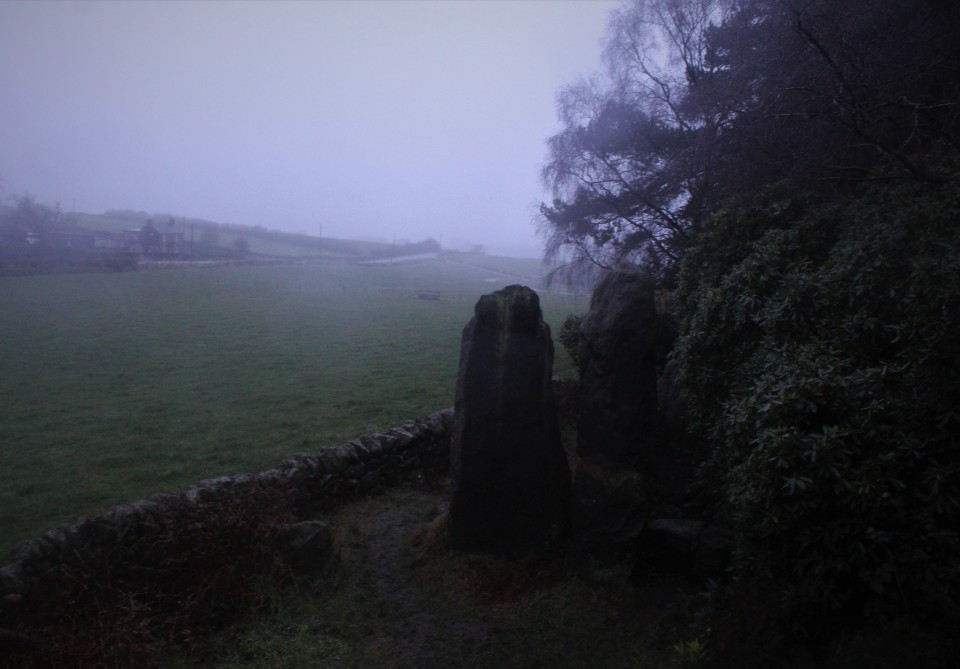
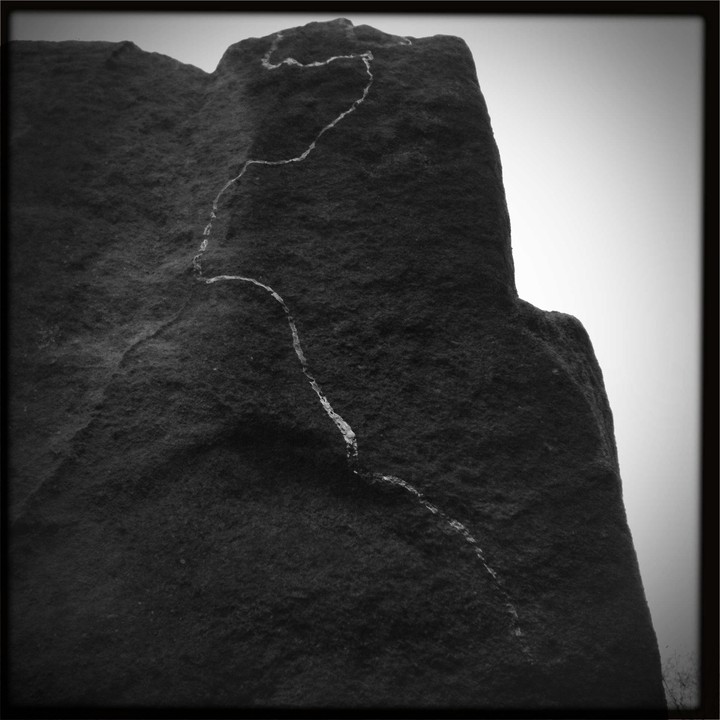
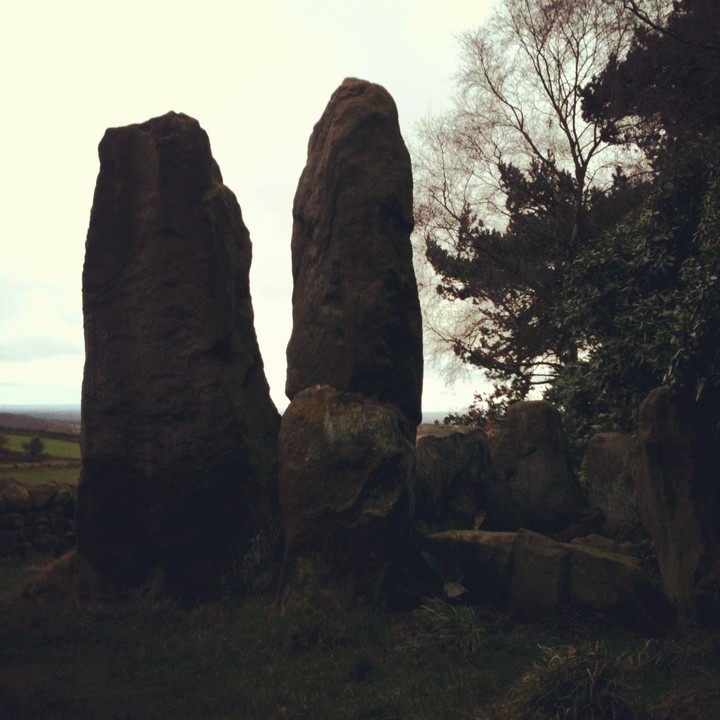
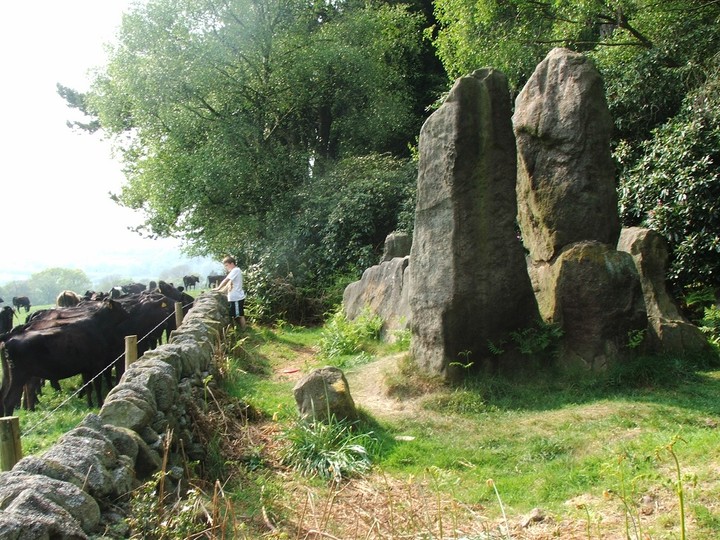
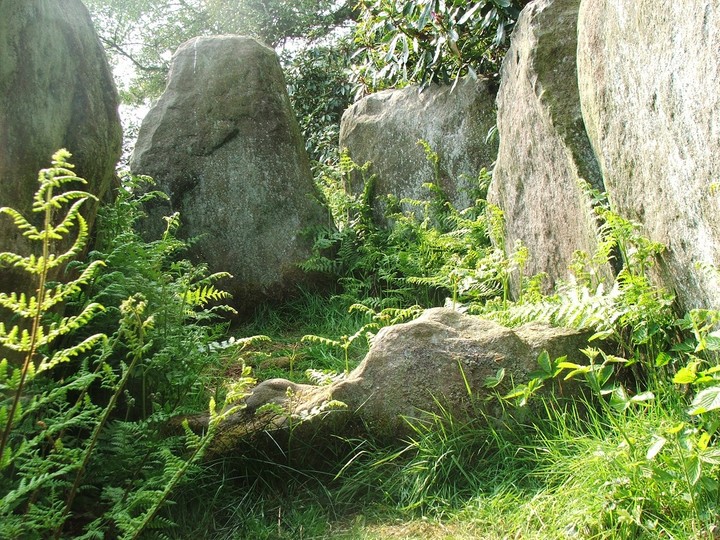
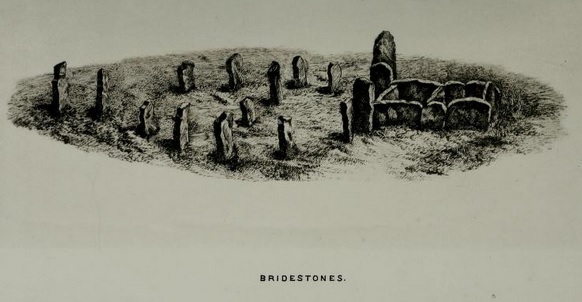
 Artistic / Interpretive: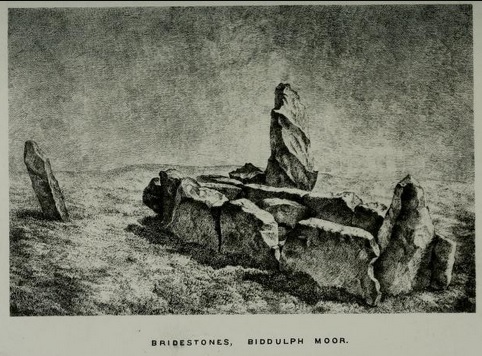
|
Fieldnotes |
Add fieldnotes |
|
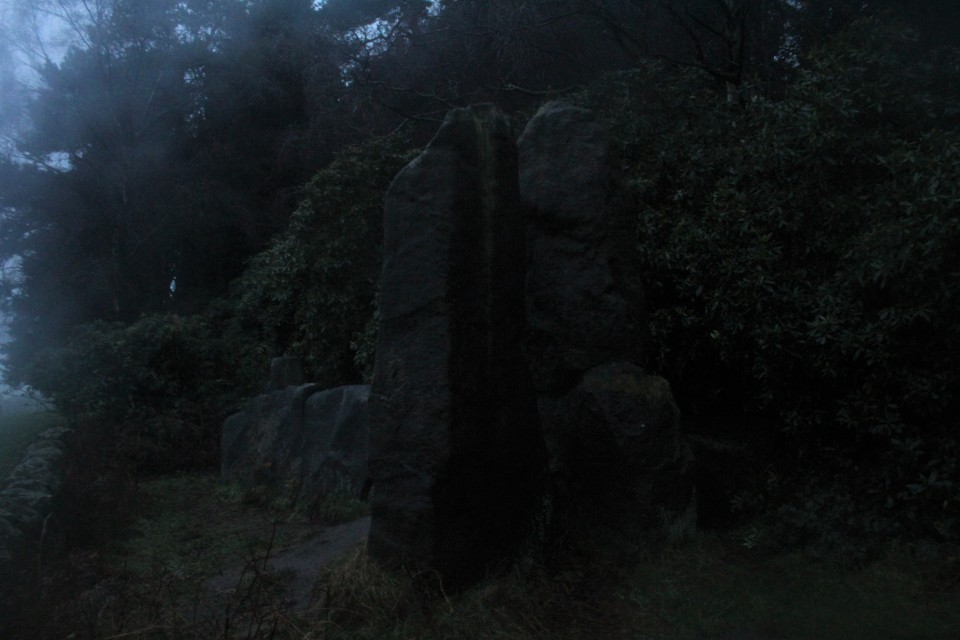
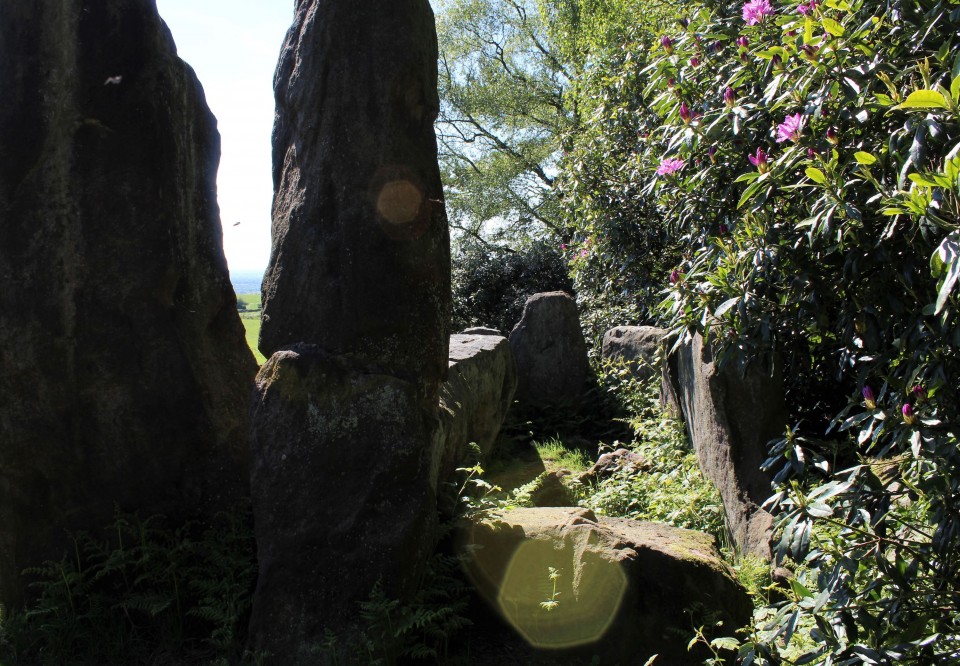
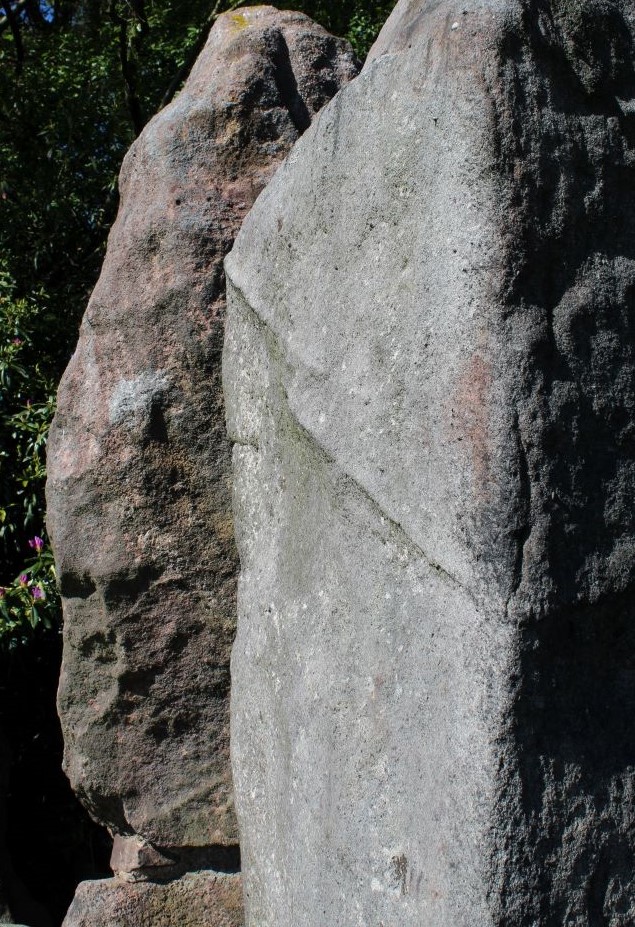
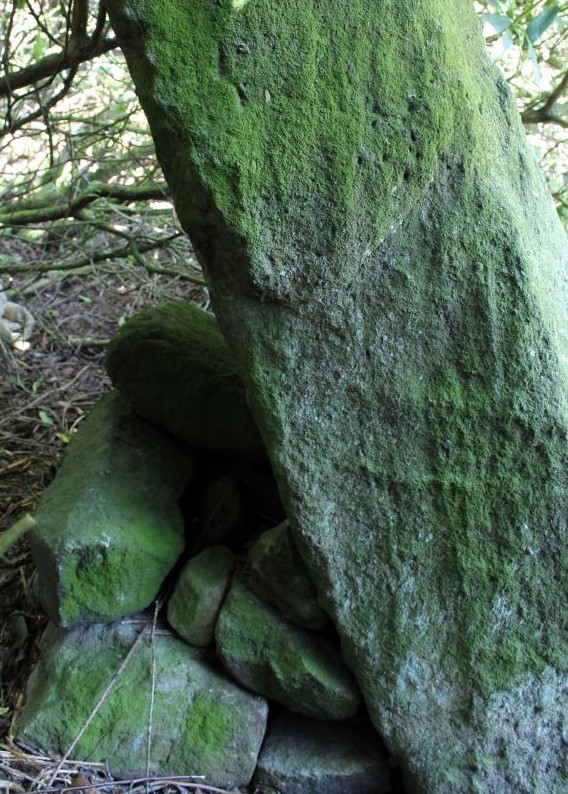
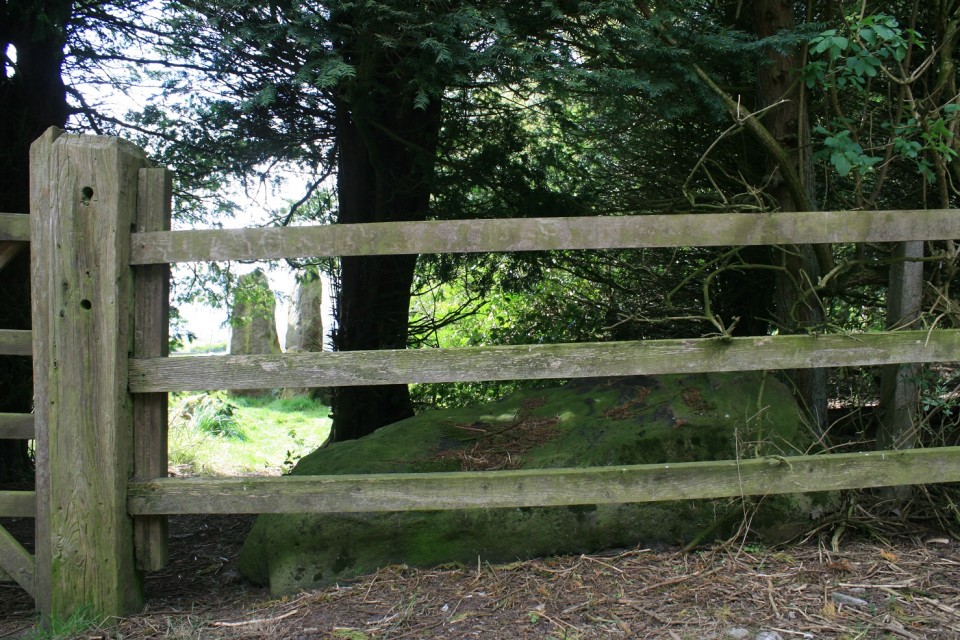
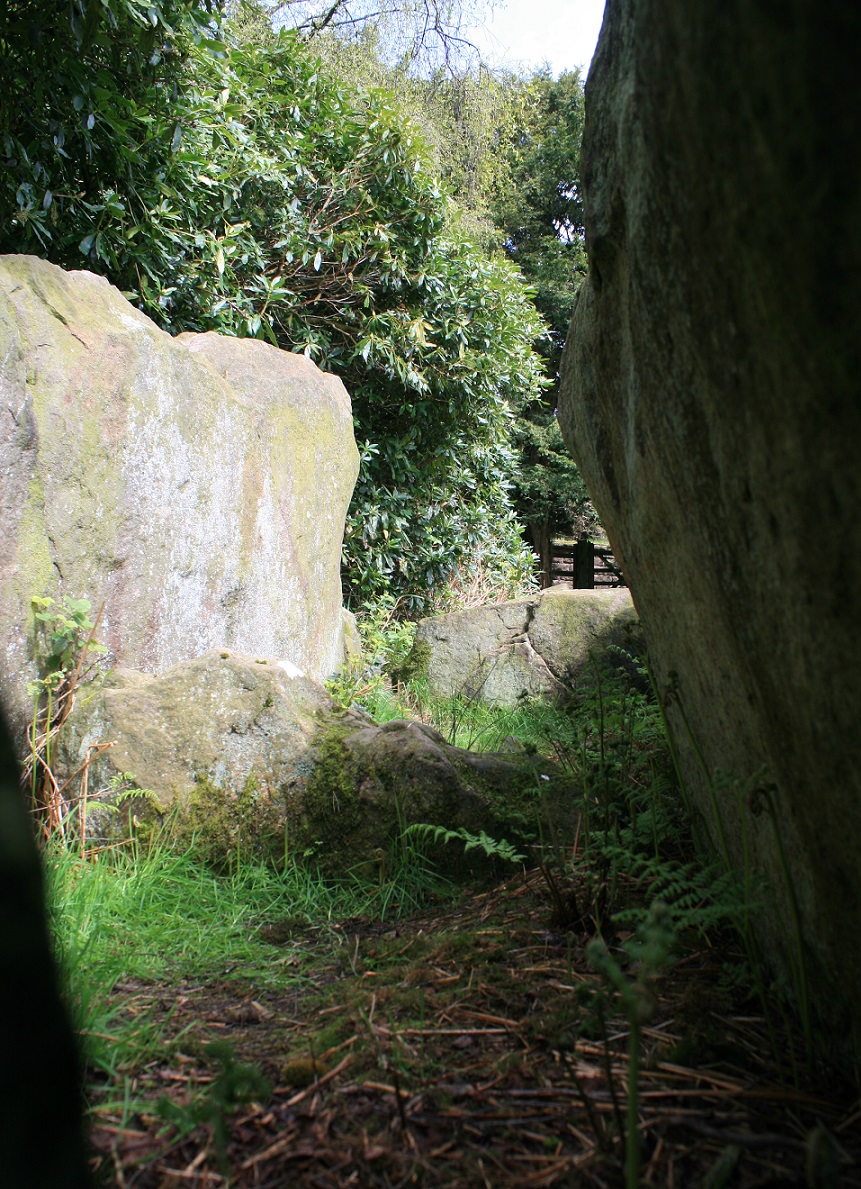
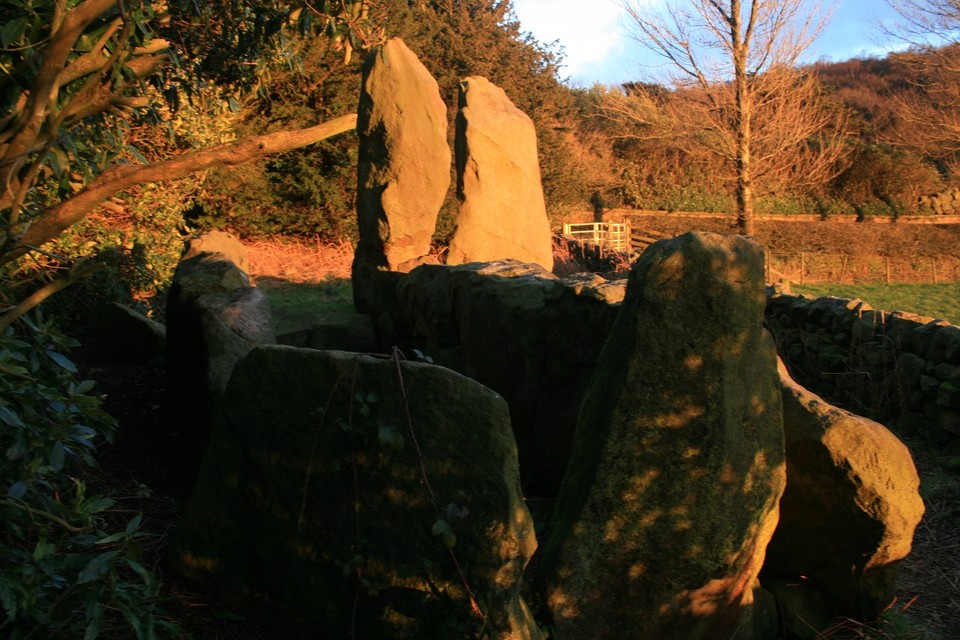
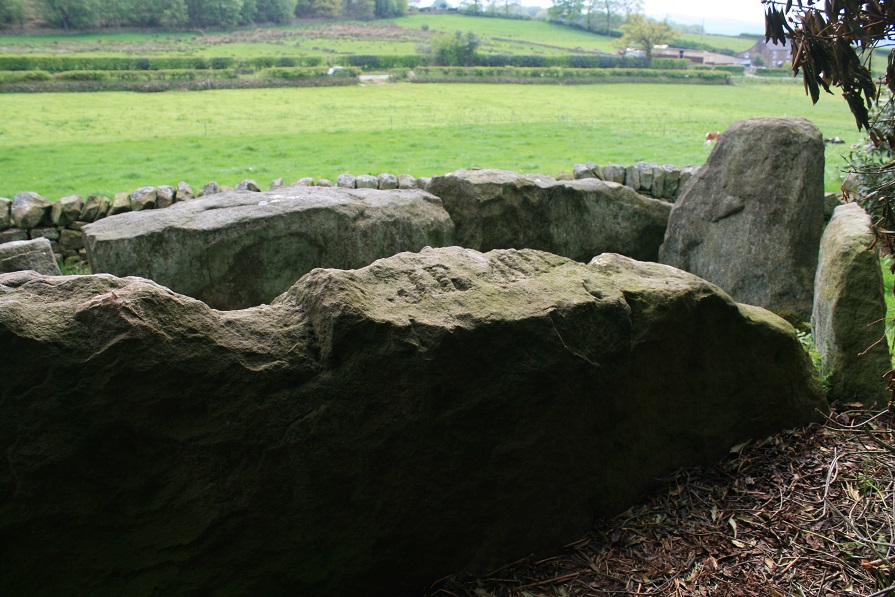
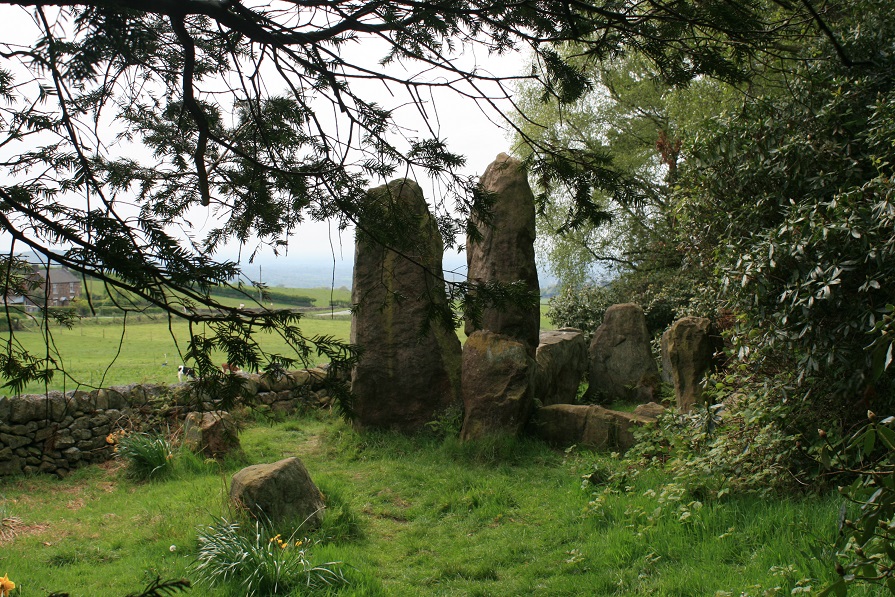
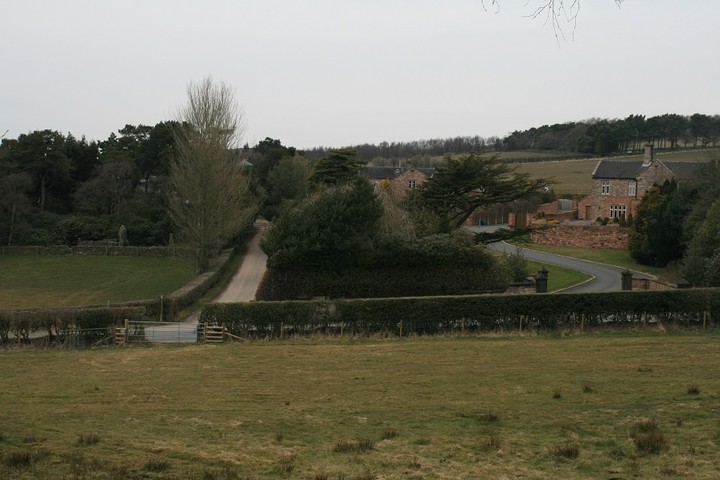
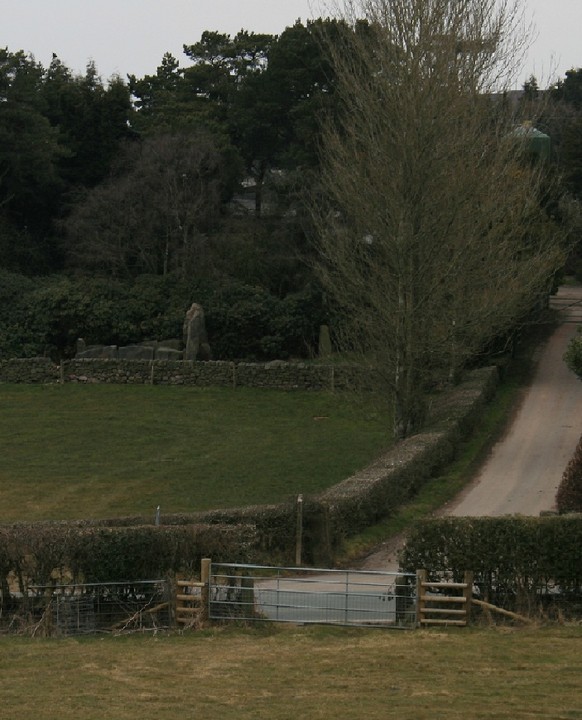
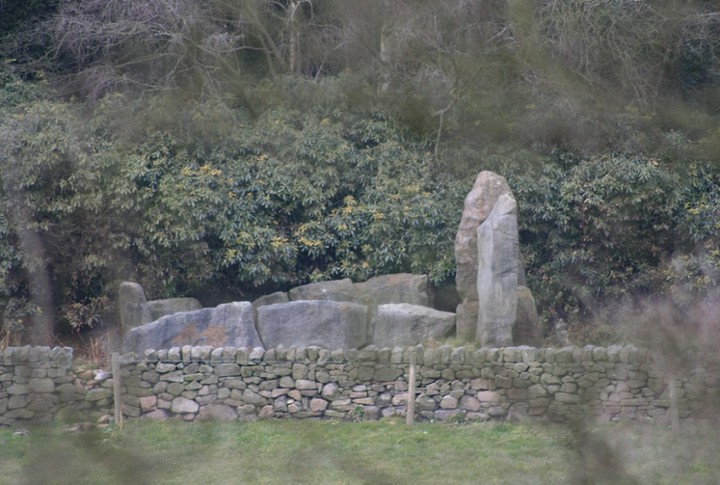
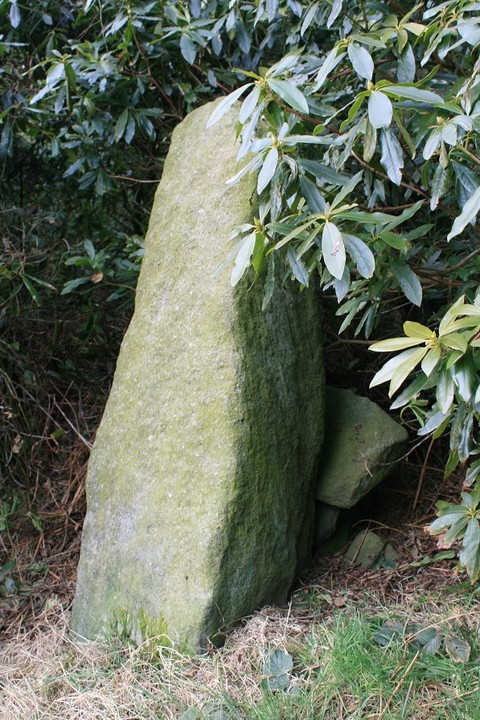
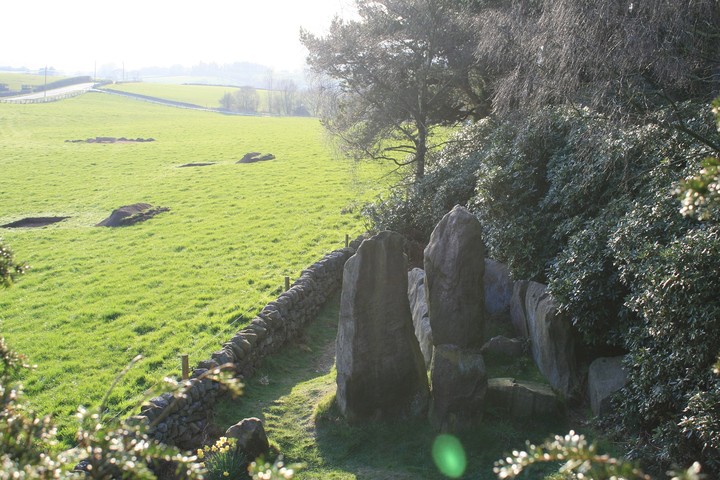
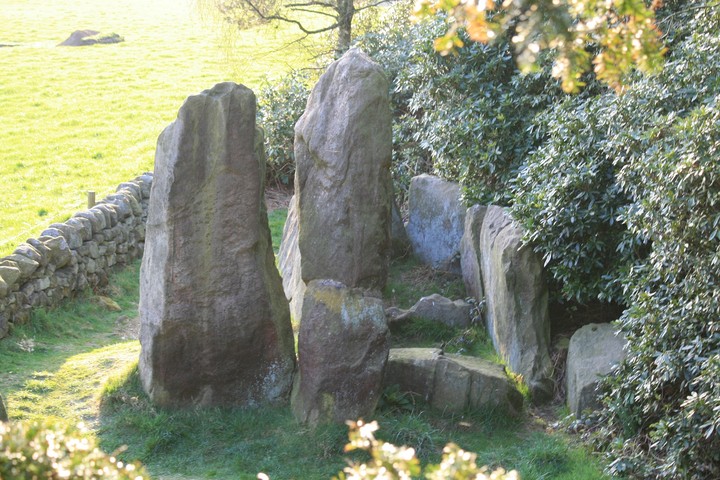
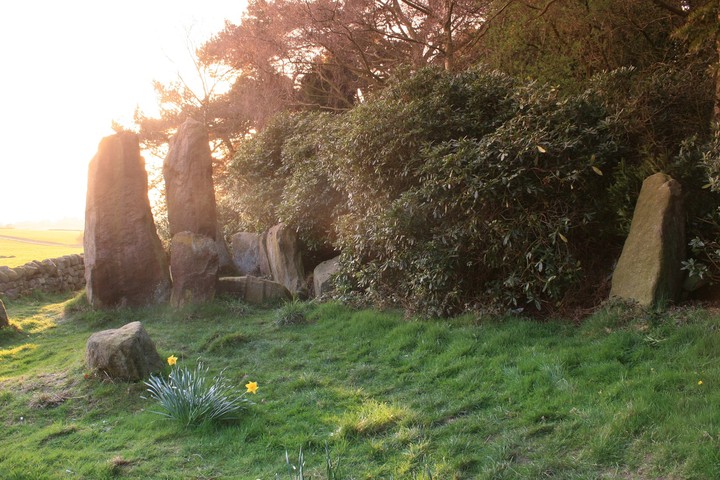
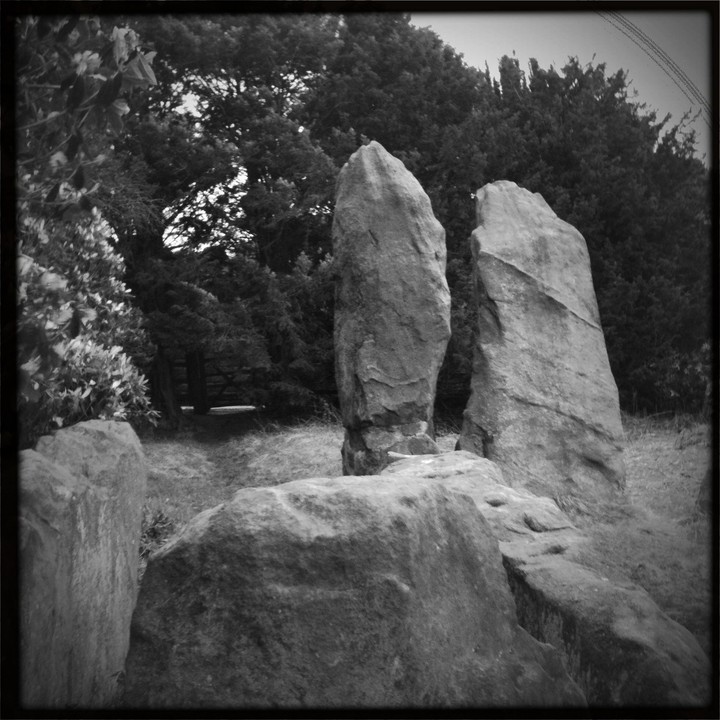
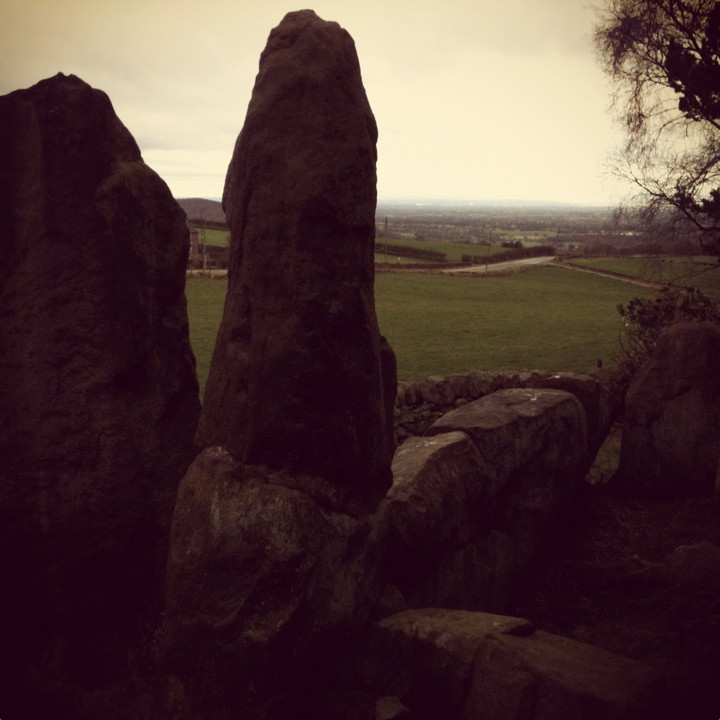
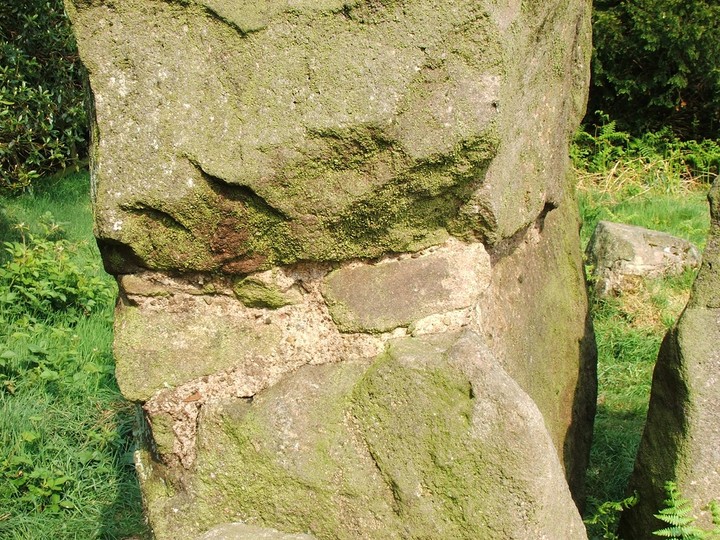
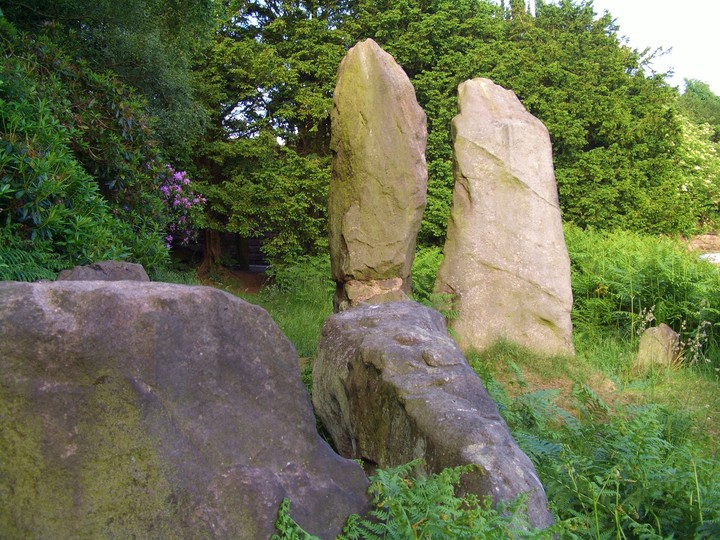
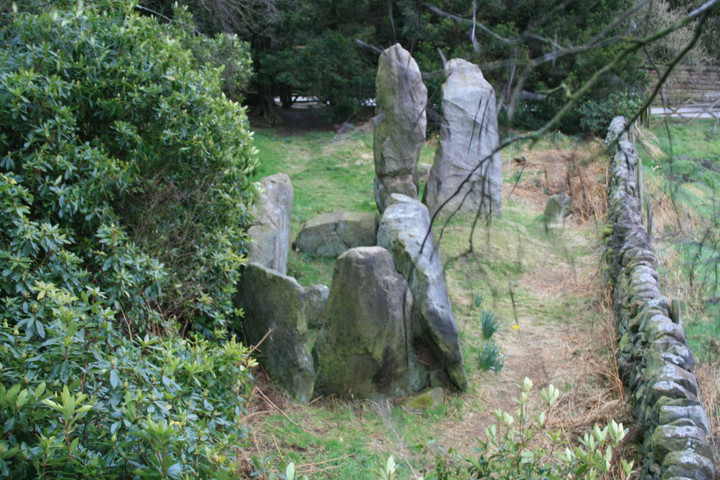
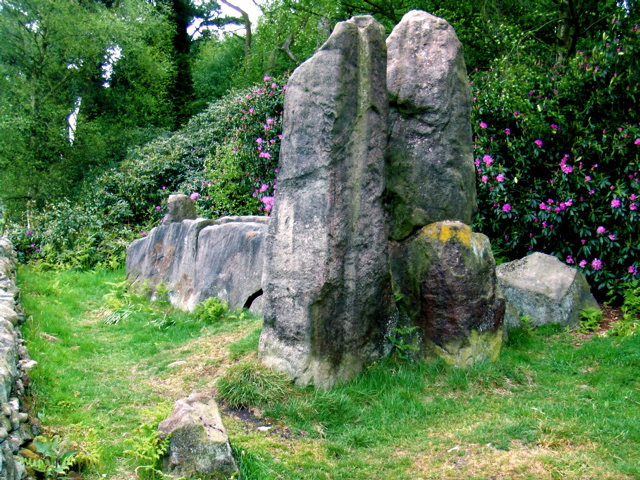
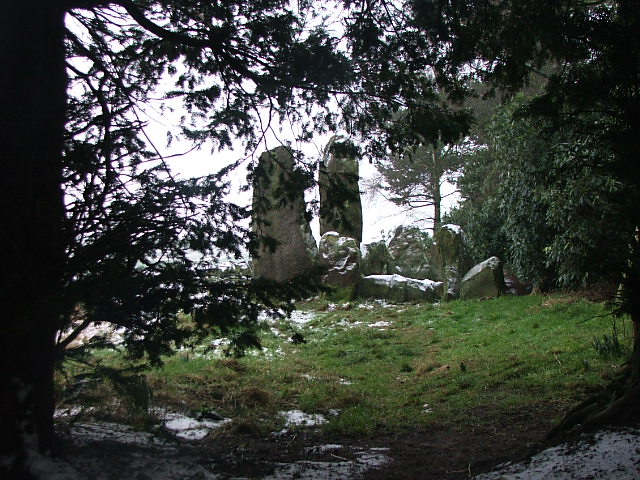
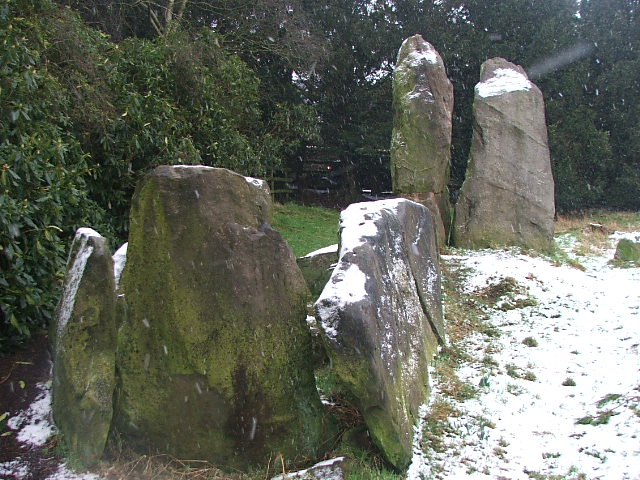
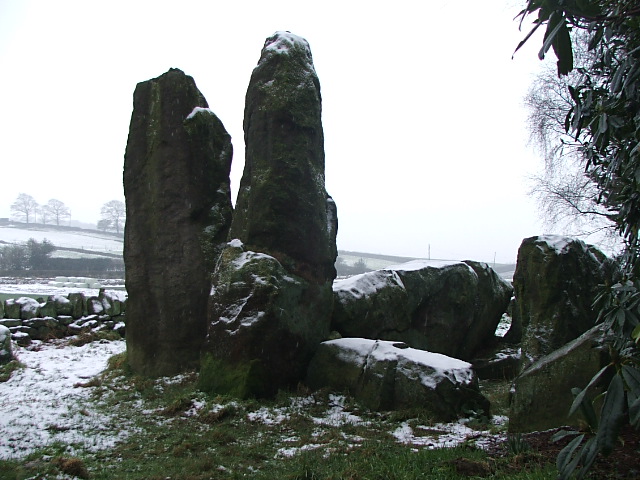
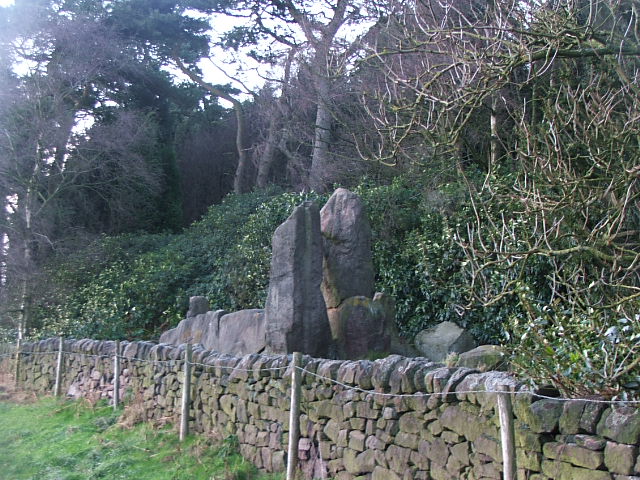
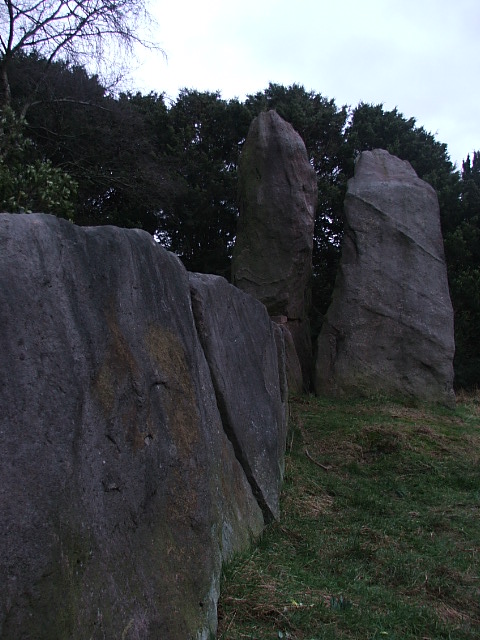
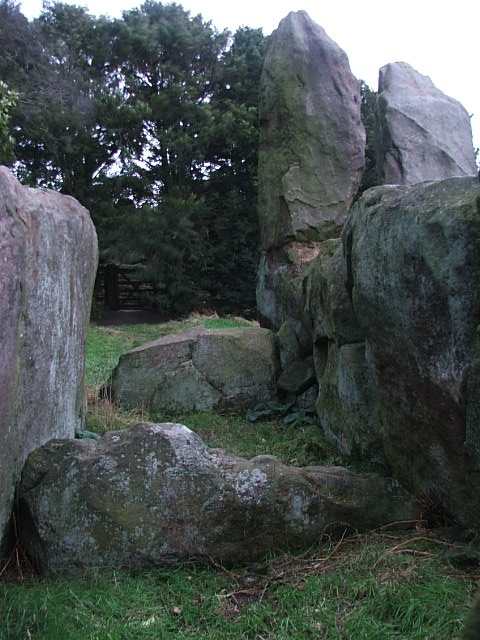
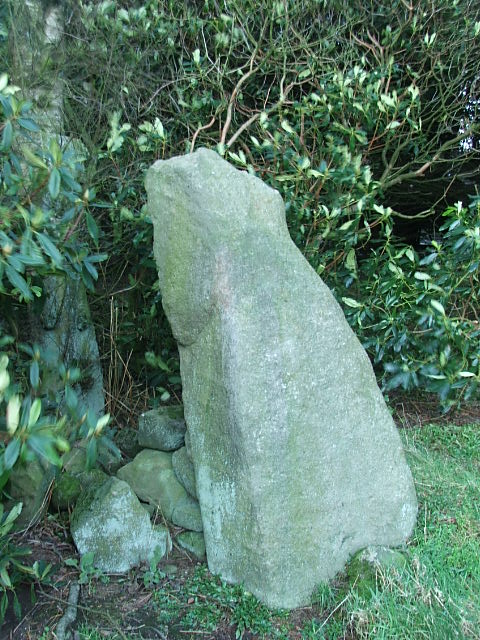
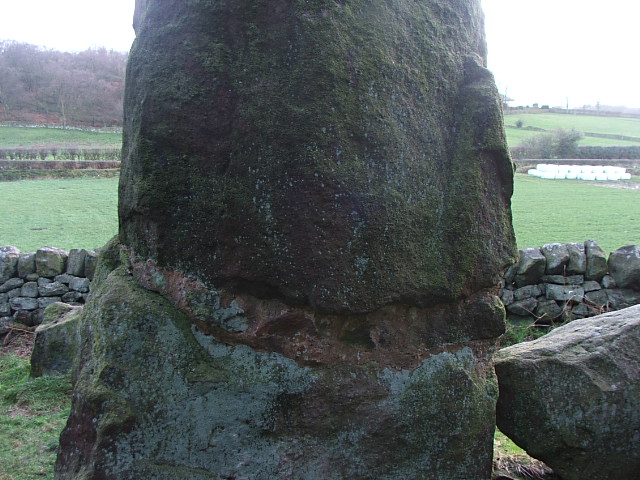
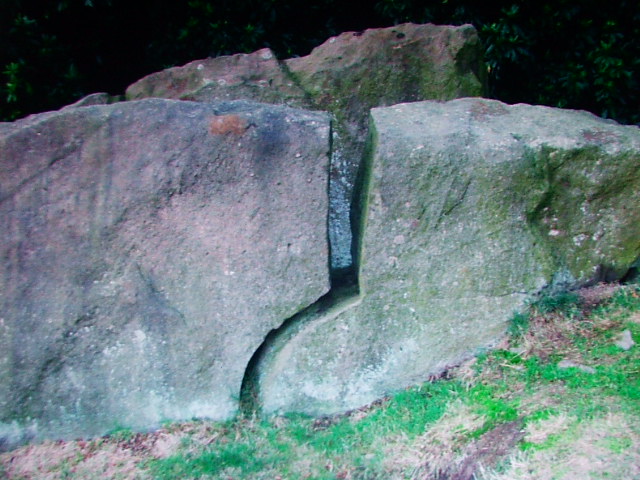
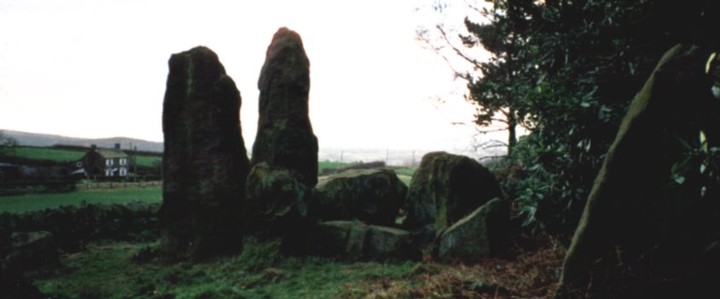
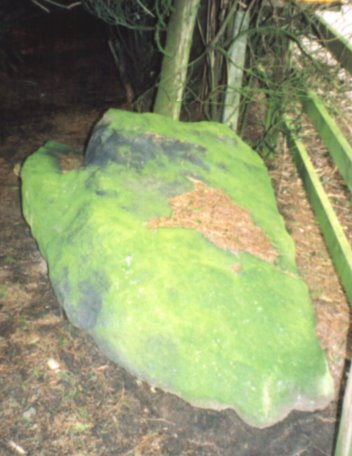
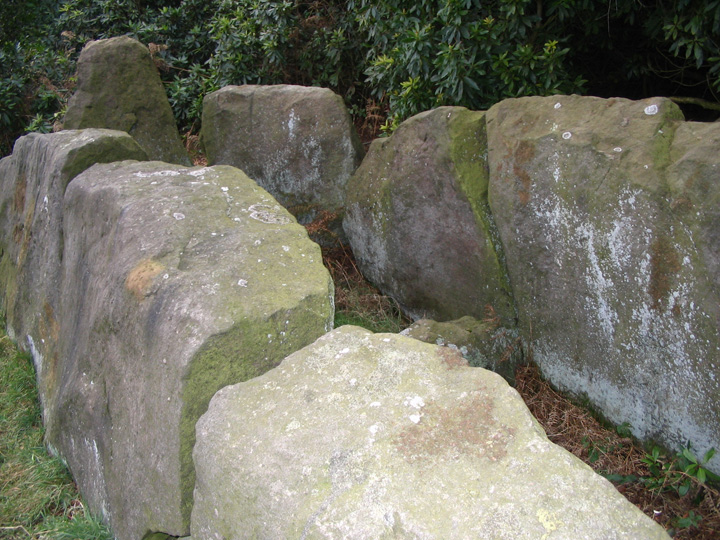
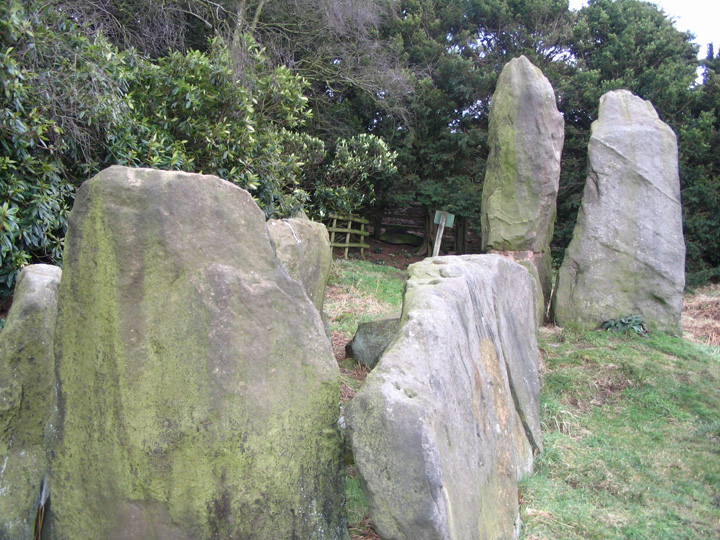
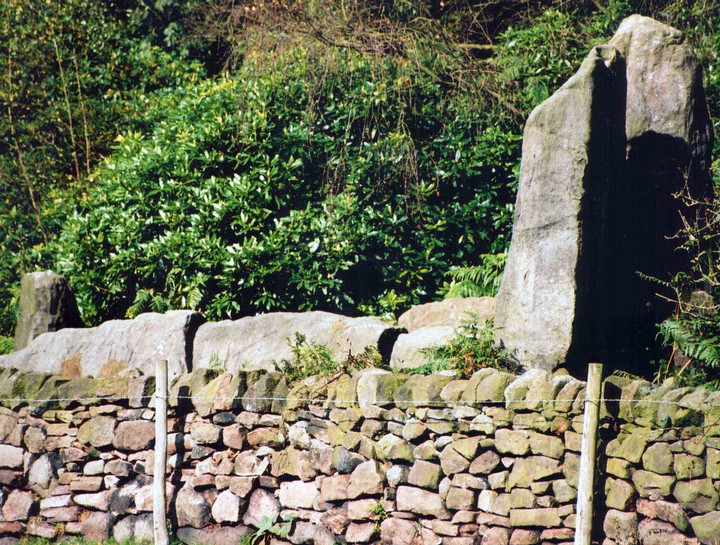
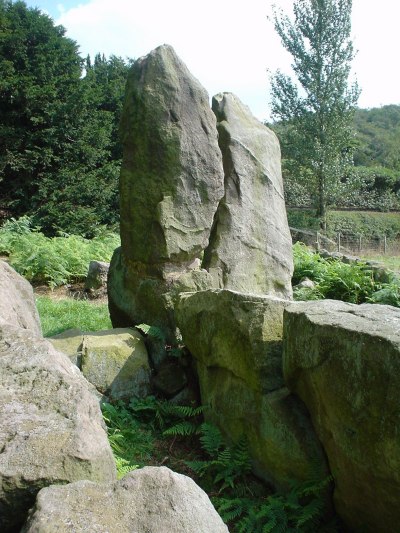
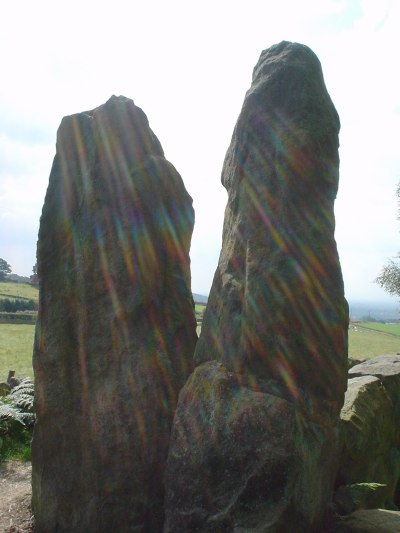
Visited 21.7.15 Directions: East of Congleton along minor roads. The two large upright stones are easy to see from the road and we parked outside the (posh) appropriately named Bridestone House (up for sale if you are interested!) We didn't park in the lane next to the stones as it gives access to Bridestone Natural Stone suppliers and judging by the amount of mud on the road it sees a lot of use. We didn't want to risk blocking a lorry etc. Anyway, I walked up the lane (in the rain) and through the wooden gate. Next to the gate is a prostrate large moss covered stone - is this from the burial chamber? It is certainly large enough to have been? The site appears to have been restored at some point with one of the large (approx 3 metre) having been cemented back together again. Having said that, the site is certainly impressive and offers fine views west over Congleton and the surrounding low lying area. I had the place to myself and am glad to report no sign of litter or barking dogs! This is an excellent place to visit and well worth stopping off for when in the area. Pity about the rain! |
Posted by CARL 22nd July 2015ce |

|
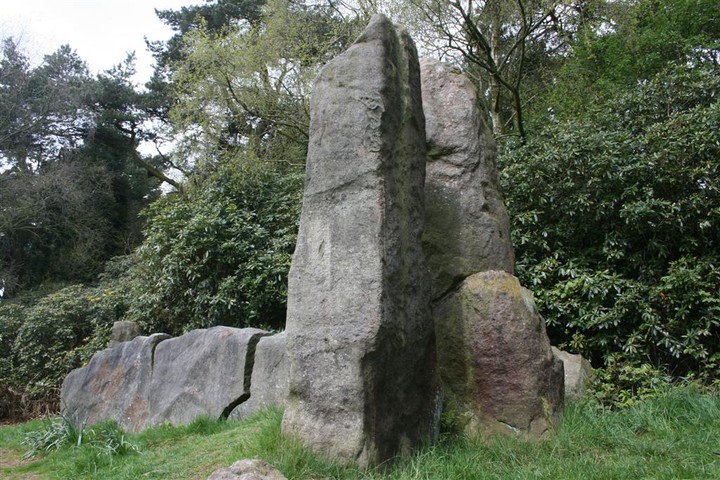
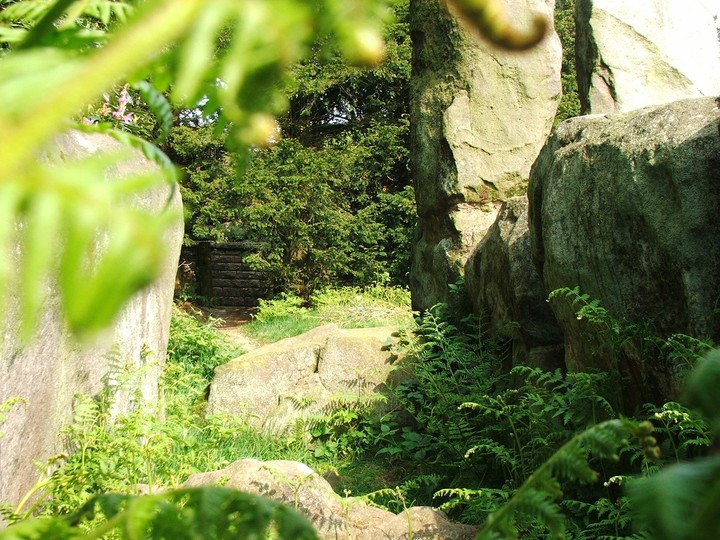
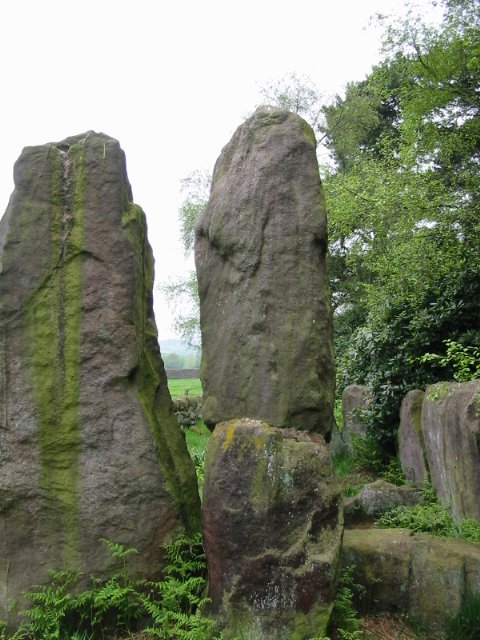
Visited 20th July 2013 Well, as I promised myself on the last visit, we wouldn’t be leaving it so long before coming back here again, and given the current run of good weather the plan of a picnic at the site seemed like a good one. On arrival though we were a bit shocked to find the place almost totally overgrown. Ferns had completely shrouded the side stones, leaving only the tall front orthostats looming above the foliage, and the interior of the chamber was totally choked with vegetation to a height of about 4 feet high. Not to be put off though I embarked on some emergency ‘gardening’, and after a good half hour of pulling up ferns and long grass by hand (had to leave the brambles though!) the place was looking a little more respectable, and the long awaited picnic was finally had. It breaks my heart though to see such a fantastic place so uncared for, the rampant overgrowth not withstanding, I also removed various bits of rubbish from the chambers (it appears previous picnickers were not so conscientious about taking their rubbish away with them) and to top it all it seems to be somewhat of a popular spot for dog walkers to allow their pets to do their business. Despite all of this the Bridestones remain undaunted, and a worthy place to visit, it just might be worth bringing some secateurs with you when you come! |
 Posted by Ravenfeather
25th July 2013ce |
|
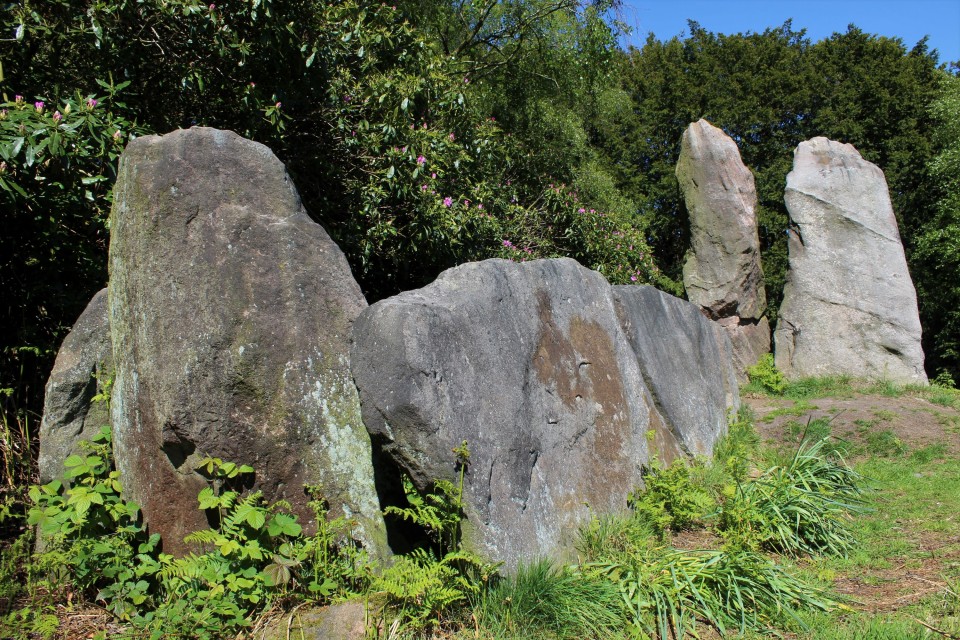
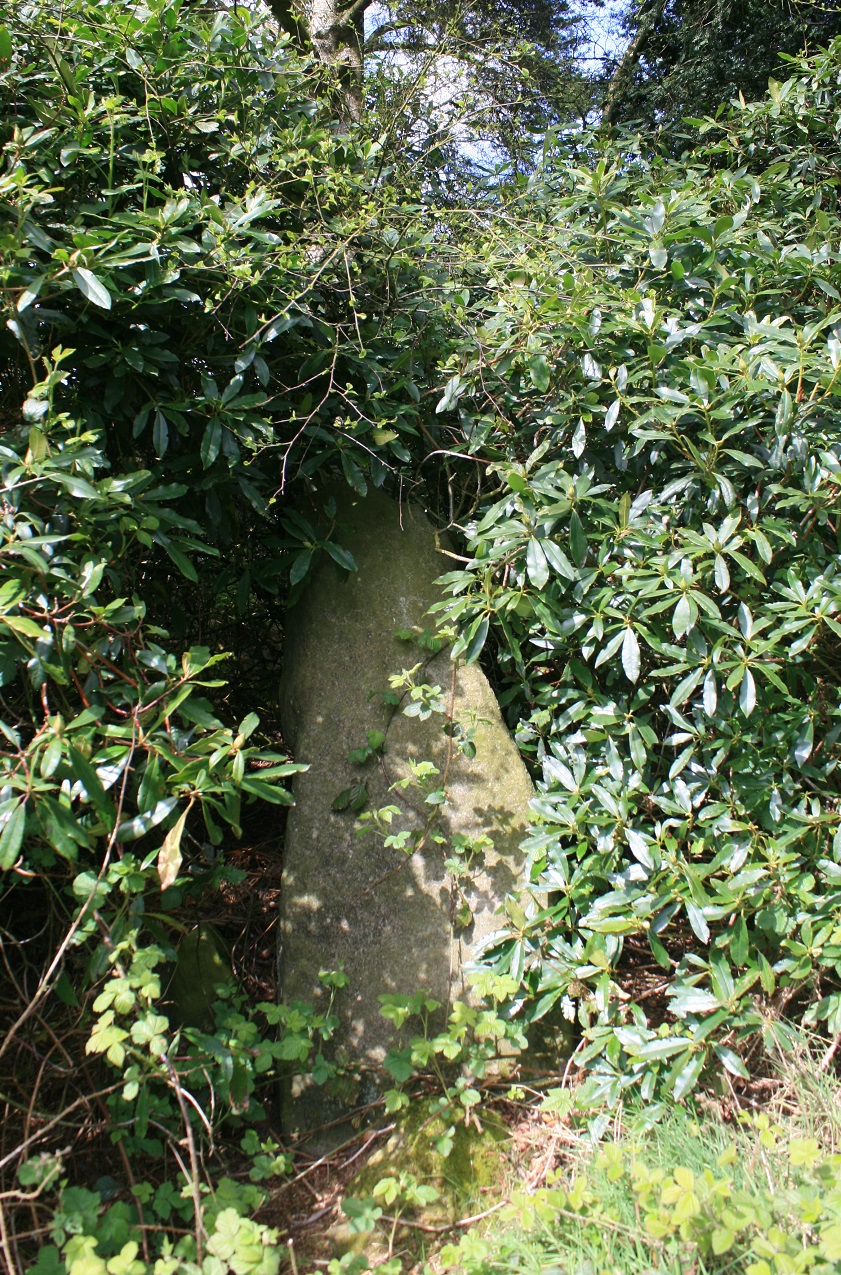
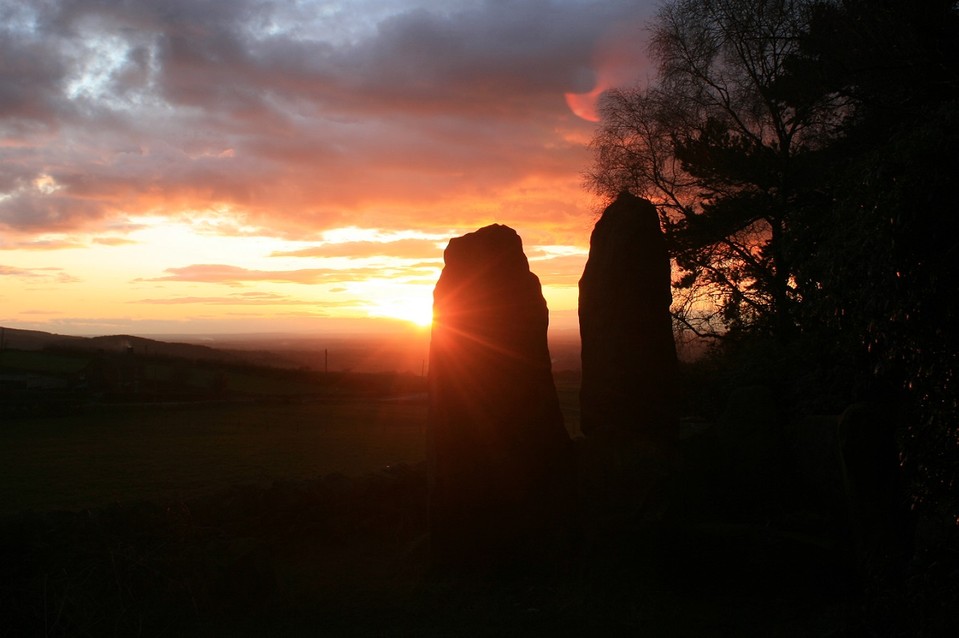
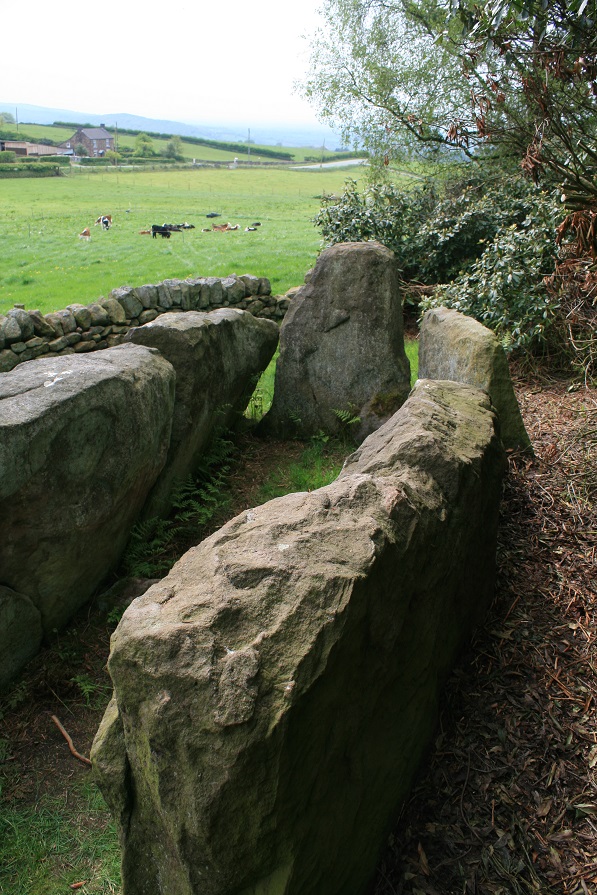
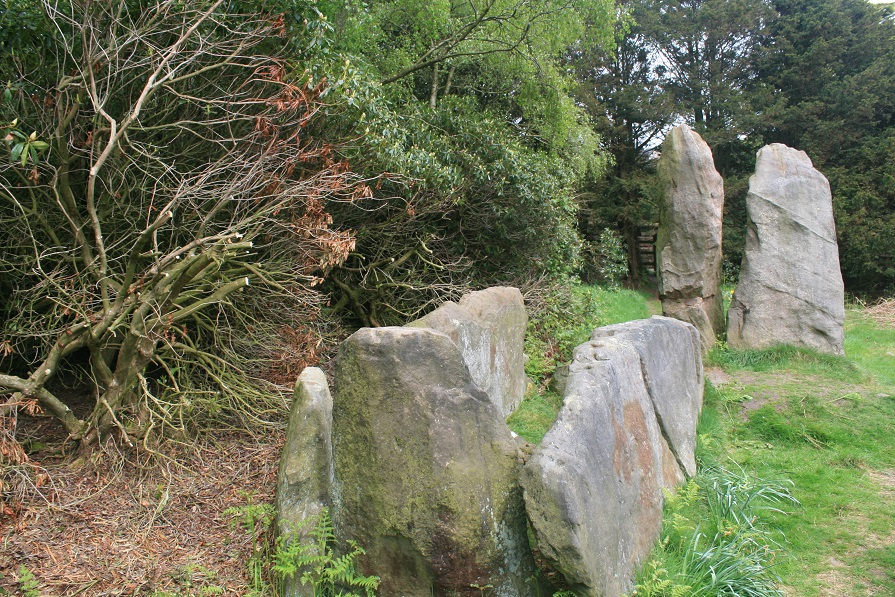
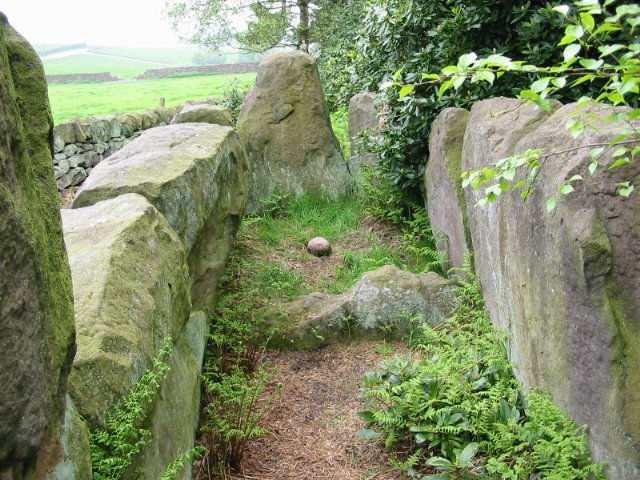
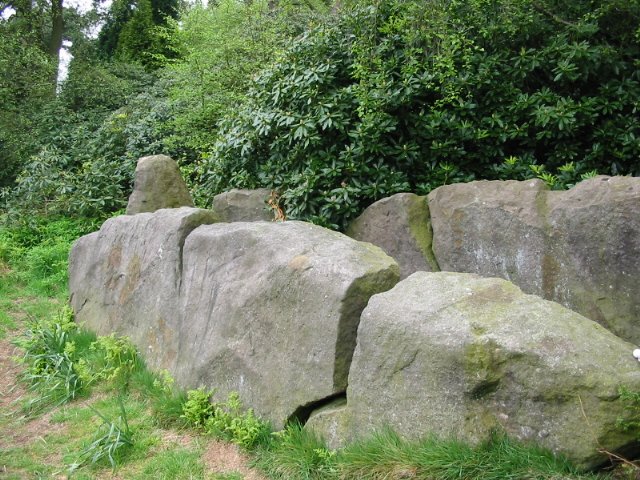
Visited 6th May 2012 For our day trip out on the Beltane bank holiday we were heading up to Alderley Edge, but with the Bridestones being on the way (sort of) and also nicely accesible it seemed rude not to pay them a visit. It must have been fifteen years since I was last here, shocking really since they are only around thirty miles from home. Parking up on the drive right by the access to the chamber, the first thing that struck me was the peace and quiet. I had distinct memories last time of a continual barking from the manic pack of hounds that lived at the farm next door, but the days of canine cacophony now seem to have passed. The huge portal orthostats, and overall size of the tomb impress, and everything was a lot neater and tidier than I remember it last, when the chamber was strewn with rubbish, and undergrowth choked the stones. Today though everything is neat and tidy and lovely, not a scrap of rubbish to be found, and apart from the slight incursion of the rhodedendrons, which are in need of a prune, the site seems much better looked after than before. The sun is out, but chill winds sweep clouds across the horizon as I sit in the chamber writing my notes. As I'm writing I hear voices as a pair of walkers sidle up to the stones. As they talk about how the stones were built by 'Druids' for sacrificial rites, I feel compelled to give them a brief history lesson on the Beaker peoples and the actual purpose of the site. They thanked me for the information (although I'm sure I could bore for England on matters megalithic!) and we are left alone again at the stones. It has been lovely to revisit this place, which has been even better than my memories of it, I certainly won't be waiting another fifteen years to come back, in fact the next warm and sunny weekend we get I think this might be the perfect place for a picnic! |
Posted by Ravenfeather 13th May 2012ce |
|
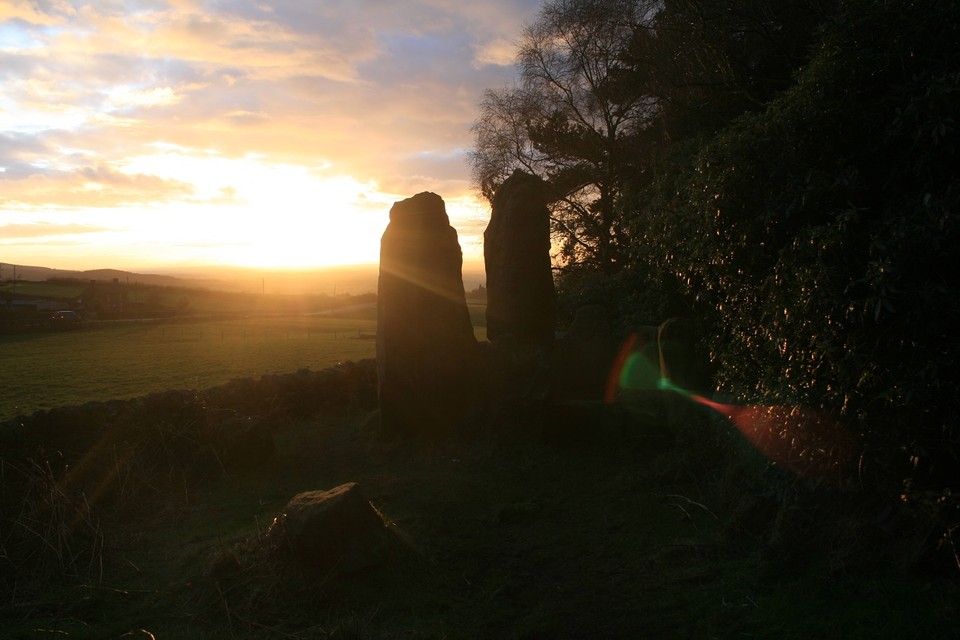
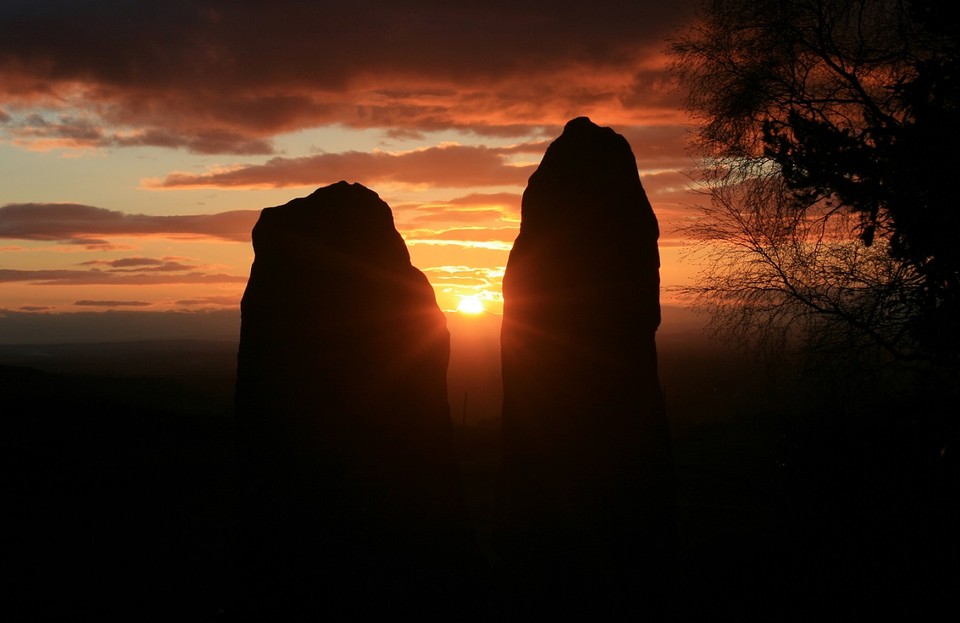
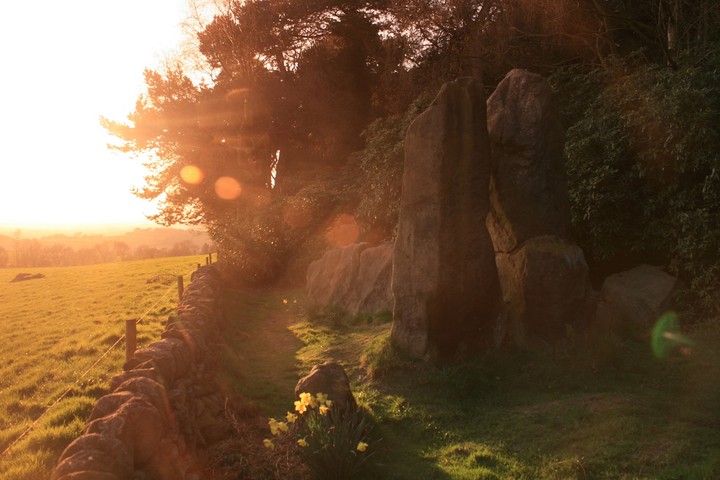
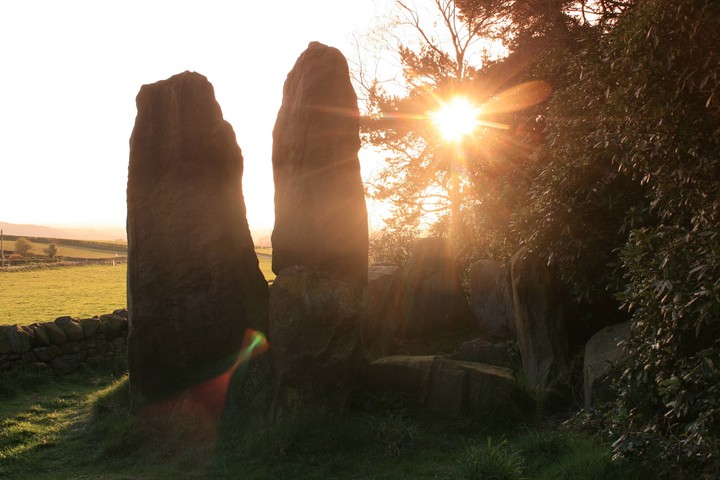
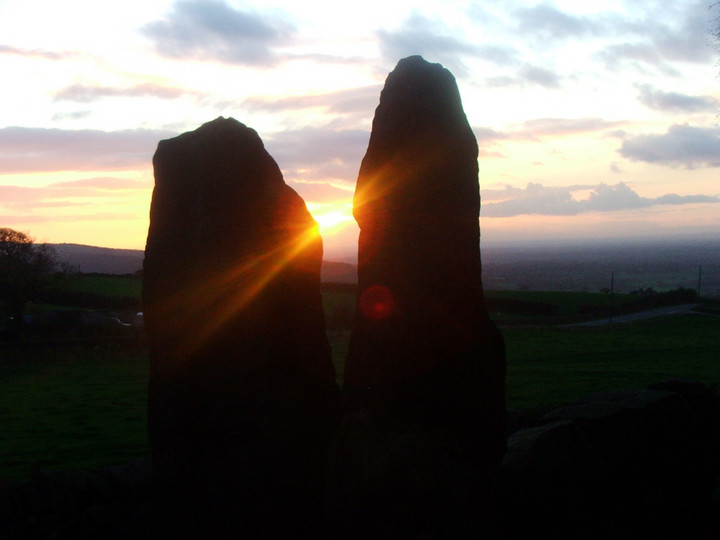
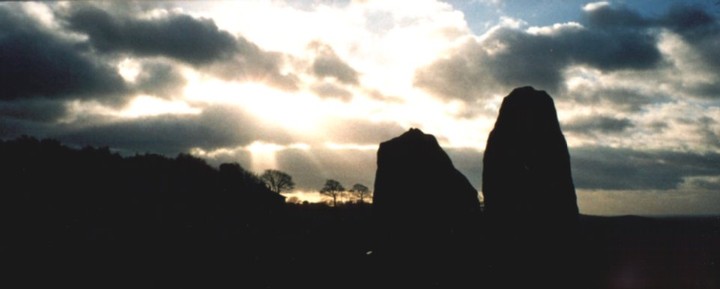
It's been eleven months since our last visit, and seeing as we were unwilling to return home just yet, we nipped into Congleton for Tea and came up here for the sunset, damn good idea it was too. Once again we had the place to ourselves for nearly two hours, even on a beautiful day like today, no dogs barking either. In the field next door are two or three time team type trenches, I don't know if they're archaeological in nature or weather the farmer dude is going about his farming duties, which this day include perfectly square tidy trenches. Either way half the trench includes what looks like a low rubble wall running north/south, I wish i'd taken a photo now but was remiss at the time. We sent monkey boys up a conifer in the stones compound to try and look down on the stones, not in a dismissive way you understand but just trying to see something new in a place that we've seen a dozen times. In the end something new did occur to me, but it wasn't found up a tree you wont be surprised to find. Nearly thirty miles away on the Cheshire plain is the Mid Cheshire ridge, part of this sandstone play ground contains Beeston Crag with it's famous castle, but less known is the neolithic enclosure, Bronze age settlement and Iron age hill fort. Well, the Bridestones chamber seems to be directly aligned on the distant crag. Trees and Rhododendrons are blocking any definitive proof but both are neolithic in date, both inter visible and (not related) I live between the two, for the first time ever Crewe isn't such a bad place to live after all. On another tack the rhododendrons are too close to the chamber, we used to be able to walk right round the chamber but are now confined to the southern side, it's not on, this place is too cool to be swamped in vegatation. This post appears as part of the weblog entry Cheshire's Western Peak Part II
|
 Posted by postman
2nd April 2012ce Edited 2nd April 2012ce |
|
Almost seven years on from my last field notes here I visited again, this time with my Daughter for company. The benefit of visiting on 26th December is that there is no one about at the quarry next door, so this time there was better for exploring the geographical context of the Bridestones and to further explore the connection to the landscape. Just of from the site standing at the quarry building there is the most spectacular view over Staffordshire and Cheshire, truly awe-inspiring in the distance the naked eye can see. I am convinced that this spot would have been of prime importance in relation to the Bridestones, and there reason for being here, I suspect they weren't placed here in isolation but would have been a small part in a wider use of this area, leading up higher and higher to the peak of the cloud. |
 Posted by texlahoma
1st January 2012ce |
| Surprisingly easy to find, The Bridestones are striking. A small, compact site but still imposing when you are amongst the stones. No dogs on the day of my visit so, except for the occasional car passing by on the nearby road, I was surrounded by tranquility and calm. Perfect. |
Posted by Gnomon 13th August 2010ce Edited 13th August 2010ce |
|
Visited on a Northern Earth Mysteries day out. Our guide warned us that there have been problems with Rottweilers from the adjacent property menacing visitors - physical contact though not bites. On this visit there was barking from a sheepdog on the other side of the fence, but nothing worse. Apparently the structure was originally some 300 ft long (!), but much of the stone has been robbed over the years. The site is somewhat encroached by vegetation, but attempts have been made to cut it back, and apparently the situation is now better than it has been in the past. It is strongly recommended that you report any issues with dogs and/or vegetation to the local authority if you encounter them here. |
Posted by Ubik 27th April 2008ce |
| Seeing as I only live forty minutes away and this is my nearest ancient place I will come here several times every year, almost as if expecting to see something new,so far I'm not doing bad Once I came at sunset , next it had been snowing, this time I climbed a tree to look down on it slightly.Sometimes there is a big Rottwieller dog just ten metres from the chamber but he was elsewhere today and all was quiet. The only bad thing about this visit was the bushes were ever so slightly closer to the side of the chamber, the whole lot should be ruthlessly chopped leaving only the mature trees, somtimes there's not even enough room to stretch ones imagination. I leaned the fallen information board against a tree said goodbye to the stones (as you do) and walked back to the car. |
Posted by postman 3rd March 2008ce |
|
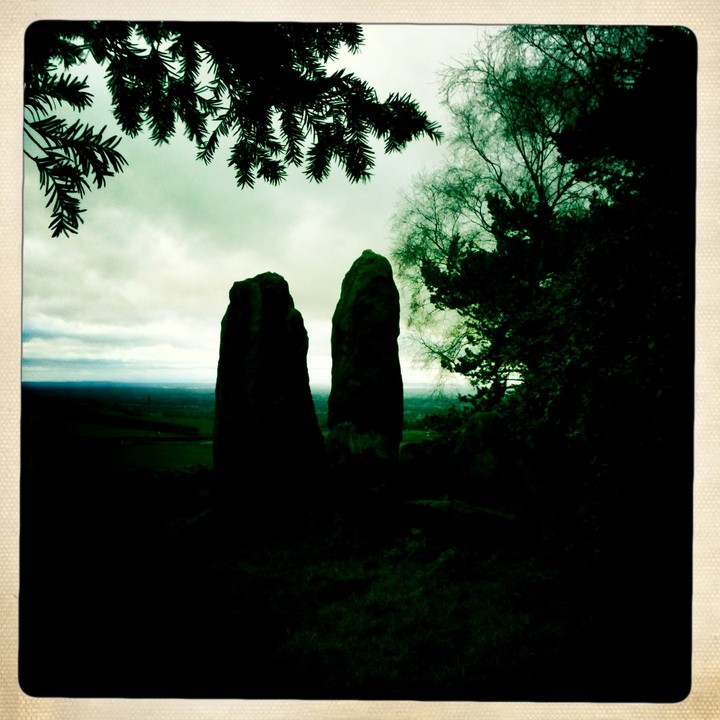
As we approached the Bridestones the sky was dark towards Jodrell Bank Observatory and the Welsh hills in the far off distance. we did encounter the barking of dogs on approach to the stones although they quickly stopped again leaving us in peace. As we entered the enclosure the sun broke through the sky and created amazing views past the stones and across the landscape. This is an amazing place to visit and in very good condition. By the gate there is what looks like a capstone to the tomb or maybe it is another standing stone which has fallen over at some point, either way it is huge. This post appears as part of the weblog entry below the cloud towards the old man o' mow
|
Posted by texlahoma 4th January 2005ce Edited 4th January 2005ce |
|
[visited 3/4/4] I've been angling to come here for ages ever since I saw The Pikestones and wondered just how they got that far north. Access is good, you can park to within metres of the stones & then through a gate. So accompanied by loud barking I got to see a very impressive chambered tomb facing almost true west. It used to be 100 odd metres long and had a cresentic forecourt with cobbling! Very similar in style to other outliers of the cotswolds barrows, a vein of which seem to be clinging to the western edge of englands central hills. If this mound was covered in white as per mounds further south, it would have been visible far out into the western plains. I met a very helpful local who pointed out some stones can be still be seen in the small grove of trees on the way into the site and on the other side of the access road, but most were taken away when the road was metalled. Apparently the stones are named as a result of a wedding being held here in the 1930s, what they were called before then is unrecorded. This post appears as part of the weblog entry Quick bank holiday drive round
|
 Posted by juamei
3rd May 2004ce |
|
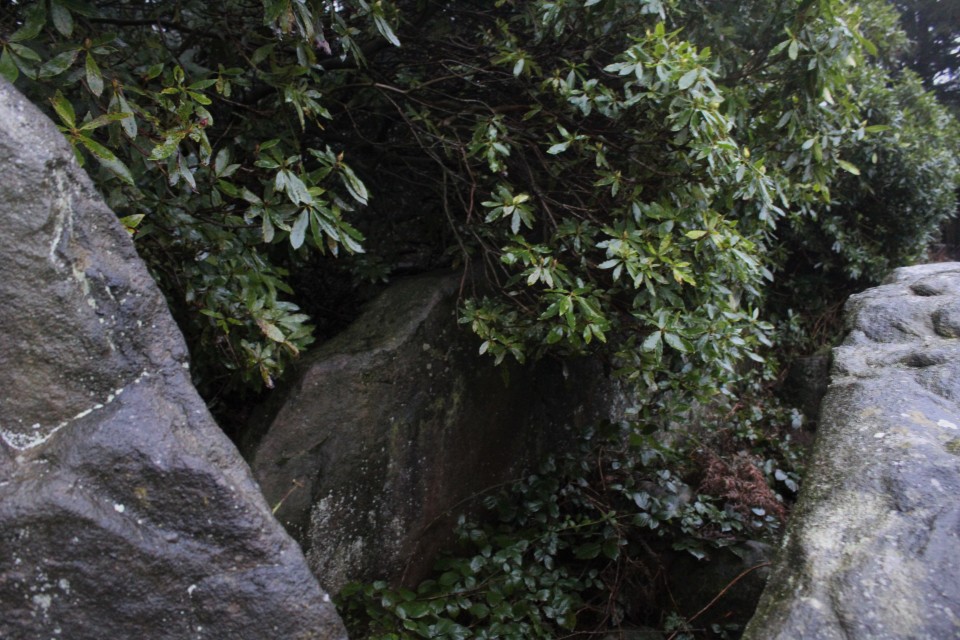
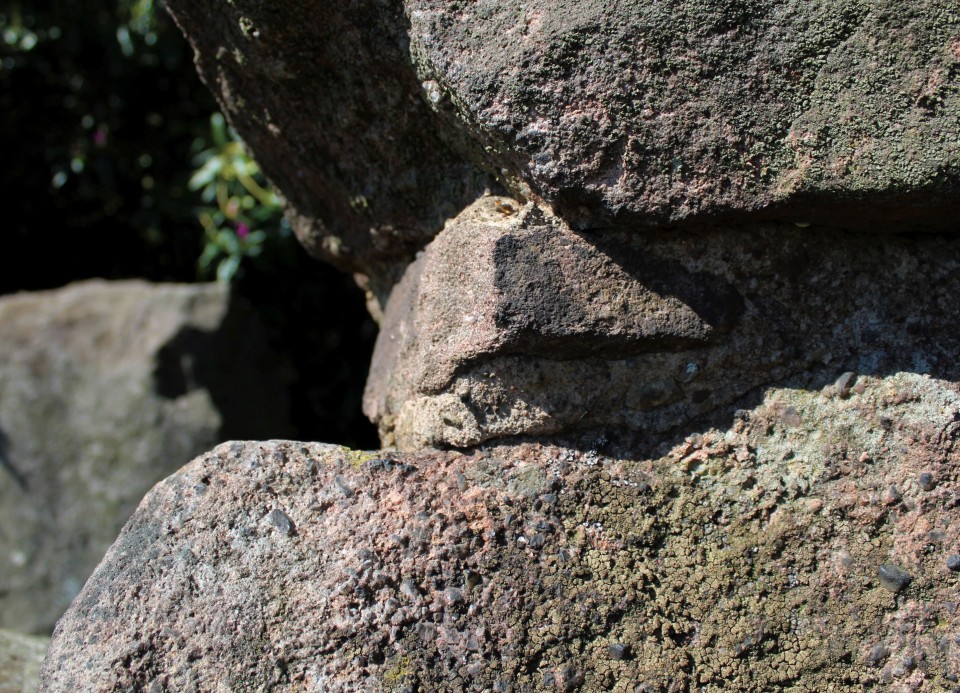
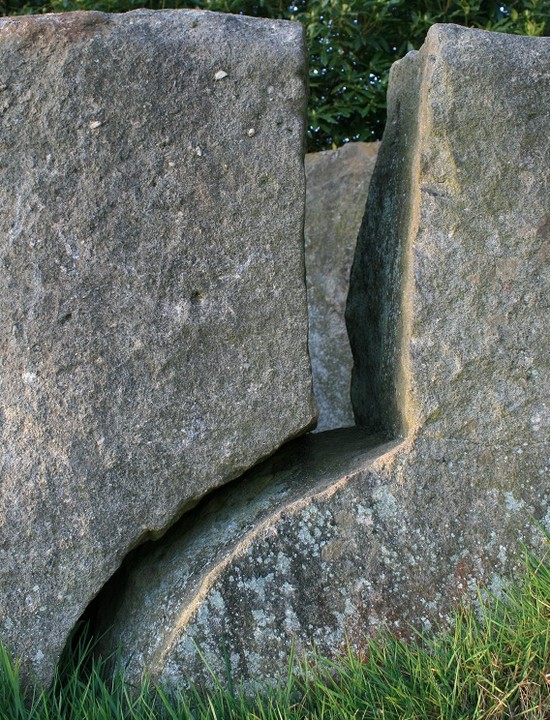
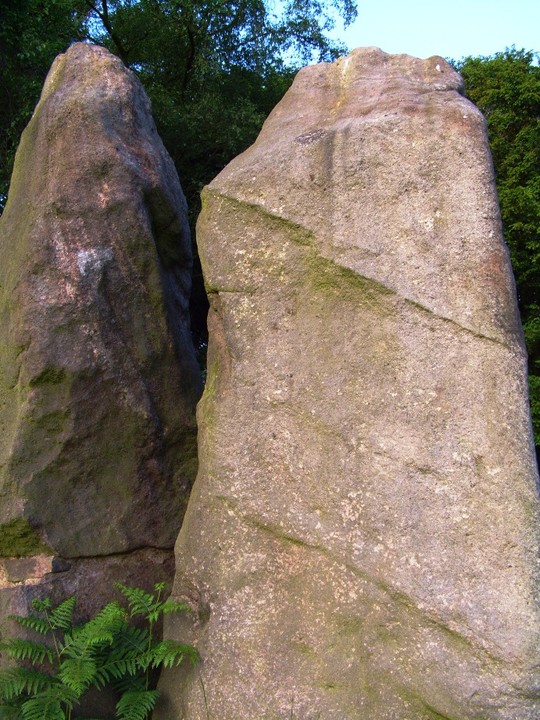
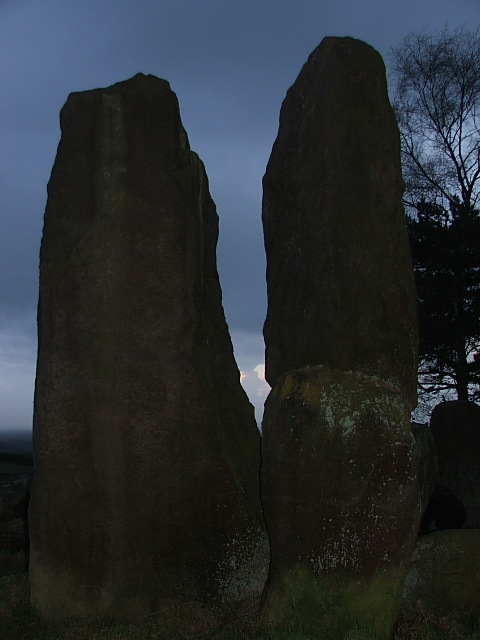
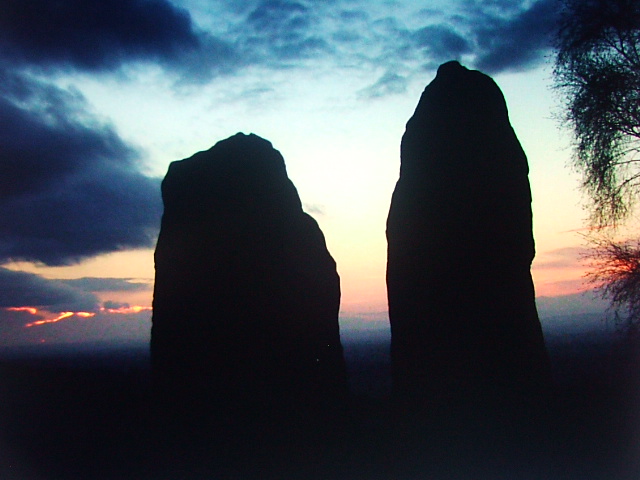
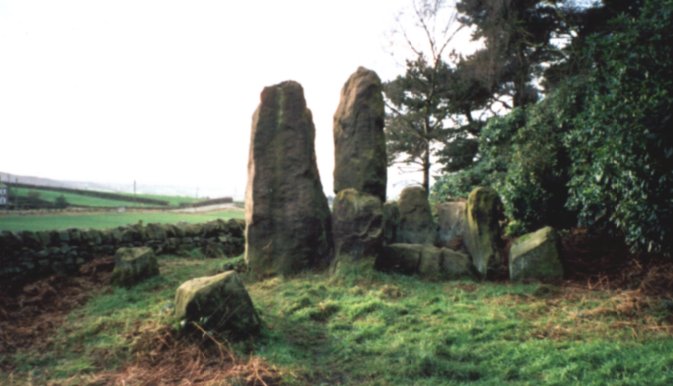
This is an amazing site... small, but for me, perfectly formed. Two massive uprights - one with a beautiful smile - and then a long chamber flanked with big, sparkling slabs. This is definitely worth a journey - it's not that far from Lud's Church. The only 'problem' are the guard dogs - two big rottweilers just beyond the site don't make you feel terribly welcome. They are fenced in, but were a little intimidating. To get to the Bridestones, you could walk from the nearby (about 2 miles) hamlet of Timbersbrook (parking, loos, picnic area etc), or else just beyond (c. 400 metres) the site towards Leek there's a layby where you can park (just where Dial Lane becomes Beat Lane). |
 Posted by rangzen
19th August 2003ce |
| The Bridestones are one of the few megalithic sites between Derbyshire and Wales and are well worth a visit if you can put up with incessant dog barking and the occasional Curious Cow. Two big flanking uprights infront of a roofless burial chamber, curious for its porthole stone: one of only five or so known from the UK. While you're there go for a walk on the cutely named Cloud: fantastic views across the north Midlands and you can tell your mates you went for a walk in the Clouds.... |
Posted by Dave M 25th June 2000ce |
Folklore |
Add folklore |
Local landowner, Sir Philip Brocklehurst, wrote in 1874:The peasants of the neighbourhood have a curious legend respecting the origin of 'The Bridestones'. "When the Danes invaded England," they say, "a Danish youth became enamoured of a Saxon lady, and in the end the two were married at Biddulph church (about a mile and a half distant) but on returning from the wedding, they were here met and murdered, and after their interment had taken place on the spot where they fell, these stones were laid around their grave, and the name Bridestones given to it from that circumstance." So much for public opinion.You can see him rolling his eyes. Quoted in Westwood and Simpson's 2005 'Lore of the Land'. |
 Posted by Rhiannon
24th February 2006ce |
Miscellaneous |
Add miscellaneous |
|
From J D Sainters "Scientific Rambles Round Macclesfield" 1878: 'East of this sephulchral cell or monument, there stood six or eight upright stones or monoliths, from 8-10feet in height and six feet apart, which formed a circle 27 feet in diameter; and two other stones stood north by south within this circle, which may have been the remains of a cromlech or dolmen that had contained a burial by process of cremation, since the soil is reported black with charcoal ashes. Another stone stood six yards east from this circle, succeeded by one six yards beyond it......' |
 Posted by stubob
9th December 2007ce Edited 9th December 2007ce |

| It appears that someone brings there dog to toilet here, regularly. Watch your footing! |
Posted by AgentOrange 19th December 2005ce |
Links |
Add a link |
SOTMASStoke On Trent Museum Archaeological Society results for magnetometer and resistance surveying in the field next to the remaining stones. Also includes a brief antiquarian history of the site together with a report into a small excavation looking at anomalies in the scans. |
Posted by juamei 12th February 2014ce Edited 24th February 2014ce |

Megalithic PortalRe-building a classic Not wanting to lift pictures straight from the portal I've linked us to it. Some really great and instructive photos of the reconstruction of the Bridestones. |
Posted by postman 2nd April 2012ce Edited 3rd April 2012ce |
Cheshire Archaelogical Service Site Information |
Posted by Ubik 27th April 2008ce |
Megalithic WalksAtmospheric snowy photos of the Brides. |
Posted by Rhiannon 17th April 2002ce Edited 2nd March 2005ce |
 Top of page