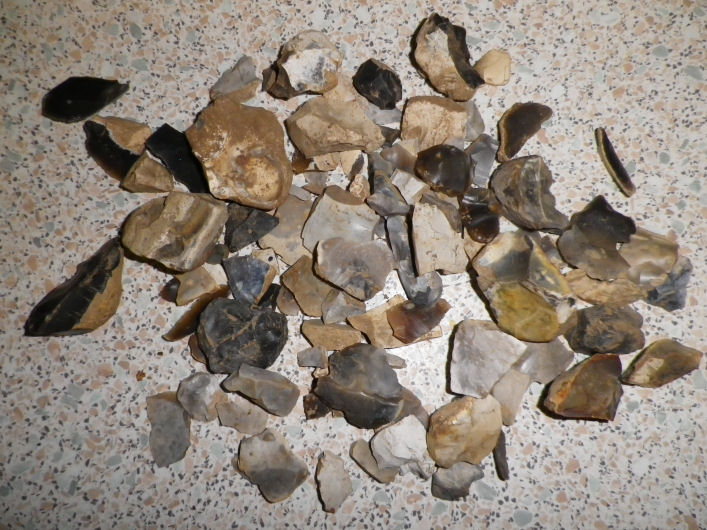
I don't know if there was some sort of settlement up here or whether the area was used for seasonal camps or what. But the amount of flint I found milling about the fields on the common for a hour suggest something was going on here.
The fields are ploughed regularly each year and have been well manured in the past judging by the amount of 'blue and white' pottery and bits of clay pipe that are also to be found here.
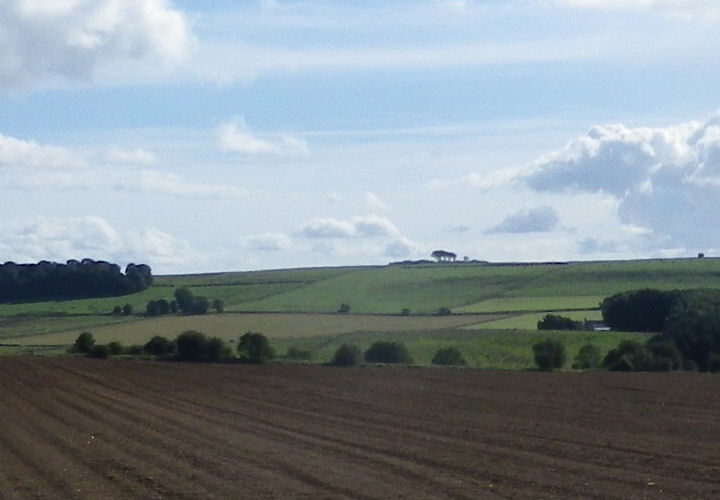
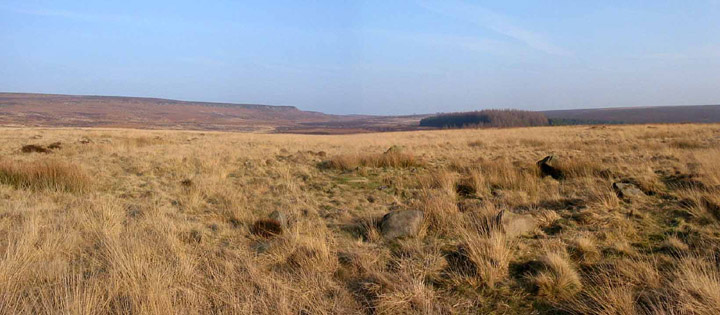
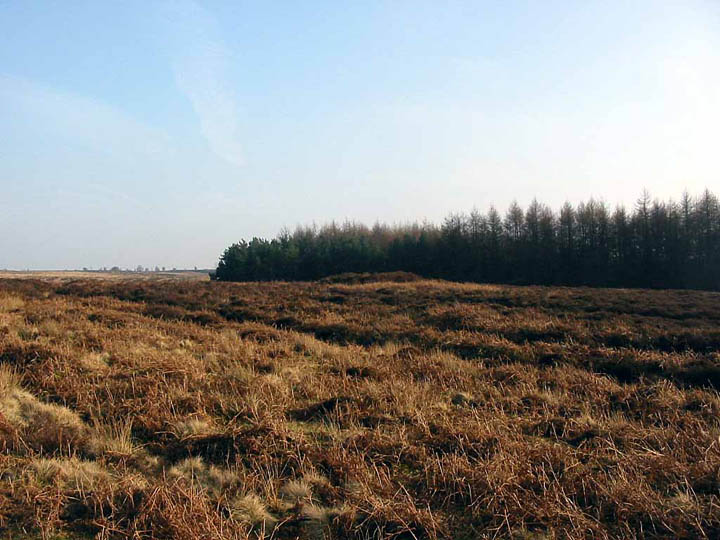
Minninglow's trees are visible on southern horizon; only a stones throw away really.
|
 
|
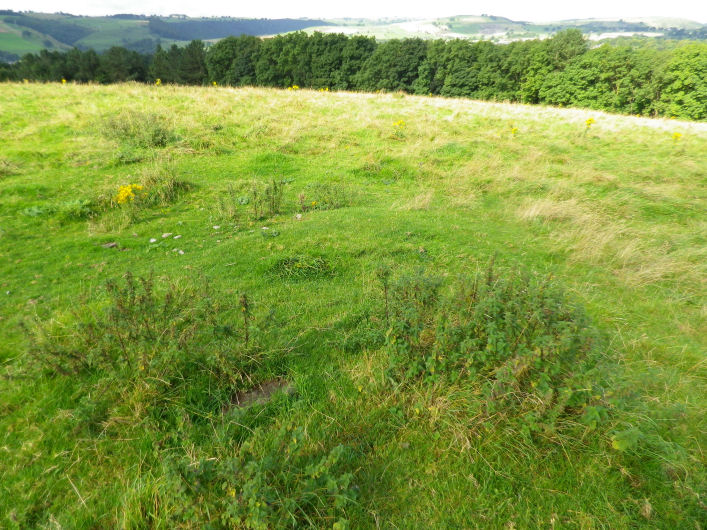
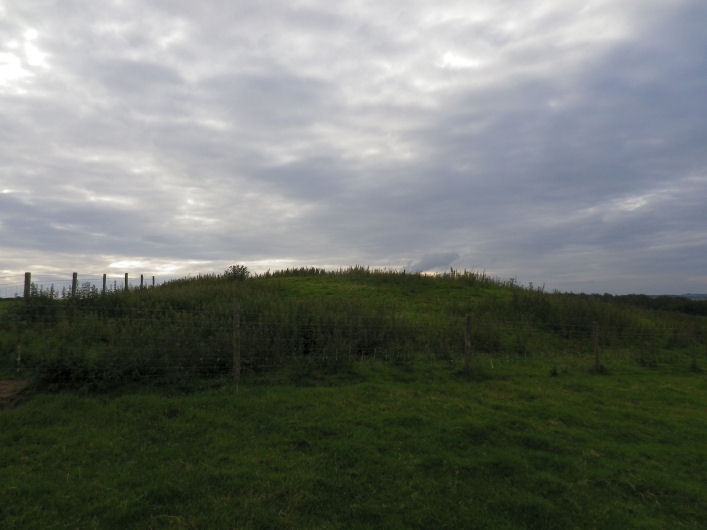
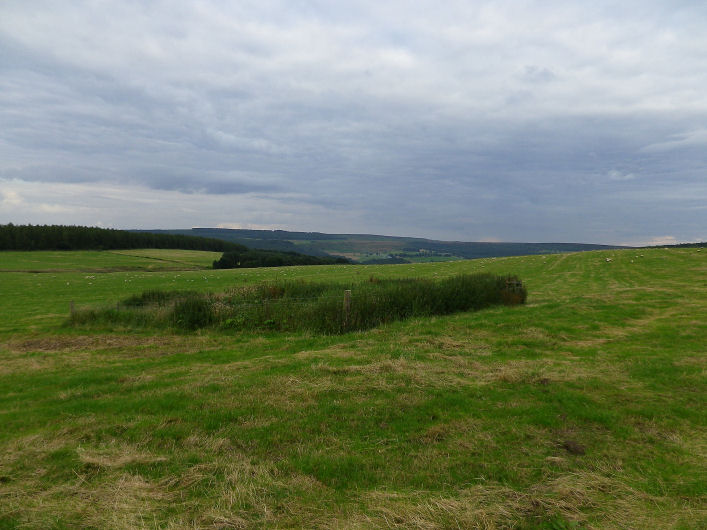
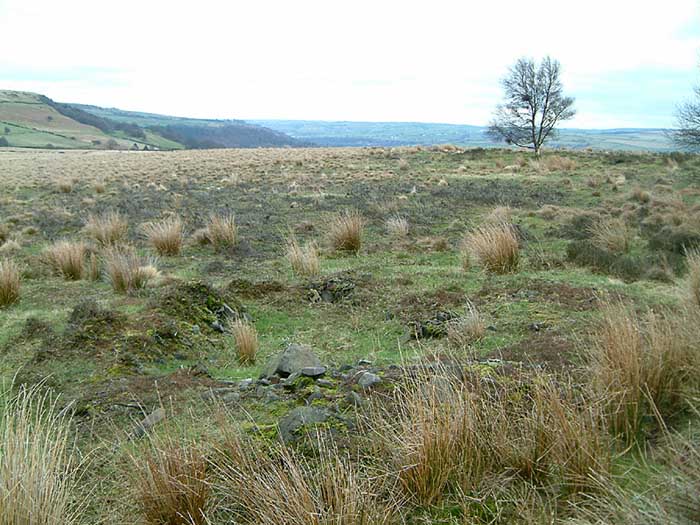
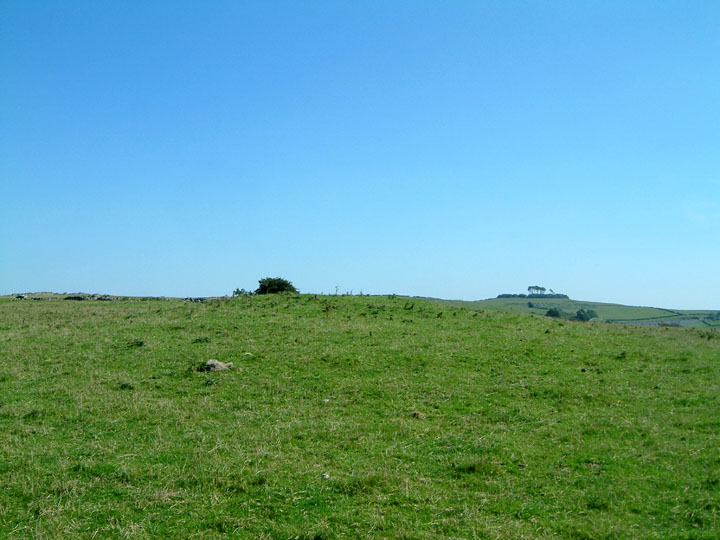
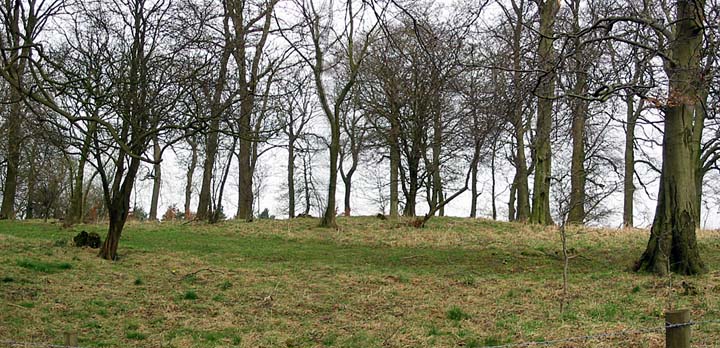
As with the nearby One Ash round barrow there's nothing to see here its so ploughed out. Supposedly 40m long and 10m wide perhaps its the long grass that masks its presence but I somehow doubt it.
A trench was dug across the barrow within the last 30years but the findings were never published.
As with Harrod Low, the barrow for its type, is in a relatively low lying spot.
Pottery and flint have been found in the mole hills around the monument suggesting a camp perhaps.
|

|
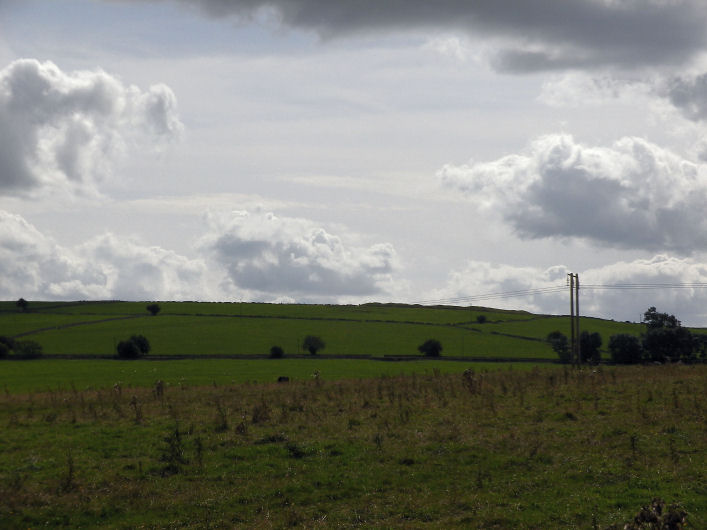
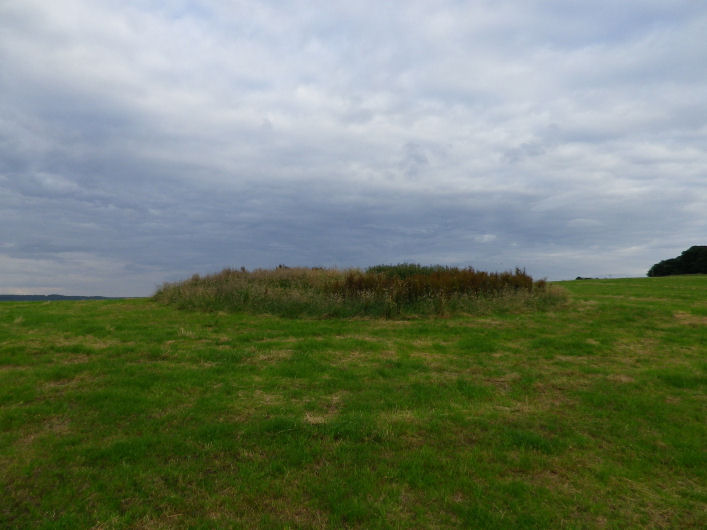
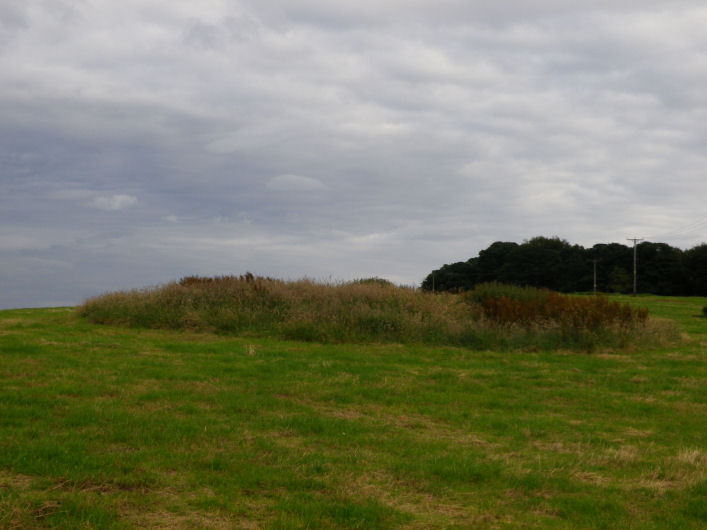
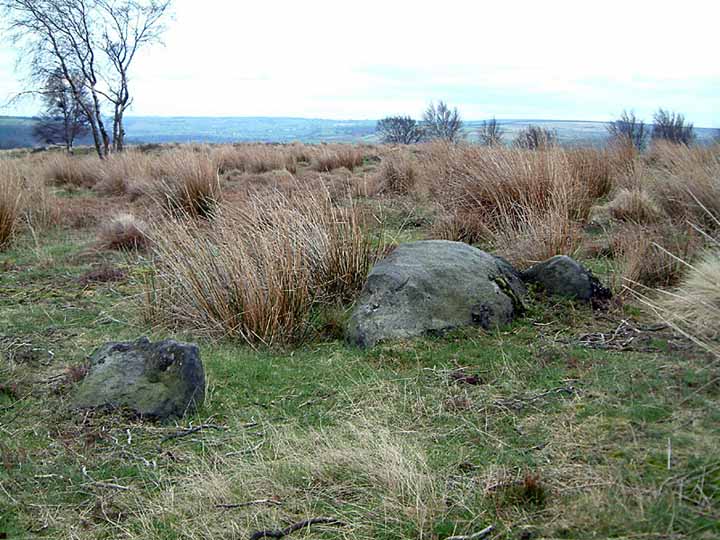
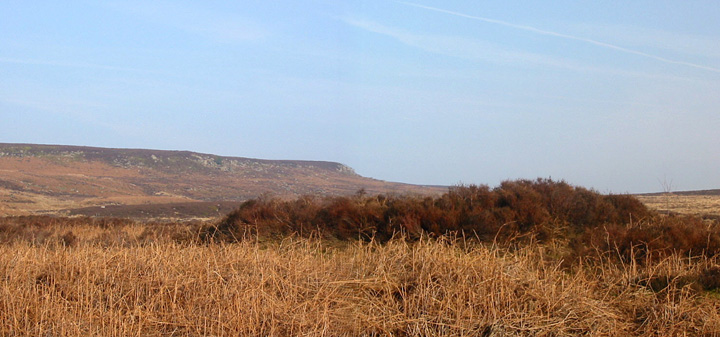
Marked as Tumulus on the 1:25000 map of the White Peak this barrow deserves its badly plough damaged label in Barnatt's Barrow Corpus. In the ankle length thick grass there was nothing to be seen.
Arbor Low's banks are visible on the near horizon as is Chelmorton Low farther away in the distance; the two barrows that crown it just about visible.
|
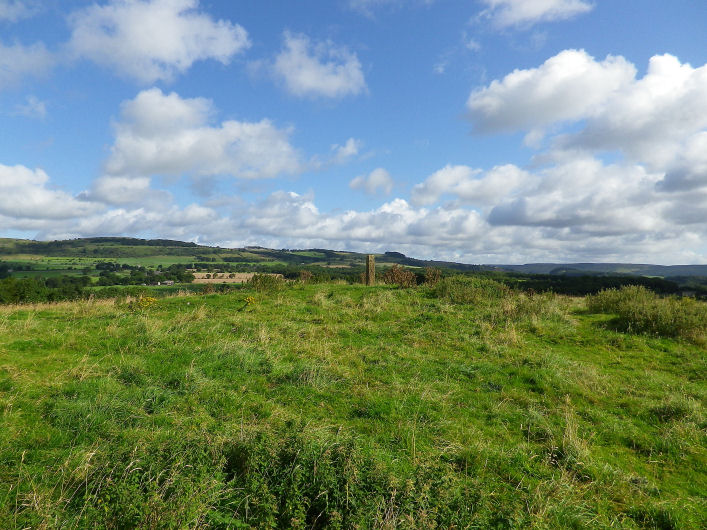
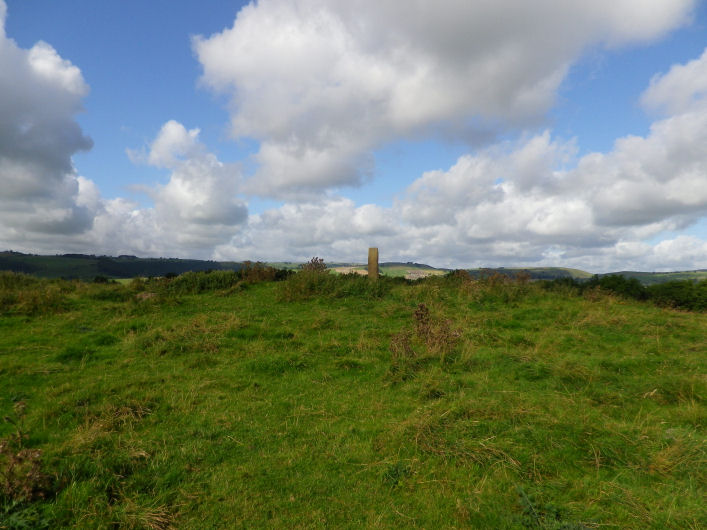
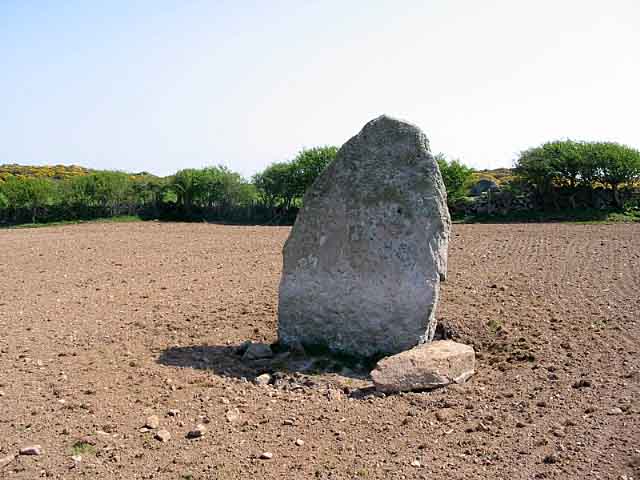
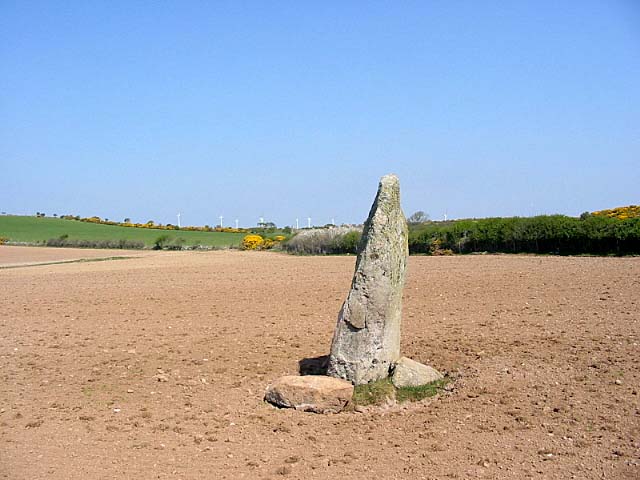
Situated on the high point of Crackendale Pasture is this odd little barrow that has previously been described, by Bateman, as lobated and, by J. Barnatt and the NMR, amorphic and badly disturbed.
On the ground it looks pretty much the same as any other Peak barrow except for the three spokes or limbs that protrude from it. A square set stone as also been set on the barrow for some reason.
Fine views towards Fin Cop and Longstone Edge.
|
  
|
25 x 16m barrow opened by bateman in 1851 and described in his 'Ten Years Digging.....' volume. He recovered a burial of human and animal bone within the mound and on the old ground surface, beneath the mound, he found 4 disturbed inhumations accompanied by a beaker and a bone artefact. Around this central burial were 5 concentric arcs of stone.
Info: J. Barnatt & J. Collis.
|
Excavated by Bateman in 1845 and recorded in his 'Vestiges of .....' book a few years later. He found a central burial on a limestone pavement beneath the mound, and a cremation in a pit.
Info: J.Barnatt & J. Collis
|
Plough damaged barrow measuring 16x14m. Excavated by Lucas and Carrington in the 1860's, the results were badly recorded so all that is known is they found bone, pottery and flint of unspecified types.
Info J.Barnatt & J.Collis
|
There are visible disturbances at the centre of the structure suggesting there may have been a very limited excavation.
From the NMR.
|
Excavation of the cairn has revealed artefacts, indicating that the structure was a Bronze Age funerary monument, but residual worked stone material, incorporated into the mound, indicates that the immediate area was also occupied during the earlier Mesolithic period.
From NMR.
|
Partial excavations carried out by Thomas Bateman in 1843 and 1851, and by Marsden in the late 1960s, have revealed the remains of eleven human burials of adults and children, most of which were crouched inhumations but some of which were cremations. The primary burial was a cremation laid on a flat stone at the centre of the mound adjacent to a barbed and tanged flint arrowhead. Several of the secondary burials were laid in rock-cut graves or cists formed of limestone slabs, one of which was
covered by a paved chert ceiling. In addition to the crouched skeleton, the latter grave contained a flint knife and a decorated clay drinking vessel.
This and other similar vessels assign the barrow to the Beaker period or Early Bronze Age, and this date is supported by other Bronze Age artefacts which, in addition to flint implements, include a number of Bronze pins. Also found, on
the old land surface beneath the barrow, was a Neolithic polished stone axe and a pointed arrowhead of a similar date. These earlier artefacts are likely to be residual remains contained in the material used to build the barrow.
Info from the NMR.
|
SK233685. Partially excavated by Bateman. He revealed a pit under the centre of the barrow containing lead ore.
SK236684. Possibly excavated by Major Rooke in the later half of 18th Century and later by Bateman who found it disturbed.
The mound contained a small cist with a food vessel and cremation interned within it.
SK239683. Possibly opened by Rooke.
SK241680. Possibly opened by Rooke and later Bateman.
|
     
|
  
|
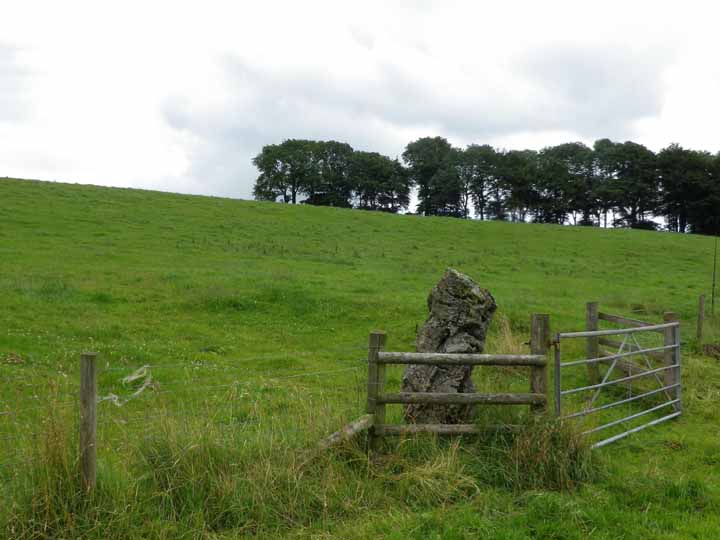
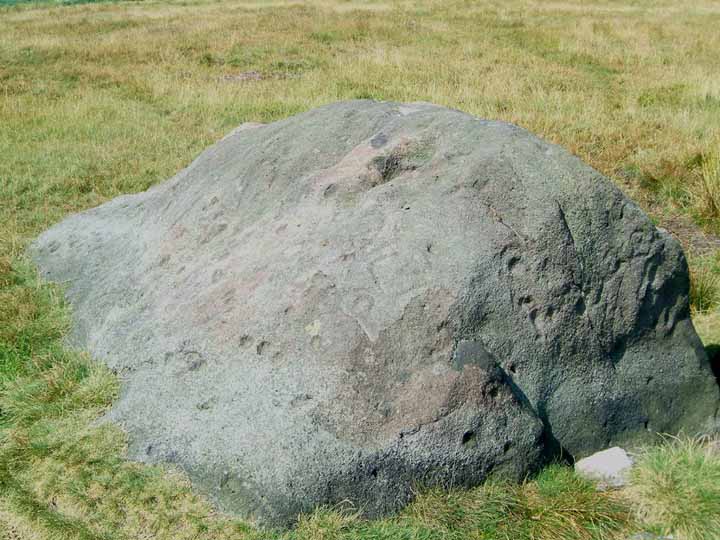
I'm guessing this should have a 'Disputed Antiquity' label really....
I came across a reference to this stone on the Parwich Village History website last year, where they suggest it to be possibly prehistoric.
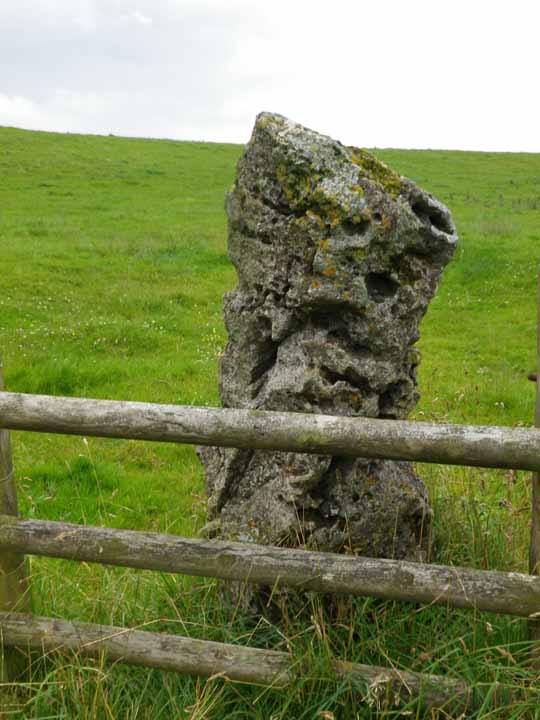
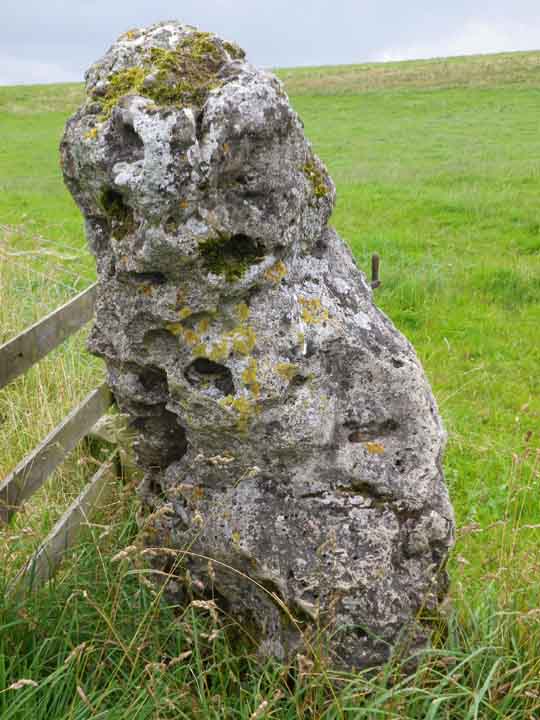
It was first mentioned in a 15th Century document as The Holleston....the website translates this as being The Holestone; and if it's one thing this stone has it is plenty of holes.
The 19th/20th Century iron work hinges put me off a bit.....but hey and in its favour its only a couple of fields away from the standing stone mentioned in the 'HER' at Hawkslow Farm.
|

|

|
 
|

|
     
|
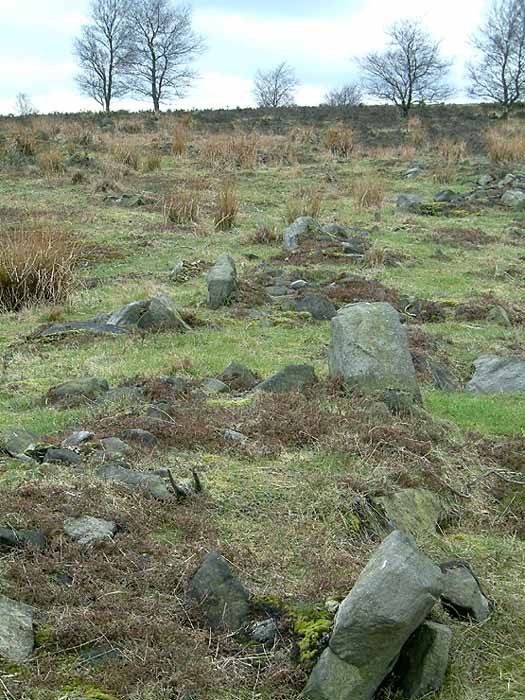
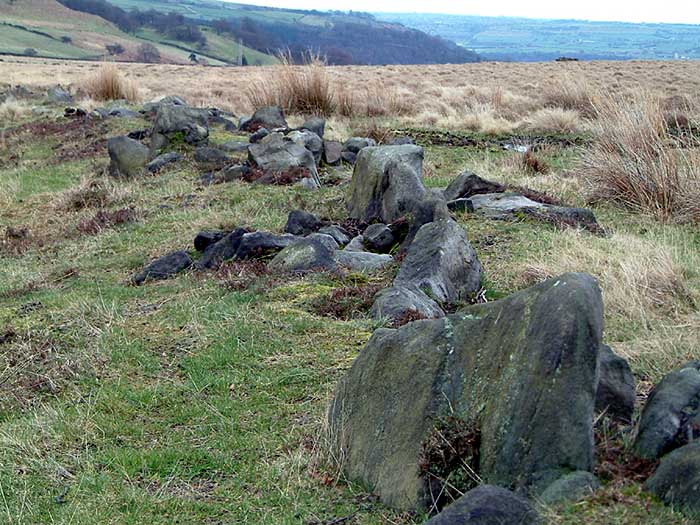
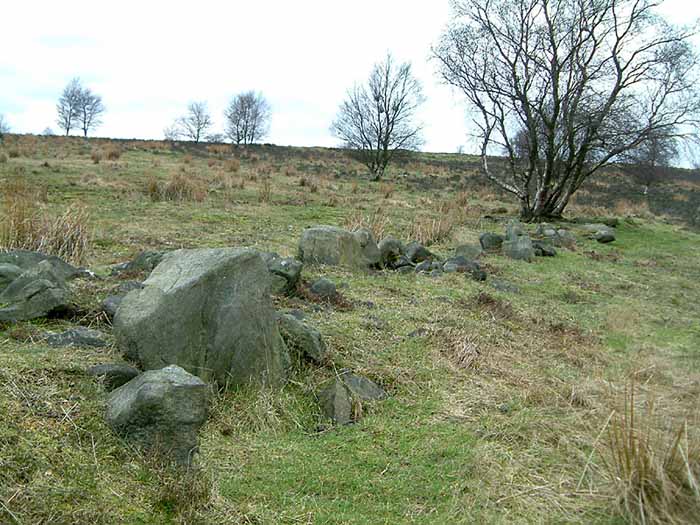
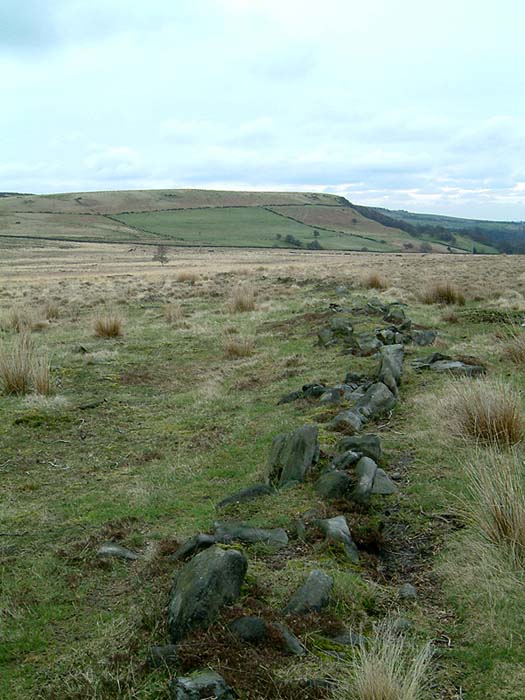
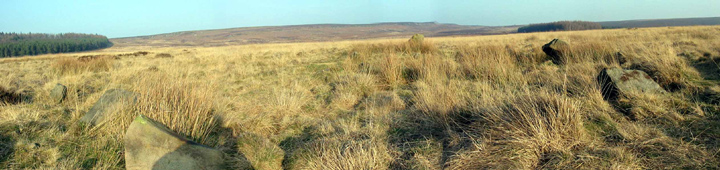
This Bronze Age field system/settlement is worth a look if you're in the area.
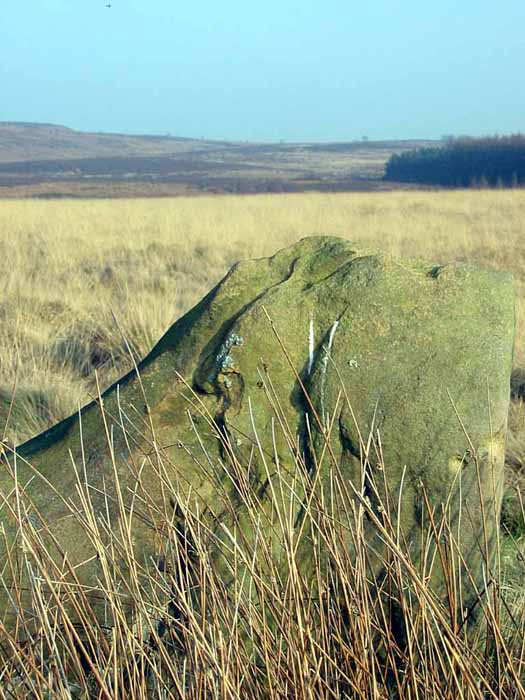
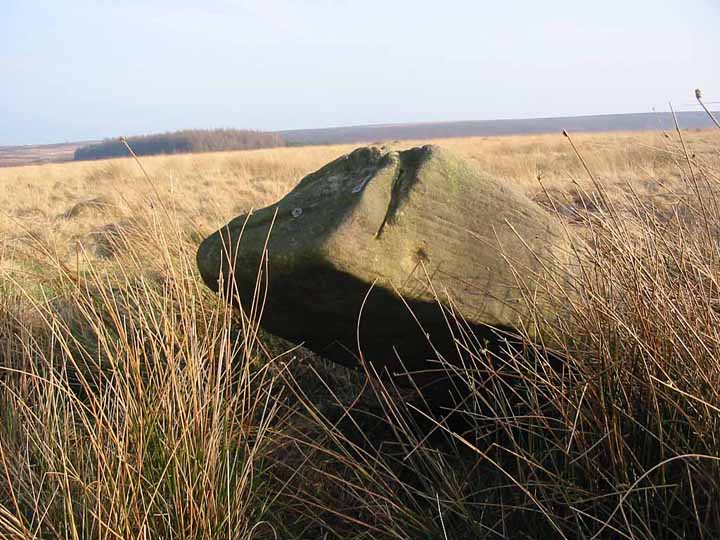
Covering around 900 square metres there is plenty to see in the form of field boundaries, cairns and an enclosure containing some kinda 3/4 stone alignment.
March 2004 when I visited the remains were pretty clear of heather and moorland grass; wouldn't know if that's the case now.
Follow the track to the SE from the Bar Dyke, SK246946, for about a quarter of a mile until you are directly above the Agden Side Road.
|
|
Prior to an excavation by W Bateman in 1824 stone robbers uncovered a cist holding 2 skeletons and an urn. Bateman's dig unearthed another cist containing cremations, inhumations, urn fragments and dogs teeth. Later Romano coins were also found indicating its later use.
|
|
Thomas Bateman may have excavated this barrow in 1860, although it's not confirmed, and found a contracted skeleton laying on a bed of burnt wood along with a flint arrowhead and a bronze awl.
|
| |
 Log in |
Register
Log in |
Register


 Previous 50 | Showing 151-200 of 1,681 posts. Most recent first | Next 50

 Top of page