|
 Log in |
Register Log in |
Register
|

|
|

Fin CopHillfort
|


 Show map (inline Google Map)
|
|
|
News |
 Add news Add news |
Mass burial suggests massacre at Iron Age hill fortArchaeologists have found evidence of a massacre linked to Iron Age warfare at a hill fort in Derbyshire. A burial site contained only women and children - the first segregated burial of this kind from Iron Age Britain. Nine skeletons were discovered in a section of ditch around the fort at Fin Cop in the Peak District... continues... |
 Posted by juamei
18th April 2011ce Edited 18th April 2011ce |

Derbyshire Iron Age bones were of pregnant womanTests carried out on a skeleton discovered at an archaeological dig in Derbyshire have found it was that of a pregnant woman. Experts said they were surprised by the female find because the site, near Monsal Dale in the Peak District, had been believed to be a military scene... continues... |
 Posted by texlahoma
16th June 2010ce |
|
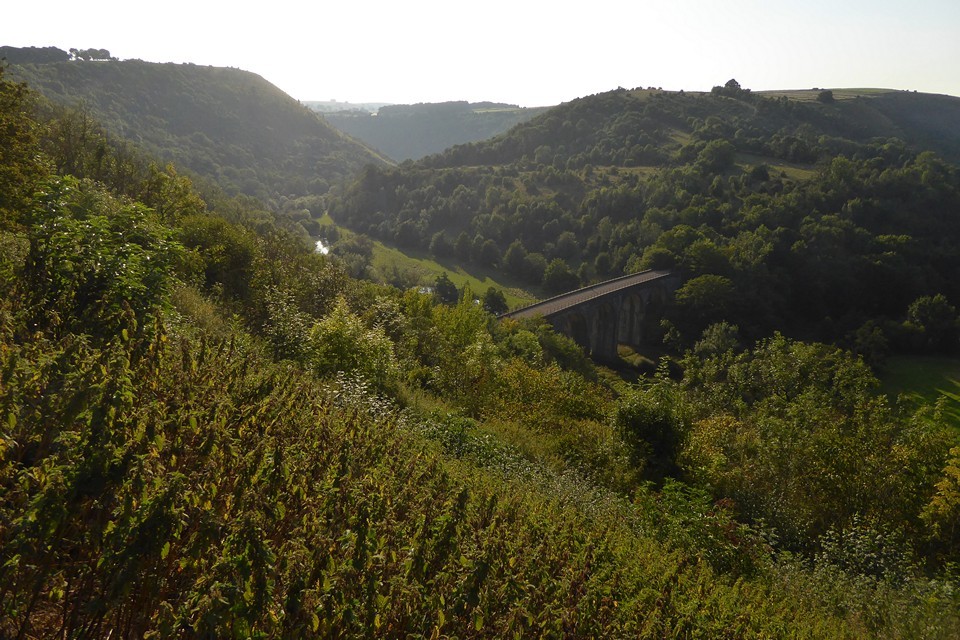
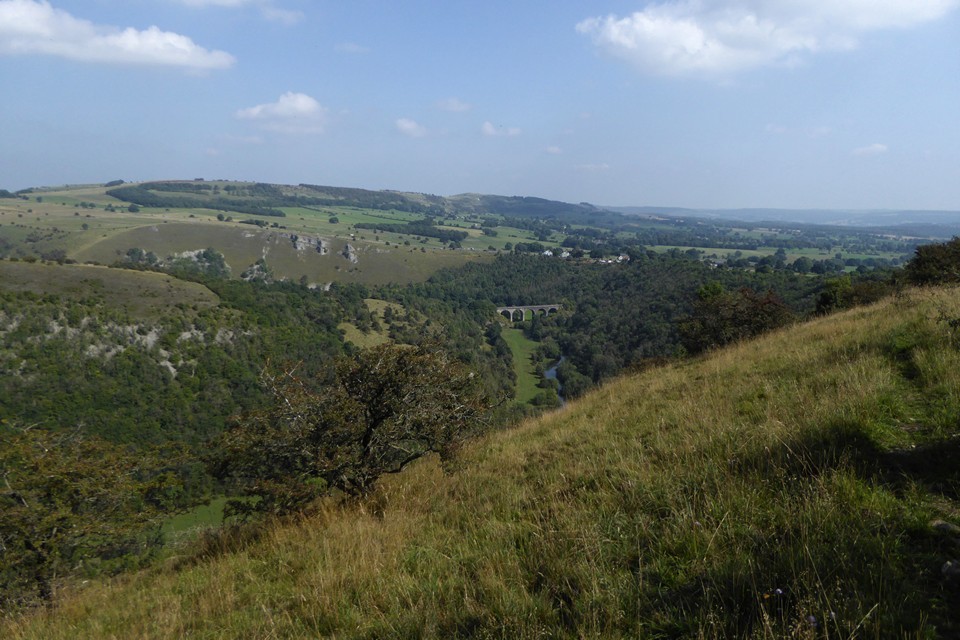
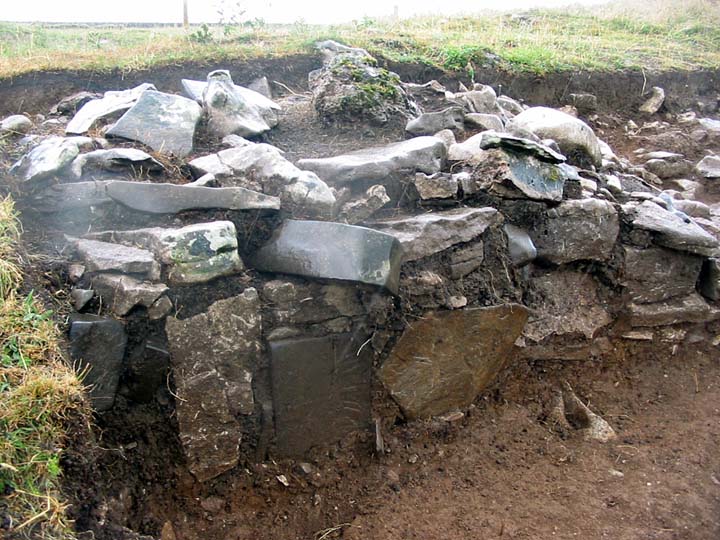
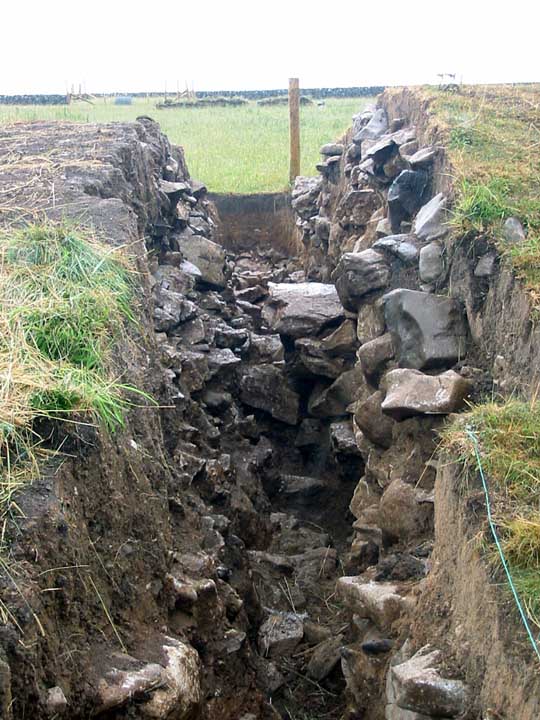
Fin Cop 2010 Fin Cop is going to be excavated again in July and August of 2010 by Clive Waddington of Archaeological Research Services in conjunction with the National Park Authority, Longstone Local History Group, English Heritage and Natural England and funded by the Heritage Lottery Fund. Open days will be held every Saturday of the five week dig; July 10th, 17th, 24th and 31st meeting in the Monsal Head car park, overlooking the viaduct, at 11am and 1pm. |
 Posted by stubob
4th June 2010ce Edited 9th June 2010ce |
Body Find Sparks Peak District StirDr Clive Waddington and the Longstone Local History Group, excavated Fin Cop in July 2009, several open days for public viewing were held... "It is believed the Iron Age hillfort is between 3,000 and 2,000 years old. Radiocarbon dating of surviving material is likely to enable more accurate dating... continues... |
Posted by stubob 28th September 2009ce |
Images (click to view fullsize) |
Add an image |
|
Fieldnotes |
Add fieldnotes |
|
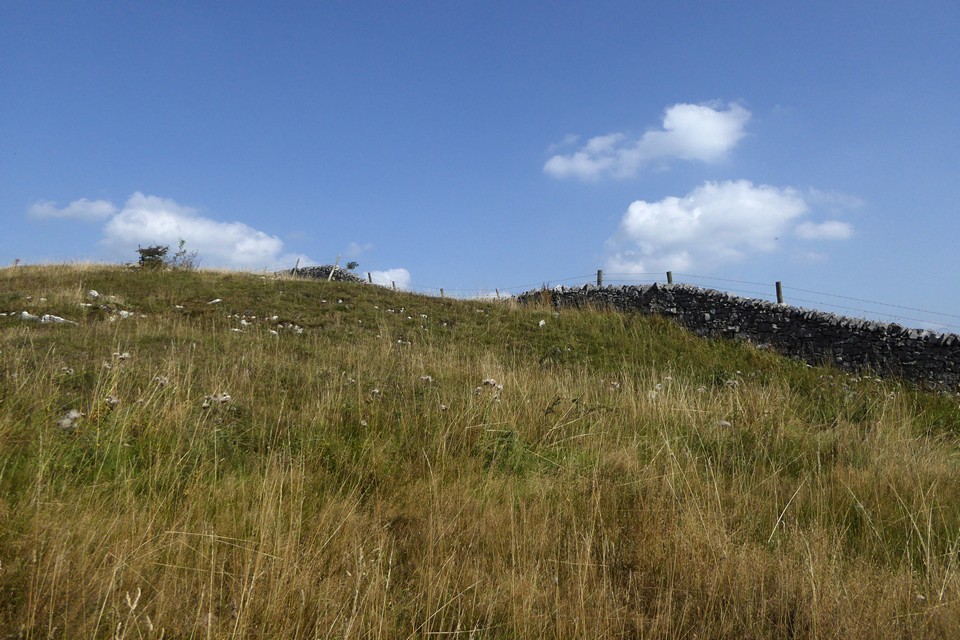
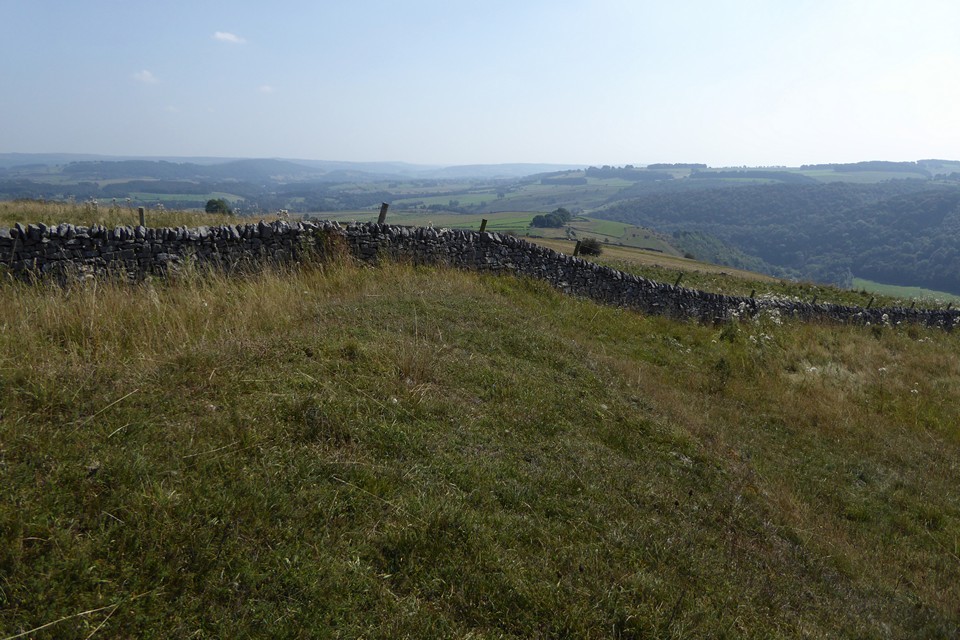
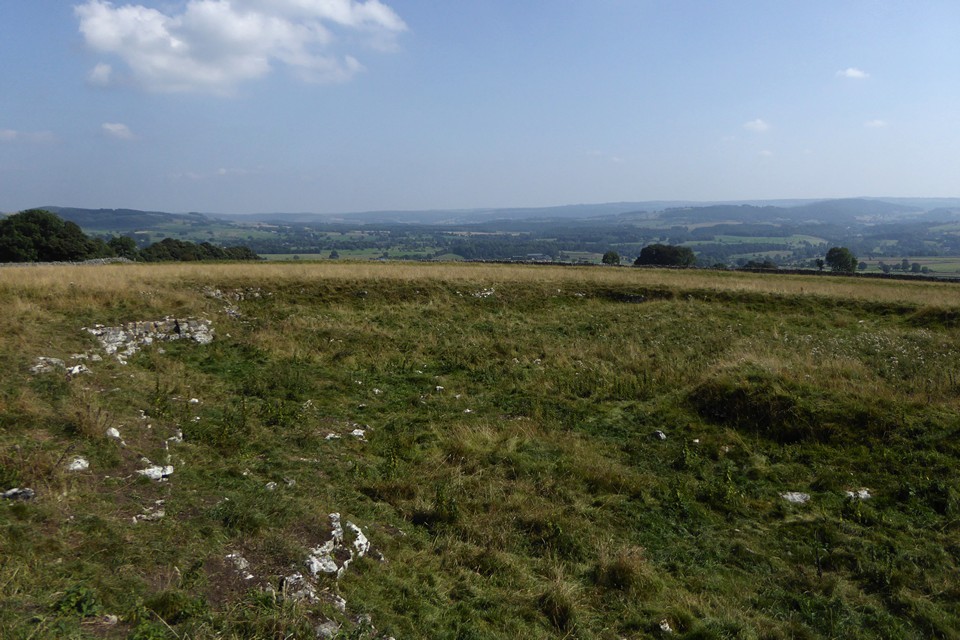
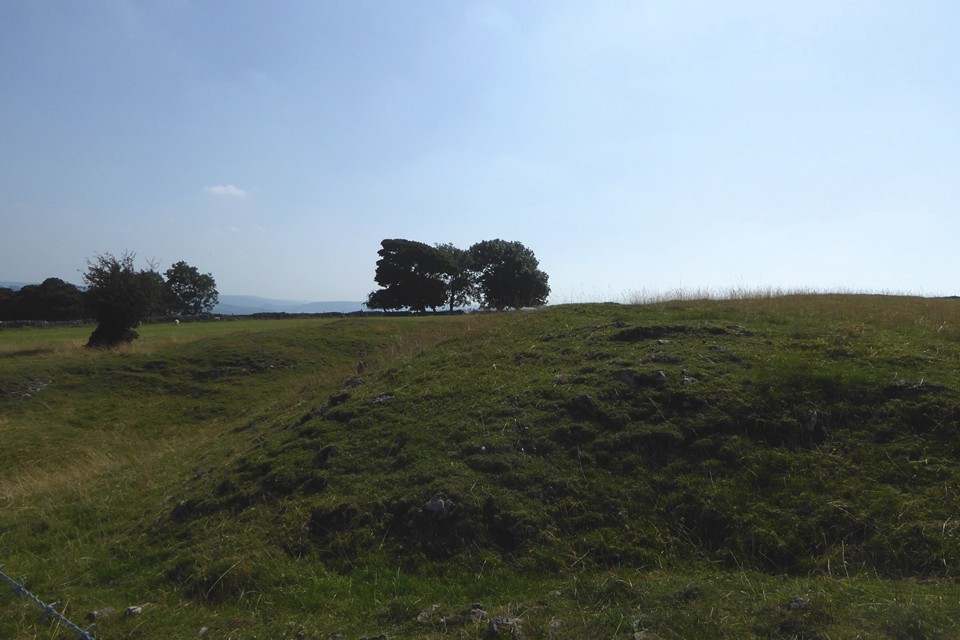
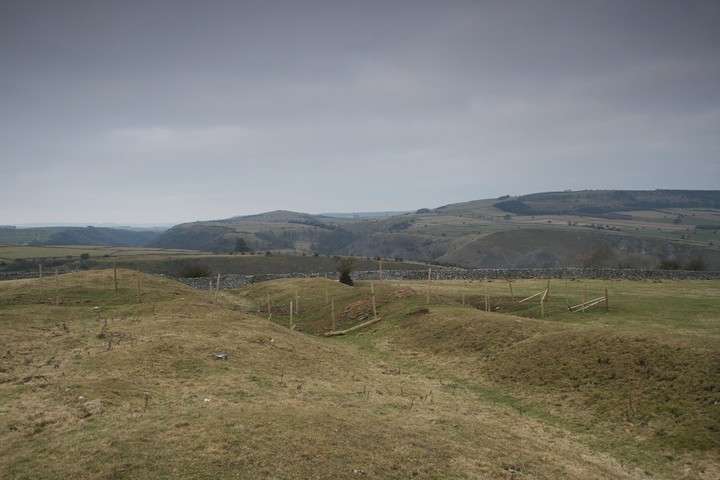
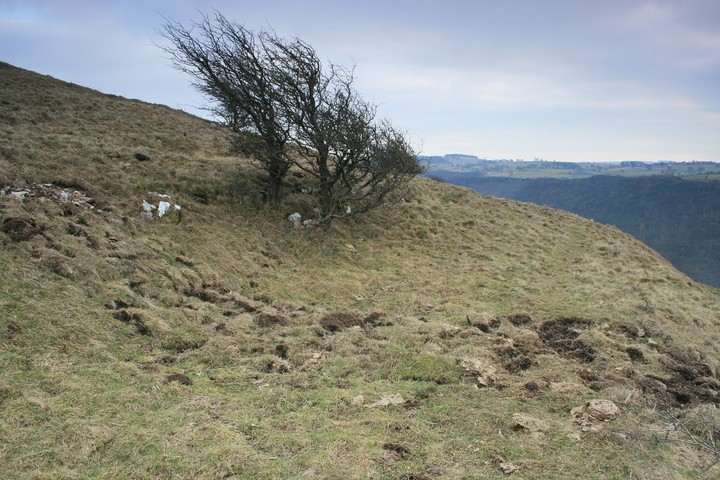
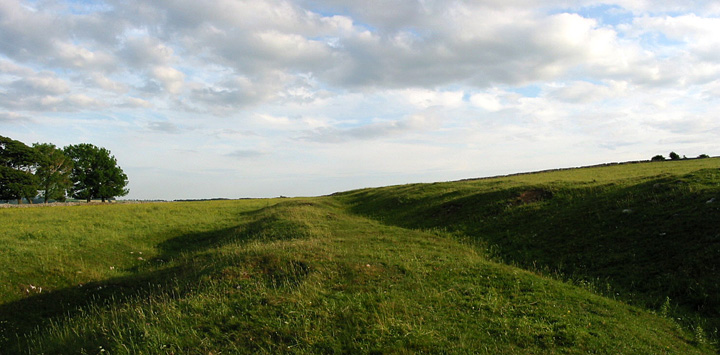
Bruvvs describes Fin cop as a fabulous place, he in my opinion was only half right, it is indeed a place, but as to it's fabulousness I can not attest. Ive never really felt at home in the Peak district, even though its the only national park that is in my home county. (just a small bit) I get an oppressive feeling from the place, as if it doesnt really want me poking around. I know it's just me, I just can't help it. From the 150 place car park, we headed to Hobbs cafe and took the high path way above the river wye heading directly for the highest point, this I hoped was the hillfort, my map is strangely rubbed free of detail right on the bit we need, (probably accounts for my delay in getting here), apart from being on the wrong side of the wall, it was the right path. The entrance and defences on either side of it are still in pretty good shape, though the fenced off excavation scars are a tadd ugly, will they be back soon? We followed the earthworks over the well made drystone wall, (though presumably not as good as Stonegloves) but in this field the defences are not very defending anymore, but recognisable all the way to the edge of the steeeeep hilside. We then followed the hillsde round and dropped down to the river via Hobbs cave. |
 Posted by postman
31st January 2011ce Edited 31st January 2011ce |

| It's a fabulous place. The path up to the enclosure was called Pennyunk / Penyonke [Lane] back to the 1300s and likely long before[http://www.geograph.org.uk/photo/351089] as this seems to be a pre-English [i.e. Old Welsh] name [it doesn't make any sense in Old English but does in the language spoken in the Peak until the 7th/8th C]. Pennyunk would have meant something like 'headland of [the] youth' in Old Welsh [Pen = top, end, head, headland; Iouanc = youth, youngster]. It's possible that this was the pre-English, P-Celtic, name for the enclosure. After all, Penbroga [= 'land's end' = Pembroke] goes back to the Iron Age... Cf. the shape of the hill with another 'penn'; Pendle. |
 Posted by Bruvs
25th September 2007ce Edited 25th September 2007ce |
|
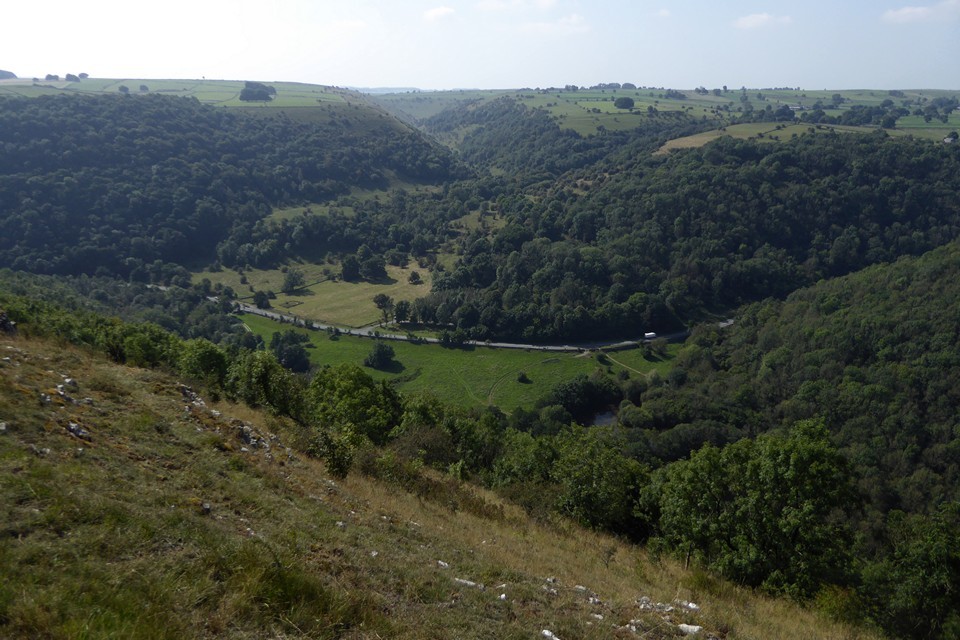
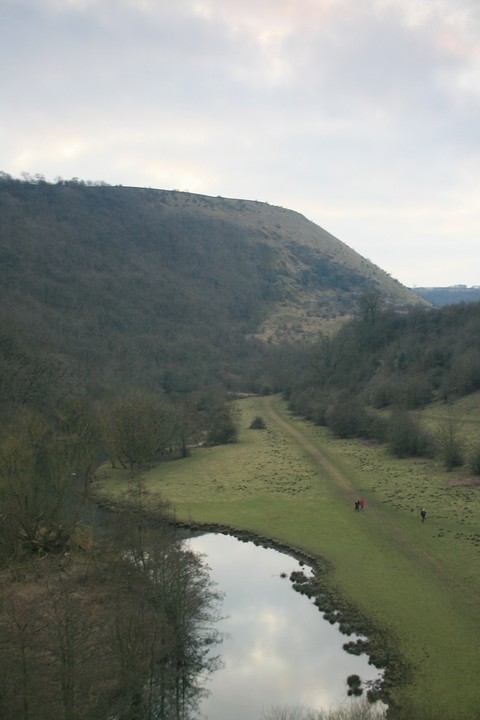
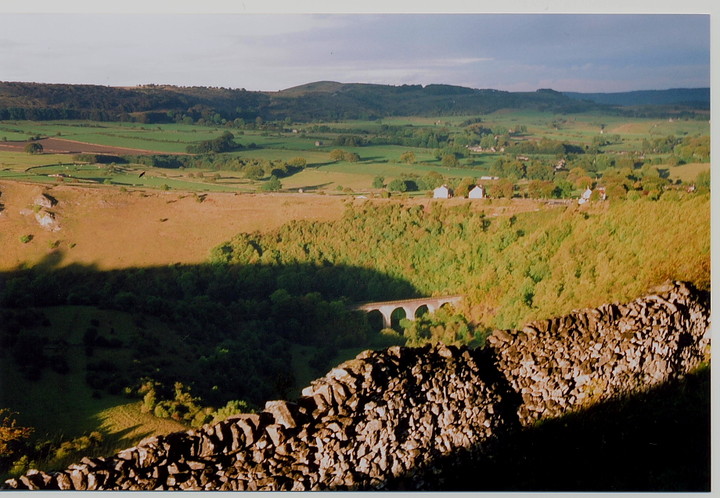
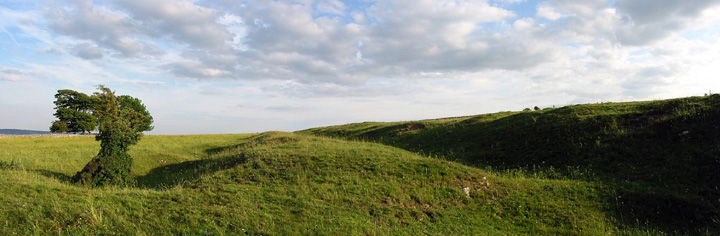
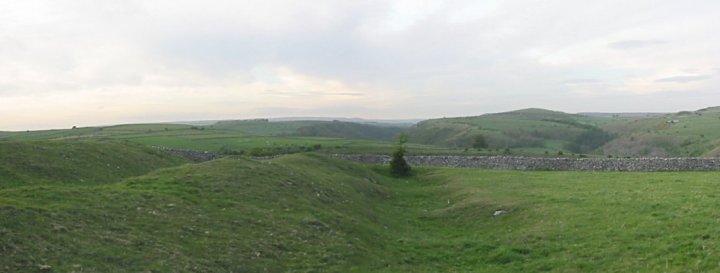
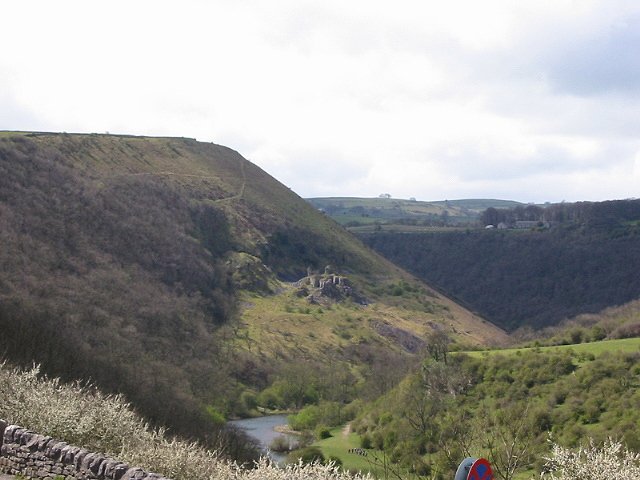
The fort at Fin Cop is an easy walk from the Monsal Dale Hotel, with some excellent views of Monsal Dale below on the trek out. The fort is defended to the South and East by banks and ditches and to the North and West by the steep sides of Monsal Dale. At the Eastern side, the side you approach from, double banks and ditches are still impressive, an entrance is central to this part of the defences, which carry on over the wall in the form of a single bank. The views from the top are unreal with Five Wells in the West, Kinder Scout just visible in the North and Beeley Moor quite close in the South-East(ish). Monsal is one of the best places to watch a Derbyshire sunset without doubt. An added attraction this time of the year are the banks of the fort covered in Mountain Pansies and 'Early Purple' Orchids. |
Posted by stubob 7th May 2003ce Edited 7th May 2003ce |
Folklore |
Add folklore |
| Fin Cop is another one of those places, Barbrook II another, where it's reckoned that if you spend a night up there..........you'll go mad. |
Posted by stubob 7th May 2003ce Edited 18th October 2007ce |
Links |
Add a link |
Google BooksDiscoveries in a Barrow in Derbyshire. In a Letter from Hayman Rooke, Esq. to Mr. Gough. An article from Archaeologia v12 (1796). The barrow was on the summit of Fin Cop. |
 Posted by Rhiannon
1st May 2013ce |

Archaeological Research Services.Fin Cop 2010 excavation report. |
Posted by stubob 13th March 2012ce |
Archaeological Research ServicesDetails of the 2009 excavations at Fin Cop. |
Posted by stubob 4th June 2010ce |
 Top of page