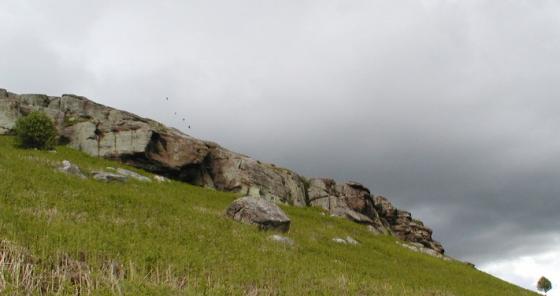
Image credit: Mike Purslow


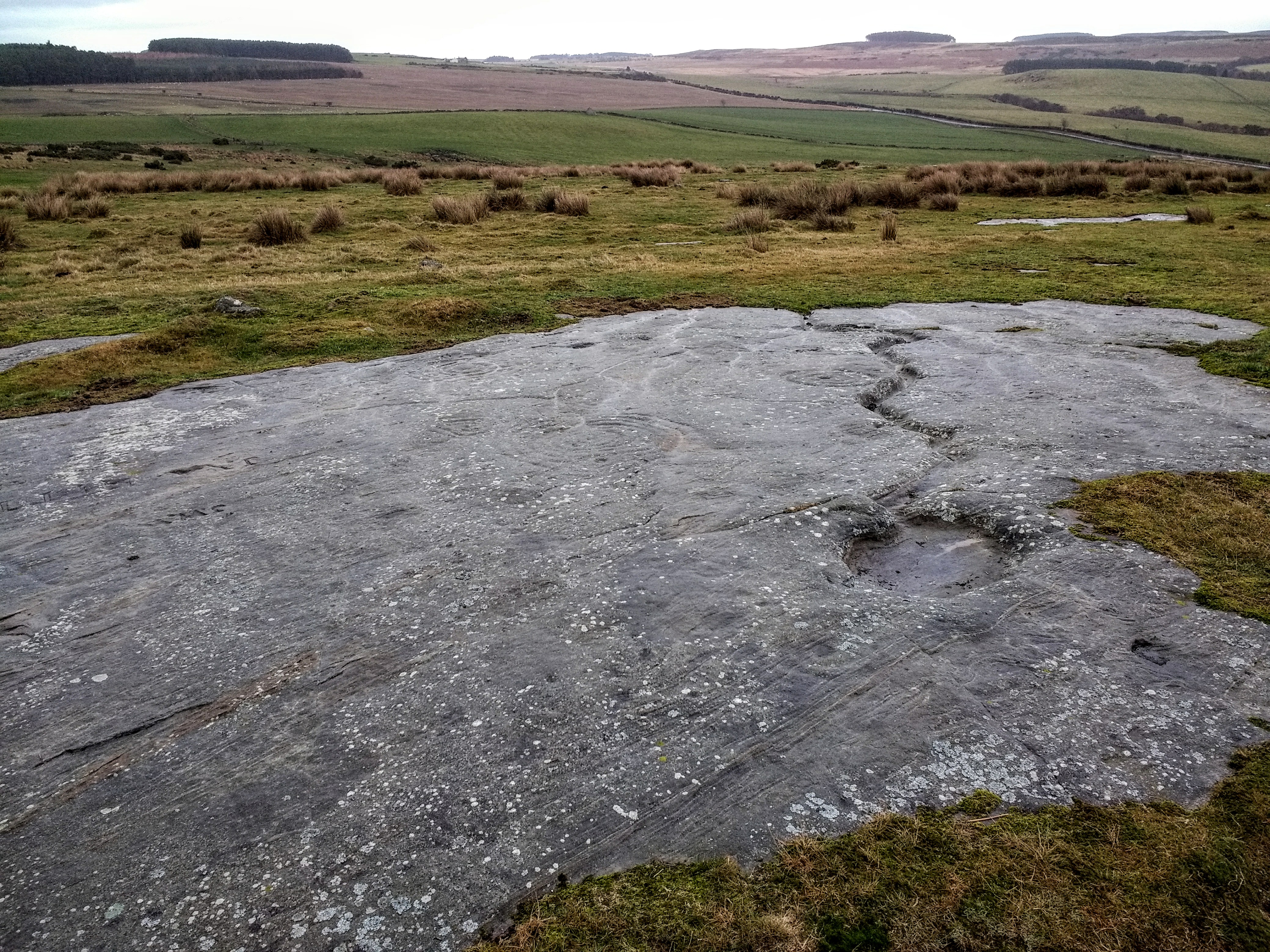


02/05/2016 – The size of this main panel really surprised me when I got there. So much to see. Magic.


02/05/2016 – You got to love that groove.

Carvings are still there. Checked them yesterday (24/03/14) on the way to Ketley.


Some experimental faffing about with LEDs. I’m still not sure exactly what is the best way to mix this kind of light painting with rock art.
Straight out of the camera, no post processing other than to resize.

Mucking about with long exposures and handheld lights to try and pick out the motifs.

Late night/early morning doing some long exposure stuff with sidelighting to try and bring out the carvings.

Cow pat has bleached a patch in the middle of the main motif.


This is a photograph straight from the camera. No photoshopping or anything. Just a lot of faffing about with flash units and stencils and lens caps. Unfortunately there aren’t actually any ghostly light sculptures of prehistoric CnRs in my kitchen.
(Though there is a modern CnR sealed behind the kitchen wall units to the left of the image)
A higher res version can be found here

Carved outcrop inside Chatton Law Camp (Iron Age hillfort)

Chatton 1 – the classic view
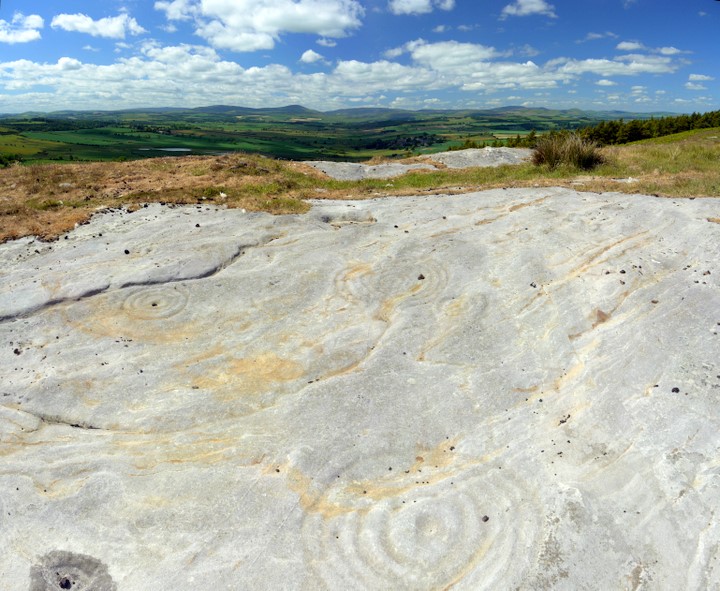
Chatton 1 – stitched from 6 images


(After Beckensall, 2001)

Backlit carved translucent soapstone pendant.

Chatton 3 – second, highly-eroded cup and ring

Chatton 3 – faint ringed motif. Is that another cup to its right?
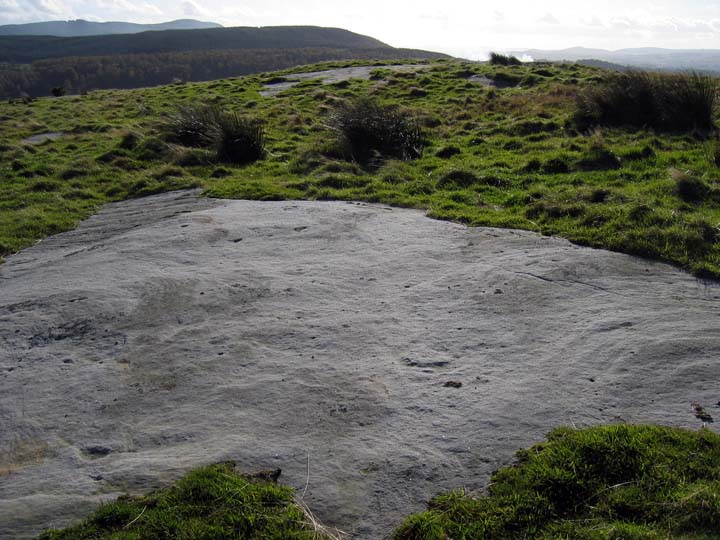
The ‘blank canvas’ that is Chatton 3.

Chatton 1c – an array of ‘midget cups’ on outcrop N of main panel

Chatton 1a – faint, multi-ringed pair of motifs SE of main crack

Chatton 1a – detail of carved graffiti

Chatton 1a – close-up of faint double-ringed motif to N of main carved area. New find by N&DRAP recording team.

Chatton 1a – faint double-ringed motif (in foreground) to N of main carved area. New find by N&DRAP recording team.

Chatton 1a – oh boy, I could stay here all day.

Chatton 1a – detail. Crevasse warning!
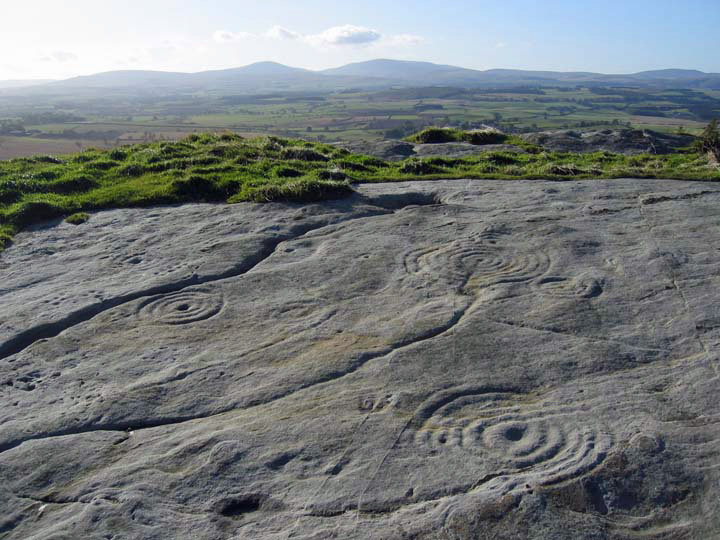
Chatton 1a – in near perfect natural lighting. Scatter my ashes here!

Chatton 1a – ok it’s a duplicate image but first time for me in such good light. So good here I didn’t even cross the northerly fence (but then I am afraid of cows).

Chatton 1a – exactly same shot as rockartuk in 2003. 5 years latter and still as good in late October sun-light.

Chatton 1a – main crack is now free of turf. Dominos anyone?

Chatton 1a – main motif. OK it’s a duplicate but you could post this every day for a year and it would still be a stunner.

Chatton 1a – see Greywether December 2003. B&W into the sun shot.

Chatton 1a – what a beautifully made motif! Ever had the feeling you are just following Hob round these sites?


Chatton Moor, from ‘Incised Markings on Stone’, 1869

As seen in ‘Inscribed Rocks...’ 1865.

From The Proceedings of the Society of Antiquaries of Scotland
Volume 6 (1864-5), Appendix.

Circa 1859
There’s quite a bit of artistic license going on here.

1863

1859


18-10-05
Panel 5, looking over to the main white panels
.o0O0o.

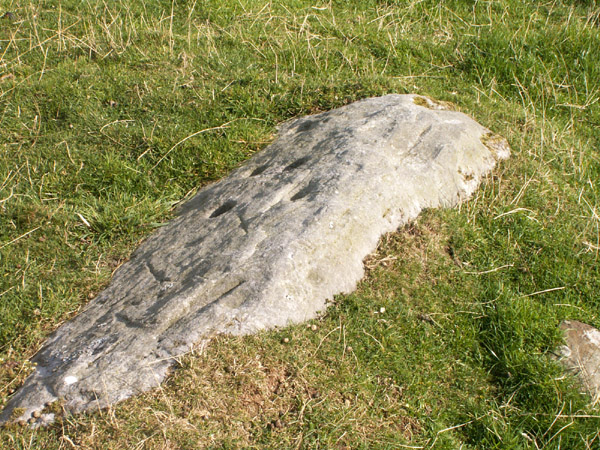
18/9/05
panel 7
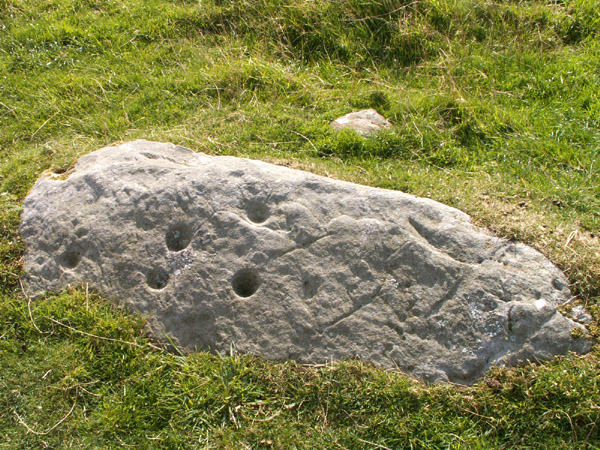
18/9/05
panel 7

18/9/05
panel 5

18/9/05
panel 5

18/9/05
panel 5

18/9/05
panel 5

18/9/05
panel 5

18/9/05

18/9/05

18/9/05

18/9/05

18/9/05
does that look like a human figure?...

18/9/05

18/9/05
what is this?...i know what it looks like, but some help please?..

18/9/05

18/9/05

18/9/05


Chatton 5: An unusual motif, with it’s gapped ring and it’s position on a vertical surface.

Chatton 5, horizontal surface
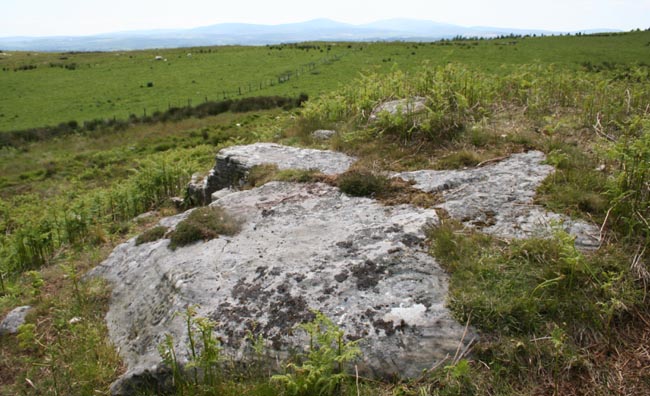
Chatton 5, with the area of the main panel just visible to the upper left.

Ripples on water, concentric circles in liquid and in stone.


The large Chatton panel.
Showing the natural basin and the channel which snakes across the rock dividing the large circular motifs from the smaller motifs and the ‘domino cups’. Stan reckons that this large natural channel has been enhanced.


50p coin for scale.


The large cup and ring mark (with a 50p coin just to the right for scale)

7-12-03
.o0O0o.

7-12-03.
.o0O0o.

08/03.

08/03. NU 0723 2939. Inside the enclosure on the hilltop.

08/03 NU 07390 29244

08/03.

Taken just afer a shower of rain (and more on the way!)
25-5-03
.o0O0o.

23-4-03. misty spring evening looking west.
.o0O0o.

23-4-03.

23-4-03. Evidence that perhaps the farmer isn’t keeping the cows off after all!!
.o0O0o.

23-4-03. view to the south-east, towards the black shed next to the lay-by and access stile.
.o0O0o.
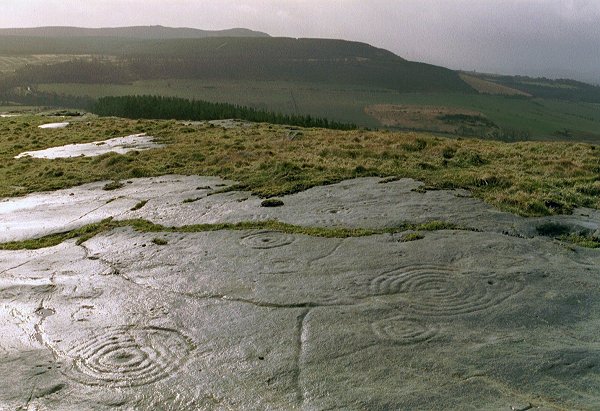
Ancient rock art in perfect balance with the surrounding landscape. What more can you ask for?


A rainy morning on Chatton Park Hill creating the right atmosphere for deep thoughts!

Someone had kindly removed the turf for me
.o0O0o.

Panel 4 close-up. Please ignore the “cut here” marks left by quarrymen.
.o0O0o.

Panel 4.
.o0O0o.

Panel 2: The television!
.o0O0o.

Panel 1with convenient grass inserts for extra footing when taking close-ups :-)
.o0O0o.

Who needs crop circles when we’ve got rock circles?
.o0O0o.

Chatton 1.
.o0O0o.


Like everyone else I mainly came to see Kettley crags amazing rock art but got so much more for my money.
The parking place now has no long shed at all, black or otherwise, I also never saw any information board, but I wasn’t looking for one.
A stile leads one into the first field, there was a poor little lamb stuck under it, Eric tip toed over it then wriggled free and ran off, I joined Eric and we tramped up the hill towards a gate and another stile.
Soon enough we started coming across many rocks and stones, we looked hard, at every sheet of rock and every boulder we came across, but inbetween the car and the trig point we only found the one panel, a very poor performance, if I were a football team I would’ve lost 8-1, if I were an American president I’d have got impeached. In my defence, there’s very little rock art any where near where I live, so i’m more used to looking for big stones, circle and cairns, some of the carvings are quite worn, the light was very bright and not conducive to viewing faint carvings, I cant believe that one myself, either way the big white rock sheet was the only one I found, out of maybe a dozen, very poor. I did find a hillfort no else seems to care about though.
02/05/2016 – Sometimes when I’ve read about a site and seen the photos, if the place is as good as Kettley Crag it’s hard to actually believe it exists and that I was there, walking up Chattonpark Hill with the rock shelter just on the other side, a few minutes walk away. It doesn’t get much better than Kettley Crag with its floor covered in the most wonderful rock art.
First things first, I had to get past the rock art on the south side of the hill. Easy parking in the layby and good access straight onto the hill. There’s rocks everywhere. The simple action of walking a hillside, having a nosey at each new rock we came across for any trace of markings is one of pure joy. Still happy just thinking about it again today. What a wonderful afternoon.
The pull of Kettley Crag proved too strong, so we made the walk over the top to the north side. It felt too soon. The Rock Shelter is quite magical and I hadn’t realised how good its location and view of the landscape was going to be. Wonderful markings.
After a while we strolled back to the Chatton rocks again. This time just sitting by the largest panel and trying to take in all we had seen. The sunshine was in and out of the clouds, making the markings on the main panel seem to nearly disappear then magically reappear again to surprise us once more. Again the views from here are too good. The Cheviots in full view.
Finally it was time to go. I came to see Kettley Crag but in the end this main panel at Chatton stole a little bit of our hearts. Perfect day.
This has to be up as a contender for the title of ‘rock art with the best view’. It really is in an excellent spot, with the big end of the cheviots arranged directly in front of you, leaving no doubt as to why this spot was chosen to be marked. I was particularly pleased on a recent visit to be able to confirm that the allegedly sacred hill of Simonside is also visible, which is unusual for this end of Northumberland.
What Fitzcoraldo says below about the ghostly appearance of the carvings is spot on, they do have an eldritch quality about them, an effect which is most pronounced in strong sunlight. At times, it’s possible to ook from angles that the motifs almost vanish into the quartzy glistening white surface of the outcrop. At other times, in different lighting conditions, they can appear totally different, and the surface of the outcrop looks much darker, and reflected light can pick the pattern out superbly.
You’d think that they’d be at their finest at sunset, but I found that the trees can cast annoying shadows which prevented the motifs from being highlighted as well as I’d hoped. Pah! One of these days I shall manage to get a good photo which shows the carvings and the view. It’d be great to spend a year or so standing over this outcrop watching it intently as it’s appearance shifts.
The panel Stubob speaks of at the top of the hill is one of the best examples of fresh pick marks, possibly evenmore so that the hidden motif at North Plantation. According to the Beckensall Archive, these fresh picks have been designated ‘Chatton 13’ (with only a 2m difference in the 10 digit refs, good going eh?!).
Whilst it seems a shame to expose such fresh cup marks to the ravages of the elements, they should provide a good indicator of the rate at which the stone hereabouts erodes. This in turn may help in attempts to ascertain the best preservation strategies for what remains of the area’s prehistoric rock art. Maybe.
Chatton 4 is in the middle of a little hillfort, (or a settlement with high banks), this is a lump of stone with carvings. It’s more or less in the middle of the earthworks, and it’s difficult to think that the builders of the earthworks were unaware of the carvings.
The cup and ring on the top of the slab are considerably more worn looking than the ones on the side. It’s tempting to think that this may have been because they were used in some way by the Iron Age (?) folk who built the earthworks. It’s definitely not just the results of natural weathering, more the kind of thing you’d get after years of people running their fingers over the motif. At least to my mind, but admittedly, I am just making this up as I go along
The panel to the east that Pebbles speaks of is that designated ‘Chatton 5’ by the Archive, and has an unusual little motif, both in it’s form and it’s position on a vertical surface.
One last thing to say about Chatton, it can be an infuriating place. There is so much that leaves nagging questions which will never be answered. There are maybe-cairns, maybe-cups, maybe-burnt mounds, traces of maybe-houses. Combine these maybes with the general mystery of the meanings of the motifs, add a strong sense that quarrying and erosion may have caused the loss of some carvings, and this is a place that needs to be pondered in depth.
We came up to Chatton with Pebbles acting as our guide.
It’s a lovely drive up to the moor. We parked up at the large, no longer black, shed and tried to ignore what we thought may have been a corpse in the car next to us – don’t get involved!
After mooching up the hill past some industrial sized clearence cairns we hit the panels...JEEZUS!!
To be honest, I had viewed Chatton as ‘somewhere on the way to Ketley’. Just shows how wrong you can be.
The rock is a ghostly whiteish grey shot through with iron staining. The carvings combined with the colour & texture of the rock give the panel a strange meglithic ‘shroud of turin’ vibe, wierd I know but that’s what I felt.
This was a special place, the circles the dominos, the bizarre Television set carving...too much.
We finally dragged ourselves away and set off towards Ketley but Chatton hadn’t quite finished with us yet. The next panel we came to was Stubobs pecked rock with its lovely pecked grooves and cups followed by the enclosure and Stans ‘occulus’ with it’s strange ziggy-zaggy groove.
Chatton is a beautiful place. The landscape has been knocked about a bit over the centuries but it still manages to retain it’s power.
I’m not an expert in rock art matters.....
But...as you leave the ‘main panel’ and head uphill toward the trig point, not heading for the stile though, go to its left. Just before the fence is a cup marked stone with fresh looking peck-marks.
NU 07390 29244.
Chatton Hill has become a DEFRA conservation area, so if you park at the black shed there is a new small information board and directions.
I recommend sticking to the path where possible – the surrounding area has been quarried and the going is a bit extreme on the ankles, and there’s a few deep holes so don’t walk and look at the map at the same time :-)
The first panel is on your left as you go up, with the “TV” panel not far away. Another large outcrop is situated right inside the “settlement” earthworks, and more to the east (which I missed this time, gives me an excuse to go back!)
Keep going over the hill & down to the right to find Kettley Crag, you won’t regret it.
Back at the car I spoke to some visitors checking out the new board – probably due to a mention in the local rag.
.o0O0o.
Chatton on BRAC Updated
As the 720 pixel resolution does the view from chatton no justice here’s the view writ large.
Strobey, blurry, moving pictures of the carvings in the dark.
2Mb file.
“A short walk around Chatton through open countryside, fields and farmland.”
A 2 page pdf guide outlining public access to the Rock Art, as part of DEFRA’s Countryside Stewardship Scheme.
The pics on BRAC are in sequence of the site numbers (1a-16)