|
 Log in |
Register Log in |
Register
|

|
|

Duddo Five StonesStone Circle
|


 Show map (inline Google Map)
|
|
|
News |
 Add news Add news |
Duddo Stone Circle wind turbine bid refused by government minister Greg ClarkPicked up from the 'Stone Pages' Good news it seems. Plans for a wind turbine close to Northumberland’s answer to Stonehenge have been thrown out by the government. The proposal less than two miles from the 4,000-year-old Duddo Stone Circle has been rejected by minister for communities and local government Greg Clark... continues... |
 Posted by moss
16th October 2015ce |

A call to arms to protect ancient stones near Berwick from wind turbines has been issued"A government planning inspector is beginning the process of deciding whether a 74m (242ft) turbine can be erected at Shoreswood Farm, close to the ancient Duddo Stone Circle near Berwick, following the quashing of the existing planning permission." continues... |
 Posted by Hob
24th September 2014ce |
Duddo Stones still threatenedThe Duddo Stones are still threatened by wind turbine speculators. We have 2 schemes which have been refused by the planning authority because of the damage to the setting of the Stones, but which are being appealed... continues... |
Posted by Nlys 10th July 2014ce |
Wind turbine plans to be reconsideredVia the Heritage Journal: Northumberland County Council planning officers had recommended approval for two wind turbines close to the monument but now they are advising the Council to throw out the plans – on the back of a recent decision to allow another turbine to be erected in the area... continues... |
 Posted by thesweetcheat
9th March 2014ce |
|
Wind Farm Plan Rejected Read about it here http://www.berwick-advertiser.co.uk/news/planners-reject-wind-farms.3923173.jp |
 Posted by fitzcoraldo
28th March 2008ce |
Duddo's monuments to be safeguardedFrom the 'this is Berwick' website A new partnership looks set to safeguard two of north Northumberland's ancient monuments... continues... |
 Posted by Rhiannon
13th January 2005ce Edited 14th January 2005ce |
Images (click to view fullsize) |
Add an image |
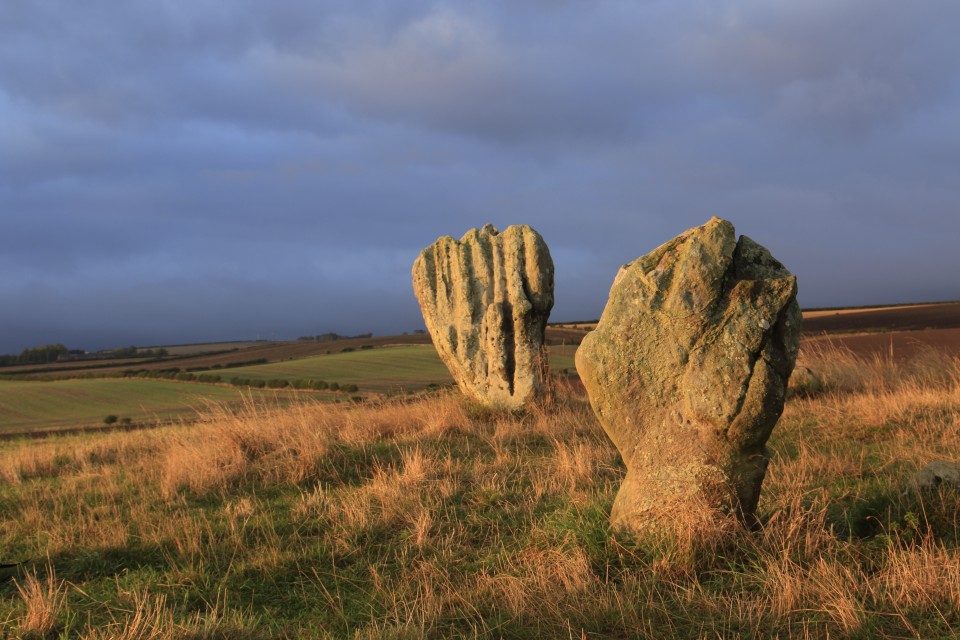
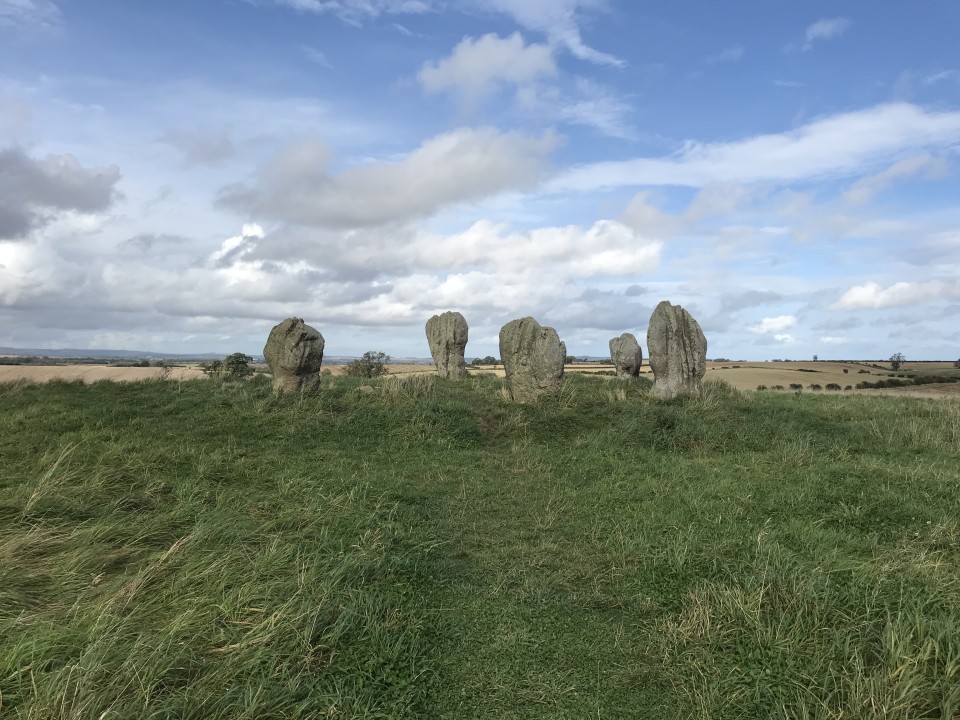
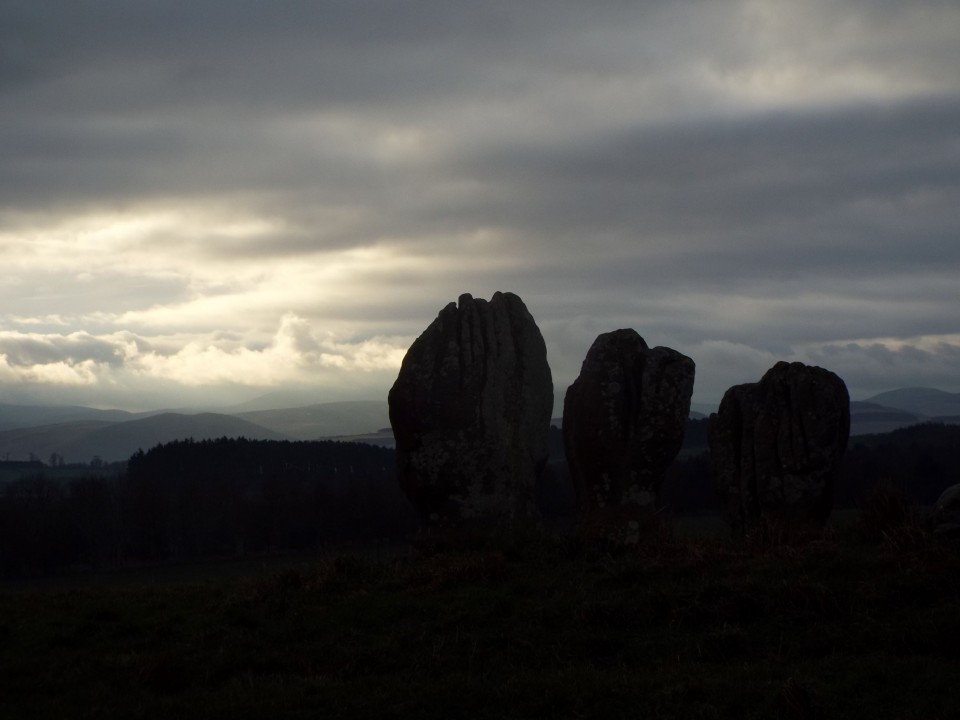
Photographs: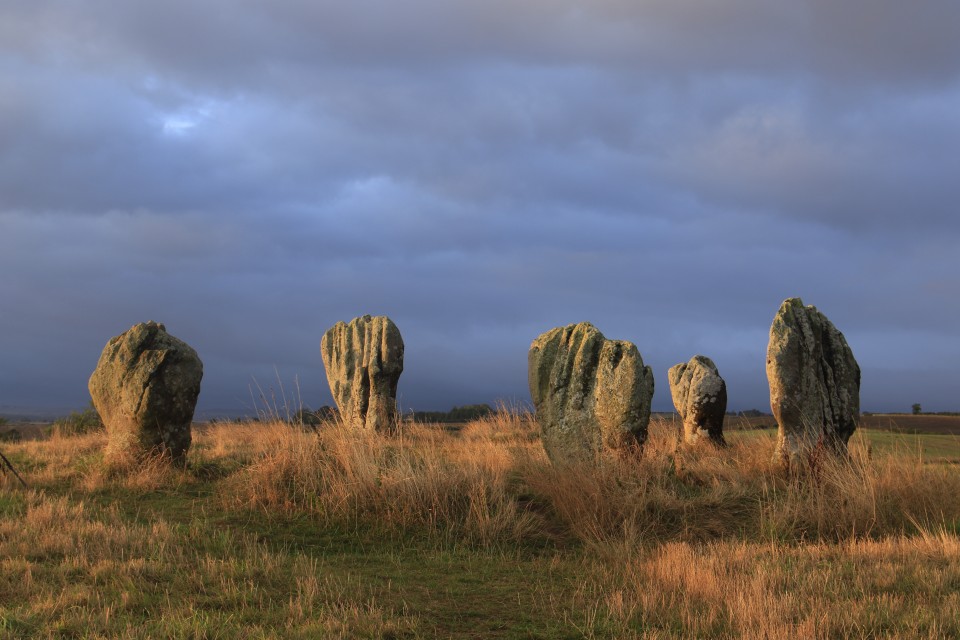


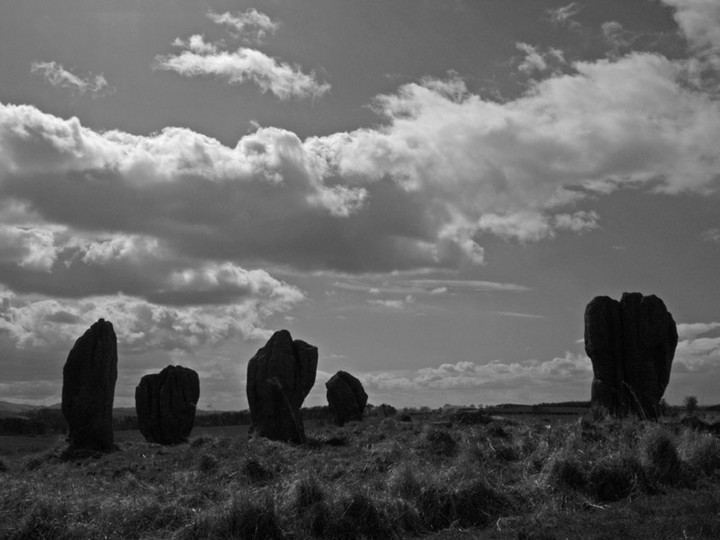
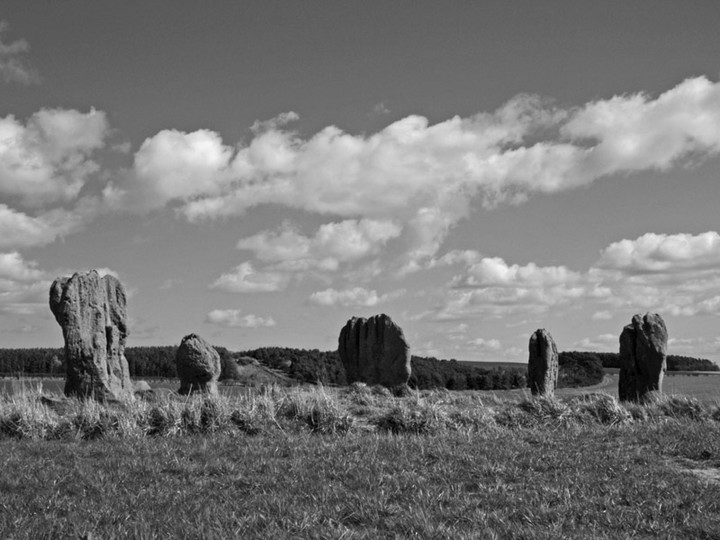
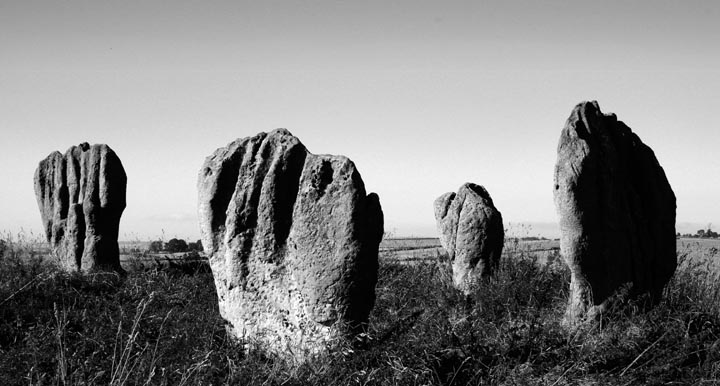
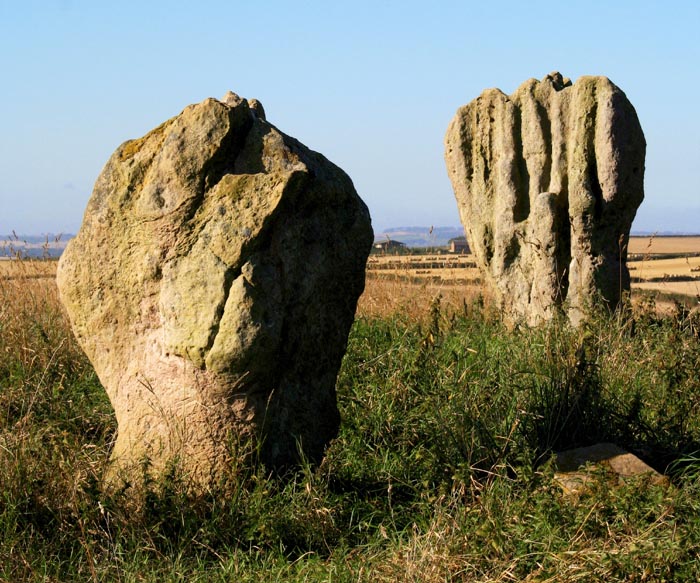
 Artistic / Interpretive: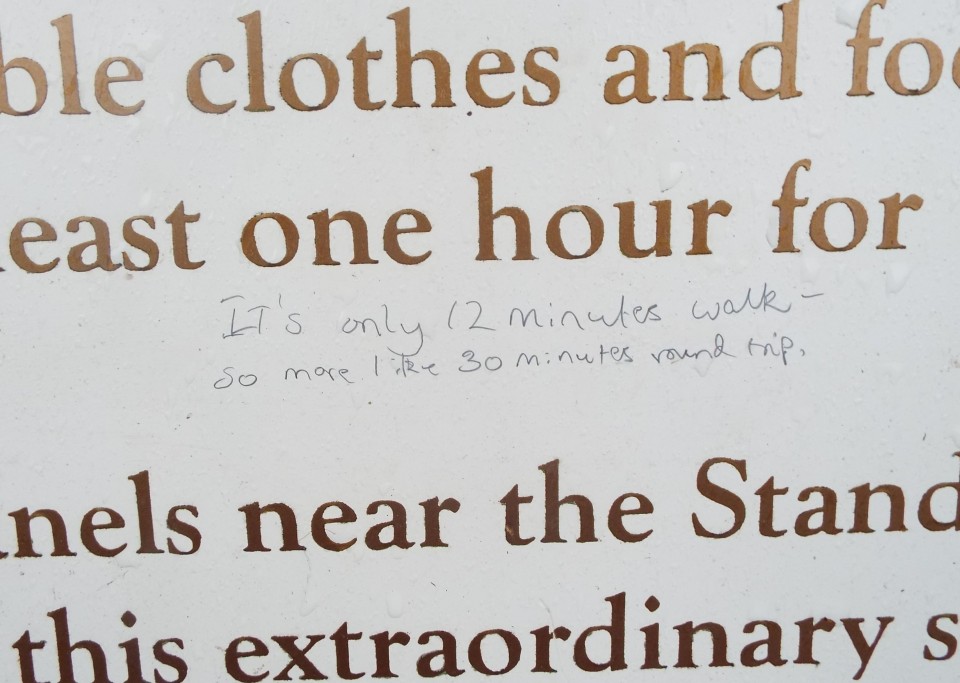
|
Fieldnotes |
Add fieldnotes |
|
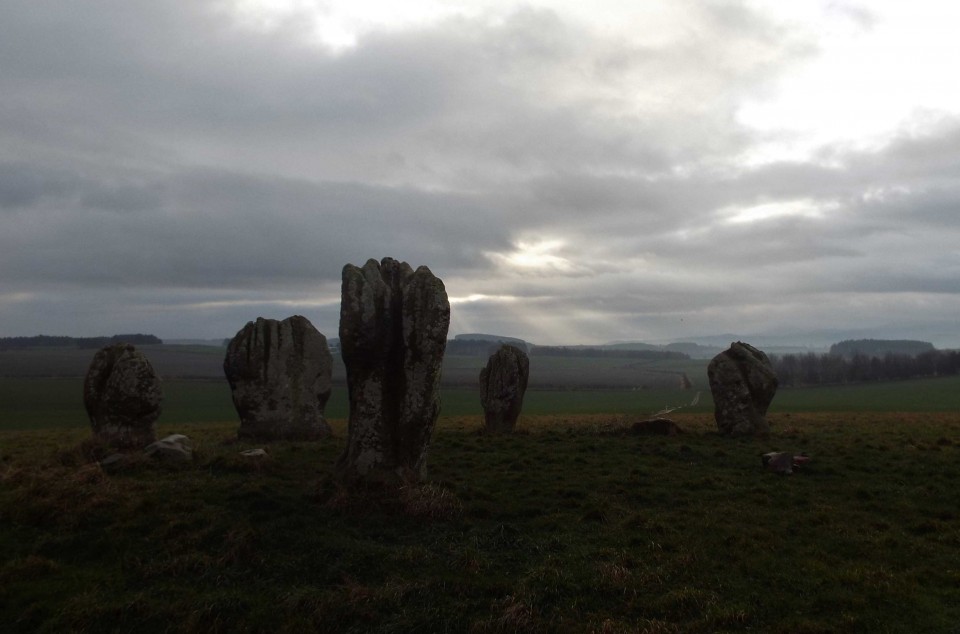
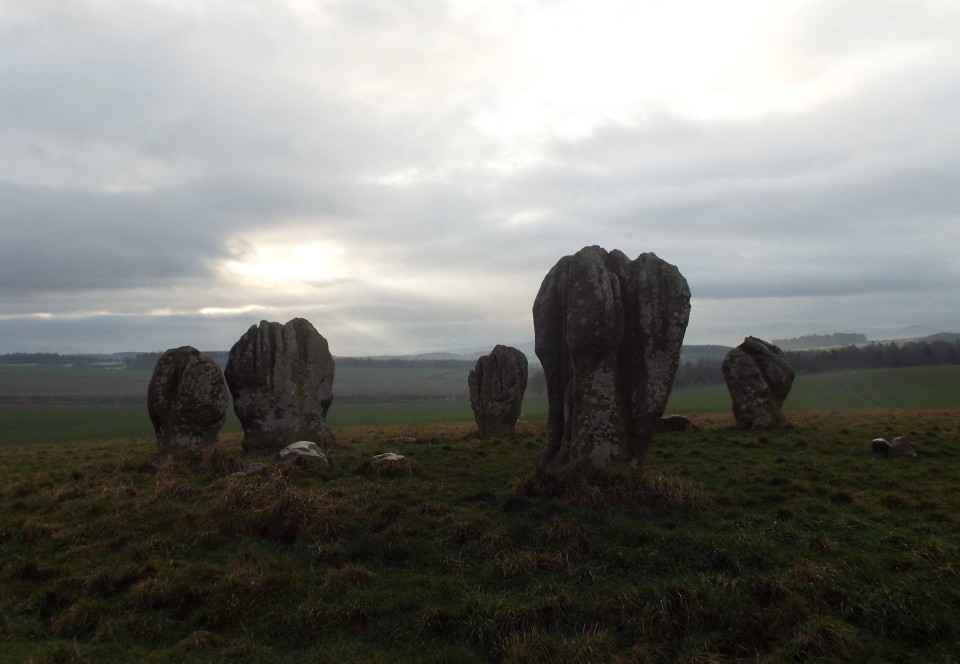
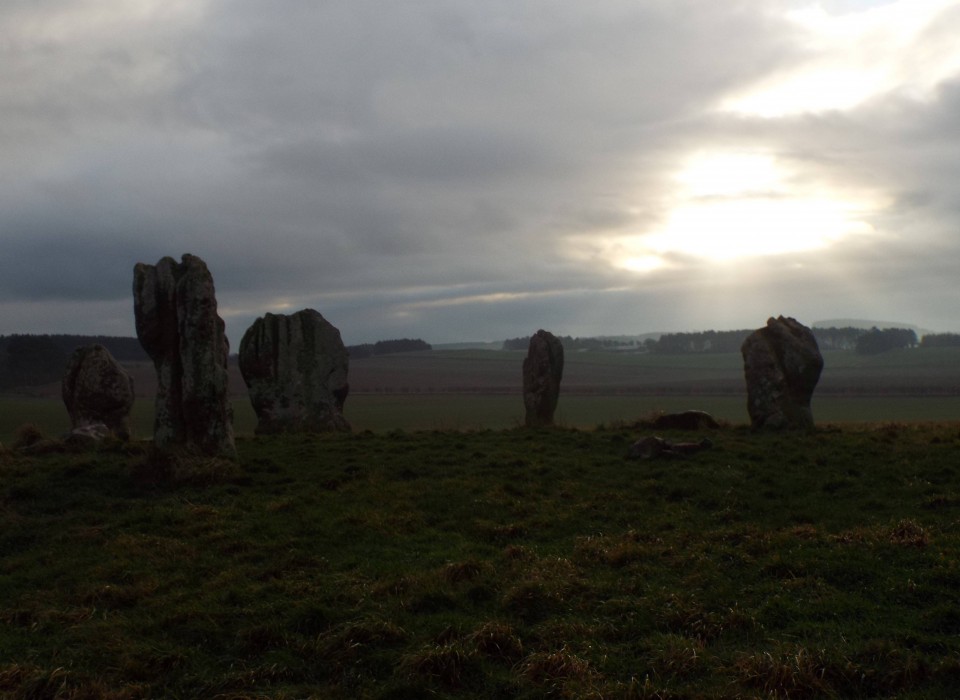
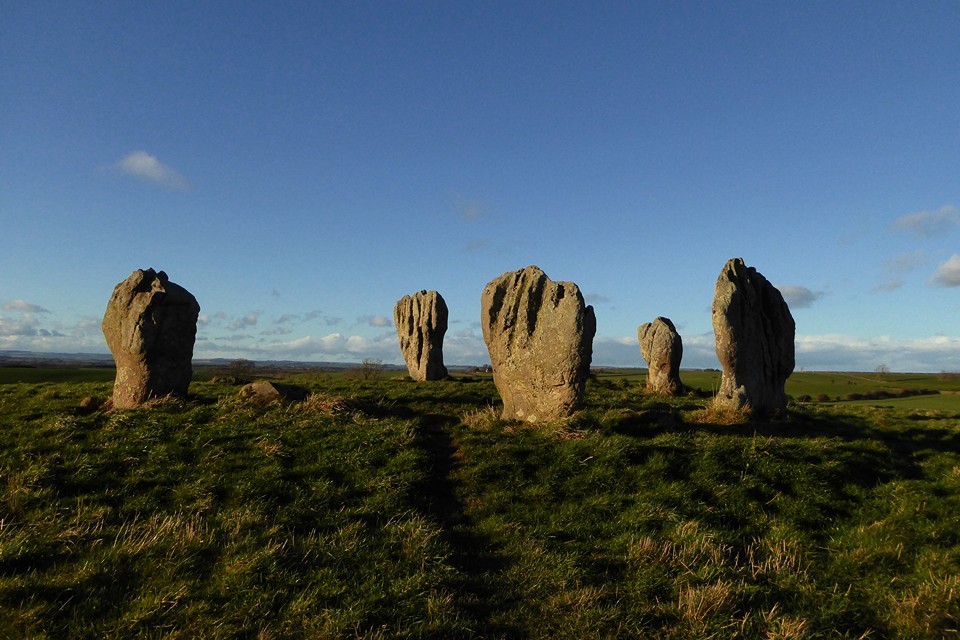
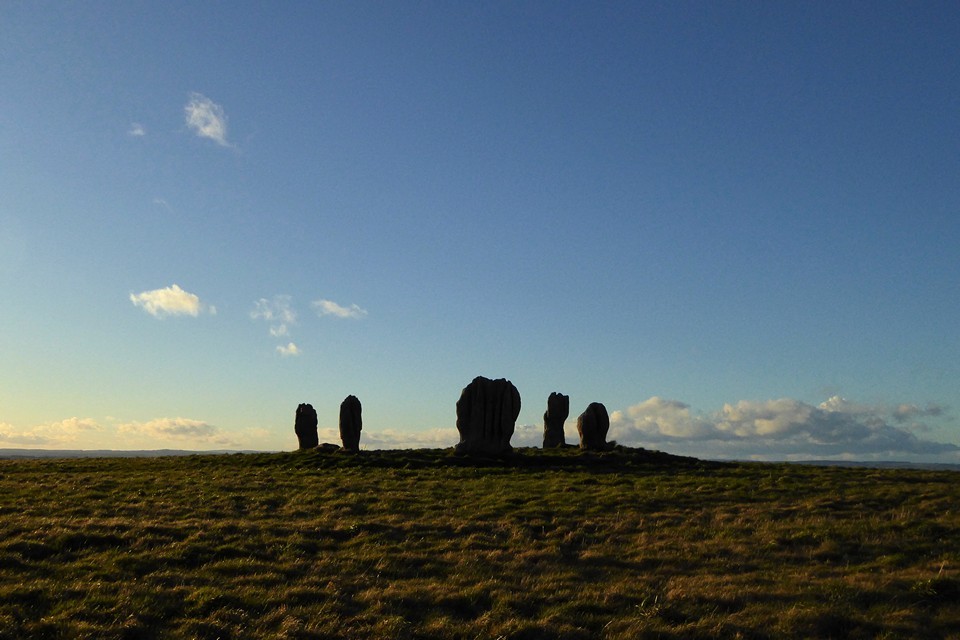
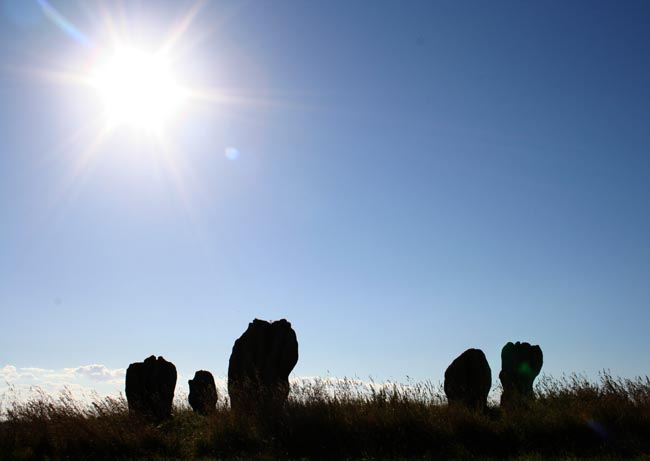
06/09/22 Driving from Berwick-Upon-Tweed, heavy rain was pouncing off the car as me and my friend a local photographer who was accompanying me on my trip to visit The Duddo Five Stones parked up on the verge as the sky began to clear - a brake in the weather! this lead to a mad dash with camera gear and tripods to reach the stones. the best thing about this site is its easy to find on the approaching walk from the parked car and isn't that far either as it is in the centre of a farmers field on a fairly small hill. finely at the the top of the hill I began to take in the uniqueness of these weathered and truly spectacular sandstone stones, each one different from the other. it was quickly approaching late evening and the rain and thunder storms where still holding off, so we decided to wait for the perfect light as the sun was setting. and then with that natural glow of the last of the rays of sun finally hit the five stones we both managed to achieve some great photographs before wondering slowly back to the car as the dark early night began to descend. |
Posted by Hornby Porky 16th September 2022ce Edited 16th September 2022ce |

|
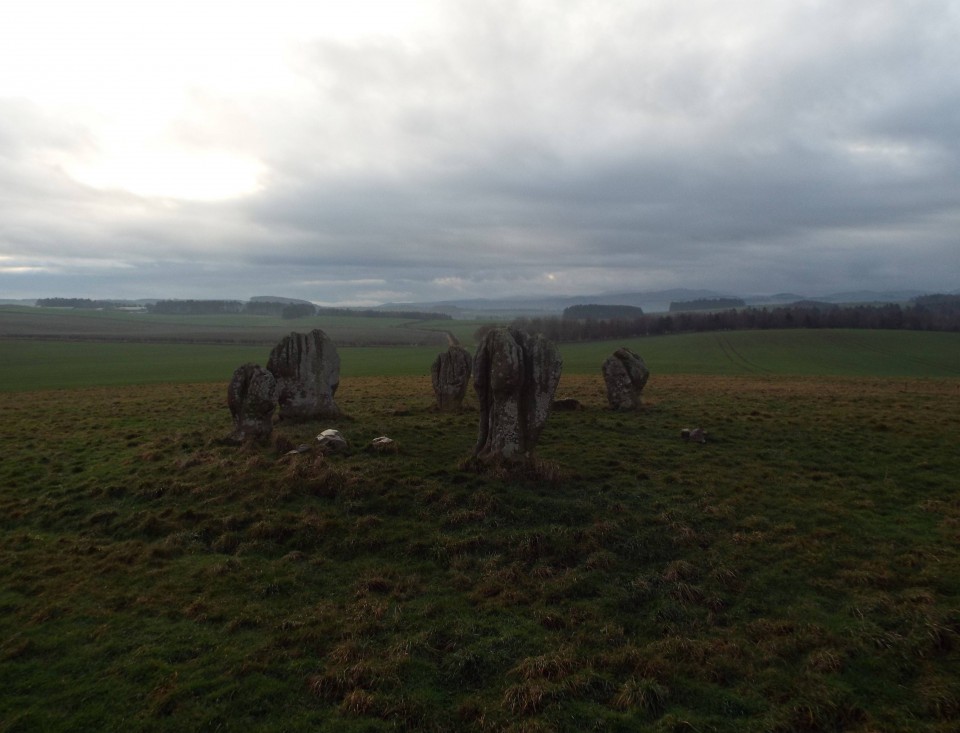
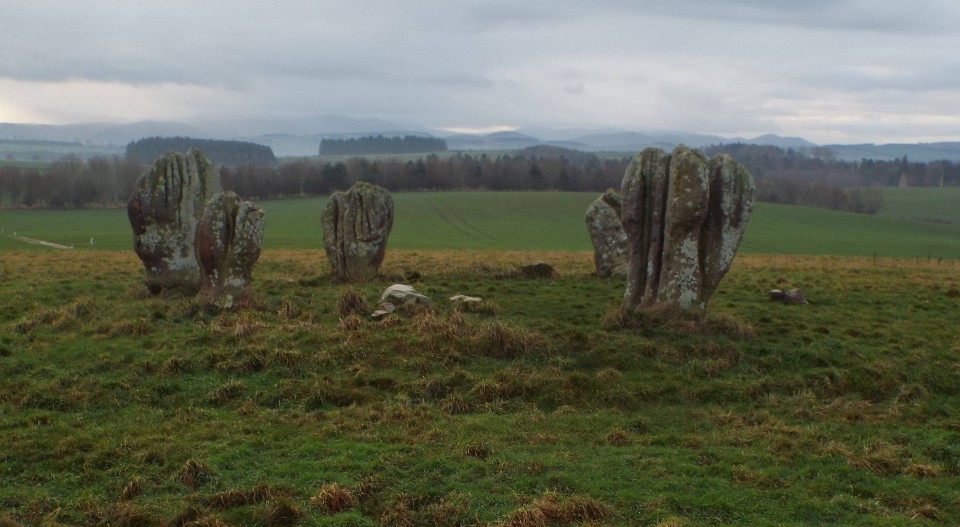
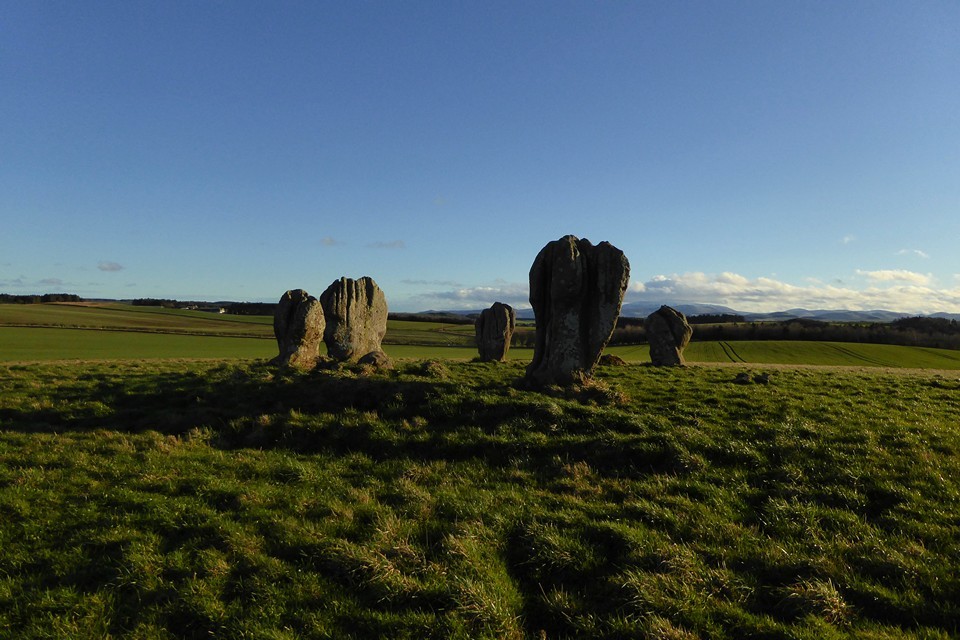
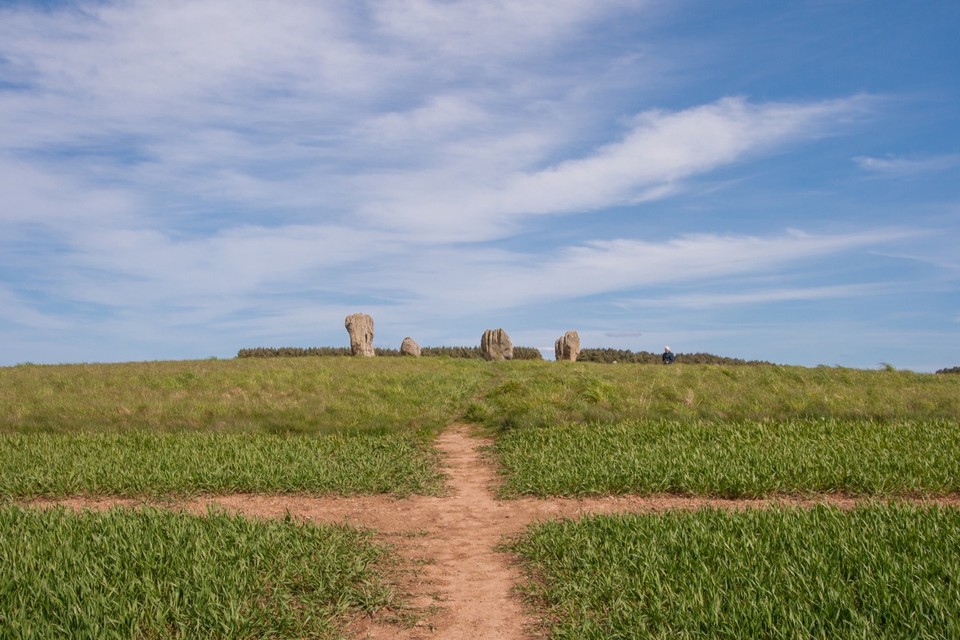
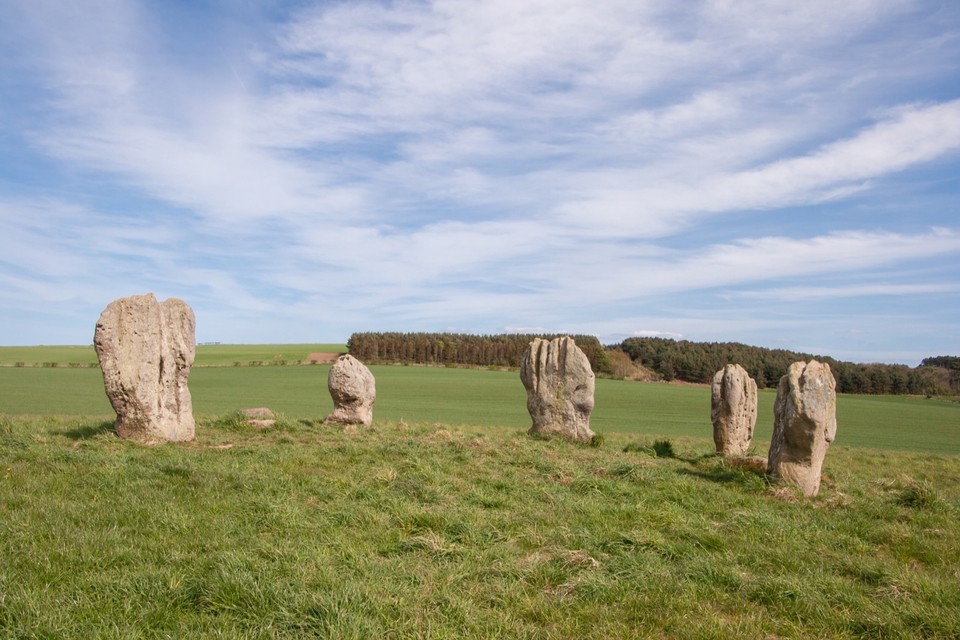
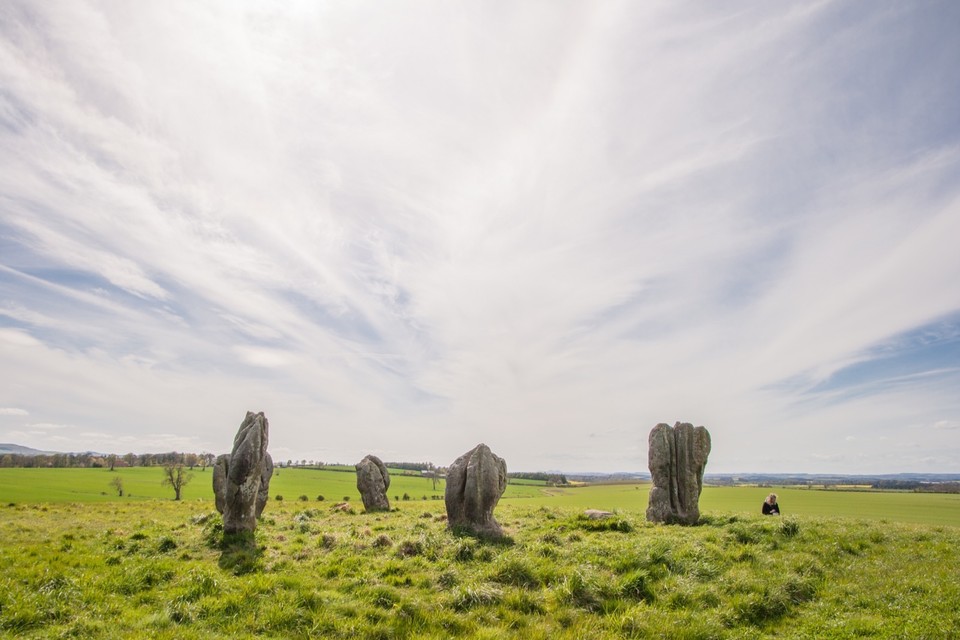
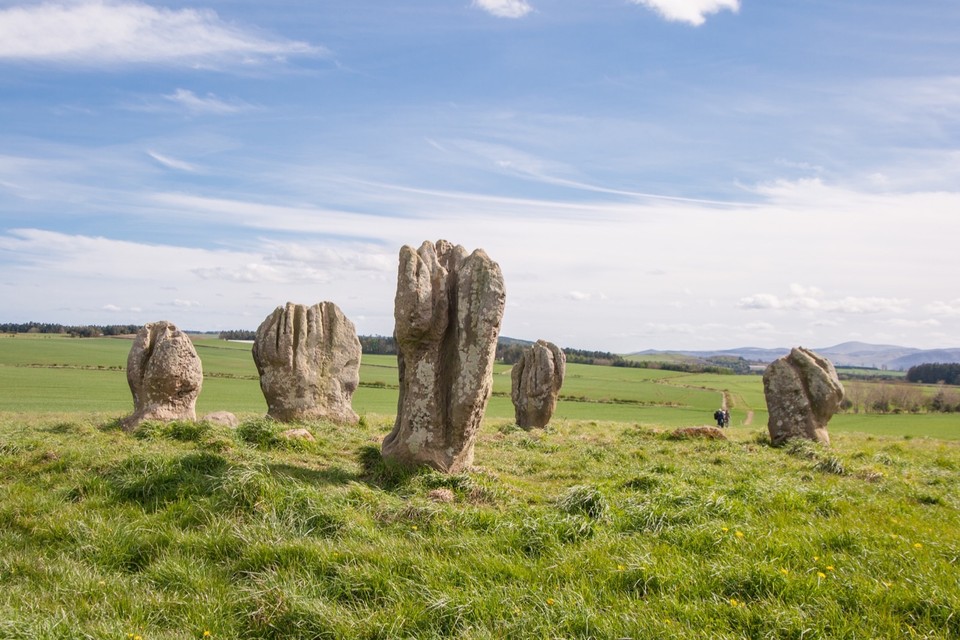
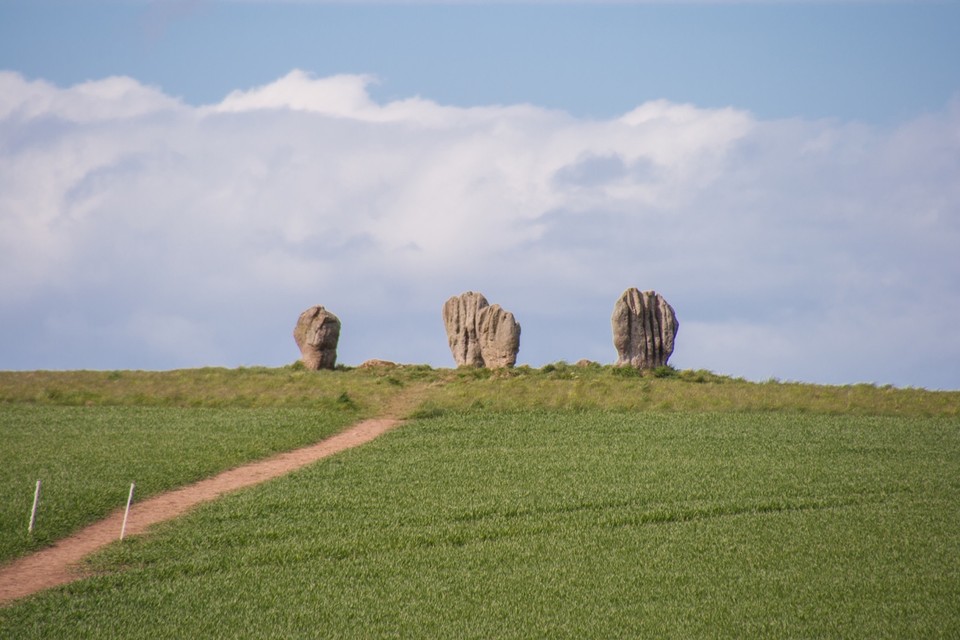
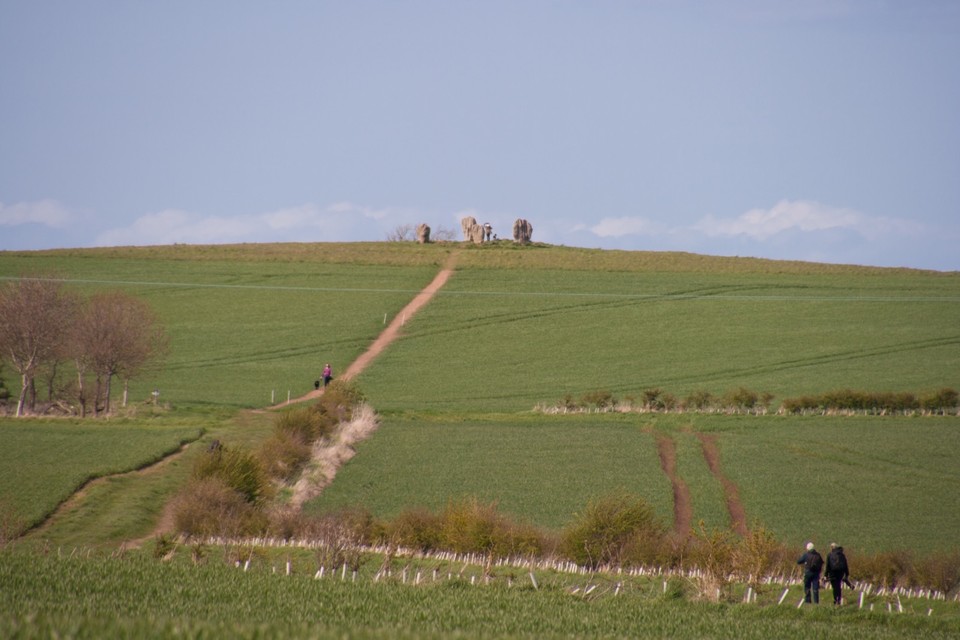
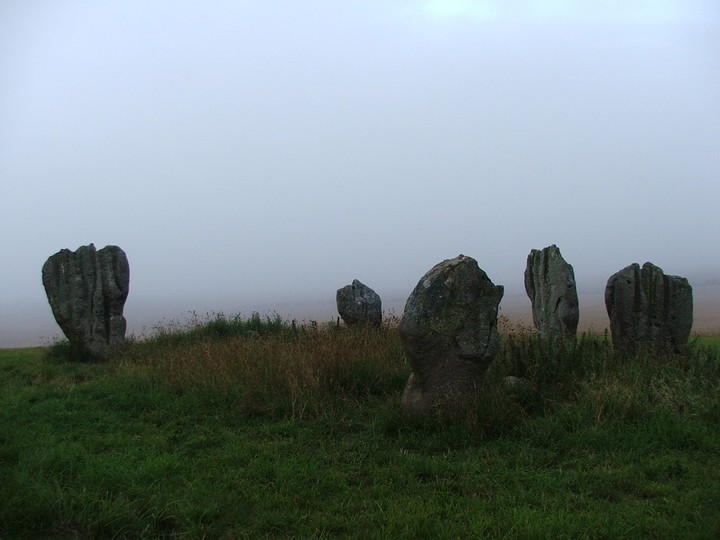
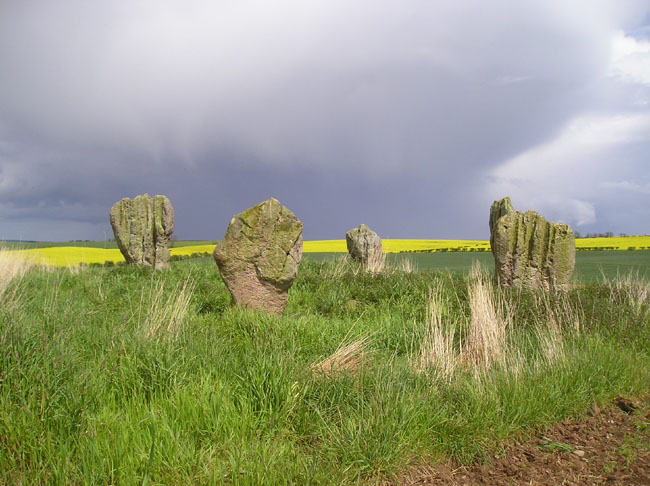
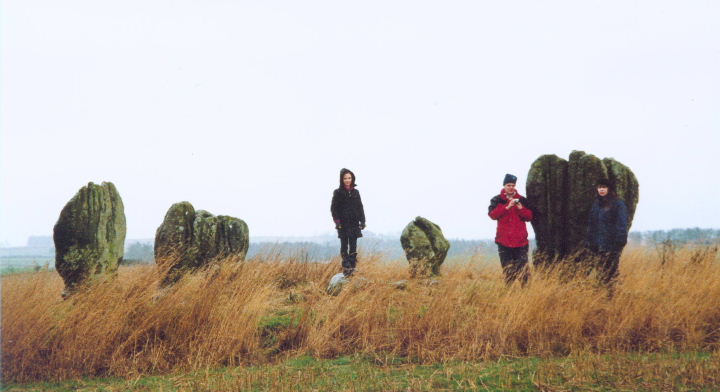
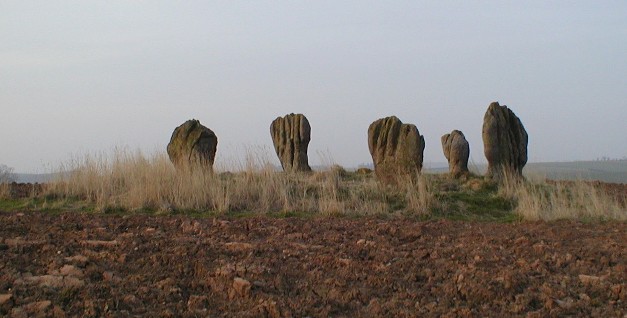
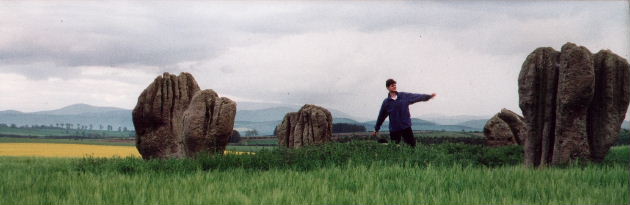
The first time we visited this circle we approached from the north down the map marked footpath, but it was too rough and overgrown, so wife and two yr old son turned back, I carried my daughter on my shoulders, we were surprised by a Roe doe that suddenly jumped up and bounded high and long away from us, we stood staring agape, it was but five yards from us. But this visit was different. The threat of wind turbines have gone (?) and an all new path and information board have appeared, nice. We left the car by where it says to park on the verge, after fifty yards Phil turned back to the car ( she is soooo lazy) but Eric and me soldiered on. The stones are highly visible on the way, on top of their mound, but the path doesn't go straight to the stones, it winds all around the fields edge. A few fellow travelers were approaching from a different direction, but they must have turned back because they didn't come up to the circle. Did Eric and me put them off, or was it the long walk, who cares besides a couple of tractors (and farmers too presumably) we had the place to ourselves. On the way to the stones the sun was big and wonderful and I hoped we were in for a treat of a sunset, but no sooner had we arrived the devil threw up a big cloud bank and the sun settled in behind it, the mist closed in and the universe got a lot smaller. Even that was ok, the surroundings are indeed lovely but agriculture though it feeds me and mine doesn't half get my gander up, so I was glad that the only visible things were us and the stones. What remarkable stones they are. Returning to the car the stones were unavailable to view because of the enclosing mist, but dressed in no more than T shirts it wast cold, we had a good laugh on the way back, not at much, just two blokes being blokeish. Ps, didn't see any deer but did see quite a lot of Hares, so much so the day was named after them... Hare day. |
 Posted by postman
5th August 2011ce Edited 25th September 2022ce |
| Visited the stones on Sunday and I am convinced that this is a burial site. Nice views and a nice day. |
 Posted by bobpc
20th February 2008ce |
|
Duddo Five Stones have been described as "... undoubtedly the most complete and dramatically situated" [of Northumbrian stone circles] by Roger Miket in 'Duddo Stones', Archaeology in Northumberland, Vol. 15, 2005, Northumberland County Council. Much of the magic of this site is in its relationship to the Cheviots. Seen from the Grievestead-Grindon road to the north, or even more dramatically from Ewe Hill (highest point on the ridge to the north, near Shoreswood), the logic of its situation becomes evident. Unfortunately, wind turbine developers are proposing to severely damage this landscape. Up to twelve 125 metre (410 ft.) turbines are proposed for the Toft Hill site within 1km. to the west of the stones and another proposal for fourteen 110 metre (362 ft.) turbines are in the planning system for the so-called 'Moorsyde' site within 3km. to the north. Check out the 'Moorsyde Action Group' website to see what is being proposed. Dbnlys |
Posted by dbnlys 2nd January 2006ce |
|
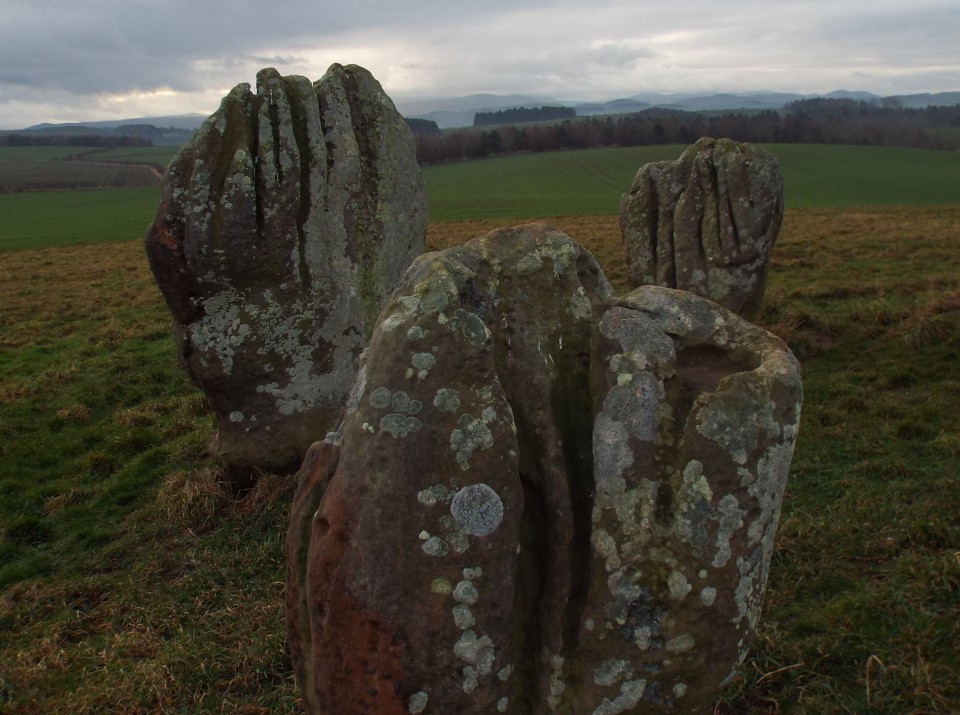
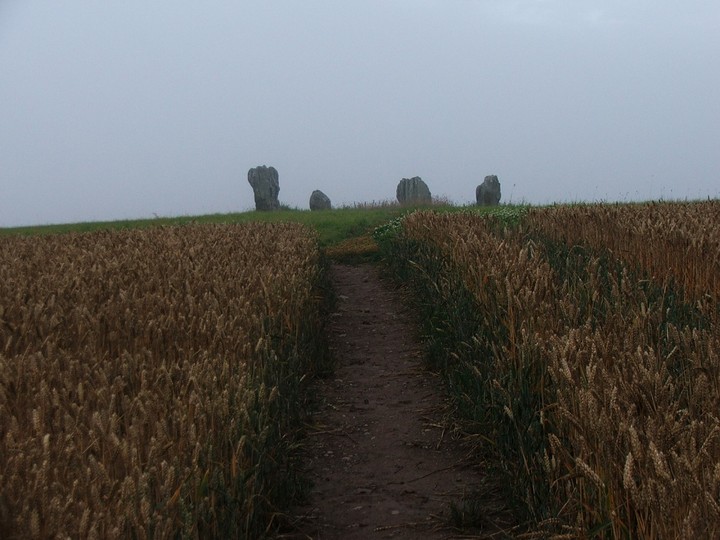
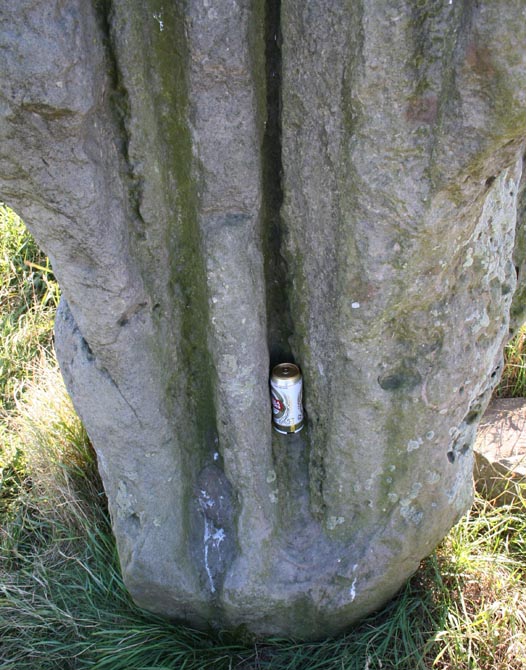
The new improved access Rhiannon mentions above seems to be a great improvement. There is now a small sign on the road heading east out of the village, it's only about A4, and is almost obscured by a hedge, but it's there, and it shows the permitted route. The last bit is still through crops, following the tractor tyre gaps. Not exactly easy for wheeled contrivances such as buggies and wheelchairs, more's the pity. We did manage to get a big 3-wheeler buggy up there though. The area around the stones is now crop-free, so future plough damage is likely to be nil. On the down side, someone had deposited a can of beer in one of th grooves of the northernmost stone. Unusual form of 'offering', but compared to the usual dried wildflowers, at least it seems to have a bit more of an element of genuinely sacrificing something treasued by the offeree. |
Posted by Hob 4th September 2005ce |
|
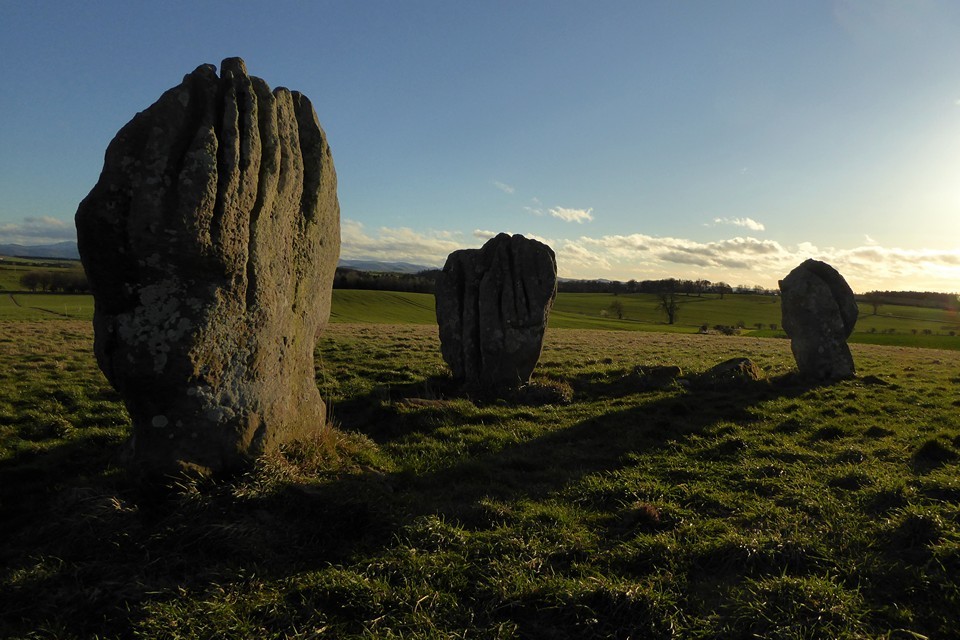
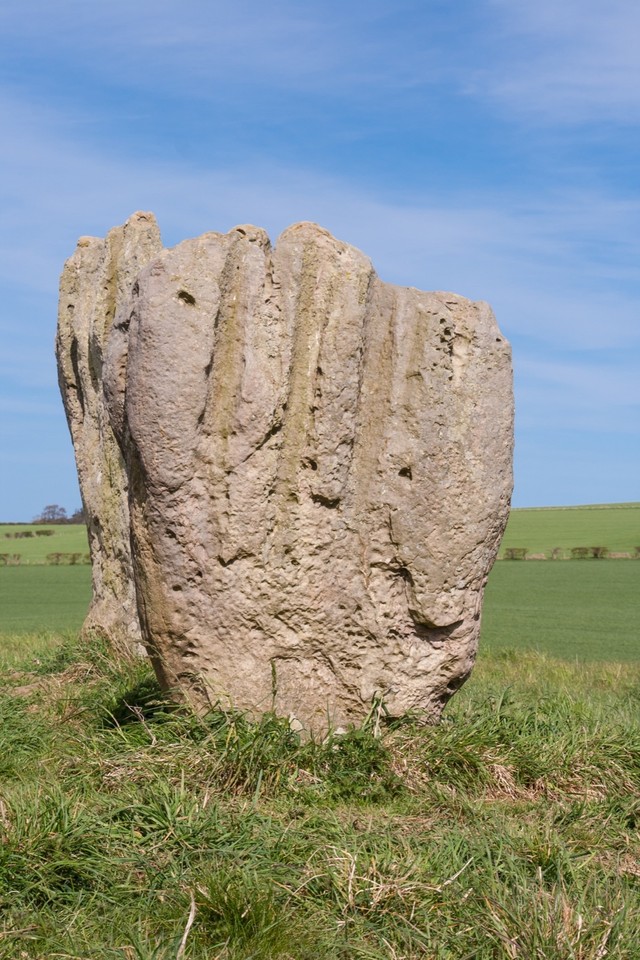
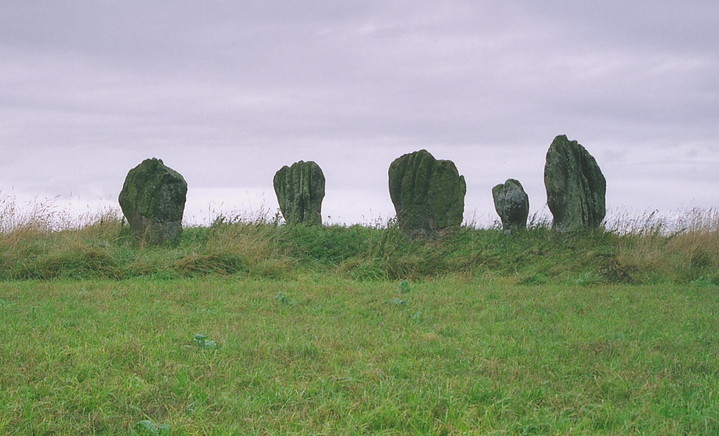
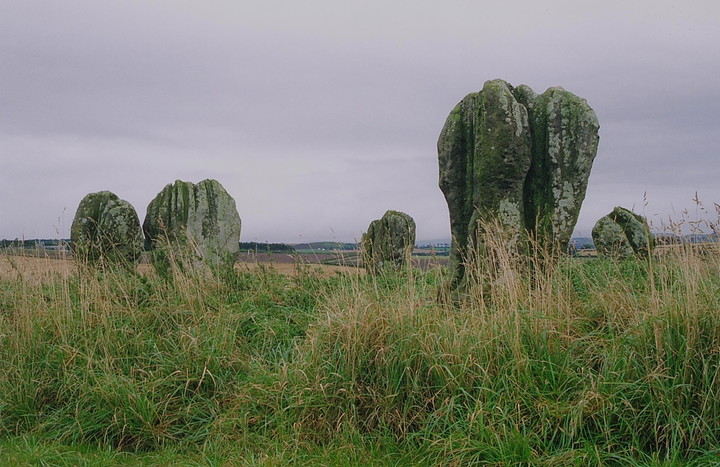
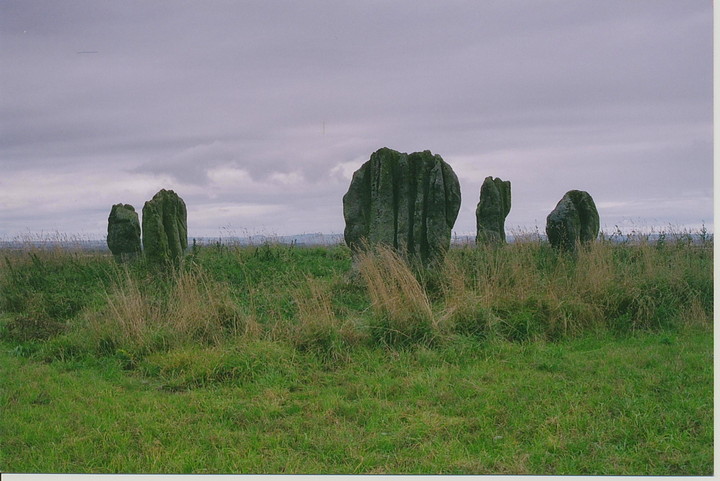
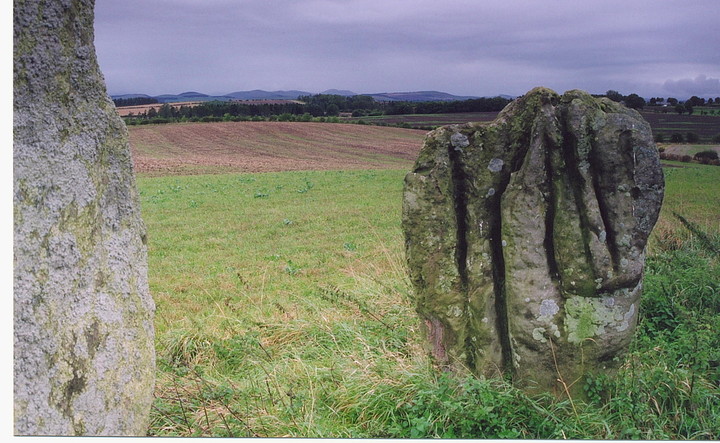
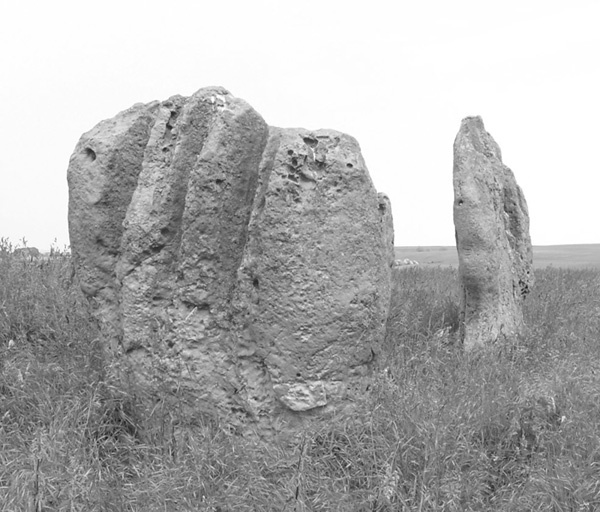
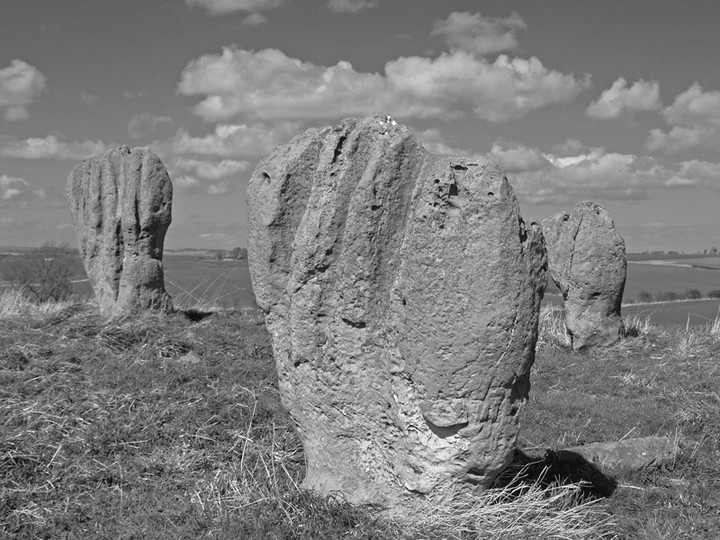
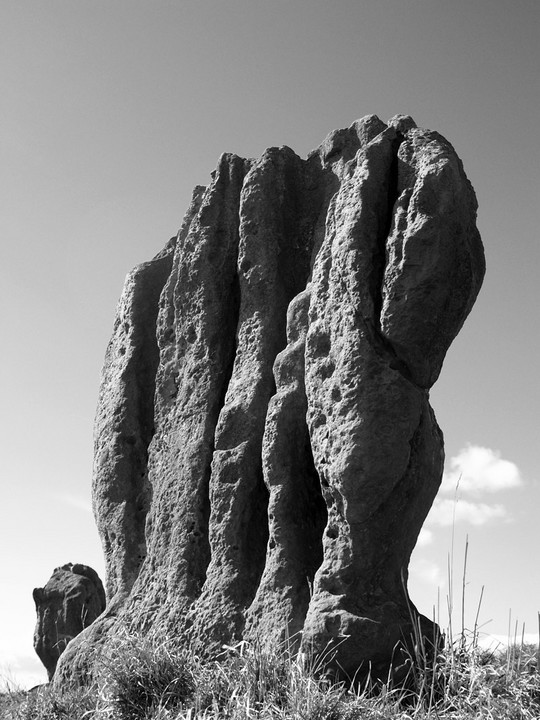
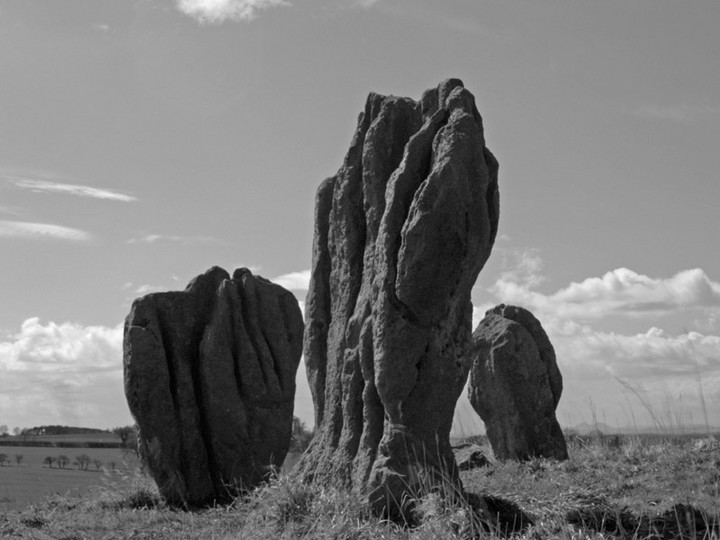
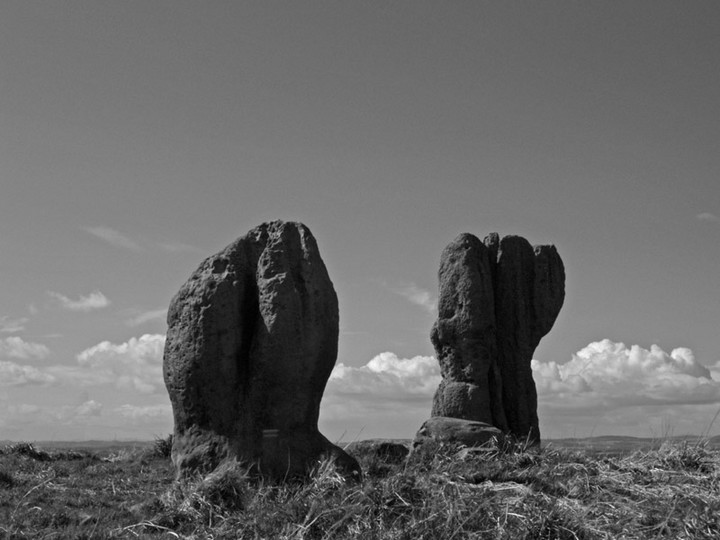
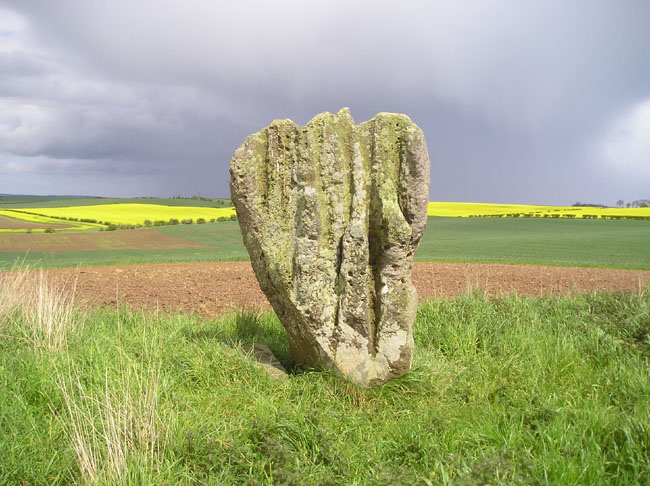
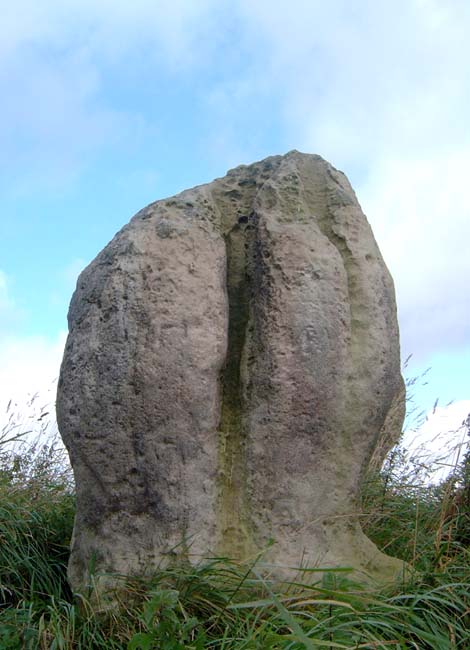
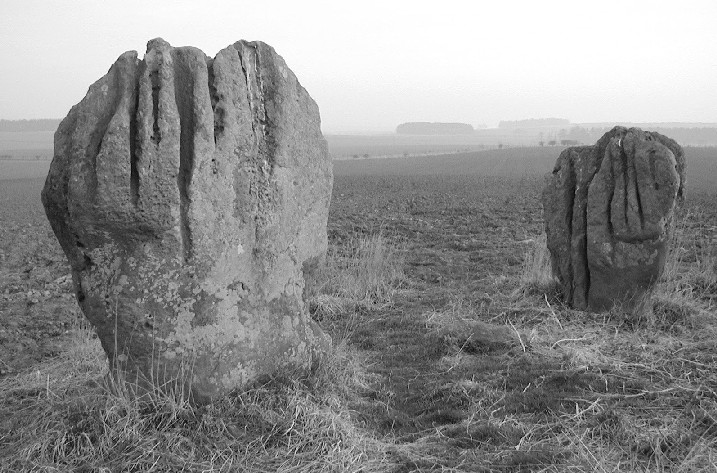
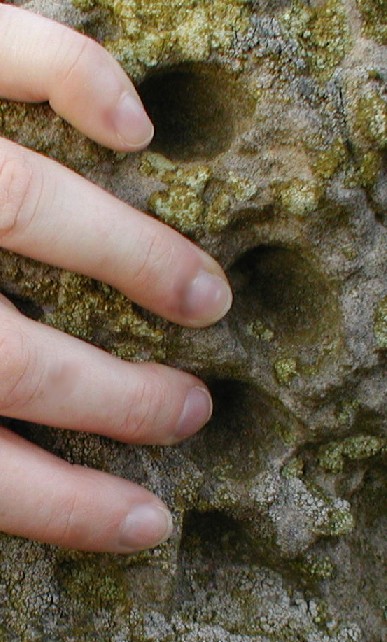
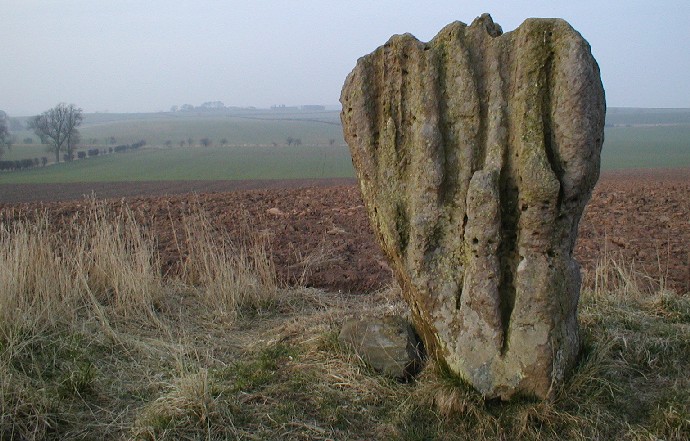
Though little, this is the most aesthetically pleasing of Northumerland's stone circles. The stones are reminiscent of single stones in the south of the county. It's position links the Lammermuir hills and the Cheviots most nicely. Weathered grooves second to none, with cups marks too. There have been allegations of a burial in the middle, but nothing conclusive has been found, bar some undated charcoal. Access up the track is easy enough, but the tromp over the field should ideally be done after the crops have been harvested, both for ease of access, and in respect for the farmer, who has had a poor harvest this year. |
Posted by Hob 15th November 2004ce |
|
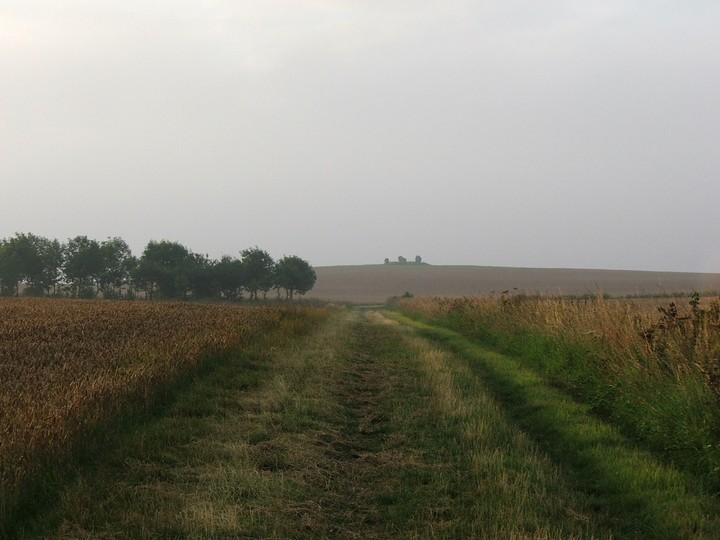
The steg, pepper and I visited the 5 stones as part of our holiday in the big green steg van. We had camped at a village about 5 miles away on the Tweed and this was a real bonus as we only realised we were so close the night before. We set off early and enjoyed the walk up the track in clear light. pepper was chasing invisible hares through the corn and we saw a deer. The stones are visible a away off, fabulous. Spent a a little while before going in, noticed a few boulders between the main stones, wondered if they were added later or were part of the original set up. Found some charcoal and a bone in the middle. Pepper was not interested in the bone and was reluctant to come back in the circle, very uncharacteristic on both counts. Tremendous position up on a mound set in a near circle / saucer of hills, cheviots particularly sexy. Dunno what to make of Duddo but it was great. Do go. stegnest |
Posted by stegnest 4th August 2003ce Edited 4th August 2003ce |
|
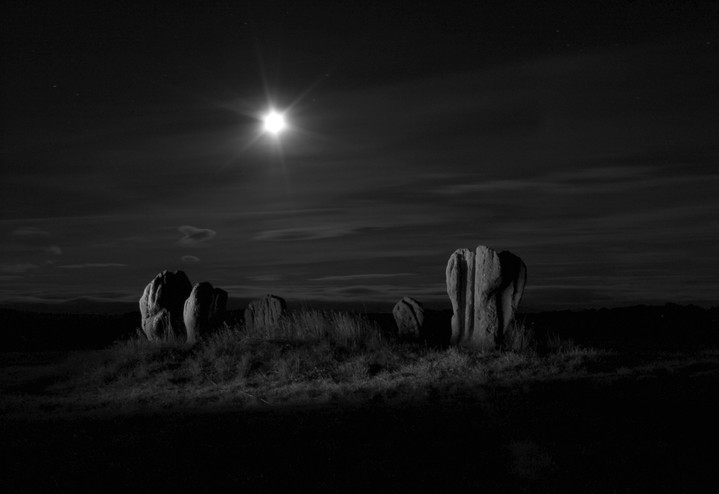
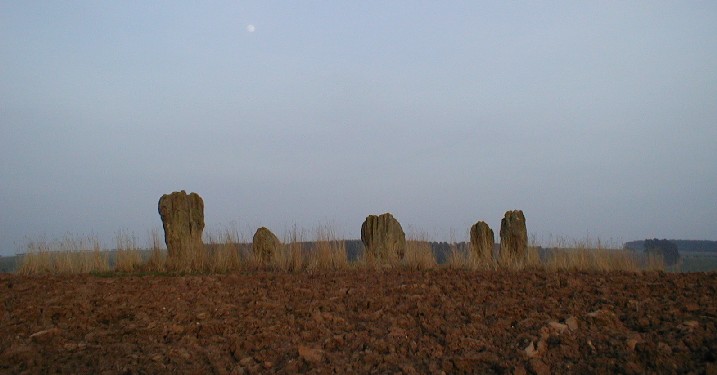
I had an hour before it got dark, and I thought I know I'll go to Duddo! Parked south of the stones, from where you can't actually see them but I'd sneaked a peak from up the road. It's a quick brisk walk up but the field immediately around the stones had just been churned so the going was a bit rough; but the soil was a nice reddy brown. The other day I was in the local tourist info place and they had an interesting poster of Duddo with the fattest moon pasted above it. Didn't buy it. I kept the stones company for a bit, waiting for the sun to go down. And whadayaknow, the moon was just coming up. .o0O0o. |
 Posted by pebblesfromheaven
17th March 2003ce |
|
The horde who sacked Yeavering Bell, the tribal palace of the ancient Northumbrian Kings, must have descended from the Cheviots when they attacked. By the time I reached the crumbling fortifications, I couldn't have lifted a sword, much less swing one.That's how steep the climb from the valley floor had been. I stood and caught my breath, and as my pulse began to slow, I turned round and took in the beautiful view. Somewhere to the North East was Duddo stone circle, but I couldn't make it out. Standing on the peak of Yeavering Bell I had gained 240 metres of height since breakfast at Duddo. I was ready for my Lunch. The day had started at eight when I packed my bag, and waited for Tom, my mate. He drove and I read maps on the way to Duddo. At Duddo village, we left the car and walked out across the open country. The circle was visible from some distance, looking like rotten teeth pointing up to the sky. It was a typical January day, gray clouds spitting mean rain at the hills. We walked over a farmer's field, a strange feeling for me; I would have felt better on a footpath, yet I could see no other way to approach the stones. Once among the stones I felt better and sat to enjoy the moment. Tom, on the other hand, spent ten minutes walking around the circle, on the field itself, before he came inside. As I enjoyed the rest, Tom rummaged in his bag and produced a miniature of Grouse, that he'd brought for me. Perfect. We could see Yeavering Bell, and felt the call to leave, much too soon for Duddo. We agreed that we'd be back, and so we left. Back at the car, we ate a sandwich, and had some coffee, then we drove to Yeavering, a row of cottages under Yeavering Bell. Again we left the car, but this time the path was pitched more steeply, and soon I was breathing hard. The path was an old drovers road, straight up into the Cheviots, marked all the way with massive boulders. We crossed a stream bed and the path got steeper. From here we could see the old walls, and then we thought we'd seen people at the top, but as we got closer we saw that it was the wild goats of the Cheviot Hills, which neither of us had seen before. When the Northumbrians were defeated at Yeavering, they moved across the valley to Gefrin, 'the place of the goats'. Yeavering sounds like a variant of Gefrin, so I guess the wild goats were at home. They had disappeared into thin air by the time we arrived at the top, and we ate lunch together in the solitude, if you know what I mean. |
Posted by NorthumbrianDawn 29th December 2001ce |
|
After driving round the area for a while we eventually found the field in which this cute circle stands. The approach to the circle was fantastic, in that we saw the circle perched on top of the hill and slowly, slowly as we waded through the waist deep crops, the beauty of the circle was revealed. Once we arrived at the stones, the landscape in which it is set is breathtaking - especially the Cheviot Hills which undulate in the distance. The whole experience was amazing - awakening - uplifting!! |
Posted by Sarah - Meanwood 22nd November 2000ce |
Folklore |
Add folklore |
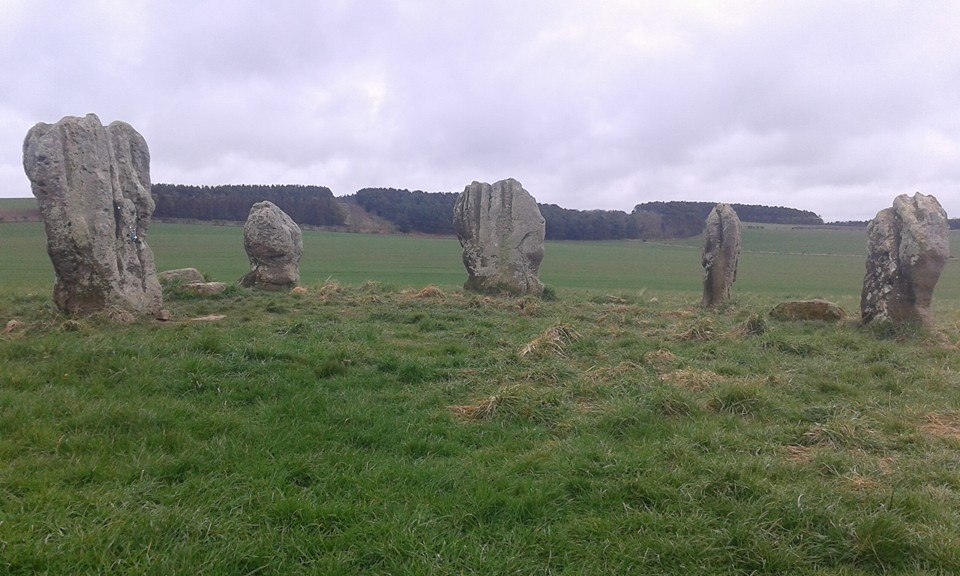
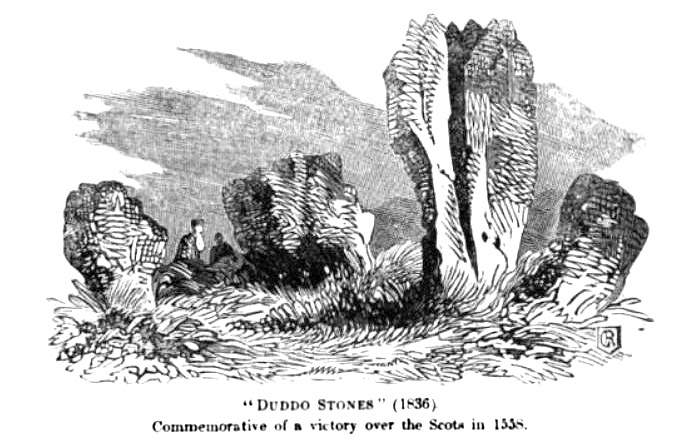
A little to the north-west of the tower are six rude stones or pillars placed on the summit of an eminence, in a circular order, forming an area of ten yards diameter. The largest is about eight feet high. They are known as the Duddo Stones, and some learned archaeologists have set them down as Druidical; but the local tradition is that they were placed where they stand in commemoration of a victory gained at Grindon, in the year 1558, by the Earl of Northumberland and his brother Sir Henry Percy, over a plundering and burning party of Scottish horse, accompanied, as Ridpath tells us, by some foot, who were either Frenchmen or trained and commanded by French officers, and who were driven in disorder across the Tweed. The accompanying sketch of the stones, showing their appearance in 1836, was published in Richardson's "Table Book," vol. iv., 1844.From 'North-Country Lore and Legend' in the Monthly Chronicle for May 1869. Were there six at the time? You can't see from the drawing (above). |
Posted by Rhiannon 9th May 2011ce Edited 9th May 2011ce |

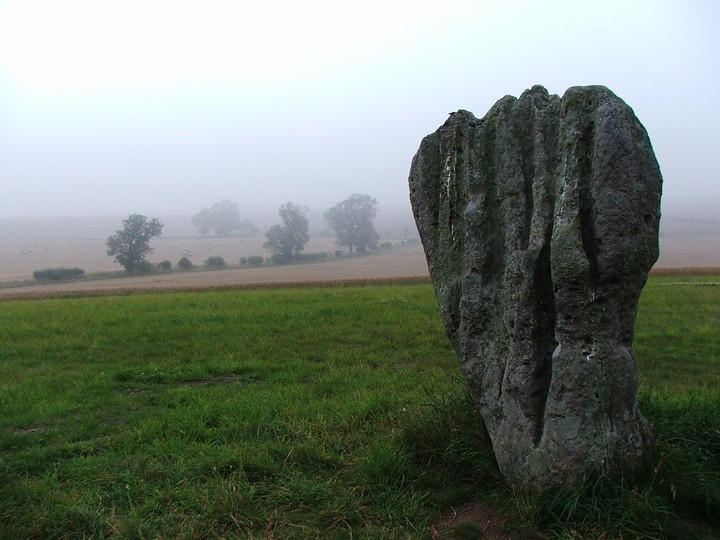
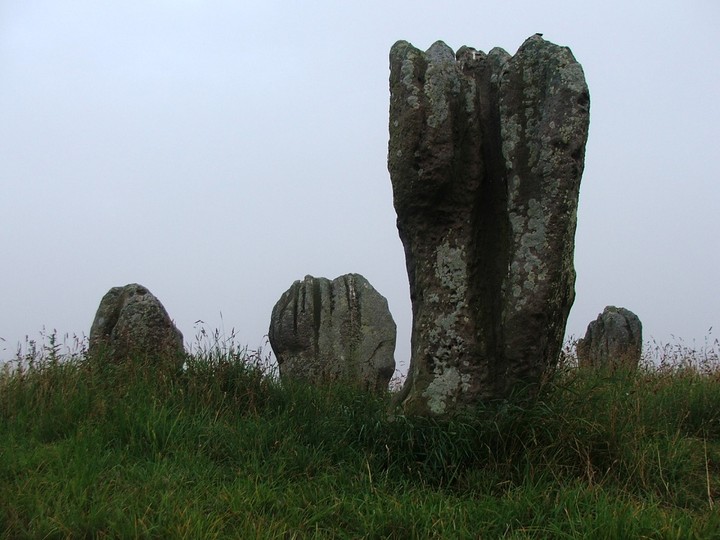
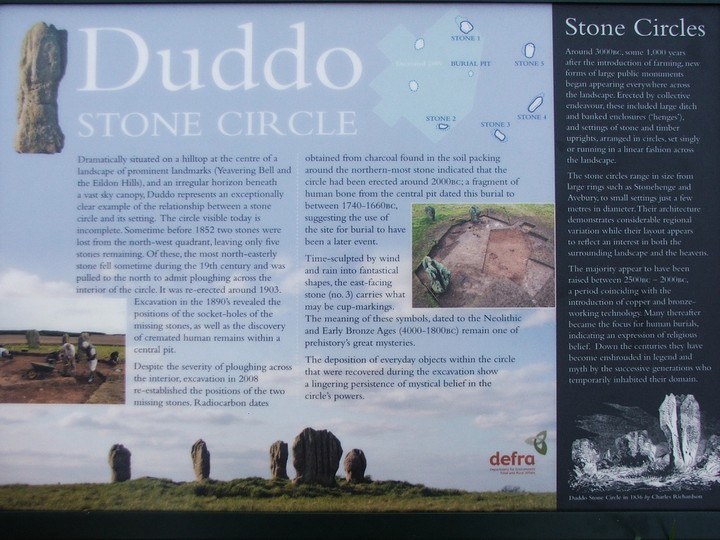
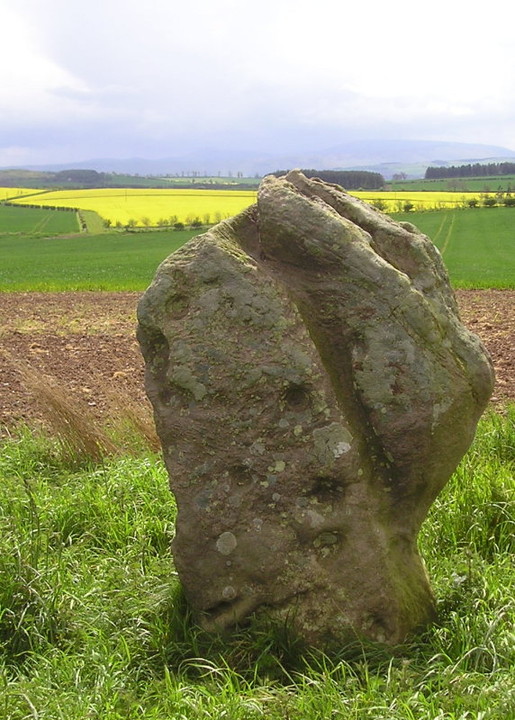
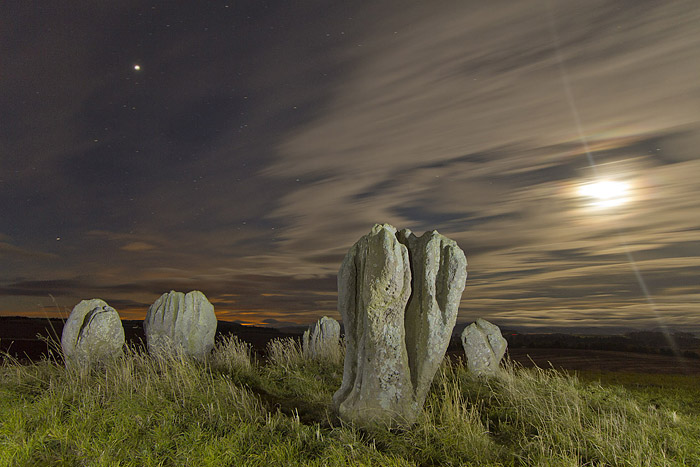
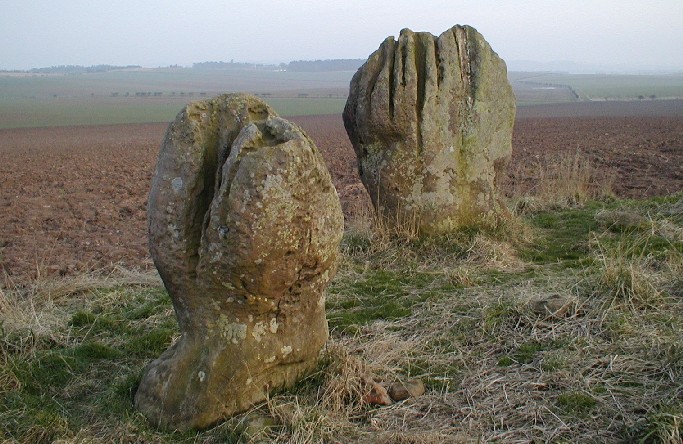
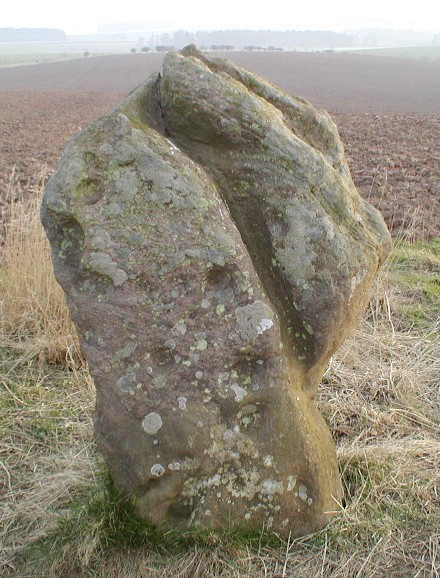
| The narrow waists of the stones, where they meet the soil, have are partly responsible for a pseudonym, 'The Women'. This, combined with the whistling of the wind through the fluted grooves, has caused this to be extended to 'The Singing Women'. |
Posted by Hob 15th November 2004ce |
|
These stones are the remains of five men who were cheeky enough to be digging their turnips on the Sabbath. Their leader was knocked over by the shock of being turned to stone: before the beginning of the last century you could see him lying there, but he's since been righted. (from Grinsell's prehistoric folklore book, drawing on a book from 1919 which I haven't yet tracked down. I wonder if the turnips got rather specifically incorporated because of the fame of turnips in the district - the Laing's Improved Purple-Top, don't you know. http://books.google.co.uk/books?id=4CMaAAAAYAAJ&pg=RA2-PA7) |
Posted by Rhiannon 10th September 2003ce Edited 9th May 2011ce |
Miscellaneous |
Add miscellaneous |
|
It's quite dull to point this out, as their flutiness is perhaps why they're so appealing today, but it may well be that these lovely fluted stones were not in their lovely fluted state when they were erected. Here are some gleanings from an article about the circle's excavation in 2008. The stone is thought to come from an outcrop of Fell Sandstone at NT935437, east of here. The stones must have been dressed there, or at least away from the circle, as when the site was excavated, no tell-tale bits were found. The grooves are called 'rillenkarren' and are caused when wind and water erodes the stone. But the direction the grooves run in, parallel to the bedding plane, suggests they developed after the stones were put up. Because if they'd been chosen for their rillishness in situ, the grooves would probably run the other way compared to the bedding plane. The waists of the stones are said to be as a result of physical erosion too (maybe animals plus weathering), although the general shape of narrow bottomed / wide topped was probably part of the deliberate shaping. Another point is that if Beckensall's cup marks are man-made, they must have been put on there post-dressing of the stones, and therefore be unusually dateable. Roughly a fifth of the stones' heights are hidden beneath the ground, which because it doesn't seem like very much, led the authors of the article to speculate whether the 'waists' of the stones were actually caused by erosion at a former ground level. And a last point, that although the stones mostly have two flatter faces and two narrow sides, the builders of the circle didn't seem to orientate them in a consistent way (for example, in/out of the circle, or towards a point of the compass). But it may be they 'relied upon some lost factor of the landscape we cannot know'. Indeed. Much more besides in: 'The Excavation of Duddo Stone Circle, Northumberland' by B Edwards, R Miket, and R Bishop (2011): Proceedings of the Prehistoric Society 77, pp321-353. |
Posted by Rhiannon 1st January 2014ce Edited 1st January 2014ce |

|
An obscure reference to an outer circle at Duddo. It isn't clear if the author is talking about an outer circle of stones, or a bank. Given the profusion of henges in the area, probably the latter. The barrow to the north is a new one to me too. Canon Raine in his massive volume 1852 on North Durham (very north indeed!) writes: On an eminence in the middle of a field a mile north west of Duddo stands a time and weather worn memorial of the Druidical period. The temple or whatever it may have been, has been of the usual circular shape, surrounding at intervals a plot of 36 feet in diameter. Four stones alone are standing, the tallest of which measures 6 feet9 inches in height, by 13 feet in girth: a fifth is extended upon the ground, In a broken state, the rest have been removed. The remains of an outer circle were a while ago discovered at the usual distance*. The situation of this hillock is of a peculiar nature; it rises as it were, in the middle of a large natural basin two miles in diameter and might have been seen at one and the same time by thousands upon thousands of assembled devotees. A small barrow at the foot of the hill on the north side, much levelled by the plough, has I believe never been opened. *My emphasis |
Posted by Hob 11th March 2005ce Edited 11th March 2005ce |
|
"Solstice: Duddo On such a night the hills dissolved and re-assembled in the shifting mist, Numb with moonloghts touch. We learnt that silence was not hostile. Took upon ourselves its deepest strength Waiting for dawn's layered sun. A moon that paced As crow's shout cracked the sky fled from the triggered bird-song Hestitant then loud. Before our eyes, a second birth, A new-created universe, Green and blue and gold. Fluted stones whose shapes had shifted with emitted heat From bearded barley heads, Buried to the hips, reclaim their circle and identity, Introspective, Janus-headed, Guarding and inviting As the suns diurnal course Played a slow game With shadow shapes Time and time and time again." Stan Beckensall Northumberland, The Power of Place. Pub Tempus publishing. 2001 |
Posted by fitzcoraldo 14th October 2002ce |
Links |
Add a link |
Duddo Five Stones on BRAC UpdatedDuddo Five Stones on BRAC |
Posted by markj99 4th January 2021ce Edited 4th January 2021ce |

stone-circles.org.uk360 degree panorama of Duddo. |
 Posted by Chris Collyer
7th September 2010ce |
 Top of page