The Modern Antiquarian. Ancient Sites, Stone Circles, Neolithic Monuments, Ancient Monuments, Prehistoric Sites, Megalithic Mysteries

England   Northern England   Shropshire  

The Long Mynd

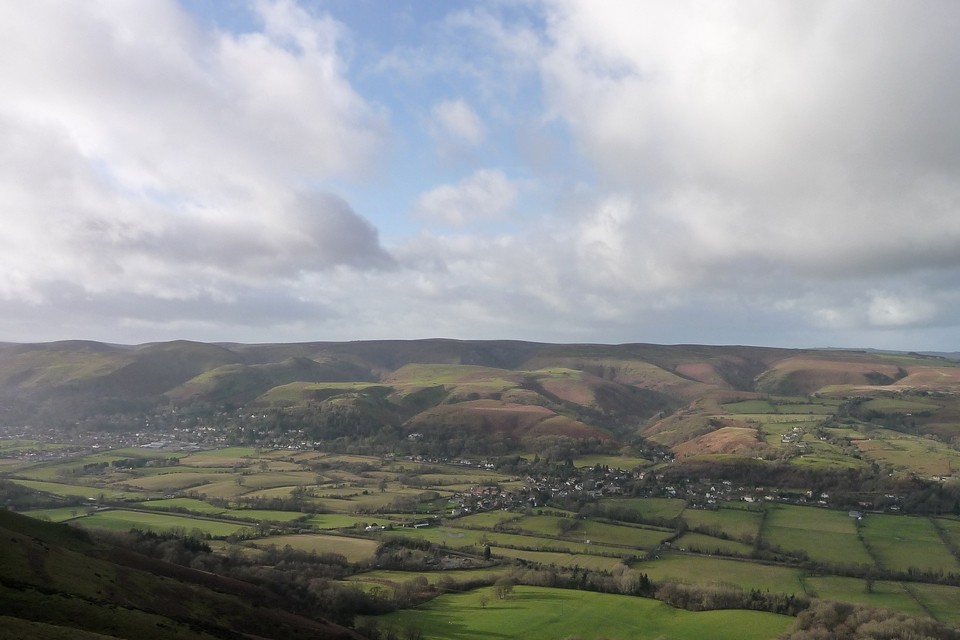
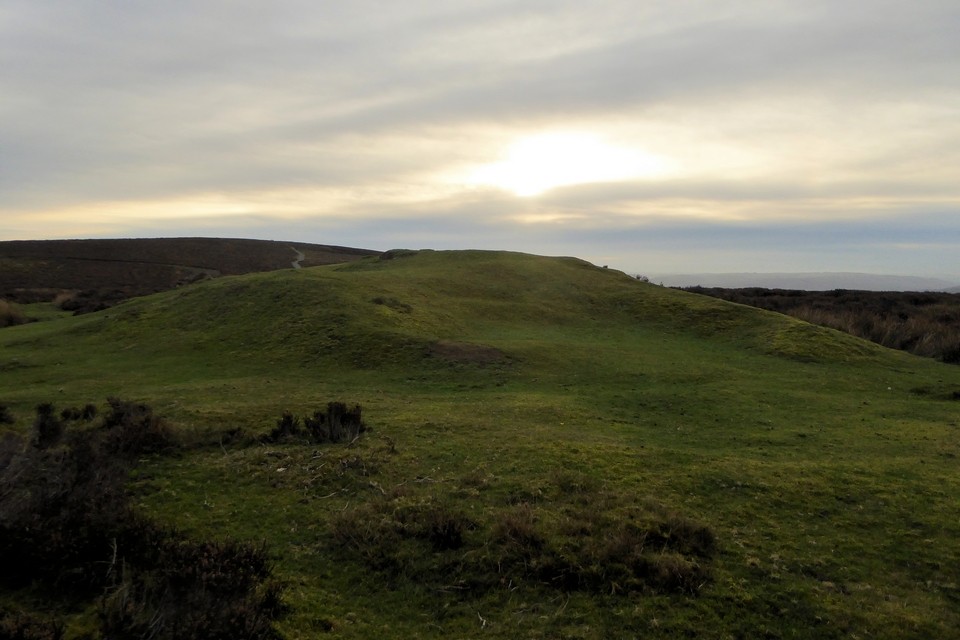
<b>The Long Mynd</b>Posted by thesweetcheatImage © A. Brookes (2.1.2012)
Nearest Town:Church Stretton (3km ESE)
OS Ref (GB):   SO420953 / Sheet: 137
Latitude:52° 33' 7.26" N
Longitude:   2° 51' 19.84" W

Added by TMA Ed


Discussion Topics0 discussions
Start a topic


Show map   (inline Google Map)

Sites in this group:

6 posts
Bodbury Ring Hillfort
9 posts
Boiling Well barrows Round Barrow(s)
6 posts
Devil's Mouth cross dyke Dyke
1 post
High Park cross dyke Dyke
12 posts
Shooting Box barrows Round Barrow(s)

Images (click to view fullsize)

Add an image Add an image
<b>The Long Mynd</b>Posted by thesweetcheat

Latest posts for the Long Mynd

Showing 1-10 of 35 posts. Most recent first | Next 10

Barrister's Plain cross dyke — Miscellaneous

English Heritage description:

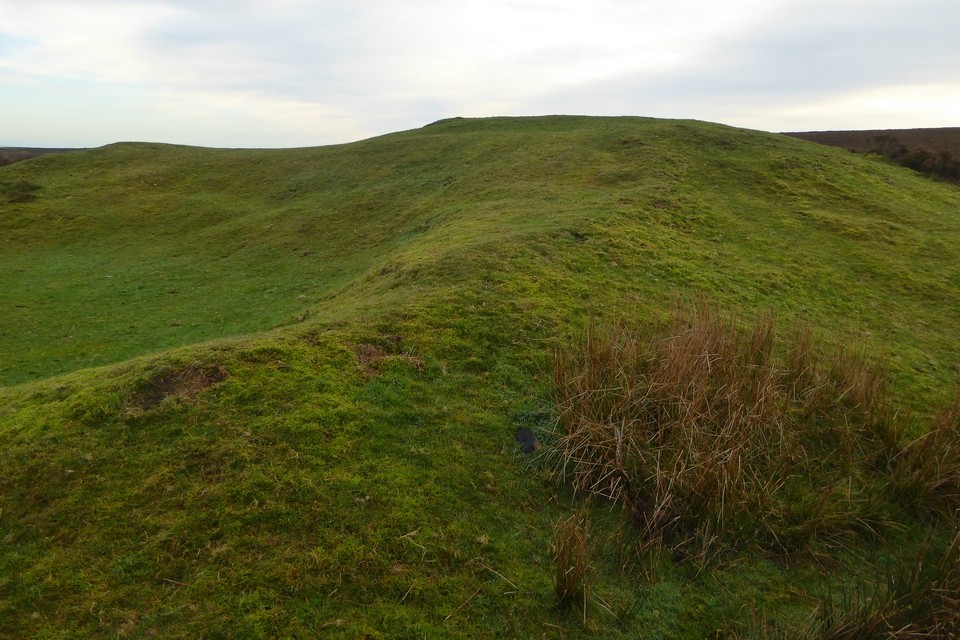
The monument includes a univallate cross-dyke situated on Barrister's Plain, a narrow saddle between Round Hill to the north-west and Grindle Hill to the south-east. The dyke is visible as a well defined linear bank of earth and stone construction 170m long, averaging 5.5m wide and 0.6m high, with a flanking ditch on its north-west side 3m wide and 0.4m deep. The earthworks are orientated north-east to south-west, cutting across the line of the ridge top at its narrowest point. The bank tails off down the sides of the hill at either end to link the precipitous north and south scarps of the spur; the ditch fades out as the bank ends. The bank is lowered between 19m and 28m from the southern end, possibly the result of slighting at some time in the past. A trackway 4m wide crosses the ditch and cuts through the bank some 66m from the southern end of the dyke. Although this appears modern, it could represent the original position of a passage through the dyke. The structure is clearly not of a defensive nature, being too slight and overlooked from both sides. However, it effectively isolates the eastern tip of the spur, `Grindle Hill', from the main body of the hill to the west and would have functioned as part of a system of land management during the Late Bronze Age and Early Iron Age.
thesweetcheat Posted by thesweetcheat
2nd January 2012ce

High Park cross dyke — Miscellaneous

English Heritage description:

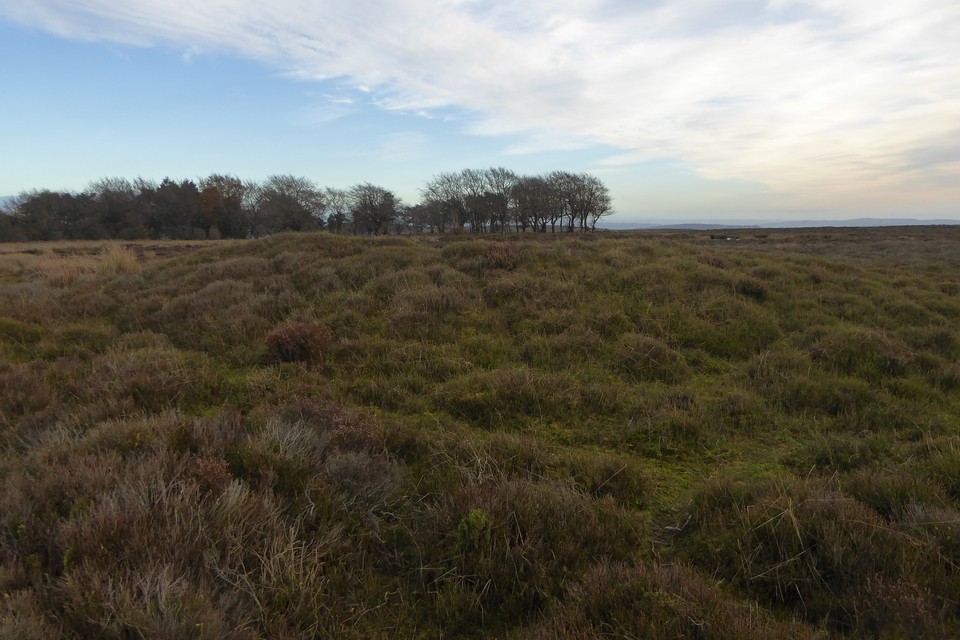
The monument includes a substantial cross-dyke, a linear bank, a sample of ridge and furrow and two sub-circular features. The cross-dyke lies orientated NNW to SSE crossing a broad roughly east to west ridge, ending on the edge of a steep sided gully in the south and a somewhat more shallow gully in the north. The earthwork is cut by a modern field boundary 130m from its north end, the portion to the north being within enclosed sheep pasture, that to the south in open moorland. As a result the survival characteristics of the two sections of earthwork differ. The northern portion is visible as a substantial earth and stone bank 142m long averaging 6m wide and 0.8m high, surmounted by a modern hedge bank and hedge. This is cut at its southern end, immediately north of the fence line, by a modern break 3m wide. Though there are no surviving physical traces of a ditch alongside the bank, differential growth in the grass cover on the west side suggests that a ditch does survive here as a buried feature. The larger portion of the dyke lies to the south of the enclosed land in open moorland; here it includes a linear bank some 240m long, averaging 8m wide and varying between 0.2m and 0.8m high on its east, downslope, side, 0.8m to 1.2m high on its west, upslope, side. The bank is flanked along its west side by a clearly visible ditch which averages 5m wide and 0.6m deep. This appears to be a continuation of the buried ditch noted as a crop-mark in the northern section of the earthwork. A second bank, 1.5m wide and 0.2m high, lies parallel to the main embankment on the west side. It commences 4m south of the modern field boundary and runs for some 68m south before fading out. From this point a section of the ditch running roughly between 69m and 91m south of the hedgeline appears to have been re-cut into the base of the main ditch, giving an incised ditch 1m wide and 0.2m deep at the base of the embankment. The southern portion of the cross-dyke is cut in three places: immediately south of the field boundary a trackway 4m wide runs parallel to the edge of the enclosed land, the track cutting through the bank and lying on a level roughly at the bottom of the ditch. The double bank, strengthening the cross-dyke defences at this point, suggests that this is the position of an original entrance gap. A hill drain 2m wide cuts through the earthworks 51m south of the field boundary and a second trackway cuts through both the bank and ditch some 130m south of the hedgeline. The second trackway cutting is 2m wide and incised 0.6m into the old land surface, below the base level of the ditch. Though it appears modern, its position may also represent the original location of an entrance gap through the earthworks. The cross-dyke would have functioned as a boundary structure associated with a system of land management during the Late Bronze Age and Early Iron Age. To the east of the cross-dyke some 93m south from the hedgeline and running roughly at right angles to the main dyke, a medieval field bank abuts onto the earthwork. It runs east for some considerable distance averaging 2m wide, 0.2m high on its north side and 0.4m on its south side, where it is flanked by a ditch 1m wide and 0.1m deep. The area to the north of this bank, between it and the enclosed land, shows evidence of vestigial ridge and furrow; it lies orientated east to west and averages 4m wide. At the northern end of the section of earthwork, in open moorland, are two sub-circular rubble walled features, the remains of small huts or animal shelters. One is located on the alignment of the main ditch and overlies the western bank; its south and west sides survive as a low rubble wall averaging 0.5m wide and 0.1m high abutted onto the main bank. The second lies 18m east and 10m south of the hedgeline. It comprises a low rubble wall of similar construction forming a small oval structure 7.4m east to west by 6m north to south with walls 0.2m high on their external face, 0.1m high on their internal face and is open on the south side. All modern boundary features overlying the monument, and the water tank building at SO44329694 are excluded from the scheduling, although the ground beneath these features is included.
thesweetcheat Posted by thesweetcheat
2nd January 2012ce

Devil's Mouth cross dyke — Fieldnotes

Following the road down from Boiling Well barrows (16.4.2011), the jagged ridge of Burway Hill comes into view, falling precipitously down to Townbrook Valley. The narrow saddle of the land at the foot of the ridge is called The Devil's Mouth, but there is no gaping maw into Hell to be seen.

Instead there is a low earthwork bank, now cut through by the road, but otherwise running across the neck of the ridge. It's worth a quick climb up the steep slope of Burway Hill to gain an eagle-eye view as well. Once at the top, you are rewarded with lovely views of Caer Caradoc and the line of hills running north to The Wrekin. From here it's a stroll back down to Church Stretton.
thesweetcheat Posted by thesweetcheat
24th April 2011ce

Devil's Mouth cross dyke — Images (click to view fullsize)

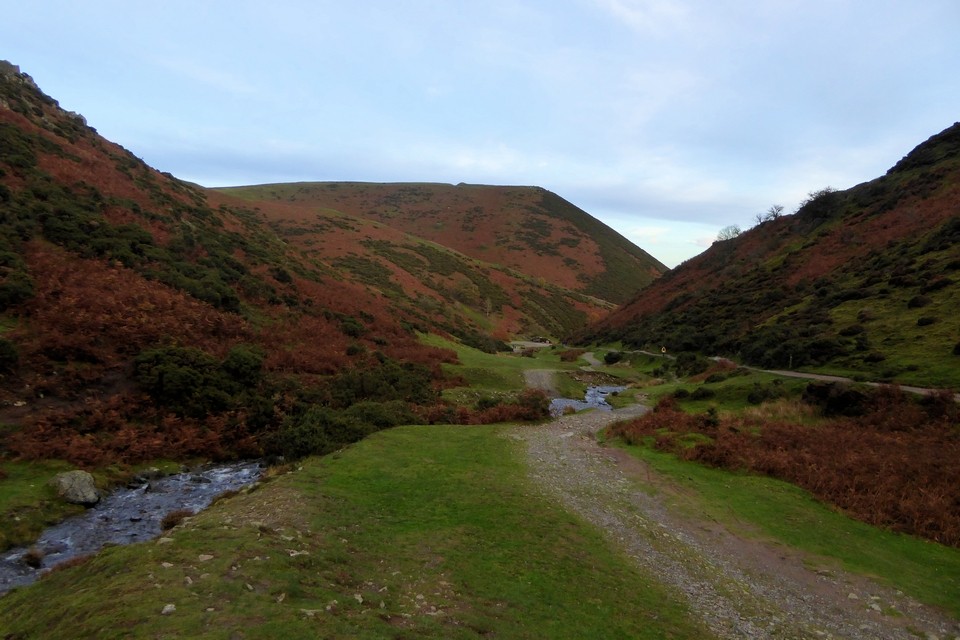
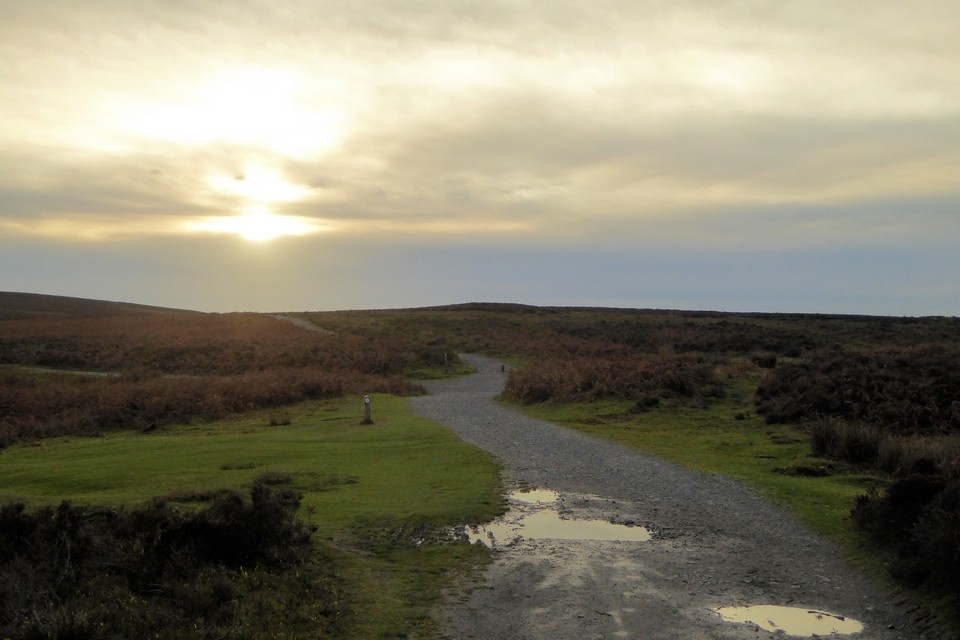
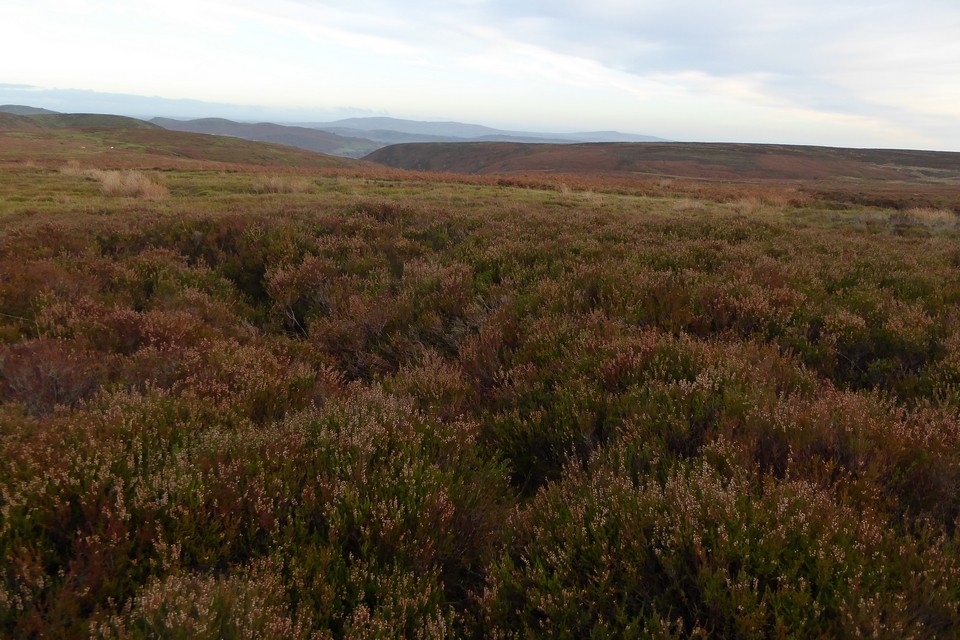
<b>Devil's Mouth cross dyke</b>Posted by thesweetcheat<b>Devil's Mouth cross dyke</b>Posted by thesweetcheat<b>Devil's Mouth cross dyke</b>Posted by thesweetcheat<b>Devil's Mouth cross dyke</b>Posted by thesweetcheat thesweetcheat Posted by thesweetcheat
24th April 2011ce

Bodbury Ring (Hillfort) — Images

<b>Bodbury Ring</b>Posted by thesweetcheat<b>Bodbury Ring</b>Posted by thesweetcheat thesweetcheat Posted by thesweetcheat
24th April 2011ce

Boiling Well barrows (Round Barrow(s)) — Fieldnotes

Leaving the overcrowded hilltop of Pole Bank (16.4.2011), I head eastwards along a narrow path through the heather until it hits the minor road that runs from Asterton along the top of the Long Mynd before heading eastwards to Church Stretton.

This road will take me straight to the two barrows near the Boiling Well, a natural spring that I fail to notice as I pass (principally because I mistake the larger pool shown on the OS for it, but there you go). So, barrows near a source of water - who'd have thought?

The western barrow lies in dense (but thankfully low) heather on the north side of the road. It has obviously been cleared of vegetation at some point, but the new growth springing up suggests it might be covered anew before too long. The top has been dug into, as ever.

The road is busy on this sunny Saturday and the frequency of passing cars, coupled with the difficulty of getting a satisfactory photo of the barrow (which seems to blend into the heather at every opportunity), makes for a rather frustrating visit. So I rejoin the road and continue eastwards.

The contours rise again and the eastern barrow sits near the top of the hill, even closer to the road than its companion. It has had a hard time, with the road cutting across its edges, excavation digging into its top and now a row of wooden posts hammered in to (presumably) discourage anyone from driving across it to get to the nearby parking area.

However, what it loses in stature and condition, it gains in the extensive views to the east across Shropshire.

Neither barrow is the finest that Shropshire - or even the Long Mynd - has to offer, but both endure. They are probably ignored by hundreds of people each summer, whether on foot or in cars. I'm glad to have stopped by.

My own route continues eastwards, parallel with the road. Cutting northwards through the bracken, the hillside suddenly drops away down towards a small reservoir far below. From here there are fine views of Bodbury Ring and Caer Caradoc. An excellent place to sit a let the world pass by, before heading into The Devil's Mouth.
thesweetcheat Posted by thesweetcheat
24th April 2011ce
Showing 1-10 of 35 posts. Most recent first | Next 10