   
|
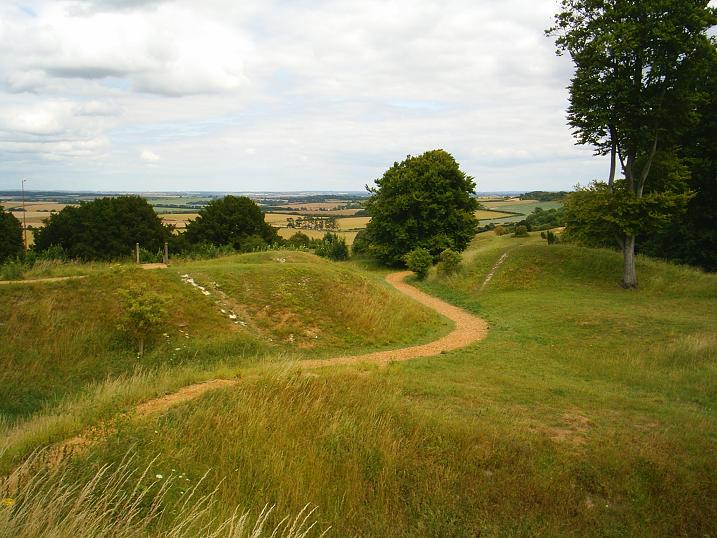
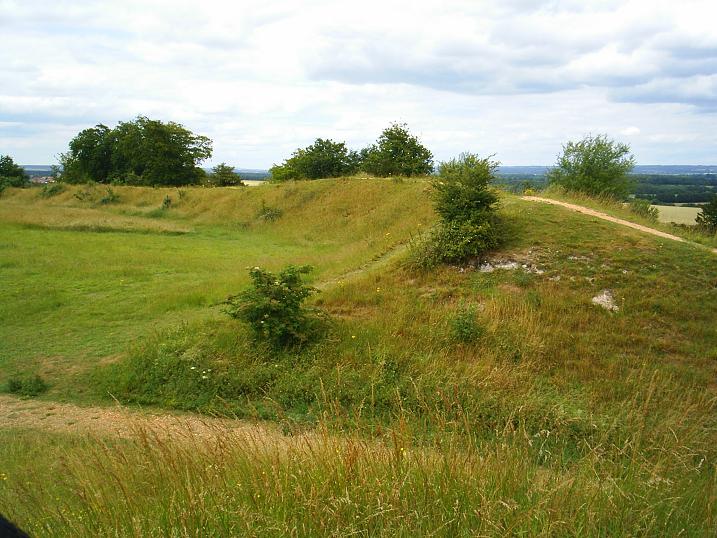
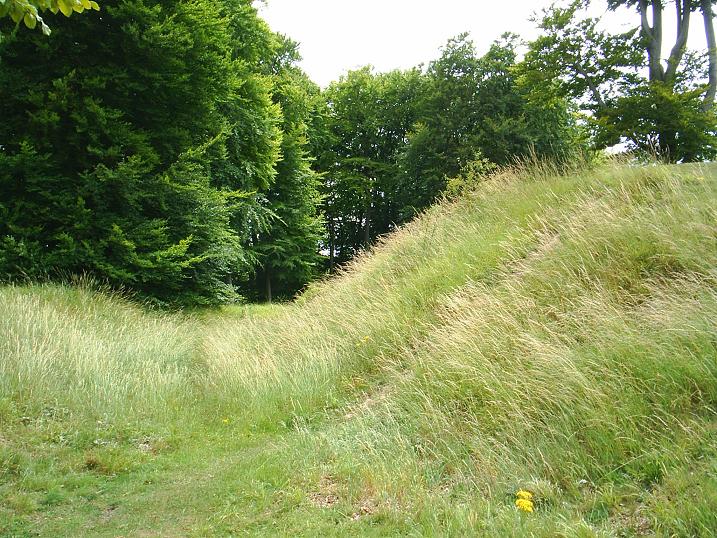
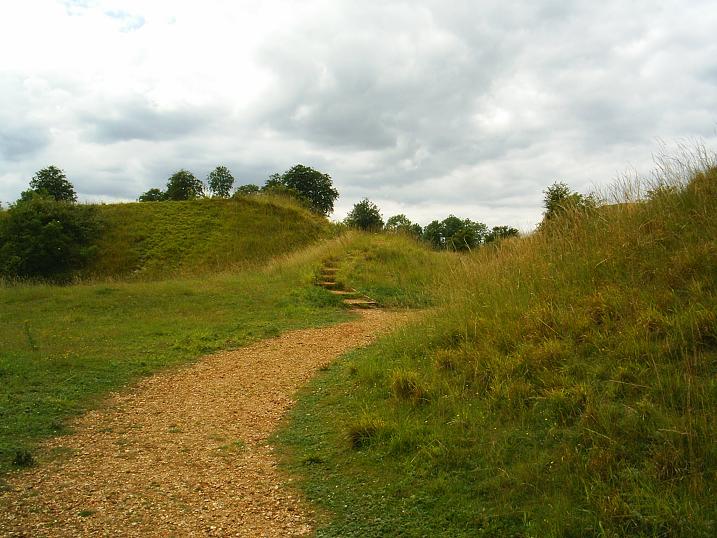
Visite 09/07/09. Flamin' Hell, this is a big, impressive site, with banks and ditches of almost Avebury proportions. Obviously it's been tamed, and spruced-up a tad, with a modern, slightly-pisses-me-off entrance. But, did I want an overgrown site, which was hard to see and interpret, and an entrance which was overgrown and hard to find? Yes, and no. Can't have both, can I? So, it's the modern take, and the huge, cleared centre.
It's definitely easy to appreciate how massive this place is, and the info boards are full of info, as you'd expect, even directing you to the archaeologist who dug the site, which is helpful, 'cos so many lay-people who visit the lesser-known sites don't always know where to find more knowledge.
The area is massive, once housing up to 1,000 people, and it just has to be seen to be believed. The views from the bank are superb, south across the flatlands of Hampshire, and with the various hills in other directions. It's a very quiet spot, and the wind rustles gently through the surrounding trees. On my visit I had the place to myself, and it was one of the most peaceful places I have ever been, with an atmosphere reeking of the past.
|
  
|

|
Visited on 06/07/09.
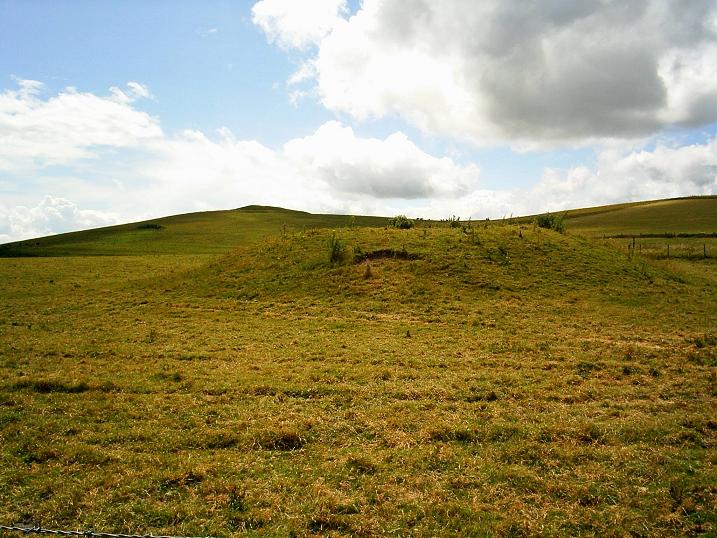
It's in a lovely setting, this Iron Age hillfort, on the edge of a rolling down, and now occupied by a farm. It's now a series of ploughed-out banks and ditches, barely discernible in the field, and hardly worth a visit, unless you're passing. In fact, you wouldn't know it was there if it wasn't for the fact it's marked on the O.S. map. I can't see many photos of this site being posted. I didn't bother taking any. Go to the Bell Inn at nearby Wylye instead.
"Small hillfort levelled by ploughing. From the excavation of 1959-64:- a pedestal base and bead rim sherds from the lower silt of the ditch and pre-camp Iron Age 'A' occupation material. A collection of brooches and a ring found in 1863 plus an iron arrowhead are in Salisbury Museum. A watching brief during 2003 produced no information or features." according to Wiltshire and Swindon Sites and Monument Record Information website. Sceduled Monument AM449.
|

|
 
|
    
|
   
|
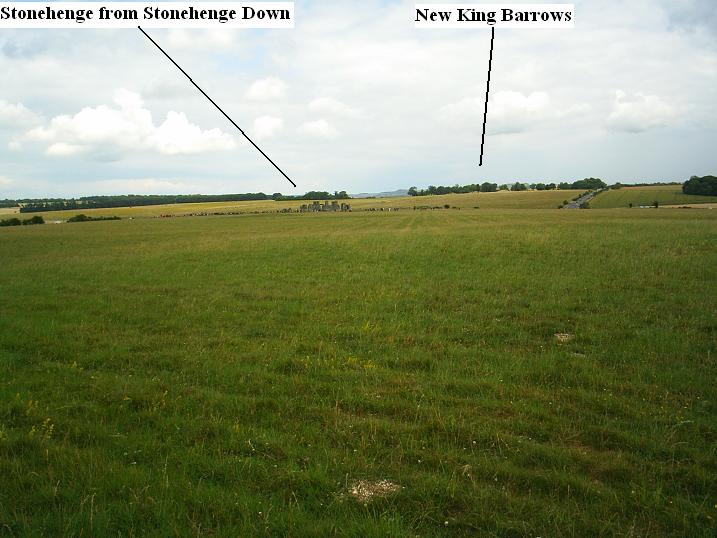
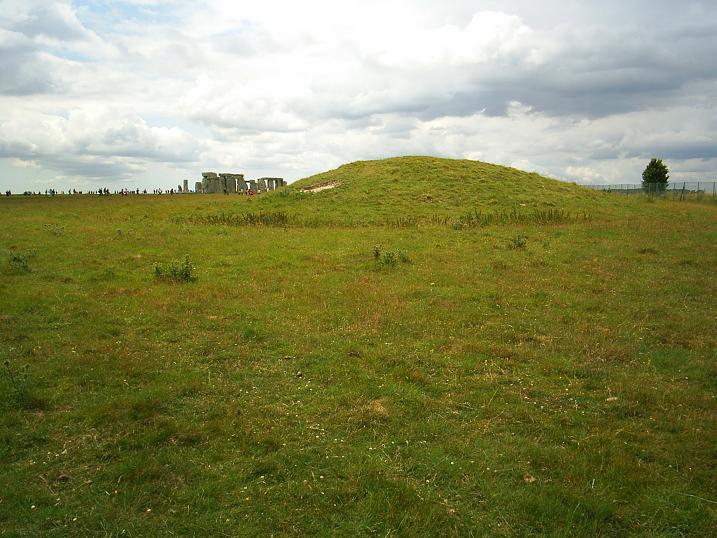
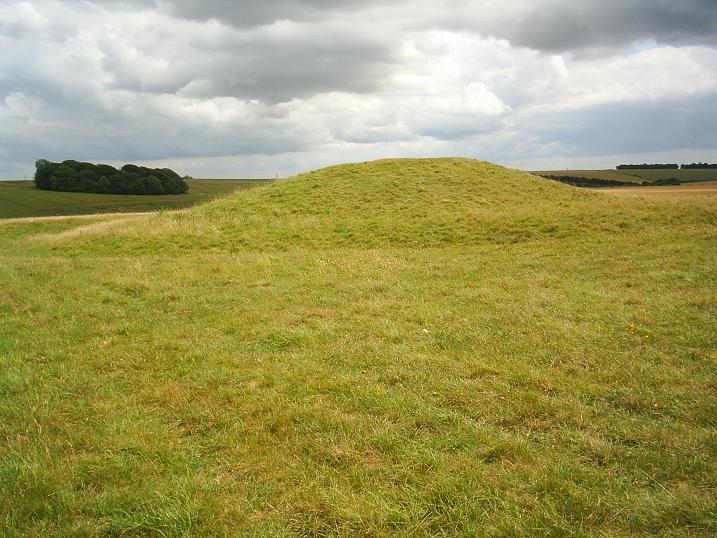
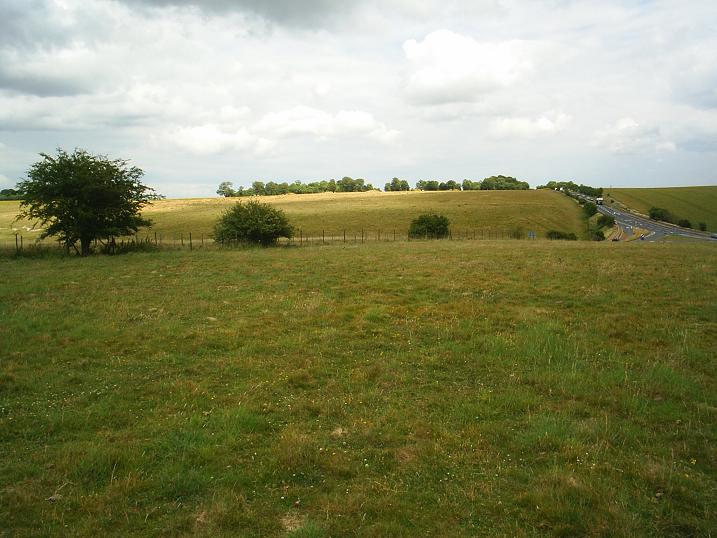
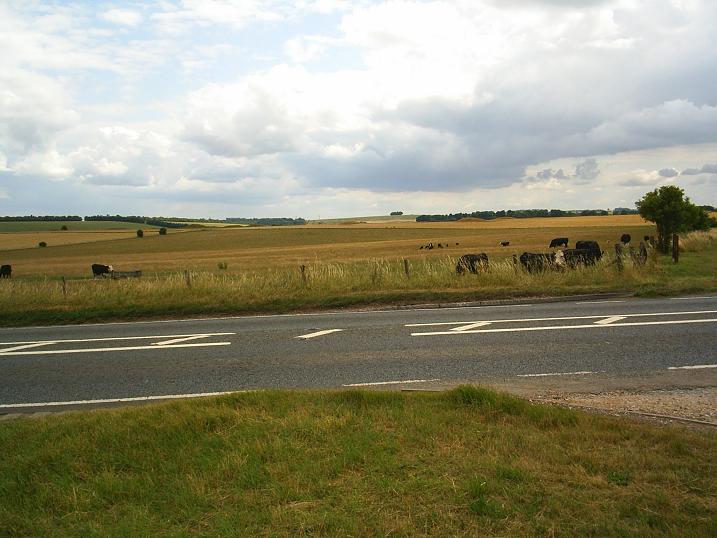
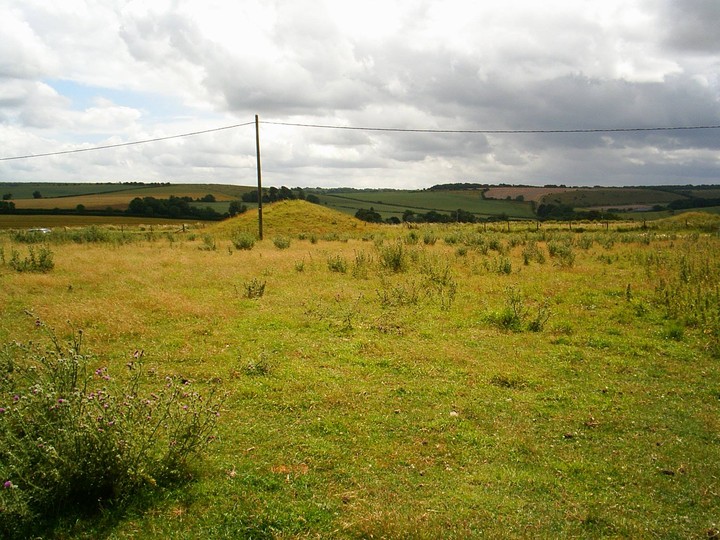
Visited on 08/07/09. This is Burl's "the last round barrow", as is the caption of the photo in his "The Stonehenge People". It is Scheduled Monument, number SM10371.
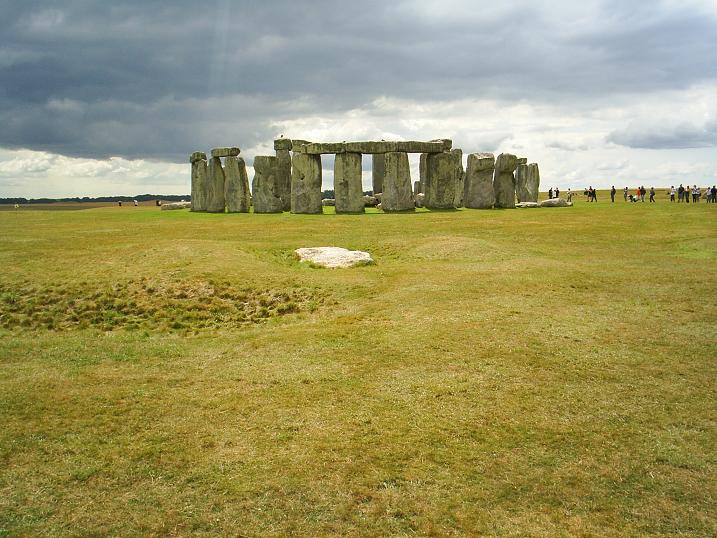
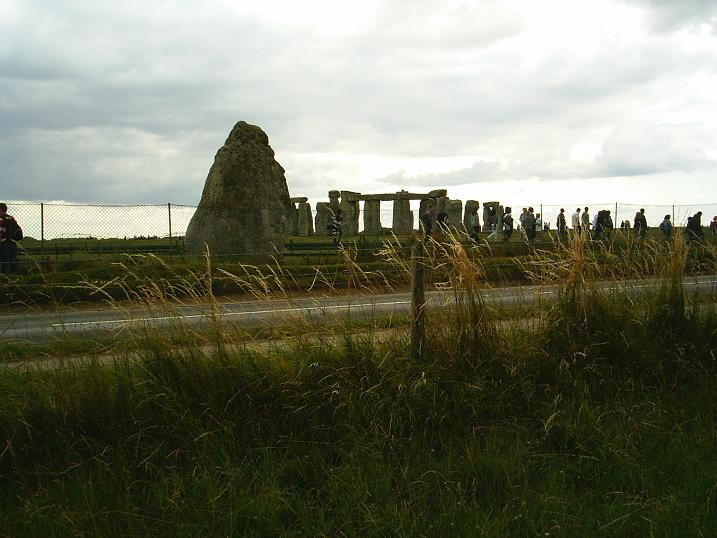
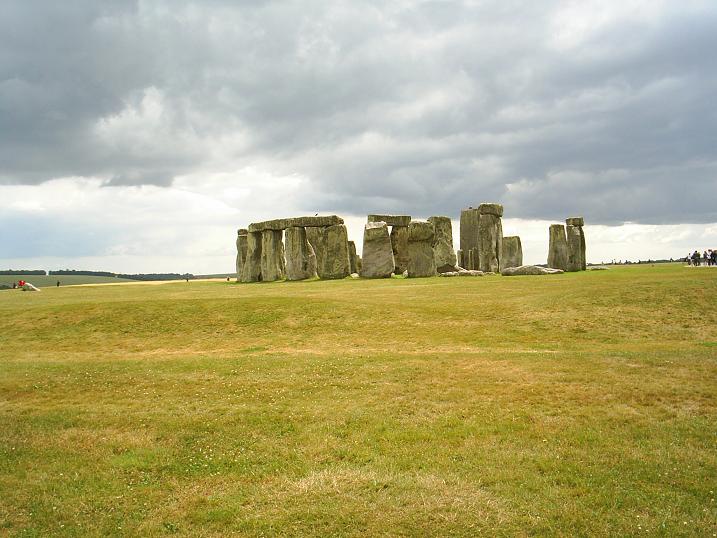
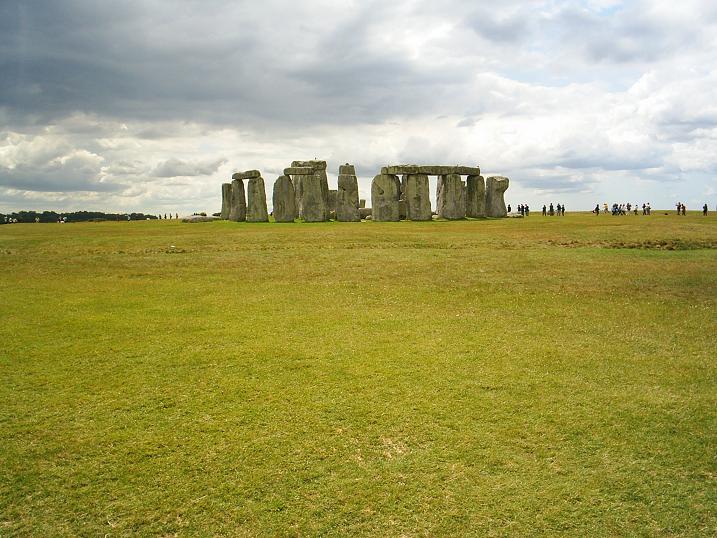
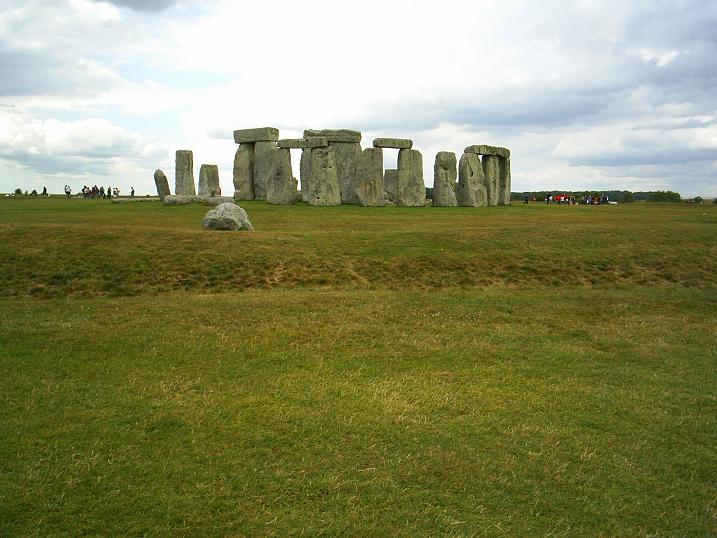
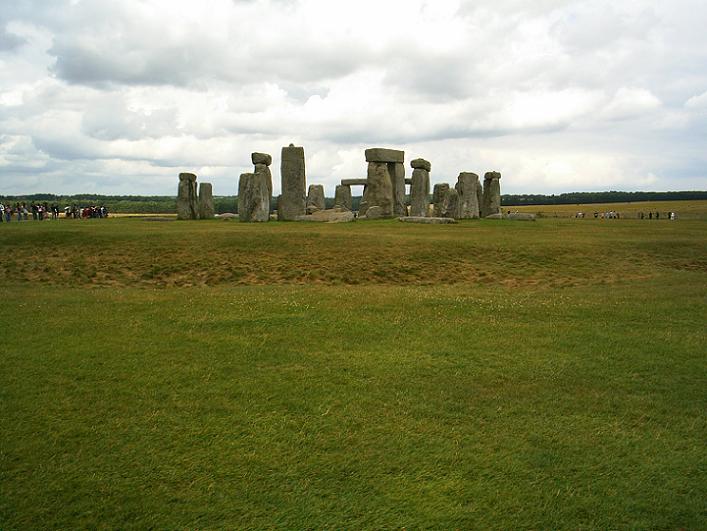
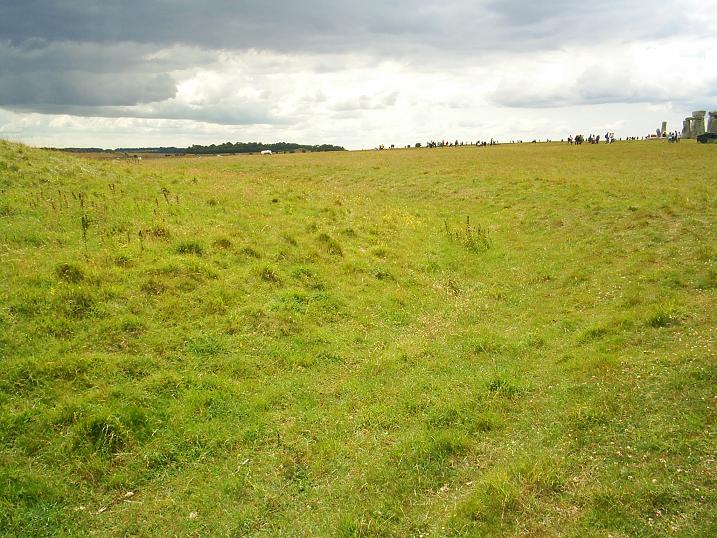
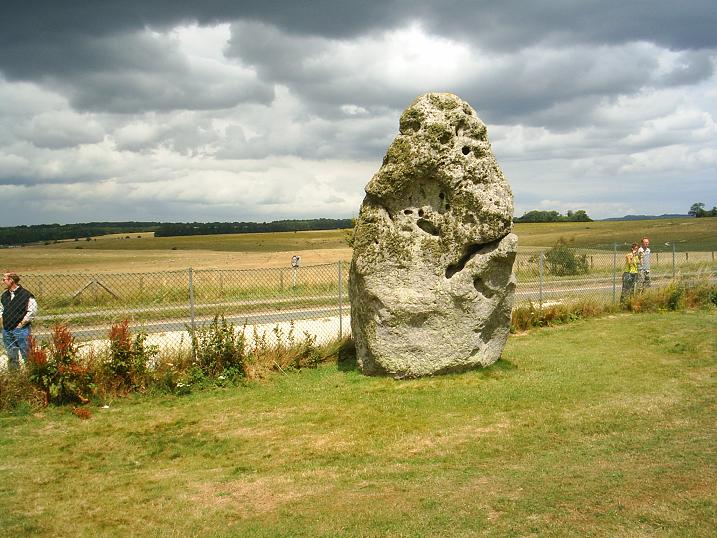
It is pretty much ignored, except, perhaps, by the occasional interested people passing by in a car. It lies just east of Stonehenge, and most people will be seen with their backs to it, staring at the enigmatic sarsens of that great circle.
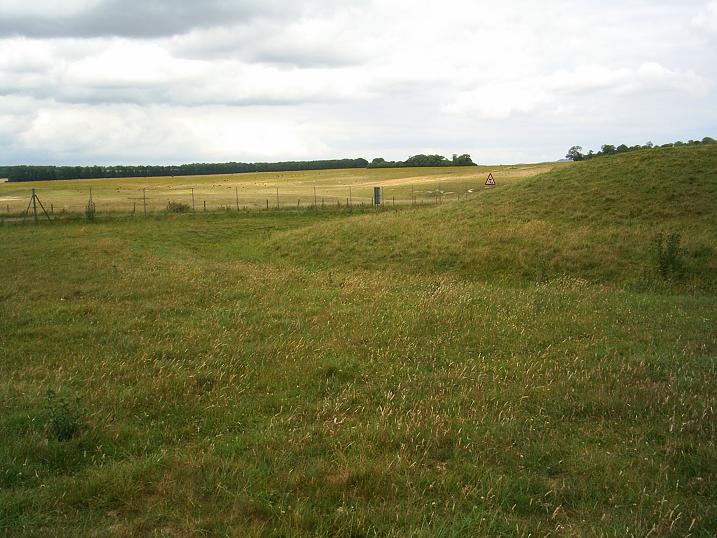
I wandered over, as cloud shadows chased across the landscape, the sound of the traffic close by. I have never seen anyone approach it, and I had it to myself. There is an impressive ditch with berm, and a patch on the SE side has been eroded away, probably by rabbits. It is quite an impressive barrow.
The ubiquitous Hoare dug here, discovering, beneath an upturned urn, bone tweezers and a cremation, as well as bluestone fragments.
Next time you manage to dodge the obscene admission fee, and sneak into Stonehenge over a distant fence, walk across to our old friend, Amesbury 11, and keep it company for a while, as it's a lonely old soul.
|

|
  
|

|

|

|
|
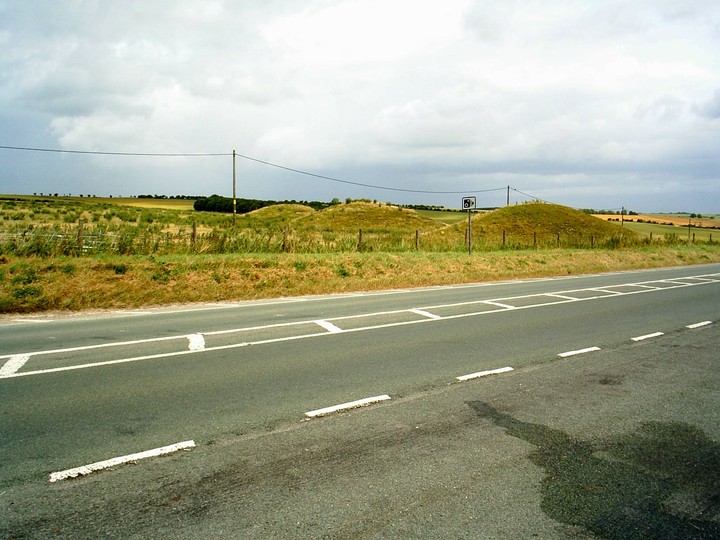
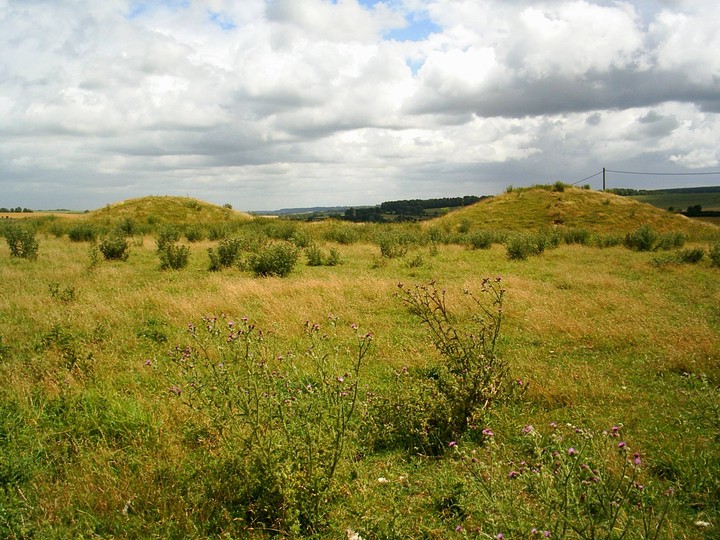
What a lovely collection of round barrows, and a shame about the A4 spoiling the peace, and separating them. They are by The Ridgeway, which leads you up the hill to more tranquil surroundings, and the promise of a journey through history. The hairy old mounds, with a head of long grass, speak of the past, and I wonder about the scenes in the days when these monuments were being constructed. The Sanctuary is their neighbour, and leads the eye to nearby Avebury, and Silbury Hill, to which these sites are inexorably linked.
|
Bleasedale Circle is a wonderful place, surrounded by trees, through which the wind sighs or howls. Sometimes, well, quite a lot, it rains. It is Lancashire after all.
The peace within is complete. Few people visit, and the trees will be a bit overbearing for some, but for me it works well, and adds to the sense of the past. True, it'd be good to see the surrounding fells of the Trough of Bowland, and to look towards the Fylde coast, but the modern wooden markers of their predecessors, along the edge of the well preserved ditch, along with the info board all help to reconstruct the site in the Modern Antiquarian mind.
If in Preston, pop into the Harris Museum to view the beaker with cremation that was found here, along with a reconstruction of the site.
|
I can't believe I haven't posted owt about (like the rhyme?) one of the grestest of our chambered tombs. I'm having a blitz on sites I've not posted fieldnotes about, me.
Here goes. A few years ago we took our chances and crossed the A4 without being killed by some speed-freak with lowered suspension, wide tyres, and a big phallic exhaust. I suppose it makes them feel a little less inadequate. I'm turning into my dad.
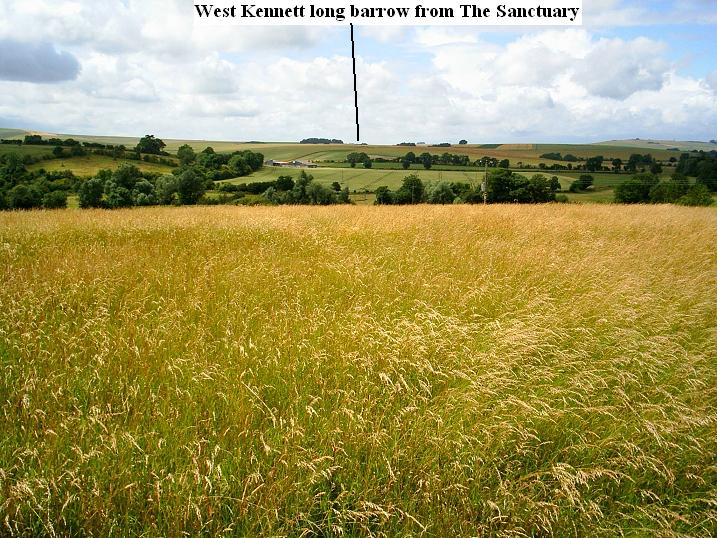
Anyway, our ancestors, who built WKLB had other things to worry about, like missing thigh bones, skulls, and other body bits. What a memorial to a collective of people. It makes you think about how graves and grave markers have developed over the milennia, yet the basics have remained the same: stone. Did the WKLB people have any form of "writing", and is the absence of markings on the sarsens proof of no "writing"? I know of the carvings on the Stonehenge sarsens, but wouldn't you think that such a huge monument as WKLB would have had some form of "words", symbolic or otherwise? Or was the memory of people in the form of ancestral stories, passed down through the generations? Perhaps telly and stuff has got in the way of our modern communication.
It's an awe-inspiring site, with big stones, and an even bigger earthen mound, and great views. It's just below a ridge, so where was it supposed to be seen from?
Marvellous.
|
A few years ago I stood on top of Silbury Hill, and was absolutely gobsmacked by the sheer effort required to raise this behemoth. Why? Deep thought fails to bring an answer. With all the comforts and ease of a modern day life I bet we couldn't be arsed to do anything remotely as big with the tools they had to hand. Their life would be hard work without the hassle of this monumental construction.
To get into the mind of these people is impossible, and beyond the realms of archaeologists, who can, like us, just theorise.
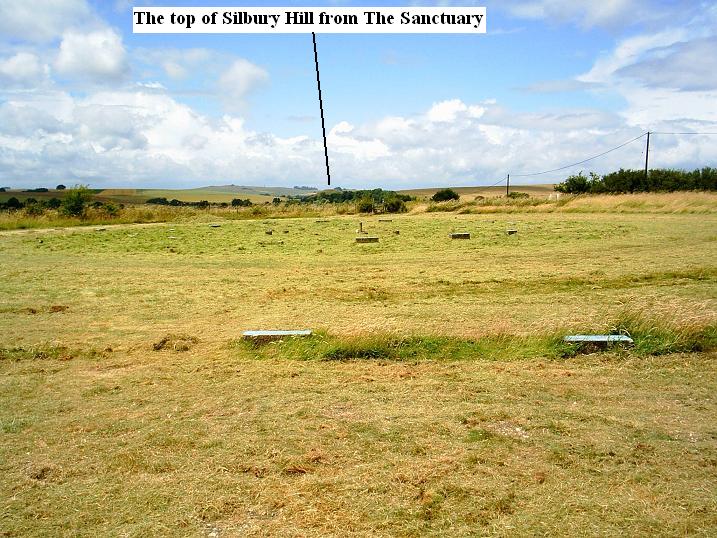
Looking from The Sanctuary, on 07/07/09, I could see the downs rolling across the landscape, and there, in the middle of it all, was a flat-topped mini-down, dear old Silbury Hill. It didn't look at all drawfed by the surrounding landscape, truly a tribute to her architects, for she always seems a she to me. Bless 'er.
|
|
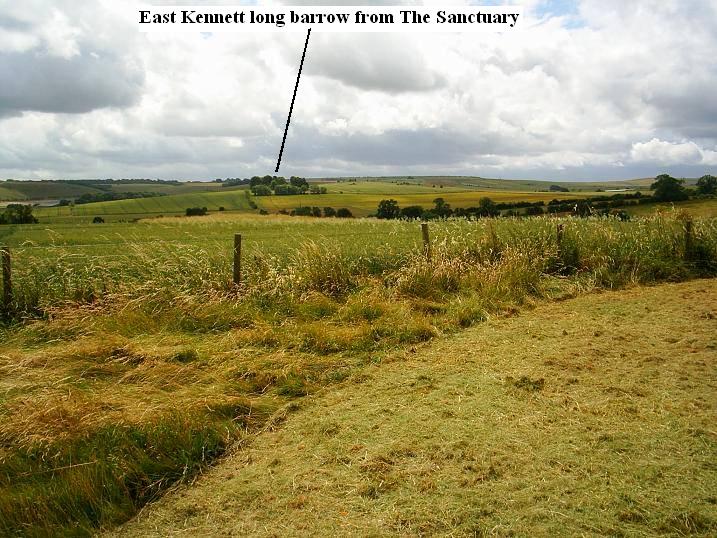
My latest visit (07/07/09), and the Natioinal Trust warden was finishing off strimming the grass, or rather the latest of many showers finished it for her, and sent her scuttling back to the Land Rover. I waited for the rain to stop, and the warm sun to return, and entered the sacred site, ankle-deep in strimmings (is there such a word?). They almost obscured the ugly concrete markers, which isn't a bad thing. The number of outstanding sites visible from The Sanctuary is more than you could shake a big stick at, and sites that would be on any anorak's ticklist: East Kennett long barrow, West Kennett long barrow, Seorfon round barrows, The Ridgeway, Silbury Hill, and dear old Avebury. Need I go on. Alright, I will - Adam's Grave. Good, eh? If The Sanctuary had a doorstep, I could safely say it's a crying shame that the A4 is on its doorstep. Why, as a nation, are we famous for ruining our historic sites by running roads right through or by them? The Sanctuary would be truly that if it was remote from the A4, and had its original stones. It still exudes an atmosphere, in spite of everything.
|
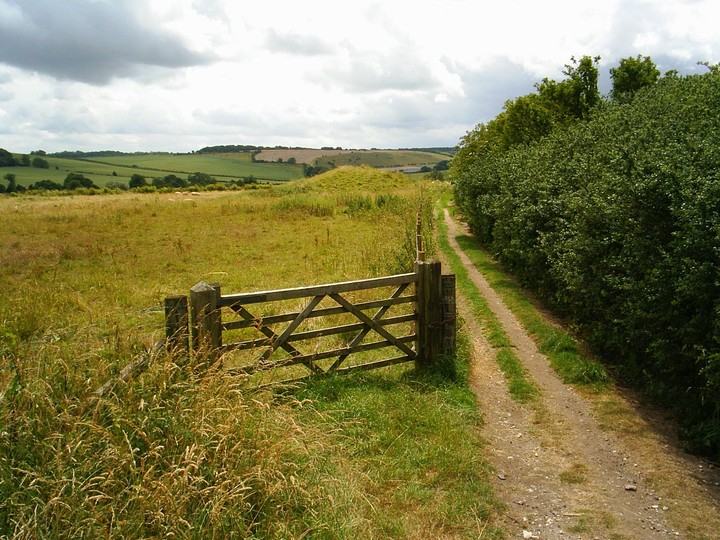
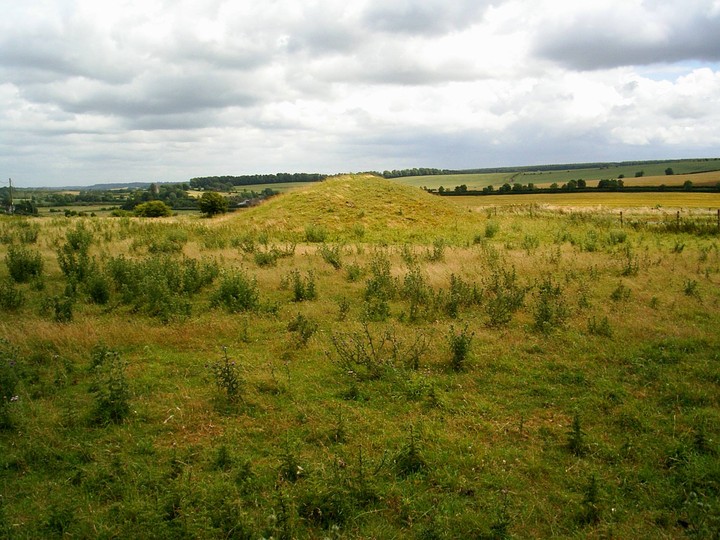
A few years ago I visited Knap Hill, and was blown away by the place. However, I then walked across to Adam's Grave, which outshone it. Knap Hill is the bridesmaid, and adam's Grave the bride. Having said that, it is a place to put on your places to visit before you shuffle off this mortal coil. Adam's Grave is a place to put on your list of places to visit tomorrow in case you shuffle off this mortal coil the day after tomorrow. In fact, stuff it, spoil yourself, visit them both tomorrow, it'd be daft not to.
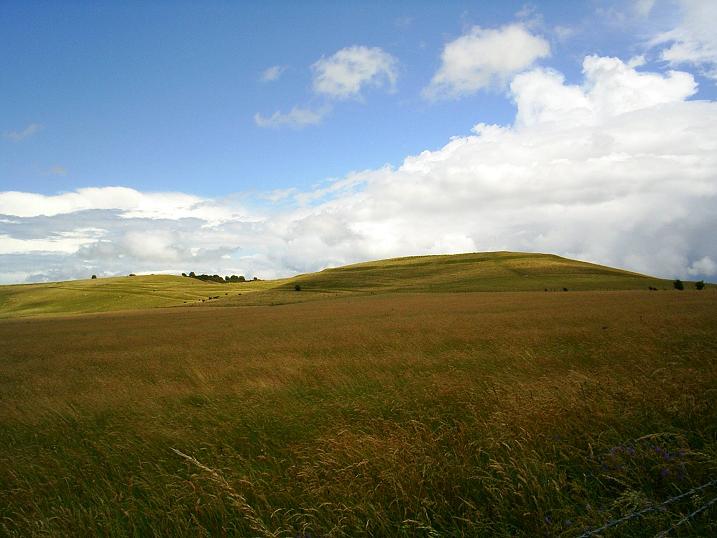
Knap Hill is wide open, with outstanding views, and a sense of loneliness for a people gone. Choose a day of wind, and clouds sailing like galleons across the sky, with the sun-dappled landscape stretched out before you, with Avebury to the north, and Salisbury Plain to the south.
|
Big Wiltshire skies, cloud shadows chasing across the downs, creating a patchwork quilt over the already patchwork quilt of the farmland, wide-open spaces, pre-history peppered across the rolling landscape, a landscape of curvy, female-like form, and views over golden fields. There's the odd crop circle too.
I first visited Adam's Grave a few years ago, and was struck by the prominent position it occupies, visible from miles around. Knap Hill sits handily away to the east, and it's good to feel the wind through my scalp. This is a special place, a place of great atmosphere, and a place where I feel great inner peace. Whoever was placed to rest her for eternity was truly blessed. I wish I could meet the people who built this barrow, for they truly felt something, something intangible to us today.
Sit up there on the right sort of day, and dream of the distant people, for whom a great, unknown driving force set them to work on this tomb.
|
 
|
|
 Log in |
Register
Log in |
Register


 Previous 50 | Showing 51-100 of 448 posts. Most recent first | Next 50
 Top of page