|
 Log in |
Register Log in |
Register
|

|
|

Hembury CastleHillfort
|
||||||||||||||||||||||||


 0 discussions


 Show map (inline Google Map)
|
|
|
News |
 Add news Add news |
An incredibly rare chance to buy your own Iron Age hillfort –- with ‘significant archaeological, conservational and ecological value’ Lydia Stangroom October 22, 2021 Your eyes do not deceive you. Upon first glance, the ancient monument known as Hembury Fort Cross could well be mistaken as just a verdant hilly slope coated in trees... continues... |
 Posted by ryaner
22nd October 2021ce |
Images (click to view fullsize) |
Add an image |
Photographs: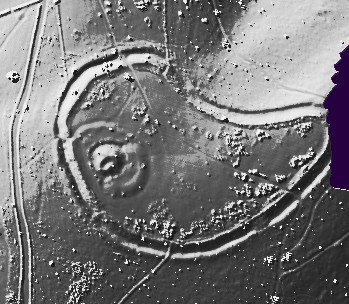
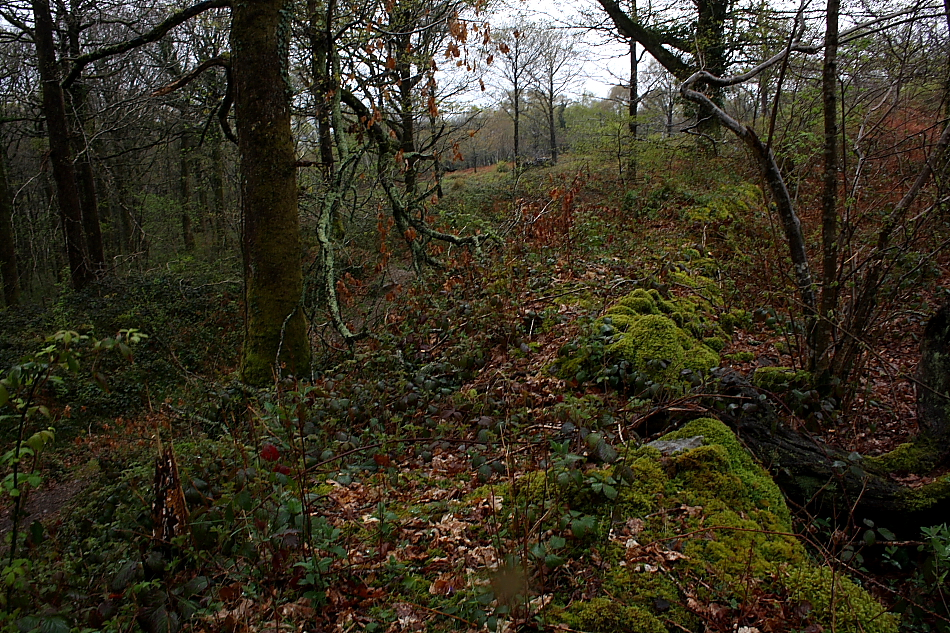
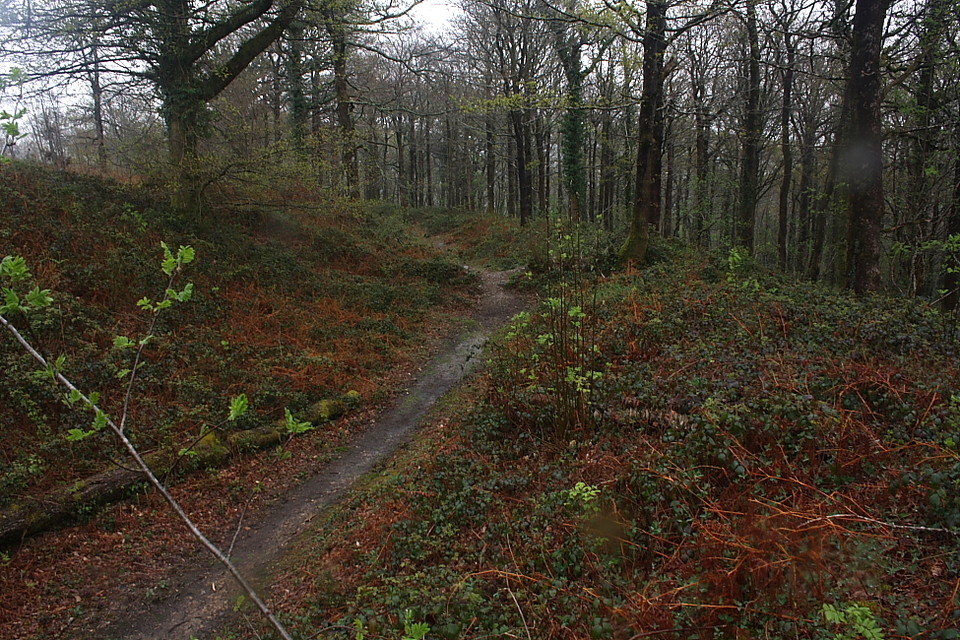
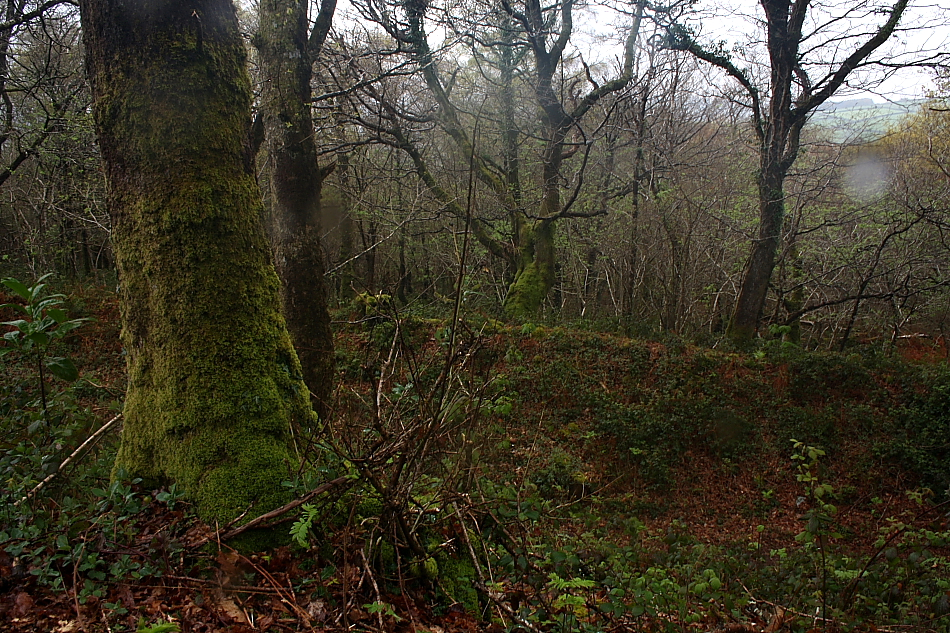
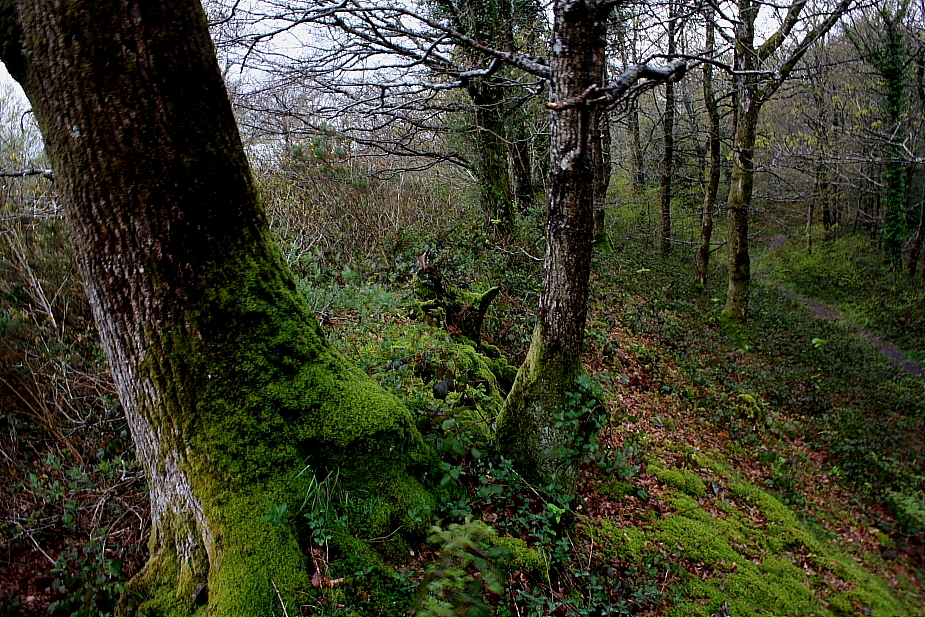
 Maps / Plans / Diagrams:
|
Folklore |
Add folklore |
Certain spots on Dartmoor are more commonly haunted by the Wish Hounds more than others: and on its borders there are many long narrow lanes, closely overgrown with thorn and hazel, through which they pass in long procession on particular nights, - of which St. John's Eve is always one.From an article about 'The Wish or Wisked Hounds of Dartmoor' in the Athenaeum (March 1847). St John's Eve is the 23rd of June, the evening before the traditional Midsummer Day, so (somewhere around) the shortest night of the year. |
 Posted by Rhiannon
2nd March 2012ce Edited 2nd March 2012ce |

One earth-castle, Hembury, near Buckfastleigh, has a legend that long ago when the defenders were likely to be overwhelmed, they retreated leaving their womenfolk to deal with the situation in the manner of the Danaides. The ladies welcomed the enemy, took them into their beds and stabbed them all in the night. We owe the discovery of this legend to Mrs Diana Woolner, F.S.A., who has found the same story attached top148 in The Folklore of Devon Theo Brown Folklore, Vol. 75, No. 3. (Autumn, 1964), pp. 145-160. |
Posted by Rhiannon 25th November 2006ce Edited 25th November 2006ce |
Miscellaneous |
Add miscellaneous |
|
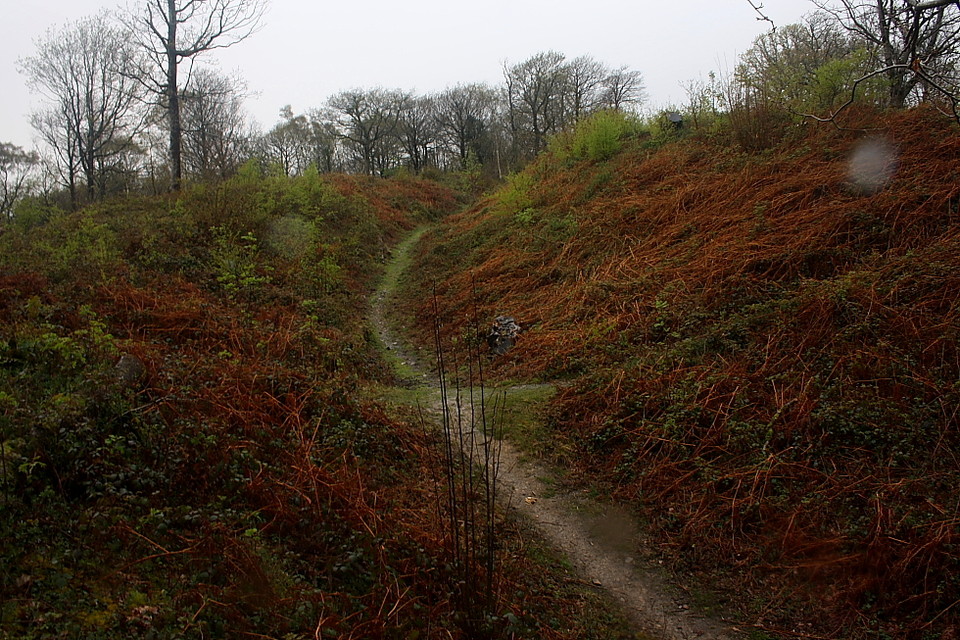
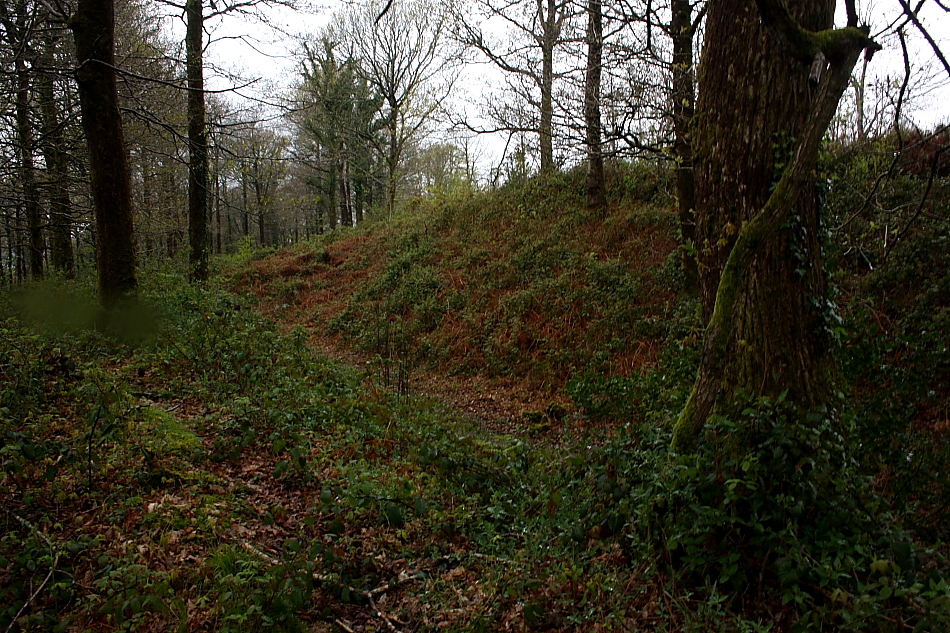
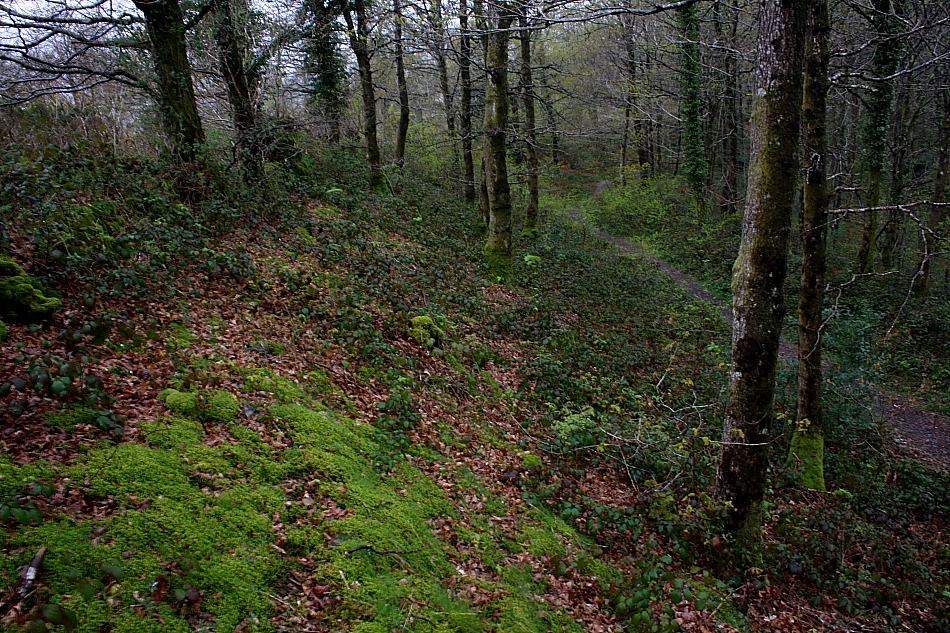
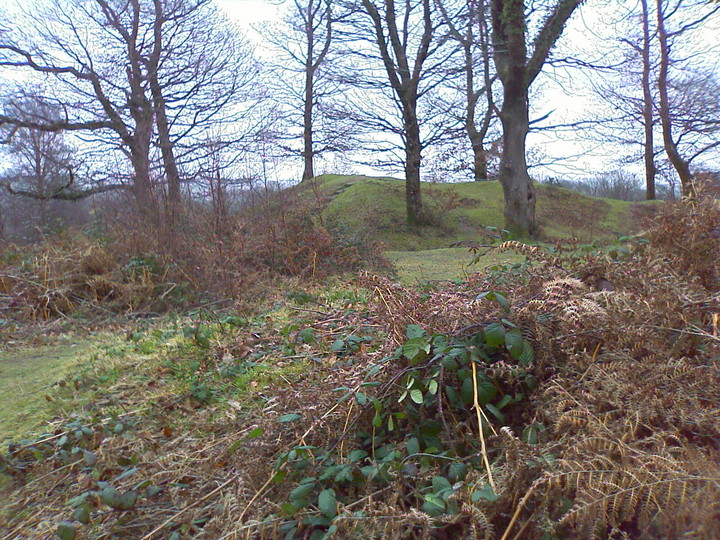
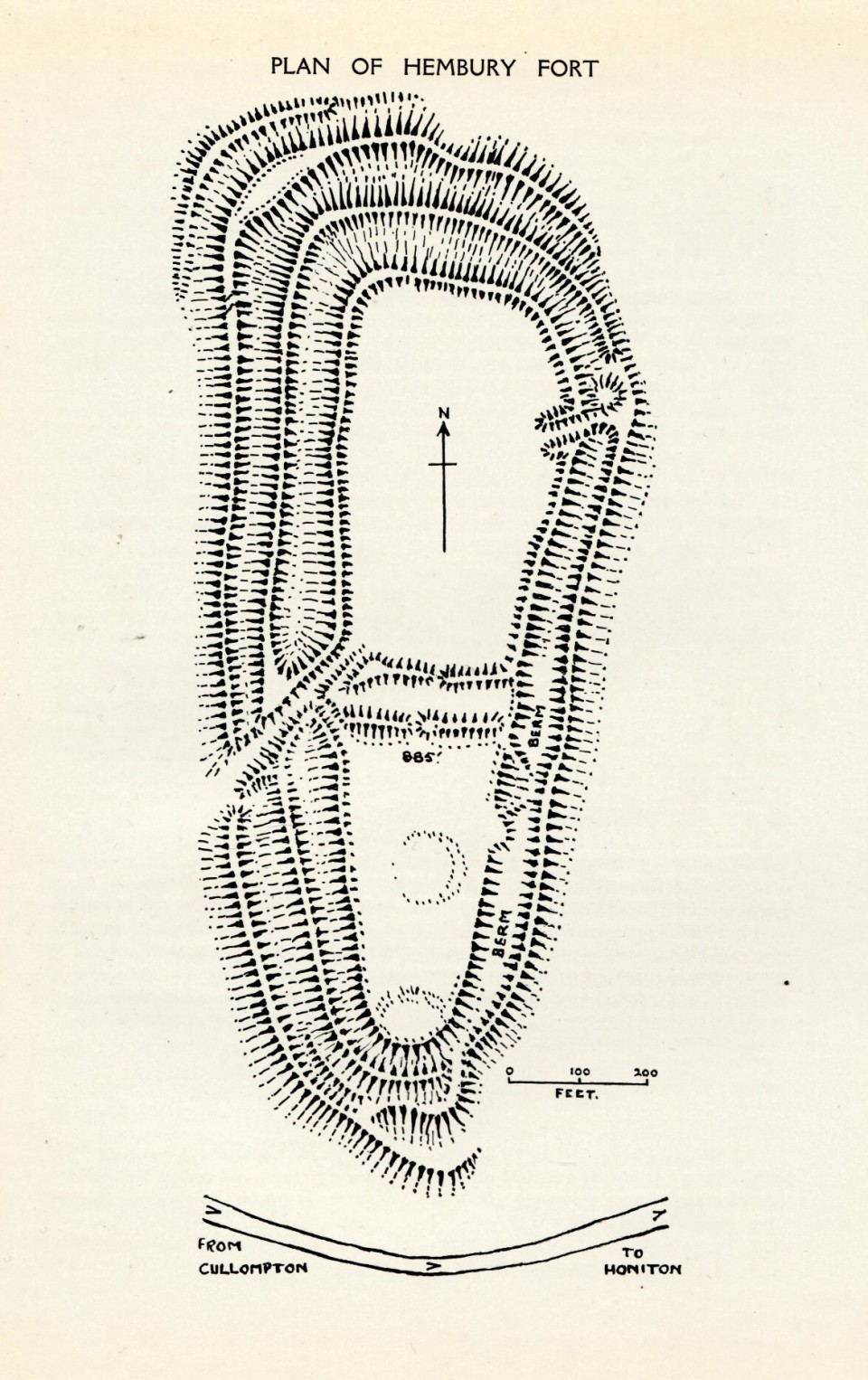
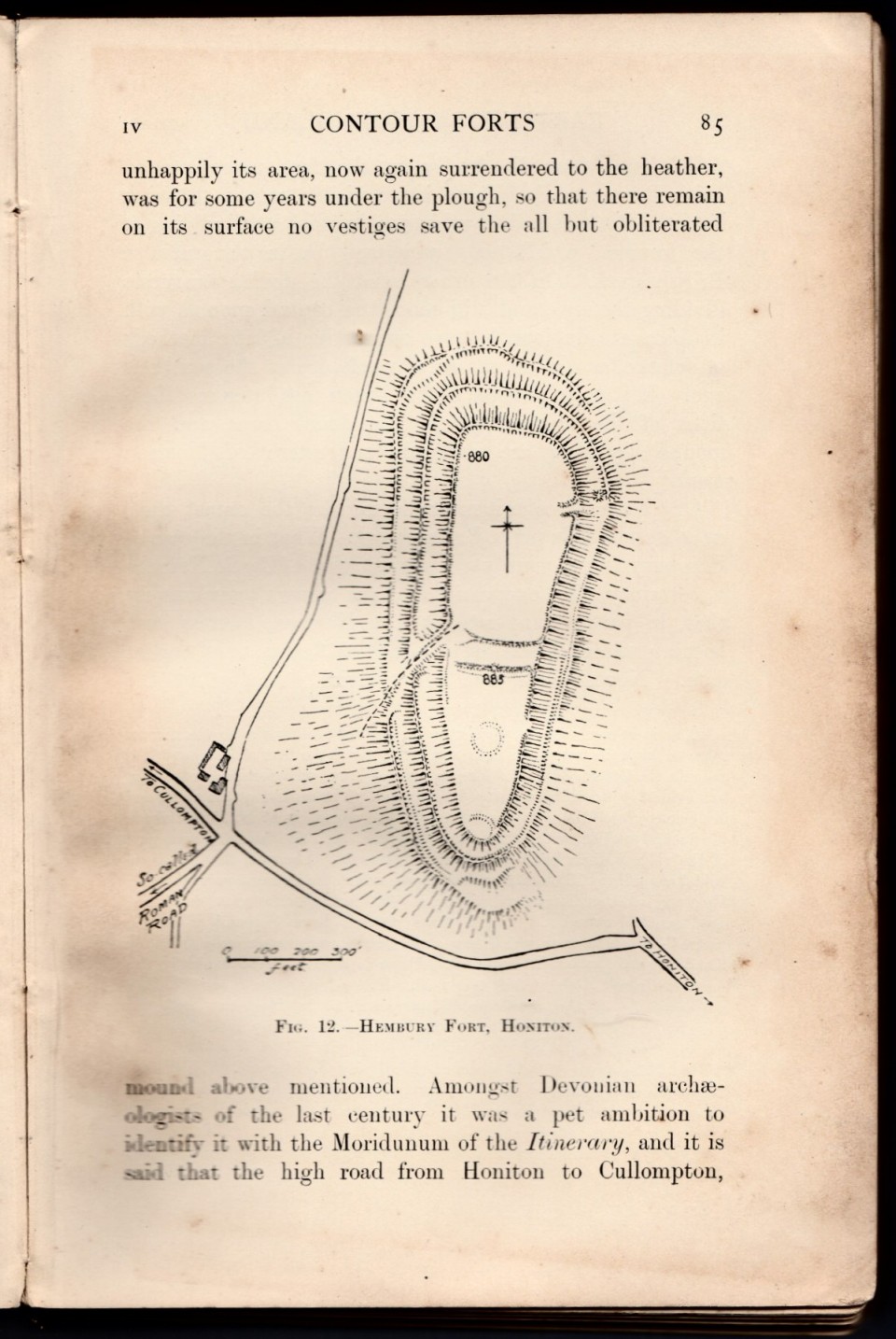
Details of the Hillfort on Pastscape An early Iron Age Camp, Hembury Castle is a contour-following hillfort. It is formed by a double rampart which extends for the whole of the perimeter though much of the inner slope of the inner rampart has been destroyed. The outer rampart of counterscarp bank is weakest on the north-east where natural slopes afford some protection. A number of small causeways occur in the deep medial ditch. These are not modern and may represent the limits of sections of work during the original construction or subsequent deepening which may have taken place during a possible Medieval phase of occupation (see SX 76 NW 7). The original entrance appears to be on the south-east and is of simple type. Three other breaks in the defences, on the south-east, north, and west, are of much later date and carry footpaths in modern use. |
 Posted by Chance
30th April 2014ce Edited 5th May 2014ce |

|
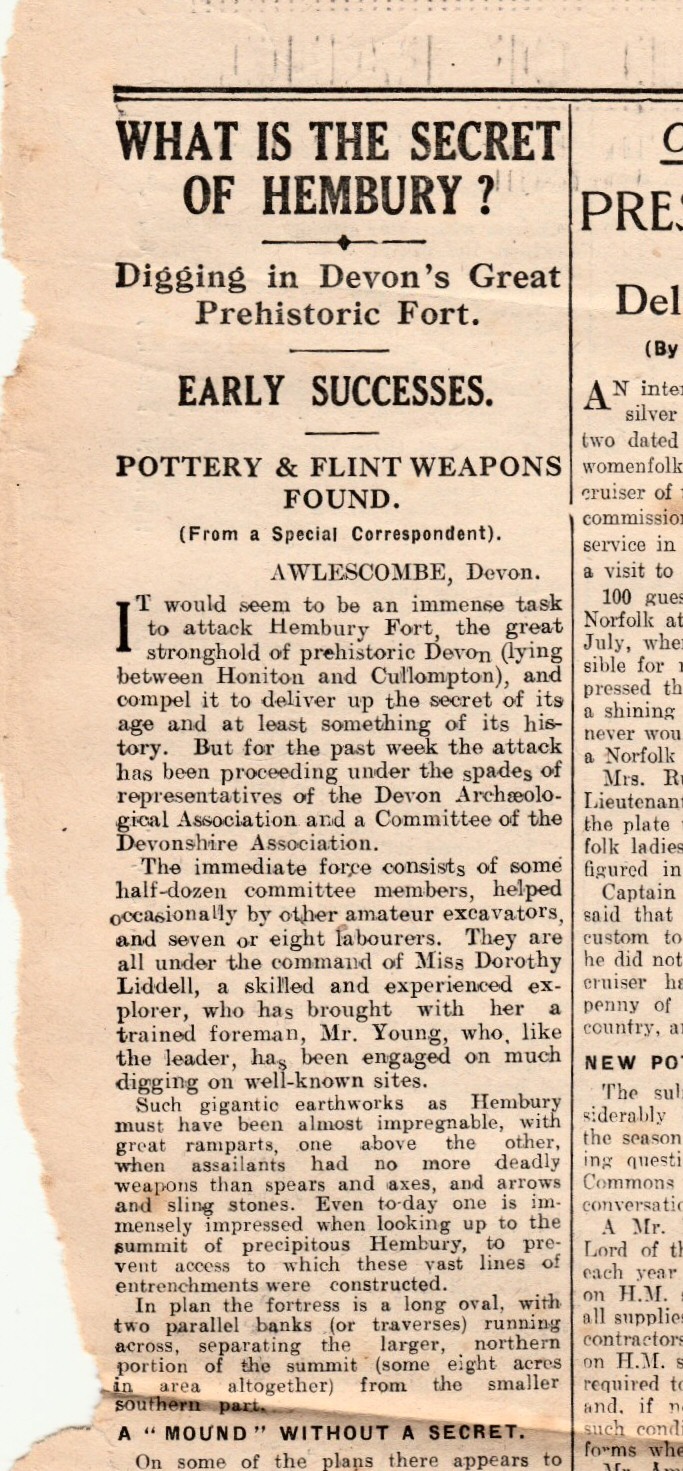
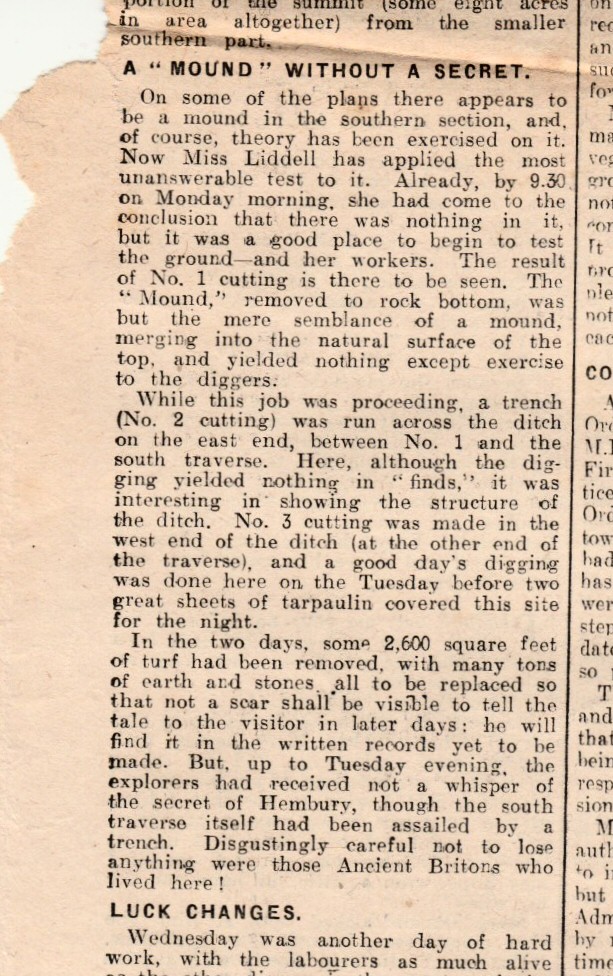
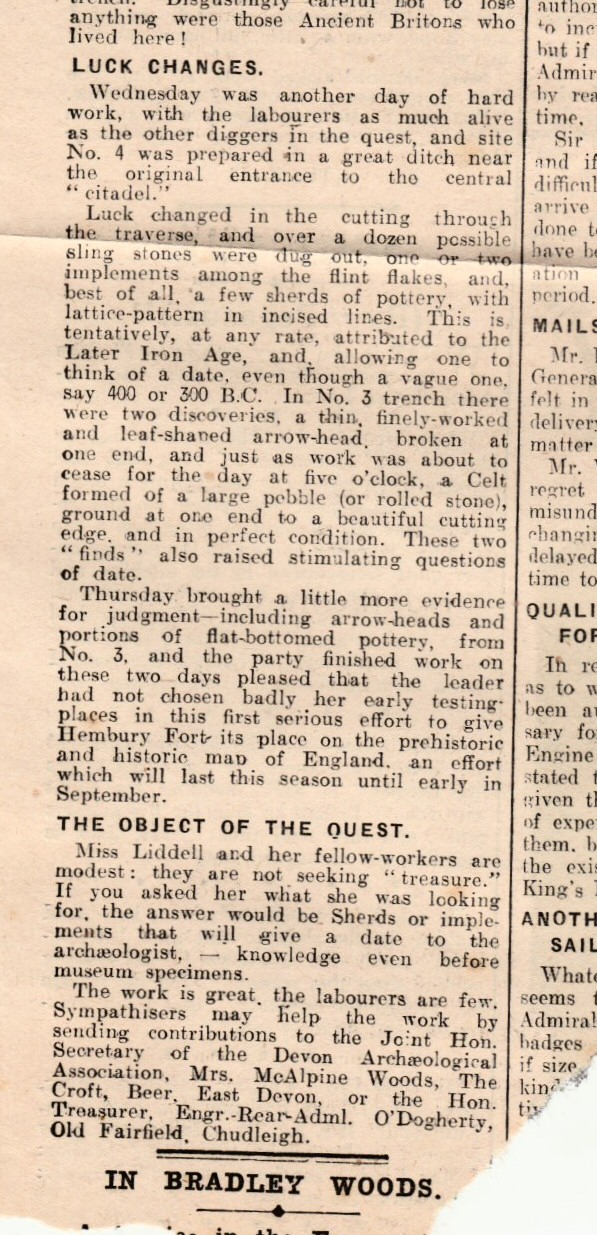
Notes on Excavations during 1935 Hembury Fort 1935. The 5th season of the D.A.E.S. Excavations at Hembury Fort, Devon, carried out in May under the direction of Miss Liddell FSA, saw the uncovering of the eastern Early Iron Age Entrance practically completed. In contrast to the western Entrance this had no revetment posts, but relied on more complicated palisade work. There were 60 feet of cobbled roadway leading through an elaborate gateway, and wooden structures represented by the sockets and cores of 18 posts set in two huge pits. The iron shoe upon which one gate revolved was found in one post-hole, and ornamented 'Glastonbury' type pottery from some others now dates the building of the main ramparts. Numerous Neolithic cooking holes, and abundant traces of Neolithic dwellings were found beneath the Iron Age earthworks about this gateway, and an unusually long section of Neolithic ditch, measuring over 70 feet, traverses the entrance, running beneath the cobbled roadway. The course of this second Neolithic ditch has not yet been traced, and it remains a problem whether it can possibly haver any connection with the Neolithic ditch in the southern half of the Fort, or whether it is part of an independant ring in the northern half. The 6th and 7th sections of the first Neolithic Ditch were located in the southern half, showing its course to curve right across to the eastern vallum on its way to encircle the Neolithic habitation site previously discovered on the extreme southern point of the Fort. Two large Neolithic post-holes were found on the margin of the 7th section of the ditch. Quantities of flint and greenstone implements and of native and imported Neolithic pottery were recovered. A trial cutting in the northern half disclosed a 4th period of occupation in a Romano-British pit, which had cut through an earlier Iron Age pit, amd which contained pottery of the third century A.D. |
 Posted by wysefool
29th April 2007ce |
Links |
Add a link |
Hembury Castle Video |
 Posted by wickerman
6th July 2012ce |

Legendary DartmoorOpening lines of site: 'The intention of this web site is to provide an overview of the many aspects of Dartmoor in the hope that they will inspire people to visit the moor and discover the numerous, "Gems in a Granite Setting" for themselves. ' |
 Posted by Pilgrim
14th January 2009ce |
 Top of page