|
 Log in |
Register Log in |
Register
|

|
|

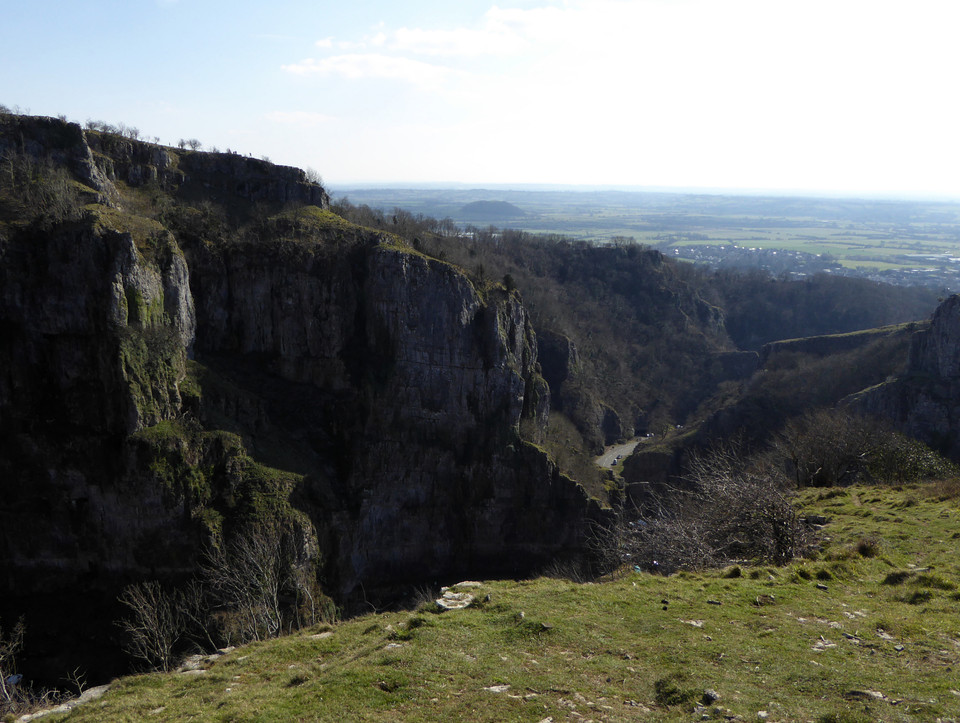
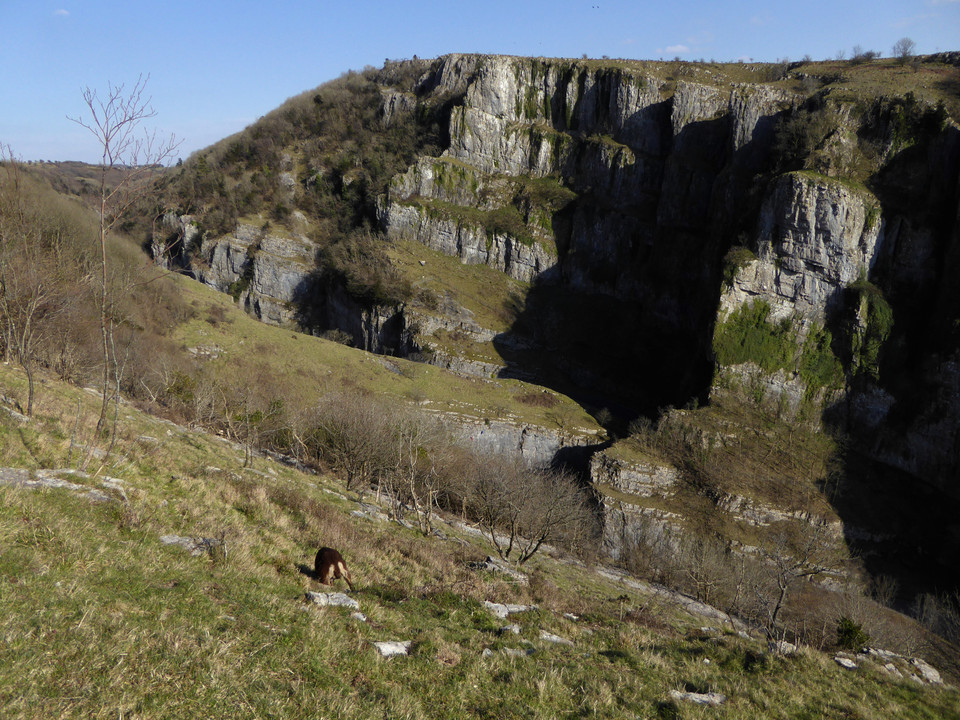
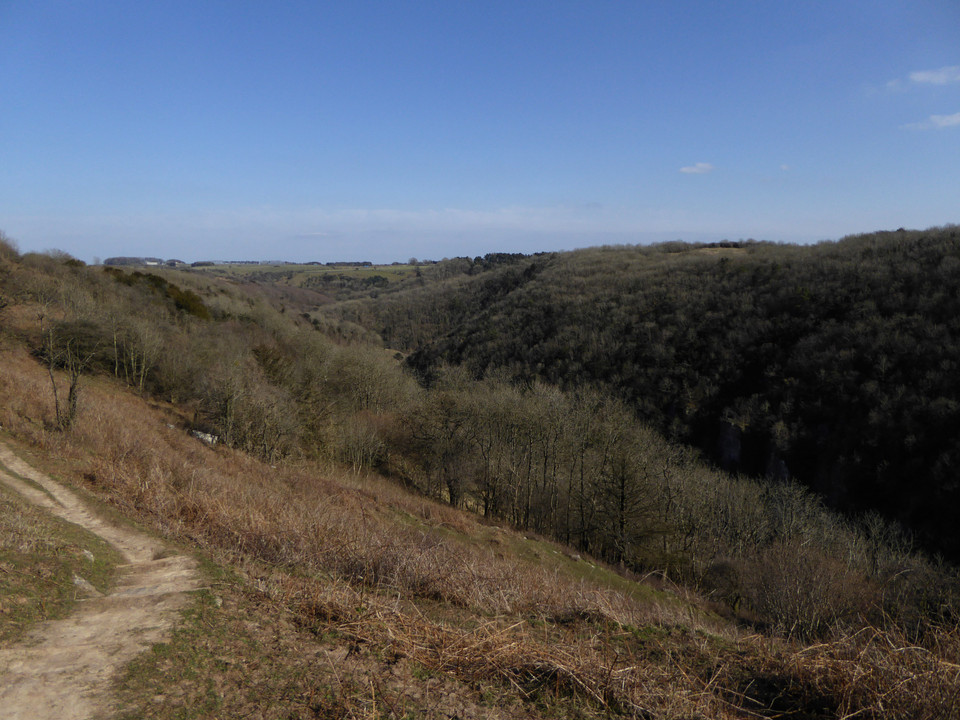
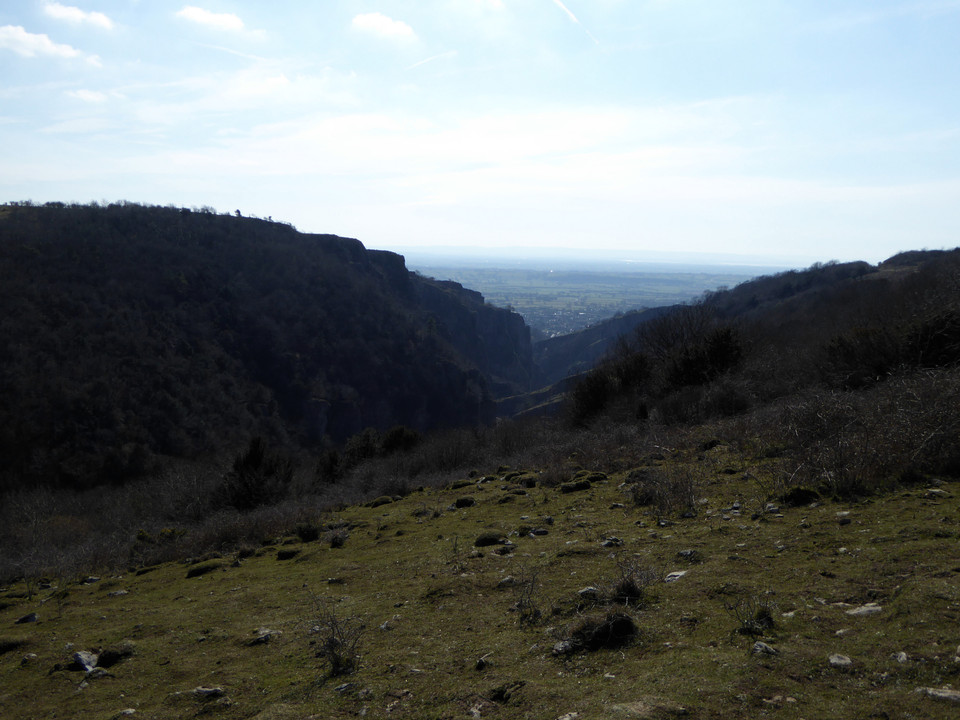
Cheddar Gorge and Gough's CaveCave / Rock Shelter
|
||||||||||||||||||||||||


 0 discussions


 Show map (inline Google Map)
|
|
|
News |
 Add news Add news |
Prehistoric Britons ate their dead and carved mysterious markings on their bonesCheddar Gorge in Somerset’s Mendip Hills is one of Britain’s most beautiful natural wonders, with its sweeping limestone cliffs, and striking natural rock chambers. But new evidence suggests the picturesque site had a deeply sinister past... continues... |
 Posted by moss
14th August 2017ce |

New information about life in Gough's Cavehttp://www.guardian.co... continues... |
 Posted by Rhiannon
23rd June 2010ce Edited 3rd April 2016ce |
Retesting of bones gives new occupation dateBones from Gough's Cave have been re-radiocarbon-dated, giving a new date 14,700 years ago. This matches the archaeological evidence better than the previous radiocarbon tests. The date suggests Cheddar Gorge was one of the earliest places in Britain that was colonised after the Ice Age... continues... |
Posted by Rhiannon 20th July 2009ce |
More on 'Mammoth' carvingThis page at the 24 Hour Museum has a photo and diagram of the newly-found carving. http://www.24hourmuseum.org.uk/nwh_gfx_en/ART49804.html (You can call me a cynic, but when you think "mammoth", what features come to mind? Fur. Tusks... continues... |
Posted by Rhiannon 19th August 2007ce Edited 3rd April 2016ce |
Prehistoric cave art found in Gough's Cave"It might not have the instant impact of modern graffiti but a mammoth carved on to a wall in Cheddar Caves 13,000 years ago is being hailed as one of the most significant examples of prehistoric art ever found in Britain... continues... |
 Posted by baza
14th August 2007ce Edited 3rd April 2016ce |
Images (click to view fullsize) |
Add an image |
|
Folklore |
Add folklore |
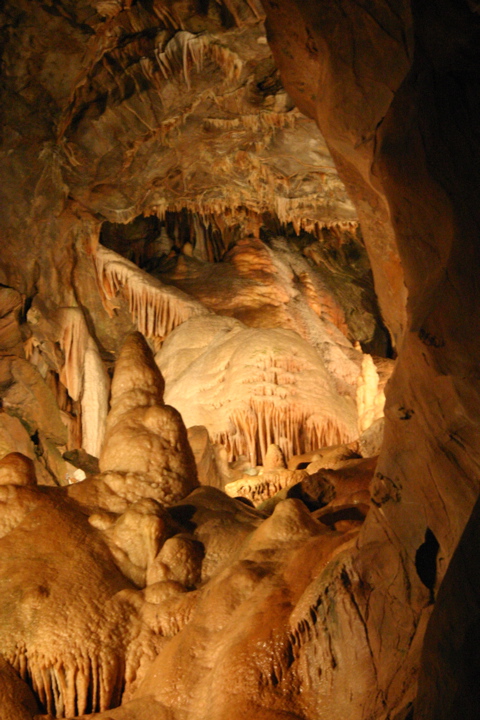
Cheddar Cave [...] is lofty in parts, and full everywhere of fantastic incrustations -- turkeys hanging by the legs, a brown loaf, with the mark of the baker's thumb, ropes of onions, organ pipes, cables, curtains (broad, transparent sheets), jelly glasses (reflected in a pool), and a stalactite and stalagmite separated now, as when the cave was first discovered, by just the space of one drop of water. This, Mr. Cox used to say, shows the slow growth of all these diverse petrifactions, the breaking off of one of which (he ominously hinted) had brought ruin on a thriving Taunton solicitor.Mr Cox, we are told, discovered the cave in 1837 when he was breaking up the ground for potatoes. Running a show cave obviously became more lucrative. I thought it was interesting that he used the same kind of 'harm to meddlers' threat that accompany other stoney sites. From 'Good-bye to Wessex' in 'London Society' magazine, April 1871. |
Posted by Rhiannon 31st March 2009ce |

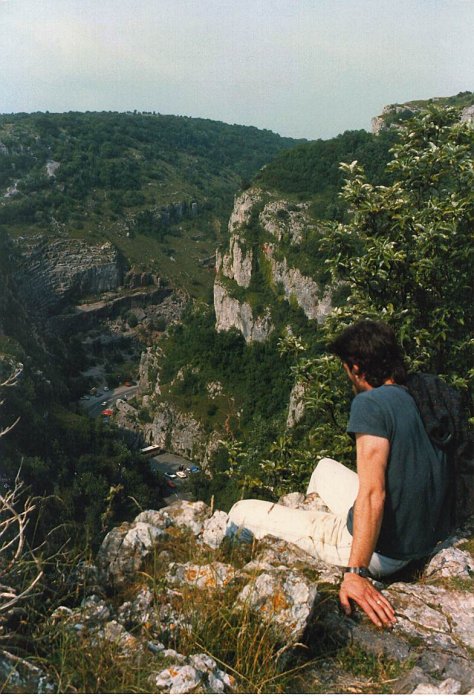
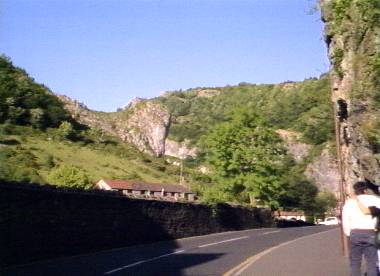
| When the Devil first say the Mendip Hills they were smooth in outline, and legend has it that he decided to spoil them by digging out a deep channel which became the Gorge. His first spadeful of rock and soil was thrown out to sea to become the islands of Flat Holm and Steep Holm (off of Weston Super Mare). The next load became Brent Knoll. He also meant to destroy the Minehead and Watchet area but when he jumped over the River Parrett the basketload of soil he was carrying flew off in several directions. |
 Posted by pure joy
21st March 2003ce |
Miscellaneous |
Add miscellaneous |
|
Details of Sun Hole cave on Pastscape [ST 4671 5404] SUN HOLE [G.T.]. (1) Cave, 120' up the cliff, vertically over the car park, excavations 1927 and 1951/3 revealed Roman coins (AD 273-345) and pottery, a few I.A. sherds; B.A., flints and pottery (inc. a globular urn); leaf-shaped arrowhead, Ne. pottery spoon and pottery, and a hearth in a Beaker/NE. A. horizon associated with human remains. This overlaid a Pleistocene deposit which contained faunal remains and a few flint implements of typically late Creswellian facies. Finds in U.B.S.S. mus. (2-5) Sun Hole is in the cliff face on the northern side of the Gorge at ST 46735408. Positioned at 1:2500. (6) The radiocarbon date of the Upper Palaeolithic at Sun Hole is c.10428 BC. (7) Additional references. (8-10) |
 Posted by Chance
18th April 2015ce Edited 3rd April 2016ce |

|
Details of Sugar Loaf Slitter on Pastscape [ST 46835414] Sugar Loaf Rock [T.I.] (1) Bones of Cave Lion, Cave Bear and Hyaena and possibly Rhinoceros found in a fissure behind Sugarloaf Rock. In Goughs Cave Musuem. (2) This fissure is known as Sugar loaf Slitter and is at ST 46905415. There seems to be no record of any human remains from this site. Positioned at 1:2500. (3) |
Posted by Chance 18th April 2015ce Edited 3rd April 2016ce |
|
Details of Sow's Hole rock shelter on Pastscape A rock shelter located at the foot of the cliff on the southern side of Cheddar Gorge. It is one of two, the other known as Pig's Hole (ST 45 SE 2). There has been uncertainty in the past as to which is which. It has been decided, rather arbitrarily, that the smaller of the two, located at ST 47845455 should be known as Sow's Hole. Excavations in 1930 apparently recovered Iron Age potsherds. |
Posted by Chance 18th April 2015ce Edited 3rd April 2016ce |
|
Details of Soldier's Hole rock shelter on Pastscape [ST 4690 5398] SOLDIERS' HOLE [G.T.]. (1) Rock shelter, 150' above the road. Excavated 1925-6 and later. R.B. pottery, a coin (copy of a third brass of Claudius ii), E.I.A. material, Ne. sherds and flints, including a partly polished flint axe were found in a disturbed top layer. The bottom two layers of the deposit contained flints of La Madeleine and Solutrian type. The faunal remains in these layers were late Pleistocene. Finds in Goughs Cavern Mus. Piggott lists a B.A. Globular urn from Soldiers Hole in Wells Museum. (2-6) Soldier's Hole is at ST 4686 5400. In addition to the finds listed above a single looped socketted axe is displayed in the museum of Gough's Cavern. Positioned at 1:2500. (7) |
Posted by Chance 18th April 2015ce Edited 3rd April 2016ce |
|
Details of Pig's Hole rock shelters on Pastscape [ST 47755453] Pig's Hole' [ST 47605452] Sow's Hole; rock shelters containing derived material (silt, etc.). Sow's Hole was explored by R.F. Parry in 1930 and a few shards of I.A. pottery were found. (1-2) These cave shelters are at the foot of the cliff as the southern side of the Gorge at ST 47705454 and ST 47845455. The present authorities on Cheddar caves - N.R. Barrington, Oak House, Axbridge; I.W. Stanton, "Iona", Easton, Nr. Wells; (3a) and Prof. Tratman (1) - know that these are referred to as Pig's and Sow's Holes by Bolch (2), but they are uncertain as to which the names should be correctly applied. For convenience it has been arbitrarily accepted that the large cave shelter at ST 47705454 should be known as Pig's Hole, and that the small overhang at ST 47845455 should be Sow's Hole. (3) |
Posted by Chance 18th April 2015ce Edited 3rd April 2016ce |
|
Details of The Slitter and Long Hole Cave on Pastscape [Name ST 467 538]Long Hole [T.I.]. (1) ST 4667 5389. The Slitter and Long Hole Cave. The former consisted originally of a steep scree slope (part destroyed when building the Cave Man Restaurant) leading up to long Hole Cave, alias 'The Roman Cave' some 150' up in the cliff face. R.B. occupation of Long Hole cave is attested by finds made by Gough, 1887/8 and subsequently in the Slitter below. These include human remains (of at least 15 individuals, aged 4-45), iron spears, pottery, etc. and coins of late Emperors' 'sealed together in little heaps'. Boon lists 376 coins dating from the 1st-4th cents. found here and in Goughs Old Cave, and comments that the Bronze coins making the Valentinian total, 284, probably came from a hoard. A post A.D. 395 coin of Arcadius and a quasi-autonomous bronze of Rome, C. A.D.500, is included in the collection, now in the museum at Goughs Cavern. It is not possible to associate the coins specifically with either find spot. (C.F. ST 45 S.E. 10, Goughs Cavern). Before 1934 the slitter deposit yielded a bronze palstave: The human remains from here were presented U.B.S.S. Museum, 1951. (1-5) The entrance to the Long hole is at ST 46685387. The majority of the finds from this cave are displayed in the museum at Gough's Cavern. Positioned at 1:2500. (6) Additional reference. (7) |
Posted by Chance 18th April 2015ce Edited 3rd April 2016ce |
|
Details of Great Oons Hole on Pastscape [ST 4675 5393] GREAT OONS HOLE [G.T.]. (1) 300' above the road, an open hole. Ransacked, with no record of finds: but Upper pa. flints which may have come from this site, including a flint knife hafted to a bone handle, are in the Weston-super-Mare Museum. It also contains iron and bronze buckles, E.I.A. pottery and bone spindle whorls. (2-4) The entrance to Great Oons hole is at ST 4679 5393. Positioned at 1:2500. (5) Additional reference. (6) Natural cave, with modifications, used as operational base.Great Oone's Cave - among trees on left bank at head of slope, 160 feet above coach park beside Cooper's Hole which is 200 yards up Cheddar Gorge from Gough's Cave on left bank at road level. (7) |
Posted by Chance 18th April 2015ce Edited 3rd April 2016ce |
|
Details of Gough's Old Cave on Pastscape Located a short distance west of the better known Gough's (New) Cave (ST 45 SE 10), the cave was originally known as The Great Stalactite Cavern, and was on show from at least the late 18th century (when it may also have been inhabited). By 1877, the proprietor was Richard Cox Gough, whose name became associated with it. However, by the 1890s the cave had been eclipsed both as a public attraction and an archaeological site, by Gough's New Cave. The cave clearly held a large accumulation of material, but much was removed during the 19th century with little record. The talus was removed without record in 1934. Sample excavation of what little remained in the way of cave deposits occurred between 1954-8, although the deposits proved to have been disturbed considerably. Finds included an assemblage of animal bones, including mammals and birds, from which 3 radiocarbon dates have been obtained, ranging from circa 12500 bp to 9300 bp. Iron Age and Romano-British pottery and quern fragments and features described as "hearths" were also found. Other Roman finds included a coin and a few bronze items. |
Posted by Chance 18th April 2015ce Edited 3rd April 2016ce |
|
Details of Flint Jack's Cave rock shelter on Pastscape ST 46355383 [Sic. probably 46355381] Flint Jack's Cave: a rock shelter 50' above the road. Explored 1893, many flint implements, upper Palaeolithic and possibly Creswellian, were found. Two skulls and bones were alledgedly found here: thought to be contemporary with the industry. Finds in the B.M.(British & Mediaeval, and Natural Hist.) and Weston-super-Mare Mus. (1-2) This cave is in the cliff face on the southern side of the Gorge, at ST 4632 5381. Positioned at 1:2500. (3) |
Posted by Chance 18th April 2015ce Edited 3rd April 2016ce |
|
Details of Cooper's Hole cave on Pastscape A cave with an entrance on the south side of the road through Cheddar Gorge. The front of the cave has been quarried back, and the interior contains substantial quantities of debris deposited during an episode of flooding in the late 1960s. Exploration in 1931-2 by RF Parry recovered Iron Age pottery from the cave and from the area of the car park immediately to the south, as well as the remains of domesticated and wild animals. One sheep bone with a hole bored through the middle was described as a "bobbin". A female inhumation was also found in the car park area. In 1966 these finds were on display at the museum at Gough's Cave (ST 45 SE 10). Explorations were also undertaken by the University of Bristol Speleaological Society in the late 1930s, and by several cavers subsequently, primarily in the belief that Cooper's Hole may have led to a much larger cave system, although no evidence to support this idea has ever been found. In 1998 the cave was investigated by Channel 4's Time Team. A flint implement and a deposit of animal bones, the latter below the stalagmite layer and thus potentially of very early, perhaps Palaeolithic, date had been found during cave exploration in the 1950s. Waterlogging prevented re-investigation of this deposit. However, a few sheep bones were found elsewhere within the cave system which have been suggested to be probably Prehistoric on the basis of probable cut marks made by a flint tool. A trench was also dug in the car park in front of the present cave entrance, but could not be taken down as far as the postulated Palaeolithic levels for safety reasons. |
Posted by Chance 18th April 2015ce Edited 3rd April 2016ce |
|
Details of Bone Hole cave on Pastscape [Name ST 4820 547] Bone Hole [T.U.] (1) Bone Hole. Cave 30' deep, human bones found include more than 12 skulls and fragments of others in a detritus of soft mud: but some were imbedded in stalactite. Also found were bones of bear, horse, wolf, boars and Bos; indicating a late period of occupation. (2-4) The entrance to the Bone Hole is at the northern end of an open fissure at ST 48035472. Surveyed at 1:2500. (5) |
Posted by Chance 18th April 2015ce Edited 3rd April 2016ce |
|
Details of White Spot Cave on Pastscape Cave, consisting of a lofty fissure. Painter tells of a tiny opening which only a boy could pass, within which, on a ledge, stood a little pot which fell to pieces when touched. (1) The pot seems to have been found in White Spot Cave. Its entrance is in the foot of the cliff a short distance up the Gorge from Priddy Hole Slitter at ST 47395442. Mr. C. Painter, the son of the late Mr. V. Painter, says that the pot was found about half way along the fissure, but he thinks that the ledge has been destroyed. |
Posted by Chance 18th April 2015ce Edited 3rd April 2016ce |
|
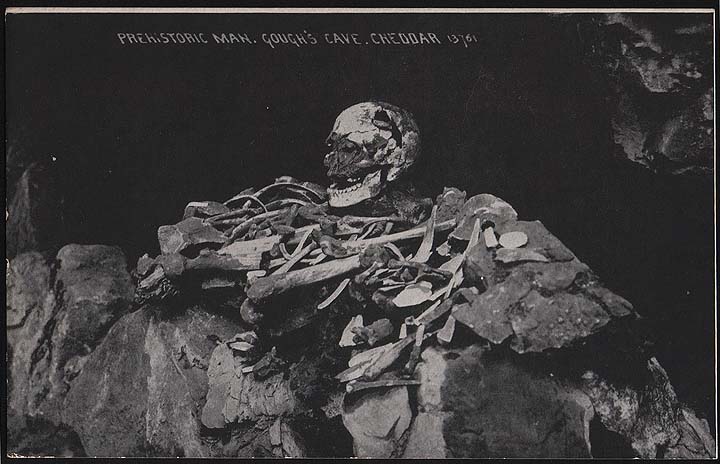
Details of Gough's Cave on Pastscape [ST 4666 5386] GOUGH'S CAVERN [G.T.] (Stalactite). (1) Excavations, 1903 and later, revealed an upper Paleolithic burial, hearths, bone and flint implements, a block of Baltic amber, two 'Batons de Commandemant' etc. The flints were of Creswellian type. The upper deposits contained E.I.A. & R.B. pottery. Goughs Old Cave, 30' east of the above ST 4668 5388, excavated 1954-8. Much disturbed; but two hearths were found, one associated with Roman & I.A. 'B' pottery, and other with I.A. 'A'. Fragments of several saddle querns were found unstratified, but parts of two upper stones were associated with the latter hearth. Finds in Goughs Cavern Museum, Weston-Super-Mare Museum, Taunton Mus, and Univ. Mus., Oxford. Roman coins, 1st-4th cent. and possibly later have been found, possibly here or at the Long Hole cave and slitter [ST 45 S.E. 9]. (2-5) The entrance to Gough's Cavern is at ST 46705391, and the entrance to Gough's Old Cave is at ST 46785389. Positioned at 1:2500. (6) Two items of unusual interest from Gough's Cave (the name which seems now to be adopted for 'Gough's Cavern') are: (a). The skeleton known as 'the Cheddar man' which now has a radio carbon dated of 7130 BC approx, and is thought to be a deliberate interment of the very late Palaeolithic.(7). (b). A bone-point with grouped and purposeful-looking notches, which is thought to be some kind of tally or calculating device. (Good coloured illustration). (7-8) Excavations in 1927. (9) Excavations from 1928-1931. (10) Rescue excavation, 1968. (11) Additional references (12-13) Gough's Old Cave - its history. (14) Late Palaeolithic exploration of horse and red deer at Gough's Cave. (15) Bird remains. (16) Human bones. (17) The remains of 2 children and at least 3 adults were found at Gough's Cave in April-July 1987, during excavations by Lancaster University and the London National History Museum. Possible signs of cannibalism were evident, and a fine collection of artifacts. (18) Additional references. (19-23) The block of amber from Gough's Cave is one of only three certain amber finds of Mesolithic date from Britain, the other two sites being Starr Carr and Cresswell Crags. (24) |
Posted by Chance 18th April 2015ce Edited 3rd April 2016ce |
|
Britain's oldest complete skeleton, ‘Cheddar Man’, was buried in Gough's Cave 9,000 years ago and discovered in 1903. Humans lived in the caves for 40,000 years, leaving behind many stone-and-bone clues to their lifestyle. DNA tests in 1997 established that Cheddar Man still has descendants living in Cheddar. It seems like Gough’s cave is now part of the whole Cheddar Gorge ‘tourist experience’. The ‘Caves & Gorge Explorer Ticket’ allowing access to everything (i.e. including Gough’s Cave) cost almost £9 for an adult in 2002. It is open all year though. |
Posted by pure joy 9th February 2003ce Edited 3rd April 2016ce |
Links |
Add a link |
BBC NewsDr Silvia Bello explains in this short video how she thinks a skull (found at Cheddar Gorge in 1987) was carefully chipped into a bowl shape (with the implication that it could then be used as a cup). Her article is here: http://www.plosone.org/article/info:doi/10.1371/journal.pone.0017026 |
Posted by Rhiannon 18th February 2011ce Edited 3rd April 2016ce |

Cheddar Caves and GorgeOfficial web site for site including maps, opening times & prices |
Posted by Chance 10th July 2010ce Edited 10th July 2010ce |
Channel Four - Time TeamBrief description of Cooper's Hole with photos, animation and links. |
Posted by Rhiannon 4th March 2006ce |
Official website of Gough's Cave (part of Cheddar caves) |
Posted by pure joy 10th February 2003ce Edited 3rd April 2016ce |
 Top of page