|
 Log in |
Register Log in |
Register
|

|
|

MartinsellHillfort
|
||||||||||||||||||||||||


 0 discussions


 Show map (inline Google Map)
|
|
|
Images (click to view fullsize) |
 Add an image Add an image |
Photographs: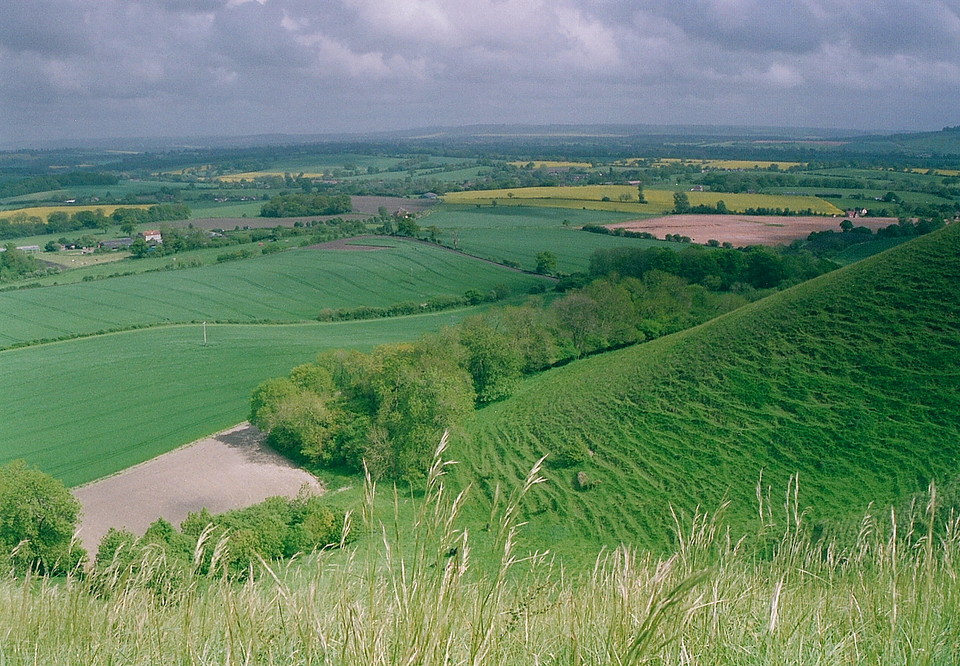
 Artistic / Interpretive: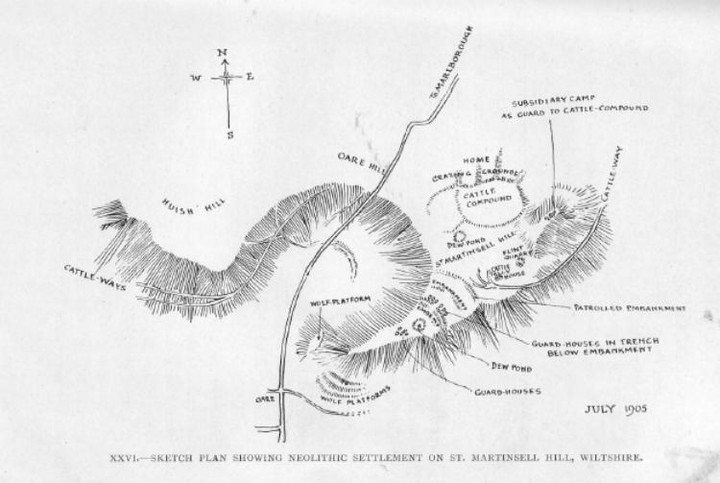
|
Fieldnotes |
Add fieldnotes |
|
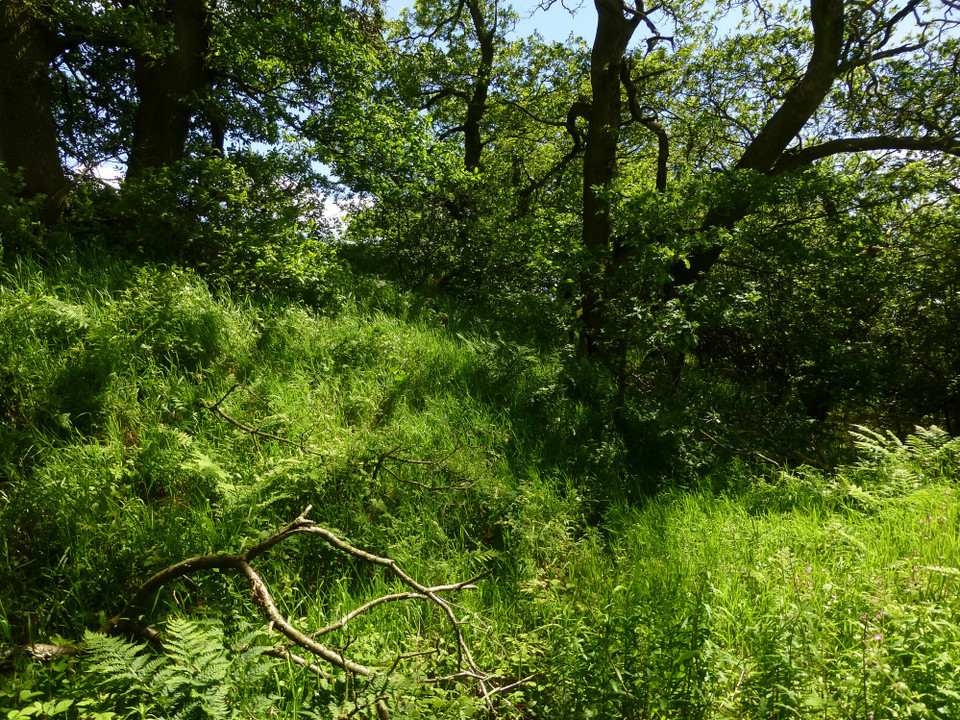
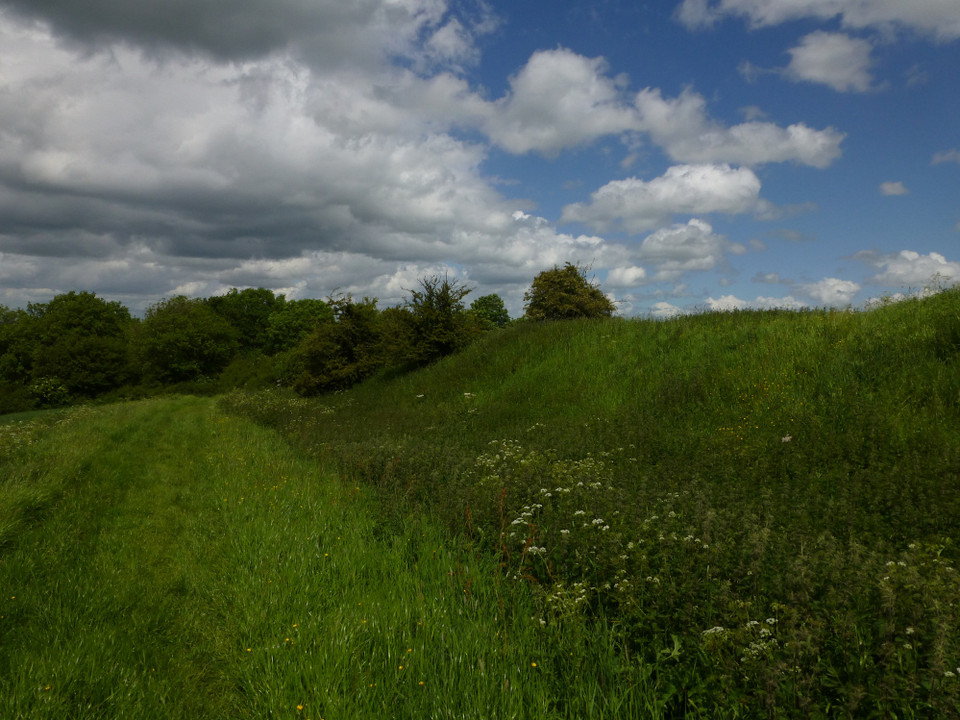
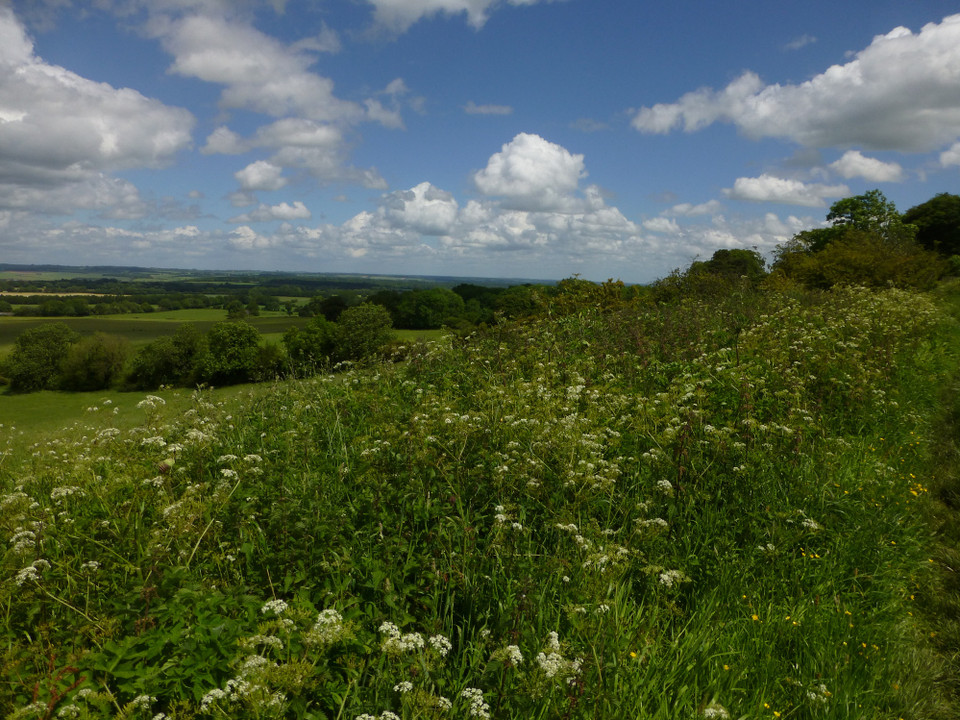
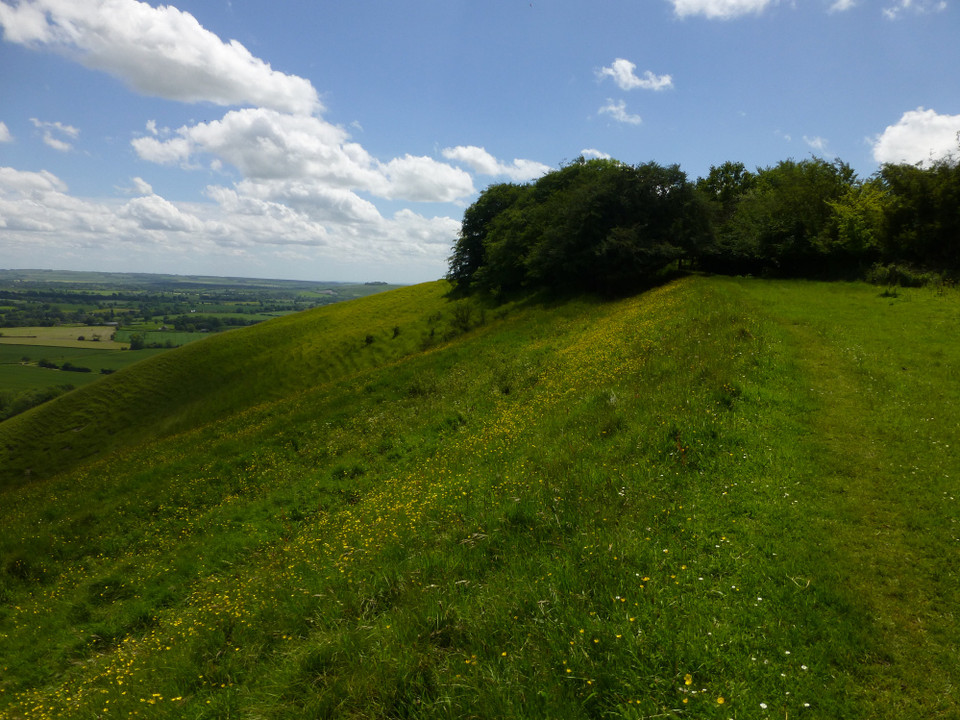
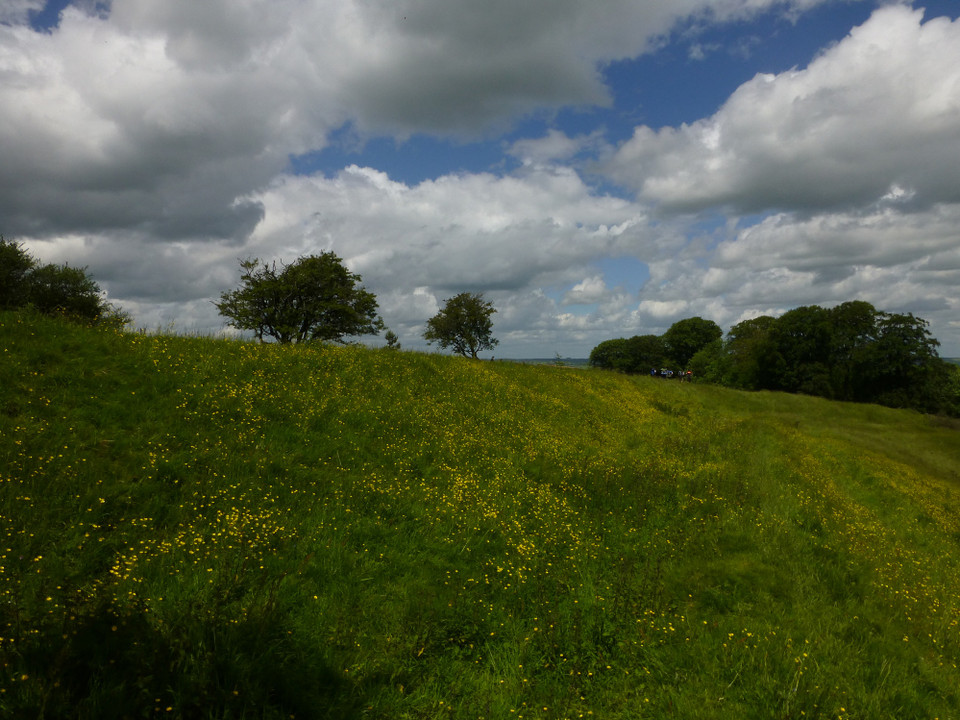
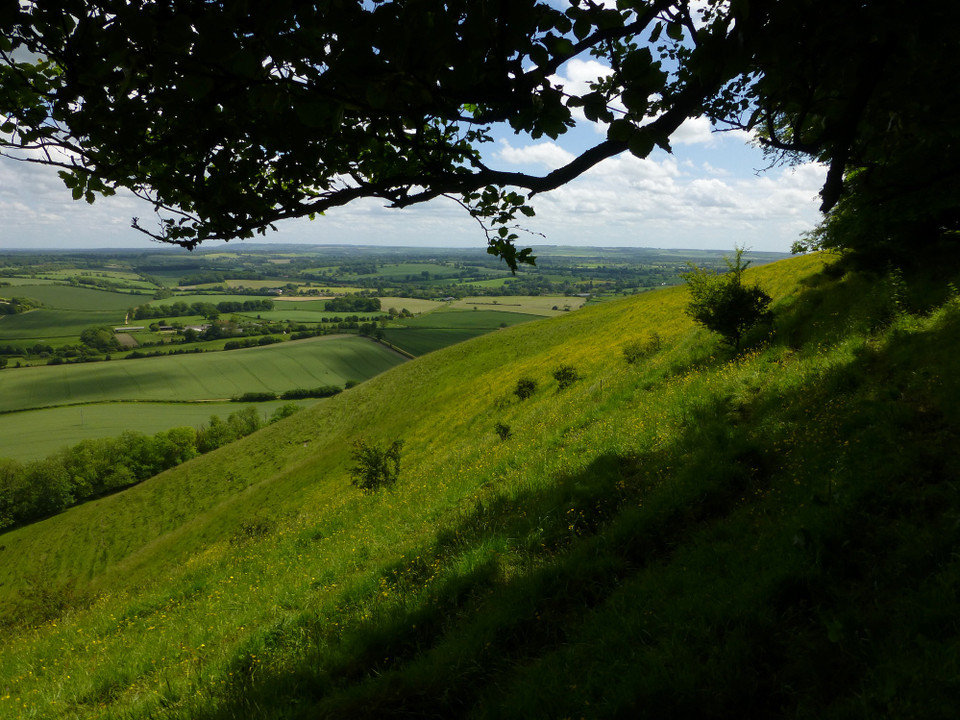
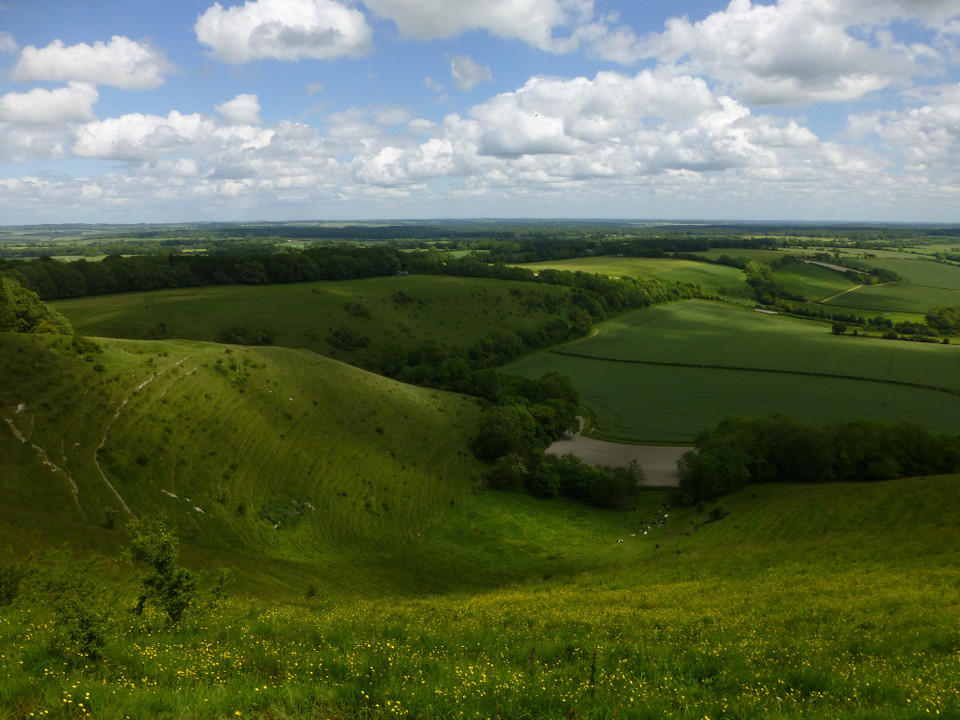
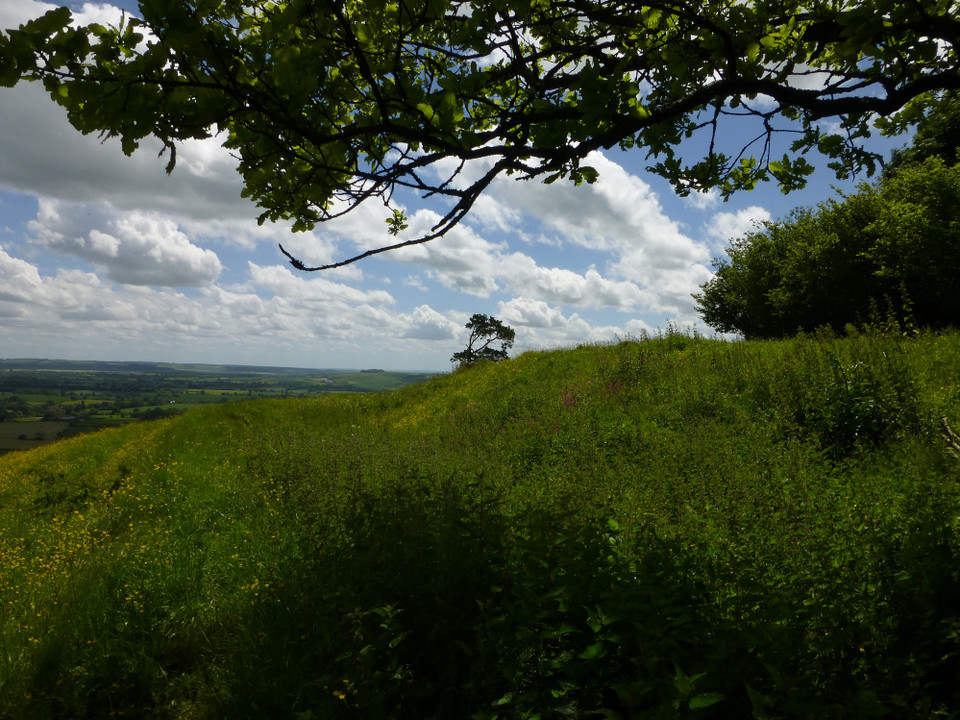
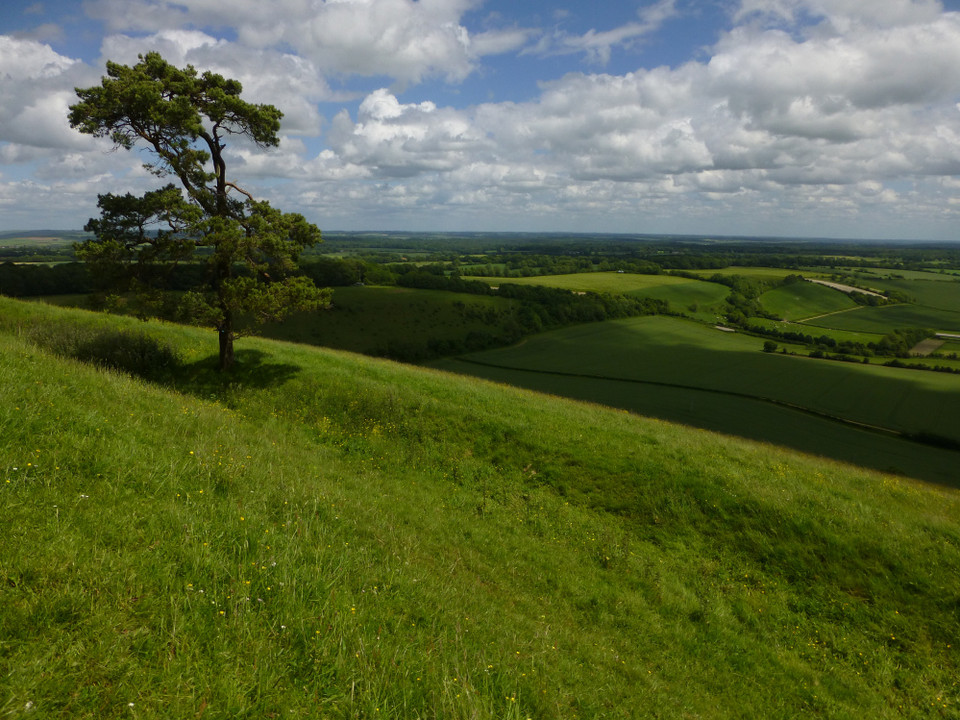
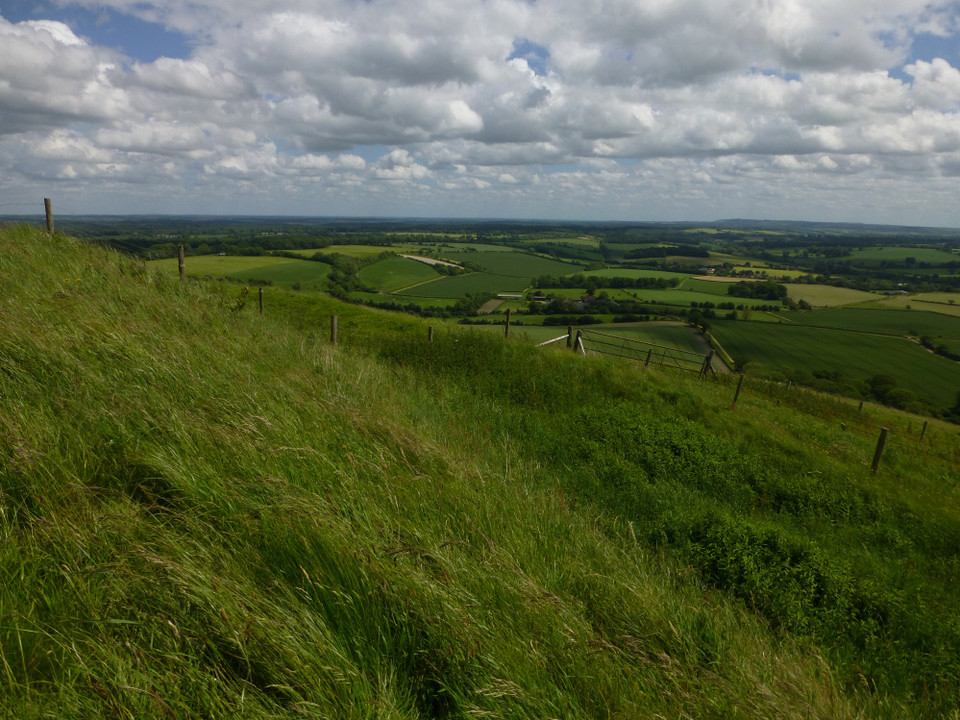
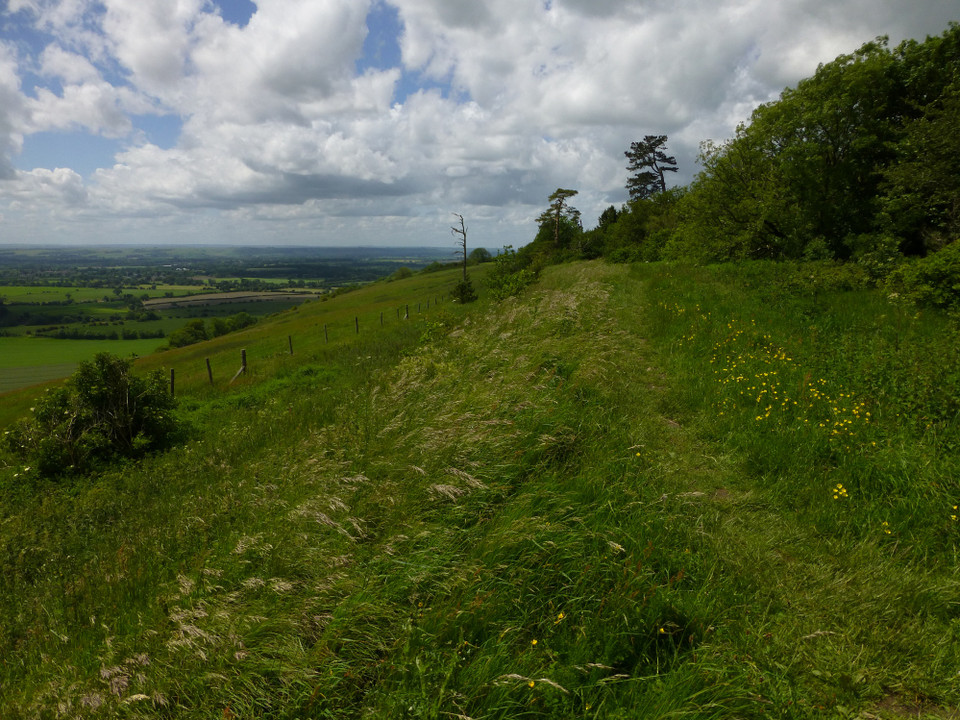
Visited 12.6.10. This was my last stop off on the way home after a long day. I parked in the car park alongside the lane which runs to the east of the hillfort (room for about 10 cars). I looked up and saw what appeared to be a long walk ahead of me. Even though I was a bit tired I decided to go for it and picking Dafydd up, walked over the wooden stile and up the hill. The walk to the top took about half an hour but the gradient wasn't too bad at all and the walk wasn't as gruelling as I expected. It was a lovely warm, sunny summer's evening and the views from the top are spectacular - some of the best I have ever seen from a hillfort. Dafydd played in the grass picking buttercups and daisys and I just sat and admired the wonderful views, watching the sun and clouds make patterns on the fields below. A farm in the distance was calling the cows in for milking. A very, very pleasant place to be. I didn't walk right around the large site and settled for a look at the ramparts near where I sat. I could only see the remains of one ditch / rampart which snaked its way around the hill top. The central area of the hillfort is fenced off although you can walk around the perimeter. A lovely place to visit - for the views alone. Highly recommended. A great way to end a successful days 'old stoning'. |
Posted by CARL 14th June 2010ce |
Folklore |
Add folklore |
A festival used to be held on top of Martinsell on Palm Sunday, which closely resembled an ordinary country fair. The principal feature of the meeting was the fighting which took place there. The inhabitants of the district would reserve the settlement of their quarrels till the day of the festival, and the scenes which then occurred were often of the most brutal character. But this part of the ceremonies was suppressed, and the fair soon died out.Folklore Scraps from Several Localities Alice B. Gomme Folklore, Vol. 20, No. 1. (Mar. 30, 1909), pp. 72-83. |
 Posted by Rhiannon
5th October 2006ce |

Hill Sliding. ---Martinsell Hill, on the top of which is an ancient encampment, formerly used to be the scene of a great fair on Palm Sunday. Boys used to slide down the hill on the jawbones of horses; men from the neighbouring villages used to settle their disputes on this day by fighting; oranges were thrown down the slope and lads used to rush headlong after them. At the present day only a few children stroll about the hill on Palm SundayWiltshire Folklore T B Partridge Folklore, Vol. 26, No. 2. (Jun. 30, 1915), pp. 211-212. |
Posted by Rhiannon 1st October 2006ce Edited 1st October 2006ce |
On Palm Sunday, it was the custom, some years ago, for everyone in the village to visit Martinsell which is within easy walking distance. Here a Fair was held. Recruiting was also carried on at this Fair, at the last of which a local lad 'joined up' and afterwards served in the Russian War, taking part in the siege of Sebastapol. This fair was stopped about the year 1860. Since then religious services have been held on Martinsell on Palm Sunday. A Feast Day was always made of the Monday following Trinity Sunday, when a fair was held; but now for more than 20 years this has not been observed.From 'Moonrakings' by E. Olivier and M. Edwards (c1920), p65. |
Posted by Rhiannon 6th September 2005ce |
|
Grinsell said (in his 1975 folklore collection) "In dry summer weather I occasionally see children sliding down the shaggy grass-covered steeps... They sit on the discarded paper bags that held chemical fertiliser." Much comfier than a jawbone. A G Bradley's 1907 'Round about Wiltshire' says: In the eighteenth and early nineteenth centuries, great sports were held up here on Martinsell. The custome still, I believe, survives in picnics for children. But at the original function a part of the programme consisted in sliding down the almost perpendicular face of the hill seated on the jawbones of horses, a practice which an antiquarian friend in the neighbourhood believes to show some trace of pagan origin. I can myself remember as a child the well-worn mark of a slide traced down this three or four hundred feet of precipitous turf, and the legend that a certain grave episcopal and academic dignitary, then living, had been persuaded to launch himself down it, without the assistance even of the horse's jawbone, and that having once started had to continue his career unchecked till he landed safe but sore in the vale of Pewsey. All trace, however, of the historic slide has long vanished. But within the memory of men only elderly, the pugilists of the neighbouring villages used to take advantage fo what was left of the ancient festival, and fight out their battles on the top of Martinsell. These encounters were sometimes so ferocious that unsuccessful efforts were made to stamp out the festival, which, however, died a natural death. |
Posted by Rhiannon 1st May 2002ce Edited 21st March 2010ce |
Miscellaneous |
Add miscellaneous |
|
Details of hill fort on Pastscape (SU 176640) Camp (NR). (1) A univallate hill fort of 32 acres on Martinsell Hill. Probable entrance in NE corner from where a ditch runs in a NE direction (see Meyrick's plan (SU 16 SE 4). Parts of red deer antler from rampart (in Marlborough College Museum) and IA 'C' sherds, phase 3c, found by Meyrick in quantity to the west (SU 175638) and north-east of the site (SU 181643). He also found three RB sherds just to the west (c SU 17656400). Locally known simply as Martinsell (a); occurs as Maetelmesburg in the 8th century. (2-4) Martinsell (name verified); a fort comprising a single rampart and ditch 2.8m-3.2m high with outer ditch 1.0m deep. Numerous modern breaks occur in the work but those at SU 17776420, SU 17756377, and SU 17543383 are probably original entrances. In the NE, the entrance has been eroded by a later holloway which runs for about 70.0m to the NE. Here the ditch has an outer bank 1.0m high running for some 60.0m on either side of the entrance. On the east side the ditch fades into a terrace on which a modern boundary bank has been constructed, and re-forms at the SW angle. The entrance here has been distorted by a later trackway. The NW angle has been mutilated by a quarry and on the N side the outer ditch has been destroyed. The interior is under crops. See SU 16 SE 14/24 for associated occupation finds. Published survey 25" revised. (5) SU 177 639. Martinsell Hill. Listed in gazetteer as a univallate hillfort covering 13.0ha. (6) Further finds of IA and Roman pottery have been found at SU176640. The IA sherds include fragments of haematite coated bowls and furrowed bowls. The Roman sherds include C1-2 Samian and Savernake wares and some C3-4 fragments of ampulla, and a bone fragment. Devizes Museum Acc No. 76.1973. (7) A clear and concise description of the hillfort. (8) -------------------------------------------------------------------------------- SOURCE TEXT -------------------------------------------------------------------------------- ( 1) Ordnance Survey Map (Scale / Date) OS 6" 1961 ( 2) edited by R B Pugh and Elizabeth Crittall 1957 A history of Wiltshire: volume 1, part 1 The Victoria history of the counties of England 1, 1957 Page(s)89,96,260,268 ( 3) The Wiltshire archaeological and natural history magazine plan (O Meyrick) 51, 1945-7 Page(s)157 ( 4a) Oral information, correspondence (not archived) or staff comments ( 4) General reference EPNS Wilts 1939 351 ( 5) Field Investigators Comments F1 PAS 27-JUL-74 ( 6) by A H A Hogg 1979 British hillforts : an index BAR British series1 (1974) - 62, 1979 Page(s)208 ( 7) The Wiltshire archaeological and natural history magazine 69, 1974 Page(s)185-6 ( 8) by J L Forde-Johnston 1976 Hillforts of the Iron Age in England and Wales : a survey of the surface evidence Page(s)327 |
 Posted by Chance
9th August 2012ce |

|
"Neolithic Dew-ponds and Cattleways." The brothers, Arthur and John Hubbard, wrote this lovely book, though its facts are slightly on the wild side, at the beginning of the last century, they diligently recorded the cattleways and dewponds around such places as Cissbury, Chanctonbury and Maiden castle hill forts. Wolf platforms; Maybe they got it wrong, but wolves, can you not see them, like great lions guarding the gates of Martinsell hillfort, really does send the imagination racing. "The month which we now call January our Saxon ancestors called wolf-monat, to wit, wolf-moneth, because people are wont always in that month to be in more danger to be devoured of wolves, than in any other season of the year; for that, through the extremity of cold and snow, those ravenous creatures could not find of other beasts sufficient to feast upon" Richard Verstegan "Restitution of Decayed Intelligence in Antiquities 1673" |
 Posted by moss
4th May 2007ce Edited 5th May 2007ce |
 Top of page