Visited June 2026
Image credit: Uwe Häberle 06/2026

Visited June 2026

Panorama shot from the south
Visited June 2026

Visited June 2026

Visited June 2026

Visited June 2026

Visited June 2026

Visited June 2026

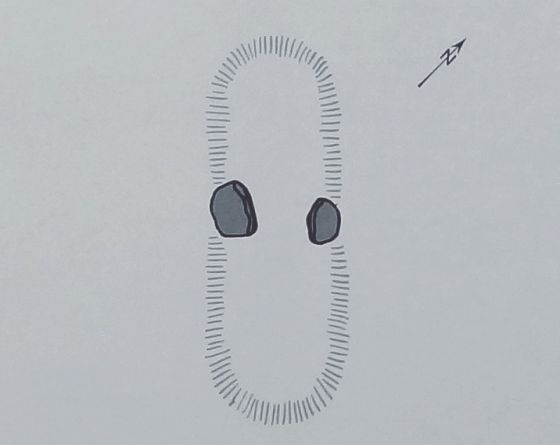
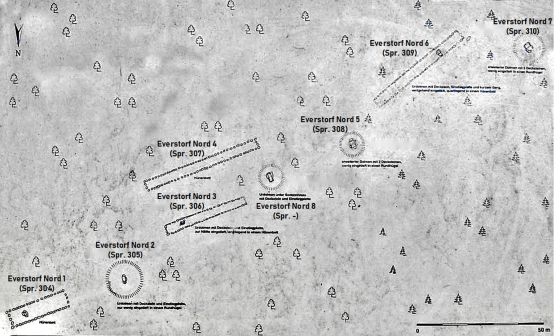
Ernst Sprockhoff
Atlas der Megalithgräber Deutschlands,
Teil 2: Mecklenburg – Brandenburg – Pommern (1967)

Ernst Sprockhoff
Atlas der Megalithgräber Deutschlands,
Teil 2: Mecklenburg – Brandenburg – Pommern (1967)
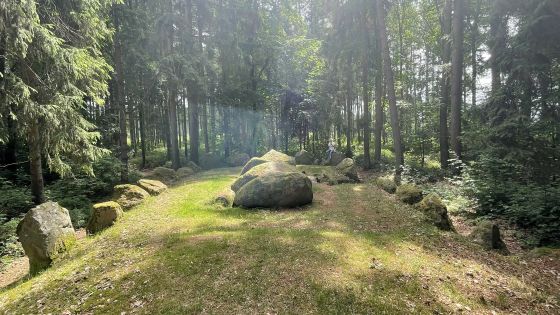
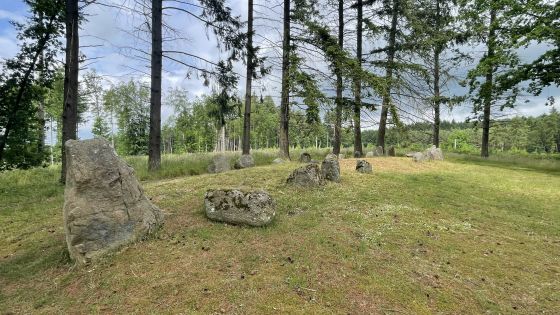
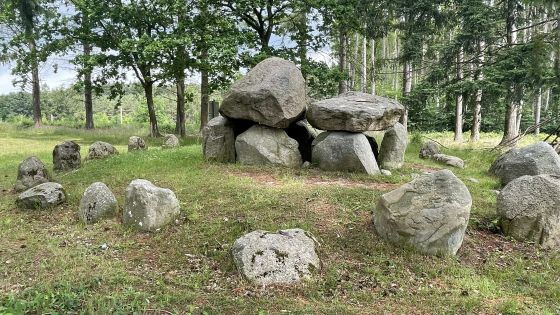
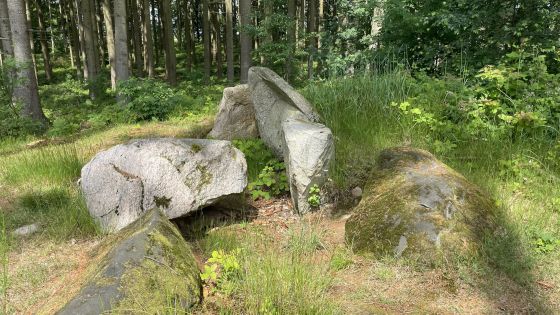
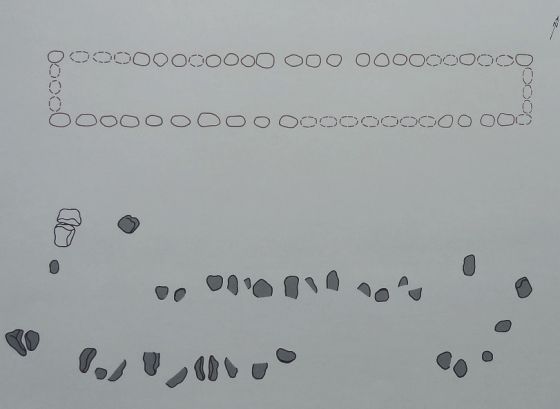
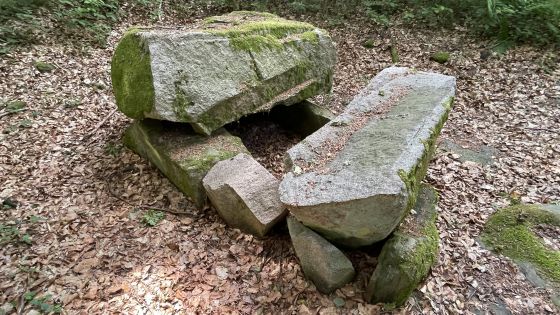
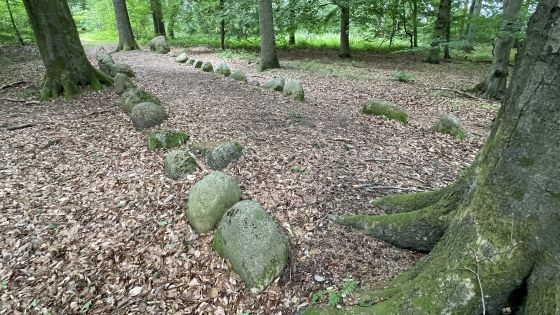
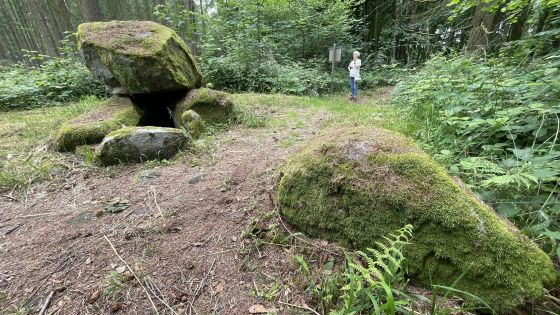
Everstorfer Forst Süd 4 or Ganggrab von Jamel is a near-complete passage grave that sits within a trapezoid long barrow; of the kerb, however, only a few stones on the western and southern sides survive. The tomb is a north-west/south-east oriented Funnel Beaker Culture (TBK) construction dating to 3500–2800 BC — the classic passage-grave form of a chamber with a laterally attached, structurally separate passage.
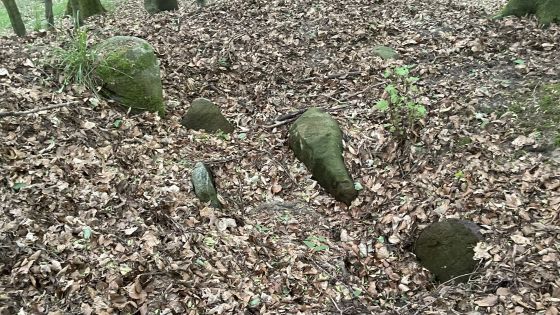
Of the two surviving capstones, both have slipped down into the chamber; the western one is now propped up on a modern concrete base. The southern end of the entrance passage, along with its capstones, is missing entirely.
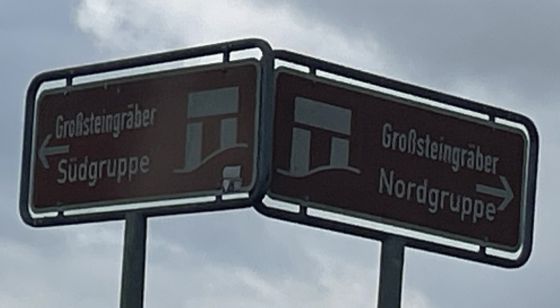
To get to the tomb, walk a short distance north-west along the road from the Südgruppe car park, leaving the B105 behind you. After about 30 metres, a forest track branches off to the left towards the west. Follow this for about 170 metres; here, a small footpath leads north-west and, after a further 40 metres or so, you reach the grave.
Visited June 2026
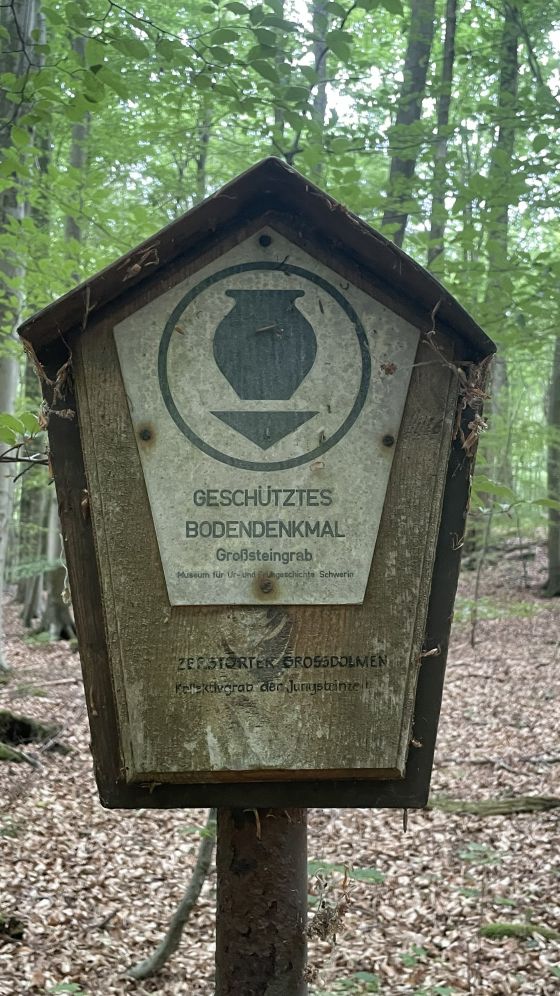
Taken from the on-site information board:
As arable farming and livestock rearing became increasingly prevalent in the North German Plain, supplanting the traditional hunter-gatherer economy, the farming communities settling there began, during the 4th millennium BCE, to construct burial monuments from large boulders that remain impressive to this day.
These stone monuments, also known as ‘megalithic tombs’ (a term derived from Greek), were communal graves. They were not used to inter the mortal remains of distinguished individuals, but rather those of a settlement or village community. However, as we now know, it was not the bodies of the deceased that were interred here, but rather, in the manner of ossuaries, their bones—which had already been buried elsewhere for some time—together with the remains of the original burial site.
This megalithic tomb was first mentioned in 1846 by G. L. F. Lisch. In 1927, it was investigated by R. Beitz. A follow-up investigation was carried out in 1966 by the Mecklenburg archaeologist Prof. Dr Ewald Schuldt.
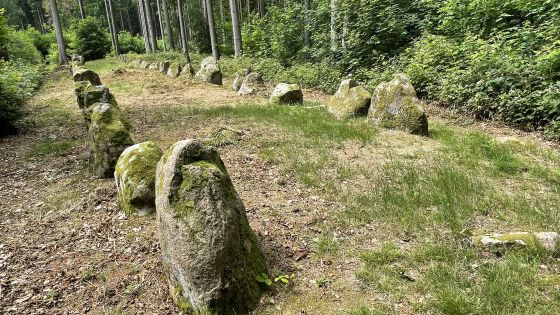
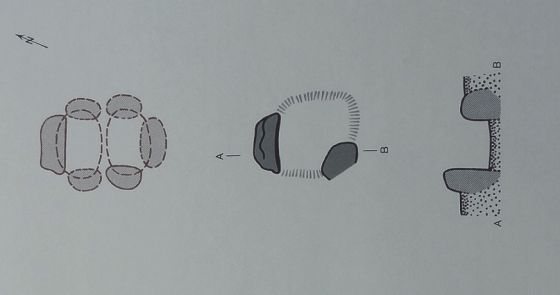
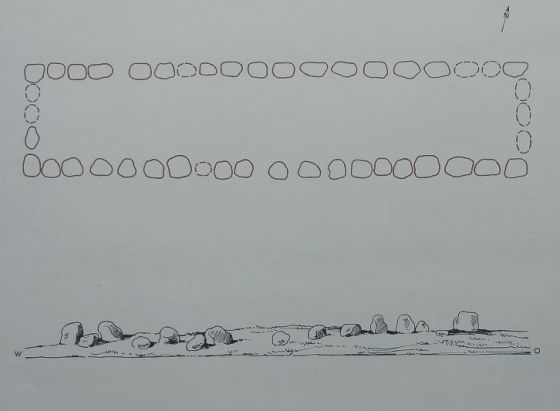
Despite the absence of some blocks, the length of the bed was determined to be 15 m and the width 10.5 m. The boundary stones, which are remarkably small compared to the chamber stones, were arranged in a trapezium shape. The rather wide gaps were filled with dry stonework made from rolled stones. A passage leading into the chamber was situated on the southern long side of the enclosure, between two larger blocks. Although the capstones were missing, it was possible to determine that it was originally probably constructed from three yokes. The passage, which ended between the third and fourth wall stones, was marked at the end by a large, broad threshold stone. The passage is approximately 2.5 m long, 0.6 m wide and 0.8 m high. In the large chamber, the floor was partly paved with boulders and divided into six sections by upright red sandstone slabs. Of the burial chamber, which consisted of six yokes, only two capstones remain.
This complex was built by members of the so-called Funnel Beaker Culture; subsequent burials in the burial chamber also date from the significantly younger Globular Amphora Culture and the Late Neolithic Individual Grave Culture.
The current appearance of the passage grave is the result of a reconstruction commissioned by the State Archaeologist W. Bastian in 1936.