Visited June 2026
Image credit: Uwe Häberle 06/2026

Visited June 2026

Visited June 2026

Visited June 2026

Visited June 2026

Visited June 2026
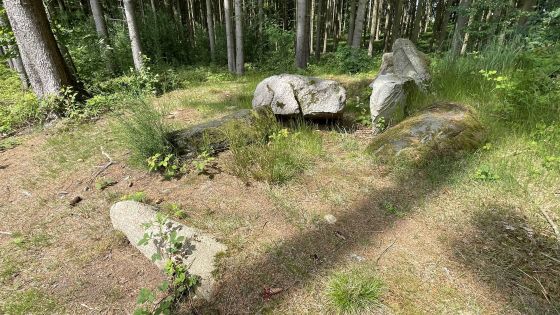
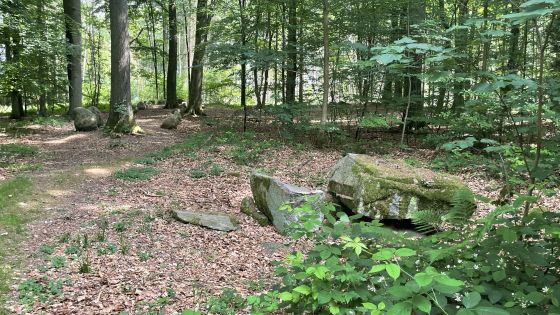
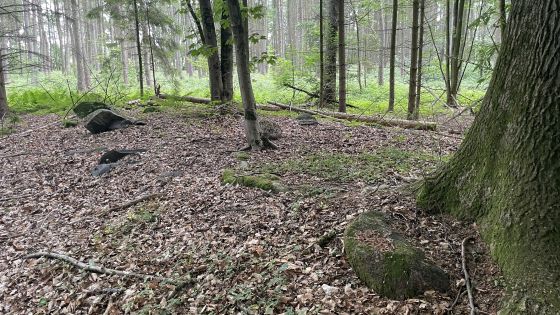
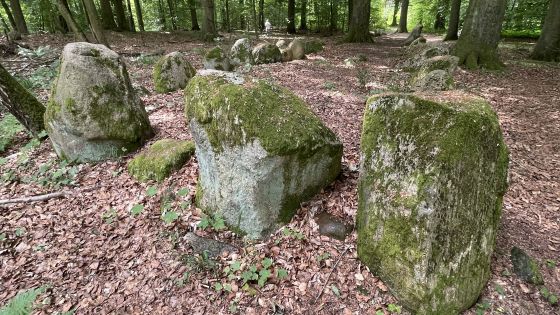
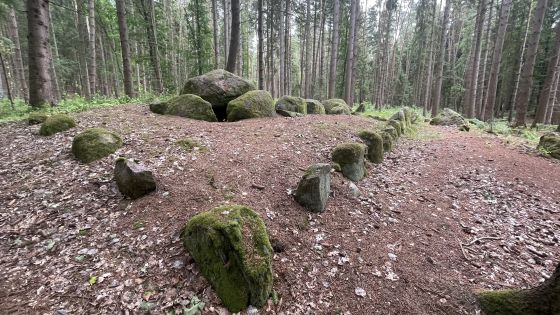
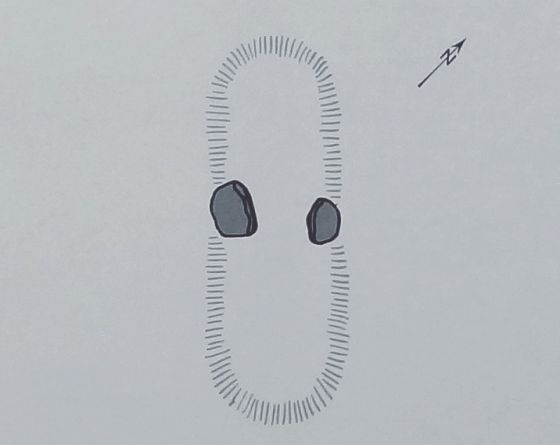
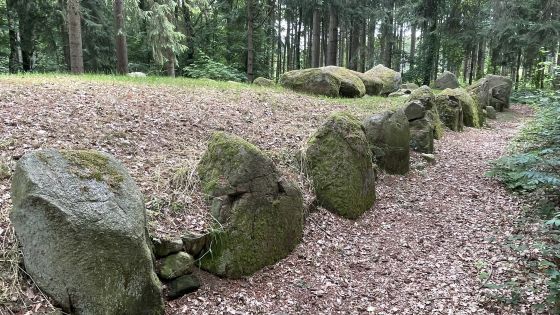
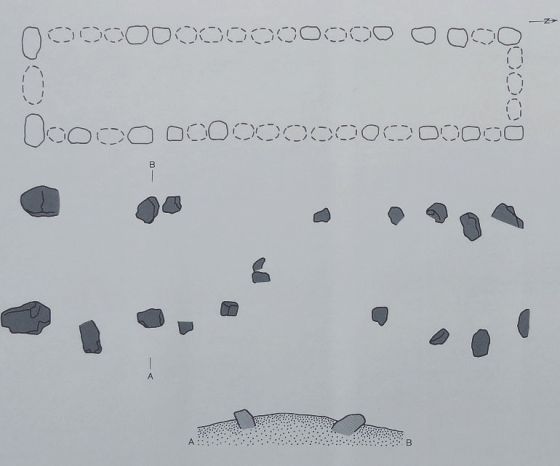
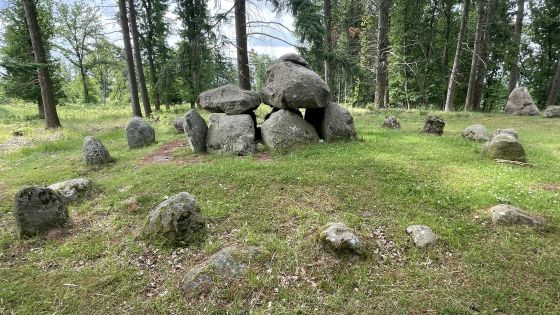
Everstorfer Forst Nord 10, like Everstorfer Forst Nord 9, was known solely as a Bronze Age burial mound until it was excavated by E. Schuldt. These are the remains of a small chamber, which has since receded somewhat back into the hill.It has two supporting stones on each of its long sides. One of the supporting stones has toppled into the chamber. The northern keystone is also still in place. The opposite side is only half-closed by a stone; this was apparently where the entrance was located. A stone lying next to it is probably the remains of an enclosure. Several other stones are scattered across the hill. One of the capstones was taken to Hamberge, some two kilometres further west, in 1922 and erected there as a memorial to the victims of the First World War. It is adorned with numerous small cup marks.
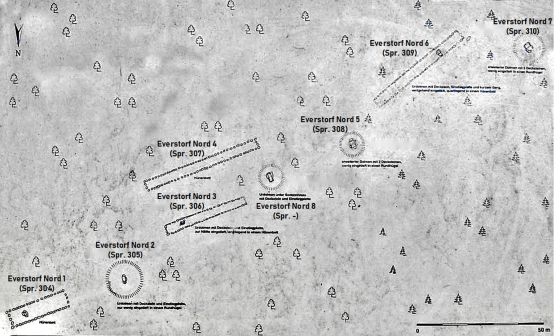
Everstorfer Forst Nord 10 lies about 500 metres west of the signposted northern group of megalithic tombs. Take the road that runs past this group and continue towards Grevesmühlen. Just before the woodland begins to the north of the road, a path branches off to the south into the woods (it’s easy to find a parking space here). Follow the path and, after a short while, you will come across two very conspicuous mounds on which the two stone tombs are situated. Everstorfer Forst Nord 10 is the western of the two.
Visited June 2026
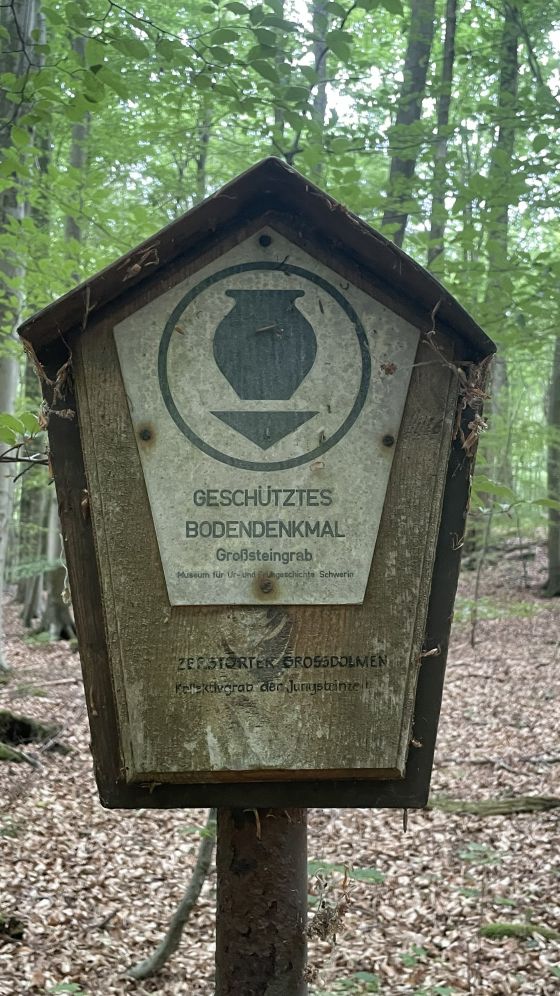
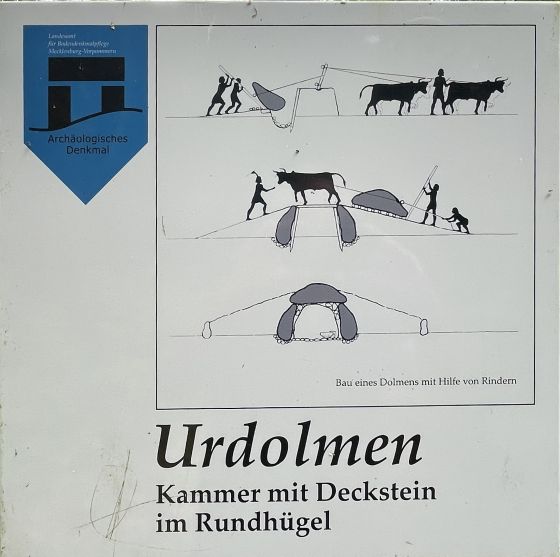
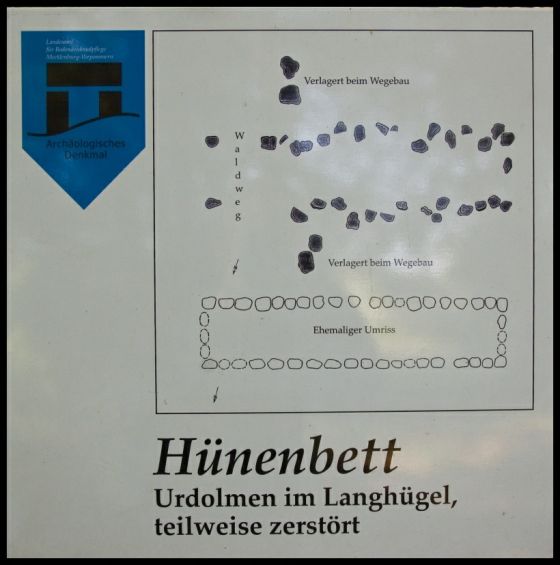
Taken from the on-site information board:
During the Bronze Age (2nd millennium BCE), burial mounds were constructed from turf, earth or stones as tombs for a single individual. Initially, burials in wooden coffins were carried out in such mounds. Later, after religious beliefs had evidently changed and cremation had become widespread from the Middle Bronze Age onwards, the charred skeletal remains were initially scattered in the space originally intended for the wooden coffin within the mound, and later urn burials were carried out.
It is not uncommon to find secondary burials in such mounds, some of which took place much later. Originally, the majority of megalithic tombs (also known as giant’s tombs) were also located in or beneath mounds. Burial mounds were often clustered together. Like the megalithic tombs, they were defining features of the Mecklenburg landscape until the introduction of land consolidation. They served as landmarks for travellers and as boundary markers for the local population.