The Modern Antiquarian. Ancient Sites, Stone Circles, Neolithic Monuments, Ancient Monuments, Prehistoric Sites, Megalithic Mysteries

Get the TMA Images feed
A R Cane's Latest Posts

Latest Posts
Showing 1-50 of 462 posts. Most recent first | Next 50

Coldrum (Long Barrow) — Fieldnotes

I've been meaning to visit Coldrum for what seems like an eternity. It would pop into my head as I was lurching around the M25 after a hard days slog in London, but usually I'd find myself too tired, the light would be fading or the weather not quite right. So despite the on/off rain showers Mrs. C and I decided to try a visit on the way to friends in North Kent and as it turned out it couldn't have been much better. I was a bit surprised once we'd located it that it wasn't perched on the edge of the North Downs, which is how I'd always pictured it, but nestling in the valley below on a small raised platform of a hill. The views from here, however, are quite wonderful as your gaze tumbles along the bottom of the downs and across the surrounding fields and I doubt whether that view will have changed very much in the past 5000 years considering its isolation. Somebody else who turned up while we were there informed us that most of the surrounding land is to become a vineyard in the near future and I wondered how that might impact on the site.
As we were there as the sun was going down everything seemed to have that warm glow about it and the light gave the stones that extra strength and definition so reminiscent of childhood evenings in Wiltshire when we'd drive out to places like West Kennet and Avebury and the stance of the site is not unlike the Wiltshire sites also. The only detraction was that some imbecile had written the word 'DEVIL' on one of the burial chamber stones in charcoal but it must have been a while ago and it had faded and would probably disappear with the next good rain fall. The other thing that was interesting and which has been noted here before is the strange blueness of the stones once they're in shadow. I couldn't work out if this was just due to the comparison between the lit and unlit stone or perhaps something to do with the lichens that cover them and how they interact with light?

So what a delight and a place that I'm itching to get back to, along with the nearby Chestnuts at Addington, which we didn't get to see on this occasion, but would be interesting to compare.

Coldrum (Long Barrow) — Images (click to view fullsize)

<b>Coldrum</b>Posted by A R Cane<b>Coldrum</b>Posted by A R Cane<b>Coldrum</b>Posted by A R Cane<b>Coldrum</b>Posted by A R Cane<b>Coldrum</b>Posted by A R Cane<b>Coldrum</b>Posted by A R Cane<b>Coldrum</b>Posted by A R Cane<b>Coldrum</b>Posted by A R Cane<b>Coldrum</b>Posted by A R Cane<b>Coldrum</b>Posted by A R Cane

Saxonbury Hill (Hillfort) — Images

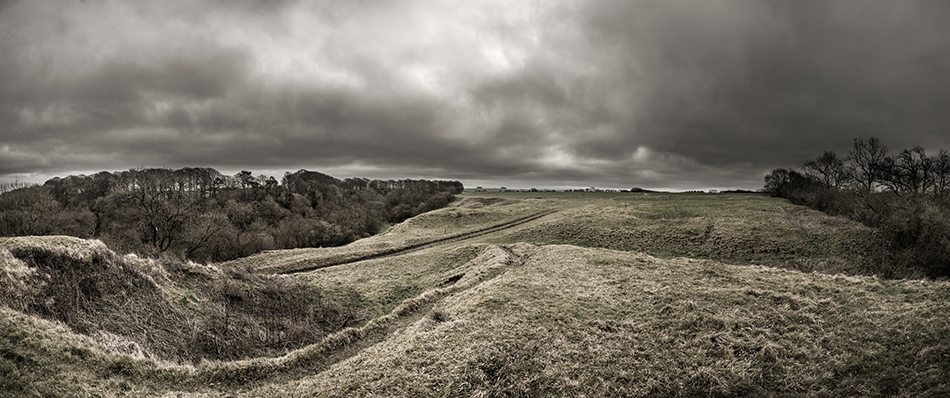
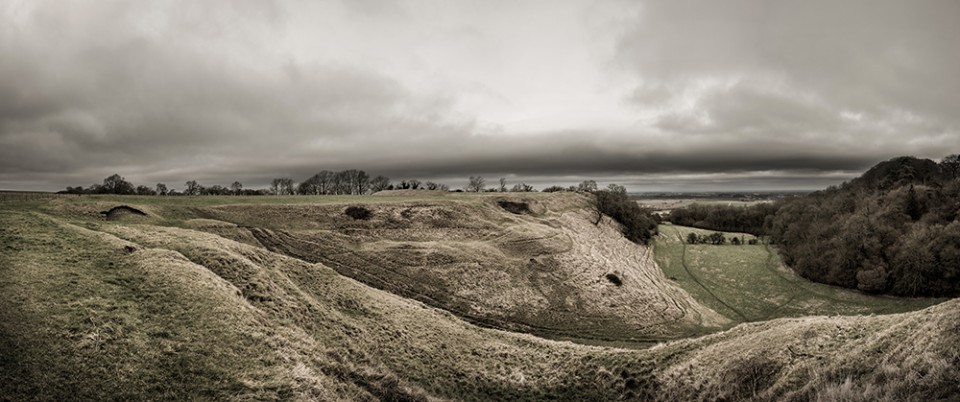
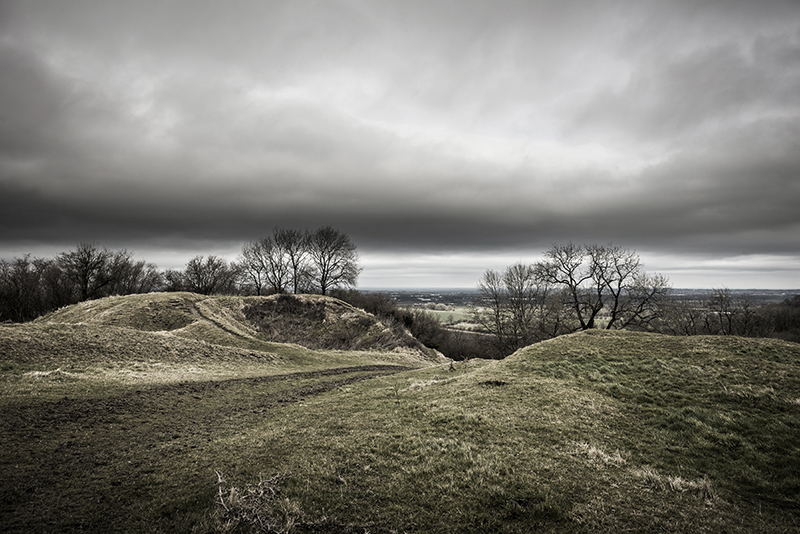
<b>Saxonbury Hill</b>Posted by A R Cane<b>Saxonbury Hill</b>Posted by A R Cane<b>Saxonbury Hill</b>Posted by A R Cane<b>Saxonbury Hill</b>Posted by A R Cane

Cissbury Ring (Hillfort) — Images

<b>Cissbury Ring</b>Posted by A R Cane

The Burgh (Round Barrow(s)) — Fieldnotes

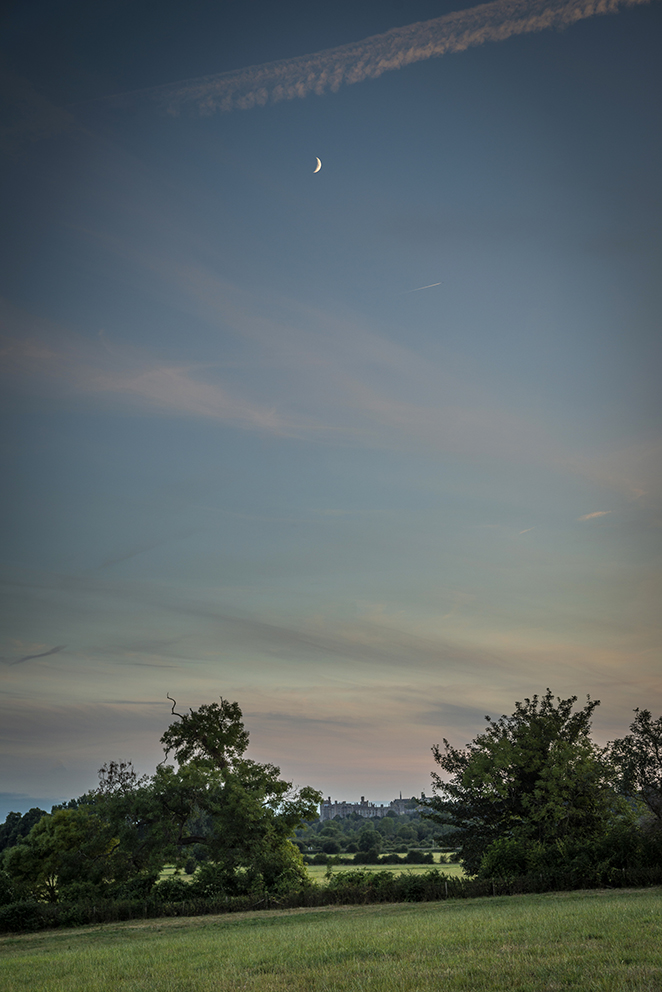
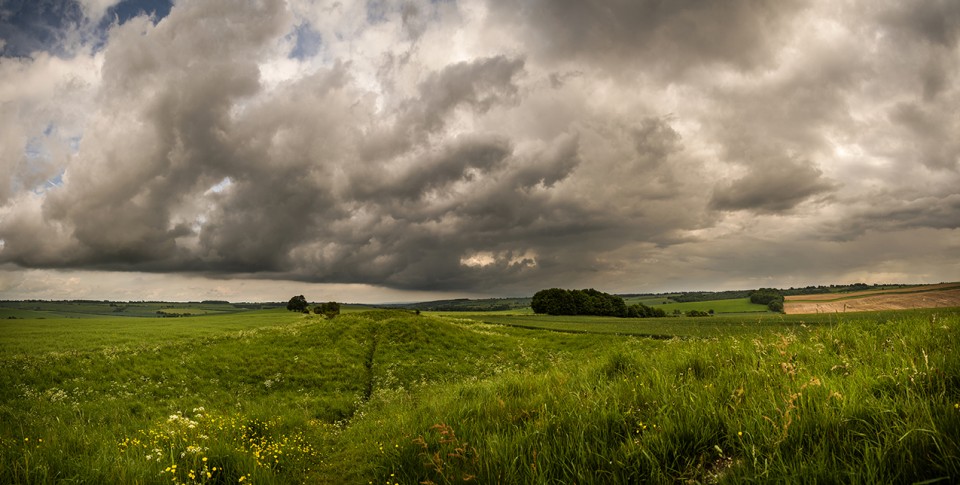
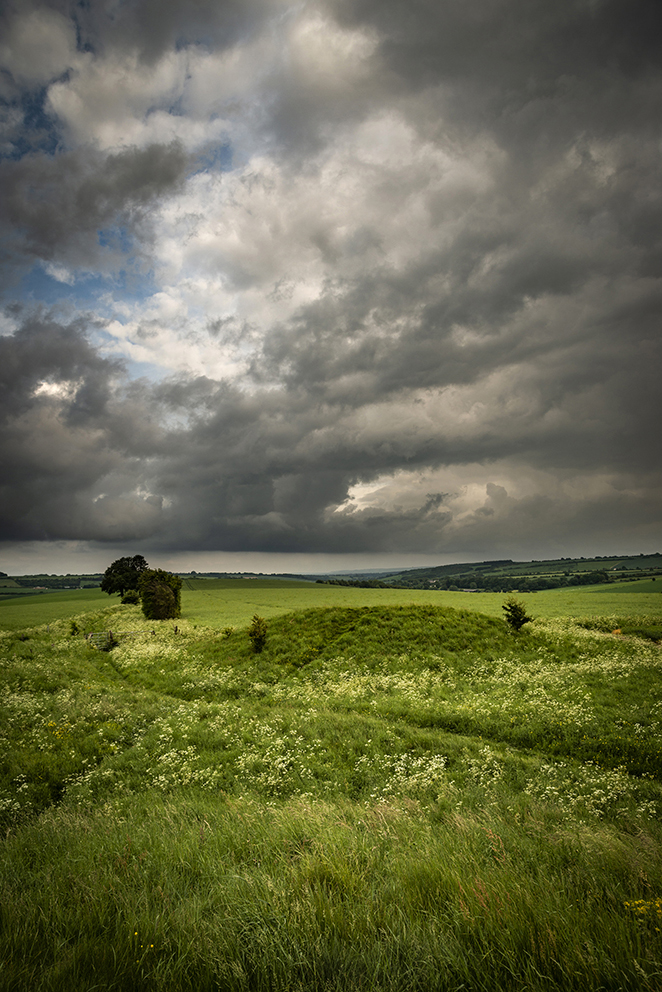
This solitary barrow sits on the edge of a track which diverts from the South Downs Way at Springhead Hill leading South West towards Burpham and North Stoke. There are superb views across the rolling downland hills and on this particular day a spectacular sunburst above Arundel Castle (Camelot!)

I like the fact that this barrow has a name as so few round barrows do, although I suppose they all did to begin with, they just got lost in the mists of time. This one, I believe, is a Saxon name and might possibly be connected to the strange earthwork slightly South of it. This looks like a giant dew pond but apparently isn't. Possible explanations include a siege fort or animal enclosure. The latter would seem a more obvious choice as there are nearby field systems (celtic or medieval?) and it's deep in livestock grazing country.

The Burgh (Round Barrow(s)) — Images

<b>The Burgh</b>Posted by A R Cane<b>The Burgh</b>Posted by A R Cane<b>The Burgh</b>Posted by A R Cane<b>The Burgh</b>Posted by A R Cane

Holmbury Camp (Hillfort) — Images

<b>Holmbury Camp</b>Posted by A R Cane<b>Holmbury Camp</b>Posted by A R Cane

Springhead Hill (Dyke) — Images

<b>Springhead Hill</b>Posted by A R Cane<b>Springhead Hill</b>Posted by A R Cane<b>Springhead Hill</b>Posted by A R Cane<b>Springhead Hill</b>Posted by A R Cane<b>Springhead Hill</b>Posted by A R Cane

Brack Mount (Artificial Mound) — Images

<b>Brack Mount</b>Posted by A R Cane<b>Brack Mount</b>Posted by A R Cane<b>Brack Mount</b>Posted by A R Cane

Rackham Banks (Dyke) — Images

<b>Rackham Banks</b>Posted by A R Cane<b>Rackham Banks</b>Posted by A R Cane<b>Rackham Banks</b>Posted by A R Cane

The Tump, Lewes (Sacred Hill) — Fieldnotes

The Lewes Mounds

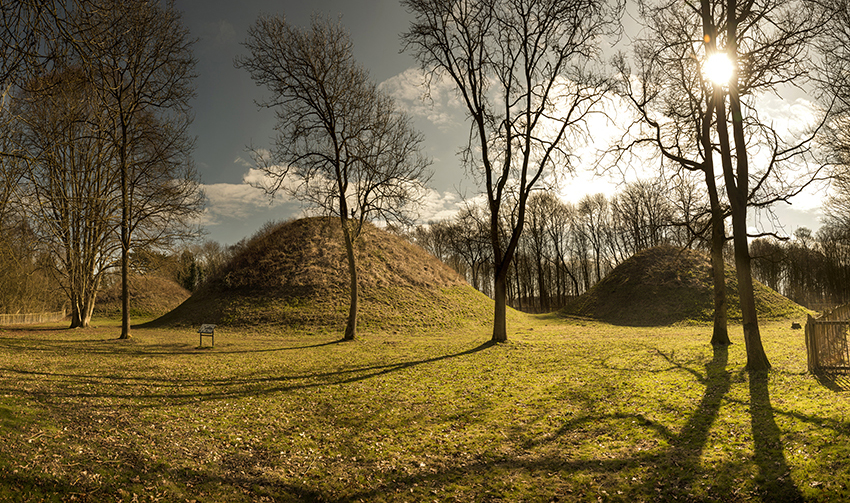
If you lived in a small town in East Sussex and there were three large Silbury-like mounds within close proximity of the town centre would you not be curious as to why? Well this is the case for Lewes, the county town of East Sussex.

The most prominent mound is the one currently occupied by Lewes Castle and is designated as a Norman Motte dating from 1069 and built by William de Warenne, brother-in-Law of William the Conqueror. This stands broadly in the town centre overlooking all of its surroundings and the motte itself must stand at about 50 feet in height.

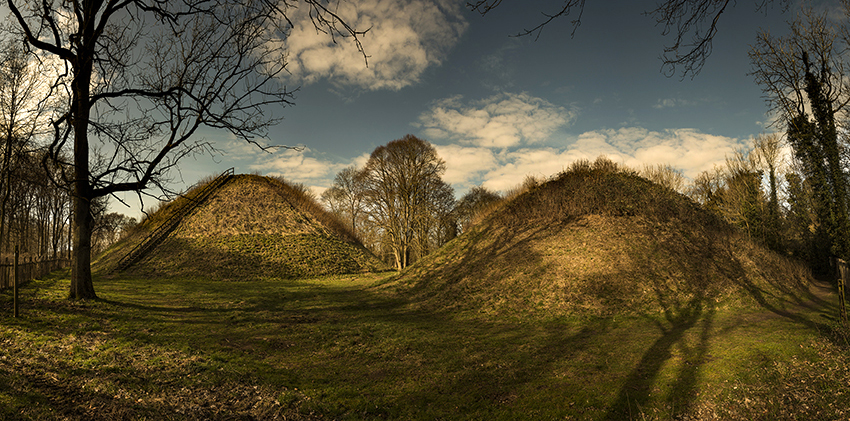
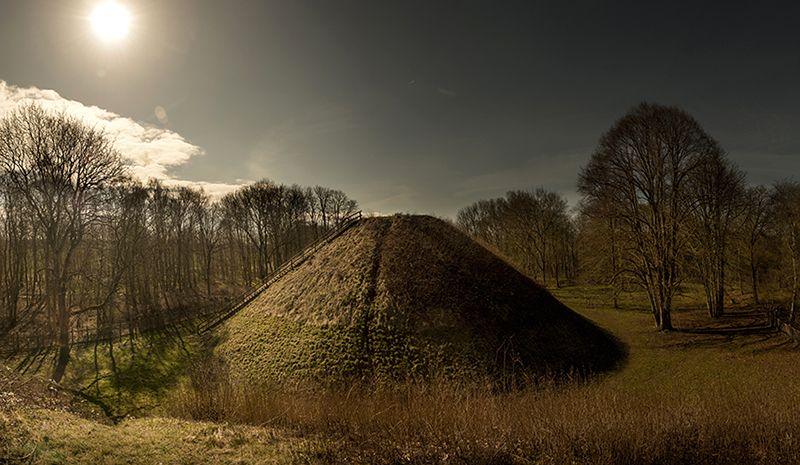
The second, known as Brack Mount, is also designated as a Norman Motte and was contained originally within the curtain wall of Lewes Castle and Lewes Castle is one of only Two Norman castles in the UK to have two mottes, the other being Lincoln. It is believed that Brack Mount was the original castle with a wooden barbican and that the superior stone barbican that we see today at Lewes Castle took some 300 years to complete. Brack Mount is about 40-50 feet high depending on where you're viewing it from and is built on a slope slightly North East of the castle and is now completely surrounded by houses and a pub, the Lewes Arms, that back onto it. There have been 2 partial excavations of this site, the first being in 1838 when workmen discovered an inhumation and boars head in the north side of the mound and the second, more recently, found a chalk lined well in the top of the mound believed to be Norman in origin. Despite the fact that the garden of the Lewes Arms cuts into the mound there seems to be no evidence of any finds on that occasion or at least no report of anything of interest, though there have been recent assertions that the mound is pre-Roman in origin.

Now we come to the third mound, or the 'Tump' as it's known locally, whose history is far from clear. It stands almost in isolation just South of the railway line that skirts the South of the town and is adjacent to the ruins of Lewes Priory. It too is about 45 feet high and takes the form of a ziggerat. Various explanations have been put forward to try and explain its origins. One is that it's a Calvary built by the priory monks and was part of a punishment whereby misbehaving monks were made to carry a cross to it's summit (there was until recently a socket still visible there for a cross erecting ceremony carried out by local Christians at Easter). Another theory is that it's simply a large pile of earth left over from either the building of the Priory on it's western side or from the 'Dripping Pan', a large salt pan (though the salt pan too is doubtful) on it's eastern side now occupied by Lewes Football Club. As far as I know there has never been anything like a proper excavation of this site. The only nearby find was of a ground Neolithic hand axe which was discovered when railway abutments were created in 1911 just to the north.

So three large mounds and little archaeological evidence to work out just how old they are. But is it just three? Evidence suggests that there were at least another five tumuli within the vicinity. A Historic Character Assessment Report for Lewes carried out in 2005 reveals that there were another four tumuli in almost a linear arrangement running north east from Brack Mount. The report lists them as follows:

• Churchyard of St John-sub-Castro – two mounds, possibly representing Romano-British or Anglo-Saxon, or earlier, barrows. That destroyed by the building of present church in 1839 contained secondary inhumations, cremated human bone, boar and other animal bones, and an urn and spearhead. The second mound was in the south-east corner of the churchyard, and was destroyed in 1779 with no record of any finds. Several Roman coins were also found in the churchyard in the 19th century [HER reference: ES7176].

• Abinger House (Abinger Place) – mound, possibly representing Romano-British or Anglo- Saxon, or earlier, barrow. Destroyed in the early 19th century without record, though apparently contained internments and pottery.

• Elephant and Castle (Whitehill) – mound, possibly representing Romano-British or Anglo- Saxon, or earlier (e.g. Bronze Age) barrow, and possibly used as a medieval and later gallows mound. Destroyed when Elephant and Castle public house was built in 1838.

A further barrow seems to have been destroyed in 1834 during the creation of a reservoir near St. Anne's Church where a Bronze Age inhumation and other cremation burials were discovered. This too lies within the town centre.

So are we looking at a large Bronze Age barrow cemetery, a sacred site of monumental mounds in the vein of Silbury (particularly in the light of the recent dating of the Marlborough Mound) or merely a disparate collection of barrows of different ages and usages? Because most of these barrows were destroyed in the gradual expansion of the town it's very difficult to know which era they actually belonged to but I'm of the opinion that all these tumuli were of roughly the same period, probably Bronze Age, and the Normans merely utilized two of them in the highest positions, in the construction of their castle. Nearby Neolithic, Bronze and Iron Age sites on the South Downs would also suggest that Lewes's mounds were of a pre-Roman era.

The Tump, Lewes (Sacred Hill) — Images

<b>The Tump, Lewes</b>Posted by A R Cane<b>The Tump, Lewes</b>Posted by A R Cane<b>The Tump, Lewes</b>Posted by A R Cane<b>The Tump, Lewes</b>Posted by A R Cane<b>The Tump, Lewes</b>Posted by A R Cane

Cliffe Hill (Long Barrow) — Images

<b>Cliffe Hill</b>Posted by A R Cane<b>Cliffe Hill</b>Posted by A R Cane<b>Cliffe Hill</b>Posted by A R Cane

The Devil's Ditch (Dyke) — Fieldnotes

Further, and more diligent map reading, made me realise that this is actually much longer than I thought. I'd assumed that it began/ended at The Valdoe but in reality the whole thing is much longer and extends, albeit brokenly, Westwards beyond Lavant all the way to West Stoke, just South of Kingley Vale. So this mysterious ditch/dyke is actually around six to seven miles in length and not the two miles I'd originally stated. Also the part I looked at this time is a dyke and not a ditch, as it was in The Valdoe with a height of around two metres in places. It would be interesting, but I'm not sure if it's possible, to walk it's entire length though some of it passes through private land and there are no footpaths available. At some points it seems to disappear altogether, most notably at Lavant, but that might be due to the build up of the village over the centuries and the section of road through East Lavant corresponds almost exactly with the 'presumed' course of the ditch. More visits will ensue no doubt.

The Devil's Ditch (Dyke) — Images

<b>The Devil's Ditch</b>Posted by A R Cane<b>The Devil's Ditch</b>Posted by A R Cane<b>The Devil's Ditch</b>Posted by A R Cane<b>The Devil's Ditch</b>Posted by A R Cane

Nympsfield Long Barrow — Images

<b>Nympsfield Long Barrow</b>Posted by A R Cane<b>Nympsfield Long Barrow</b>Posted by A R Cane
Showing 1-50 of 462 posts. Most recent first | Next 50
I'm a professional photographer living in West Sussex and have been interested in ancient sites since childhood. I was brought up near Barbury Castle in Wiltshire so visits to hill forts, stone circles and various lumps and bumps were routine. The grip of these fantastic places still has a hold on me and I still get a feeling of total wellbeing whenever I come across a new place or revisit familiar places. Much of that is to do with the magnificent or interesting locations in which they're found and equally the mystery attached to them - we know so little and can imagine so much.

My TMA Content: