|
 Log in |
Register Log in |
Register
|

|
|

Cadbury Castle (South Cadbury)Hillfort
|


 Show map (inline Google Map)
|
|
|
News |
 Add news Add news |
|
Lectures at Cadbury Day of lectures about Cadbury Castle and its landscape. Saturday 20th September 2008, North Cadbury Village Hall, 9.30am - 4.30pm. Speakers: Dr richard Tabor, Clare Randall, Susan Jones Details and booking form: www.southcadbury.org.uk |
Posted by Richard Tabor 25th July 2008ce Edited 25th July 2008ce |
Images (click to view fullsize) |
Add an image |
Photographs: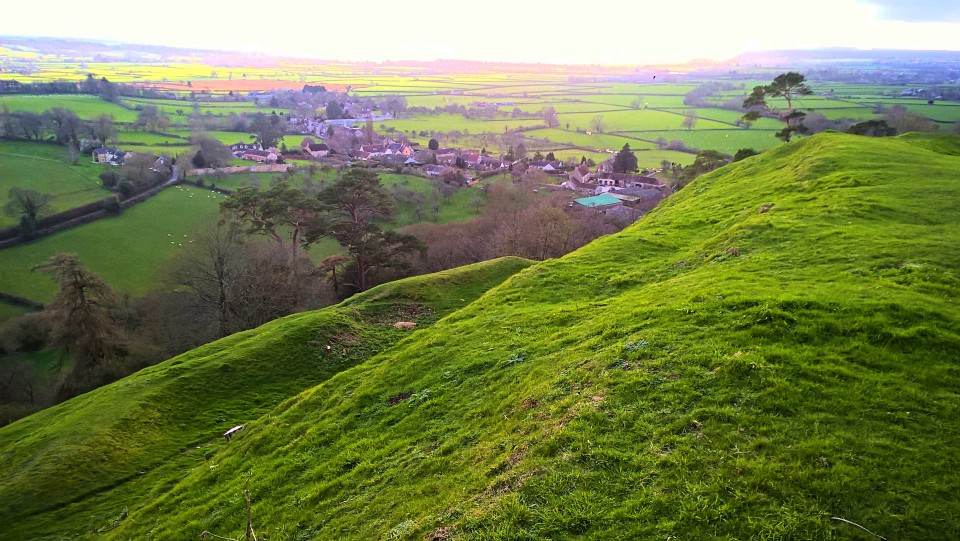

 Maps / Plans / Diagrams:
 Artistic / Interpretive:
|
Fieldnotes |
Add fieldnotes |
|
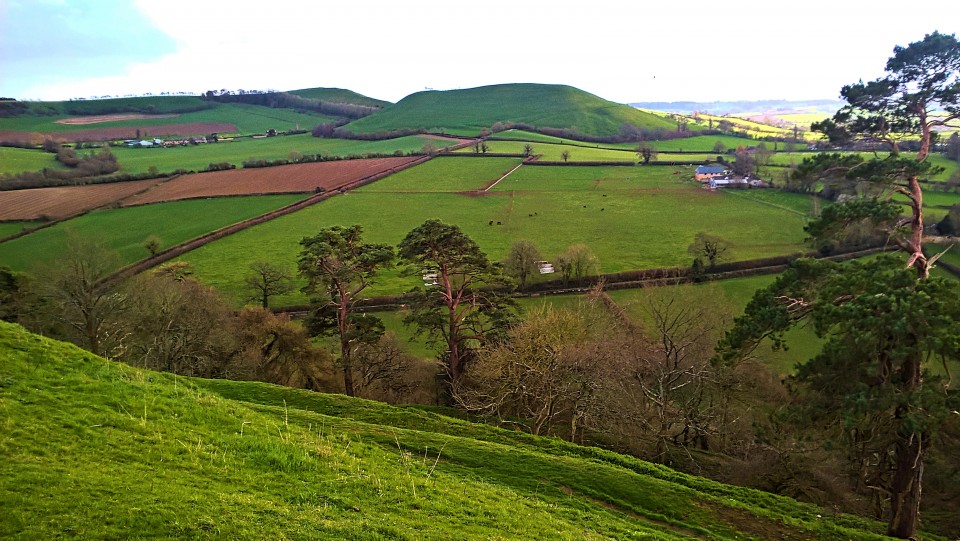
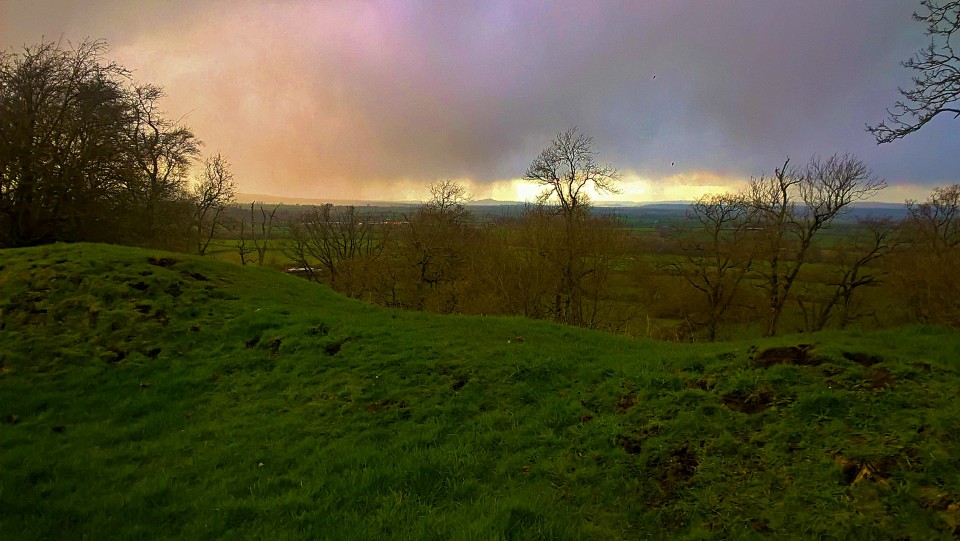
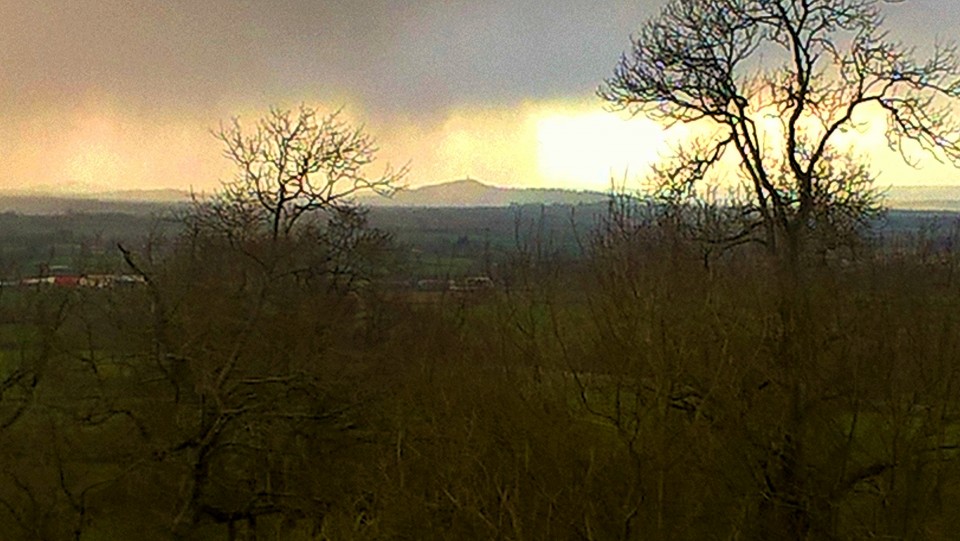
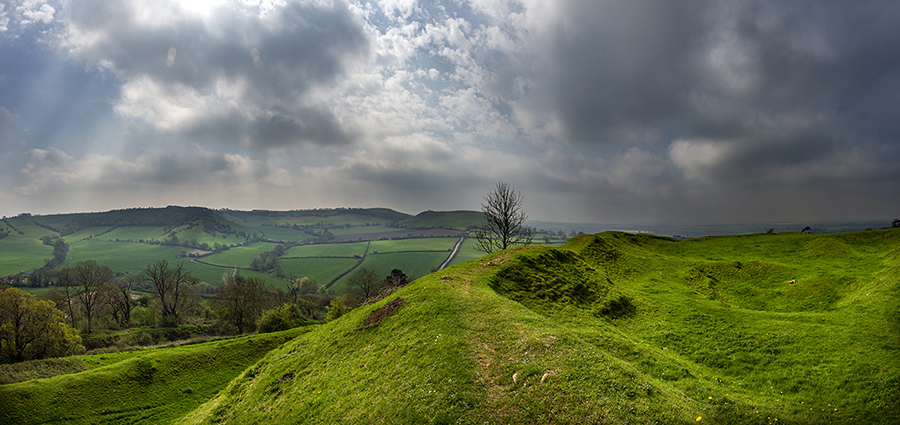
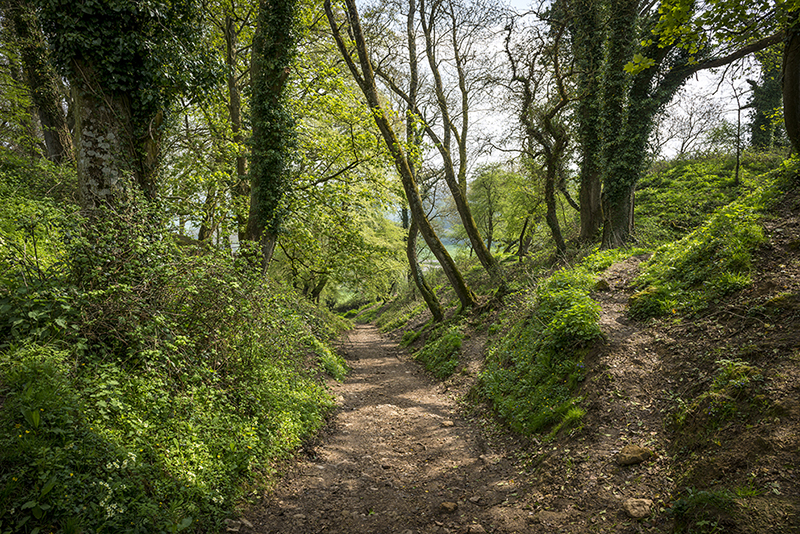
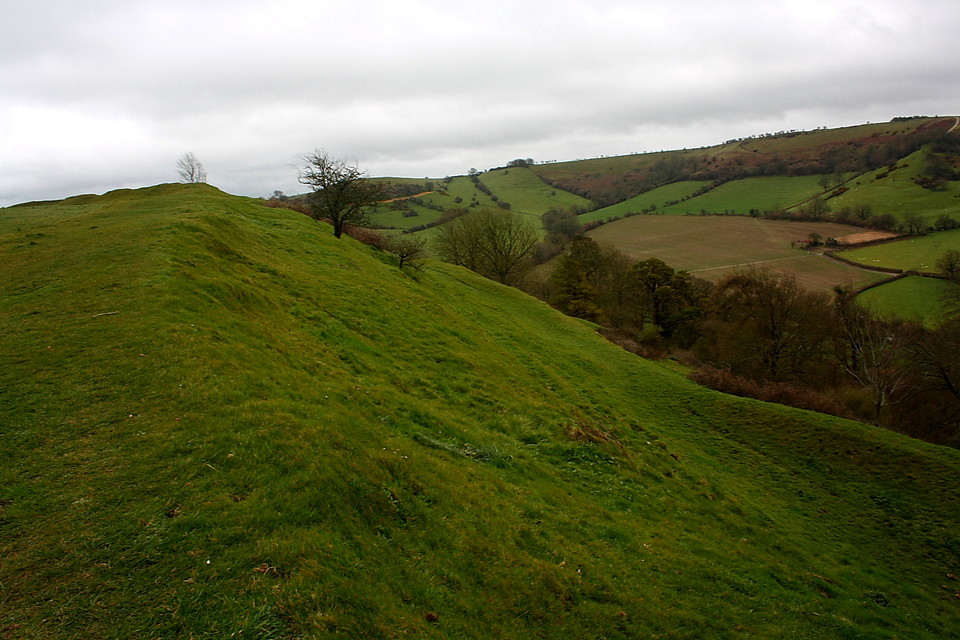
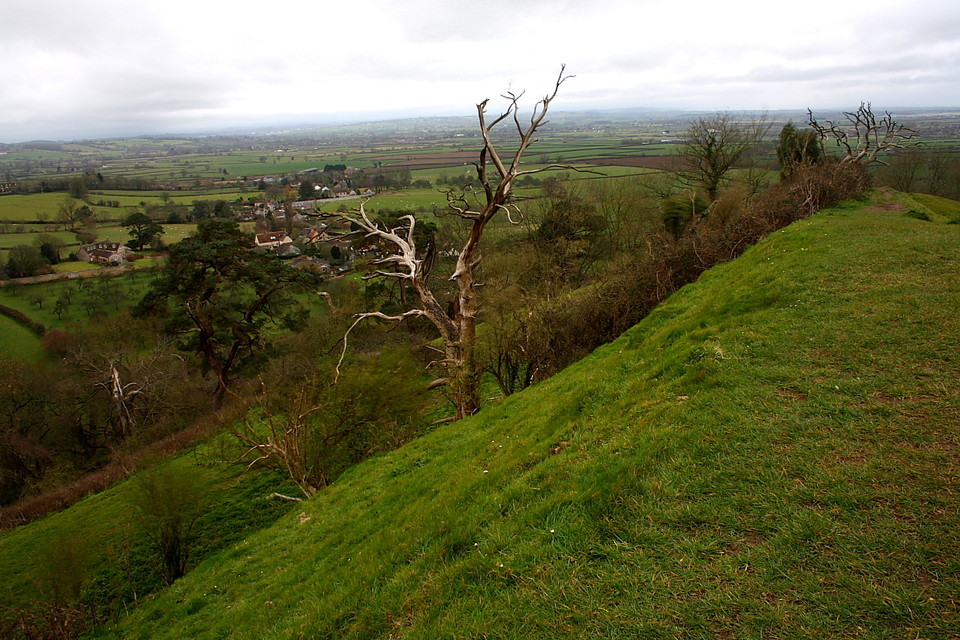
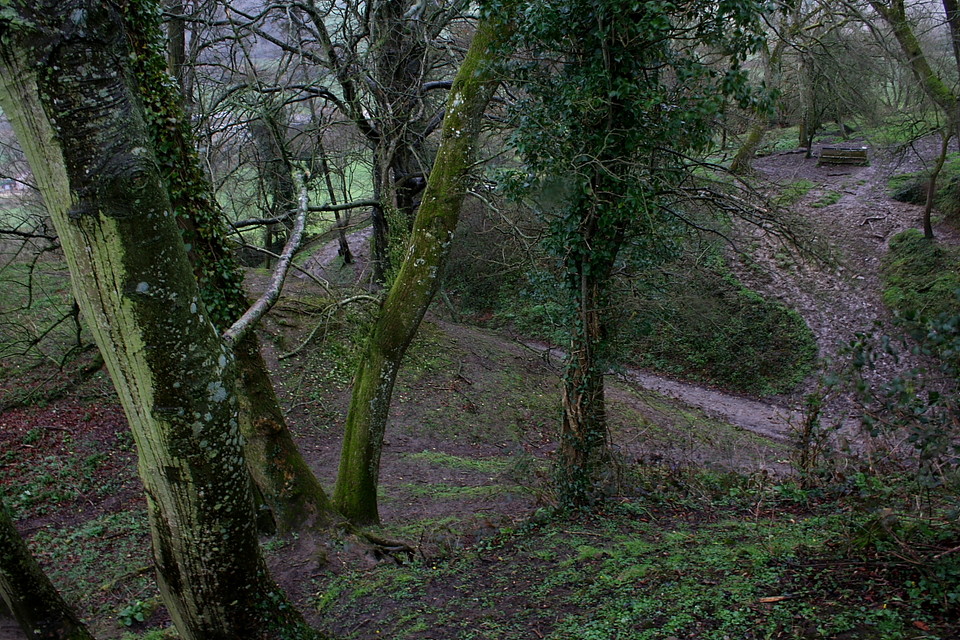
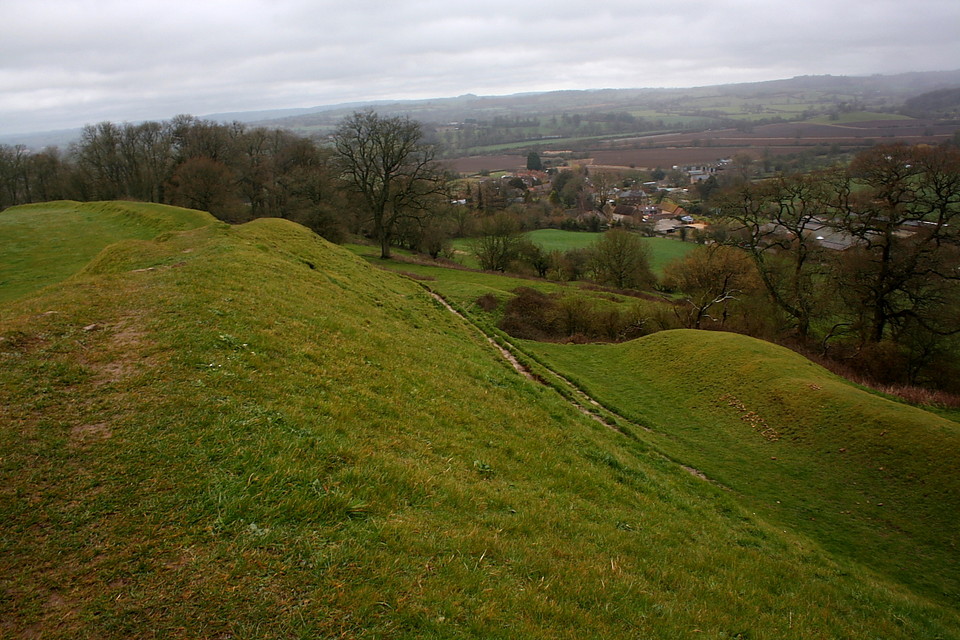
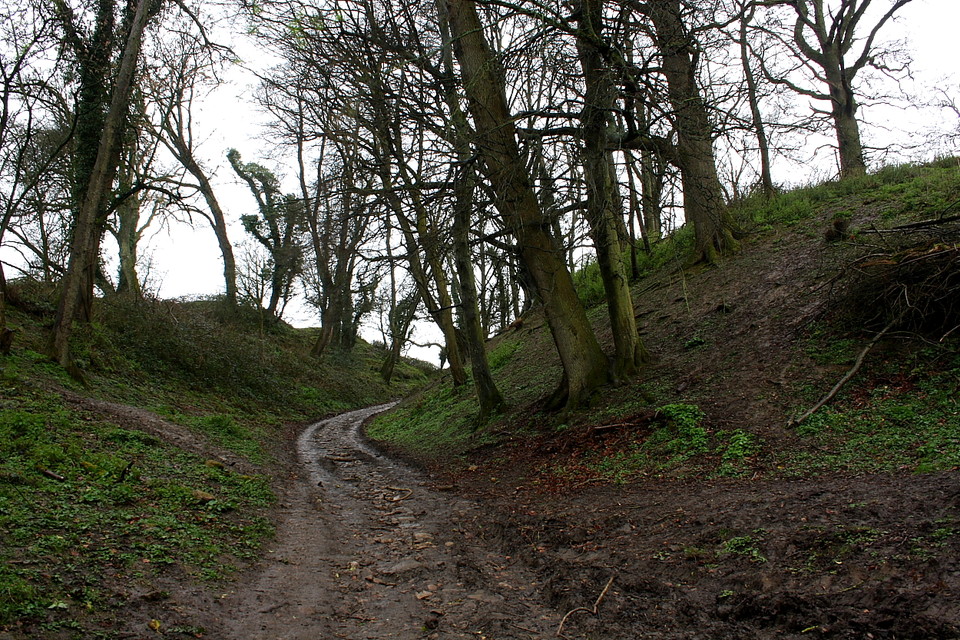
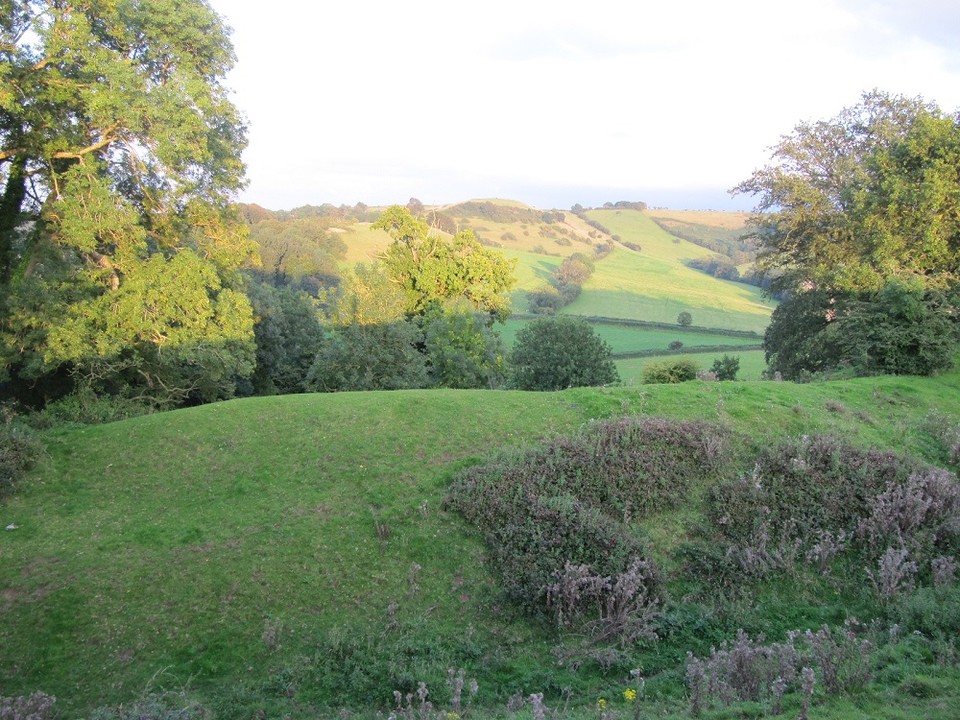
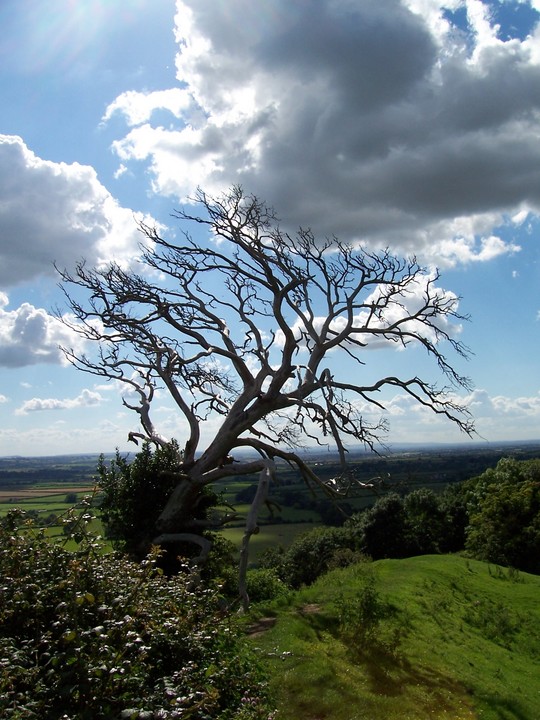
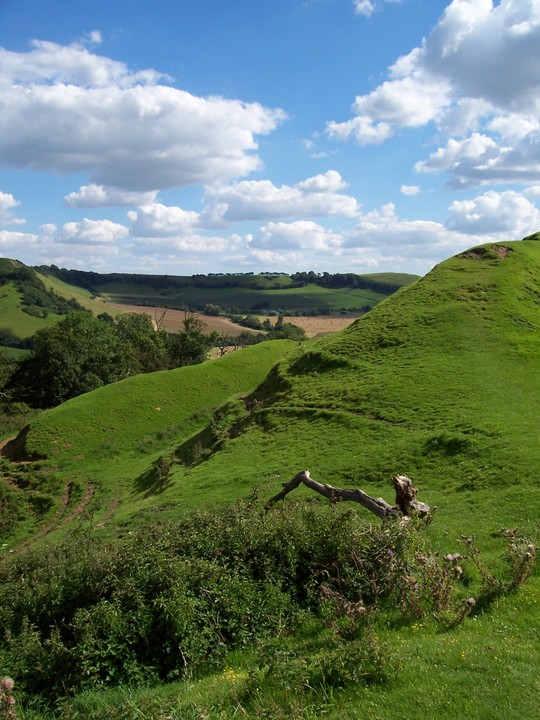
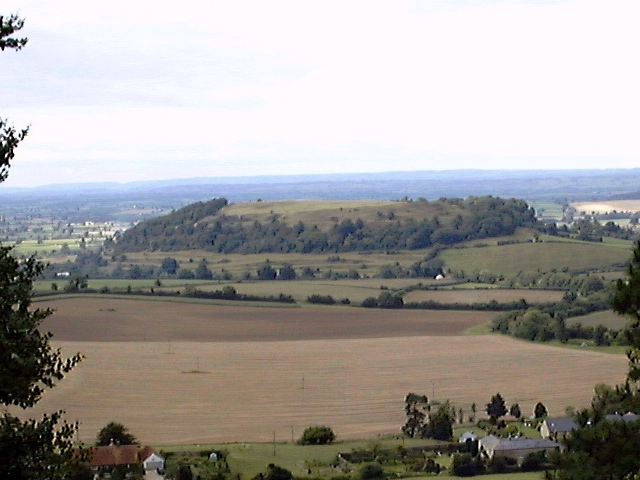
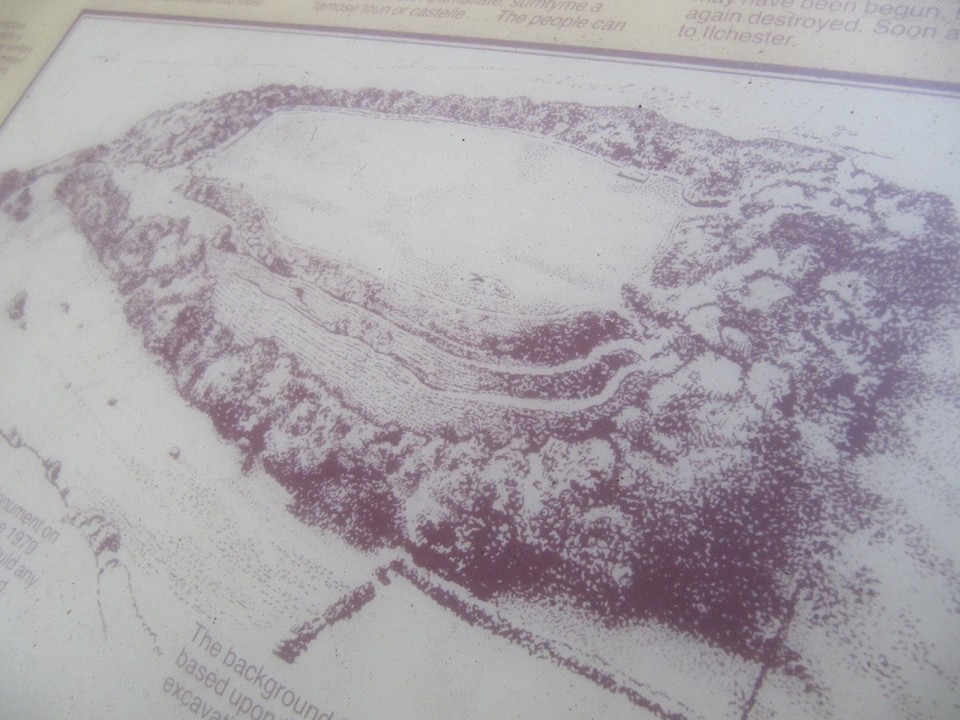
Visited Cadbury Castle a couple of days ago while driving back from the Somerset/Dorset area. The sun was sinking as we climbed up the steep stony track from the village of South Cadbury. When we reached the top everything was bathed in the glow of the setting sun. Fabulous views of the surrounding landscape, quite easy to imagine this may have been the site of a the mythical city of Camelot. Back down in the small car park, I tried to read the information board - the light was failing by now so I photographed it and have reproduced the text below. A fascinating potted history of England from the time of the Neolithic up to the 15th Century. (Information based on the work of Leslie Alcock and the excavations at Cadbury Castle 1966-70). From the Neolithic Age (3,000BC) to early 11th Century, the fortress of Cadbury Castle was in turn military stronghold, centre of trade and culture, and probably focus of a religious cult; by the early 16th Century folklore identified it with Camelot of Arthurian legend. Iron Age Town – A modest Bronze Age settlement on the summit grew into a large and spectacular hill fort town, a centre of craft, trade and religious worship. The place was probably a ‘capital’ of the Durotriges whose territory included central and southern Somerset and Dorset. Dwellings within ramparts were wood, wattle and thatch. At first left alone by the Roman government, the town was forcibly cleared around 70AD by the Romans, an action which left some of the inhabitants dead and which removed others to settlements in the surrounding countryside. The Dark Ages and Camelot – People returned to the site towards the end of the Roman period and by 500AD there was a massive refortification on the hill top. Defences of timber and dry stone walling replaced the earlier banks and posts of the new south-west gate were embedded in solid rock. Within the defences stood a large, aisled timber hall. The scale of the work and precious pottery found from the eastern Mediterranean imply a wealthy, sophisticated and highly organised military society. The only surviving written record of the 5th Century shows Britain divided into tribal ‘kingdoms’ and later Celtic tradition tells of a series of battles against invading Saxons under the command of a figure called Arthur. Cadbury, strategically placed to defend south-west Britain, could well have been the base from which Arthur led his troops to the final victory of Mons Badonis, whether that was fought in Dorset, near Bath, or in north Wiltshire. Cadbury was first linked to Arthur by Leland in 1542: “At the very south ende of the Chirch of South-Cadbryri standeth Camallate, sumtyme a famose toun or castelle … The people can telle nothing ther but they have hard say that Arthure much resortid to Camalat” (sic) Saxons and Vikings – The threat of Viking invasion during the reign of Ethelred II (the “Unready”) brought the hill top into use again as an emergency administrative and commercial centre in place of Ilchester. Coind were minted at Cadanbyric between 1009 and 1019 in the safety of new defences, and a church may have been begun but the ramparts were again destroyed. Soon after the mint returned to Ilchester." |
 Posted by tjj
10th September 2015ce |

|
Visited 30.5.10. I had read a lot about this site over the years so I was looking forward to my visit - and I wasn't disappointed! The free car park is well sign posted when entering the village and it is only a short walk to the public footpath along Castle Lane. A 10 minute walk up the steep hill through the trees and you are there. Myself and Dafydd then spent an enjoyable 30 minutes walking right around the hillfort enjoying the fantastic view all around. Well, at least I was - Dafydd was more interested in honing his 'sliding down the ramparts on his bum' skills he first learned at Bratton Hillfort a couple of weeks ago- much to the dismay of his mother!! Definitely worth a visit. |
Posted by CARL 1st June 2010ce |
|
Personally, having had my first home within 20m of the hillfort's base, then excavating on it as a boy from 1966-70 and finally founding and running the South Cadbury Environs Project, I'm in agreement with the writer who thinks Cadbury is the best of all hillforts! For a more considered justification read the book! Hillforts were massive engineering undertakings and from their inceptions have implications for the population of a wider landscape. Two surveys of southern British hillforts have been published in popular and academic form (Danebury, Hampshire; Maiden Castle) but a book for general readership of the most detailed survey, that around Cadbury Castle, is about to appear in August 2008. The book covers work by the South Cadbury Environs Project from 1992-2007 and is by its then director, Dr Richard Tabor ("Cadbury Castle: The hillfort and landscapes"). An academic report is in preparation. The project is continuing its work under the leadership of Clare Randall and those interested, either generally or with a view to doing voluntary work, shopuld visit the newly relaunched website from 21st June 2008 (www.southcadbury.org.uk). |
Posted by Richard Tabor 16th June 2008ce Edited 16th June 2008ce |
|
Visited 1992 and 1994 Though now ruled by cattle, once fit for a king. This Iron Age hillfort was re-occupied and refortified on a large scale during the Late Roman or sub-Roman period. No doubt about that part. As to the builder, without any written evidence we will be kept guessing. Ambrosius Aurelianus? Possibly, but can't be sure where to locate him. Arthur? No contemporary evidence available. Whoever it was, it has been proposed by experts that the massive workforce neede to strenghten Cadbury's defences can be compared to the workforce of both Wansdyke and Bokely Dyke, earthwork that are very close by. My solution: if not Arthur, than surely a different person with the same name :-) |
 Posted by Vortigern
13th November 2002ce |
| the Best hillfort in Britain! Absolutely stunning views of many major sites. Forget the King Arthur tosh- he didn't exist, but the setting is definately fit for a king. Much Archaeological work going on there at present, presenting new finds IA & BA. Watch for a TV progamme on the site presented by Carenza of Time Team fame in OCT/NOV, if only for the stunning shots of the site. Dont forget a fantastic BA shield was recently found there, one used in ritual and the only one found in context.Poignant as F%&*. |
Posted by Mouse 28th June 2000ce |
|
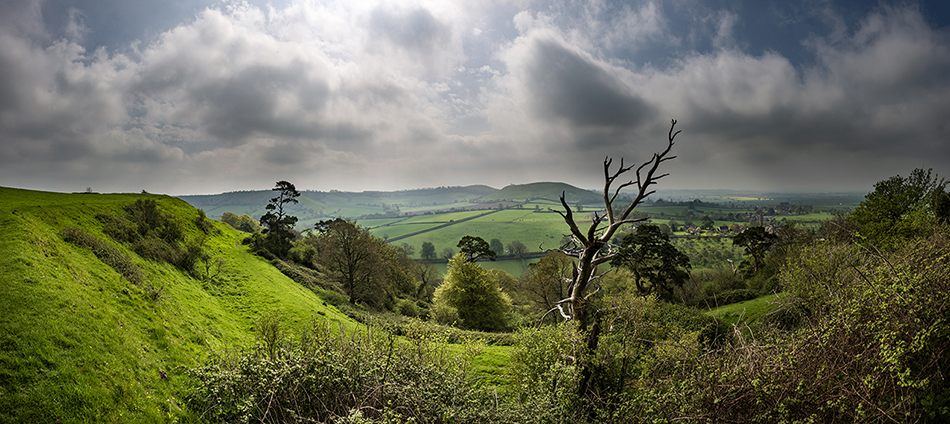
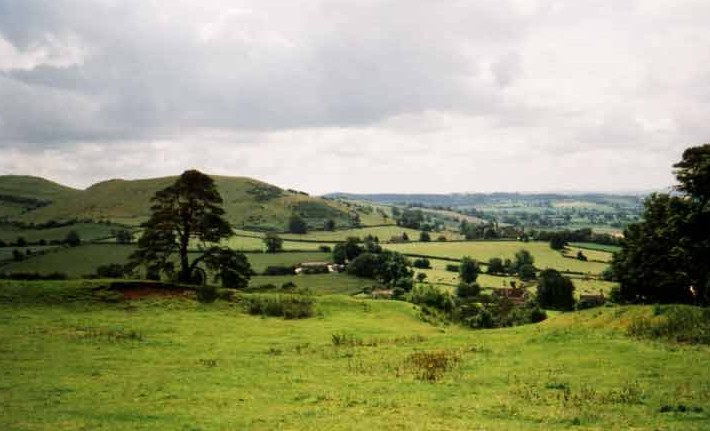
Stunning views to the South and East up towards Glastonbury Tor. There's a legend that this was the site of Camelot, and that old Art himself appears every year on Midsummer's Day. What better way to mark this than installing a large Round Table, right on top of the hill (lottery money apparently) Up in the centre, towards the South side at what is probably the highest point, there's a circle of earth already cut out, so it'll probably be there. Hurry whilst you can then ... (visited on Easter Sunday) |
Posted by RiotGibbon 28th April 2000ce |
Folklore |
Add folklore |
Underneath a natural bower, on the bank of the lowest rampart but one, is a small arch of stone, covering a well of clearest water, fed by a spring that never in the fiercest drought runs dry. The overflowing stream makes a small pond below, but the well itself is almost out of sight under overhanging bushes, in the shadow of the north side of the hill.By Walter Raymond, in 'The Idler Out of Doors: Camelot' - The Idler, November 1898. |
 Posted by Rhiannon
28th May 2016ce |

People round here must be very fond of a tale - the variety and permutations are endless.Some talked of the king's palace and kitchen and well; and the imaginative Stukeley had a story of a road across the fields, 'bearing very rank corn,' which was known as 'King Arthur's Hunting-causeway.' Here we see the warrior king turning into a shadowy creature like the wild huntsman of the German tales.Ah those witty locals. In 'Somerset: Highways, Byways, and Waterways. Edinburgh Review 181 (April 1895). |
Posted by Rhiannon 1st April 2009ce |
According to legend the ghosts of Arthur and his knights make a periodic nocturnal ride over the hilltop and down to Sutton Montis below, where their horses drink at a spring. This is reputed to happen on Midsummer Eve or Midsummer Night, or Christmas Eve, or every seventh year, so the ghosts may be difficult to catch riding.p45 in 'The Landscape of King Arthur' by Geoffrey Ashe (1987). Hmm. A flute - or maybe pan pipes?? Spooky. The name of the highest part of the plateau can be traced to at least the same kind of time (1586): 'Arthur's Palace'. Curiously, (although no trace was known before excavation) there actually was a timber hall on that spot in the 5th century - the era that an 'Arthur' would have lived. There was also a gatehouse (in the gap in the top rampart to the SW) and the whole perimeter was protected by a 16ft thick fortification made of stone and wood. Such a type and size of structure is apparently very unusual for this period - so 'Camelot' is actually quite credible as the headquarters of a king or regional chief, according to Ashe's book. |
Posted by Rhiannon 21st November 2005ce Edited 21st November 2005ce |
|
According to Berta Lawrence, in 'Somerset Legends' (1975), young people used to come to Arthur's well to drink because it would 'make their dreams come true'; and while they were about it they would carve their initials on the nearby trees. The water is particularly magical on St John's Eve (that is, the midsummer solstice), because a true-hearted person who bathes their eyes in the well then might see the hill open up and glimpse Arthur and his men sleeping inside. The book also mentions proof that the hill is indeed hollow - when the inside of the enclosure was cultivated, a barley stack near one of the entrances sank below the surface of the earth before it could be threshed. Very peculiar, apparently. |
Posted by Rhiannon 28th September 2005ce |
|
King Arthur and his men ride round the hill on silver-shod horses when there's a full moon at midsummer. They ride over the hill to the spring next to Sutton Montis church. You can also hear their horses in Arthur's Lane (is this 'Folly Lane'?). It is also called 'King Arthur's Hunting Causeway'. Normally Arthur and his knights live inside the hill: it's hollow, and they lie sleeping waiting for when the country needs their help. Sounds from King Arthur's Well can be heard at Queen Anne's Wishing Well, which is a good 200 metres away, but still within the ramparts. (partly from J+C Bord's 'Atlas of Magical Britain', also 'Somerset Folklore' by Ruth Tongue, 1965, collected 1906) [King Arthur and his knights] come riding down from Camelot to drink of the waters of a spring by Sutton Monks [sic] Church on the eve of every Christmas Day (J A Bennet, Cadbury, p4). According to another account, related to me by Mrs Church, King Arthur goes down to drink on St. John's Eve, and anyone he meets, if not of perfectly pure life, he strikes dead.From The Rollright Stones and Their Folk-Lore Arthur J. Evans Folklore, Vol. 6, No. 1. (Mar., 1895), p25 in pp. 6-53. In 1872 the Bath Nat. Hist and Antiq. Field Club took an excursion here - they recorded the story about King Arthur riding around the hill with his men on silver-shod horses - and to prove it, they were told that one of the shoes had been found embedded in the track! King Arthur's Lane is also mentioned as 'a nearly lost bridle path leaving Cadbury by its West gate' and heading straight for Glastonbury. S Toulson (in 'Moors of the Southwest, v1' 1983) says that the fairies who lived in the surrounding fields used to bring corn up to the fort to give to Arthur. This was until the installation of bells in the nearby church - at which time they left. |
Posted by Rhiannon 9th May 2002ce Edited 30th September 2006ce |
Miscellaneous |
Add miscellaneous |
|
Details of the Neolithic and Early Bronze Age occupation of site on Pastscape Neolithic activity at Cadbury was for a long time represented only by casual surface finds, including polished flint and stone axes. During the 1950s, Neolithic pottery was identified among artefacts recovered by Mary Harfield, although the discovery subsequently became somewhat overshadowed by the attention given to the early Medieval sherd also recovered by her. However, Ralegh Radford argued on the basis of these surface finds that there had been 'substantial occupation' in the Neolithic, represented by Windmill Hill-type pottery, leaf-shaped arrowheads etc, and speculated on the possibility of a causewayed enclosure having been located on the hill. In her own account of her finds, Harfield referred to the discovery of worked flints in 'great quantity', and described two 'working floors' on the northward-facing slope of the interior, from which came cores, arrowheads, scrapers, burins, fabricators, saws, knives, plus misc flakes and blades. Her finds were subsequently donated to Taunton Museum. (1-3) The physical evidence for a Neolithic presence on the hill was uncovered during the 1966-1970 excavations directed by L Alcock. features included a number of pits, distinguished from later features by their red clay fill, in contrast to the darker material conatined in later pits. Artefacts varied in quantity and type from one pit to another. Pit P154, for example, contained sherds from several vessels, 2 flint arrowheads, a quantity of waste flakes, various bones from an ox, an antler fragment, burned hazelnut shells, and part of a human jaw. Pit C187 meanwhile contained part of a human skull only among the red clay fill, while another contained just waste flakes among its fill. The only other features definitely attributable to the Neolithic were a straight-sided gulley with what appeared to be a right-angled return. Initially thought to be a building, no further continuation of either feature was uncovered. There were no definite signs of an enclosure, although traces of a possible stony bank beneath the pre-rampart soil were noted in one cutting. As for dating, the antler from Pit P154 produced a C14 determination of 2510+/-120bc, and some of the hazelnut shells from an unknown context produced a determination of 2755+/-115bc, placing this occupation in what Alcock described as 'a mature phase of the early Neolithic'. Subsequently, the Neolithic and Early Bronze Age are, acording to interim accounts, rather sparsely represented. Apart from a few diagnostic flint types such as ptd arrowheads, the evidence is limited to a single sherd of Grooved Ware found beside an otherwise undated stake hole, and a miniature EBA flanged axe. (4,5 NB see ST 62 NW 1 for fuller biography of the 1966-70 excavations). |
 Posted by Chance
8th March 2015ce |

|
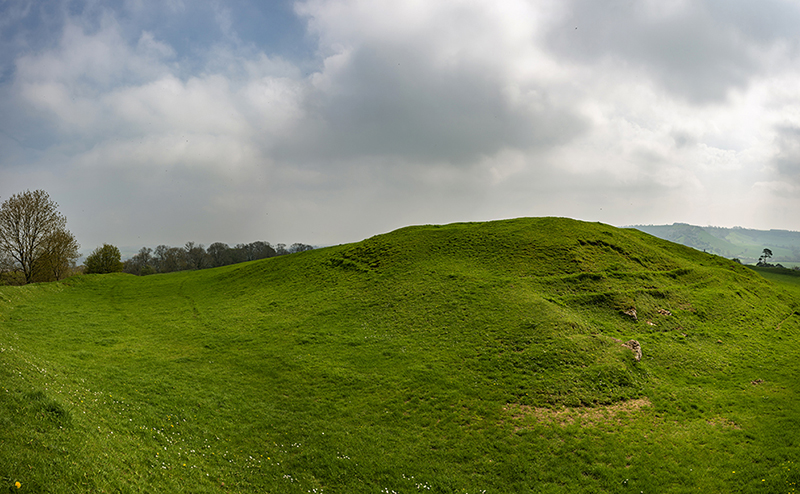
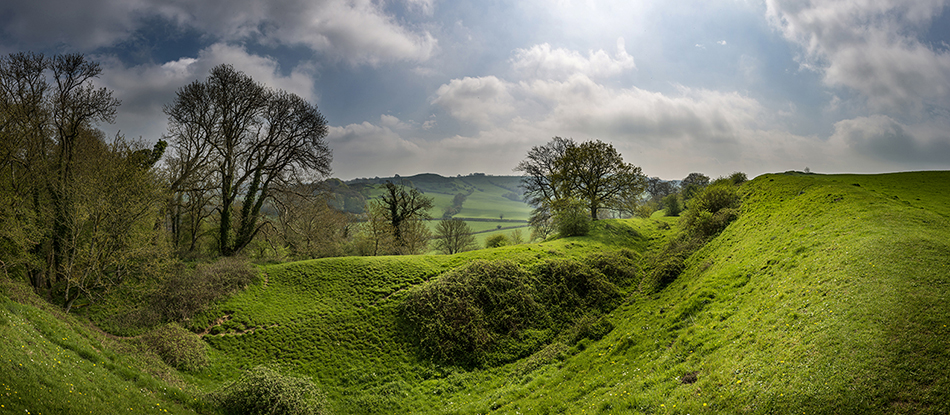
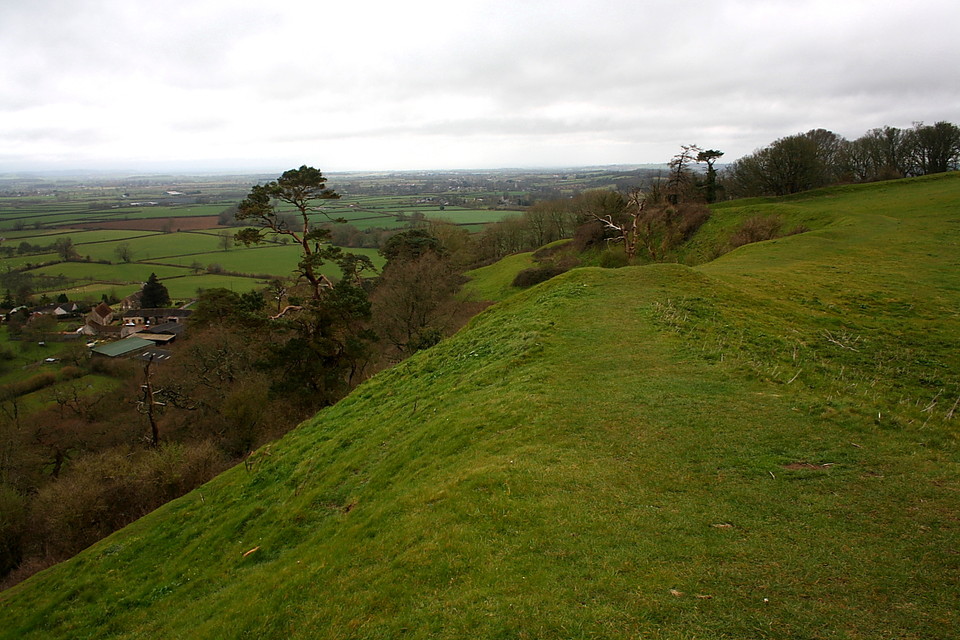
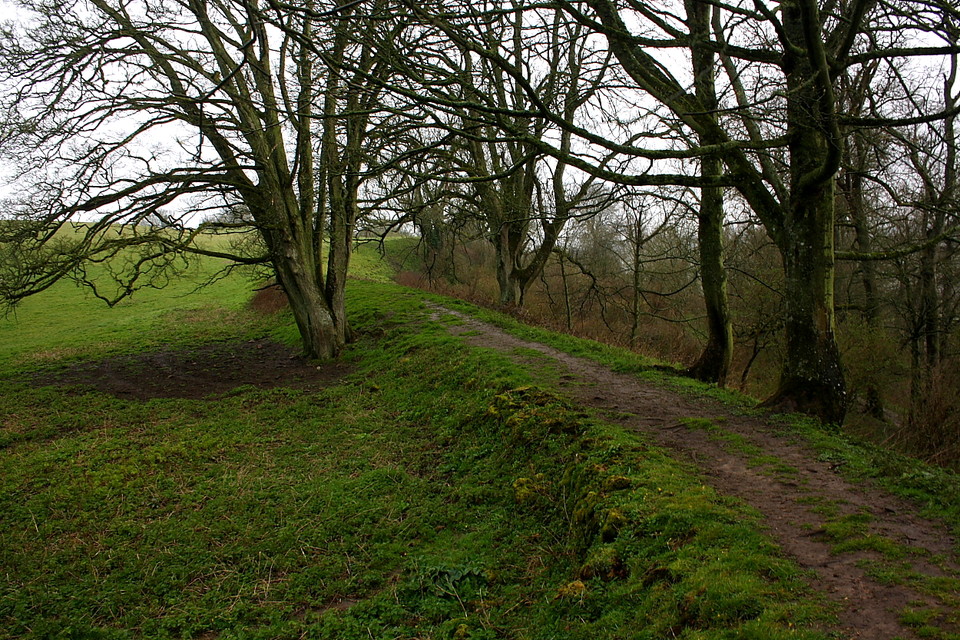
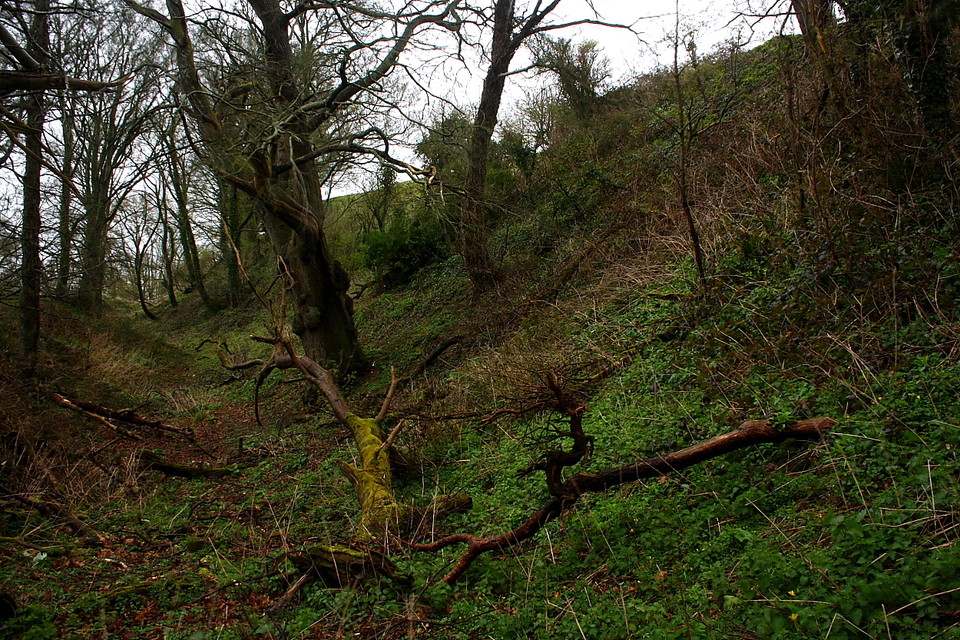
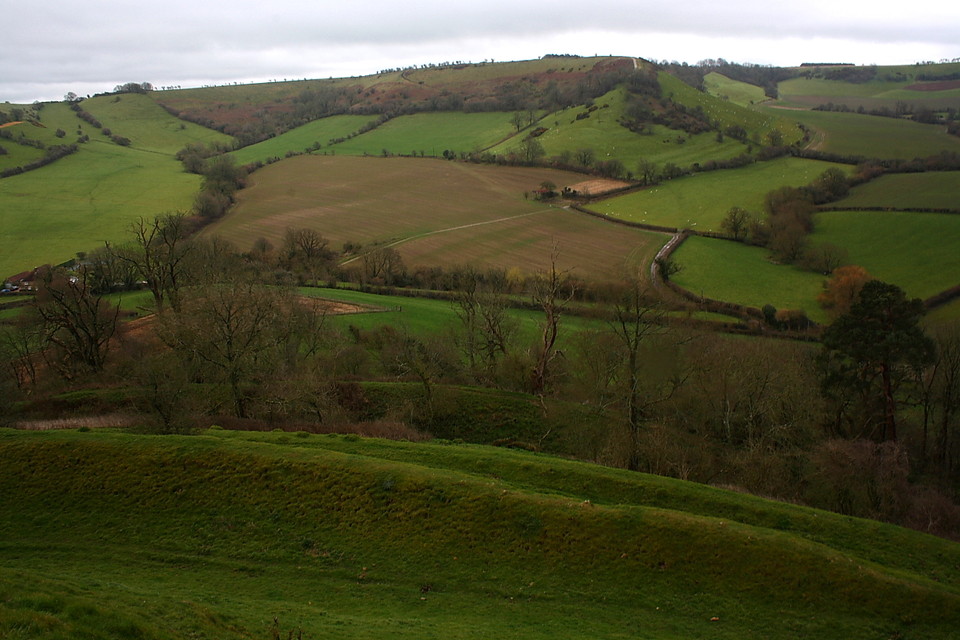
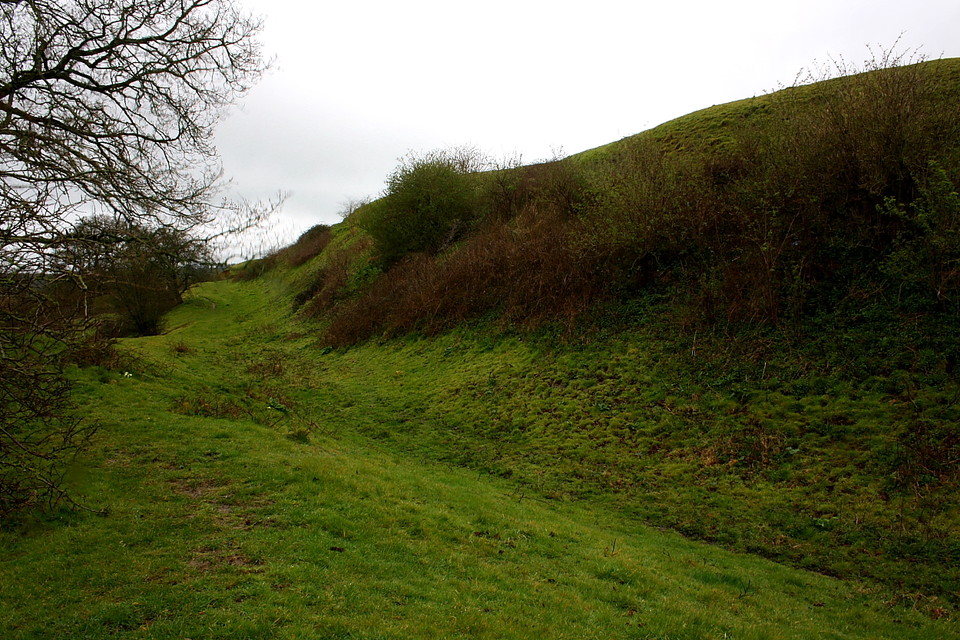
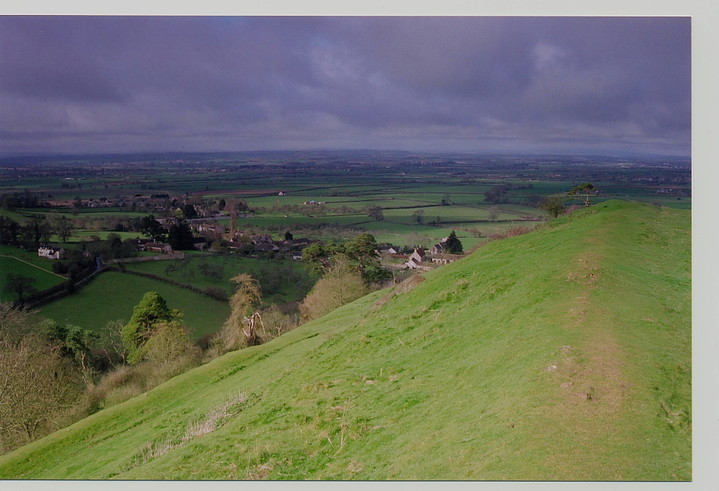
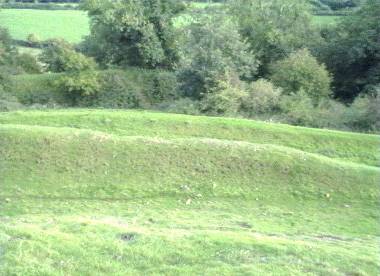
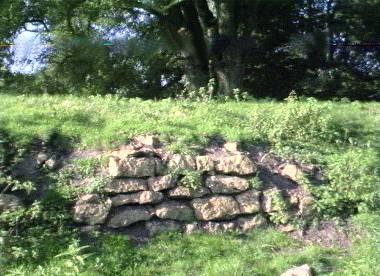
Details of the Iron Age hillfort on Pastscape The Hillfort defence does not consist of four ramparts. Around much of the northern side there is clear evidence of a discontinuous berm which probably represents a fifth rampart. This is not a strategic necessity. The eastern side is the most vulnerable and here only the upper two ramparts survive. Below these two slight changes of slope could be indicate former ramparts and these may have been deliberately slighted for conversion to strip lynchets which have since been eroded and covered by natural slip. Lynchets occur all round the Hillfort and much of the enclosing wall is built at the foot of a negative lynchet. The entrance gap on the east side appears to be original (ditches on its S. side are neatly ended) but unfinished since it is so deeply cut that it could not penetrate the inner rampart unless it continued within as a hollow way. It can have had no use in an agricultural context as suggested by St. G. Gray. Cadbury Castle is a multivallate hillfort of Iron Age date, subsequently refortified and reoccupied in the post-Roman and late Saxon periods. The hill has also yielded evidence, in the form of both surface and excavated finds, of Mesolithic, Neolithic, Bronze Age and Roman activity. The association of the hillfort with the fictitious Camelot of Arthurian legend began, in print at least, with Leland in 1542. The extent to which he was reporting local tradition rather than jumping to conclusions of his own is a matter for debate. Inevitably, the site attracted much antiquarian attention over the ensuing centuries, although the degree to which the Arthurian associations were accepted varied considerably. Camden and Stukely both described the hillfort, for example, but emphasised the predominance of Roman material recovered from the interior. By the later 19th century, the name 'Camelot' was appearing on OS maps alongside the name Cadbury Castle. The earthworks were surveyed by Dymond (3,4) in 1873, while the first recorded excavation occurred "a few years before" 1890. It was undertaken by the Rev JA Bennett, who unfortunately (from an archaeological viewpoint) devoted much of his published report to local legend and tradition, with the results of his digging amounting to little more than a footnote. (5) Bennett's finds were examined later by Harold St George Gray, who undertook his own small-scale 'trial excavations', mainly in and around the SW gateway, in June 1913 (6). The combination of finds from the two excavations effectively established 'late Celtic' (ie late Iron Age/early Roman) occupation at Cadbury. In the light of later work at the site, it also appears that Gray uncovered part of the early Medieval refurbishment of the defences, but was unable to recognise it as such at the time. After Gray's excavations, the haphazard collection of surface finds continued, though with little in the way of recording, until the 1950s. Mary Harfield, a local amateur, collected material from the surface of the interior between 1954 and 1959 in a fairly systematic manner, although more casual collection by others continued. CA Ralegh Radford examined this material and recognised Neolithic and early Medieval artefacts as well as the expected Iron Age and Roman finds. Among the early Medieval artefacts was imported Mediterranean pottery of c5th century AD date, a discovery which once more stimulated interest in the supposed Arthurian connections of Cadbury. New APs of the hillfort interior taken around the same time also showed a considerable density of cropmark features. (7, 8) The result of these discoveries was a major campaign of investigation under the auspices of the Camelot Research Committee, consisting of geophysical survey and excavation under the directorship of Leslie Alcock. The main excavations took place annually from 1966-1970, with some smaller-scale work linked to the post-excavation programme occurring in 1973. These excavations established a sequence of periodic activity at Cadbury from the early Neolithic onwards, including for the first time the recognition of a major later Bronze Age presence. Other important results included confirmation of occupation of the interior in the 5th/6th centuries AD, and further use of the site in the late Saxon period, tying in with numismatic evidence for a short-lived mint at Cadbury spanning the end of Aethelred II's reign and the start of Cnut's (c1010-1020 AD). Subsequent activity was primarily agricultural in nature. To date only the early medieval aspects of the excavations have been fully published, although publication of the prehistoric and Roman evidence is in preparation. Several interim accounts of the work have appeared. (3-15). Cadbury Castle was surveyed by staff from RCHME Exeter in 1993 at the request of English Heritage and the University of Glasgow, who were preparing the published account of the prehistoric and Roman aspects of the site. The following is abstracted from the detailed archive report, which will also appear in the excavtion report: Cadbury Castle is located on the NW edge of the dissected limestone hills between Sherborne and Wincanton, at the western limit of the Jurassic rocks which make up much of S and E Somerset. It lies on an outlier of Inferior Oolitic limestone, which caps the more sandy Upper Lias rocks below. A geological fault occurs to the south of the hilltop, which may account for the steep natural scarp in the SW part of the interior, and for the differential vegetation growth on the hillslope. The hill is sub-rectangular in shape with a domed top and rises steeply to some 150m above OD at its summit. To the N lie the Somerset Levels, Glastonbury Tor and the Mendips; to the W Ilchester and Ham Hill, and to the S and E are the steep escarpments of Pen Hill, Corton Hill and Parrock Hill. The villages of Sutton Montis and South Cadbury lie close to the foot of the hill, to the SE and NW respectively. The adjacent hills to the E and S are marked by numerous strip lynchets, indicating extensive medieval and post medieval cultivation. The number of ramparts and ditches vary around the defensive circuit. However, there are generally four ramparts and three ditches, although in places terraces occur instead of ditches. The eastern defences have been largely obliterated by medieval or later cultivation, and what now survives are the two uppermost ramparts and intermediate ditch. The northern and western defences, which extend from the north-eastern to the south-western entrances, are between 100m and 120m wide with a height difference of about 40m from the bottom of the outer rampart to the top of the inner rampart. The southern and south-eastern defences, which extend from the south-western to the eastern entrances, are between 85m and 100m wide and rise some 50m from the bottom of the outer rampart to the top of the inner rampart. Cultivation of medieval or post medieval date has in several instances truncated the foot of the outer rampart. Field evidence for the Aethelredan rampart refurbishment may be represented by a break of slope on the outer face of the inner rampart. Also relevant are a number of exposures of walling on the outer face.The composition of the walling and their relative heights suggests that those on the southern rampart are more likely related to the post-Aethelredan work identified by Alcock around the SW entrance, while most of the remainder may be part of the burh wall. There are three gaps in the defensive circuit - at the south-western and north-eastern corners, and on the eastern side. All three have the appearance of being of considerable antiquity. The south-western has a deep, curving entrance passage, which funnels traffic up through the southern end of the massive western defences. The north-eastern entrance gives access to the hilltop from Castle Farm and South Cadbury, and is deeply-hollowed where it crosses the inner defences. The eastern entrance consists of a passage way, curving slightly at its eastern end, which makes its way up through the defences and ends as a deep hollow below the inner rampart. The entrance is effectively blocked by a steep scarp, which appears to be a later addition. It is uncertain when and why this entrance fell out of favour, although unlike the other entrances it does not now appear to be related to any major settlement. The defences enclose an area of c7.5ha. The most prominent feature is the natural scarp which occupies the SW part of the interior; it has been heavily quarried. A number of quarry scoops exist in the interior - the use of the hilltop as a source of stone dates back from at least the 16th century. The interior of the hillfort has been cultivated over a long period of time, hence the paucity of existing earthworks other than remains of the 1966-70 excavation trenches. (16) The NMR record for Cadbury Castle is arranged as follows. This record (ST 62 NW 1) consists of a general overview of the history and interpretation of the site, and includes accounts of OS and RCHME fieldwork at the site. ST 62 NW 28 deals with Mesolithic material from Cadbury; ST 62 NW 29 describes the evidence for Neolithic and Early Bronze Age activity; ST 62 NW 30 contains details of the later Bronze Age and Iron Age activity; ST 62 NW 31 features the evidence for Roman presence on the site; ST 62 NW 32 deals with the 5th/6th century re-occupation; ST 62 NW 33 describes the late Saxon use of Cadbury, as well as subsequent medieval and later use of the site. (17) Scheduled |
Posted by Chance 8th March 2015ce |
|
Details of King Arthur's Well [ST 62962528] on Pastscape and Details of Queen Anne's Wishing Well [ST 62722532] on Pastscape |
Posted by Chance 8th March 2015ce |
|
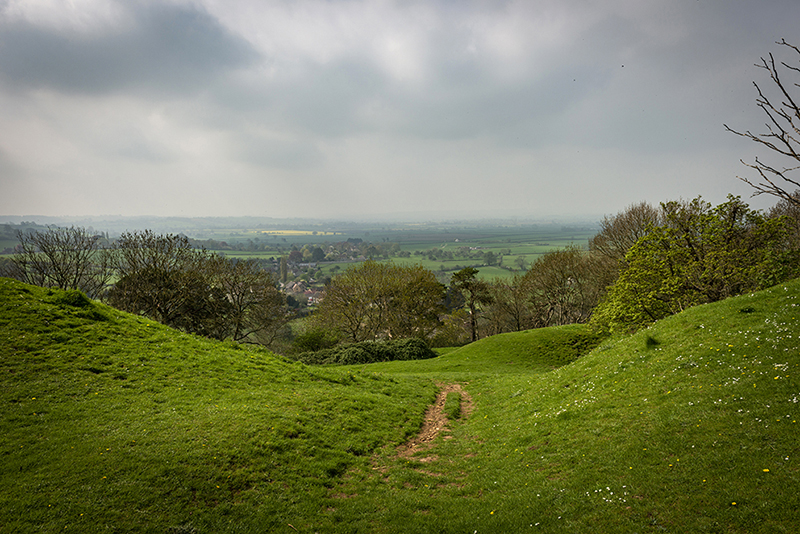
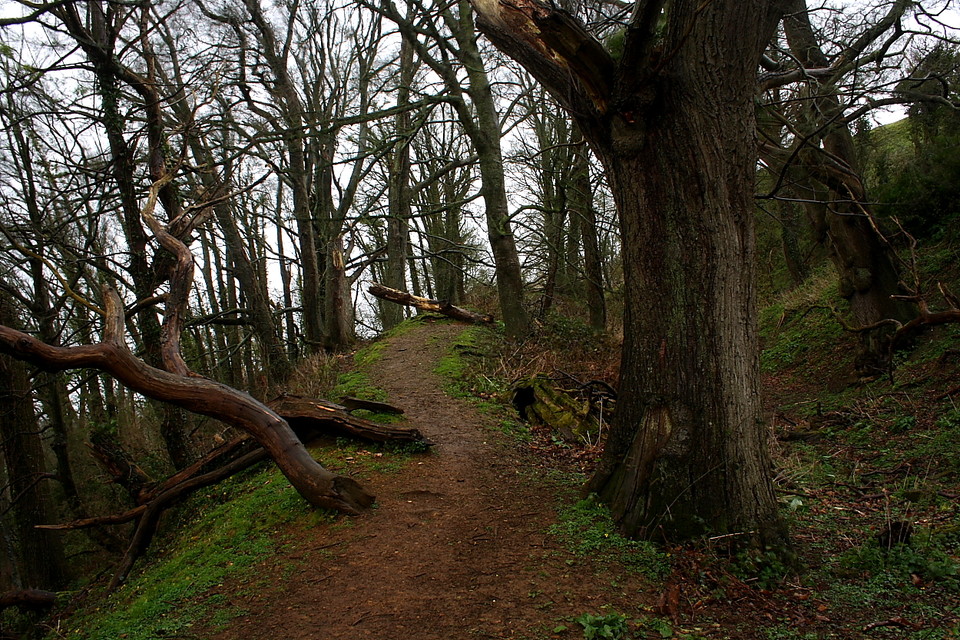
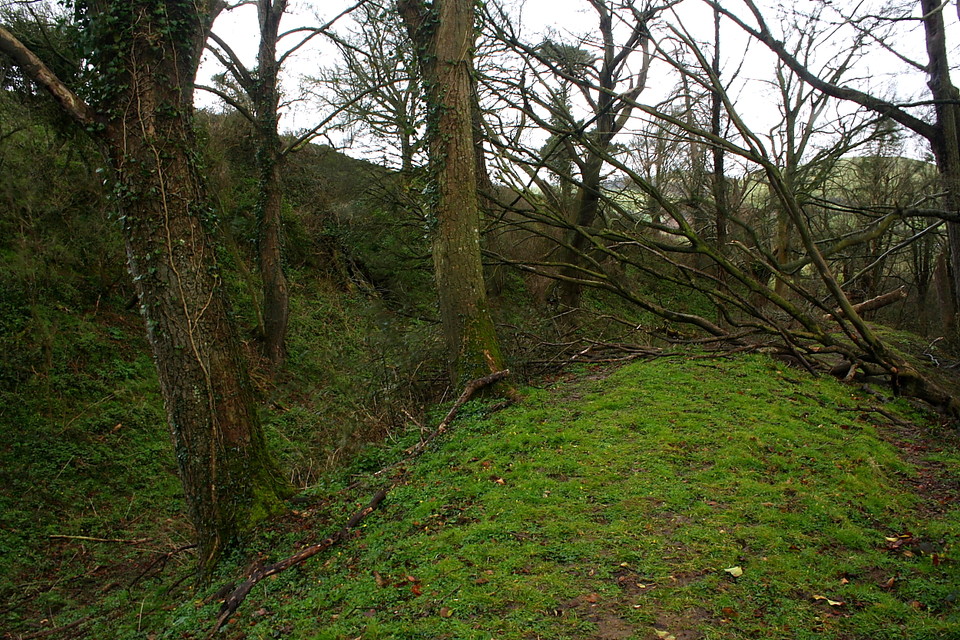
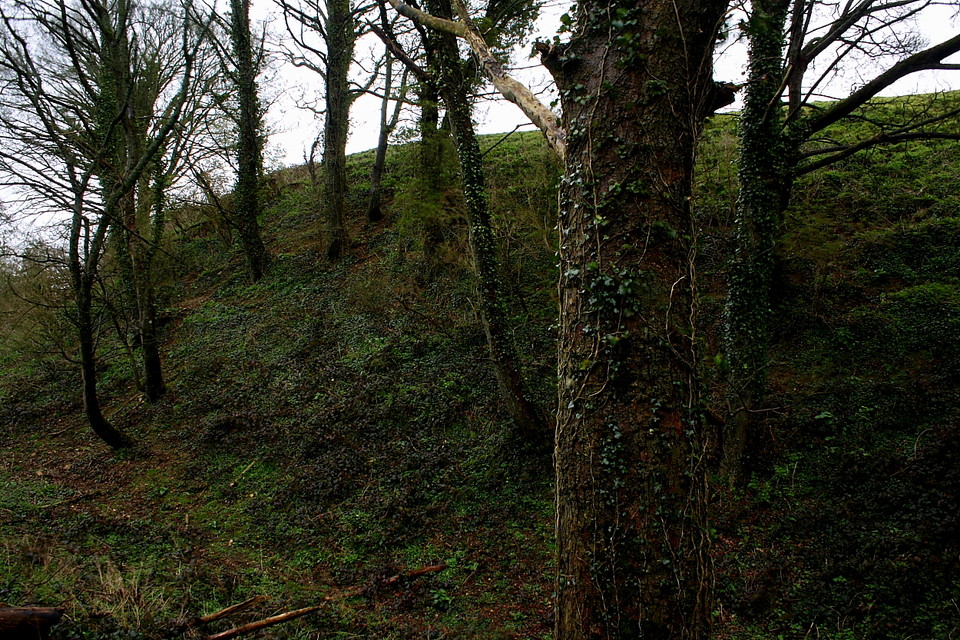
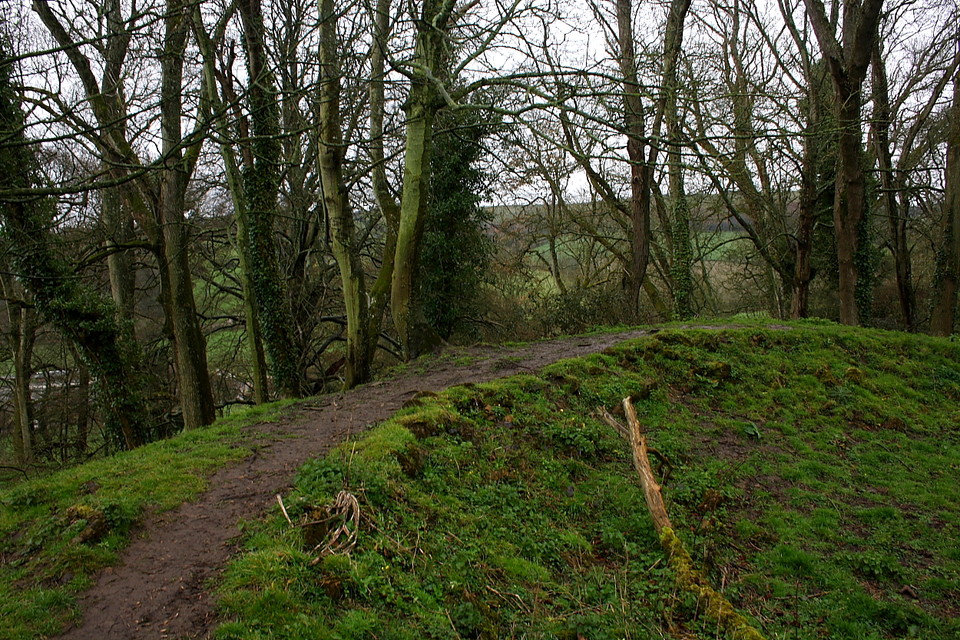
" ... But I should at once declare my position on all matters Arthurian. I would be bitterly disappointed if it was proved - which looks unlikely - that there was a historical Arthur. One of the great triumphs of the English literary imagination is that the cathedral of prose which is the Arthurian cycle was built up over centuries on empty ground. Even so, on arriving at Cadbury Castle I could see why such sober heads as Leslie Alcock, who had excavated here in the 1960s, should have succumbed to its charm: the ring of trees around the banked hill; the approach up through them along a hollow way; the emergence onto a plateau commanding views across to the Somerset Levels and Glastonbury. Moreover it was close to the River Cam, and had the villages of West Camel and Queen Camel just to the west, so encouraging the identification with 'Camelot'. When Alcock excavated here, he established that the hill-fort was built in the Bronze Age, with later Iron Age usage, and that it was substantially enlarged and occupied just after the Roman withdrawal from Britain in the fifth century - much more so than other comparable hill-forts. The fifth century was precisely when Arthur was supposed to have emerged to lead the British against the Anglo-Saxons. With great good luck, Alcock discovered a 'Great Hall' from this period, measuring some sixty-five feet long; good luck, in that his team of archaeologists allowed themselves only a relatively small part of the plateau to excavate, so to find anything was providential. Perhaps it was this that tipped Alcock over the edge into making the identification with King Arthur, which brought Cadbury Castle to world wide attention at a time, the late 1960s, when a generation were searching for a lost and future king. It cost him a great deal of respect from his peers, who questioned the historicity of Arthur. There are no contemporary accounts of his reign and the first chronicle describing his deeds dates from 600 years later - but then argued Alcock, there are hardly any fifth-century contemporary accounts in the first place..." Taken from: The Green Road Into The Trees - A Walk Through England by Hugh Thomson |
Posted by tjj 12th February 2014ce Edited 12th February 2014ce |
|
Cadbury Castle, South Cadbury, Somerset. there is loads of info on this site, which is, really worthwhile a visit. see the following link to Somerset Council HER record. http://webapp1.somerset.gov.uk/her/details.asp?prn=54552 |
Posted by bergman 27th May 2006ce |
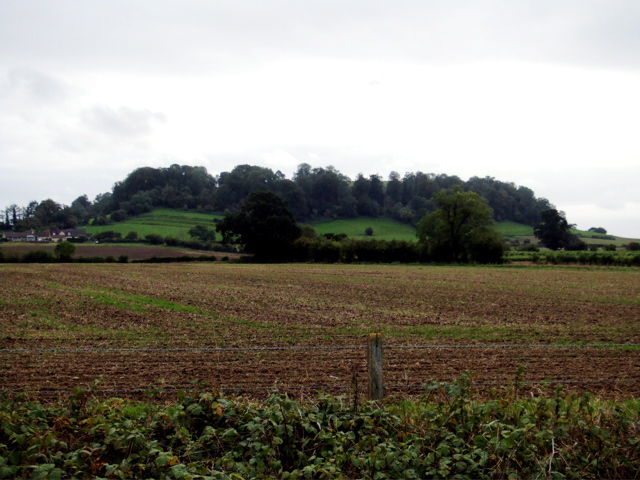
At the very south ende of the chirch of South-Cadbyri standith Camallate, sumtyme a famose toun or castelle, upon a very torre or hill, wunderfully enstrengtheid of nature, to the which be 2. enteringes up by very stepe way: one by north est and another by south west.from John Leland's 'Itinerary' (1542), an excerpt taken from the Britannia webpage http://www.britannia.com/history/docs/leland.html |
Posted by Rhiannon 21st November 2005ce |
| Look out for 'Arthurs Well' as you go up through the lane to the fort - Like me and my first trip to the fort, most people don't know its there. |
Posted by vulcan 5th May 2003ce |
Links |
Add a link |
ADSYou can download Barrett,Freeman and Woodward's (2000) EH monograph about the hillfort from the ADS website, which goes into great detail about the excavations. I particularly like the finds of beads and ammonites, and armlets of Kimmeridge Shale. |
Posted by Rhiannon 12th December 2014ce Edited 12th December 2014ce |

YouTubeShort film about the superb bronze shield excavated at South Cadbury, now residing at the Museum of Somerset (due to reopen this year). Steve Minnitt explains how it's the only shield ever to have been found during an archaeological excavation, and it owes its current state to the fact it wasn't found under 'different circumstances' ie metal detectorists who would have pulled it out of the ground immediately and disintegrated it into a squillion useless pieces. |
Posted by Rhiannon 12th March 2011ce Edited 31st March 2011ce |
South Cadbury Environs ProjectWebsite reporting on ongoing archaeological work around the hillfort of Cadbury Castle, Somerset. The project is multiperiod, reporting on excavations, geophysics and ploughzone sampling with results ranging from the Early Neolithic, through the Bronze Age, Iron Age and Romano-British, to the Medieval periods. The site also provides information about volunteer and student opportunities with the project, whicxh is run through the Department of Archaeology at the University of Bristol. For more information contact: Richard Tabor at [email protected]. 11 December 2002 |
Posted by Tabor 11th December 2002ce Edited 14th February 2003ce |
 Top of page