|
 Log in |
Register Log in |
Register
|

|
|


Madron Holy WellSacred Well
|
||||||||||||||||||||||||


 0 discussions


 Show map (inline Google Map)
|
|
|
Images (click to view fullsize) |
 Add an image Add an image |

|
Fieldnotes |
Add fieldnotes |
|
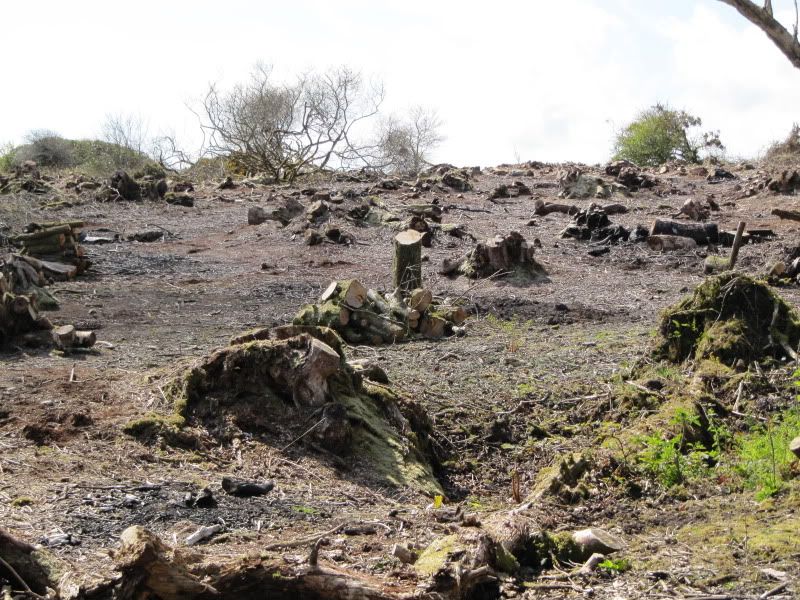
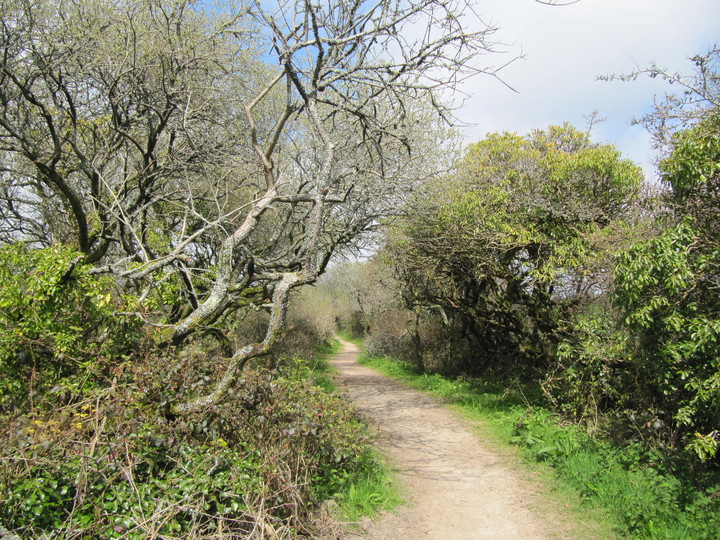
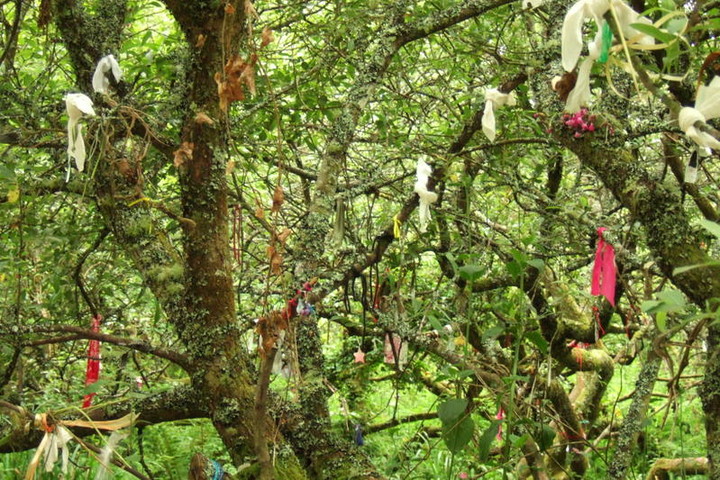
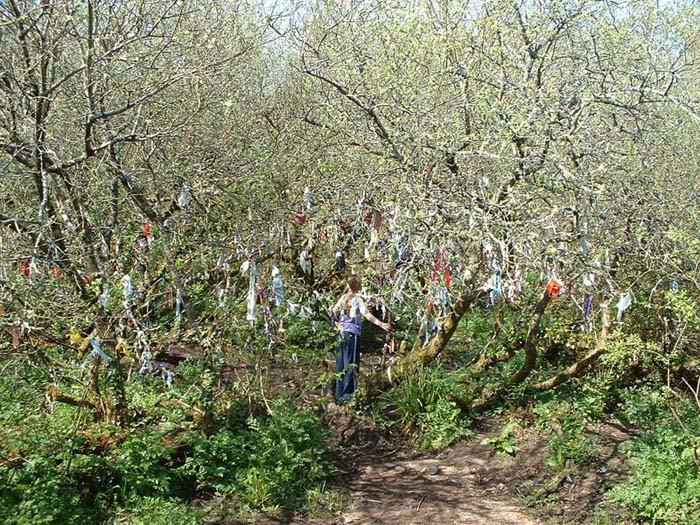
Monday 19/4/2010: walked along the fairly quiet B road to the well which is clearly signposted. Stopped of at the site of a cairn en route - we entered by a wooden gate and were dismayed at the sight that lay before us. Like other parts of the country, West Penwith has a policy of rhododendron clearance and what lay before us was acres of rhododendron stumps - probably necessary though not an attractive sight. http://i296.photobucket.com/albums/mm200/TJJackson66/046-2.jpg The wooded walk to the well was lovely; the low growing trees not yet in leaf and the lichen covered branches gave them a silvery quality. Spent a bit of time at the cloutie tree - I did a few jumps across onto some moss covered boulders to get a better feel of the place. I understand this is not the source the well and I have to admit I didn't get a sense of it being a 'holy' or mystical place. On to to the Baptistry where we sat for a bit before continuing the walk along the wooded path to a field before retracing our steps. I have since read the wellspring is hidden a bit away from the path - this I can believe as I came away feeling I had missed something. |
 Posted by tjj
7th May 2010ce Edited 7th May 2010ce |

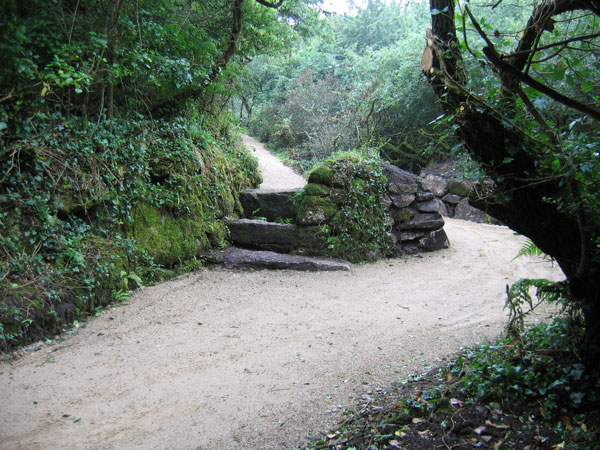
| The access to this site has been much improved, especially for those with limited mobility. It does not seem to have taken any of the wonderful energy away from the area, and has improved the 'vibe' at the car park, which was dreadful - even those who didn't know the car park's reputation for vandalism felt awful leaving their cars and it was making visiting more difficult. Nice one! |
 Posted by Incoming Traveller
30th August 2006ce |
|
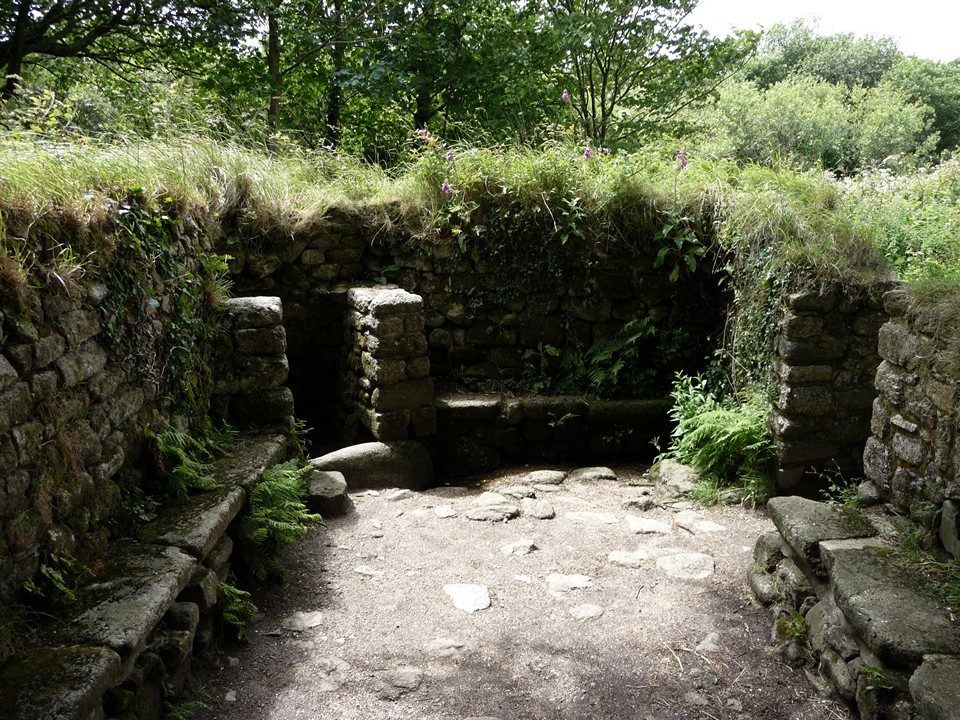
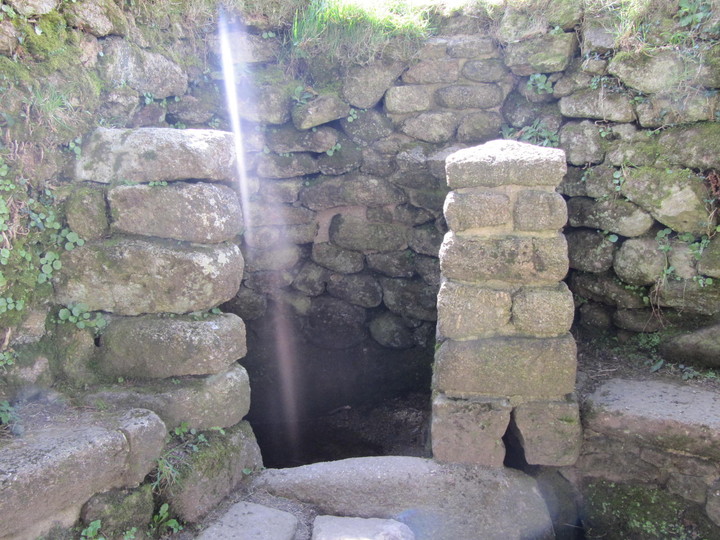
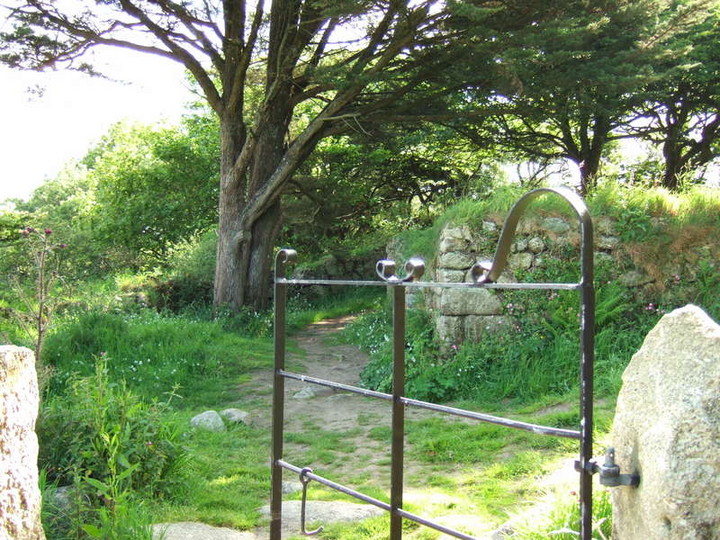
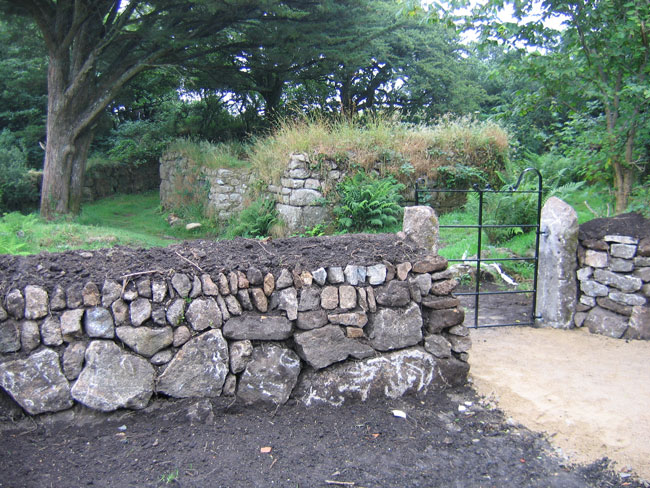
Remedial work at Madron is 'well' under way. The area around the baptistry has been relandscaped, and a gated wall has been built up. The stonework at the cloutie tree has been improved (though the well is some way off, this is where most people think the well is), and the path from the car park has been widened, cleared and laid, making the whole site wheelchair accessible at last (see photos). The car park is still being relaid and landscaped, and work should be completed in a few weeks time. It still rains every time I come here though, so some things don't change! |
 Posted by ocifant
11th July 2006ce |
|
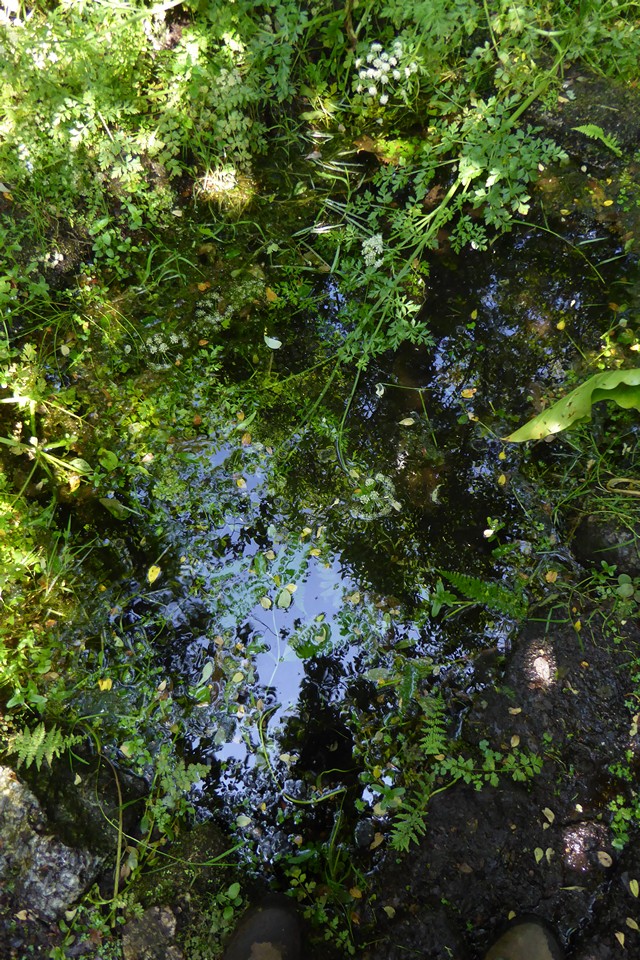
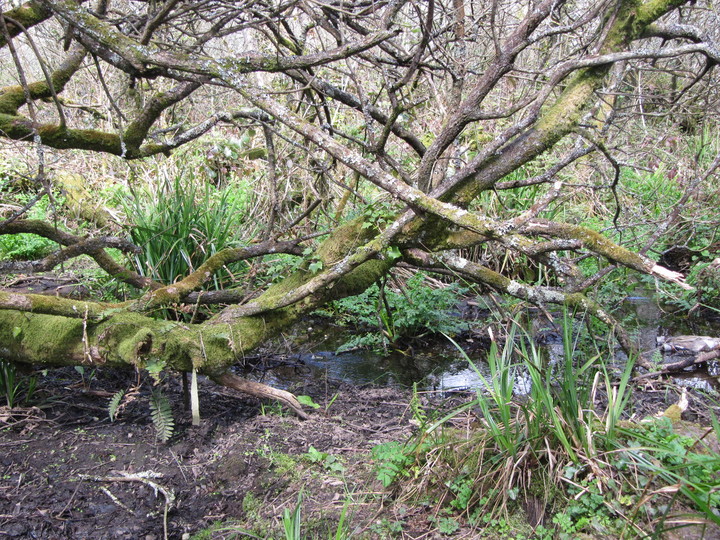
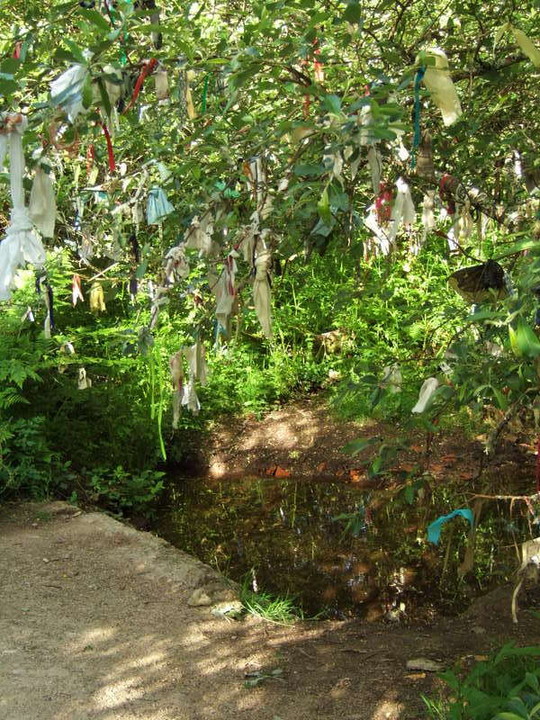
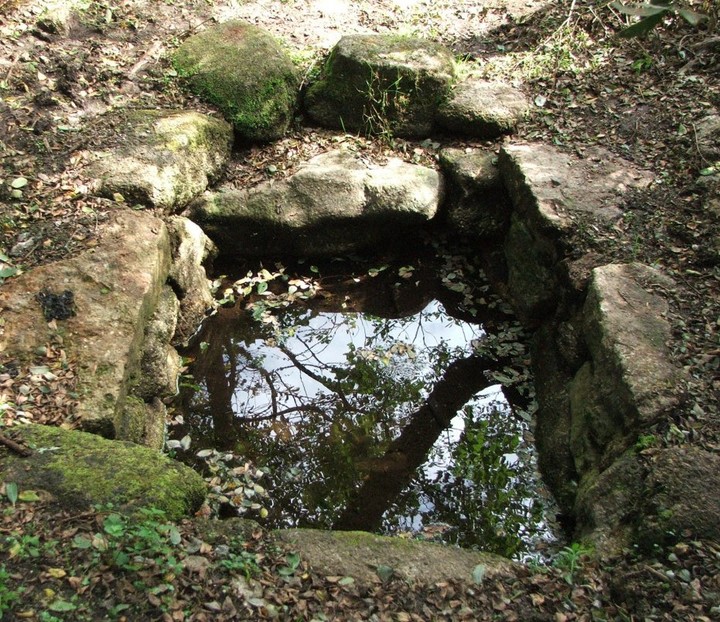
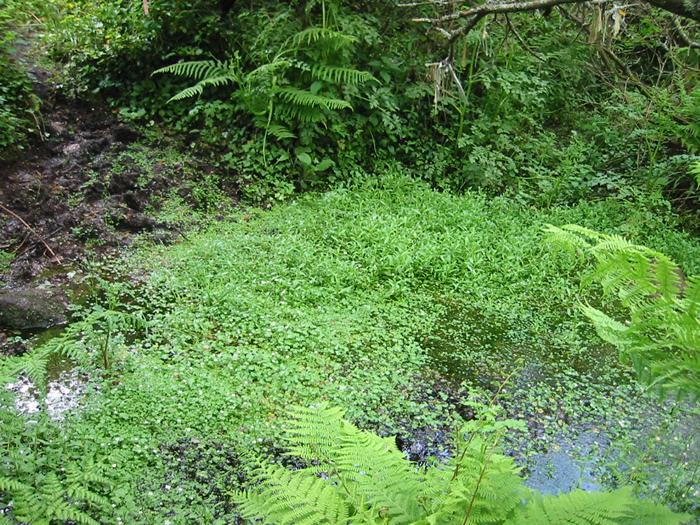
I'd been to Madron before, and was aware that the well itself was away from the wishing well and chapel, but thought the only way to get to it was wearing waders! On my last visit, however, I was impelled to try one of the many gaps in the trees on by the path, and try to find this path I'd heard of - found it! The path is a nuber of small logs - well, branches - laid out across the mire - very slippery when I was there (May 2003) and I was glad of my sturdy walking boots! I felt like Indiana Jones, leaping across huge puddles, swinging on overhanging branches (just like he did in that film, oh, Indiana Jones & the Fat Bastard, I think it was - not one of his best...) After what seemed like ages, I came to the end of the path, and discovered some old clouties hanging above what looked like a pond - the well! Some stones were visible, but due to the amount of water, it was suitably submerged. I felt I was in the middle of nowhere - it was so quiet. Gorgeous. Must pop back during drier weather... G |
 Posted by goffik
29th April 2004ce |
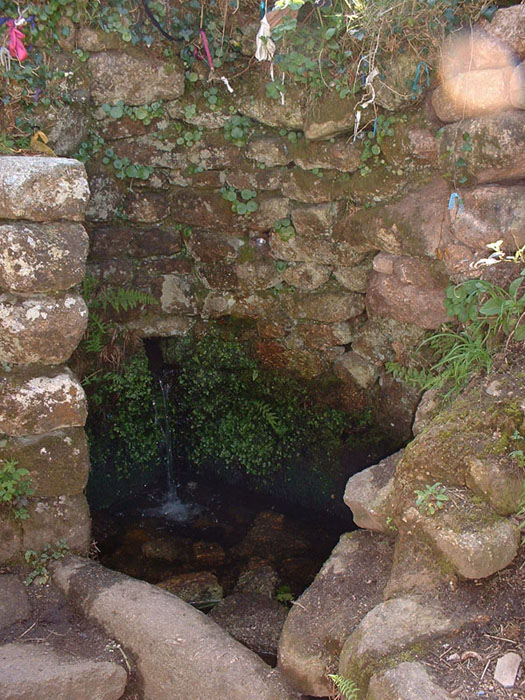
| A very very popular site with tourists, and locals, yet many actually miss the original well which lies half a mile from the baptistry, lying in very boggy ground, until recently imposible to reach.The local 'Earth Mysteries' group have now though made it more accessible if taken with care!!!.A stone surround now marks the location of the well, also uncovered recently at the site is a green mound, marking the location of 'St Madderns' bed, on which pilgrims used to sleep on as part of the 'healing' cure. |
 Posted by paul1970
4th May 2003ce |
Folklore |
Add folklore |
Borlase was less impressed. But he was the reverend at Ludgvan. So he probably couldn't be officially doing with too much superstitious behaviour.The soil round Madern Well, in the parish of Madern, is black, boggy, and light, but the stratum through which the Spring rises, is a grey moorstone gravel, called, by the Cornish, Grouan. Here people who labour under pains, aches, and stiffness of limbs, come and wash, and many cures are said to have been performed, although the Water can only act by its cold and limpid nature, forasmuch as it has no perceivable mineral impregnation. Hither also upon much less justifiable errands come the uneasy, impatient, and superstitious, and by dropping pins or pebbles into the Water, and by shaking the ground round the Spring, so as to raise bubbles from the bottom, at a certain time of the year, Moon, and day, endeavour to settle such doubts and enquiries as will not let the idle and anxious rest. Here therefore they come, and, instead of allaying, deservedly feed their uneasiness; the supposed responses serving equally to increase the gloom of the melancholy, the suspicions of the jealous, and the passion of the enamoured. As great a piece of folly as this is, 'tis a very ancient one. The Castalian Fountain, and many others among the Grecians, was supposed to be of a prophetic nature.From The Natural History of Cornwall by William Borlase (1758). |
 Posted by Rhiannon
24th November 2012ce |

Maderne, called also St Maderne, a parish situate under the craggie hills north of Penzance, nere which is a well called Maderne Well, whose fame in former ages was great; for the supposed vertue of healinge, which St Maderne had therinto infused: And manie votaries made annale pilgrimages unto it, as they doe even at this daye unto the well of St Winifride, beyounde Chester, in Denbigheshire, whereunto thowsands doe yearly make resorte: But of late St Maderne hath denied his or hers (I know not whether) pristine ayde; and as he is coye of his Cures, so now are men coye of cominge to his conjured Well; yet soom a daye resorte.From the Cornwall section of Speculi Britanniae, by John Norden (written 1610 but published 1728). |
Posted by Rhiannon 23rd November 2012ce |
On passing over a stile and entering the moor in which the well is situated, cross the moor at a right-angle to the hedge, and a minute's walk will bring one to the noted spring, which is not seen until very near, as it has no wall above the surface, nor any mark by which it can be distinguished at a distance.From Traditions and Hearthside Stories of West Cornwall by William Bottrell (1873). |
Posted by Rhiannon 20th November 2012ce Edited 20th November 2012ce |
.. an account of St. Maddern's Well in the parish of Penzance, Cornwall. From Camden. Ed. Gibson, p21, 22.Oh I think Mr Cameron would like this well very much. He'd like the way the Cured Cripples went back to gainful employment. Don't tell him about it though or he'll probably privatise the damn thing. This is from 'The Cambrian Popular Antiquities' by Peter Roberts, 1815. http://www.archive.org/stream/cambrianpopular00robegoog#page/n272/ |
Posted by Rhiannon 19th May 2011ce |
I know this is long, and it's about a well, but maybe the bit that says "A small piece torn (not cut) from the child's clothes was hung for luck (if possible out of sight) on a thorn..." isn't something often quoted in your new age holy well books. Might be something to think about at the Swallowhead Springs for example. Or will it just become a different type of geotrashing.In East Cornwall they have a custom of bathing in the sea on the three first Sunday mornings in May. And in West Cornwall children were taken before sunrise on those days to the holy wells, notably to that of St. Maddern (Madron) near Penzance, to be there dipped into the running water that they might be cured of the rickets and other childish disorders. After being stripped naked they were plunged three times into the water, the parents facing the sun, and passed round the well nine times from east to west. They were then dressed, and laid by the side of the well to sleep in the sun; should they do so and the water bubble it was considered a good sign. Not a word was to be spoken the whole time for fear of breaking the spell.p228-30 in Cornish Feasts and "Feasten" Customs. [Continued] M. A. Courtney The Folk-Lore Journal, Vol. 4, No. 3. (1886), pp. 221-249. |
Posted by Rhiannon 3rd April 2007ce Edited 3rd April 2007ce |
In Cornwall, Madron Well near Penzance had till recently—probably still has—a large thorn-tree growing against the wall of the baptistry which encloses the well. Young children suffering from skin-complaints are dipped in the well and carried round it three times, after which rags from their clothing are laid beside the streamlet and hung on the tree. This should be done about the beginning of May—the first Sunday if possible.From Notes and Queries, May 23, 1942. |
Posted by Rhiannon 26th August 2006ce |
|
Plenty of testaments to the well's healing properties can be found in Hunt's 'Popular Romances of the West of England' (1886), online at the sacred-texts archive, here: http://www.sacred-texts.com/neu/eng/prwe/prwe148.htm You can also find out when you will be married: In Madron Well--and, I have no doubt, in many others--may be found frequently the pins which have been dropped by maidens desirous of knowing "when they were to be married." I once witnessed the whole ceremony performed by a group of beautiful girls, who had walked on a May morning from Penzance. Two pieces of straw, about an inch long each, were crossed and the pin run through them. This cross was then dropped into the water, and the rising bubbles carefully counted, as they marked the number of years which would pass ere the arrlval of the happy day. |
Posted by Rhiannon 16th June 2005ce |
Miscellaneous |
Add miscellaneous |
|
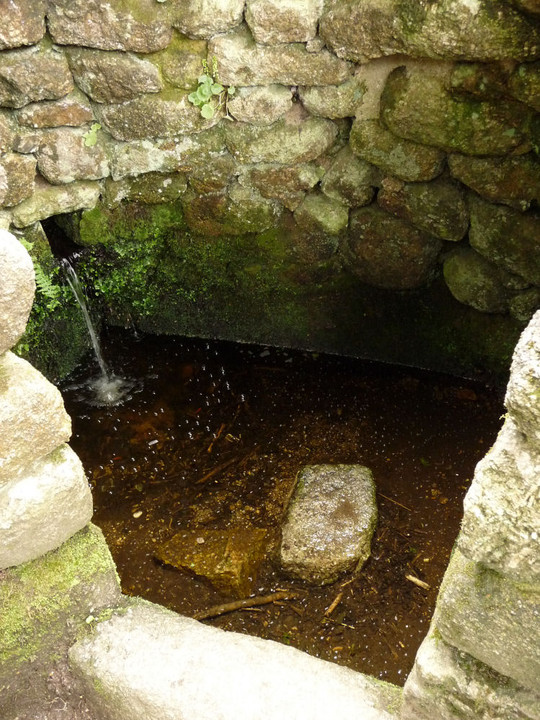
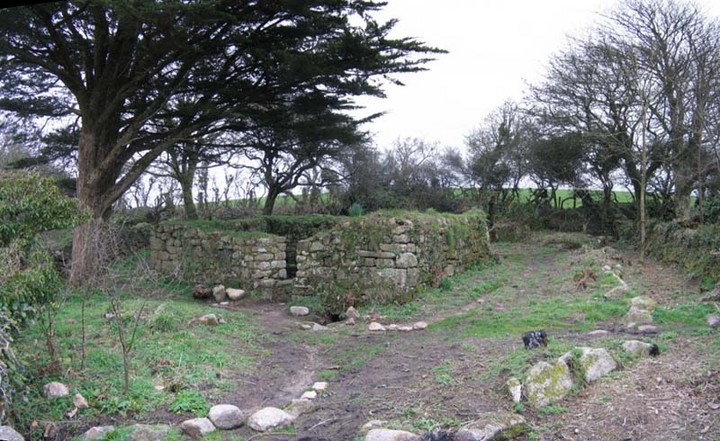
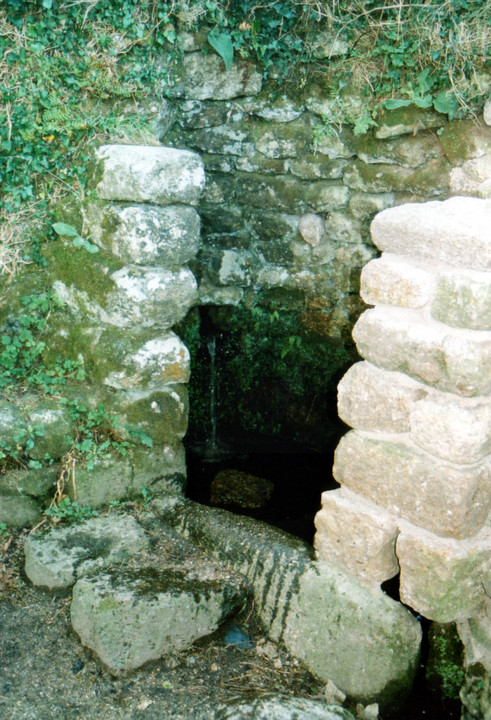
The holy well at St.Madron is one of Cornwall's oldest and most famous wells. St.Madern, of whom nothing is known may have been unique to this area, though apparently it has been a local surname. Madron church is an ancient church with a pre-christian standing stone now in the church, it was re-used in the 6th/7th C to mark a christian burial St.Madern's well is a mile north of the church, it is set in a grove of sallows and bubbles up through marshy ground. Hung on the branches are hundreds of clouties and strips of cloth; these are symbolic prayers for healing or in gratitude of a cure. The chapel is 75 metres along the track, foundations of a 12th C building with a granite altar and a baptismal basin in its n/w corner. During the 17th century a great thorn tree's branches formed a leafy roof over the ruined chapel, and the people used turf to repair a green bank by the altar which they called St.Madern's Bed, and which, of course, sick people lay on and were cured...... Above taken (almost verbatim) from Elizabeth Rees - Celtic Saints in their Landscape. |
 Posted by moss
17th February 2006ce Edited 17th February 2006ce |
 Top of page