Visited May 19, 2013
Hunebed D42 Emmeres lies west of the city of Emmen, about 2½ kilometres walk from the Central Bus and Railway station. If travelling on foot, head west from the station until you reach the main road, Odoorneweg. Follow Odoorneweg northwards for just under a kilometre (takes 12 minutes walking), then follow the first road left, Sluisvierweg. Follow this for a kilometre to Schietbaanweg, and turn left (south) down this road. By now you should encounter 'hunebed' signs as you walk the 400 metrtes to the end of the woodland.
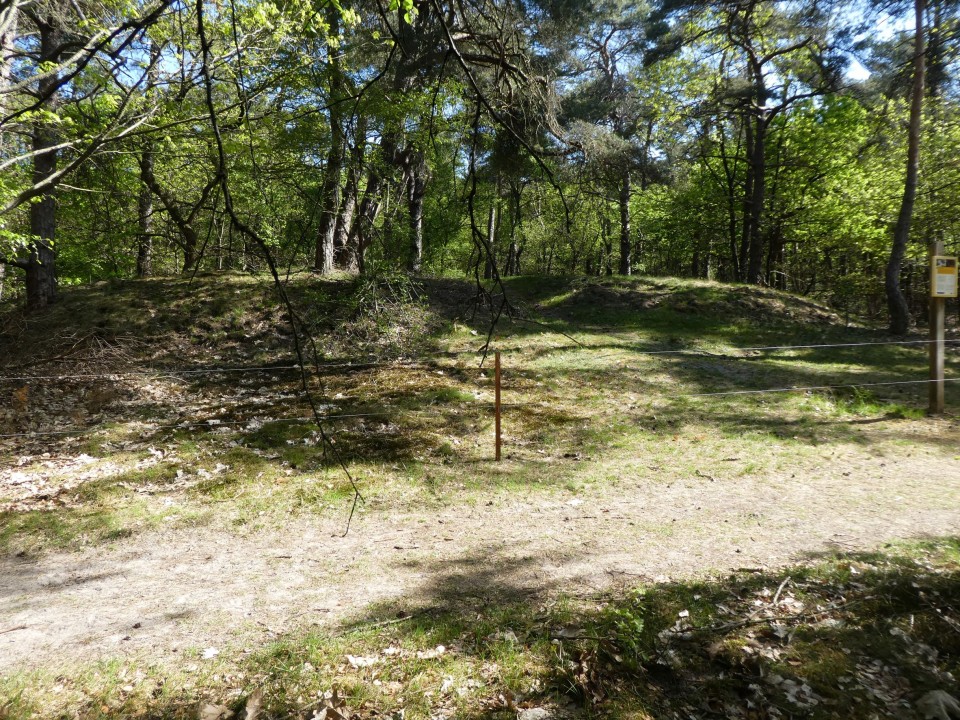
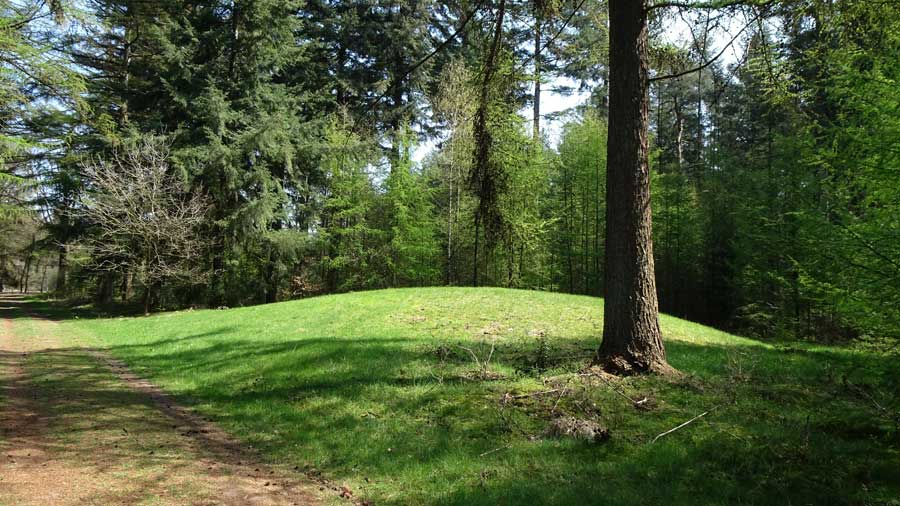
Here a path heads left, through the last of the trees, and takes you to the hunebed which lies in the clear, on the corner of the wooded area.
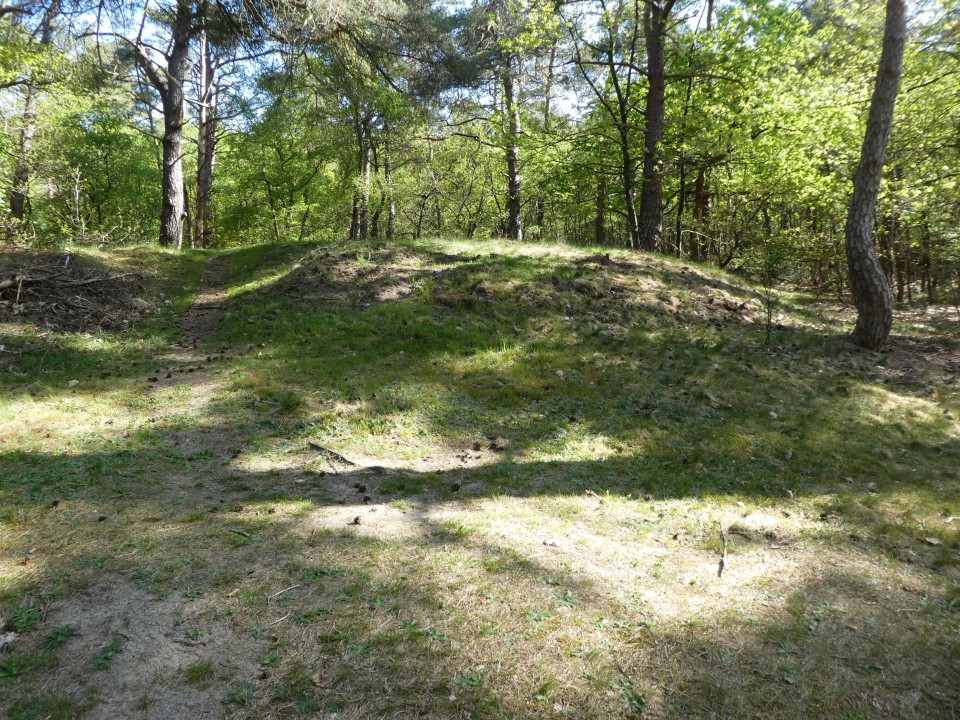
This is not one of the most magnificent hunebeds, having clearly been greatly robbed over the centuries. It is believed that this passage grave originally boasted nine capstones: only four remain today, and two of these are fallen. It was restored in 1960 and, if you look closely, you will see the concrete imprints that were set into the ground to mark the positions of the missing sidestones.
The most notable feature of D42 Emmeres is the mighty oak tree that rises from the middle of the hunebed.
Reference: Dolmens in the Netherlands by Hans Meijer.
|
Posted by LesHamilton 22nd May 2013ce |
Visited Sept 9, 2011
D44 Emmen Westenesch can hardly be called a hunebed, though it is still a classified National Monument. Long since, most of the stones comprising this megalithic burial chamber were robbed, leaving behind this remnant consisting of just two sidestones and a single capstone: the poorest hunebed of all.
It is interesting to learn that this is the only hunebed that stands on private property: all the other hunebeds are under state care. D44 can be found at the side of the Schiebaanweg track leading to the Westenesch farm.
To see the Westenesch hunebed, you will have to walk from Emmen (the nearest buses can drop you off at the Frieslandweg Bus Halt on the edge of town, on the N381 highway). Walk along the footpath/cycleway just north of the road for almost exactly a kilometre until you reach Schietbaanweg (just after you pass a single, prominent tree). Carefully cross the highway and head south to the nearest farm buildings. The first time I visited this hunebed, I couldn't find it - until I turned back the way I'd come. The hunebed nestles neatly in the angle between the first two farm buildings on the right of the road. You won't see it until you are level with it.
An interesting 'accessory' is a standing stone immediately behind the remains of the hunebed, which features a horizontal row of five drilled holes: perhaps an abortive attempt to break it up.
Reference: Dolmens in the Netherlands by Hans Meijer.
|
Posted by LesHamilton 22nd May 2013ce |
|