Gammel Hestehave Cist
Image credit: Bjørn Houdorf

Gammel Hestehave Cist

Gammel Hestehave Cist

Gammel Hestehave Cist

Gammel Hestehave Cist
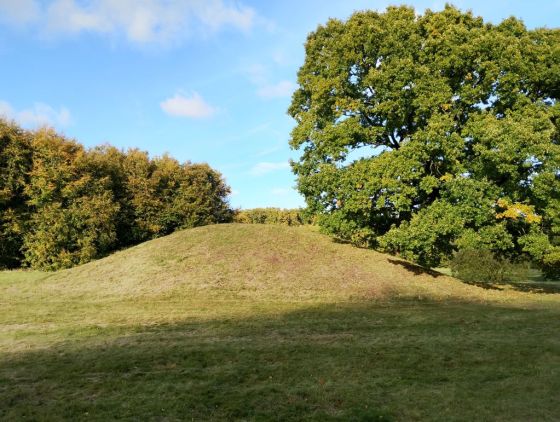
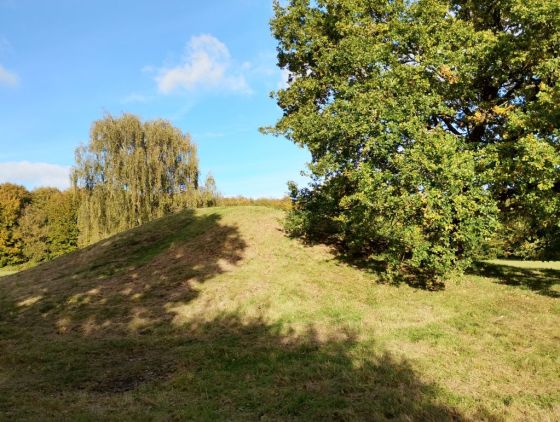
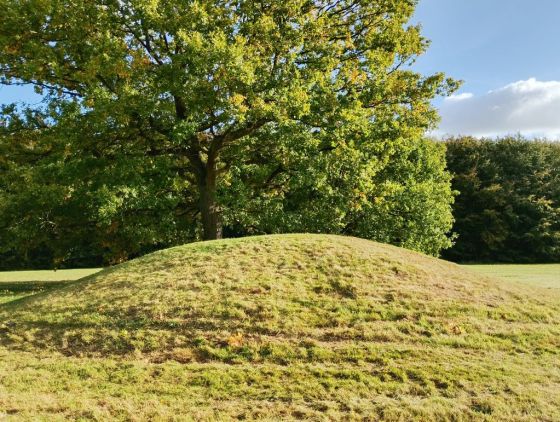
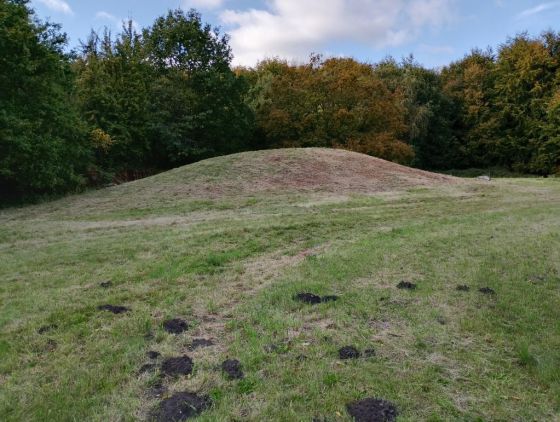
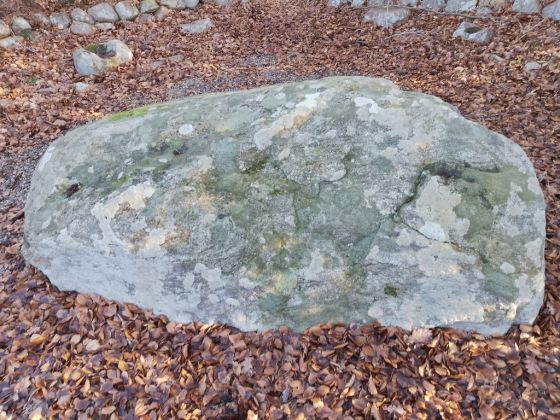
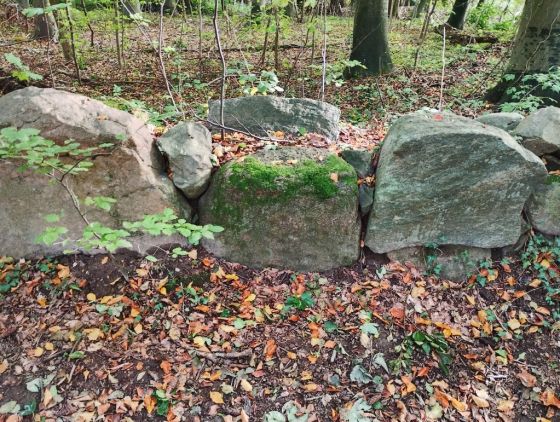
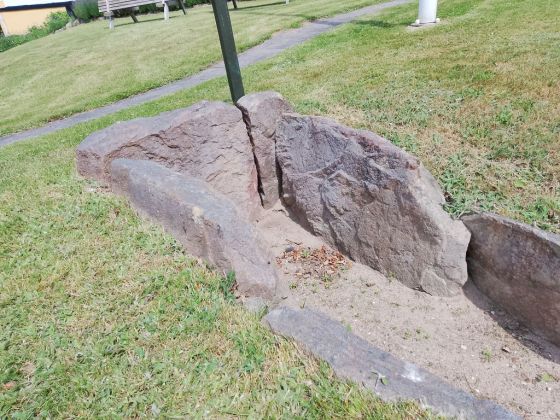
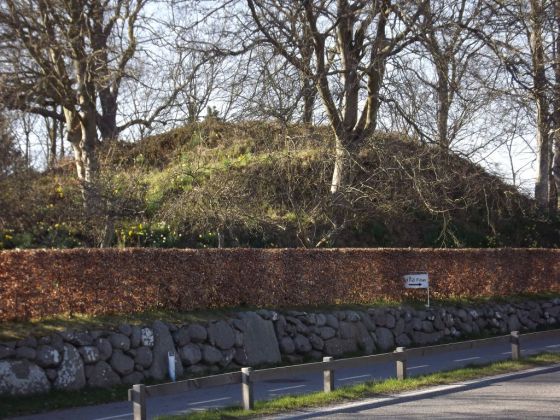
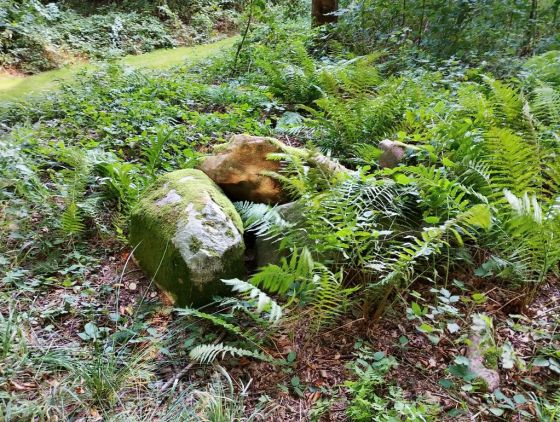
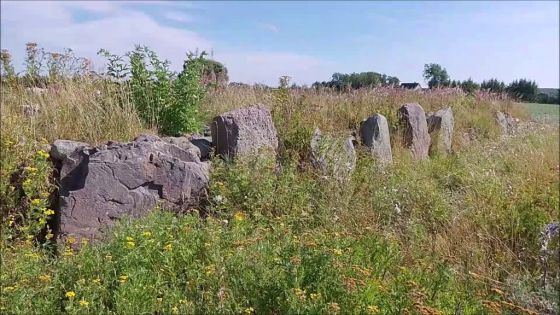
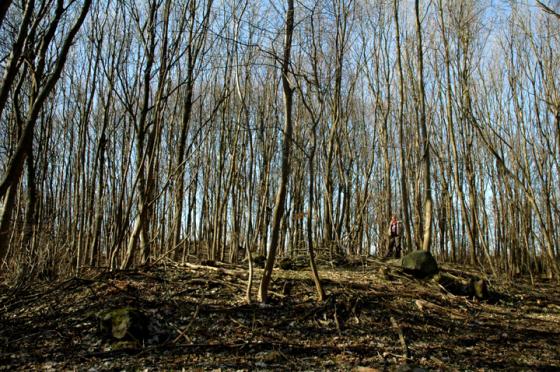
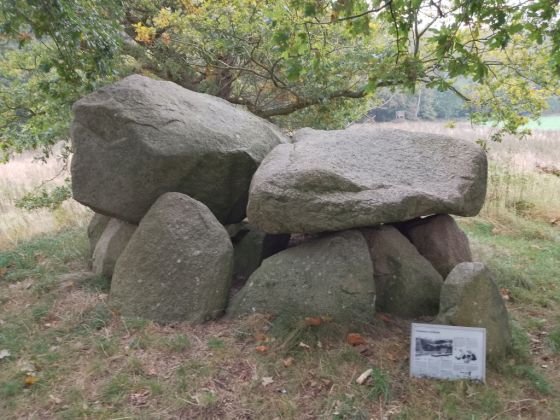
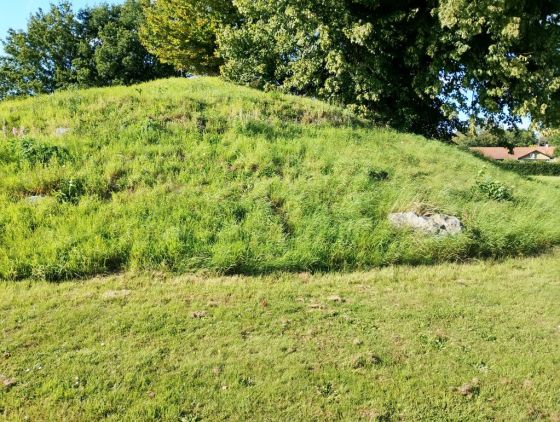
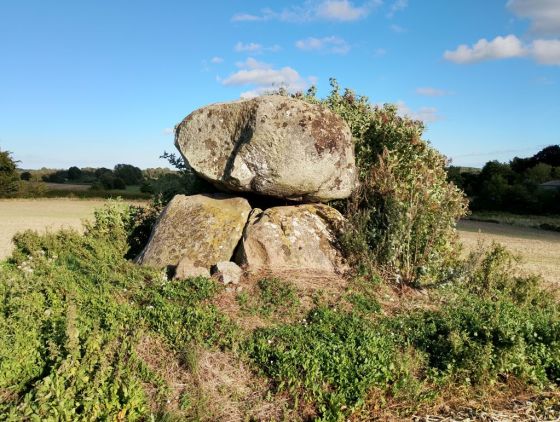
The stone cist (stenkiste, hellekiste) is located in Gamle Hestehave (Old Horsegarden) east of Svendborg, Denmark, among several large and smaller burial mounds. It is situated between two of the larger mounds.
The cist dates from the end of the Stone Age. It is categorized as Late Neolithic, corresponding to the »Dagger time« (2400–2800 BC), or more specifically, 2400–1800 BCE. Archaeological dating places it roughly between 2350 and 1700 B.C..
The stone cist was discovered and excavated in 1934 following an announcement from the plantation owner, J.H. Weber, that a burial chamber had been found during work in a fruit plantation.
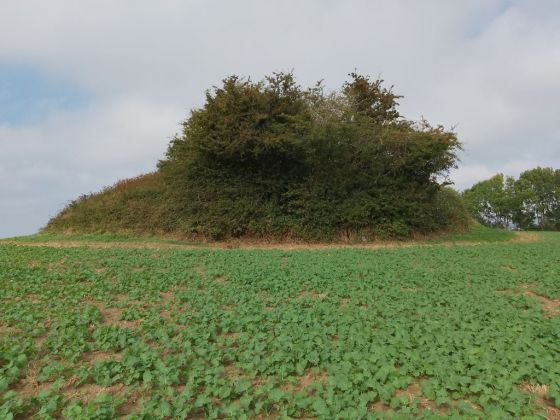
The cist itself was uncovered in a nearly vanished mound; the mound that once covered the grave has now disappeared.
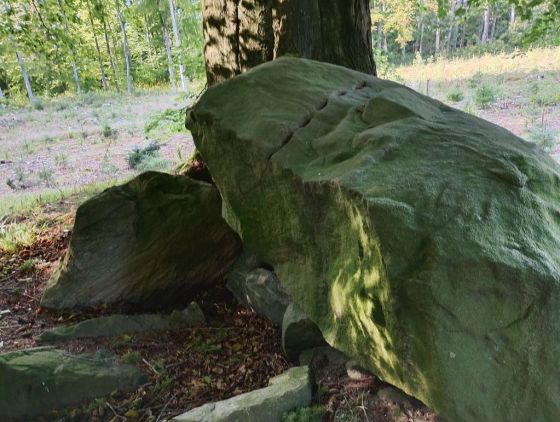
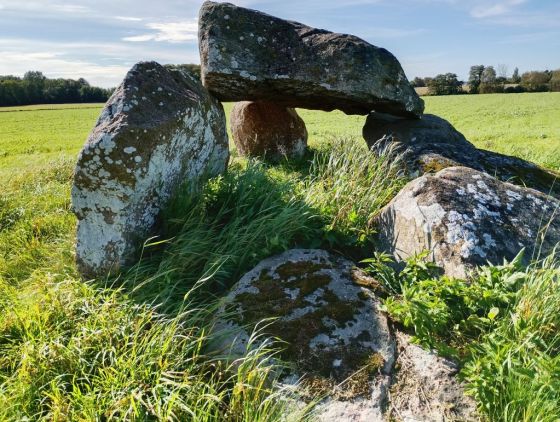
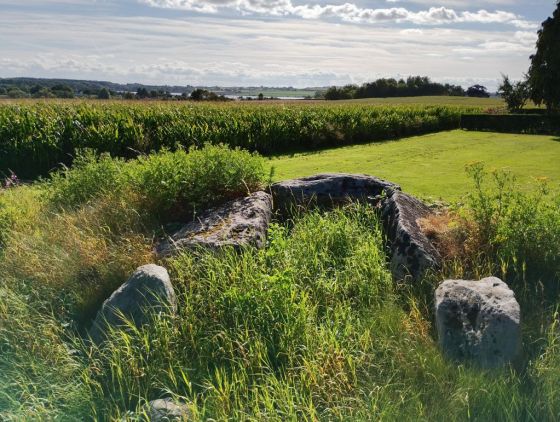
The cist was a late Neolithic stone cist (hellekiste). It was approximately 2.2 x 1.6 m (or 2.5 x 1.3 m according to a 1983 description).
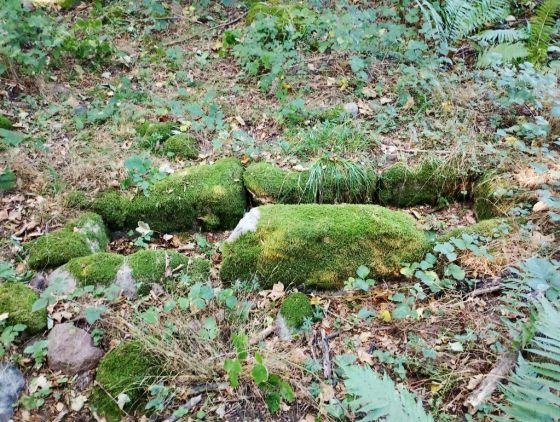
It was carefully constructed of large flat stones. The eastern long side, for instance, consisted of a single very long flat stone.
The cist was oriented NNV-SSØ (or NV/SØ in 1983) and was defined at the south end by two low threshold stones. It was noted that the cist lacked capstones (dæksten).
The grave chamber contained the remains of skeletons from many funerals, specifically the remains of at least four skeletons. Excavators noted that older burials had been cleared aside to accommodate the last interred individual.
Grave goods found in the cist included: Two flint daggers (flintdolke), and a small pendant of slate (skiferhængesmykke). This pendant was found later in the soil piles left over from the 1934 excavation.
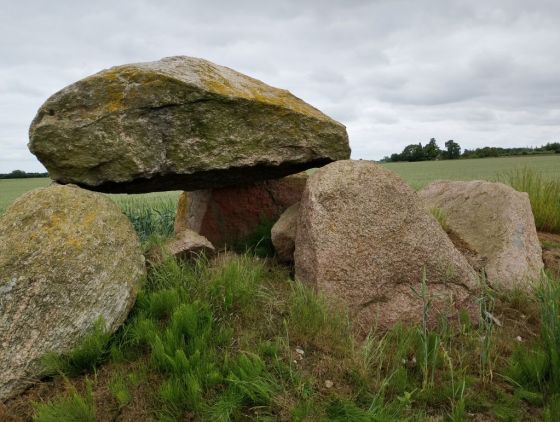
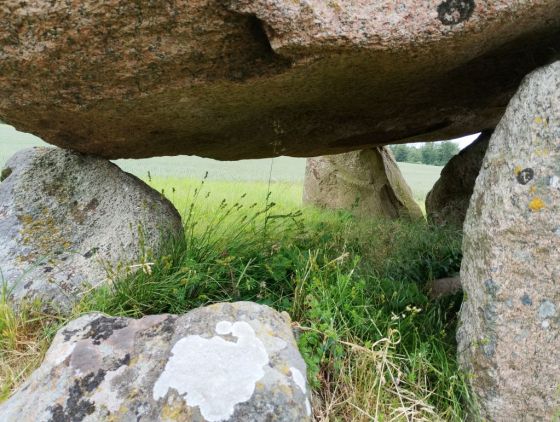
The site is a protected monument, having been officially protected in 1937 or later. However, the stone cist is now largely obscured. Multiple surveys have noted that it is completely covered by brambles (brombær), making the stones almost invisible. As recently as 2019, the ancient monument was found as described in previous reports.
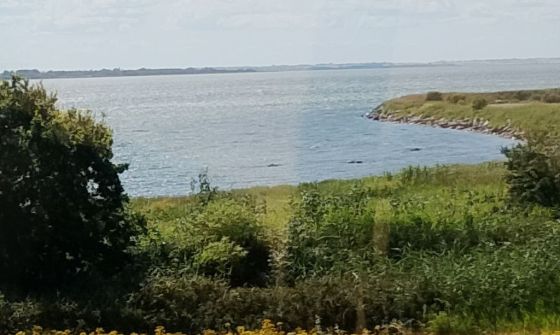
The landscape at Gammel Hestehave (Gl. Hestehave) has historically held significance, with the first settlements established along the coastline 5,000 years ago. The importance of the area is most clearly evidenced during the late Stone Age and early Bronze Age (1900–1100 BC), when settlements relocated slightly further inland. The Gl. Hestehave settlement functioned as a crucial community (bygd) and an important meeting place situated by the Svendborg Sound, offering views of the islands Thurø and Tåsinge.
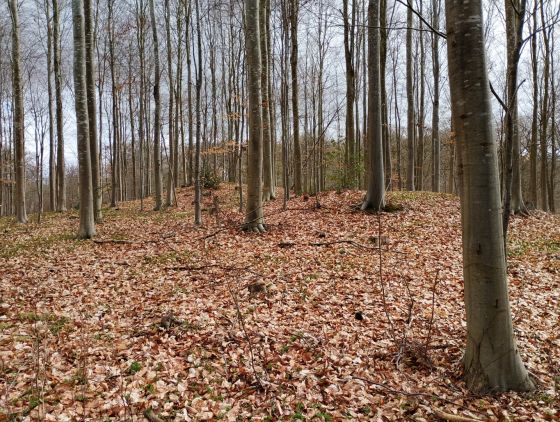
During the early Bronze Age (1700–1100 BC), a monumental burial field was constructed, containing 23 burial mounds (gravhøje) of varying sizes. The mounds served as the setting for the village community. At that time, the area was open countryside, allowing the mounds to be seen widely from places like the islands Thurø, Tåsinge, and beyond.
Building the mounds was a labor-intensive project that extended over a long period, requiring the entire community to share the undertaking of construction and burials. The mounds were likely built on pasture, using carefully cut grass turf. The largest mounds required tens of thousands of turf squares, which resulted in the surrounding land becoming infertile for an extended period.
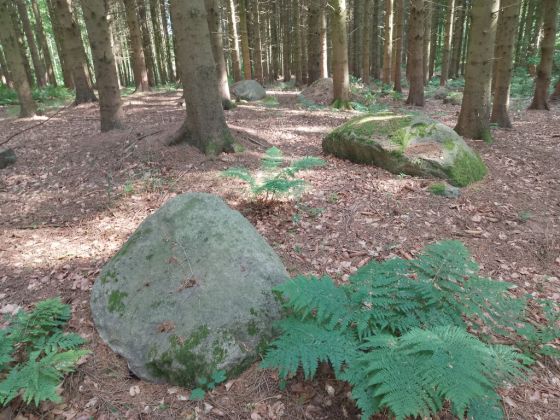
The mounds vary greatly in size. The largest are approximately 4 meters high with diameters spanning between 25 and 30 meters, while the smallest range from 0.5 to 1.5 meters high and measure 12 to 20 meters in diameter. These large burial mounds were built over one, two, or more graves, though none have been professionally examined. The area also features a small stone cist and a cup mark stone (“Æbleskivestenen”) marked with carved holy signs.
The construction of thousands of enormous burial mounds across Denmark was a clear expression of the superior skills of the new Bronze Age society. This period, which began 4,000 years ago, witnessed the emergence of ranked societies in Southern Scandinavia and Central Europe, where power and status were demonstrated through the use of gold and bronze. Chosen men and women were buried with fine weaponry and jewelry as grave goods, and sacrifices were made to powers responsible for fertility. Due to specific construction techniques that preserved the deceased’s chest, Denmark possesses a unique collection of 3,800-year-old costumes, including tunics and cloaks for men and various dresses and blouses for women.
The settlement at Gl. Hestehave participated in European trade, with residents sailing out to engage with continental contacts. Exotic acquisitions, such as harness decorations, may have been displayed during special events and processions. Furthermore, the area functioned as a casting site, where remains of several casting molds and a large crucible have been found. The bronze casting technology was advanced, involving stamping metal pieces in a wax model, covering it with a clay mold, and then melting the wax out to create an imprint for the liquid bronze.
Regarding settlement structure, new building practices arose, with people predominantly living on scattered, individual farmsteads. Some longhouses were exceptionally large, reaching up to 500 square meters, potentially accommodating the leading families of the community.
Today, the area is used for recreational activities such as hiking, dog walking, and mountain bike trails in the forest. It is also equipped with benches and explanatory signs for visitors.
National danish database for ancient sites