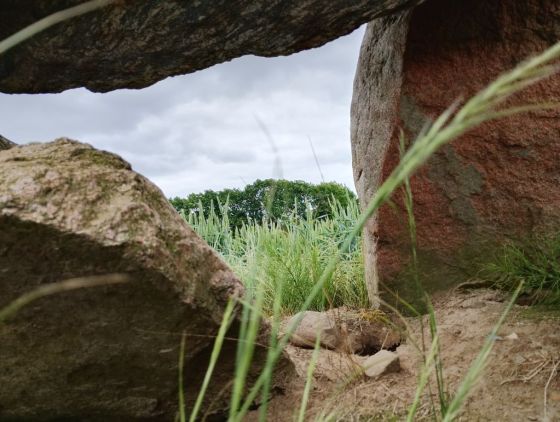
A look inside the main monument.
Image credit: Bjørn Houdorf

A look inside the main monument.

A look inside the main monument.

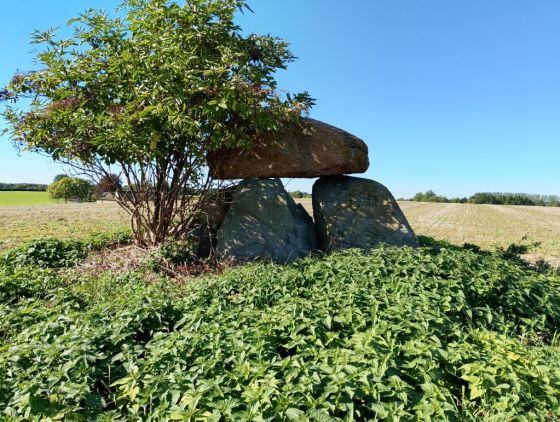
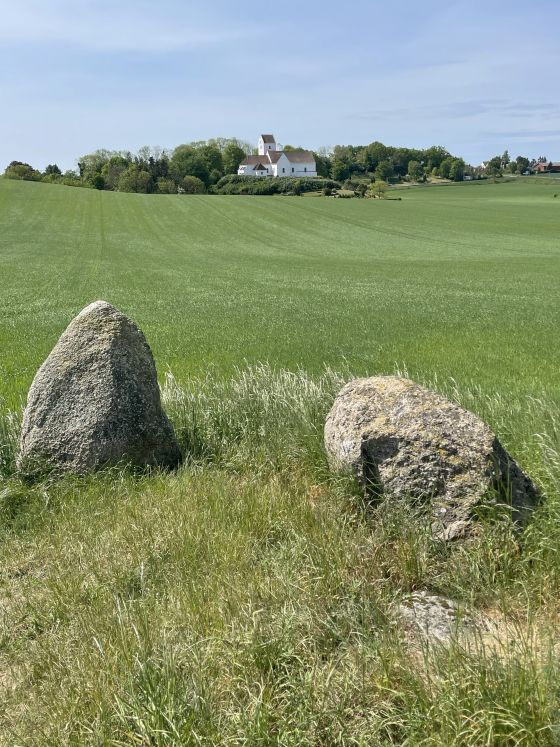
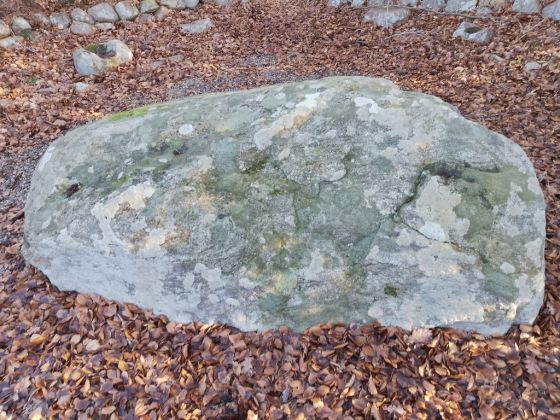
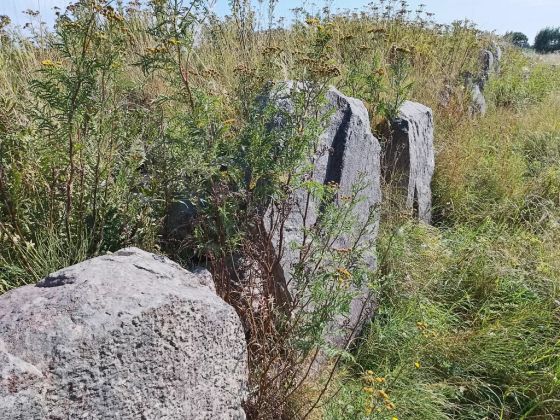
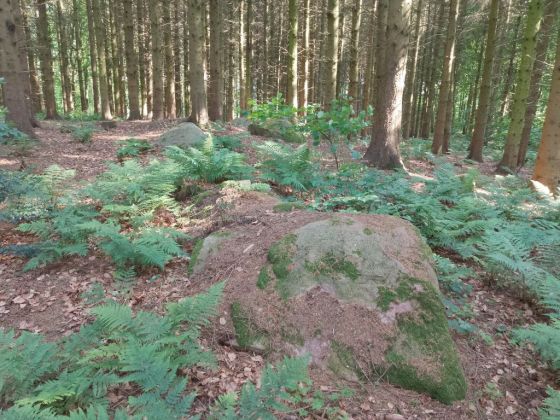
A group of stones a few meters from the main monument.


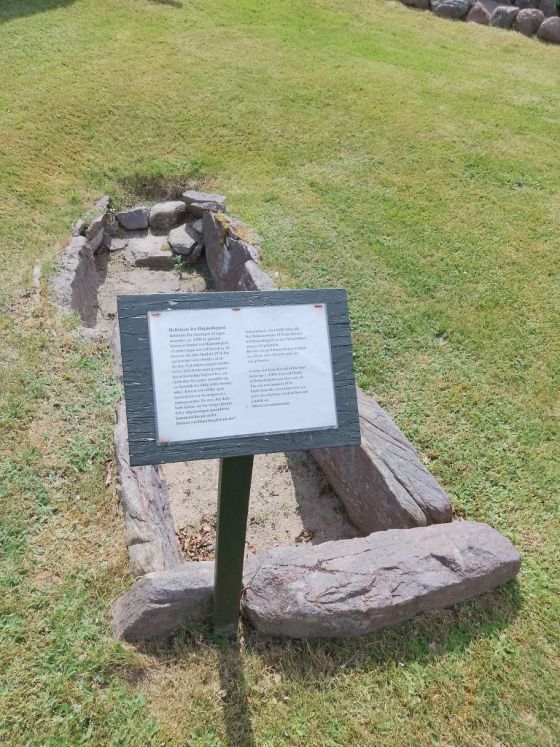
Sign at Bjerrebygaard Jættestue

5 April 2006 From roughly east, broken possible kerb or passage stone in foreground


5 April 2006 From roughly north

5 April 2006 From roughly the west showing possible kerbstones & other apparently ‘dumped’ stones.

5 April 2006 From roughly NE showing 2 remaining probable passage stones still in situ

5 April 2006 From roughly south

5 April 2006 From the 305 road looking westish
Long dolmen from the younger stoneage, 5100 – 5500 years old. It has 2 burial chambers each with a passage.
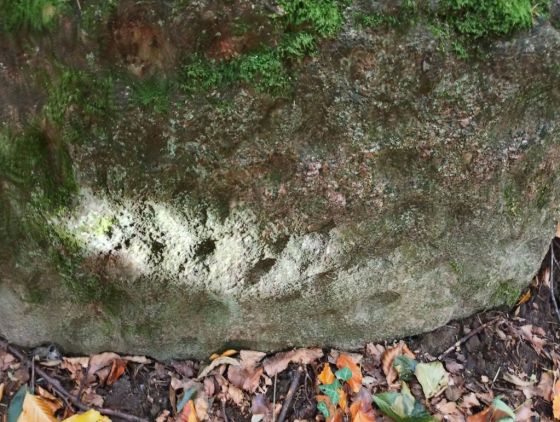
The north-east chamber has 2 cover stones. One of which has slid a little and on this you can see a least 12 small cuphollows, later made in the bronze age. The vast majority of dolmen chambers have only one cover stone.
The south-west chamber has a cover stone that has fallen into the chamber and is partially grounded. An oak tree has grown up in the middle of the chamber.
Bjerreby Jættestue, also known as Dyssekamre at Bjergby or Skebjerg, is a well-visited ancient monument located on Langeland, about halfway between Simmerbølle and Tullebølle. The site is a long dolmen from the Neolithic Age, more specifically from the Funnel Beaker culture around 3500-2800 BC, which corresponds to the Neolithic period about 5100-5500 years ago.
The dolmen is a large burial mound measuring about 20 meters in length and 10-15 meters in width and is oriented east-west. The mound contains two burial chambers, each with its own passage.
The northeastern chamber has two cover stones, one of which is slightly offset. On this offset cover stone there are at least 12 small round depressions, called bowl pits, which are believed to have been added in the Bronze Age and probably had a magical or religious meaning. The chamber consists of 11 bearing stones (two of which are partially overturned) and a 1.8-meter-long passage to the southeast.
The southwestern chamber has a single capstone, which has fallen into the chamber and is partially lying on the ground. It is somewhat special that an oak tree has grown up in the middle of this chamber, which otherwise consists of eight bearing stones and a 2-meter-long passage to the southeast with two bearing stones on each side.
No archaeological excavations have been carried out of the dolmen itself. However, it is assumed that long dolmens such as Bjerreby Jættestue served as burial monuments for local families and heads of clans. The site is easily accessible with good parking nearby and is signposted from the road between Rudkøbing and Spodsbjerg. Although there are no preserved curbstones, Bjerreby Jættestue with its two chambers is an iconic example of Danish dolmens.
Contrary to custom, I did not visit the place on a sunny day, but rather on a rainy day in the fall of 2024.
It was Moth’s birthday and while we were waiting for our friends to join us for some lunch, we quickly zipped out to see Bjerrebygaard dolmen.
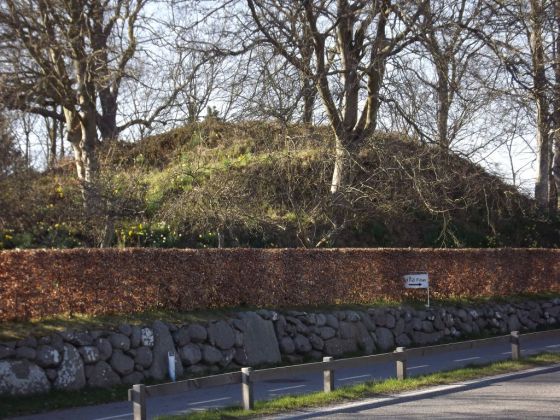
We arrived in blazing sunshine and galloped over the muddy field to reach the stunning monument, cluster of large stones, dolmens with giant capstones and six monster, gnarled ‘pantomime’ oak trees sticking out of a large mound. Very dramatic.
We spent some time enjoying it until the sky in the northwest darkened suddenly and a wall of weather closed in. We made it back to the car just in time as a full-on blizzard of hailstones pelted down.
Featured in The Megalithic European (TME) page 168.
Access: It is just about possible to park on the farm track that crosses the field past the monument. Then a walk of around 100m across the field which was ploughed when we were there. If the field is in crop, you may not be able to get to the dolmen.
Bjerrebygaard is on Langeland. Cross the bridge to Langeland and travel just over 2.5km along the 9. Take a left turn (north) onto the 305 towards Tullebølle, Tranekær and Lohals.
The dolmen is just over 1.5km along this road on the left (west) clearly visible with 6 large trees on its mound, just before a wood.
Visited 5 April 2006
This was the first place we visited on Langeland, which turned out to be a veritable megalithic wonderland, the highlight of our trip & a wonderful birthday present for me!
It’s a shame Julian wasn’t able to cover the island’s monuments in more detail – there were so many interesting or attractive sites that we came back 2 days later to investigate more!
This is a beautiful chunky ‘double dolmen’, set on a largish mound. It’s a little knocked about and according to James Dyer in Discovering Archaeology in Denmark was originally a long barrow (or langdysse).
There are 2 chambers which are basically in good condition though one of the capstones has slipped down at the end where it meets the other chamber and is now wedged at an angle.
A couple of stones at the SE end suggest a passage and there are several other large stones on the mound (mostly to the west) some of which I’d assume may be (or have been) kerbstones and maybe, passage stones.
Dyer mentions 3 stones of another passage to the NW chamber, but I couldn’t really see what he means – though they may have been moved since his visit, as the book was punished in 1972....