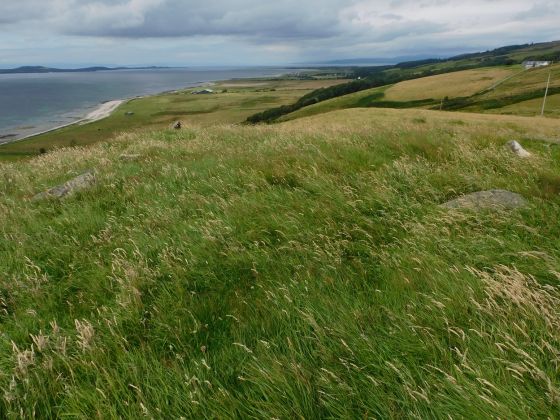
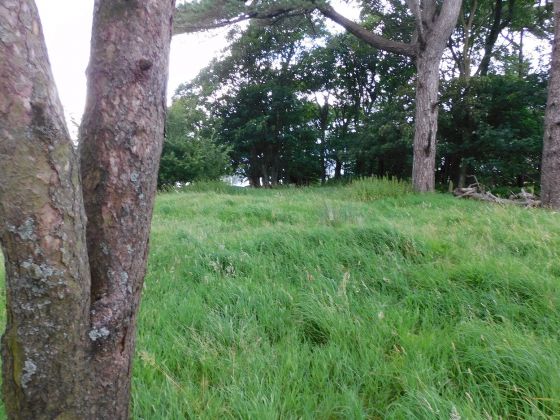
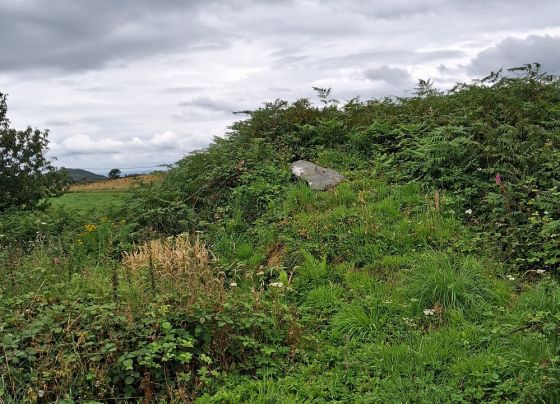
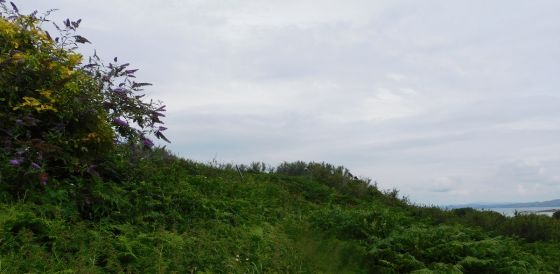
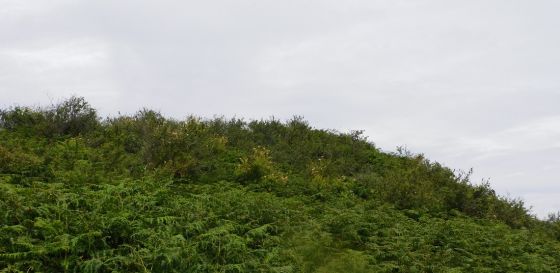
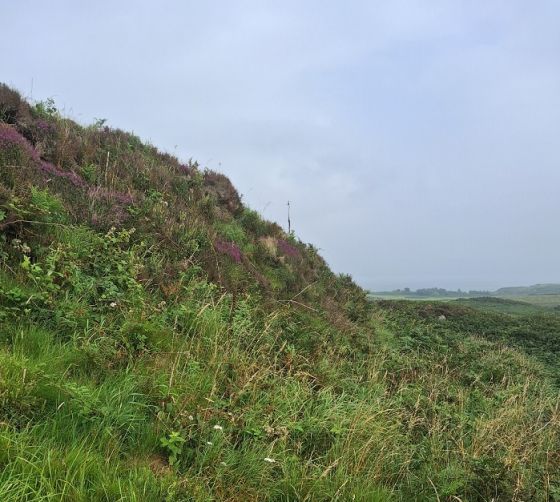
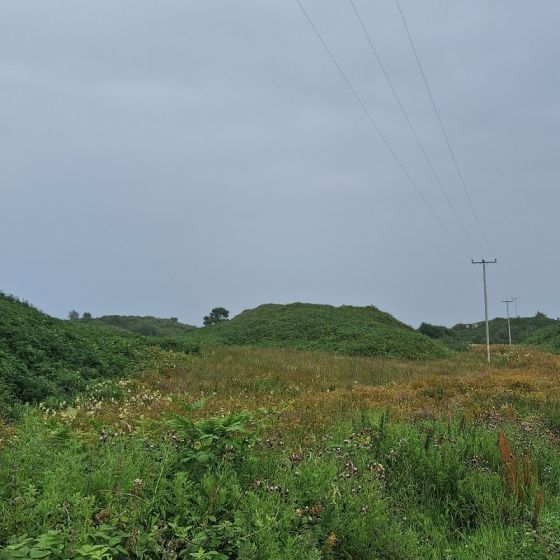
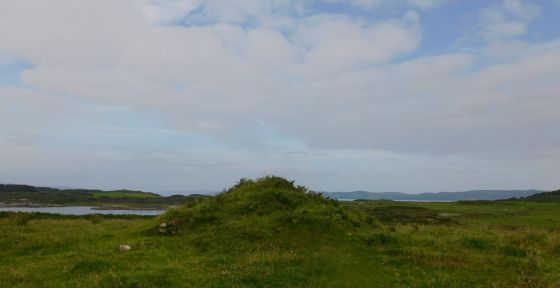
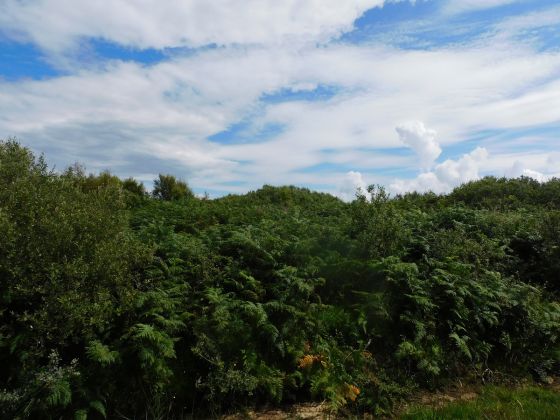
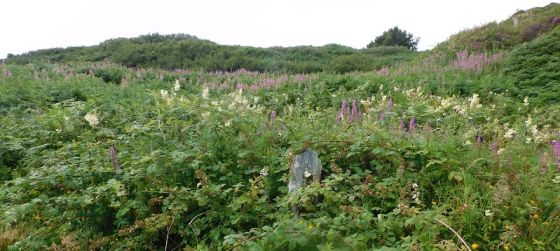
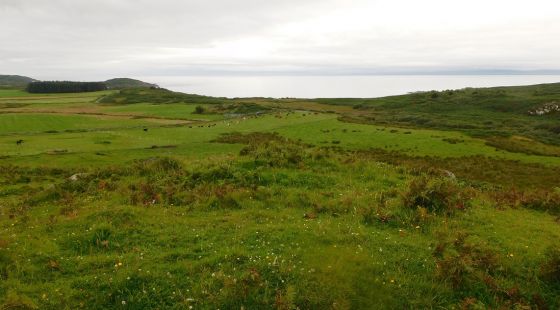
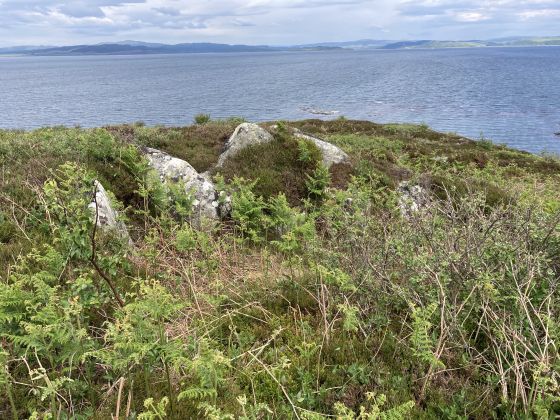
Looking south along the east wall.
Image credit: drew/AMJ

Looking south along the east wall.

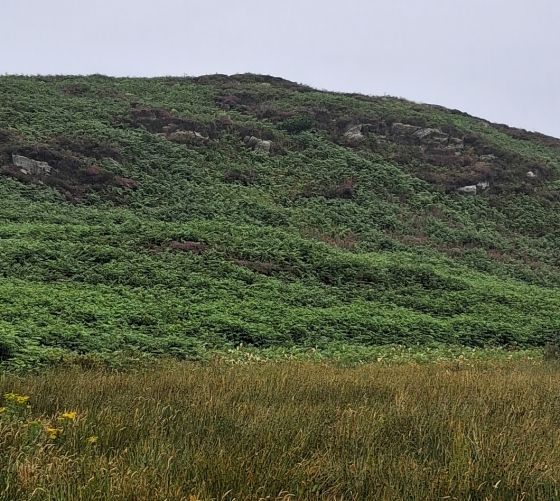
The north wall.

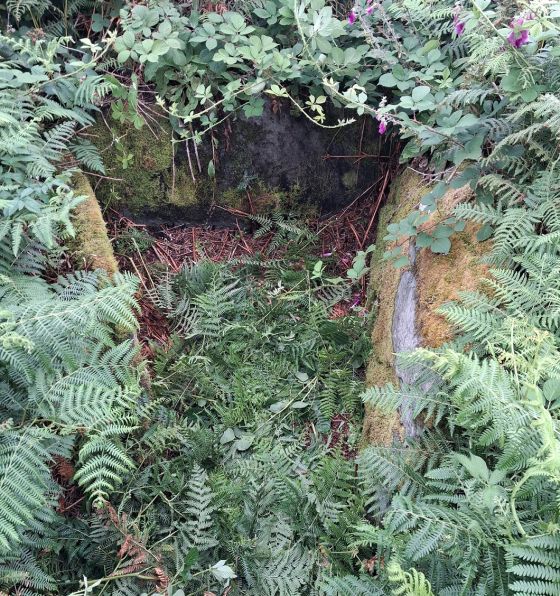
South east section.

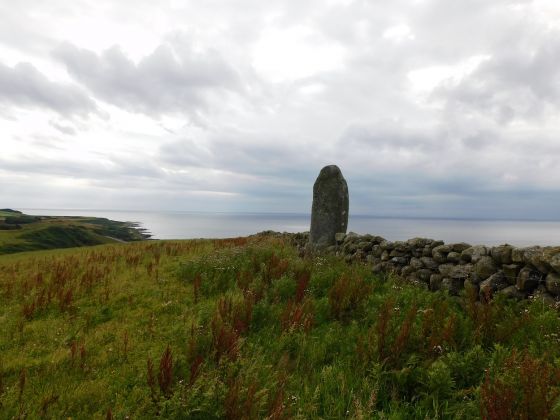
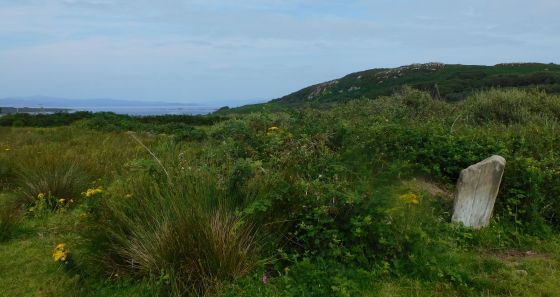
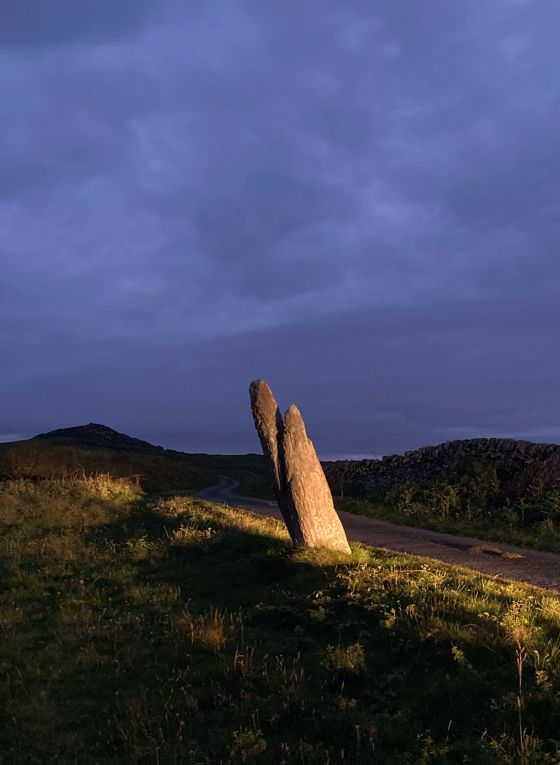
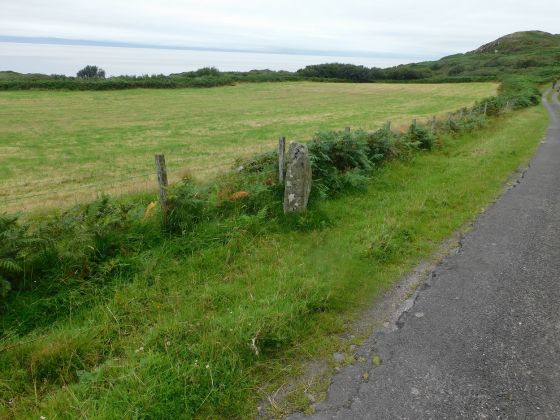
North end of the south wall, note Beacharr’s standing stone further north.

Part of the east wall.

The east side of south end looking west.

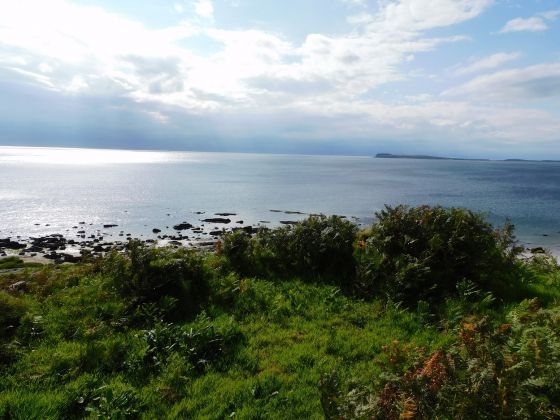
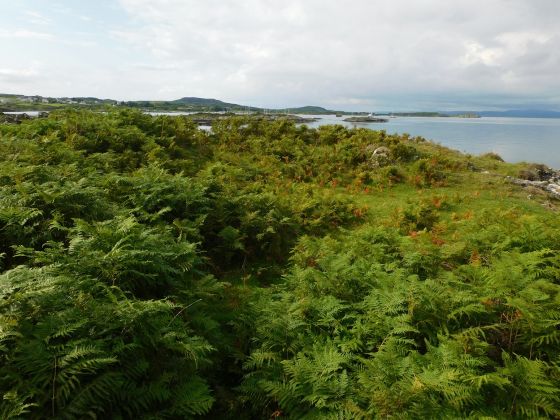
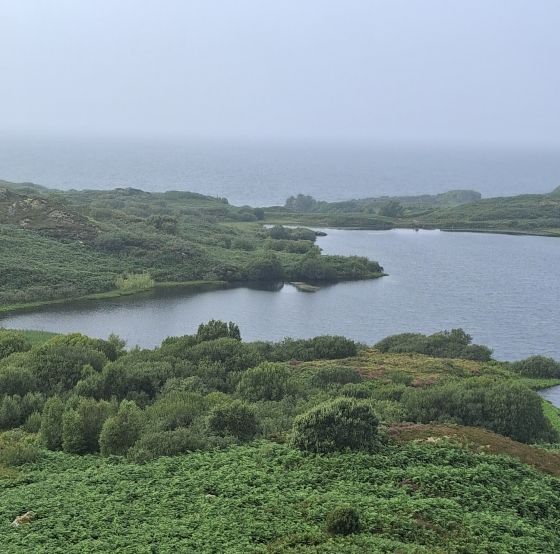
The north west looking towards Gigha.

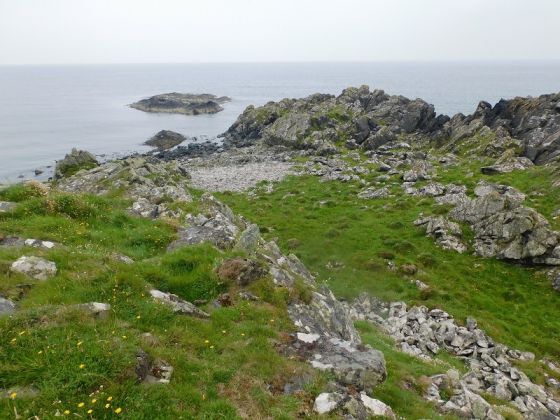
The south section, no doubt the wall going through the middle of the dun is made from the dun’s walls.

The outer walling heads south on the west side.

A few bits of decent walling remain, this on the north west.

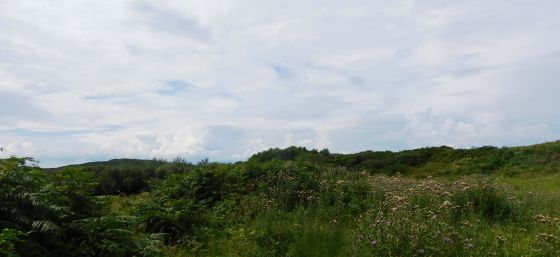
Looking south west along the west wall.

The remains of the north west wall.

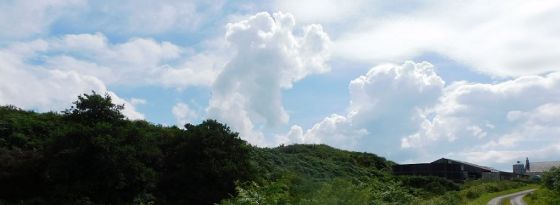
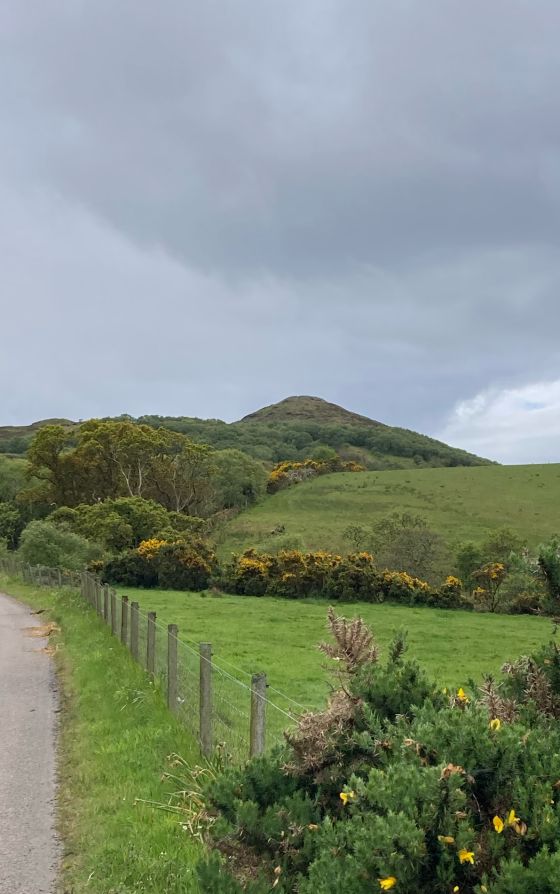
Approaching from the west.
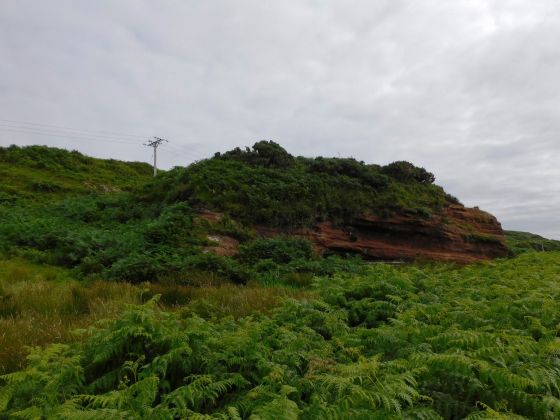
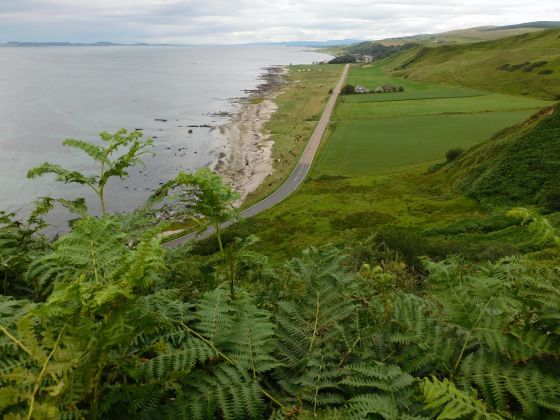
Parking near the church at Killean, I walked south on the A83 to climb the reasonably steep hill to Dun Beachaire just after Craigruadh.
Most duns are circular, this one is rectangular and steeped with folklore ranging from King Arthur to bees. None were present during my visit. Looking north-west the island of Gigha can be seen, I’d reach there a couple of days later.
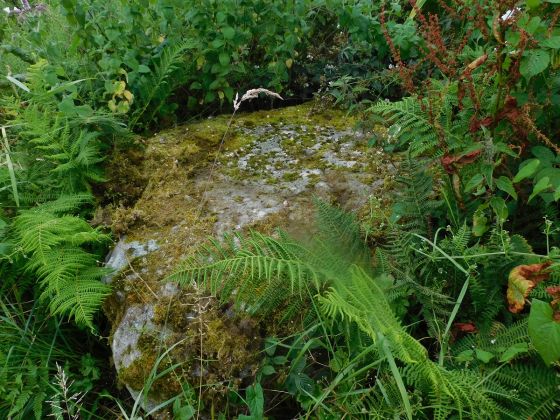
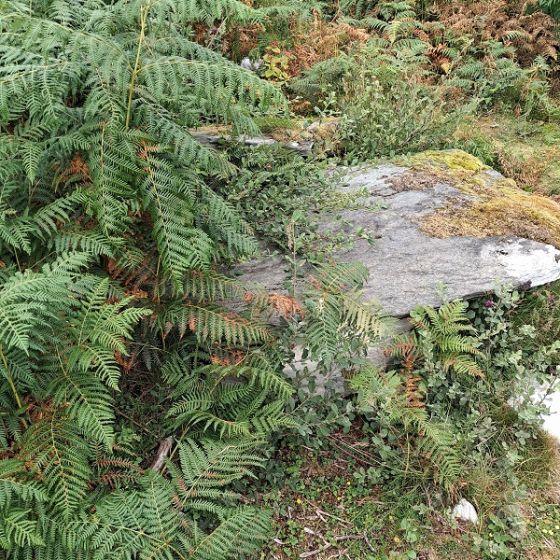
The dun is surrounded by the remains of a wall – 17.5m by 13.5. In some places the wall reaches 3m in width. Sadly the wall going through the middle of the site is probably made from stones from this dun and quite a few others. The entrance is on the south east, as seen in the south east photograph, possible lintels are also in the photo.
A great start to the day – the nearby standing stone and chamber cairn next.
Visited 01/08/2025.
Scottish Place-names / Ainmean-àite na h-Alba
I’ve a bee in my bonnet. It’s buzzing around the name of the fort on a prominent small hill close to the west coast of the middle part of the Kintyre peninsula, near Killean House, Dùn Beachaire (NR 692 432). The farm immediately below is Beacharr on OS maps, though reportedly pronounced Beacharra; Allt Beachaire flows past the southern end of the ridged hill.
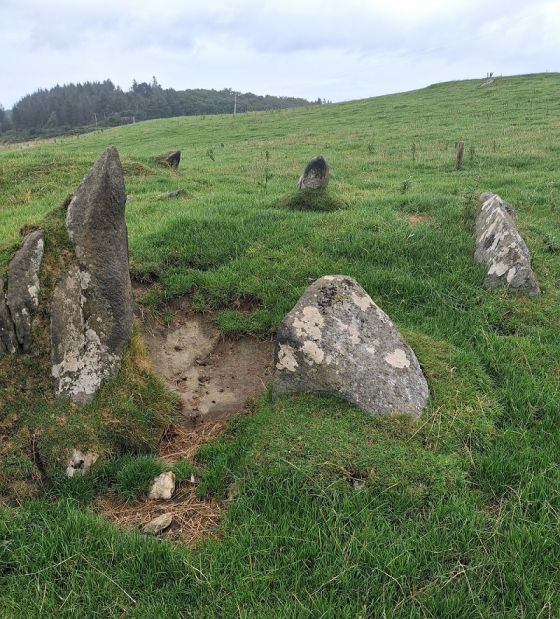
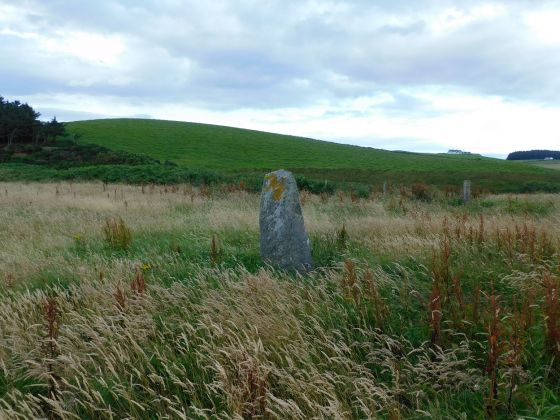
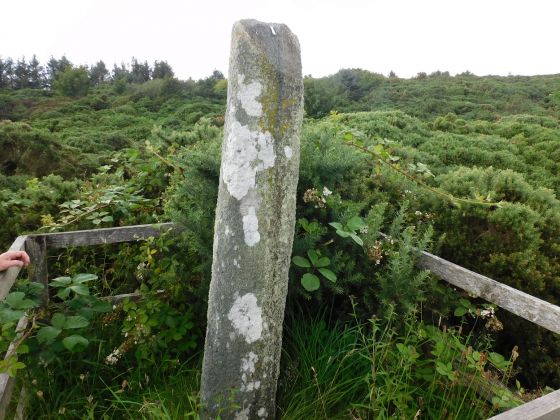
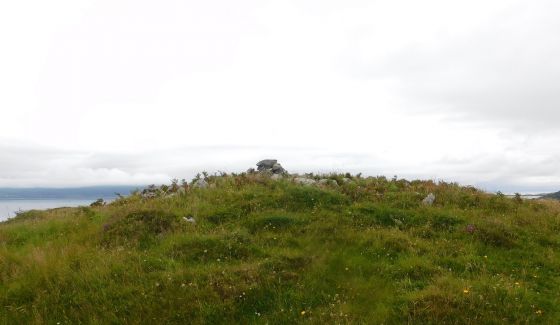
To the north of the Iron Age dùn on this hill there is a Neolithic chambered cairn and a standing stone (see Canmore for both). Am Beachair(e) can mean ‘the beehive’: one simple explanation for the name might be that the cairn may have in the past looked like a hive, and/ or bees nested in it.
However, the names of the neighbouring farms Beachmenach and North and South Beachmore add complication. My best guess would be that Beach- might be a contracted *Beachach, ‘abounding in bees’ used nominally for a ‘bee-place’ . If so, Beachmennach would be *Beachach manach’, ‘monks’ bee-place, a monastic apiary’, which seems quite plausible given that this was probably a possession of the Saddell Abbey across the peninsula. Between the hill and the coast (across the A83 road) a fairly wide stretch of sandy raised beach would be likely to support plenty of bee-friendly flowers in summer, and the higher hills overlooking the dùn inland a good range of moorland flora. Now, beachair can also mean ‘a beekeeper’, so this place might have been associated with the Cistercian bee-keeper.
However, we have to take note of the fact that Beachair, ‘Beekeeper’, was a by-name for a saint, namely Molaga of Aghacross in Co. Cork. His life and legends are discussed in detail by Pádraig Ó Riain in his Dictionary of Irish Saints: the point of interest in our quest is the story of the saint returning from a journey to Scotland and Wales, bringing with him some bees which he settled at place granted to him, consequently known as Lann Bheacaire, ‘church-enclosure of the beekeeper’; this was at or near the townland of Bremore, Balrothery, on the Irish Sea coast about 20 miles N of Dublin.
Now the Scottish St Moluag, Mo Luóc, though sharing a cognate name pretty surely not the same in origin as Molaga, was a very important figure in Argyll – especially associated with Lismore, where he was regarded as the founder of the church there; he was venerated at two Kilmoluags, one only about 3 miles to the south of Dùn Beachaire in Glenbarr, another no great distance away in Knapdale, as well as having dedications in several of the Hebridean isles.
Alan MacQuarrie, in his discussion of Moluag in his Legends of the Scottish Saints, doesn’t consider any links with Molaga, but he does explain that the cult of Moluag was very much promoted by the Cistercians, especially from Mellifont, ‘honey-fount’, in Co. Louth near Drogheda, the mother-house of Saddell; the founding abbot of Mellifont, St Malachy, seems in particular to have played a part in promoting Moluag, though there doesn’t seem to be any explicit evidence for a connection with bee-keeping in the Scottish sources for that saint. Still, it does seem quite possible that Dùn Beachaire may have been associated with Moluag, and so with Molaga and with bees and honey.
So, three possibilities: a ‘bee-hive’ cairn, a monastic apiary, a saintly beekeeper. These aren’t mutually exclusive, any or all of them might have fed into the association of this place with bees. But there’s a sting!
An alternative name for Lann Beachaire where St Molaga kept his bees was Lann Becuir. It seems unlikely that Becuir was simply an earlier or variant form of Beachaire, it’s more likely to reflect an early personal name formed with the early Celtic *bikk- ‘little’ root (see Patrick Sims-Williams Celtic Inscriptions of Britain, 136-7, discussing BECCVRI): Goidelic Bicoir, Brittonic Bicor. Such a name would in time have been readily modified to Beachaire, whether the story of the bees suggested that, or it was the origin of the legend.
And, for the sting, it turns out that a Bicoir was associated with Kintyre! Indeed with the part nearest to Islay, which includes Dùn Beachair. In the Annals of Tighernach, an entry for the year 625 (corrected date, T.627/6) records: ‘Mongan son of Fiachna Lurgan, stricken with a stone by Artur son of Bicoir Britone died. Whence Bec Boirche said:
It’s cold, the wind over Islay:
There are young warriors in Kintyre,
They will do a cruel deed there,
They will kill Mongan mac Fiachnae.
Other Irish Annals have similar entries, varying somewhat: Bicoir (Bicor in the Annals of Clonmacnoise) is either a Briton, possibly a Pict (Pritene), or a Welshman. Nothing else is recorded about him, though Mongan mac Fiachnae became something of legend. Of course, we can’t necessarily assume that Bicor was the same person as Becur: the latter was associated with a holy place in Leinster, Bicor with some nasty goings-on in Kintyre. Nevertheless, the coincidence is curious, and there does seem to be good reason to suppose Dùn Beachaire might, like Lann Beachaire, have been associated at an earlier date with Bicor, and that the name was similarly reinterpreted in the light of the Gaelic Cistercians’ fascination with bees.
Interesting or hocus pocus, I didn’t find any sword to pull out of a rock :-)
mistshadows.blogspot.com/2024/11/arthur-son-of-bicoir-of-kintyre.html