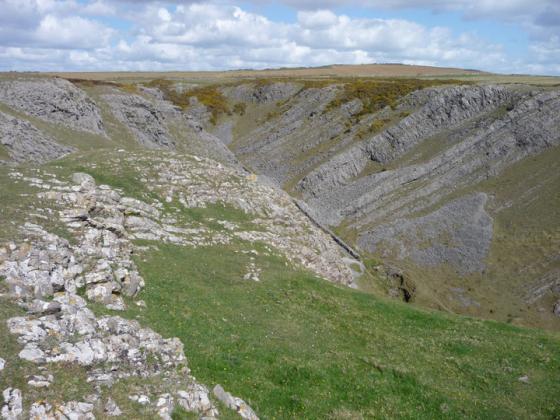
The cave from the seaward side. Note the huge chucks of shattered limestone strata that were once part of a seabed.
Image credit: A. Brookes (30.5.2016)

The cave from the seaward side. Note the huge chucks of shattered limestone strata that were once part of a seabed.

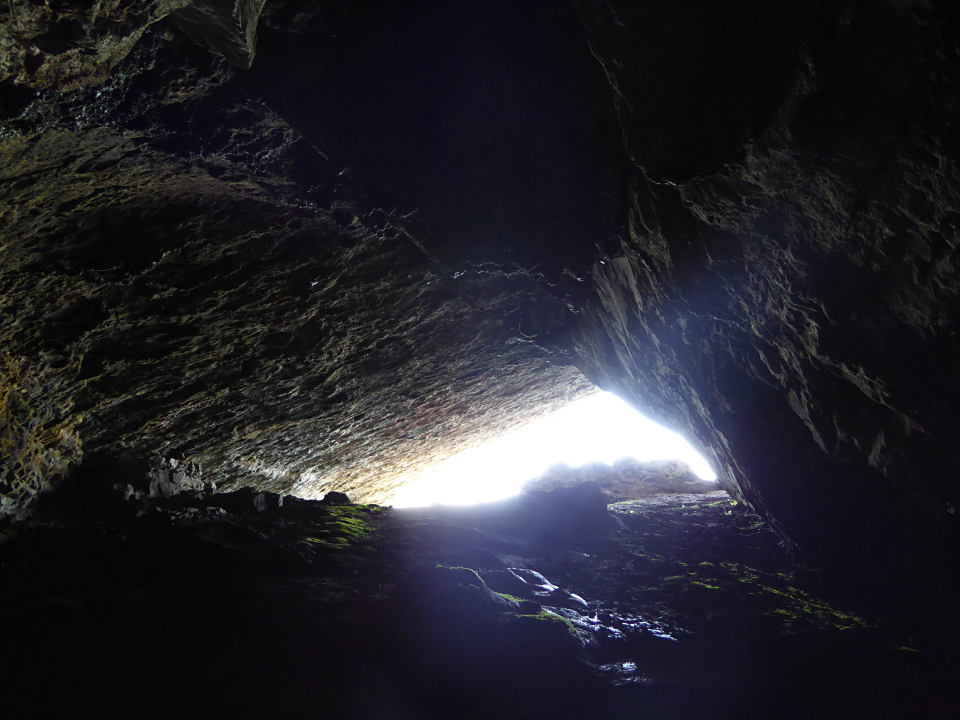
This is one of the biggest caves on the cliffs of South Gower.

The stalagmite at the back of the cave, apologies for shaky image – there wasn’t much light back here.

The back of the cave. The thing that looks like a tree stump is actually the base of a stalagmite.

The main “space”.

Room with a view.

Inside the partially blocked entrance.

The overhanging opening to the cave.

Bacon Hole from the west. High Pennard promontory fort is on the headland beyond.
Rather exciting news, to be fair. According to the BBC:
“Painted rock art discovered in a Welsh cave has been confirmed to be the oldest in Britain. The series of 10 red horizontal stripes was first found on the wall of a side chamber of Bacon Hole cave in Gower, Swansea, in 1912, before being dismissed years later as a natural phenomenon. But archaeologists have now used scientific advances to date the rock art to at least 17,100 years ago – also making it the oldest in north-western Europe.”
More here: bbc.co.uk/news/articles/c232dmk0xxdo