|
 Log in |
Register Log in |
Register
|

|
|

Beacon HillRound Barrow(s)
|
||||||||||||||||||||||||


 0 discussions


 Show map (inline Google Map)
|
|
|
Images (click to view fullsize) |
 Add an image Add an image |
Photographs: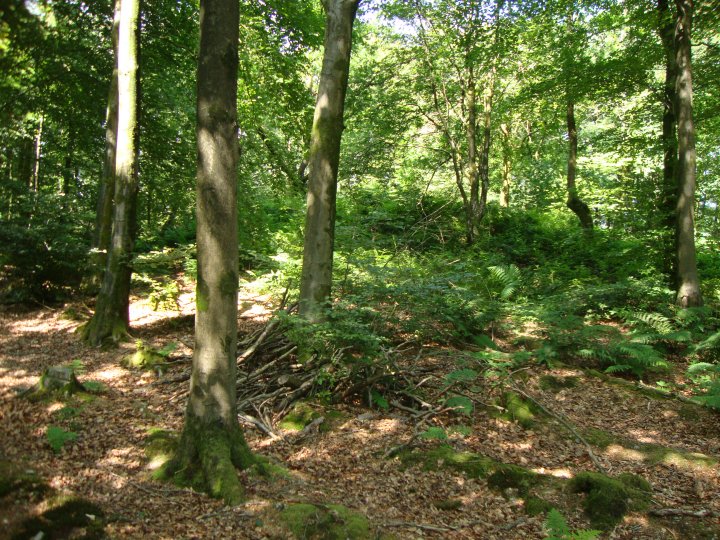
 Maps / Plans / Diagrams: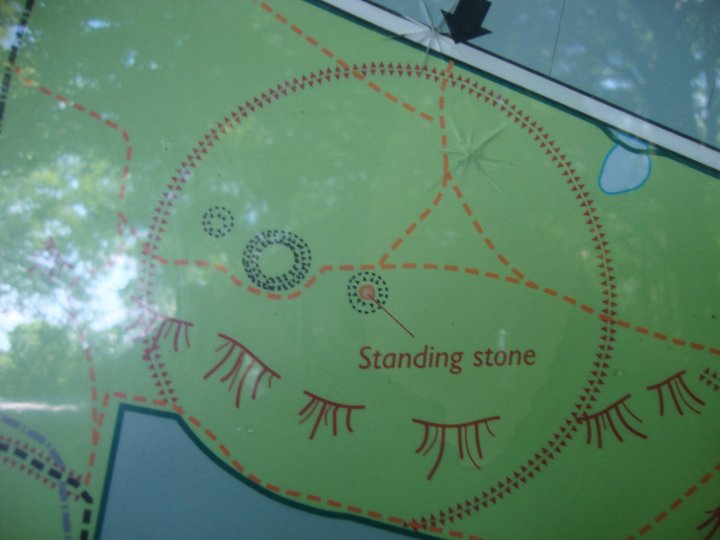
|
Fieldnotes |
Add fieldnotes |
|
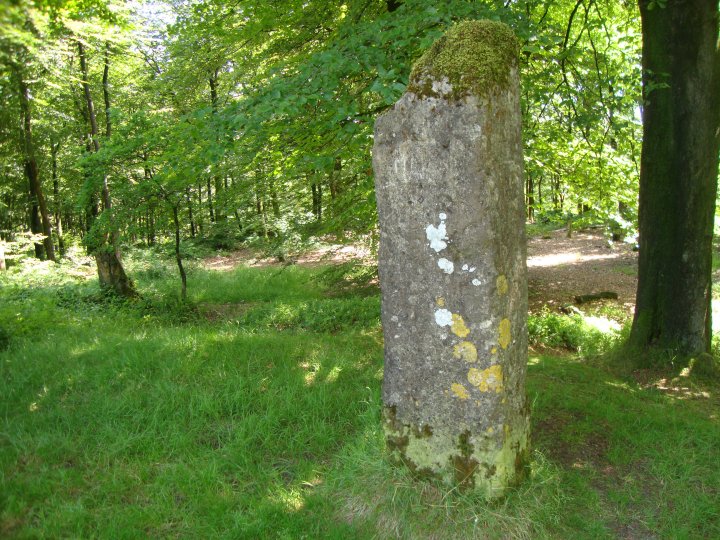
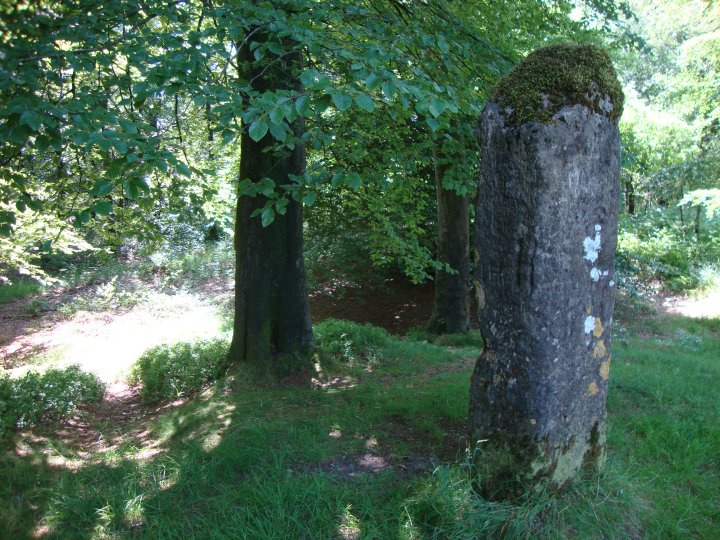
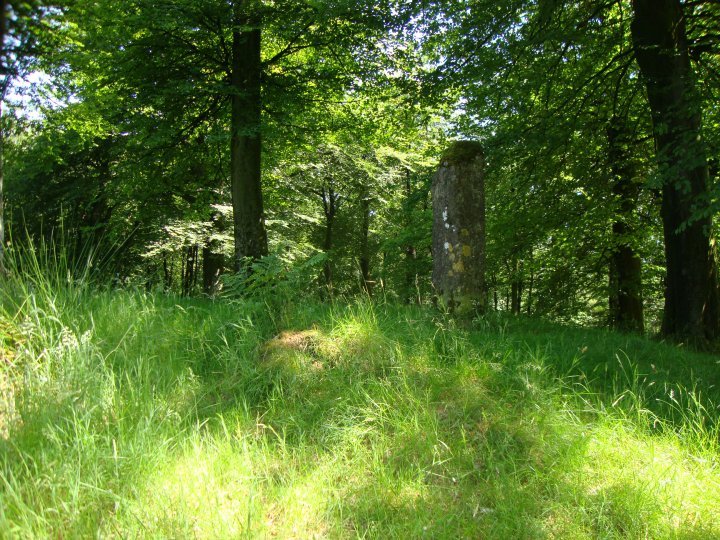
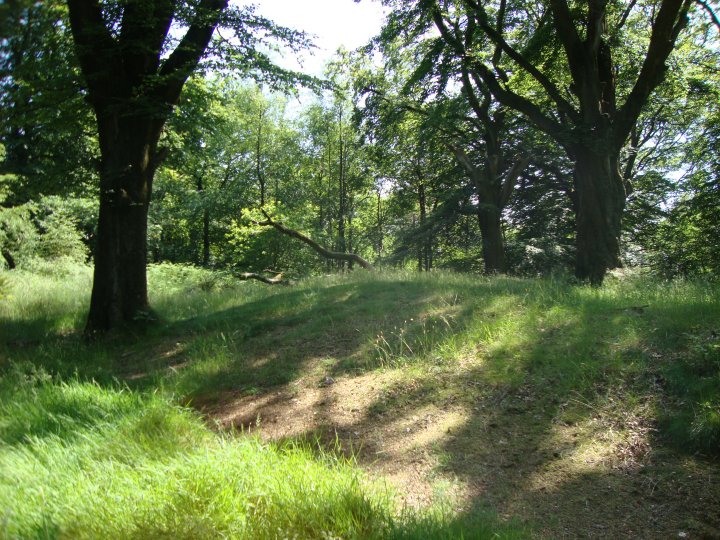
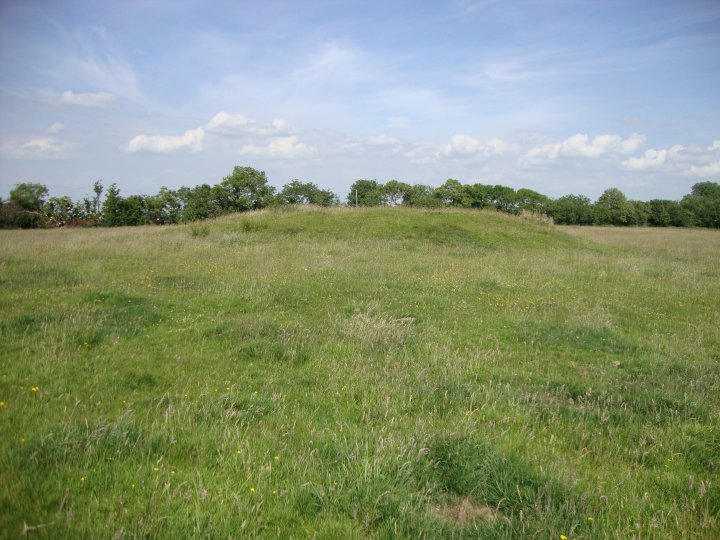
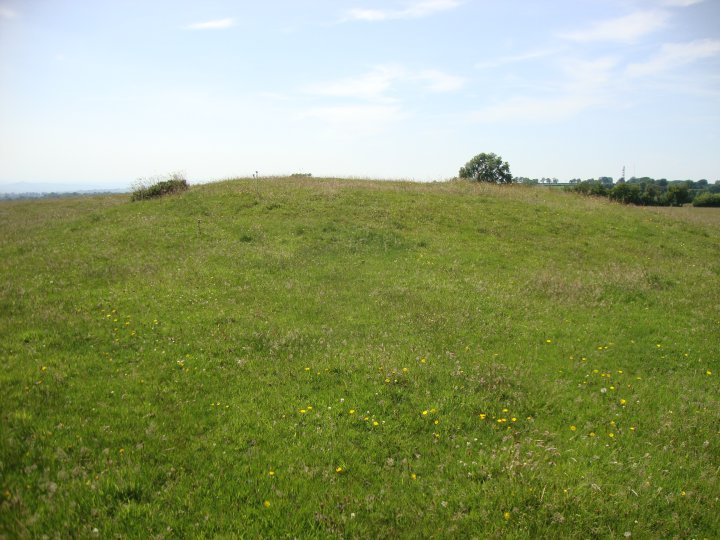
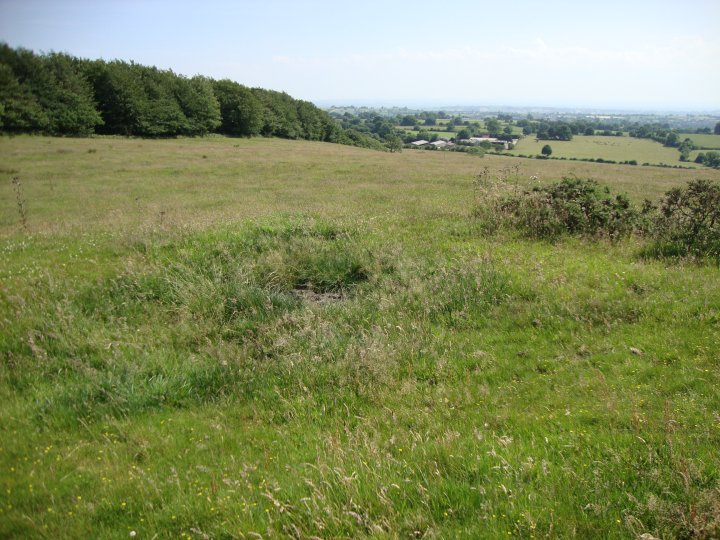
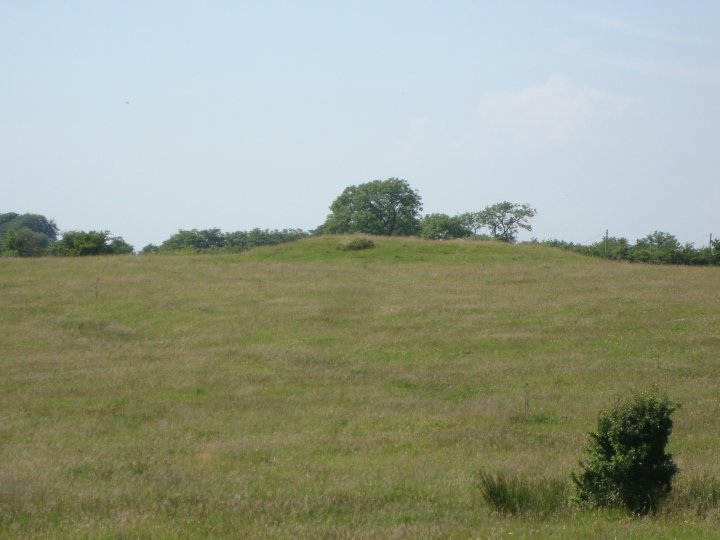
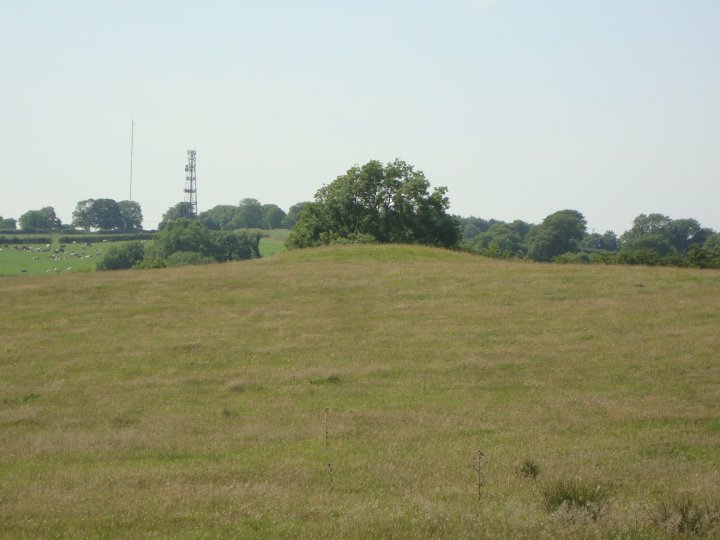
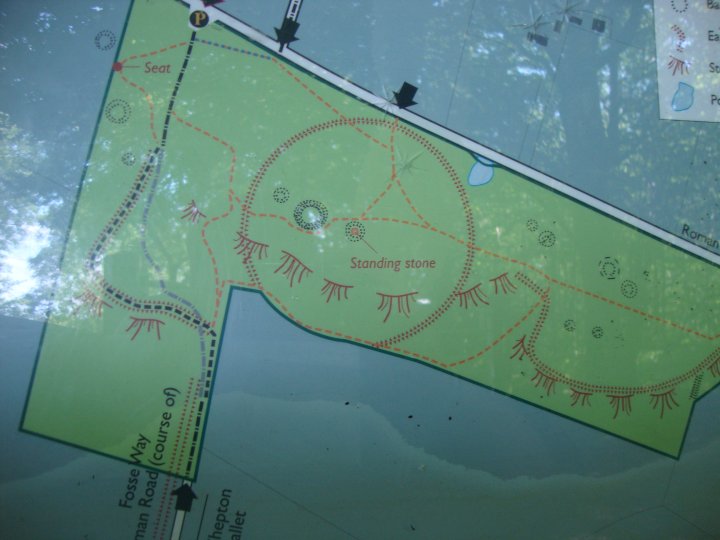
At first glance this site looks like a strip of round barrows running along the crest of the hill, but on closer inspection a distinct grouping can be made out. On the pasture east of the wood, three round barrows curve round in a arc with two more lining up in the wood. One of the barrows from this grouping was excavated by Skinner in 1820 and contained a coarse urn, 16" high, 12" wide at mouth with chevron decoration, half filled with a cremation of a young woman. There are nine other barrows, six of which seem to be paired up one the western end of the wood. Between these stand three barrows in a E-W line. This is where the Beacon was said to have stood. A large circular earthwork, presumably of later date, encircles these three barrows and centres on a single standing stone. The standing stone is a mystery and looks like it has been moved onto the barrow at a later date, but may have been originally placed elsewhere within the barrow grouping. The O.S. map of the wood gives three parish boundaries meeting on the Fosse way just west of where the barrow stands. The Romans made several roads around here but to drive the Fosse way directly up the hill and between the two barrow groups was clearly designed as a statement on a conquered territory. The iron-age hillfort of Maesbury Castle lies 3km to the east. Although the road layout of the old Frome road is roman, there would have been a prehistoric trackway running along top of the Mendip Hills directly in front of the cliff face. The quality of the stone from these hills ensured the extensive re-engineering of the road network, together with extensive building work. The woodland trust own and manage Beacon Wood with support from the Beacon Hill Society. The wood was brought by the trust in 1993 with funding from Mendip District Council. The woodland has developed over the last 200 years on land that was formally un-enclosed. The core of this hill is the oldest in Somerset and was laid down by volcanic activity 420 million years ago. Stones formed from lava (called andradite) were overlaid with fragments of explosive debris and ash (called tuff). A layer of Red Sandstone was deposited some 380 million years ago when the climate was sub-tropical desert. Rheon layers of limestone were deposited when the area was under a tropical sea. It is very unusual to see a mix of these types of stone in one small area. The present crest of the scarp contains rounded pebbles of polished white quartz, known as conglomerates; the rust red colour results from the oxidation of iron minerals under arid conditions. Continued earth movements caused folds and faults to occur and the Mendip Hills were uplifted about 280 million years ago. ACCESS No problem parking as there is a pull in just off the old Frome road at ST 63701 46110. An alternative is over the road from this where a small section of the Fosse Way remains as a minor trackway. |
 Posted by Chance
31st January 2014ce |

|
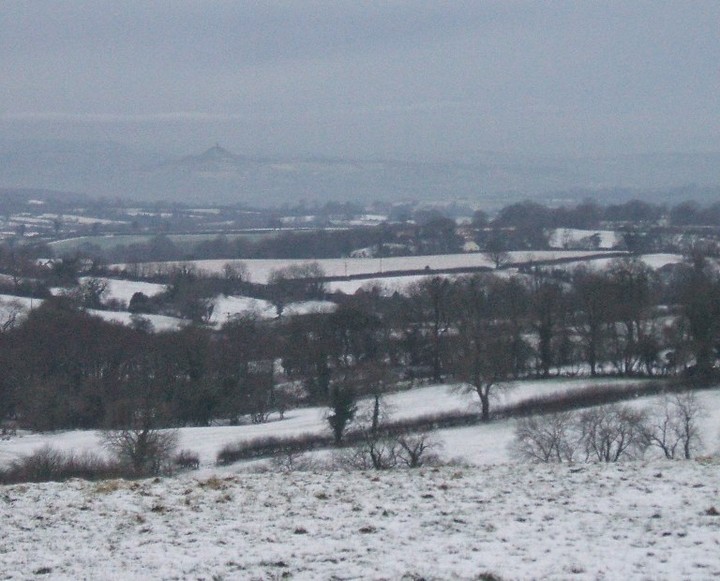
Some of the barrows here are easy to see as they line up in a field, but the wood hides many more. Fat chance of seeing the latter today though, as it was all I could do to remain upright. The snow amusingly obscures all the dips containing freezing water and slippery leaves -hilarious. The geology's a bit weird here. I visited on the pretext of sampling some acidic soil, which isn't that easy to find in this part of the world. And it turns out there is igneous rock here, andesite, which is quarried a bit further along the ridge. It's not really what I expected in Somerset. I wonder if the prehistoric types that frequented the ridge were able to use it. Anyway all the be-wooded barrows and earthworks will just have to wait until spring. But there's a great view from up here, especially in today's snow. Glastonbury Tor looked cool. |
 Posted by Rhiannon
21st December 2009ce Edited 13th April 2010ce |
Folklore |
Add folklore |
Shepton Mallet (Ashwick or Doulting parish to north): one of the barrows on Beacon Hill is said to contain a golden coffin. Somerset Year Book (1933), 107.Reported on p31 of Barrow Treasure, in Fact, Tradition, and Legislation L. V. Grinsell Folklore, Vol. 78, No. 1. (Spring, 1967), pp. 1-38. |
Posted by Rhiannon 14th June 2007ce |

In 1514 John and Agnes Panter of Doulting were accused of resorting annually on the Eve of St John the Baptist's Day to Mendip to consult with demons. The part of Mendip in Doulting parish is Beacon Hill, crowned with a notable group of barrows, extending westward into the adjoining parish of Ashwick. It seems reasonable to suspect that the Panters were 'communing' with spirits supposedly residing in these barrows.L V Grinsell, in 'Somerset Barrows - revisions 1971-87', v131 (1987) of Som Arch Nat Hist. |
Posted by Rhiannon 24th April 2006ce |
Miscellaneous |
Add miscellaneous |
Last week, as Mr. Rugg, of Lapwing farm, in the parish of Shepton Mallet, between Oakhill and the former place, was digging over a tumulus, in order to cart away the earth, he came to some stones, in removing which he discovered a few sepulchral urns, of very rude workmanship, containing bones and ashes. In digging further he discovered more, in all 12 or 14. The farm is situated on what is called the Beacon, and in the vicinity of some very extensive and ancient Roman entrenchments, called Masbury camp. There are several other tumuli near the one above mentioned, which, in all probability, contain similar relics.From The Bristol Mercury, November 7th 1840. |
Posted by Rhiannon 27th December 2008ce |
Links |
Add a link |
Local Heritage Initiative'Beacon Hill Woods - an archaeological survey 2002-2003' by Mark Corney. |
Posted by Rhiannon 24th April 2006ce |
 Top of page