|
 Log in |
Register Log in |
Register
|

|
|

Flag FenAncient Village / Settlement / Misc. Earthwork
|


 Show map (inline Google Map)
|
|
|
News |
 Add news Add news |
|
Flag Fen Bronze Age boats older than was first thought Another update on Flag Fen: Eight Bronze Age boats discovered in a deep Cambridgeshire quarry are much older than it was first thought, carbon-dating research has revealed. http://www.bbc.co.uk/news/uk-england-cambridgeshire-23974518 |
 Posted by scubi63
8th September 2013ce |

Eight bronze age boats surface at Fens creek in record findThis site is about two miles from Flag Fen and it is where the boats will end up for conservation work. Probably ties up with Rhiannon's news... continues... |
 Posted by moss
4th June 2013ce Edited 4th June 2013ce |
Flag Fen archaeology idea brings in public to dig deep"Renowned Bronze Age archaeological site Flag Fen in Cambridgeshire will host a first-of-its-kind dig that makes the public integral to the project. The idea combines both "crowdfunding" and "crowdsourcing"; for contributions starting at £125, donors can get their hands very dirty and dig for a day... continues... |
 Posted by 1speed
4th March 2012ce |
|
New finds from Flag Fen Six dug out boats in excellent condition, textiles, woven fish baskets, wooden sword handles, a bowl of nettle stew complete with spoon... http://www.guardian.co.uk/science/2011/dec/04/bronze-age-archaeology-fenland |
 Posted by Rhiannon
4th December 2011ce |
Archaeology festival this weekend"Flag Fen's Archaeology Festival, part of National Archaeology Week 2007, will be officially opened by Francis Pryor on Sunday (22nd July) at 11.30am. Visitors will be able to try their hand at experimental archaeology, excavate real Roman remains and learn all about crafts like flint knapping, spinning and weaving... continues... |
Posted by Rhiannon 21st July 2007ce |
Power Plant Still Requires Government Decisionhttp://www.peterboroughnow.co.uk/news?articleid=2738561 The plans for the PREL's waste plant were recommended for refusal by Peterborough City Council after widespread opposition. (This included fears that Flag Fen's water levels would be adversely affected)... continues... |
Posted by Rhiannon 30th April 2007ce |
Public Meetings on July 13th and 25thPeterborough City Council is to hold two public meetings about plans to build a renewable energy plant near the famous Flag Fen Bronze Age site... continues... |
Posted by Rhiannon 1st July 2005ce Edited 1st July 2005ce |
Don't Let Flag Fen Suffer Like Thornborough, Campaigner WarnsA heritage campaigner has warned that Flag Fen could become the next Thornborough if plans to plans to build a waste processing plant near the famous Bronze Age site succeed... continues... |
Posted by Rhiannon 25th June 2005ce Edited 25th June 2005ce |
Threat to Flag FenFrom PeterboroughNow 16 June 2005 In a clash between ancient history and new technology, fears have been raised that Peterborough's renowned Flag Fen site could be forced to close if a giant waste plant is built... continues... |
 Posted by Jane
16th June 2005ce Edited 16th June 2005ce |
Family Return From a Week of Bronze Age LivingA time-travelling family is back in the 21st century this week . . . after going back to the Bronze Age! For the Pogmores are now enjoying the luxuries of modern life after taking part in a reality TV programme on ITV's Central News... continues... |
Posted by Jane 2nd September 2003ce Edited 3rd September 2003ce |
Family go back to Bronze AgeSix members of the Pogmore family are spending a week living in a Bronze Age roundhouse. The experiment, organised by Carlton Television, is taking place at the Flag Fen Bronze Age visitor's centre... continues... |
Posted by Jane 20th August 2003ce |
Images (click to view fullsize) |
Add an image |
|
Fieldnotes |
Add fieldnotes |
|
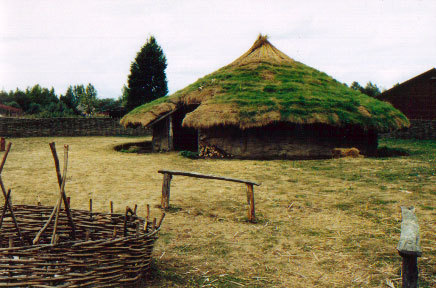
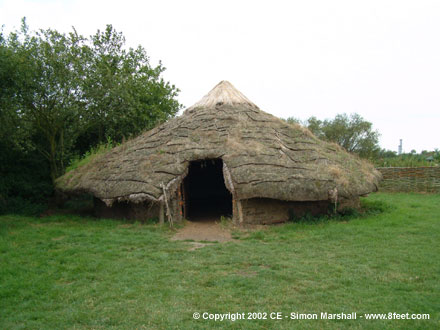
Visited 27/05/2016 I had a few hours to kill in Peterborough so thought I would head off to Flag Fen rather than aimlessly around the shops. My expectations were low as I do not usually enjoy these reconstructed educational parks, however, it was a nice day and so I decided I might as well at least enjoy a walk there and back. I headed for the Perkins Industrial Estate, down Fourth Drove and soon found myself in open countryside on a pathway that led directly to Flag Fen, through an open gate and into the park at the opposite end to the visitor centre and payment desk free to wander round at leisure. It was a Friday and with the exception of a school trip I seemed to be the only other person there which left me a little worried as to whether the place was closed to the public and whether I should be there or not. In any case I spent a most enjoyable couple of hours there, the place is really dedicated to trying to show how fen people may have lived in the iron age and includes a reconstructed round house, a building housing remnants of a wooden walkway across the fen and a building housing a movie hall and the preservation site for wooden boats discovered at the nearby Must Farm. A further building held exhibits featuring articles found during excavation and various archaeological digs. For the school kids there was also a building housing a mock dig site where they could indulge themselves and run off some energy. The park included a reconstructed Drove and marked out the line of the old Roman Road from Peterborough to Norwich. Pleased I had decided to visit, and surprised how much there was there, I slipped out the back gate and was soon swallowed up by the Industrial Estate and eventually spat out into the Queensgate shopping centre all of which rather left me wondering which time period I would rather be living in. I resolved the little matter of entrance fee just in case you thought I was freerolling! |
Posted by costaexpress 28th May 2016ce |

|
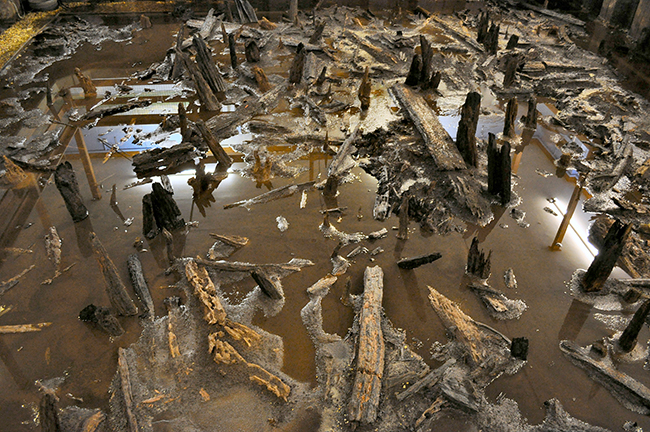
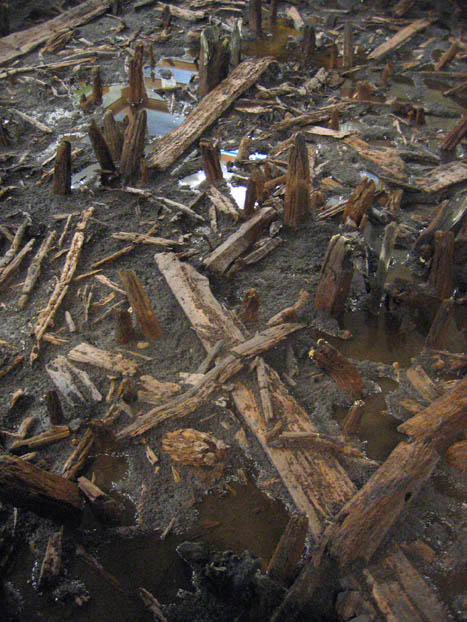
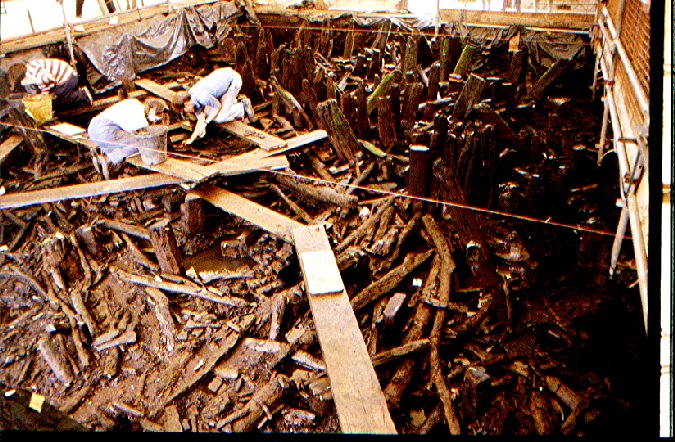
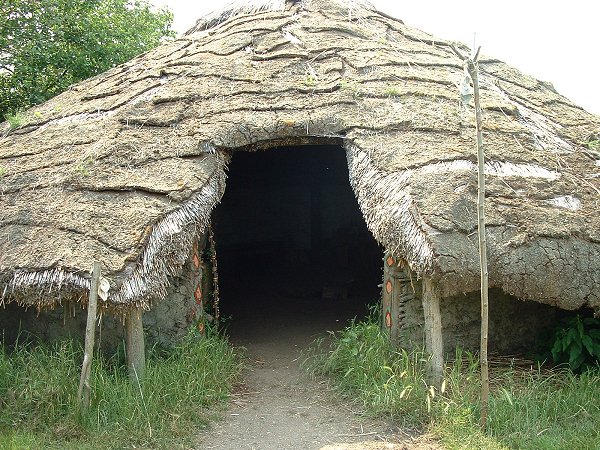
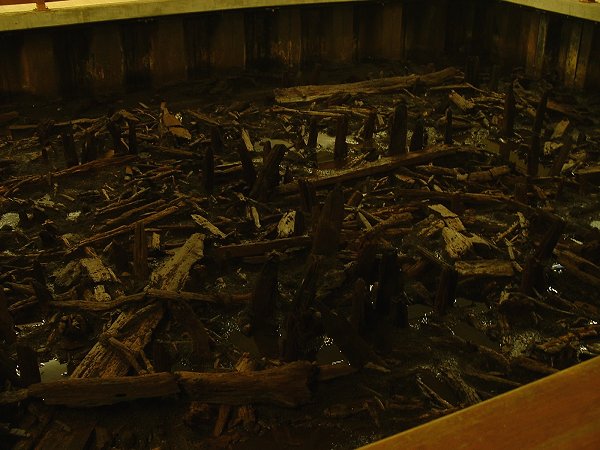
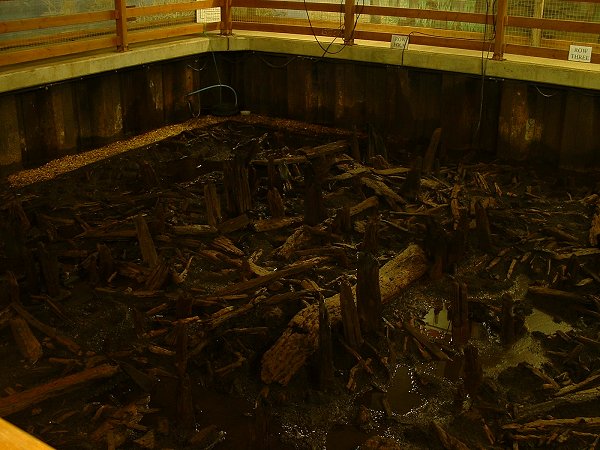
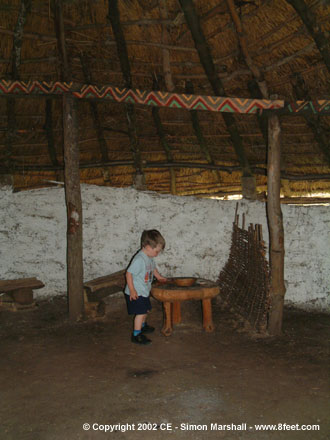
Visited 7.4.13 Directions: Well signposted from the eastern side Peterborough. It was a long journey but we had finally arrived at our destination – the famous Flag Fen. Probably like many reading this it had been a place I had wanted to visit for a number of years and it did seem slightly surreal to actually be here at last. We parked in the car park and quickly crossed the bridge into the visitor’s centre. We were met by a very helpful chap at reception who provided up with a map and a quick overview of the site. There is also a small shop and café area. Despite being a lovely sunny day, I was surprised to find that except for a handful of other people we were the only ones there, so pretty much had the place to ourselves. We visited the reconstructed Bronze Age / Iron Age round houses, the Soay sheep (plus new born lambs which Sophie in particular liked), museum and of course the famous wooden causeway. I had seen the wooden planks both on TV and in books and I must confess in real life it looks just as confusing – little more than a jumble of wood. It does take a fair degree of the ‘eye of faith’ to see it for what it actually is. It took us about an hour to go all around the site before we headed back for a cuppa and a sit outside on the veranda. It was a very peaceful place to be although I would imagine (hope) it gets a lot busier in the summer? It only cost £8.00 for a family ticket and was well worth the entrance fee. I am pleased to report that Flag Fen lived up to my expectations and I guess the only disappointment was not seeing Francis Pryor lurking about amongst the reeds! Although we did see a heron close up and a fox lurking in the undergrowth. Flag Fen is well worth the effort of a visit – I am sure you won’t be disappointed. |
Posted by CARL 9th April 2013ce |
|
I first came to this site in 1985 when it was little more than a tent sheltering an excavation team. It was fascinating literaly seeing another World, that had been buried for thousands of years, unearthed before your eyes. Twenty years later I revisit Flag Fen to find an established visitor centre built to preserve these Bronze Age findings and to challenge our understanding of this, and other, Bronze Age societies. Flag Fen is perhaps more exciting to visit now as more is known about the place and this, in turn, excites as you can only wonder at what is yet to be discovered. Visually Flag Fen is not the most eye-tingling place to visit and yet you sense that this is perhaps a very important historical site and ancient place of pilgrimage. Because the remains of this allignment are made of wood they must be difficult to excavate and even harder to preserve once excavated. In a way this gives the place more of a living history feel and all the more exciting. The surrounding area, complete with an excavated section of Roman Road built on top of the Bronze Age allignment, recreates a Bronze Age settlement with huts and sheep from breeds farmed thousands of years ago. As much as this only recreates what we understand to have beeen around in antiquity Flag Fen is all the better for educating about the Bronze Age and for paying homage. A display shows what Flag Fen intend for the future with more excavations planned. I look forward to revisiting it in another 20 years. |
Posted by Zeb 17th June 2005ce Edited 17th June 2005ce |
|
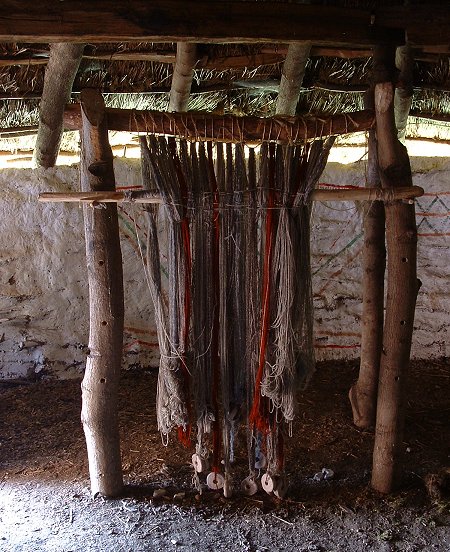
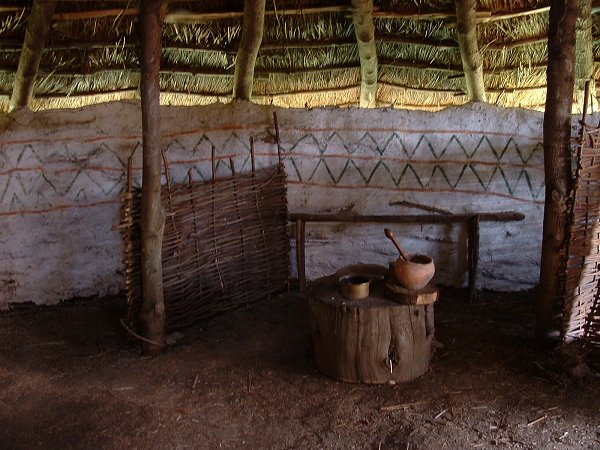
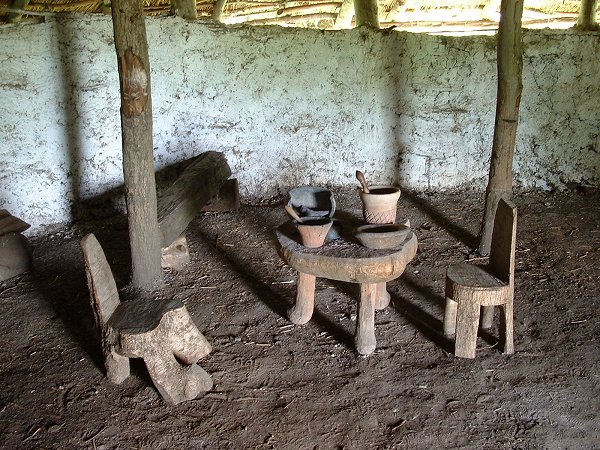
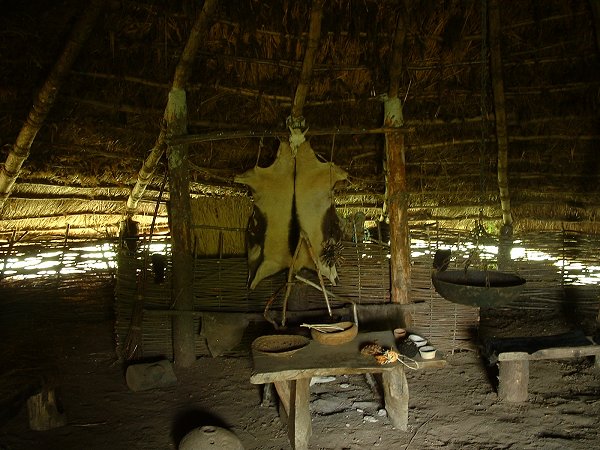
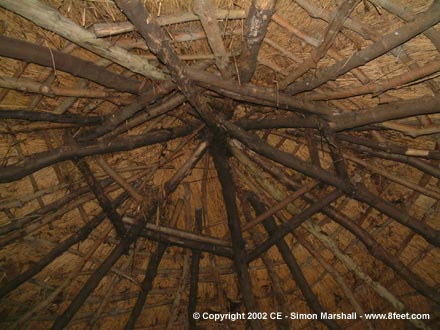
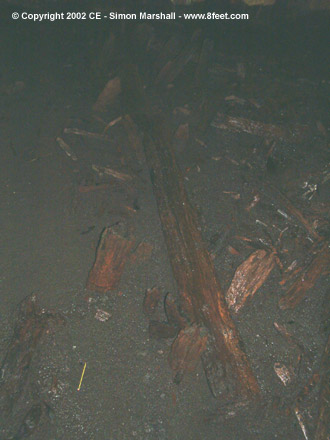
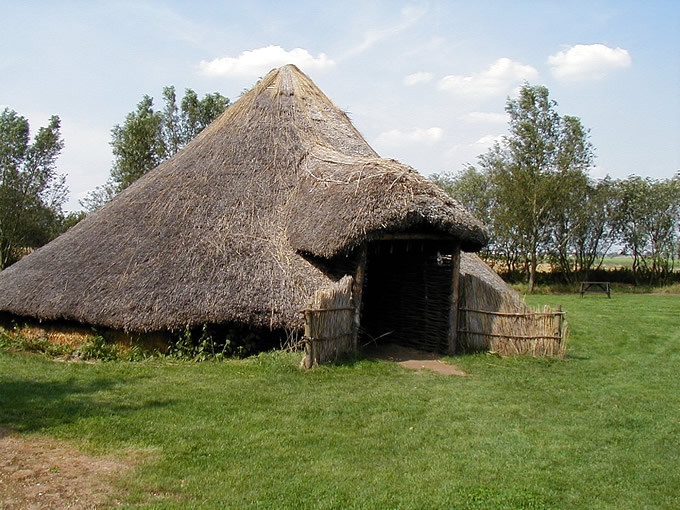
I’d never got round to visiting Flag Fen but after reading Francis Pryor’s Seahenge book my appetite was well and truly whetted. As it was Fathers Day I had parental visiting obligations to attend to before heading off towards Peterborough and having made a late start as usual, it was 3pm before I got there. I was worried about navigating around the southeastern side of the city after I had left the A1 but luckily Flag Fen is well signposted on the Peterborough ring-roads and it’s easy enough to follow the signs out through an industrial estate and then out into the low lying fens to the site itself. When I got there I was rather surprised to see only 6 cars in the car-park – not that I was complaining, I think most of them belonged to the staff who were very helpful and informative giving me a potted history of the site. Just outside the centre I noticed a container of umbrella’s for the use of visitors on wet days – I thought that was a nice touch. First stop was the Preservation Hall, lots of displays and information on the way in and ‘atmospheric’ music playing unobtrusively inside. Many people might not get excited at what seems like a random jumble of old timbers on display inside the building but it’s not everyday you get to see the remains of a bronze age trackway still in situ. Thanks to the info boards it’s possible to work out the individual lines of posts that formed the 1 kilometre link between the dry raised areas of Fengate and Northey between 3300 and 2900 years ago. Next stop were the reconstructed Bronze Age round houses. I was surprised at the amount of room inside while at the same time still being cosy - I want one! The interior was laid out as they believed these dwelling may have looked, with carved wooden beds, weaving frames, tables as well as a hearth etc but there was no sign of any reproduction bronze tools - probably thought to be a bit too ‘portable’ to leave on display. Next up was the Holme-next-the-Sea timbers housed in their own barn – I’ll cover those in the Seahenge section. By now I was getting short of time (Flag Fen closes at 5pm) so I only had time for a quick look at the rather fine Iron Age round house and like the others it was well furnished inside with suitable tables, beds, benches, wooden and pottery bowls and frame for the preparation of animal skins. A quick look at the excavated section of Roman road and then onto the museum. It’s only small but has a decent display of the various finds from the site including part of what is believed to be the earliest wheel so far found in Britain. I tried to get a photo but it was on a revolving ‘thingy’ and in the low light the picture came out blurred. My favourite displays though were the bronze swords, daggers and spear heads – the ones shown on the front cover of the ‘Seahenge’ book, for those that have it. Time to go before the staff shut the gates and there were still parts of the site I hadn’t looked at or had had to rush, the web site recommends a couple of hours to look at everything, I would suggest much longer. Nice place, nice day out. |
 Posted by Chris Collyer
28th June 2003ce |
Miscellaneous |
Add miscellaneous |
|
Details of site on Pastscape Flag Fen is the site of a major Bronze Age wetland site. The site comprises a raised timber walkway of 1km long leading to a platform of around 3.5 acres in area. Associated with the post alignment are discrete deposits of ceramics and metalwork that shows evidence of deliberate damage, indicating ritual use of the site. Some artefacts may have been made specifically for water deposition whereas other examples, especially of pottery, appear to be genereal domestic wares. There is some suspicion that some of the metal artefacts date to the Iron Age and are associated with later relationships between the site and people from the surrounding area. The platform has been radiocarbon dated to between 1000 and 660BC, within the Late Bronze Age. The post alignment has been assigned a date of use from between 1300 and 900 BC from dendrochronology which would suggest that it is slightly earlier than the platform, although there is some overlap in the date ranges. Nearby are the remains of Early Bronze Age field systems which went out of use in the early first millenium BC, around the same time as the construction of the platform. It is thought that the field systems are indicative of a settlement on the edge of the fen, also inferred by faunal remains and the domestic pottery finds. The site is now operated as an open air museum with a visitor centre. English Heritage. 2012. 'English Heritage: The National Heritage List for England', http://list.english-heritage.org.uk/resultsingle.aspx?uid=1406460 [Accessed 27-MAR-2012] |
 Posted by Chance
17th July 2015ce |
Links |
Add a link |
New Flag Fen websiteThis is the new official Fag Fen website with a nice wizzy intro and more modern look, it also seems to have rebranded itself as an 'Archaeology Park'. The old website at flagfen.com is still there at the moment. |
Posted by Chris Collyer 1st August 2008ce |

BBC news (2000) - Fire destroys Bronze Age recordsResearch document chronicling one of Europe's most important Bronze Age excavations went up in smoke in 2000. What an awful story! |
 Posted by pure joy
9th February 2003ce |
The Modern Antiquarian: Sea HengeThe Sea Henge timbers are in storage at Flag Fen. I've posted my photos of them to the Sea Henge section of the site. |
 Posted by Kammer
19th November 2002ce |
 Top of page