|
 Log in |
Register Log in |
Register
|

|
|

Carn BreaTor enclosure
|


 Show map (inline Google Map)
|
|
|
Images (click to view fullsize) |
 Add an image Add an image |
Photographs: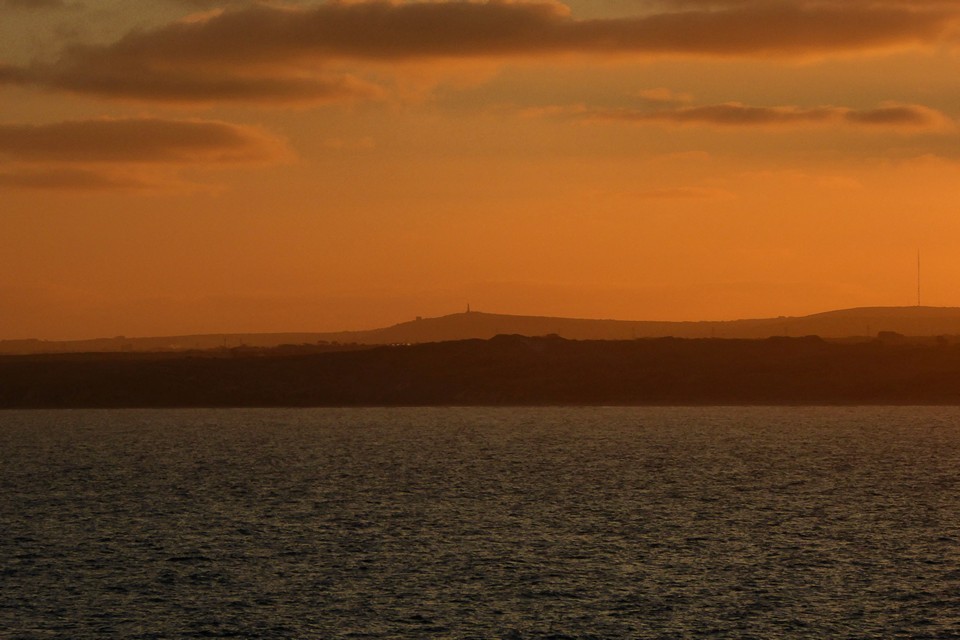
 Maps / Plans / Diagrams: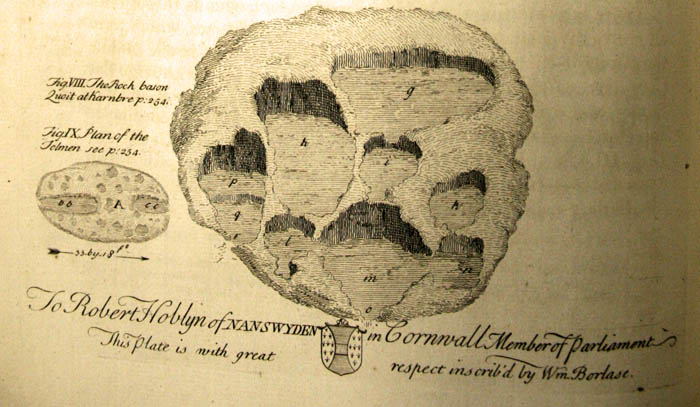
|
Fieldnotes |
Add fieldnotes |
|
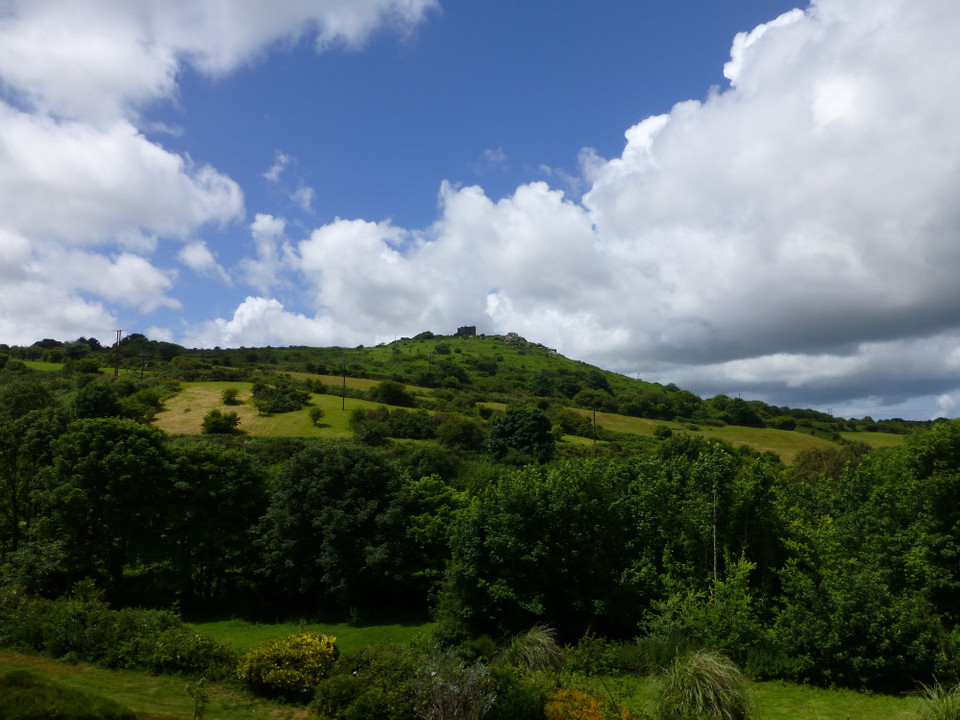
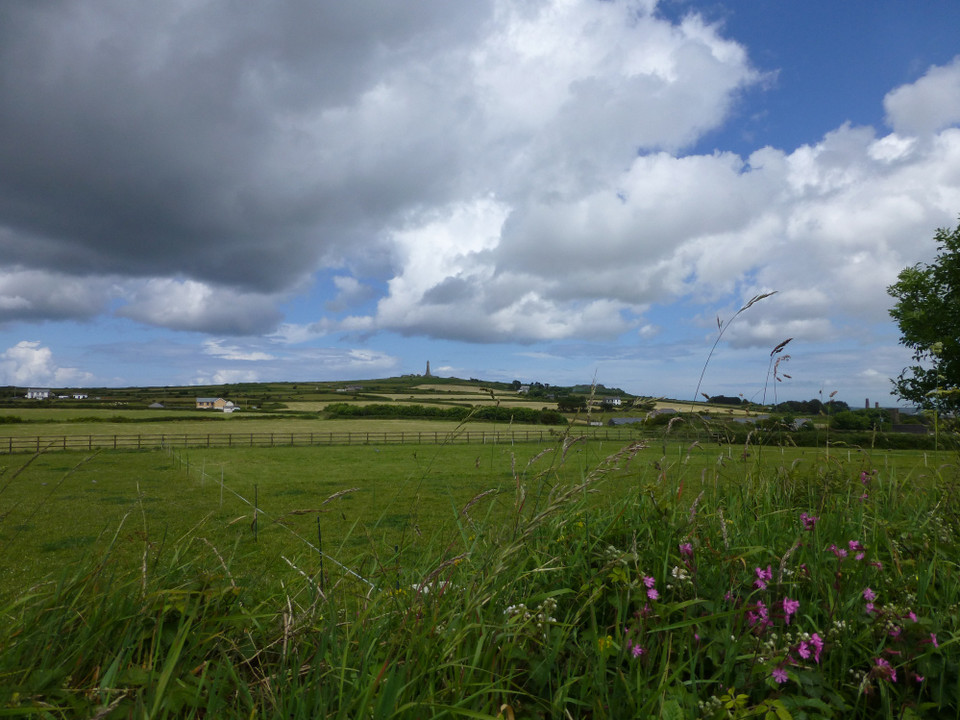
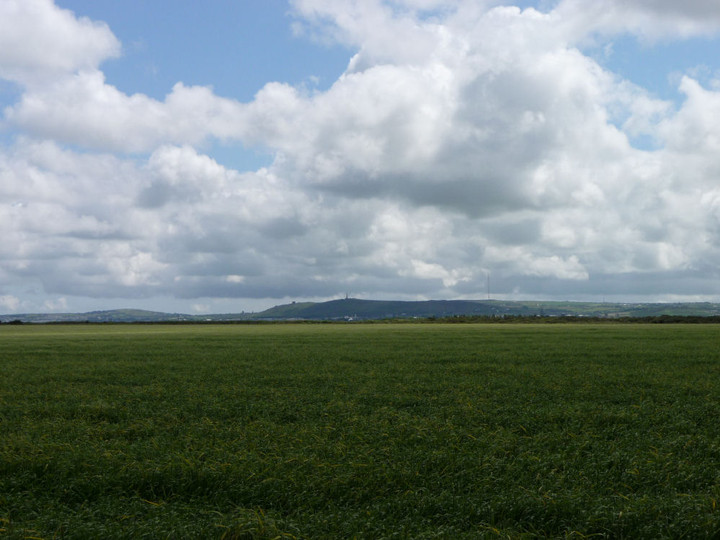
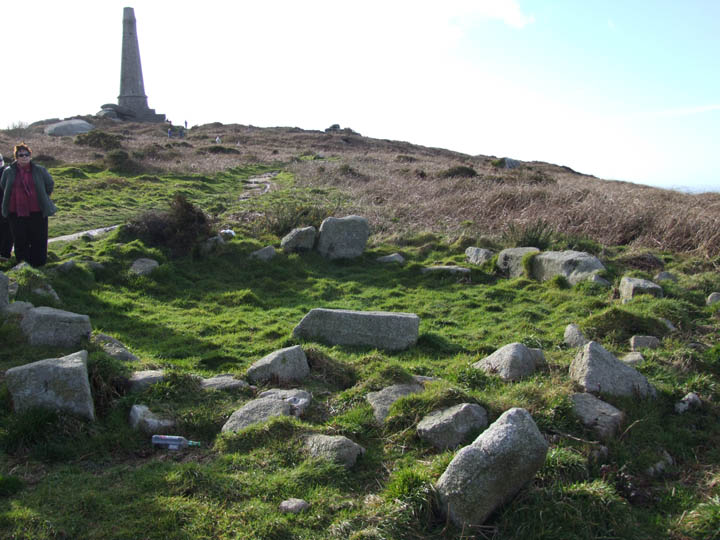
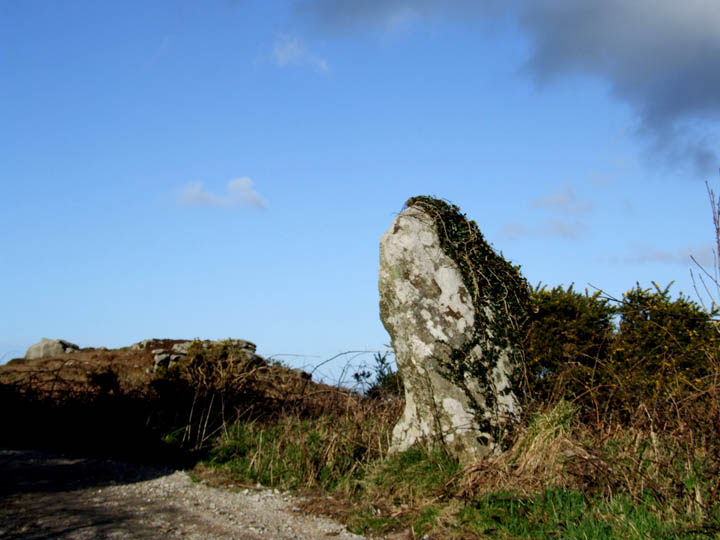
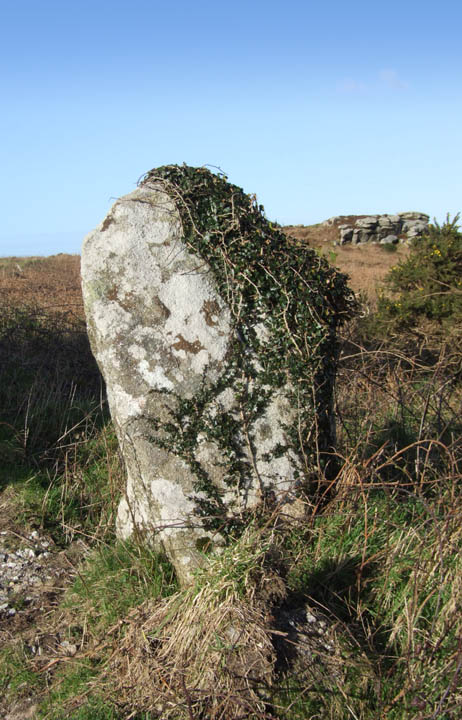
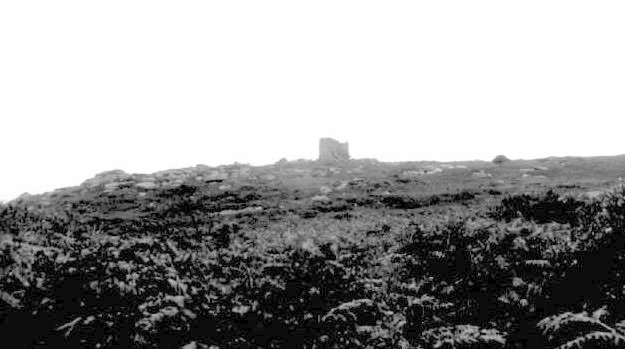
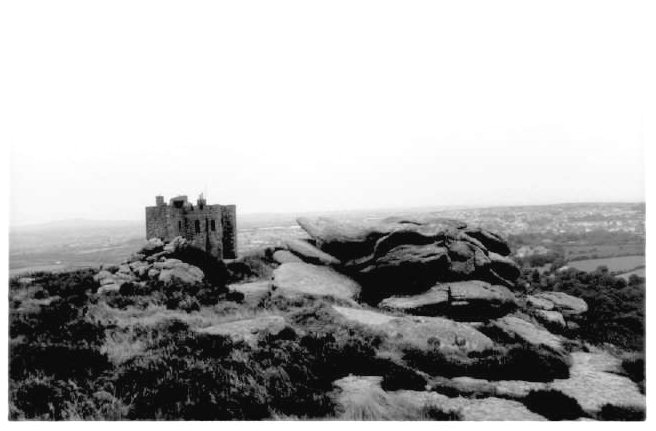
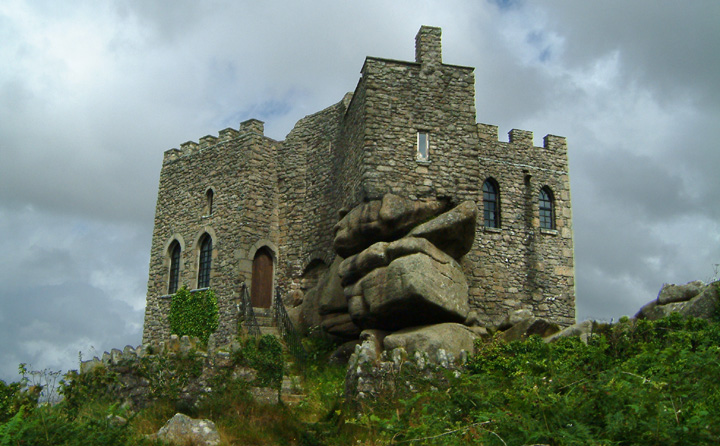
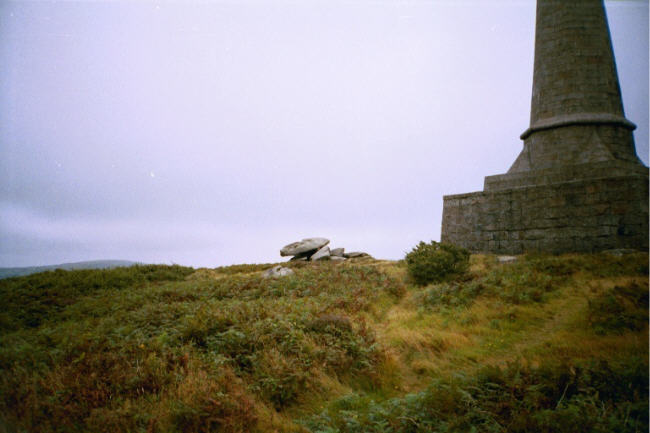
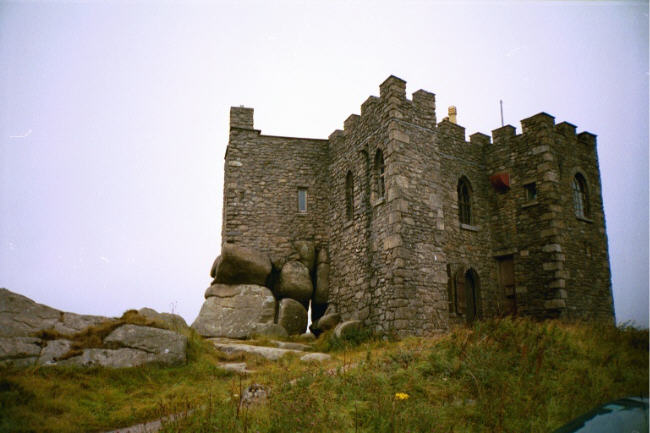
Visited 14.4.10. The road up to the hillfort is signposted from Carnkie - Carn Brea Castle. Follow the lane right up to the top where there is a parking area. The track itself continues onto Carn Brea Castle which is now a restaurant. Opposite the parking area there appears (to my untrained eye) to be the remains of a couple of stone dwellings? There are good views to be had in all directions - although I couldn't see anything obvious to show the defences of the hillfort. There is a huge stone monument on the top of the hill which can be seen for miles around. |
Posted by CARL 26th April 2010ce |

|
Carn Brea - 1st October 2003 Carn Brea is a great big hill just outside Redruth, and is currently the second oldest excavated and dated occupation site in the county. After hauling my ass up to the top of this hill, I discover a track/road and parked cars on the other side of the summit. Well, I do like walking uphill so I won't complain, but if you want to take the easy way up, I guess the top can be reached by car from Carnkie. I noticed a car park on the map at the south side of the hill (at the bottom - around SW681412). I couldn't see any road signs towards it so I drove via Carn Brea Village and the furthest I could get was a small layby at SW686412, which already had one burnt out car in it. But it is a decent (but not signposted) place to park because two paths up the hill start from close by. One path is wide and goes around and up the east side of the hill and the other is more overgrown and goes up the hill into the middle of the Neolithic enclosure, through what is believed to be the ancient entrance. It's not easy to see much of the ancient bits on the hill though (even with the detailed drawing in Cornovia), but is well worth it for the view and the vibe. Not surprisingly the view from the top is amazing, including a good view across to St.Agnes Beacon. This post appears as part of the weblog entry Kernow again - Part 2 - Land of the Giants
|
 Posted by pure joy
9th October 2003ce Edited 9th October 2003ce |
Folklore |
Add folklore |
Is this too confusing or what? Not only are there two Carn Breas, they are both near wells connected with St Uny / St Eunius. At the foot of Carn Brea Hill, and not far from the Church of Redruth, is a well dedicated to St. Eunius. A stone cross formerly stood near to it.Ancient and Holy Wells of Cornwall by M and L Quiller-Couch (1894). The church of St Euny is easy to pick out from an old map, but not the well. But there are the interesting sounding watery features of "Giant's Well" and "House of Water" on the hill. |
 Posted by Rhiannon
19th May 2015ce |

Connected with Carn Brea Castle (the relic of which, now standing, bears but the shadow of the name), there has been, from a remote period of Cornish history, handed down from father to son, a legend [...] to the following effect:-In The Western Antiquary for April 1881. A reply on p11 says the real verse is ... the manor and see- Umberleigh being the ancient seat of the Bassett family, near Barnstaple. |
Posted by Rhiannon 8th April 2013ce Edited 8th April 2013ce |
[There is] a well dedicated to St. Euinus, about sixty yards from the church of Redruth, at the foot of Carn Brea hill; and within the recollection of persons now living a stone cross stood near it. The peculiar virtue ascribed to this well was that whoever should be baptized by its water would be preserved from being ignominiously hanged.p74 in Ancient Crosses, and Other Antiquities in the East of Cornwall By John Thomas Blight (1858). (readable online at Google Books). This is also known as St Euny's Well, and is at SW690413. |
Posted by Rhiannon 7th May 2007ce Edited 4th April 2014ce |
..old John of Gaunt is said to have been the last of [the giants in Cornwall] and to have lived in a castle on the top of Carn Brea (a high hill near Redruth). He could stride from thence to another neighbouring town, a distance of four miles. I do not know if he is supposed to be the one that lies buried under this mighty carn, and whose large protruding hand and bony fingers time has turned to stone. Here, too, in the dark ages, a terrific combat took place between Lucifer and a heavenly host, which ended in the former's overthrow.From: Cornish Folk-Lore. Part II [Continued], by M. A. Courtney, in The Folk-Lore Journal, Vol. 5, No. 2. (1887), pp. 85-112. |
Posted by Rhiannon 30th September 2006ce |
|
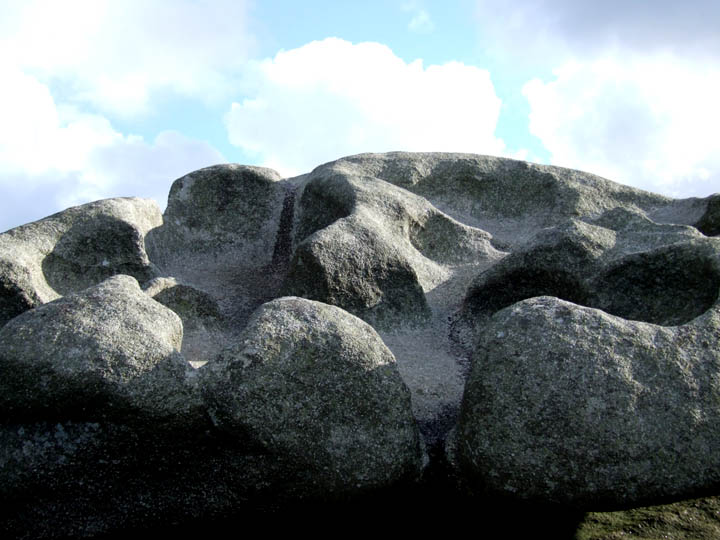
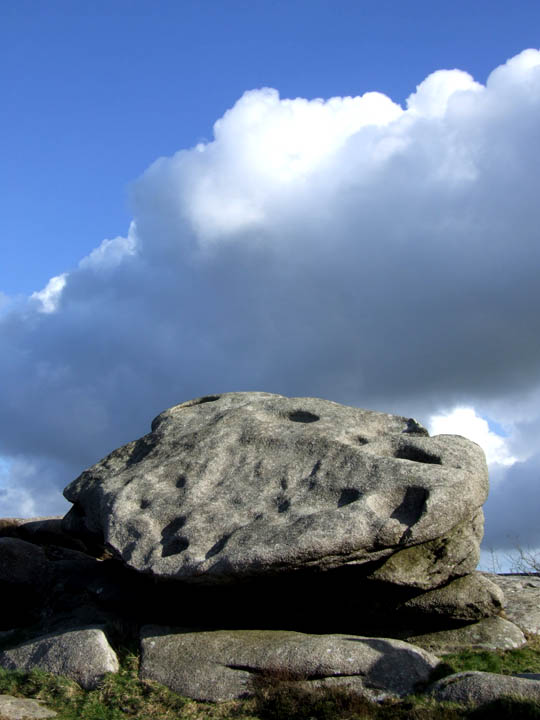
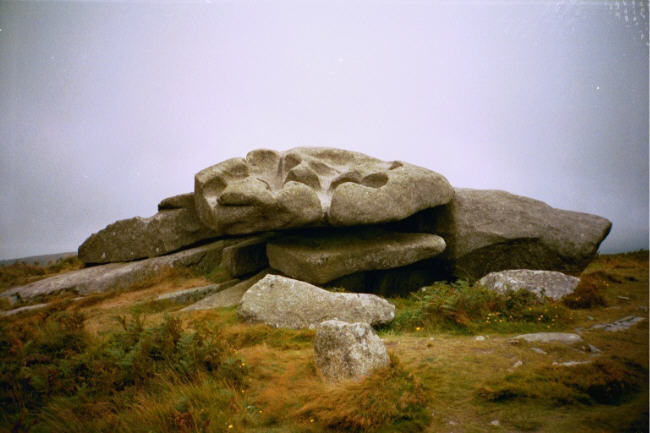
Craig Weatherhill and Paul Devereux, in 'Myths and Legends of Cornwall' (Sigma Leisure, 1994) write that the Giant's "sightless petrified head is said to protrude from an outcrop at the eastern end of this impressive hill, while his hand, also turned to stone, can be found at the opposite end of the great system of prehistoric earthworks which surround two of it's three summits. Later tradition gives this giant the unlikely name of John of Gaunt." They add that Carn Brea has one of the most remarkable examples of a mythical sacrificial rock (at SW683407)..."a huge oval boulder studded with basins and which has the name of the 'Giant's Crocks and Kettles'." I think this is the rock pictured by Hamish, and to a lesser extent in one of my pics. The reason that Carn Brea is covered in stones whilst St.Agnes Beacon is not, relates to the legend of Bolster (the giant of St.Agnes) feuding with the giant on Carn Brea and throwing all the rock around the Beacon at Carn Brea. |
Posted by pure joy 9th October 2003ce Edited 20th October 2003ce |
|
Like Trencrom Hill and St.Agnes Beacon, there is a legend of a Giant of the hill. The giant feuded with the giant Bolster at St.Agnes Beacon, which is 10km (6miles) to the north. The Carn Brae giant has several natural rocks named after him on the hill, such as The Giant's Head, Hand, Couch and Cradle. |
Posted by pure joy 7th October 2003ce Edited 7th October 2003ce |
|
According to folklore, a giant called John of Gaunt lived on this ancient site. The giant had a rivalry with another local giant called Bolster. The two would often engage in battle and throw boulders at each other. The many large erratics found in this area are supposed to be remnants of their battles. |
Posted by phil 14th December 2001ce |
Miscellaneous |
Add miscellaneous |
Nighthawking - not a recent phenomena (since morons have always existed). I liked his restrained anger: The hearths and benches of this interesting [hut] circle, which I left complete in the evening, were destroyed before 5.30 the next morning - no doubt by some of those who, fancying that no one could be foolish enough to dig unless he was finding treasure, haunted us during the whole summer, and destroyed much that would otherwise have been of permanent interest. One day I found they had removed the turf from another circle, for the sake of destroying the cooking-hole - a procedure that almost justifies language that would relight the fire.From the Journal of the Royal Institution of Cornwall v13 (1895-8) - in an article by Thurstan Collins Peter. |
Posted by Rhiannon 19th May 2015ce Edited 20th May 2015ce |

|
John Wesley (the preacher) wrote the following about the site in 1770 - "I took a walk to the top of that celebrated hill, Carn-Brae. Here are many monuments of remote antiquity, scarce to be found in any other part of Europe: Druid altars of enormous size, being only huge rocks, strangely suspended one upon the other; and rockbasins, hollowed on the surface of the rock, it is supposed, to contain the holy water. It is probable these are at least co-eval with Pompey's Theatre, if not with the Pyramids of Egypt. And what are they the better for this? Of what consequence is it either to the dead or the living, whether they have withstood the wastes of time for three thousand, or three hundred years?" |
 Posted by Chris Collyer
2nd December 2007ce |
|
Carn Brea was long presumed to be an Iron Age hillfort, but discoveries proved it to have been originally fortified in the early Neolithic. And things weren't as peaceful in the Neolithic as one might imagine. In 3800BC the occupants raised a massive stone wall to defend the settlement. It seems like they needed it: in 3500BC they were furiously attacked (as evidenced by all the arrowheads found) and the village was destroyed by fire. (Roger Mercer's research described by Ronald Hutton in 'Pagan Religions of the Ancient British Isles' 1991) |
Posted by Rhiannon 3rd September 2004ce Edited 3rd September 2004ce |
 Top of page