|
 Log in |
Register Log in |
Register
|

|
|

Carn GilfachChambered Tomb
|
||||||||||||||||||||||||


 0 discussions


 Show map (inline Google Map)
|
|
|
Images (click to view fullsize) |
 Add an image Add an image |
|
Fieldnotes |
Add fieldnotes |
|
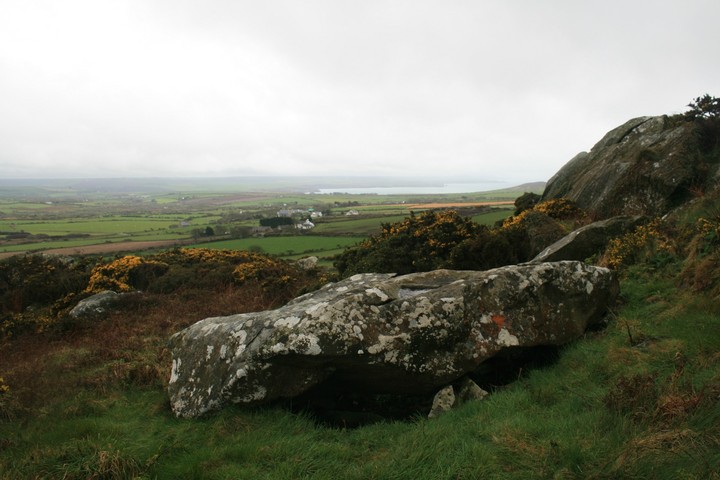
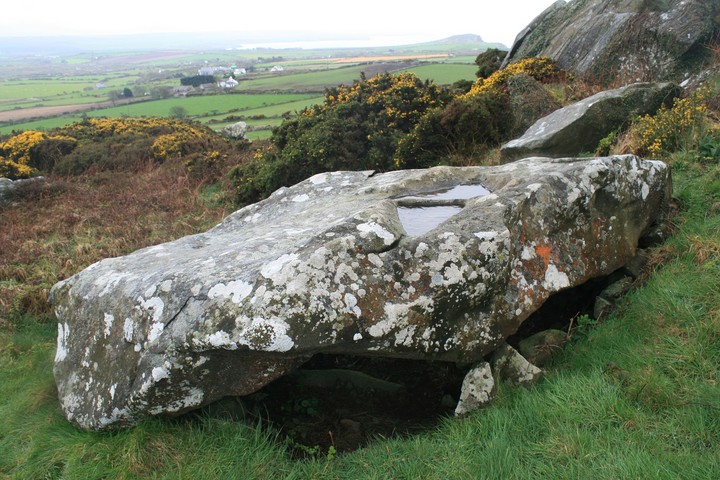
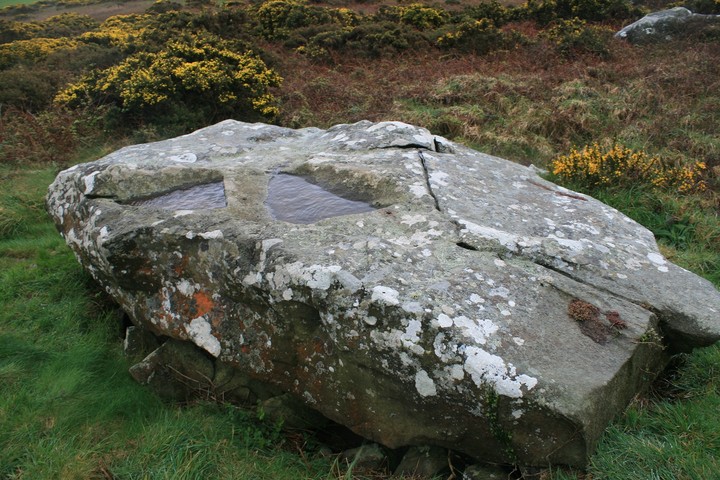
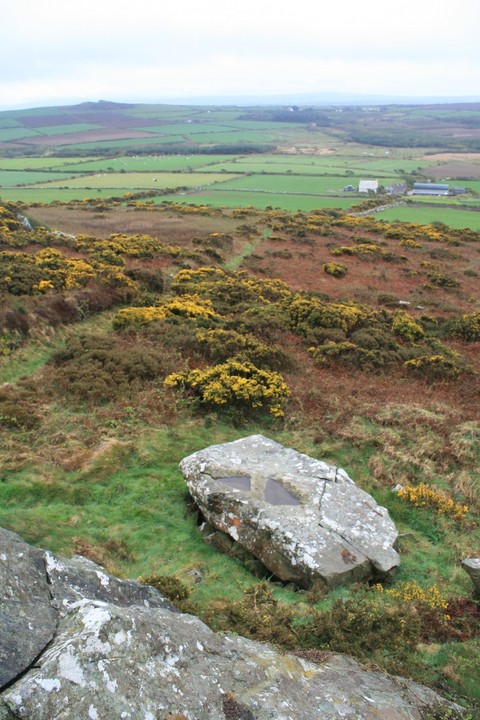
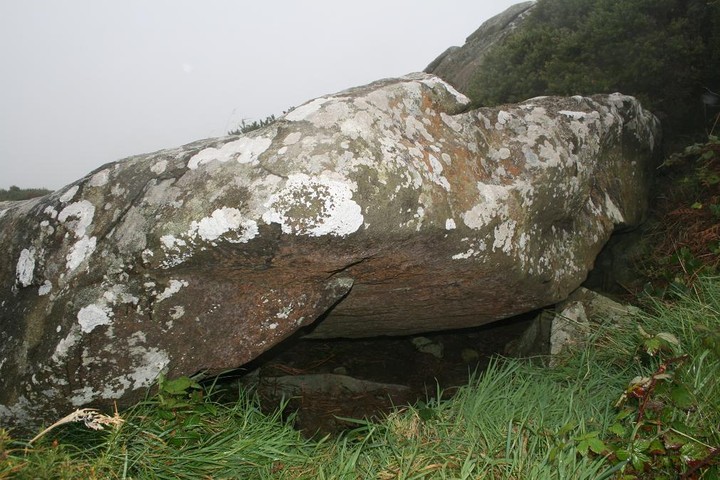
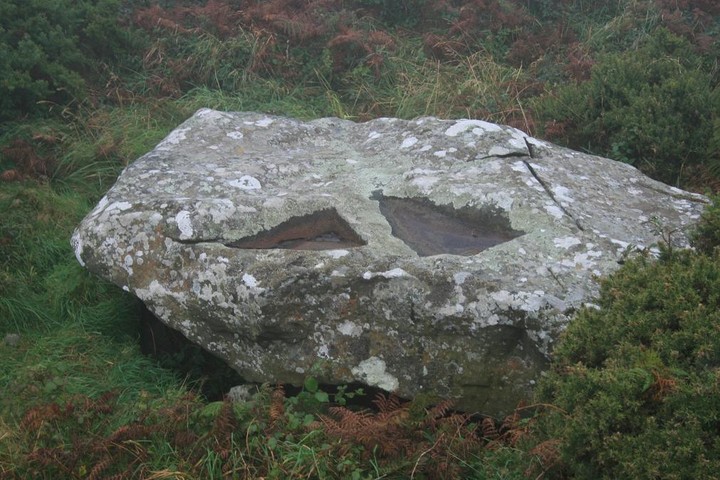
My first visit was hampered by deep impenetrable fog, thankfully I'd left Garnwnda and the Lady gate stone out so this was the return visit eighteen months in the making. I parked in the same place as before, and walked through the same farm , barked at by the same dogs probably and walked up the same path, the sign pointing out the cromlech is still there but the abundant plant growth and slugs were absent, glee ! The giant capstone was easier to define from the ground without the high grasses, and the strange triangles on the upper surface of the capstone still look freaky, are they man made or natural, I don't know but they are stained reddish as though from iron or something. Once more I climb the rocks just a few feet from the chamber and look down upon the mighty stone, held only just aloft by its small orthostats. Then I let my gaze wander around, I can't see the Lady gate standing stone from here the crest of the hill hides it from view, just like Garnwnda does with Parc Hen standing stone, the rocks of Garn Folch hides Garnwnda and it's chamber from me too, a complicated game of hide and seek are afoot, but i'm not sure of it's rules or it's meaning, if there is one. But the forts around and on Garn Fawr are highly visible, but they're not playing the same game. I bid the chamber adieu and set off for the elusive Lady stone, but i'll be back soon enough. This post appears as part of the weblog entry Trefdraeth to Wdig or Newport to Goodwick
|
 Posted by postman
14th April 2012ce Edited 15th April 2012ce |

|
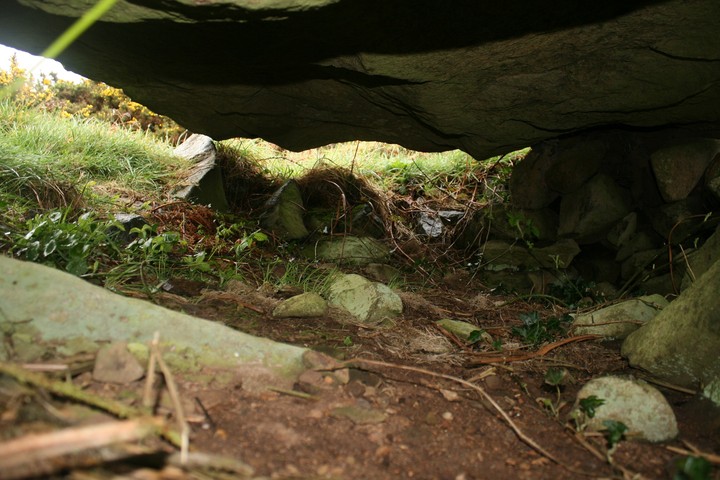
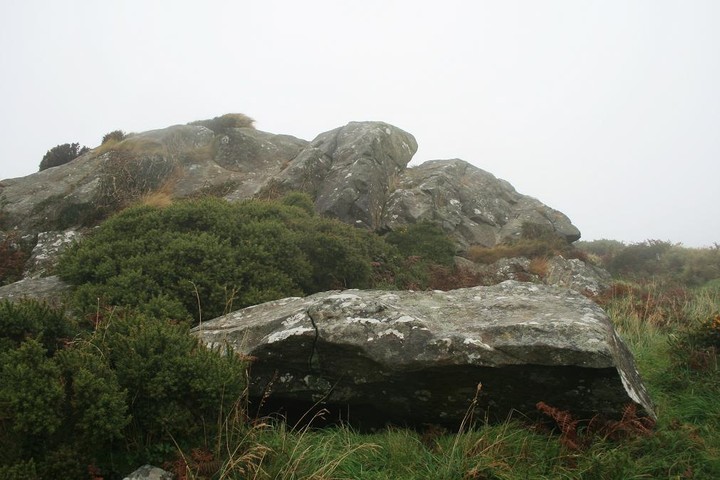
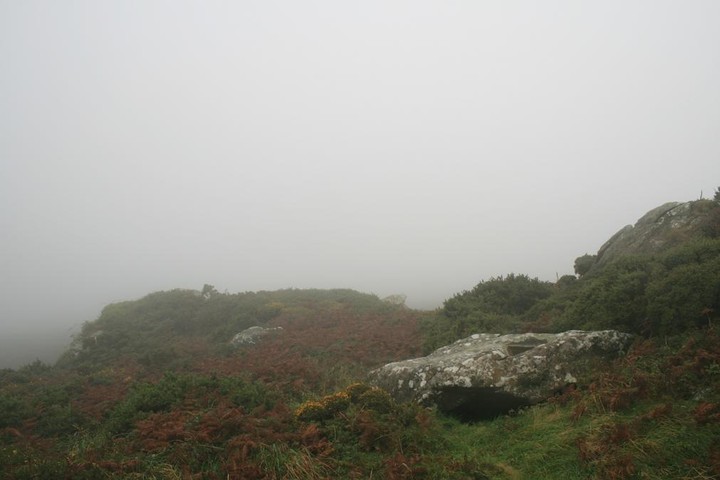
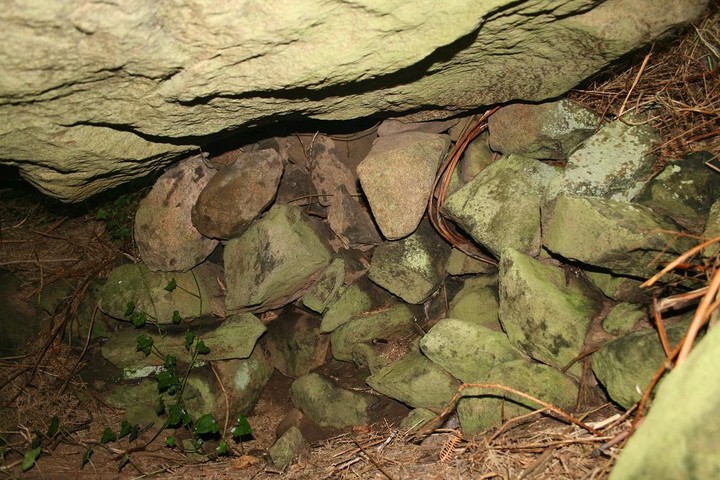
I parked on the road by Gilfach farm entrance and walked up the drive, its also the course of the footpath so I waved at the farmer in his kitchen with the air of someone who's aloud to be there. Through a gate is the half overgrown path straight as an arrow up the hillside, a helpful signpost points further on and tells us Cromlech 150m....Awsome But very very wet and you havent seen this many slugs anywhere I promise you. I had no idea what the cromlech would look like but the word cromlech always conjures pictures of Maen y Bard on Tal y Fan for me which was very unhelpful as it looks nothing like what I found. Beneath the first rock outcrop you come to is a large flat stone, this is it. On such a misty morning there was no view at all so there was no choice but to get in and have a look round. The capstone is completely elavated from the earth, held up by orthostats 18" high and smaller chock stones. Inside was two feet high, quite dry and comfy but my squirming for pictures of the orthostats got me filthy, angry wife filthy. The capstone if you can call it that, is immense, on its upper surface are two triangular depressions and a straight line. I thought nature abhors straight lines, but its not the first Ive seen today. On a beautiful summers evening this would be a perfect place to be, but wet cold and dirty with slugs on top isnt the perfect equinox. |
Posted by postman 23rd September 2009ce Edited 23rd September 2009ce |
Miscellaneous |
Add miscellaneous |
|
Barber & Williams (1989) say it's a biggy, 13 and a half feet long capstone on four uprights. Children & Nash (1997) say it's a very low cromlech – a few centimetres above the ground - cut into the rock, and at a distance almost indistinguishable from the natural forms. It's a sub-megalithic tomb, with the sunken chamber being part above and part below ground level. They also assert that there's no evidence of a covering mound, and indeed that the ledge is probably too narrow to have ever had one. GE Daniel (1950) suggests the capstone could be in its natural place, with it being underpinned whilst the chamber was cut underneath it. CT Barker (1992) suggests that what appears to be remnants of other uprights are in fact remains of drystone walling. Richard Fenton (1811) records charcoal and pottery being recovered from the site in 1800. |
Posted by Merrick 7th September 2004ce |

|
Like Garnwnda, Carn Wen, Ffynnon Druidion and Penrhiw cromlechs, this is clearly oriented on an adjacent rock outcrop, which in itself may have been the proto-temple, in the same way Cnoc an Tursa is at Calanais. However, we utterly failed to find the exact location of this cromlech. The hilltop is awash with aggressive and punishing gorse, and as we couldn't see where the monument was among it we gave up. nearly visited 21 Aug 04 |
Posted by Merrick 7th September 2004ce |
| According to the information on Coflein, Carn Gilfach has a huge capstone 13'6" long, 8' wide and 3' thick. It is supported by orthostats 18" high underneath - it was probably made by undercutting a natural boulder. In the 19th century, charcoal, pottery and flint were found inside. It was once thought that another tomb lay close by, but this is probably a natural feature. Which of course doesn't rule it out as being used as a tomb, one assumes.. |
 Posted by Rhiannon
17th June 2004ce |
 Top of page