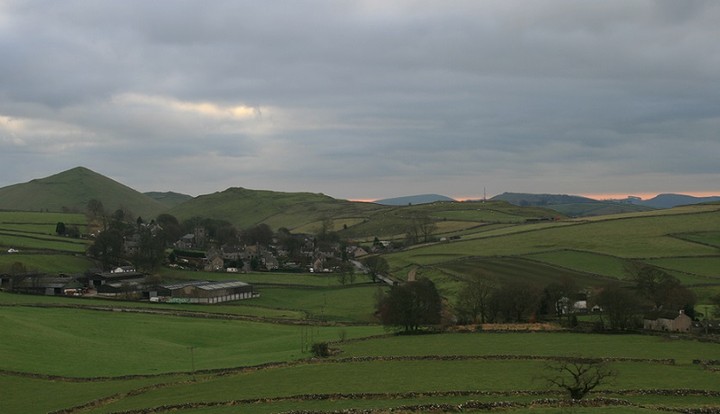
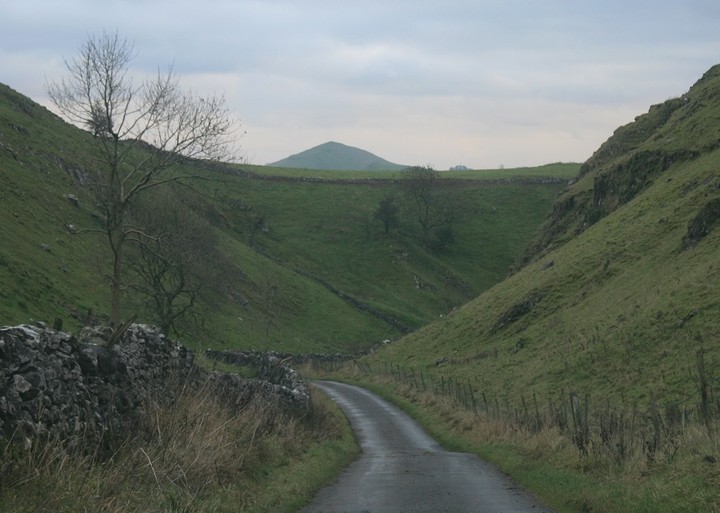
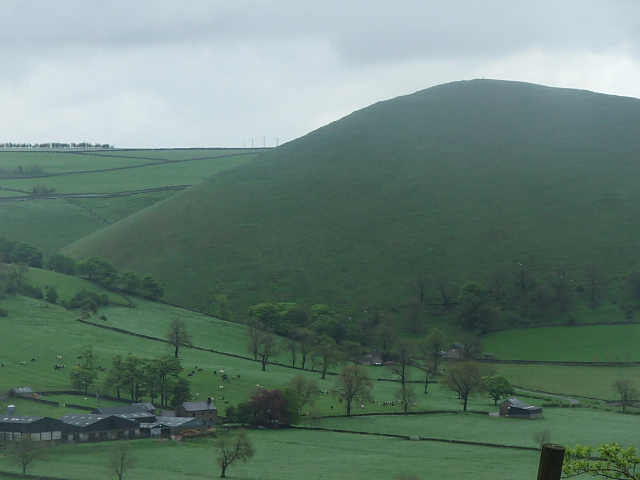
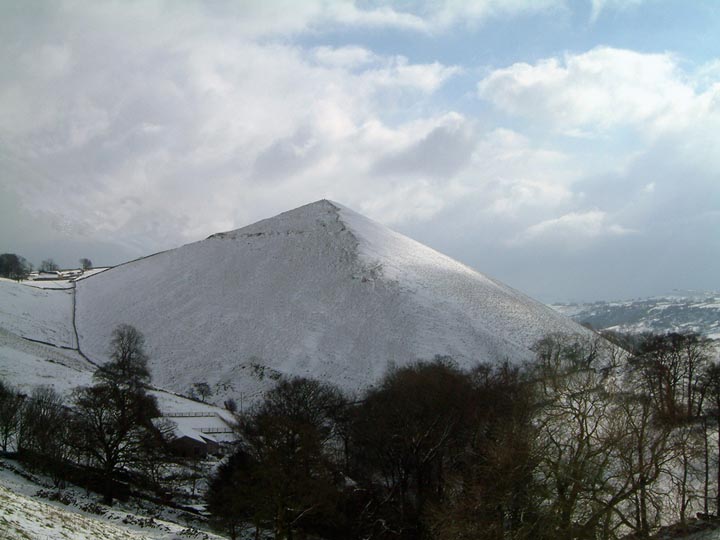
The easiest way up the mostly steep sided High Wheeldon hill is from the south east, we came at it from the opposite direction though, from by the rock climbing quarry of Aldery cliff. The foot path doesn't go up to the top, it skirts round the hill on it's north side, so a slippy scramble and stumble up the 20 degree slope is required. Luckily we had the dogs with us to pull us up, if only they went where we wanted them to go.
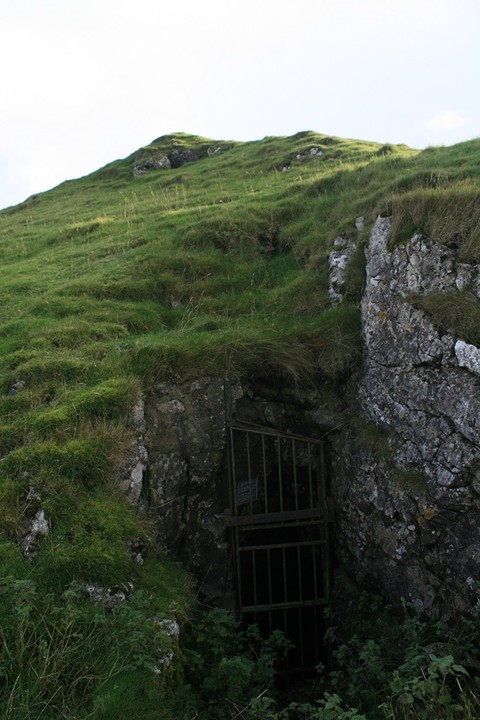
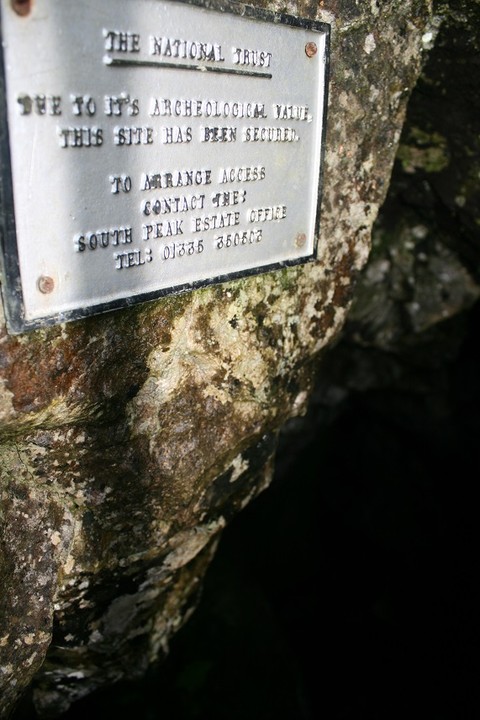
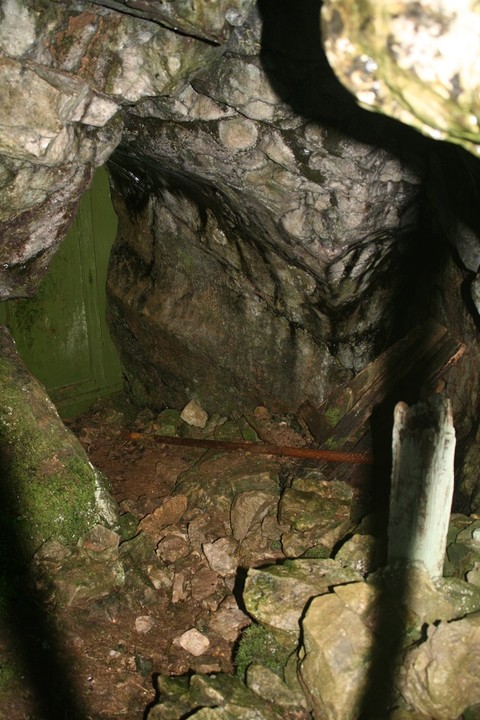
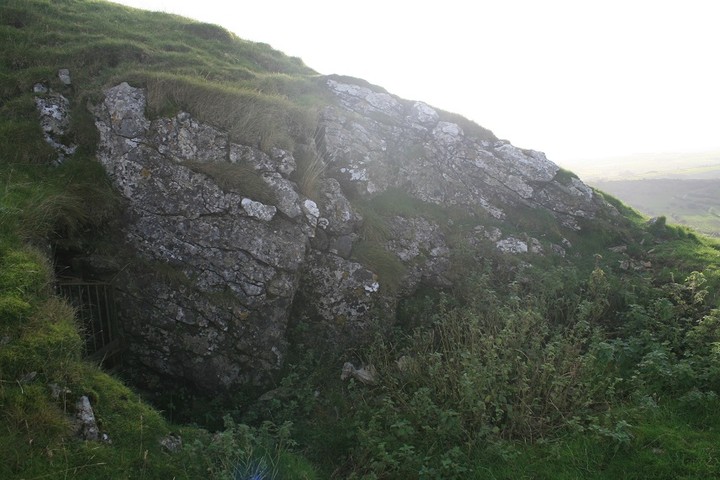
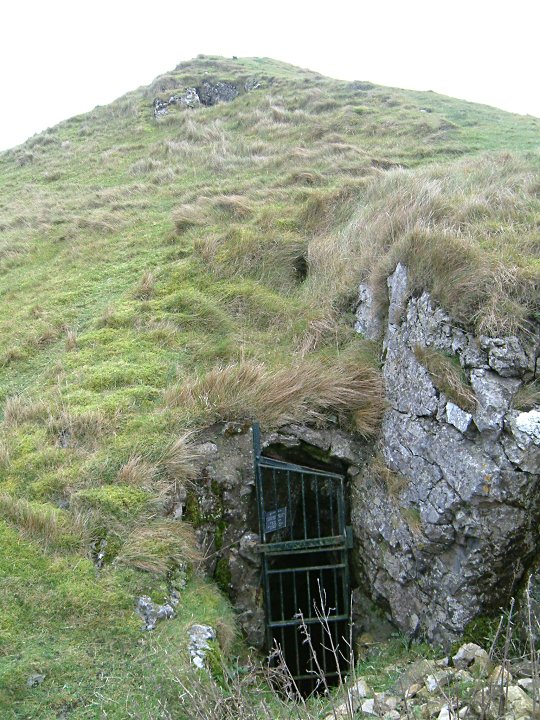
The cave is up near the top, but its closed off with a metal gate and another blockage has been constructed further inside. There is a sign explaining why the gate is there and a phone number to ring if you want access 01335 350503, I'm very sure access will be readily given to anyone wishing to get dirty.
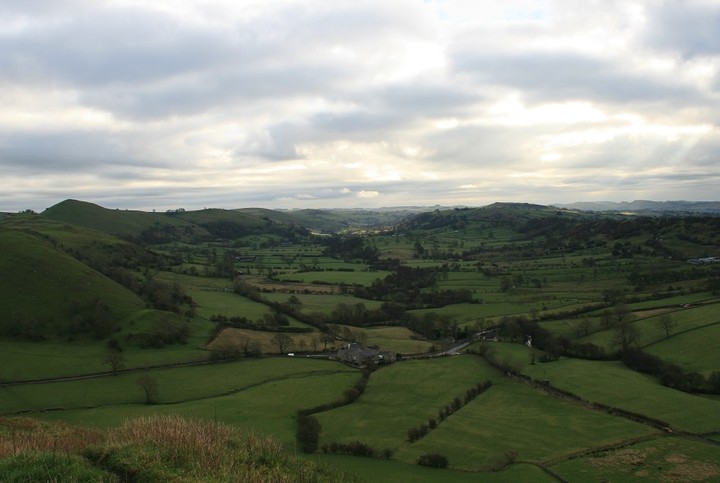
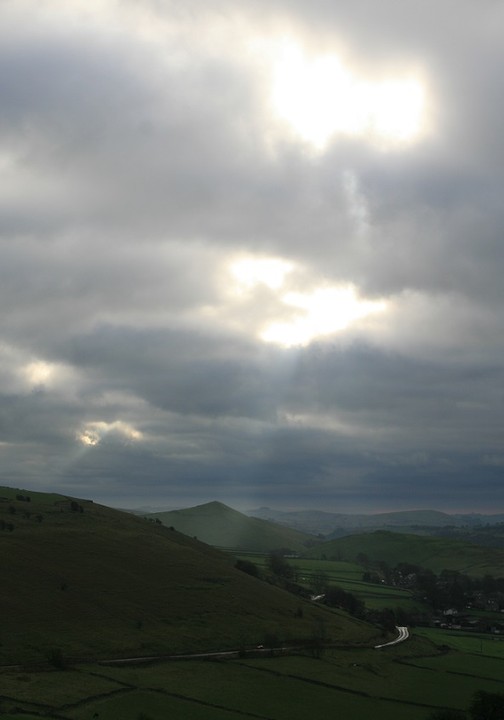
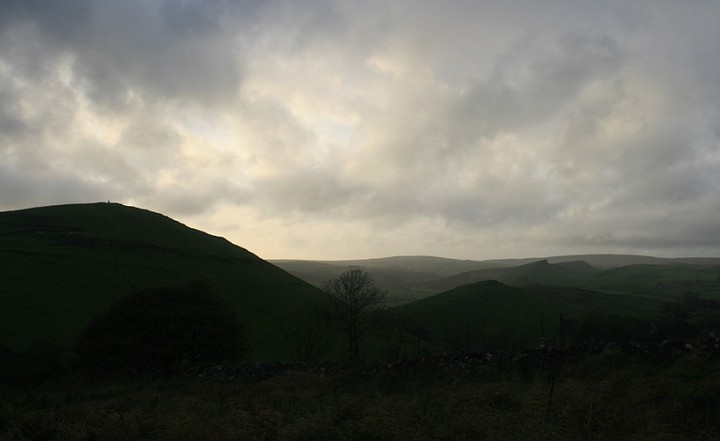
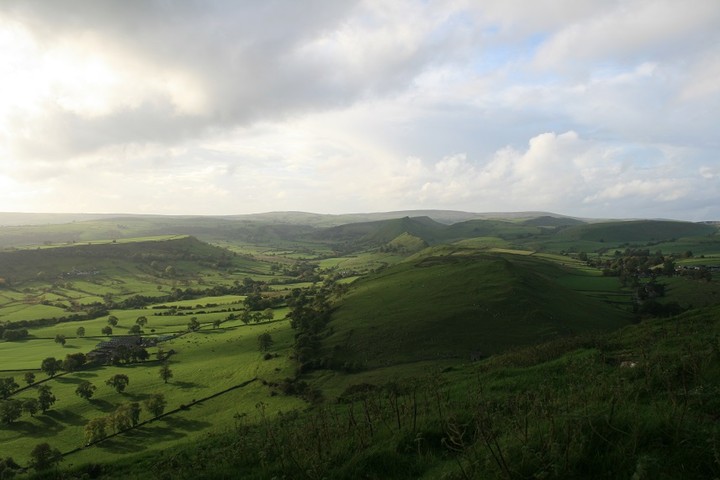
The view from the top is sweeeet and trig pointed to 422 meters, far away south I could see Minninglow, not far east is Cronkston Low, west is Hitter hill and beyond that the old coral reef hills of Parkhouse and Chrome, and just a bit further still Hollins hill.
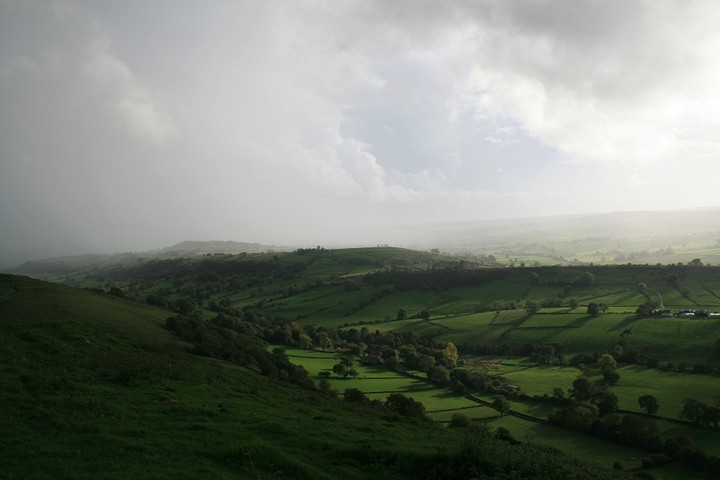
This area of the Peak district is very under visited despite it's obvious beauty, it was also obviously a special place for our bronze age brethren, as there is much for the TMA'er to get his/her teeth into. I've been round here at least five times and there is still stuff to see.
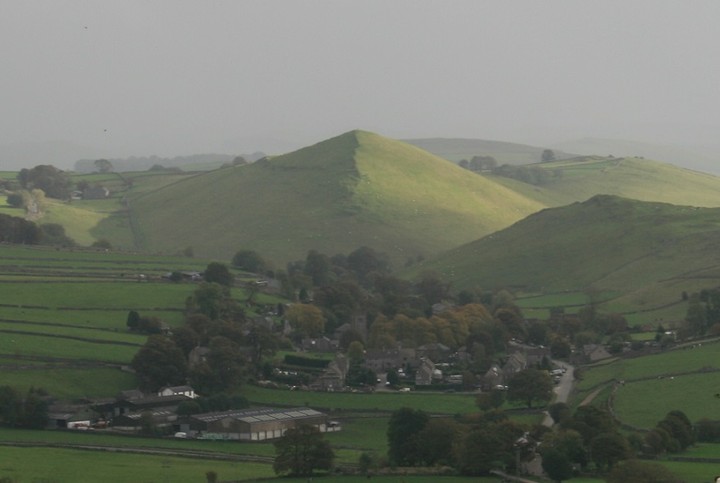
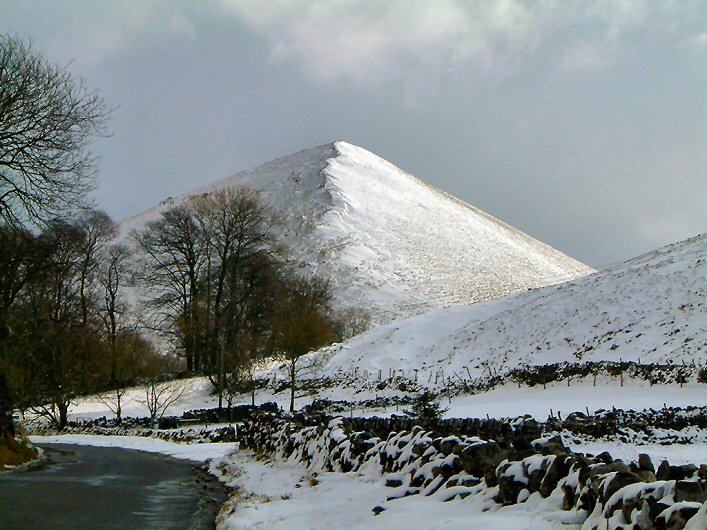
It's a thigh-burning 150m or so climb to the little summit of High Wheeldon; home to the Fox Hole, a small hidden cave, in one of the areas most distinctive hills. The name of the hill has often been mentioned as being named after a stone circle....although no trace of one has ever been found.
It's National Trust property and the path to the top is by Wheeldon Trees Farm.
The entrance to the cave is hidden away on the NW side of the hill. About a 25m walk down a little ridge from the top.....and as with most of the Peaks caves, archaeologically significant or not, the entrance is gated and padlocked. The entrance is larger today after dynamite was used to blast it out in order to help rescue a dog in the early 20th Century.
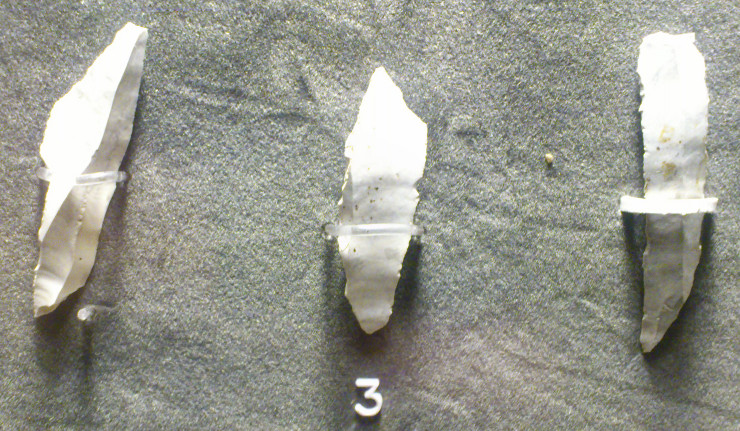
The cave has been occupied throughout prehistory beginning in the Paeleolithic, while in the Neolithic it was used to house a burial, the bones being the oldest known bones yet recovered from the White Peak. Some of the finds from the caves are/were displayed at the Buxton Museum.
"The entrance to Fox Hole Cave is situated at an altitude of 400 m on High Wheeldon Hill in Derbyshire (NGR SK 0997 6618). The cave was discovered and partly explored in 1928 (Jackson & Piggott, 1951), and more extensive investigations were carried out during controlled excavations by the Peakland Archaeological Society between 1961 and 1981 (Bramwell, 1962-1981; Bramwell, 1971). The Peakland Archaeological Society excavations concentrated on archaeological deposits in the floor of the Entrance Chamber, the Main Passage and the First Chamber, where a sequence of deposits up to 2 metres deep was recorded.
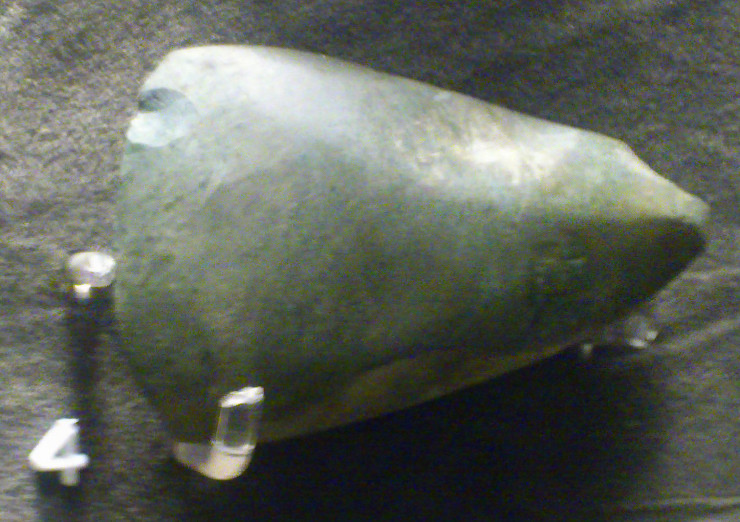
Apart from two human jaw fragments found in disturbed surface deposits in the Entrance Chamber, the human remains were confined to Layer C1, a clay deposit that also contained remains of wild and domestic fauna, charcoal, a Group VI polished stone axe, worked animal bone and teeth, and fragments of Peterborough ware pottery in which the fabric was tempered with limestone and chert grits. This layer was sealed by Layer B, described as a cobbled occupation floor containing sherds of Beaker pottery, occasional sherds of Peterborough and Grooved Wear pottery and some bone and flint artefacts of Neolithic and Bronze Age type. Underlying Layer C1 was the lithologically similar Layer C2 which lacked evidence of human occupation, and this was separated by a stalagmite horizon from Layer D, which contained Late Upper Palaeolithic artefacts. Two items of worked antler from Fox Hole Cave have been radiocarbon dated to the Lateglacial (OxA-1493: 11,970 uncal BP, and OxA-1494: 12,000 uncal BP). Small mammal remains were recovered from all archaeological layers in the cave." Prehistoric Society
 Log in |
Register
Log in |
Register


 0 discussions


 Show map (inline Google Map)
 Add an image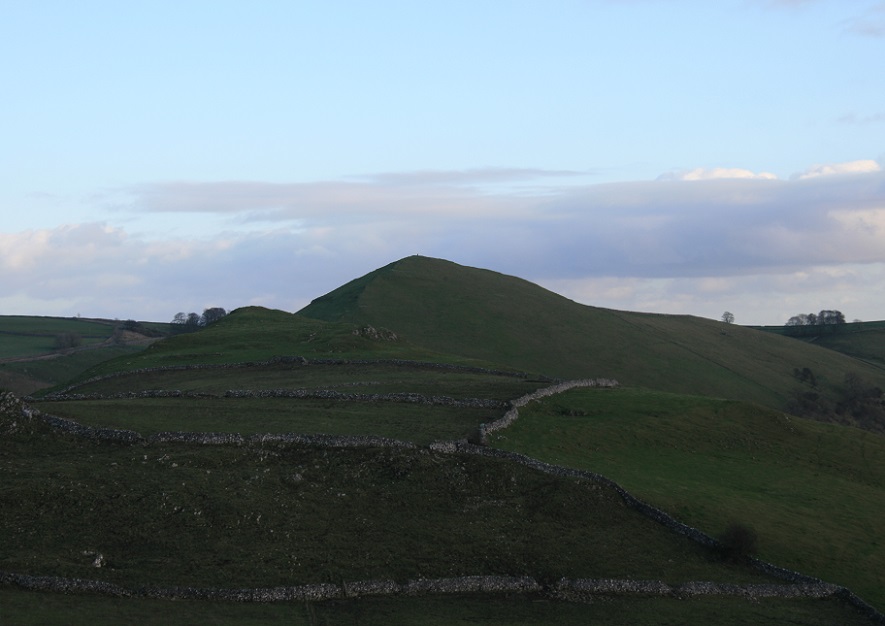


 Posted by postman
 Posted by stubob
 Top of page