|
 Log in |
Register Log in |
Register
|

|
|

Murtry HillLong Barrow
|
||||||||||||||||||||||||


 0 discussions


 Show map (inline Google Map)
|
|
|
Images (click to view fullsize) |
 Add an image Add an image |
Photographs: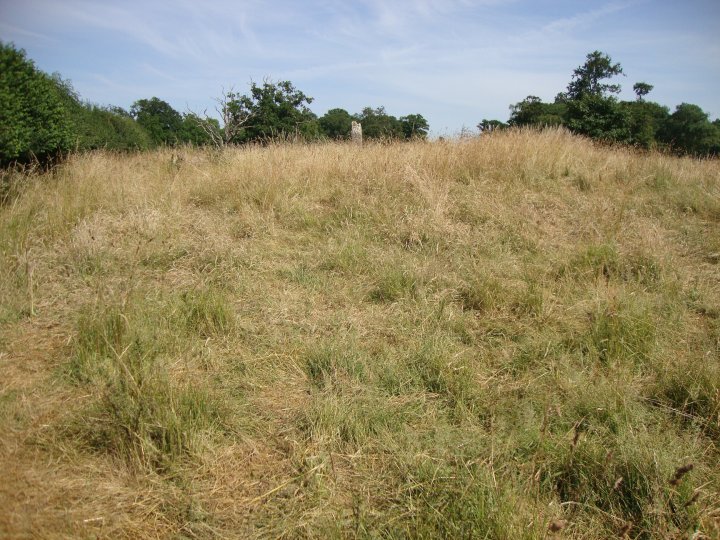
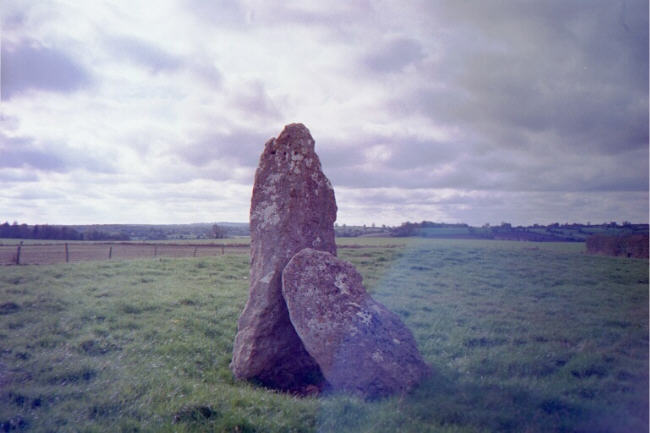
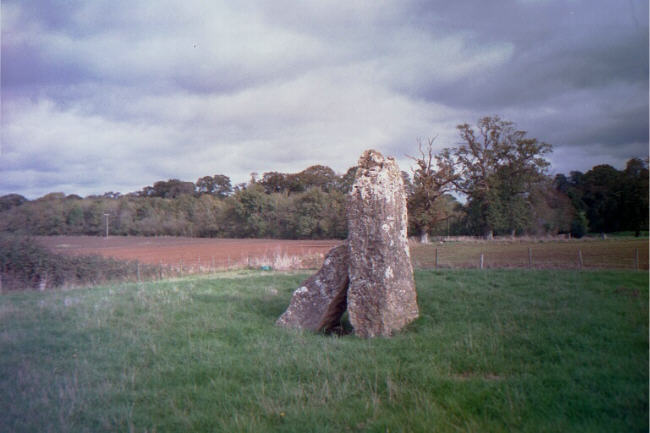 Artistic / Interpretive: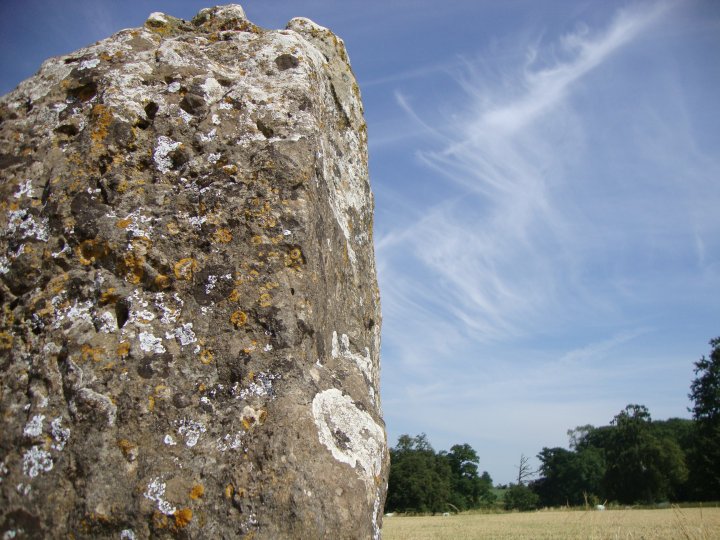
|
Fieldnotes |
Add fieldnotes |
|
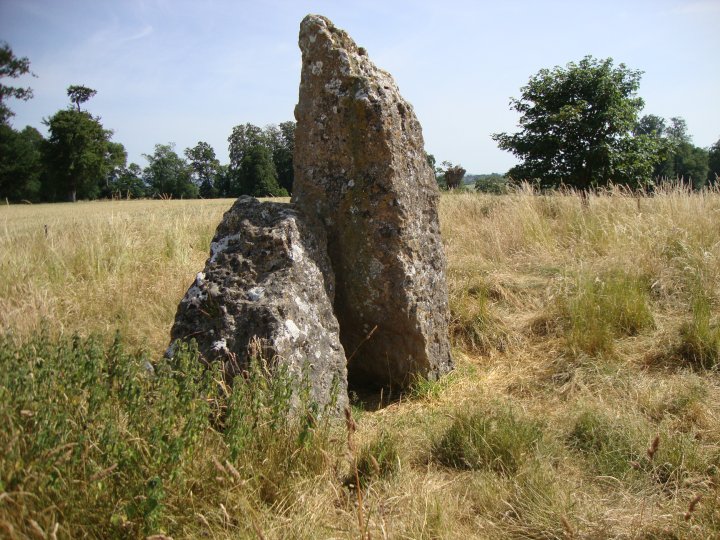
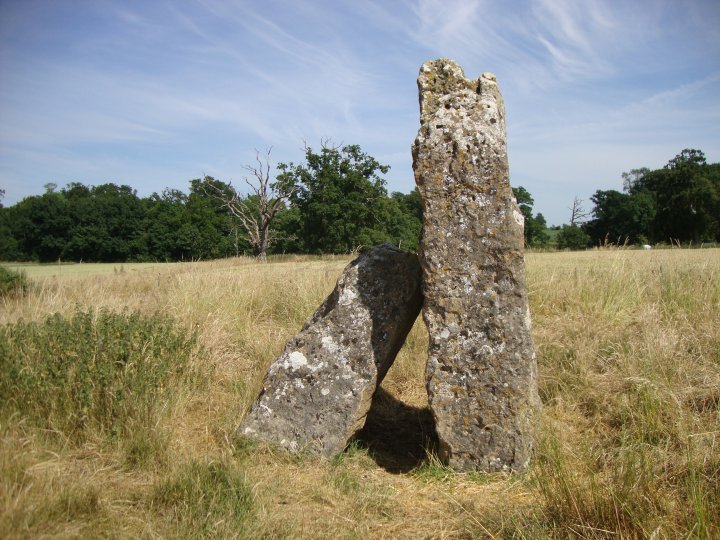
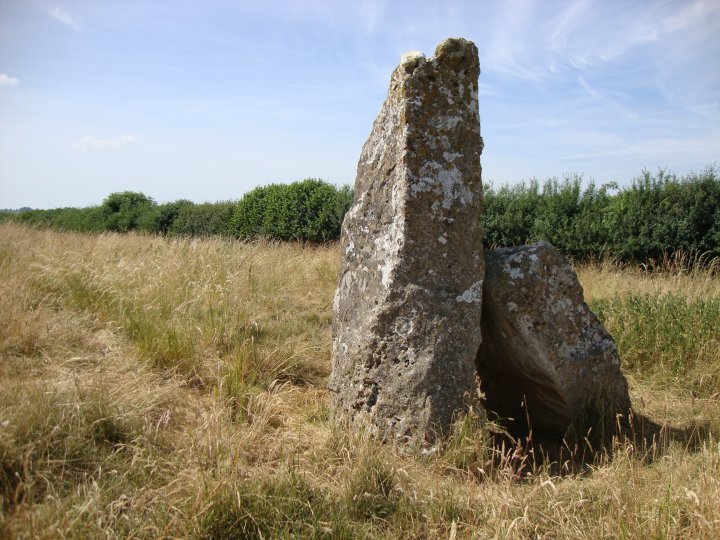
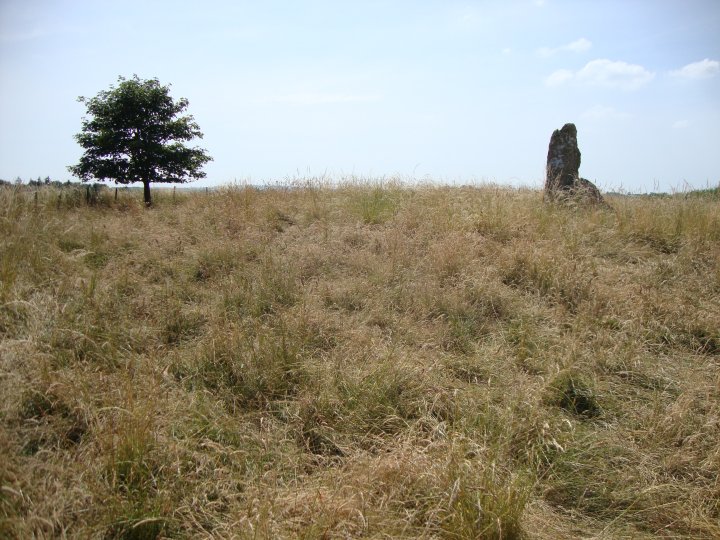
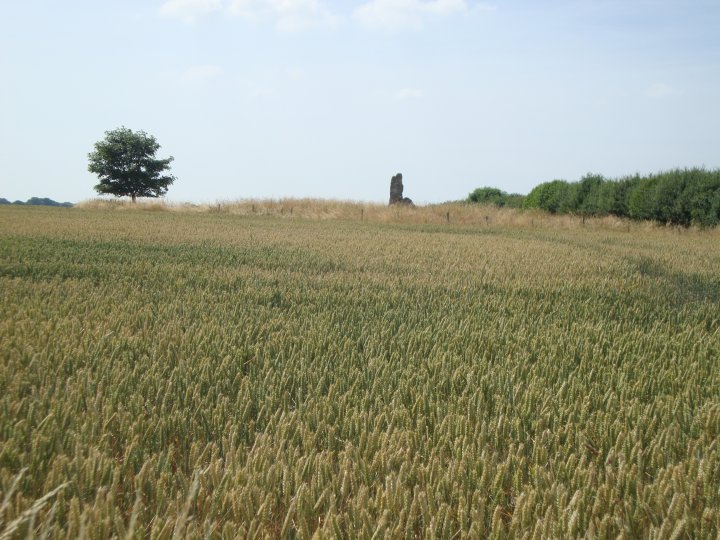
Ended up doing this site backwards. I photographed it before asking permission. Just as well because when I did go down to the farm, I was told by the neighbour that the farmer was very ill and bed-ridden. These stones have a very powerful vibe and I could easily understand some of the sites folklore. There is a mound of earth within the compound, which may have been the original covering. The Pastscape notes say that the barrow was opened in 1803-4 which would imply that the structure was undisturbed enough to still contain primary deposit of human bones, and secondary cremations, possibly in urns. If correct, the site may have attracted visitors long after the Neolithic and possibly into the Roman period. When I visited the visibility was perfect and you could easily see the Barrow Hill Long Barrow. The hilltop occupied by the church in Buckland Dinham was also very prominent in the landscape and I wonder if that too had a place in the prehistoric landscape, being link together by the A362. The springs at the bottom of Buckland Dinham hill are also worth visiting. ACCESS Site is on the crest of a hill by Nightingale Lodge and in sight of the Barrow Hill Long Barrow, with the A362 at the bottom of the hill. The surrounding parkland is now a country club and golf course with a footpath up the drive next to the stones. The area is fenced off and stands like an island amid a sea of corn. I spoke to the estate manager about access after my visit. He had a laugh when I ran some of the folklore stories past him but he hadn't seen anything himself. He was cool about me going to visit but warned me to look out for the ram which the farmer keeps in the stones compound. |
 Posted by Chance
2nd February 2014ce |

| At the end of the drivable bit of the lane is Murtry Hill Farm,the farmer is happy to let you walk his field edge and chats about the funny folk who visit. |
 Posted by hamish
29th September 2002ce |
Folklore |
Add folklore |
|
Murtry Hill was visited in 1808 by Sir Richard Colt Hoare. He said "There were formerly seven [stones] attributed by vulgar report as memorials to seven Saxon Kings who fell in battle." Gleaned by L V Grinsell: see 'Somerset Barrows - revisions 1971-1987' in v131 (1987) of Som Arch Nat Hist. To support my theory below, I was encouraged to read in the same article that Grinsell felt 'Miss Tongue tended to make the most of such matters' with regard to megalithic folklore, and didn't include her stories from 'Somerset Folklore' in his work. What a polite way of putting it. |
 Posted by Rhiannon
24th April 2006ce Edited 24th April 2006ce |

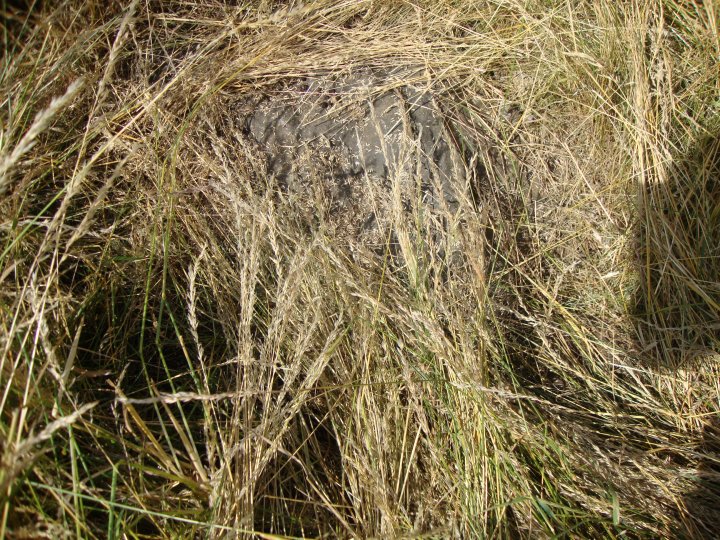
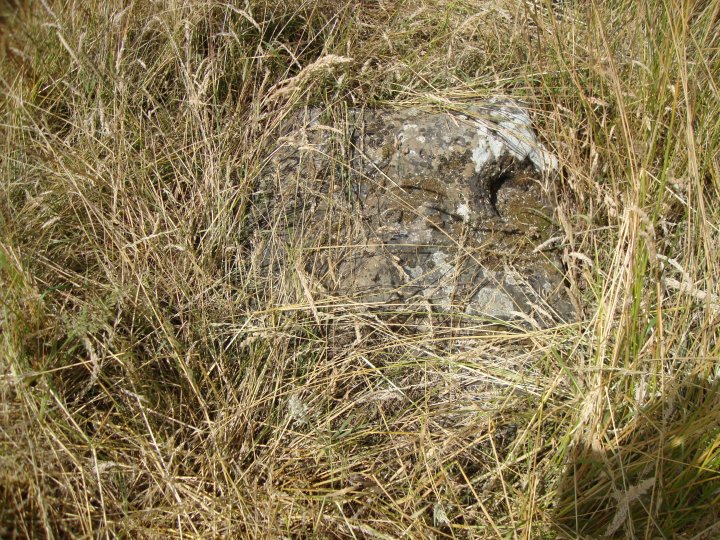
From Proc Som Arch Soc 21 for 1875:Prebendary Clutterbuck, the vicar of the parish, stated that after digging at the foot of the larger stone, to a distance equal to its height above the ground, the labourers were unable to reach the bottom of it, so that the actual length of it is not known, nor is it worth ascertaining at the risk of overthrowing it.This was told to a group of antiquarian daytrippers. One wonders if it was told 'as folklore' and the poor old souls got the wrong end of the stick. Or perhaps Preb. Clutterbuck was just trying to put them off digging? The stones had possibly only recently been dug up, as v57 has the following information: Mr F Clarke (head gardener at Orchardleigh house) says that when a schoolboy at Buckland Down he went with other excavations on this site about 1872. He distinctly recollects three holes. He does not know if anything was found, but he says there was the common tradition about a gold coffin being buried on Murtry Hill.Volume 57 (early 1920s) also describes the contemporary excavation of the stones. They found a lot, including other largish buried stones. The book has a photo of the site laid bare. "Our excavations.. told a very different tale [to Clutterbuck], and showed how necessary it is to check the statements made by antiquaries of the middle of last century." The stones only go down about 1 1/2 ft below the surface, quite boringly. So they are about 11.5 and 7.75ft tall. The excavator described a tradition from 1875 (v21): "a modern tradition [is] that these stones are not ancient at all but were erected by a former owner of the estate." So perhaps - although they are clearly ancient - maybe they lay prostrate for a long time, but were erected. Also from the 1875 journal: The natives of the district to this day have a dread of passing near the stones except in broad daylight, as if there were still remaining the notion that they marked a place of burial, or perhaps of Pagan rites, in which Satan may have taken an active part. |
Posted by Rhiannon 17th August 2005ce Edited 17th August 2005ce |
|
Grinsell (Folklore of prehistoric sites in Britain) says the barrow associated with the stones is supposed to be immovable. Though I don't think there's much left bar the stones, so it can't have been that immovable. The area is "said to be" haunted by a lady in white (a 'Lake Lady' more fairy than ghost, says Ruth Tongue). However I am not wholly convinced that this bit of folklore was originally attached to this site. In PSAS v21 for 1875, the Lady in White is mentioned - but in a paragraph about Parc-y-Meirw at Fishguard, casually thrown into the middle of a discussion about Murtry Hill. I felt confused when I read it and I wonder if some people have got the wrong end of the stick from this very bit of writing. The idea is repeated in the 1912 'highways and byways in somerset' by Hutton - but perhaps he just read it in the PSAS journal. I suppose the only way to know is to find someone who's seen a white lady at Murtry Hill! Otherwise, it seems like the idea's stuck anyway. Ruth Tongue also mentions how some men were once employed to dig up the stones. They got down ten feet - but the stone was still going and it was still 'rock' solid. Suddenly it fell and squashed a man - and immediately (to the astonishment of the onlookers) returned to its original position. So do show the stones some respect should you visit - you never know... (in 'Somerset Folklore' 1965. The workman's fate was told to her in 1909 by a school friend. The 10ft anecdote was from the 1933 Somerset yearbook) The stones are also mentioned in 'The Sun and the Serpent' (by Miller and Broadhurst) as one of the sites on the cross-England ley line of St Michael/Mary. If you go in for such things. It connects Glastonbury, Avebury and many other esoteric spots. |
Posted by Rhiannon 3rd May 2002ce Edited 29th July 2006ce |
Miscellaneous |
Add miscellaneous |
|
Details of Long Barrow on Pastscape Two stones representing the remains of a long barrow opened 1803-4 when an primary deposit of human bones and secondary cremations in urns were found. [ST 76305066] ORCHARDLEIGH STONES [G.T.]. (1) Recorded by Skinner (2) as a tumulus 50 ft x 36 ft., with two large stones at its east end, one leaning against the other. Excavated by Gray in 1920. The stones were 10 1/2 ft. and 5 1/2ft. high respectively, but set only 18" in the ground, suggesting they were not in situ. A prostrate stone, nearby, was visible at the surface, and several others were revealed by digging. Finds included several flints, many small fragments of R.B. pottery, two Roman coins, and pieces of human bone. [See AO/LP/64/23] (3). Gray concluded that this was the remains of a disturbed chambered long barrow. Daniel, however, doubts very much if "there was ever a burial chamber at this site". (4) Scheduled as a burial chamber. (5) The two stones, the taller is 3.3m., stand on a slightly raised semi-circular platform, with a bank on the south-west. Two other stones show through the surface. It is not possible by visual inspection to reach any conclusion concerning the nature of the site. See G.P. AO/64/267/3. Surveyed at 1/2500. (6) ST 7628 5069: Long barrow, Murtry Hill. Opened 1803-4, primary? deposit of human bones, secondary? cremations in urns, Large stone W of centre broken just before visit by Skinner (source 2) in 1825. Excavations by Gray (source 3) revealed human remains just W of the entrance and he suspected that the 2 standing stones now at E end may have been placed there c.1800 as a 'restoration' (7) Additional references (8)(9)(10)(11) |
Posted by Chance 20th January 2014ce |

|
John Strachey noted in 1737: "Years ago viz about 1724 or 1725, taking away several loads to mend ye highway the workmen discovered the bones of a large man by several smaller skulls, lying in a sort of chest having two great rude stones at head and feet, two side stones and a coverer. Some say a great number of bones. The barrow is overall, has a pit or hollow in ye top.."At ye east end are now remaining 2 upright stones about 3ft [or 8ft?] high which if opened might probably discover such another chest of skeletons.." 'Murtry Hill' could be a version of 'Mortuary Hill'. The area belonged to monks at Henton, and a document mentions the tithes of 'Mortuary's Field'. (this is mentioned in PSASv57 - 1911). for references see the Somerset Historic Envt Record at http://webapp1.somerset.gov.uk/her/details.asp?prn=23161 |
Posted by Rhiannon 7th December 2004ce Edited 17th August 2005ce |
 Top of page