


30/11/06, the Feeno. Burial chamber/cist is just above centre of the shot
The grounds of Stewart’s hospital are a bit of a maze. I had to ask directions for this from a staff member. On the last day of November ‘06 in the wind and rain I didn’t venture into the undergrowth to check the structure.


This is the bullaun in the first of the 4 stones of the Seven Fonts that you encounter as you head down from the gate. The lens cover shows the scale of it!

The stone furthest north and west. The building in the background is the sawmill on the Glendassan. There is said to be a group of 4 bullauns there. I located one.

The second of the double bullaun stones. I have my doubts about the left-hand depression


The most font-like of the bullauns in this field, looking south towards the monastic complex


Four of the stones in this shot have bullauns, the three across the top of the shot and the one at the bottom

Bag for scale. Shot shows the main stone of the “Seven Fonts”
100 metres or so back from the Wicklow Gap road/Glendalough/Laragh road the Wicklow Way comes down to the road from Brockagh mountain. There’s a clear signpost for it there and directly opposite on the other side of the road there’s a farmgate. Over this about 20 metres into the field and to your left is the first of the bullauns. Said to have ‘9 granite boulders with 13 basins’, I located 8. The first of these is very font-like, with one bullaun carved/worked into the flat surface of a split rock. 10 metres to the west of this is a boulder with 2 bullauns, one of which seems to be in poor and very worn condition. Roughly 10 metres south of this is another double bullaun, again with one perfect specimen and its worn twin. Walk roughly 20 metres south-west of here and you’re confronted with the “Seven Fonts”. This is a concentration of 4 boulders, 3 with a single bullaun and one with the aforementioned rectangular basin with 3 bullauns inside it and one outside. 25 metres north-west of here is a huge earthfast boulder with a single bullaun. Which gives you 8 stones and 13 bullauns!
Heading north-west from the caretaker’s house, I decided to try and locate the stones behind the sawmill. You can see this about 80 metres up along the west bank of the Glendasan and as I was already in the field I went for it. Careful back here! The banks of the river are very steep and slippery. I was fairly nervous here but then I spied the huge stone in the river with the single bullaun Quite mad really, but I descended to have a better look and get a better shot. The late-November-swollen river, and the fact that I was in someone’s back garden, stopped me going any further.
It’s beside the right-hand pillar at the end of the car-park and is hugely ignored, with rubbish littering its vicinity. The stone itself has been broken, probably dug up and brought here to be willfully neglected.
Walk straight through the main monastic settlement and cross the wooden bridge over the Glenealo river and there it is. The first of the font-like stones, it’s surrounded by a heap of ‘megalithics’ that may or may not pre-date the christian settlement in their arrangement.

Bullaun in the foreground. This is very difficult to get to and is on a stone in the Glendasan river.


Boleycarrigeen, late November. A small, hidden monument where I have always felt like an intruder.


Looking across the Luas line, over Tallaght, with Seahan the nearer peak in the top left. The mound/rath is an urban delight!
I would never have come here if not for Monumental About Prehistoric Dublin and its author, Tom Fourwinds. Right beside the red Luas tram line, in a public park, I couldn’t help wondering how many thousands pass this by each day on their way to and from work and don’t even SEE it. Aside from Ballybrack portal tomb, this is the most urban site I’ve been to. I climbed the mound in the vain hope of understanding the monument. It reminds me of the Rath in Tornant Lower themodernantiquarian.com/site/9025 with its two tiers. The views to the south, across Tallaght, towards the ridge above Glenasmole were worth coming here for.


A fifth bullaun at this site! I returned here to show a friend III and IV then decided to have a scout around for I and II and came across another one. It has 2 bullauns, a very shallow one about 7 cms across and 3 cms deep (almost just a cup-mark) and a much deeper ovoid one, about 12 cms on the longer axis and very deep. The rock has fissured through the larger bullan and seems to me to have been moved to where it now lies, possibly causing this damage.
I never located I and II.
There are many huge megaliths like this around Moytirra east and over on the other side of Lough Arrow at Carrowkeel. They are very probably glacial erratics but this one seemed so like it had been PUT there that I’ve posted it here. Should anybody have the slightest difficulty with this I’ll delete it. I would like the chance to go back there and investigate further, hopefully when the cows aren’t around.

Thanks to the cow for scale, but it stopped me from checking out whether there are any packing stones at the base of this monster.

This is probably a glacial erratic, but would bear deeper investigation when the cows aren’t around

The first stone on the left arm of the court, as you face into the gallery, has a hole seen at the bottom of this shot


The remains of the passage and chamber with Cairn K in the distance


The ruined mess of the passage at Cairn C

Chamber, or recess, to the left, passage to the right, with the cairn on Kesh Corran visible in the distance

Cairn B, with Cairn F visible on the ridge to the east


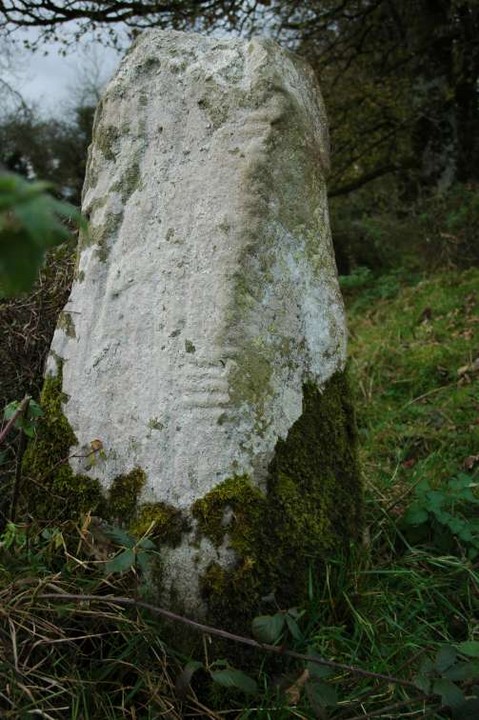
The ogham script shows up well in this shot but is actually very eroded
Marked as an Ogham stone on sheet 33, this pair are parked on the south side of a rath. The western stone, which is almost entirely covered in white lichen, has the aforementioned inscription. Both stones are about a metre tall.


A Roscommon standing (for how much longer?) stone
Slightly closer to the road than is marked on the OS map, you can see this one as you drive by (12/11/06). It’s a delightfully odd, 2 metre tall, deeply eroded, leaning phallus. How it hasn’t collapsed is anyone’s guess. The erosion on the side away from the road was a nice surprise.


A massive slab of stone, 2 metres long, tapering from 2 and-a-half to 3 metres tall and about three-quarters of a metre thick. It’s leaning slightly to the west now and must have taken a massive effort to erect. A complete wild estimate of about 15 tons in weight makes this the biggest standing stone I’ve seen yet. Impressive.