Visited June 2026
Image credit: Uwe Häberle 06/2026

Visited June 2026

Visited June 2026

Visited June 2026

Visited June 2026

Ernst Sprockhoff
Atlas der Megalithgräber Deutschlands,
Teil 2: Mecklenburg – Brandenburg – Pommern (1967)
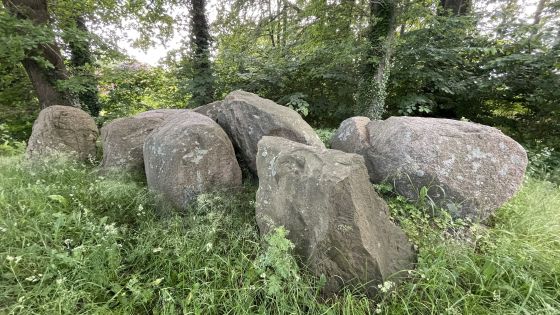
Garzer Hof 1 and Garzer Hof 2 are situated just about 150 metres apart in a field, so it makes sense to visit both megalithic tombs at the same time.
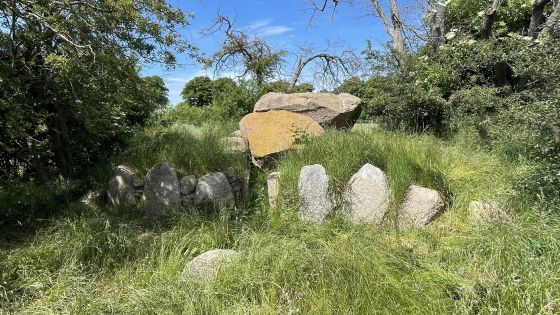
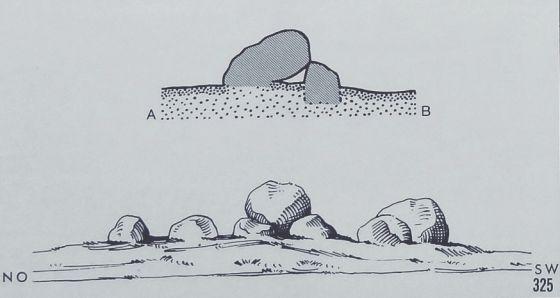
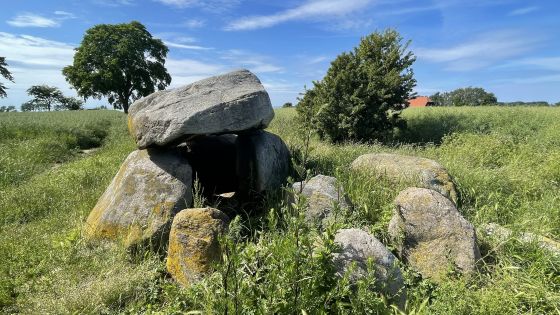
Garzer Hof 1 is a passage grave and the easternmost of the two graves. The chamber, which is 6.70 metres long, 1.90 metres wide and 1.50 metres high, is oriented in an east-west direction. The chamber consisted of five yokes; only one of the supporting stones on the northern side is missing. Two of the chamber’s capstones are still in place. The entrance is on the south side and measures 3 metres in length by 0.80 metres in width. Doorstep stones are situated at the start and in the middle of the passage. The structure originally had five capstones, two of which have survived.
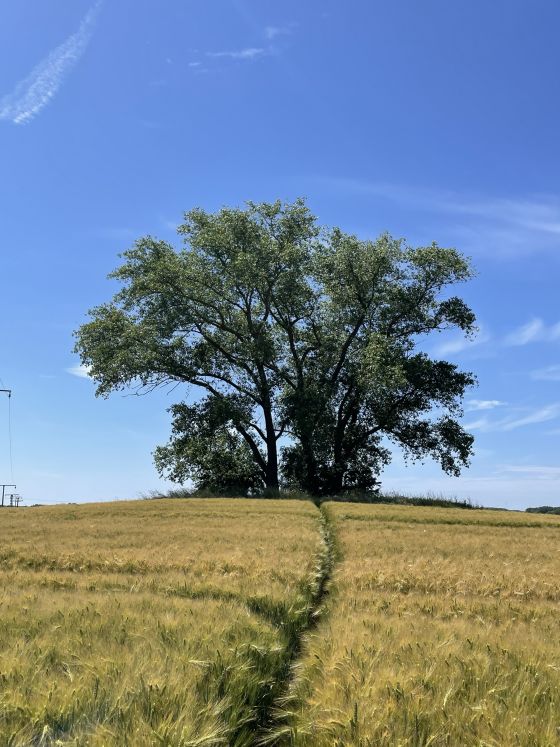
To visit the tombs, drive east from Rerik along Kröpeliner Straße (L122) towards Garvsmühlen. About 1 km past Rerik, there is a bus stop with a small shelter on the right-hand side. The footpath leading to the two graves begins immediately behind the shelter. Although the adjacent fields are used for farming, the tombs are easily accessible even in summer time, thanks to the access path. However, Grazer Hof 2 in particular is now heavily overgrown, so the structures may be more clearly visible if you visit in autumn or winter. You can park your car in the car park of a nearby war graves site.
Visited June 2026
Taken from the on-site information board:
Passage grave
Neolithic megalithic tomb
This passage grave, dating from the Funnel Beaker Culture period, represents a late variant in the development of megalithic tombs. It was constructed between 3100 and 2950 BC.
During excavations, approximately 380 artefacts were recovered from this tomb. These include a clay vessel featuring a depiction of a face.
Among the grave goods found in the tomb are also numerous everyday objects and vessels dating from the period between 2900 and 2800 BC. This makes it clear that the tomb was used repeatedly as a burial site for more than 300 years.
The fact that the builders of the megalithic tombs carefully selected the stones used is clearly evident from the straight chamber walls and the well-fitting capstones. The gaps between the standing stones were filled, for the most part, with flat stones.
The burial chambers were originally covered with thick layers of earth and stone, creating mounds that were sometimes round and sometimes elongated. On the outside, these mounds were often additionally surrounded by boulders.