Table des Merchants is one of Locmariaquer's big three sites. It is only accessible via the Site des Megalithes Visitor Centre for 6 euros. To be fair, there are three impressive monuments, unrestricted visiting time and free parking so what's not to like?
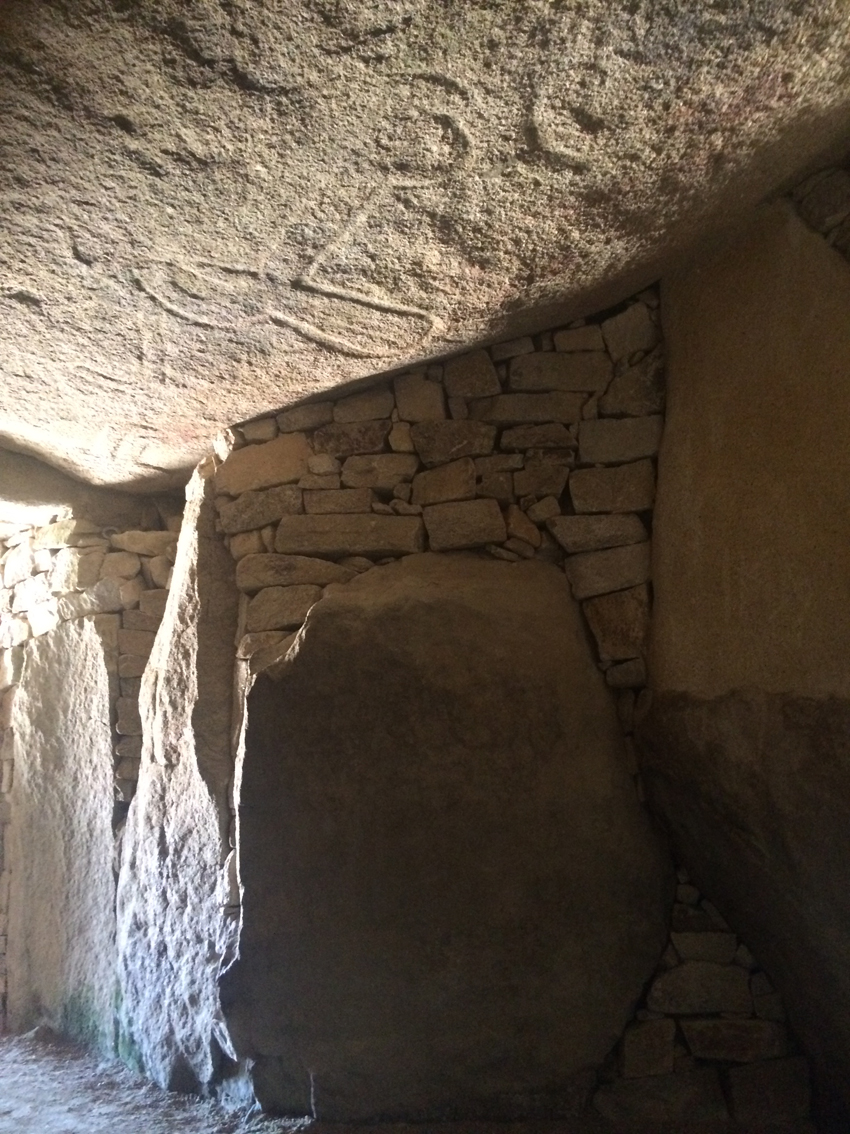
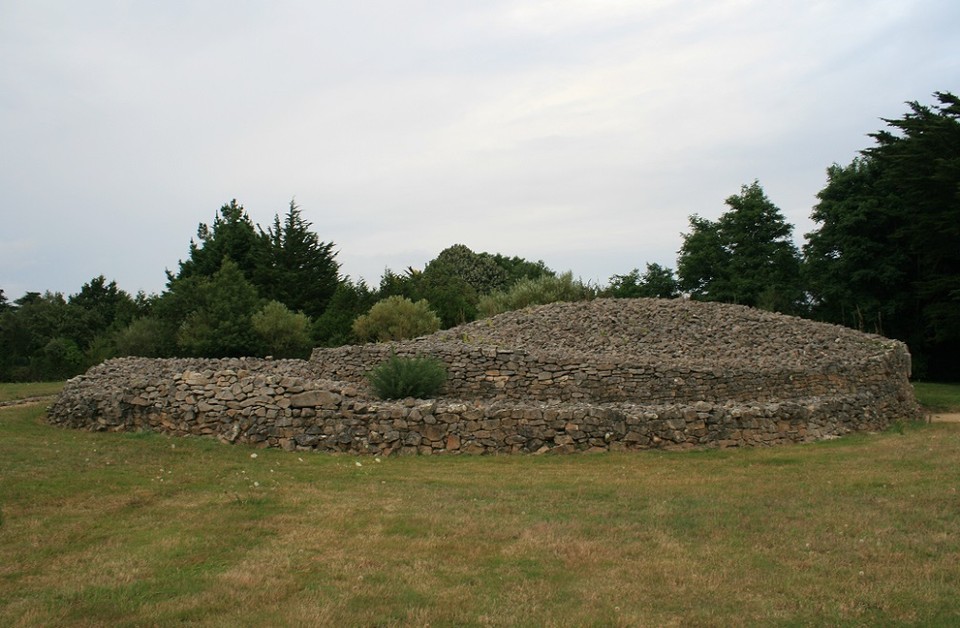
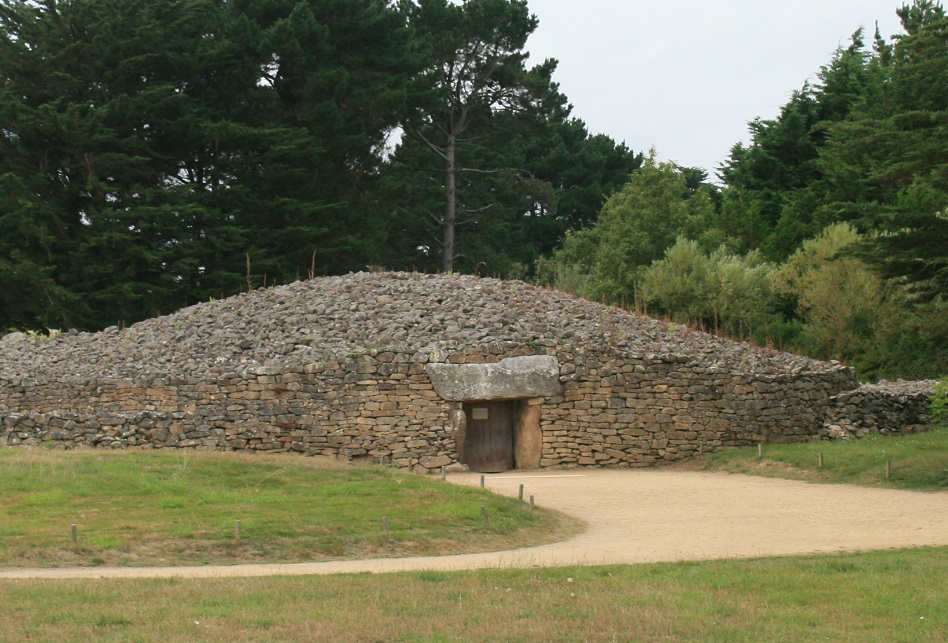
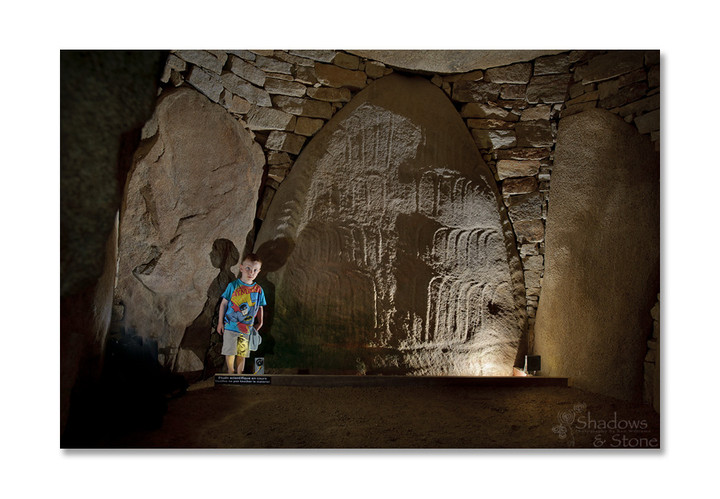
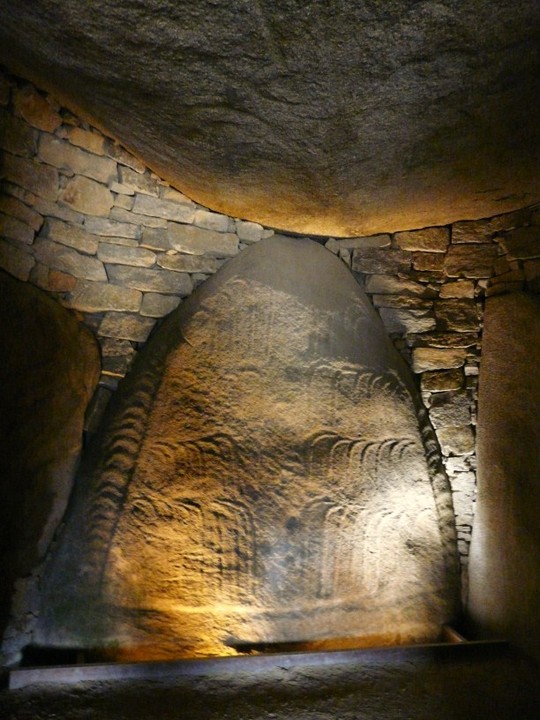
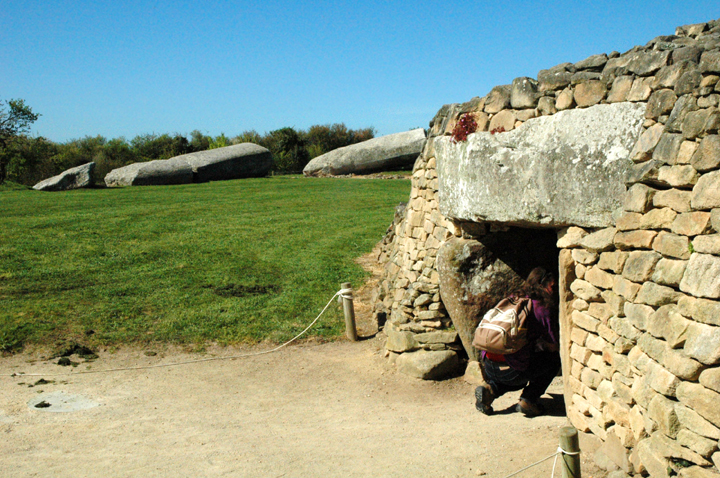
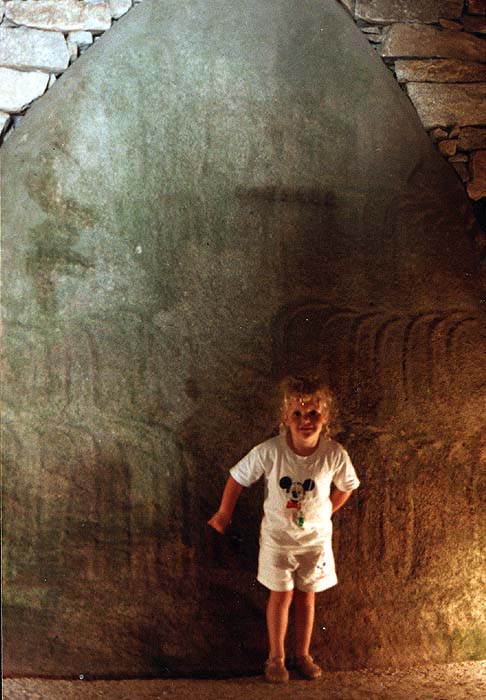
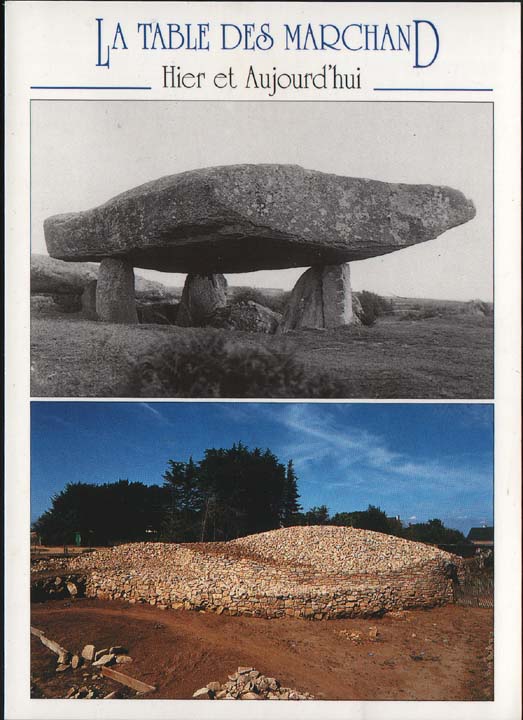
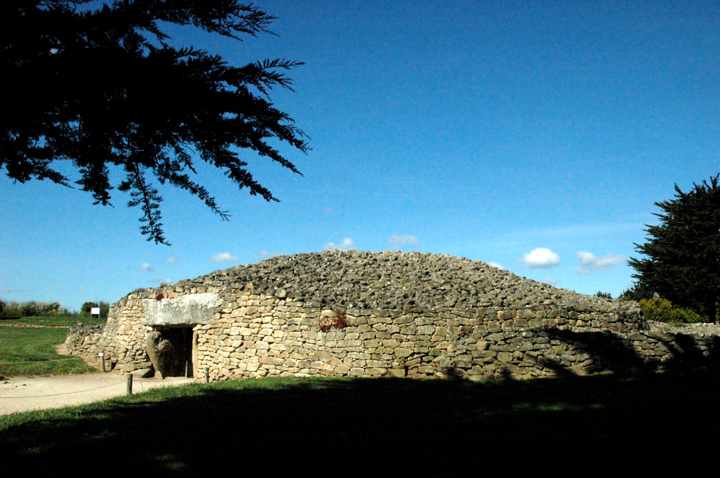
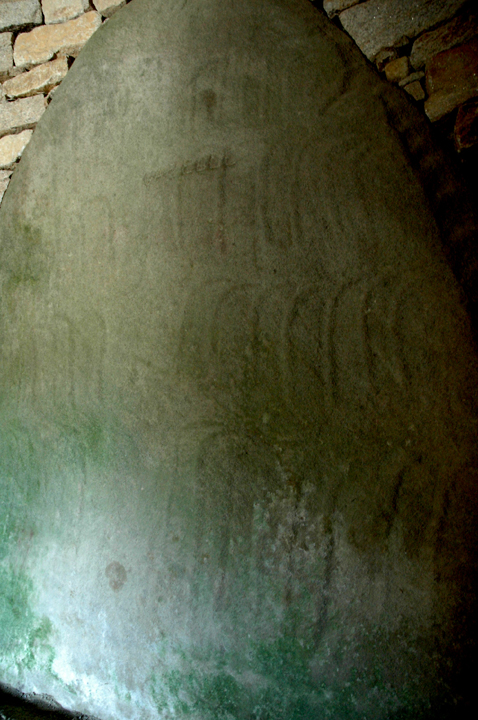
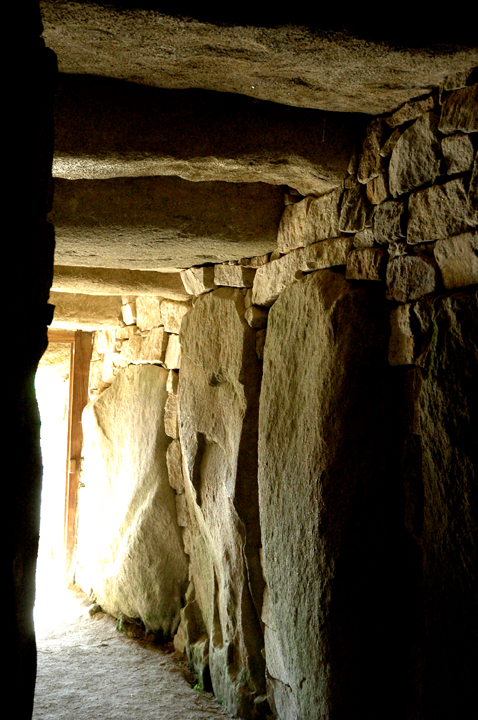
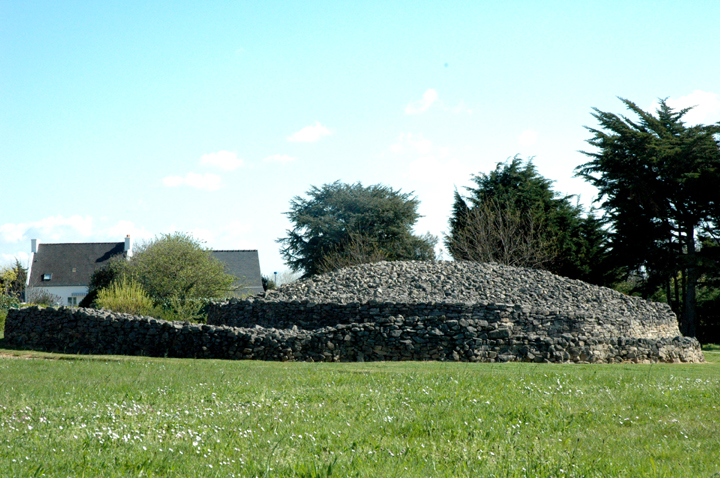
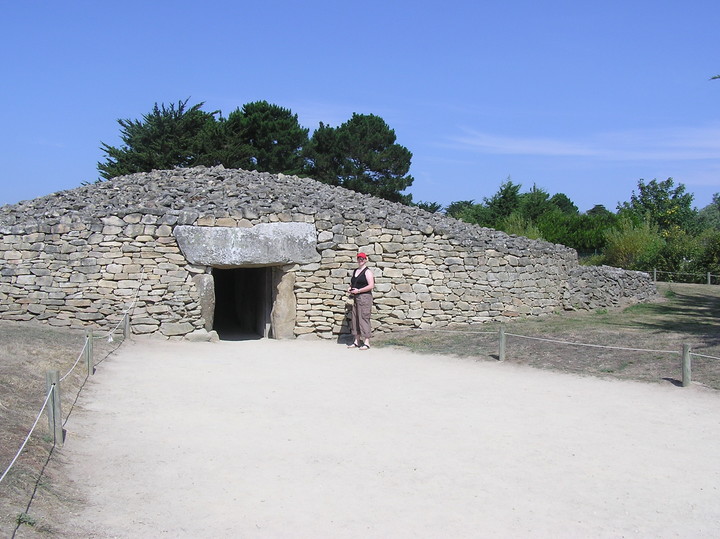
La Table des Merchants is a cairn constructed in 1993 around the surviving naked dolmen for the preservation of the antiquity. It was interesting to see the carved rear stone and ceiling in the chamber. However, the new cairn reminds me of the reconstructed cairn at Newgrange. I prefer my ancient monuments unadulterated.
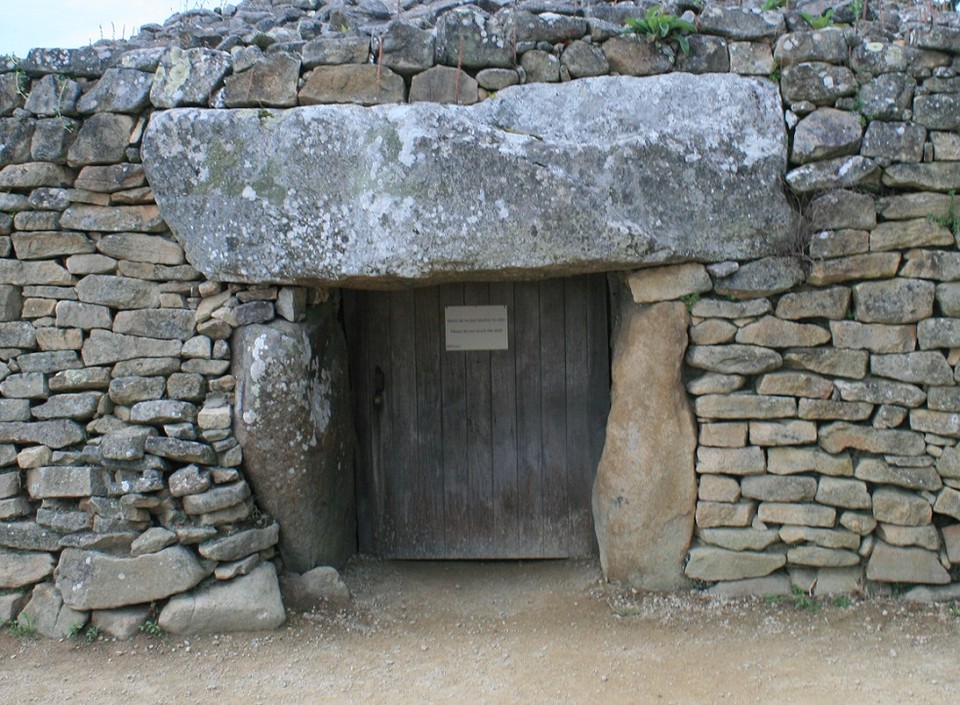
Due to sneaking in after hours there would be no getting into the Table des Marchants, which is a shame, I tried the gate blocking the entrance but it was of course locked. Ive been in before, but there was a sign saying no photography, like an idiot I obeyed the sign now I have no photos of it's wondrous interior.
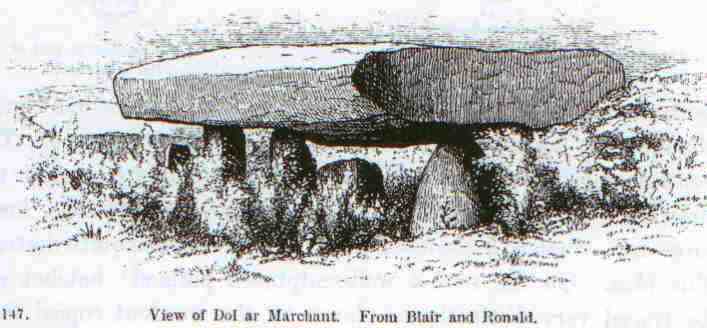
But is it wondrous ? Older pictures of it show it as a simple, massive, but simple dolmen. But today there is a long passage, impressive entrance, and strange stepped cairn covering it all, it all looks great, but its very modern. The dolmen was covered solely to protect the carvings, so, what they've done is erect a modern folly over an awesome megalithic site, I think I might have preferred it the way it was.
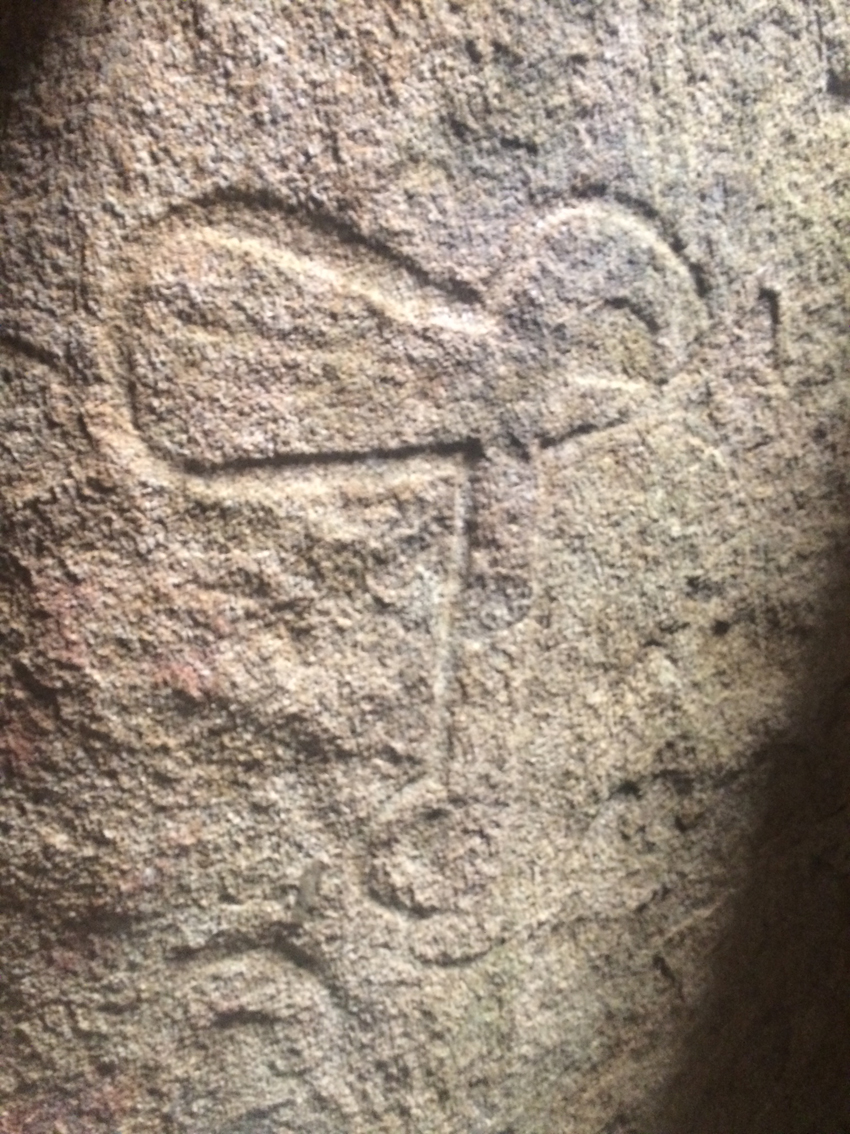
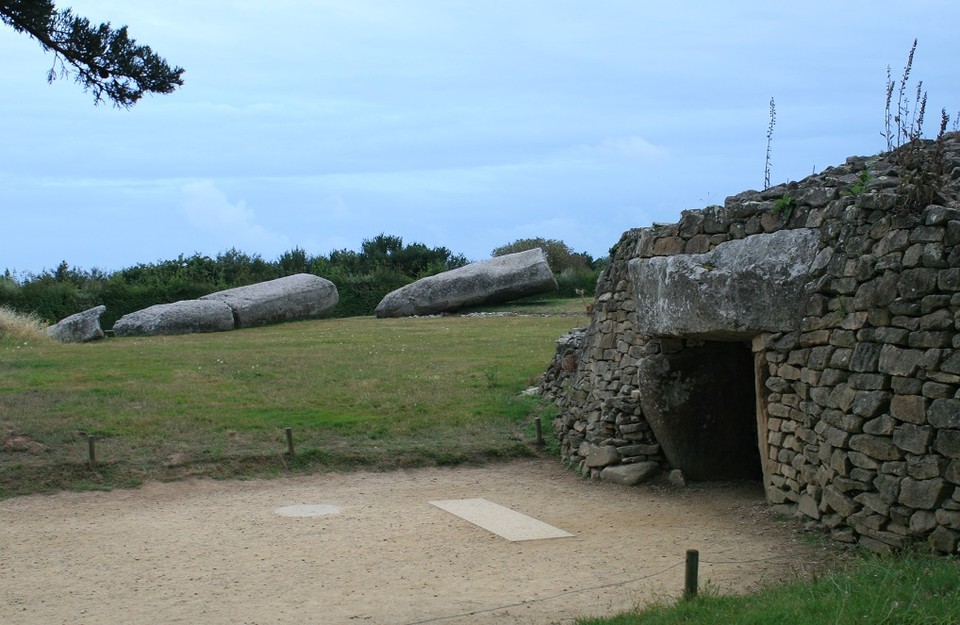
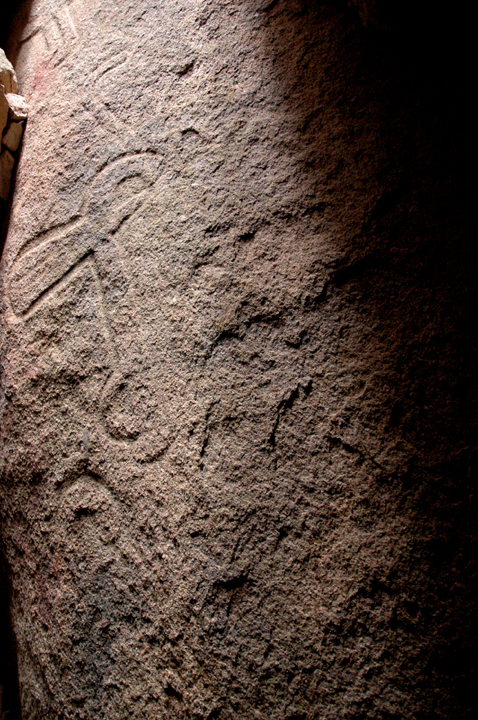
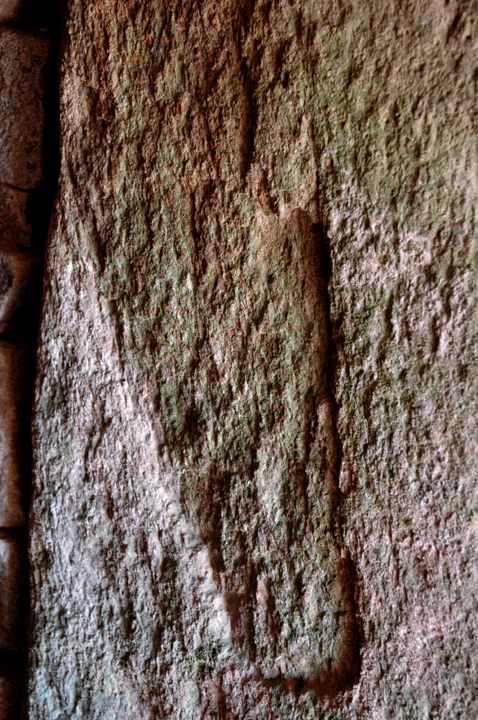
Within 15metres of Grand Menhir Brise is the large stony cairn of Table des Marchants. Today there were a few visitors around and it would be impossible to have it to ourselves, though most visitors didn't stay long. Bowing our heads to enter the 6 metre long passageway, it soon opened up and increased in height to perhaps nine feet tall, lined all around by vast walling slabs, some gloriously carved repeatedly with crooks, axe-shapes and other unknown symbols (which will probably be interpreted by someone somewhere as breasts or pubes.) The ceiling slab of the main chamber particularly impressed me – it was simply vast.
The most popular misconception about how this site gets its name is that it was knowns as 'The Merchant's Table'. In fact its name comes from the former land owners, whose name was Marchant.
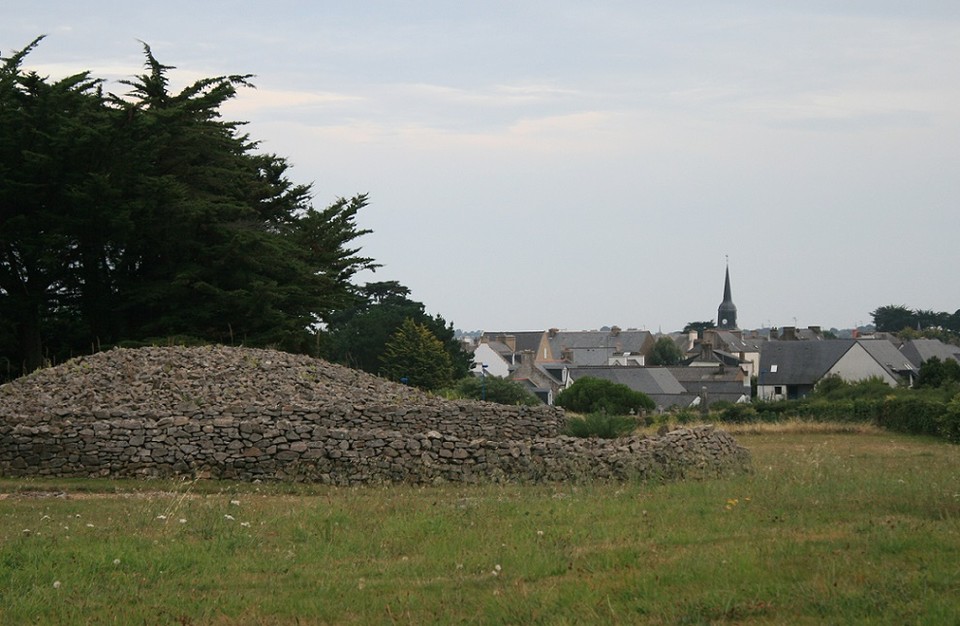
These days the Table des Marchants is covered by a wholly reconstructed cairn, which serves not only to protect the carvings within but also to demonstrate how many of the, now uncovered, local dolmens would have originally looked. Although the accuracy of this reconstruction cannot be guaranteed, it was based on detailed study of the underlying archaeology.
Within the mound the fabulous rear upright stone is decorated with many crooks, but in many ways the main attraction is the capstone. For here one can see a partial carving of two horned beasts. This capstone was once a section of a large carved menhir, the tip of which now covers the Er-Grah mound next door. However it was only realised fairly recently that the third section is now the main capstone of the Gavrinis mound, a few kilometres away on an island in the Gulf of Morbihan. This was one of the discoveries which lead to the theory of older menhirs being destroyed and used in passage-gave construction.
The Table des Marchants forms a complex with the Grand Menhir Brise and the Er- Grah mound, but many of Locamariaquer's other sites are in close proximity.
 Log in |
Register
Log in |
Register


 Show map (inline Google Map)
 Add an image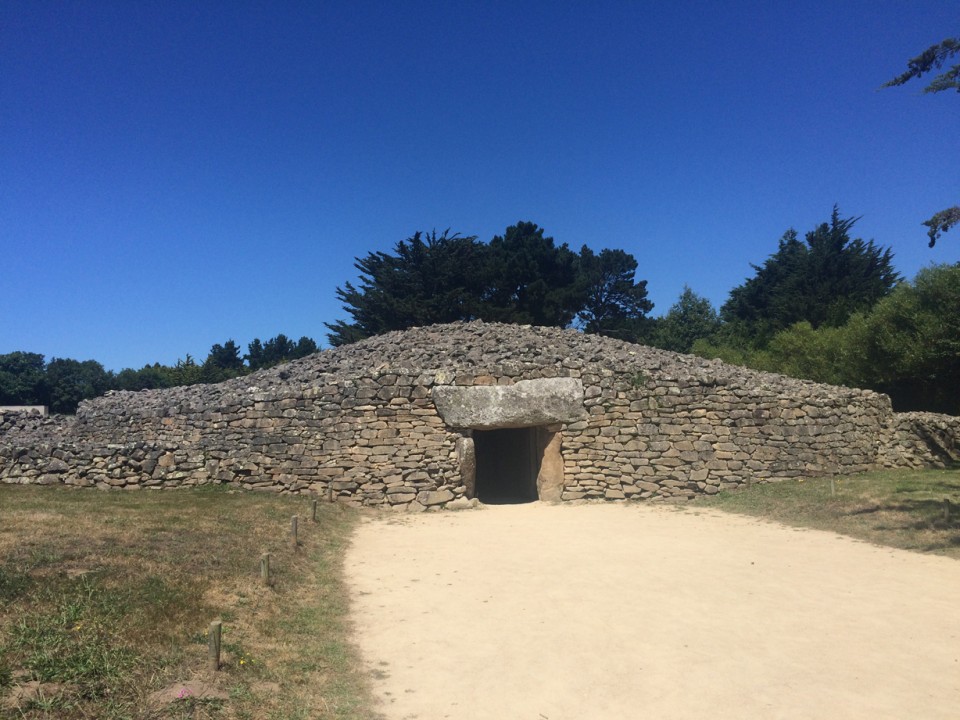
 Maps / Plans / Diagrams: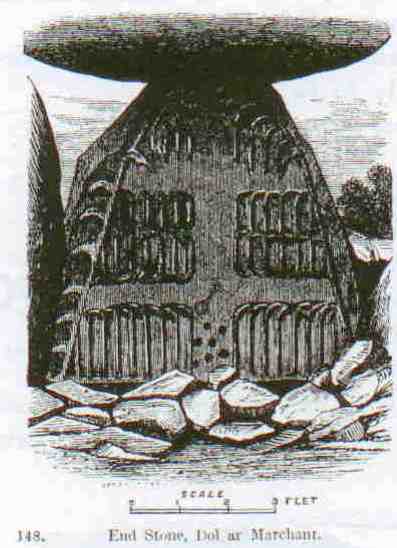

 Posted by postman
 Posted by Jane
 Posted by Spaceship mark
 Top of page