|
 Log in |
Register Log in |
Register
|

|
|

Morbihan (56) including CarnacDepartement
|


 Show |
 |
|
|
Sites/Regions:
|
24 posts
Alignements de Kerlescan Alignement |
34 posts
Alignements de Kermario Alignement |
44 posts
Alignements de Kerzerho Alignement |
|
20 posts
Alignements de Ménec Alignement |
19 posts
Alignements de Moulin de St Pierre Alignement |
14 posts
Alignements de Petit-Ménec Alignement |
|
18 posts
Alignements de St Barbe Alignement |
11 posts
Alignements de Vieux Moulin Alignement |
5 posts
Allee Couverte de Grah-Niol Allee-Couverte |
|
4 posts
Allee Couverte du Grand-Village Allee-Couverte |
Allee Couverte du Prieuré
Allee-Couverte
|
9 posts
Bot er Mohed Allee-Couverte |
|
11 posts
Bronzo Standing Stone / Menhir |
4 posts
Conguel Dolmen Dolmen / Quoit / Cromlech |
8 posts
Coët-er-Bei Alignement |
|
6 posts
Cromlech de Crucuny Cromlech (France and Brittany) |
17 posts
Cromlech de Kerbourgnec Cromlech (France and Brittany) |
1 post
Cromlech de Kerlescan Nord Cromlech (France and Brittany) |
|
3 posts
Cromlech de Kerlescan Ouest Cromlech (France and Brittany) |
13 posts
Cromlech de Ménec Cromlech (France and Brittany) |
12 posts
Crucuno Rectangle Cromlech (France and Brittany) |
|
9 posts
Dolmens Des Grays Dolmen / Quoit / Cromlech |
10 posts
Dolmens de Kerhuen Dolmen / Quoit / Cromlech |
10 posts
Dolmens de Kerran Dolmen / Quoit / Cromlech |
|
44 posts
Dolmens de Mane Kerioned Dolmen / Quoit / Cromlech |
11 posts
Dolmens de Parc Gueren Dolmen / Quoit / Cromlech |
1 post
Dolmens de Quéric la Lande Dolmen / Quoit / Cromlech |
|
33 posts
Dolmens de Rondossec Dolmen / Quoit / Cromlech |
3 posts
Dolmen des Sept Saints Allee-Couverte |
10 posts
Dolmen de Beaumer Dolmen / Quoit / Cromlech |
|
1 post
Dolmen de Botlann Dolmen / Quoit / Cromlech |
24 posts
Dolmen de Crucuno Dolmen / Quoit / Cromlech |
13 posts
Dolmen de Kercadoret Dolmen / Quoit / Cromlech |
|
1 post
Dolmen de Kerclément Dolmen / Quoit / Cromlech |
20 posts
Dolmen de Kergavat Dolmen / Quoit / Cromlech |
8 posts
Dolmen de Kergazec Dolmen / Quoit / Cromlech |
|
6 posts
Dolmen de Kerguerhen Dolmen / Quoit / Cromlech |
1 post
Dolmen de Kerlescan Passage Grave |
8 posts
Dolmen de Kerluir Dolmen / Quoit / Cromlech |
|
2 posts
Dolmen de Kerlutu Dolmen / Quoit / Cromlech |
10 posts
Dolmen de Kermané Dolmen / Quoit / Cromlech |
14 posts
Dolmen de Kermario Dolmen / Quoit / Cromlech |
|
14 posts
Dolmen de Kermarquer Burial Chamber |
3 posts
Dolmen de Kernevé Dolmen / Quoit / Cromlech |
2 posts
Dolmen de Kerroc'h Dolmen / Quoit / Cromlech |
|
1 post
Dolmen de Kervehennec Dolmen / Quoit / Cromlech |
13 posts
Dolmen de Kervilor Mané-Bras Dolmen / Quoit / Cromlech |
Dolmen de Kluder-Yer
Dolmen / Quoit / Cromlech
|
|
5 posts
Dolmen de Lannek-er-Men Dolmen / Quoit / Cromlech |
2 posts
Dolmen de la Madeleine Dolmen / Quoit / Cromlech |
Dolmen de Mané-Brisil
Dolmen / Quoit / Cromlech
|
|
17 posts
Dolmen de Mané Croc'h Chambered Tomb |
5 posts
Dolmen de Mané Canaplaye N Dolmen / Quoit / Cromlech |
5 posts
Dolmen de Mané Canaplaye S Dolmen / Quoit / Cromlech |
|
Dolmen de Mané Rohr
Dolmen / Quoit / Cromlech
|
Dolmen de Nauterio
Dolmen / Quoit / Cromlech
|
6 posts
Dolmen de Pointe Er Hourél Dolmen / Quoit / Cromlech |
|
17 posts
Dolmen de Roh-an-Aod Dolmen / Quoit / Cromlech |
5 posts
Dolmen de Runesto Dolmen / Quoit / Cromlech |
5 posts
Dolmen de St-Pierre Loperec Dolmen / Quoit / Cromlech |
|
2 posts
Dolmen de Toulvern Dolmen / Quoit / Cromlech |
10 posts
Dolmen du Cosquer Dolmen / Quoit / Cromlech |
5 posts
Dolmen Du Crapaud Dolmen / Quoit / Cromlech |
|
4 posts
Dolmen du Cruz Moquen Dolmen / Quoit / Cromlech |
3 posts
Dolmen du Port Blanc Dolmen / Quoit / Cromlech |
3 posts
Dolmen du Roh-Du Dolmen / Quoit / Cromlech |
|
15 posts
Er-Grah Cairn(s) |
1 post
Er-Roc'h-Feutet Dolmen / Quoit / Cromlech |
12 posts
Er Lannic Cromlech (France and Brittany) |
|
9 posts
Géant du Manio Standing Stone / Menhir |
22 posts
Gavr'inis Chambered Cairn |
19 posts
Grand Menhir Brise Standing Stone / Menhir |
|
5 posts
Kergonfalz Allee-Couverte |
5 posts
Kerlud Dolmen / Quoit / Cromlech |
17 posts
Larcuste cairns Chambered Cairn |
|
13 posts
La Loge Aux Loups Dolmen / Quoit / Cromlech |
11 posts
Les Pierres Droites de Monteneuf Alignement |
35 posts
Les Pierres Plats Allée-Coudée |
|
8 posts
Les Trois Menhirs du Champ Alignement |
7 posts
Luffang Allée-Coudée |
15 posts
Mane-Er-Hrouek Tumulus (France and Brittany) |
|
1 post
Mané Bogad Dolmen / Quoit / Cromlech |
31 posts
Mané Braz Dolmen / Quoit / Cromlech |
31 posts
Mané Keriavel Dolmen / Quoit / Cromlech |
|
22 posts
Mane Lud Tumulus (France and Brittany) |
9 posts
Mané Roularde Allee-Couverte |
27 posts
Mané Rutuel Passage Grave |
|
6 posts
Menhirs Beg-er-Goalennec Standing Stones |
5 posts
Menhirs de Kerjean Alignement |
8 posts
Menhirs de Mané-Meur Standing Stones |
|
Menhir de Crifol
Standing Stone / Menhir
|
5 posts
Menhir de Kerangoff Standing Stone / Menhir |
Menhir de Kerlagade
Standing Stone / Menhir
|
|
Menhir de Kerlagade
Standing Stone / Menhir
|
9 posts
Menhir de Kerluir Standing Stone / Menhir |
6 posts
Menhir de Kermaillard Standing Stone / Menhir |
|
4 posts
Menhir de Kerpenhir Standing Stone / Menhir |
16 posts
Le Petit Mont Chambered Cairn |
2 posts
Pointe de la Guérite Allee-Couverte |
|
18 posts
Quadrilataire de Manio Tertre Tumulaire |
2 posts
Quiberon Menhir Standing Stone / Menhir |
26 posts
Table des Marchants Chambered Cairn |
|
1 post
Tertre Tumulaire de Kermario Tertre Tumulaire |
11 posts
Tumulus de Crucuny Tumulus (France and Brittany) |
21 posts
Tumulus de Kercado Tumulus (France and Brittany) |
|
22 posts
Tumulus de Rocher Tumulus (France and Brittany) |
18 posts
Tumulus de St Michel Tumulus (France and Brittany) |
2 posts
Tumulus de Tumiac Tumulus (France and Brittany) |
|
17 posts
Tumulus du Moustoir Tumulus (France and Brittany) |
Sites of disputed antiquity:
|
3 posts
Dolmen et Menhir de Carnac-Plage Dolmen / Quoit / Cromlech |
News |
 Add news Add news |
|
Menhirs destroyed in Carnac: an investigation opened by the Lorient prosecutor's office Sud Ouest published an update on the destruction of 38 menhirs in Montauban by the construction of a Mr. Bricolage on 16/06/23: an investigation into the matter has been opened by the Lorient prosecutor's office. The mayor of Carnac, Olivier Lepick, has received death threats on social media. His house is under police protection. Sud Ouest article |
Posted by markj99 4th July 2023ce Edited 4th July 2023ce |

Prehistoric stones destroyed for DIY storeAround 40 standing stones thought to have been erected by prehistoric humans 7,000 years ago have been destroyed near a famed archaeological site in northwest France to make way for a DIY store, an angry local historian has revealed. But local archaeologist Obeltz believes local authorities failed to properly investigate... continues... |
 Posted by thesweetcheat
9th June 2023ce Edited 9th June 2023ce |
Images (click to view fullsize) |
Add an image |
Photographs: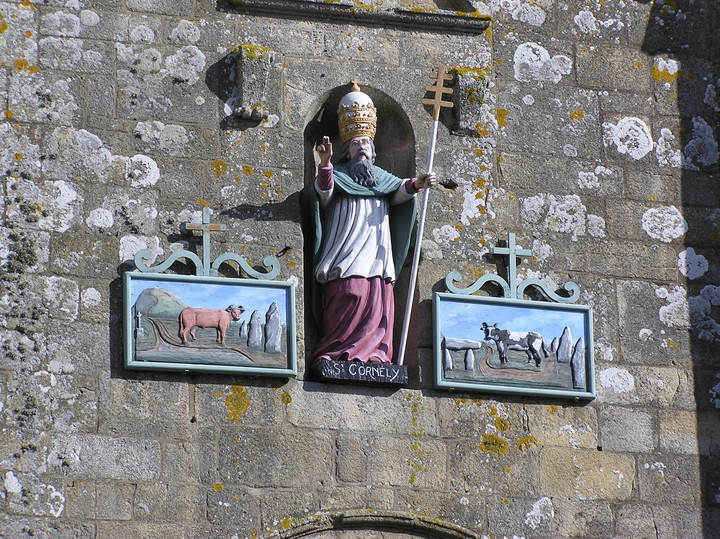
 Maps / Plans / Diagrams:
 Artistic / Interpretive:
|
Folklore |
Add folklore |
St. Cornely was Pope at Rome, from whence he was hunted by Pagan soldiers who pursued him. He fled before them, accompanied by a yoke of oxen, which bore his baggage and on which he mounted when weary. One evening he arrived on the outskirts of a village called Le Moustoir where he wished to stop; having, however, heard a young girl insulting her mother he continued on his way and arrived shortly at the foot of a mountain where there was another small village. He then saw the sea in front of him and immediately behind him soldiers in battle array. He stopped and transformed the whole army into stones. As a souvenir of this great miracle the inhabitants of the surrounding country erected on the spot where he stopped a church dedicated to St. Cornely. That is the reason why these long lines of stones standing to the north of the village of Carnac are seen, and why so often at night ghosts are observed walking in the alleys called 'Soudardet sans Cornely' or 'Soldats de St. Cornely'. Pilgrims from all countries flocked to the place to implore St. Cornely to cure their diseased cattle. He cured them all in remembrance of the great services rendered to him by his yoke of oxen during his flight.Le Rouzic then goes on to hint that perhaps the worship of St. Cornely actually replaced the original worship of the ox here. Hmm who knows. From 'The Megalithic Monuments of Carnac and Locmariaquer' by Z Le Rouzic (trans. W. M. Tapp), 1908, which you can see in full on the Internet Archive. |
 Posted by Rhiannon
19th November 2009ce |

In "Excavations at Carnac" by James Miln (1877) he describes some mounds (the 'bossenno' or Caesar's Camp) to the east of Carnac, which seem to be the ruins of Roman houses. Interestingly, from page 16...It happened one day when I was absent during the dinner hour of my workmen, that an English lady and her son came to see the diggings. The latter amused himself in working with a pick about that part of the construction in the room No. 1 which resembled a chimney, where he discovered a polished stone celt of a white colour, which he showed to his mother: neither of them, however, was aware of its value, and it was flung aside amongst the debris to be carted away. It was not until the following day, when I happened to show them the polished stone celts in the museum in Carnac, that they informed me of their discovery, and regretted that they had not known better. Exertions were made to recover the lost axe, but without success. |
Posted by Rhiannon 19th August 2009ce |
The legend of Carnac which explains these avenues of monoliths bears a resemblance to the Cornish story of 'the Hurlers,' who were turned into stone for playing at hurling on the Lord's Day, or to that other English example from Cumberland of 'Long Meg' and her daughters.From 'Legends and Romances of Brittany' by Lewis Spence (1917?), which you can read on the Sacred Texts Archive. http://www.sacred-texts.com/neu/celt/lrb/index.htm |
Posted by Rhiannon 5th May 2008ce |
I have been informed by a priest, but I know not how far it may be correct, that Carnac signifies literally, in the Breton language, a field of flesh. If this be the meaning of the word, it would lead one to conjecture that these stories were placed in memory of some great battle, or as memorials in a common cemetery of the dead.From 'The Penny Cyclopaedia' v6 by George Long (1836). Digitized at Google Books, here: http://books.google.co.uk/books?id=ztqyJi7Ec9UC&pg=PA304 |
Posted by Rhiannon 10th January 2008ce Edited 10th January 2008ce |
We pursued this [rough track] until the extreme ruggedness of the plain rendered further advance almost impossible.. I was [pleased] that my drive was at an end, and was not less pleased to find that no garrulous guides pounced on me when I alighted from the carriage.. I was happily alone; for Carnac is one of those places where solitude becomes a luxury, and consequently where guides would be more than usually vexatious and troublesome;p246 of Charles Richard Weld's "A vacation in Brittany' (1856) - now digitised at Google Books. *of Robert Burns' poem. |
Posted by Rhiannon 11th October 2007ce Edited 11th October 2007ce |
Links |
Add a link |
Alignements de CarnacDrone footage |
 Posted by ryaner
3rd July 2016ce |

List of megaliths of MorbihanDetail listing of hundreds of sites |
 Posted by Chance
6th March 2011ce |
Carnac at france-for-visitors.comVisitors guide to France in English for the Carnac area including map |
Posted by Chance 22nd July 2010ce |
Carnac by carAn amateur's guide to visiting the Carnac stones by car by Graham and Angela |
Posted by Chance 22nd July 2010ce |
The megalithic monuments of Carnac and Locmariaquer; their purpose and ageSmall guide book to the site in English, by Zacharie Le Rouzic from 1908 Download the complete book in various formats including pdf and epub |
Posted by Chance 22nd July 2010ce |
Annuaire-Mairie.frOffical listing for many of the monuments in the region. Contains early mono photos - English translation via Google. |
Posted by Chance 21st July 2010ce Edited 21st July 2010ce |
The Megaliths of CarnacAnother useful web listing of sites with pictures |
Posted by Chance 21st July 2010ce |
Megaliths in the Carnac region of FranceSome nice b&w photos. |
 Posted by Hob
6th November 2008ce Edited 7th November 2008ce |
Latest posts for Morbihan (56) including Carnac |
Showing 1-10 of 1,159 posts. Most recent first | Next 10 
Crucuno Rectangle (Cromlech (France and Brittany)) — Fieldnotes |
|
Visited 19.09.23 Like Jane, I struggle with the concept of rectangular "Stone Circles". I am conditioned to expect rectangular structures to be modern and stone circles to be ancient. I had the same problem with Quadlatiere du Manio. I left Cromlech de Crucuno with more questions than answers. |
Posted by markj99 13th October 2023ce |
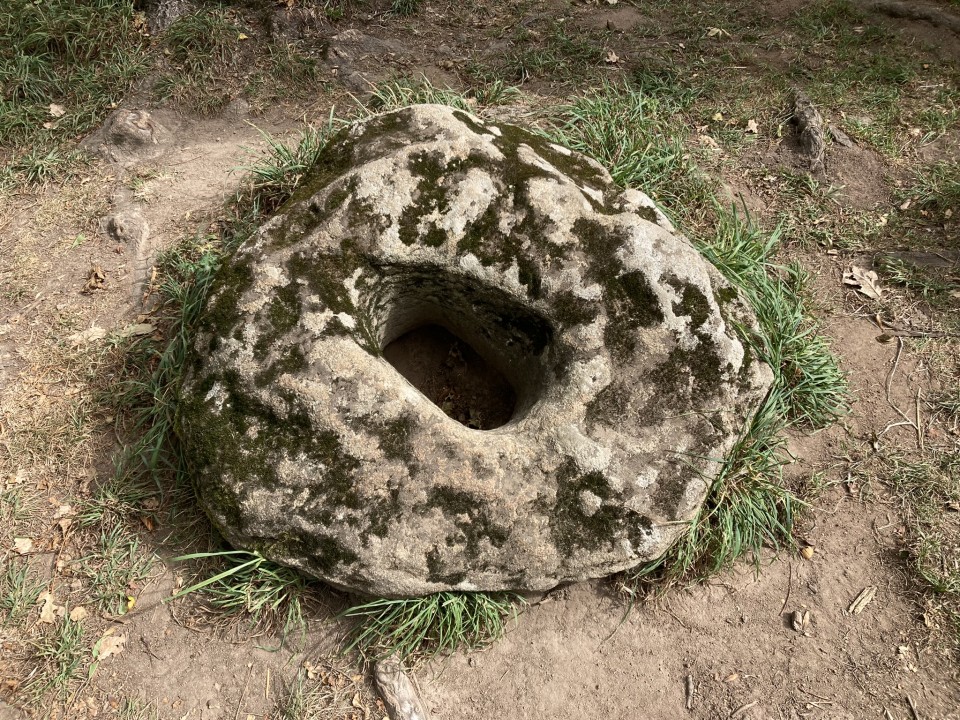
Alignements de Kerzerho — Images (click to view fullsize) |
|
Posted by markj99 13th October 2023ce |
Dolmen de Crucuno (Dolmen / Quoit / Cromlech) — Links |
Dolmen de Crucuno Street View on Google MapsDolmen de Crucuno Street View on Google Maps. |
Posted by markj99 12th October 2023ce |
Dolmen de Crucuno (Dolmen / Quoit / Cromlech) — Fieldnotes |
|
Visited 19.09.23 Dolmen de Crucuno is very easy to visit. It is situated adjacent to a house in the centre of Crucuno, a hamlet between Plouharnel and Erdeven. You can park 10m away from the monument. These facts don't make Dolmen de Crucuno any less impressive when you are standing beside it. A giant capstone measuring c. 7.5m long and weighing an estimated 40 tons is supported by 9 large orthostats. Take the Crucuno turn off the D781 at the Toul Siac'h roundabout. After c. 0.8km turn right into a car park in the centre of the village opposite the dolmen. |
Posted by markj99 12th October 2023ce |
Dolmens de Rondossec (Dolmen / Quoit / Cromlech) — Links |
Dolmens de Rondossec Street View on Google MapsDolmens de Rondossec Street View on Google Maps. |
Posted by markj99 12th October 2023ce |
Dolmens de Rondossec (Dolmen / Quoit / Cromlech) — Fieldnotes |
|
Visited 19.09.23 If you are near Carnac, Dolmens de Rondossec are a must-visit. There are three extensive dolmens in a mound in the centre of Plouharnel. There are numerous capstones on the wide passages and large chambers partially covered by capstones. From Carnac take the D781 towards Erdeven. Follow the D781 through two roundabouts in Plouharnel then turn right onto Rue Hoche to find the tumulus. |
Posted by markj99 12th October 2023ce |
Dolmen de Kergazec (Dolmen / Quoit / Cromlech) — Fieldnotes |
|
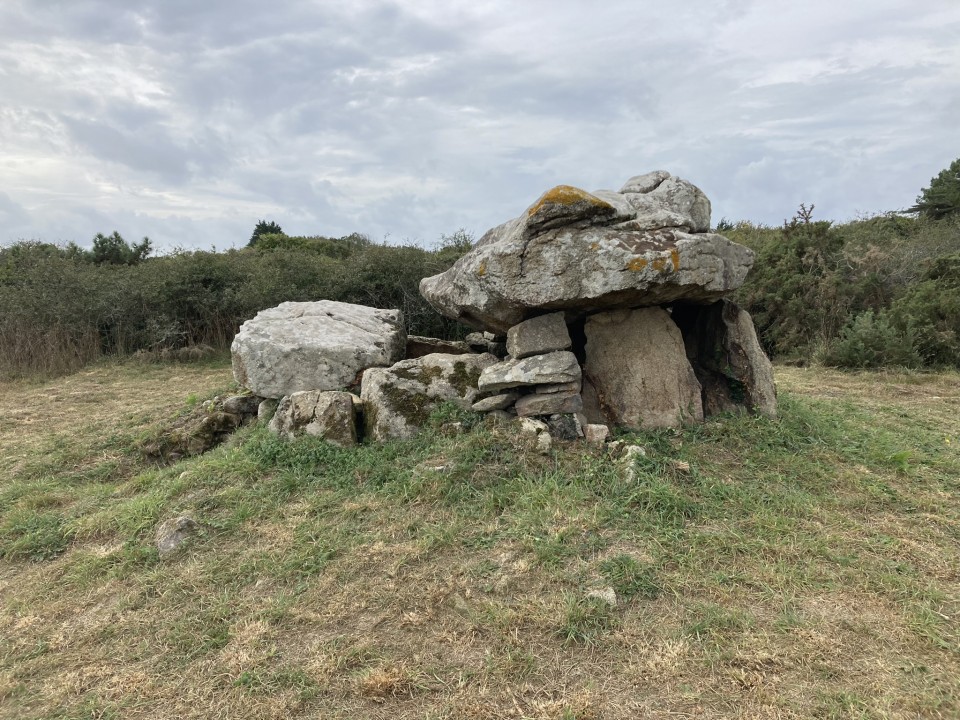
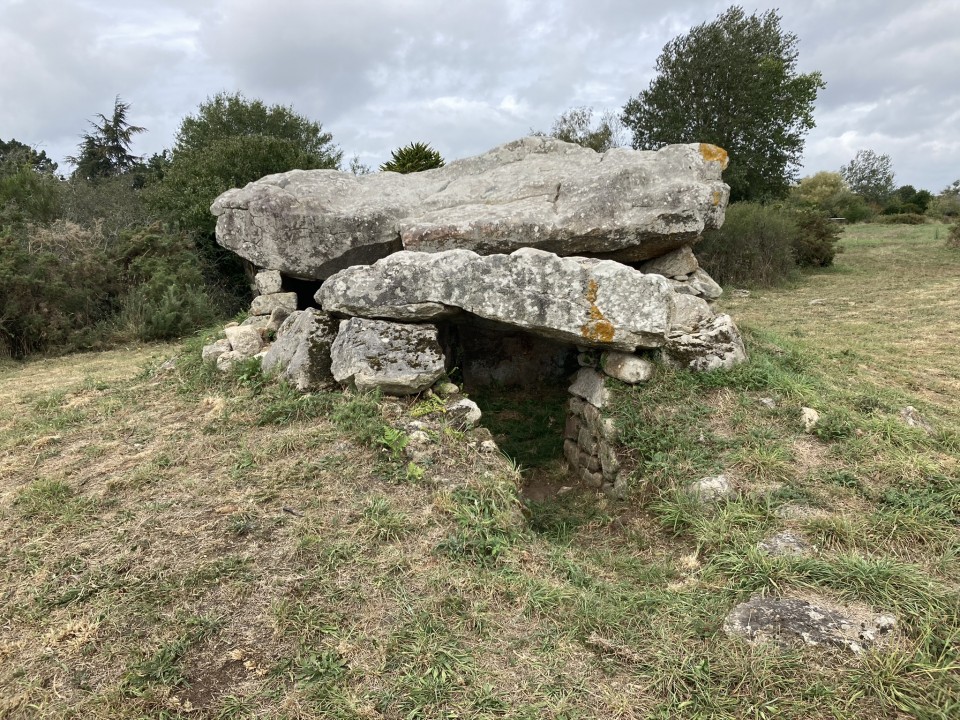
Visited 19.09.23 Dolmen de Kergazec is located c. 100m SE of Kergazec, a small village in Morbihan. The exposed dolmen is in reasonable condition, consisting of a large capstone on four supporting orthostats and dry walling. It retains a passage measuring c. 2m long. There is a small capstone on the SE end of the passage. The best way to find Dolmen de Kergazec is to visit Dolmen de Kernevé then walk c. 140m SW along the C106 to the edge of an open field. Follow a dirt track heading NE for c. 300m to reach Dolmen de Kergazec. |
Posted by markj99 12th October 2023ce |
Dolmen de Kergazec (Dolmen / Quoit / Cromlech) — Links |
Dolmen de Kergazec Street View on Google MapsDolmen de Kergazec Street View on Google Maps. |
Posted by markj99 12th October 2023ce |
Dolmen de Kergazec (Dolmen / Quoit / Cromlech) — Images |
|
Posted by markj99 12th October 2023ce |
Showing 1-10 of 1,159 posts. Most recent first | Next 10
 Top of page