On Watch Croft, one massive cairn was built on the very summit of a hill that lacks any tors. On the western edge of the summit area another cairn was built. This cairn incorporates within its structure a series of grounders. The most massive of these is to the north, and is enclosed by the kerb of the cairn. This grounder is 4.5m long, 1.5m high, and has a water-filled solution basin on its upper surface measuring 20x30cm with a depth of 15cm. W C Borlase dug into this cairn. At the time of his excavation the stone with the solution basin was 'uncovered'. Judging from the amount of cairn material now present within the cairn, and the amount surrounding it that was dug out, this stone was never completely covered. Its uppermost surface, with the solution basin, was meant to be seen.
[..]
This is the only area on Watch Croft where solution basins occur. What is particularly significant is that the cairn overlooks the Men-An-Tol, another culturally transformed solution basin, from which the hill is dominant on the northeastern skyline.
[later in the article it is suggested:]
The incorporation of solution basins within cairns, as at Watch Croft and Boscawen Un, or the placing of cairns in their vicinity during the Bronze Age, may be all about connecting the purity of rain water with death rites involving a requirement for purification in relation to the potential pollution of death. The circular form of many of the basins in turn connects them with the circularity of the sun that dies a dramatic fiery death in the sea every day in the west, only to be reborn perfectly formed in the cool air of the eastern morning. Water is thus conceptually connected both to death and the regeneration of life. It both extinguishes fire and gives birth to it. Given that cremation appears to have been the primary burial rite, this general metaphorical connection is of particular interest.
An Archaeology of Supernatural Places: The Case of West Penwith
Christopher Tilley; Wayne Bennett
The Journal of the Royal Anthropological Institute, Vol. 7, No. 2. (Jun., 2001), pp. 335-362.
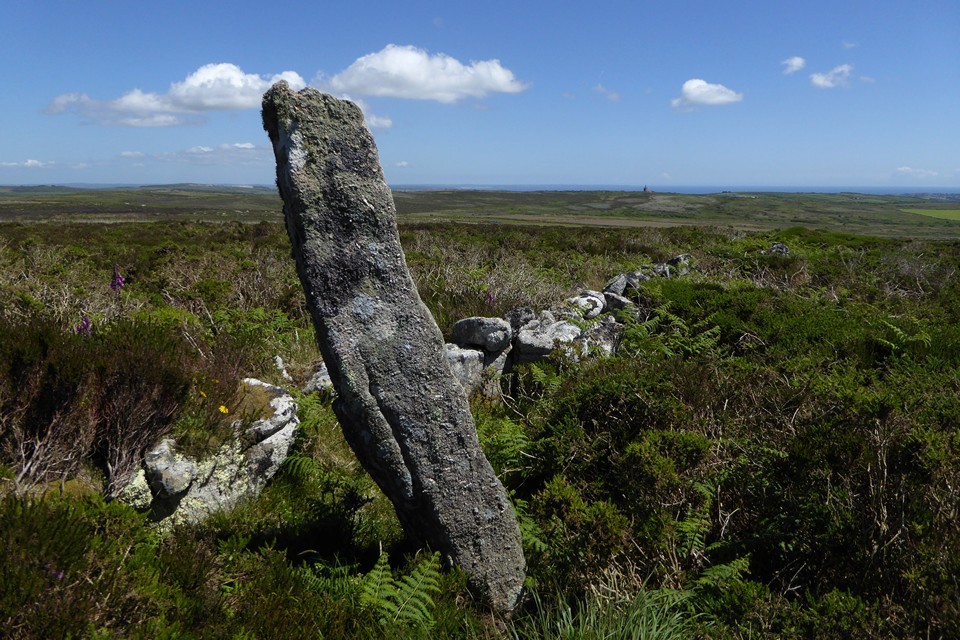
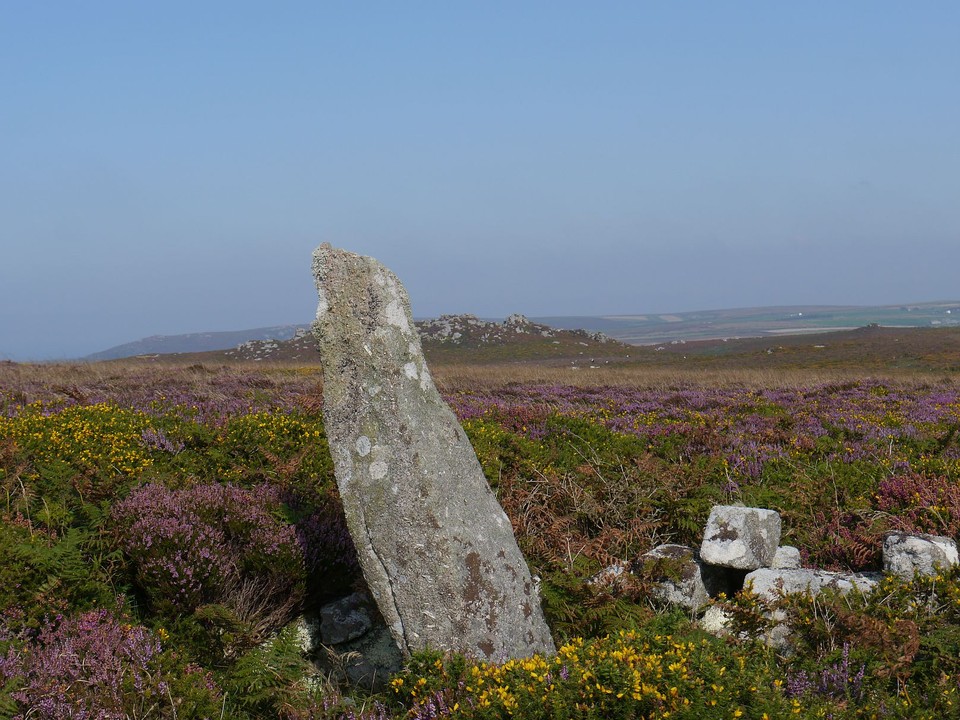
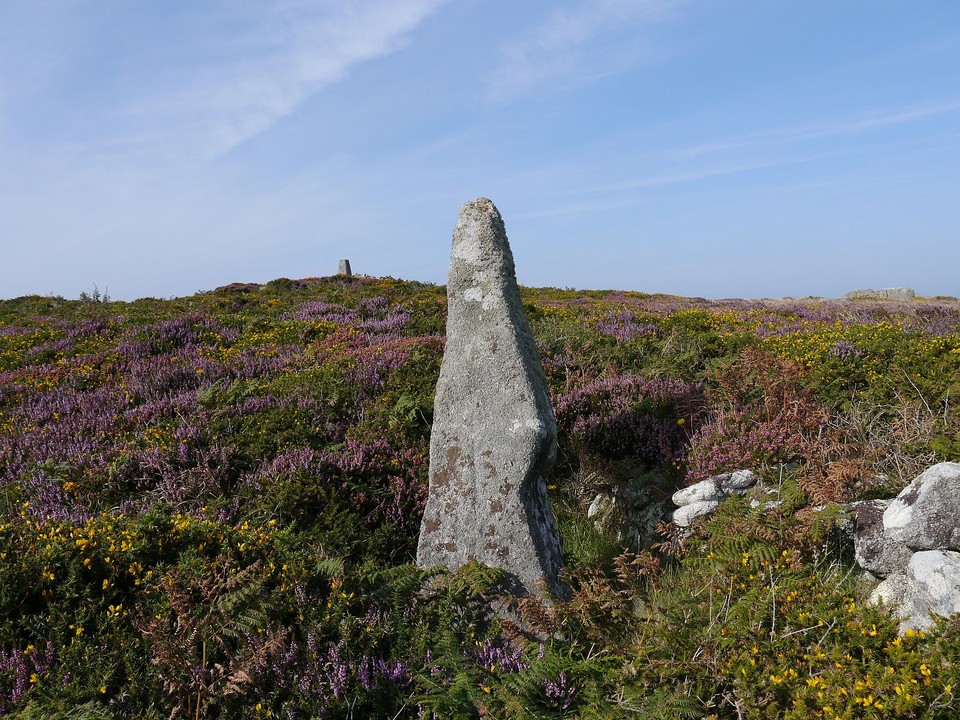
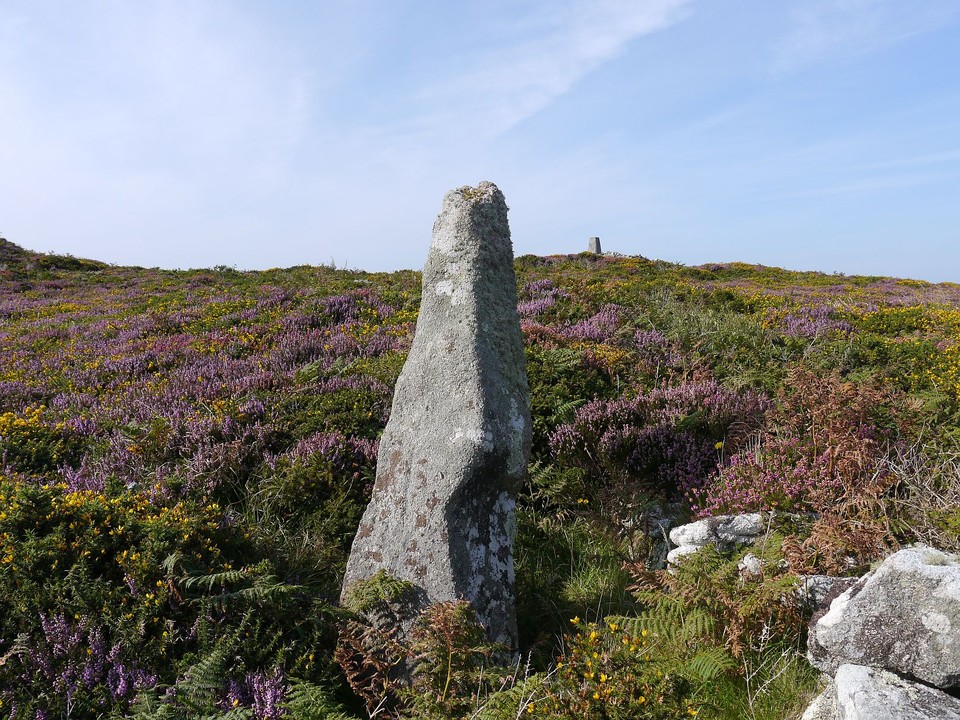
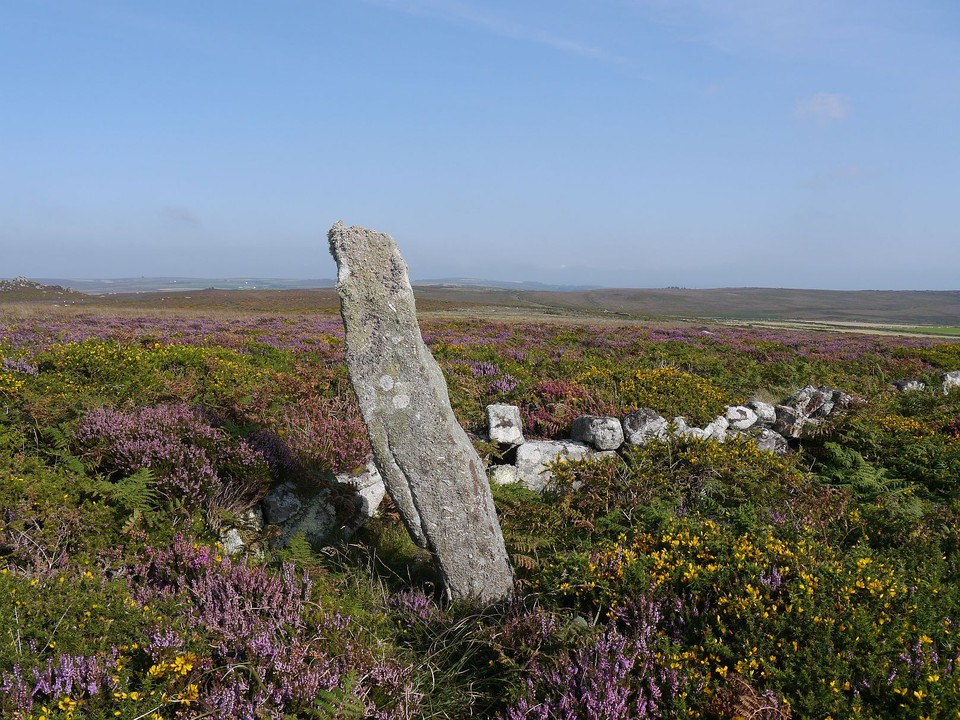
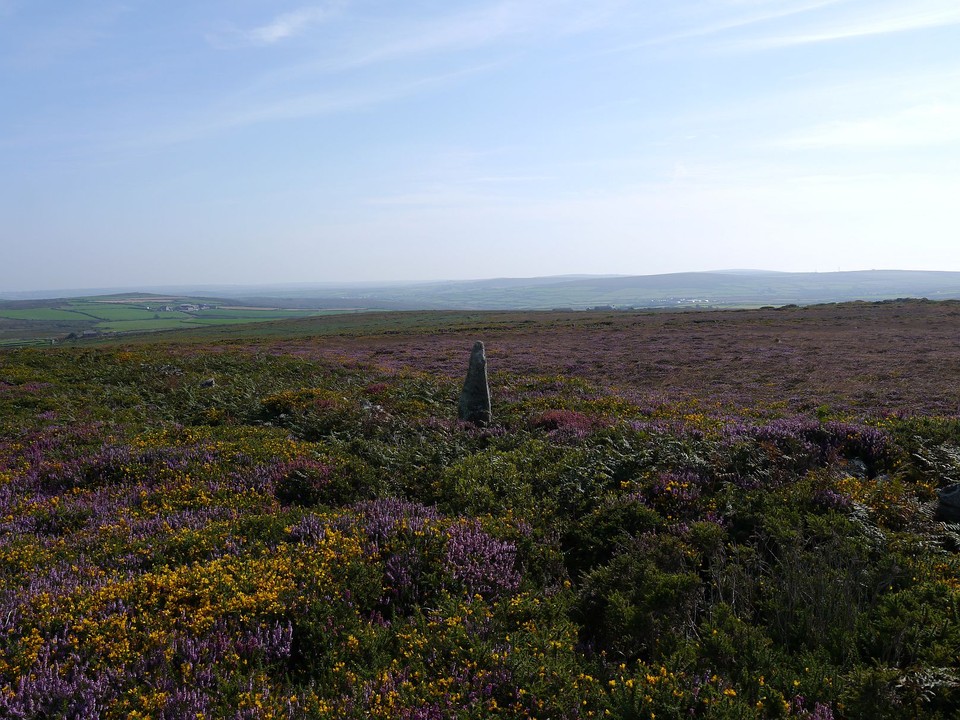
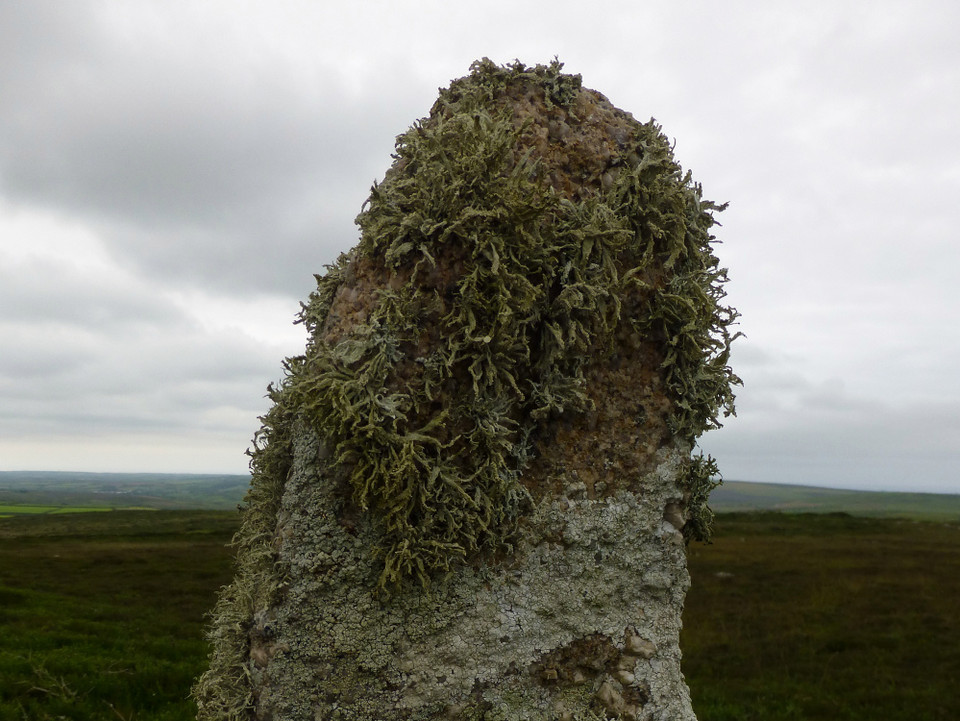
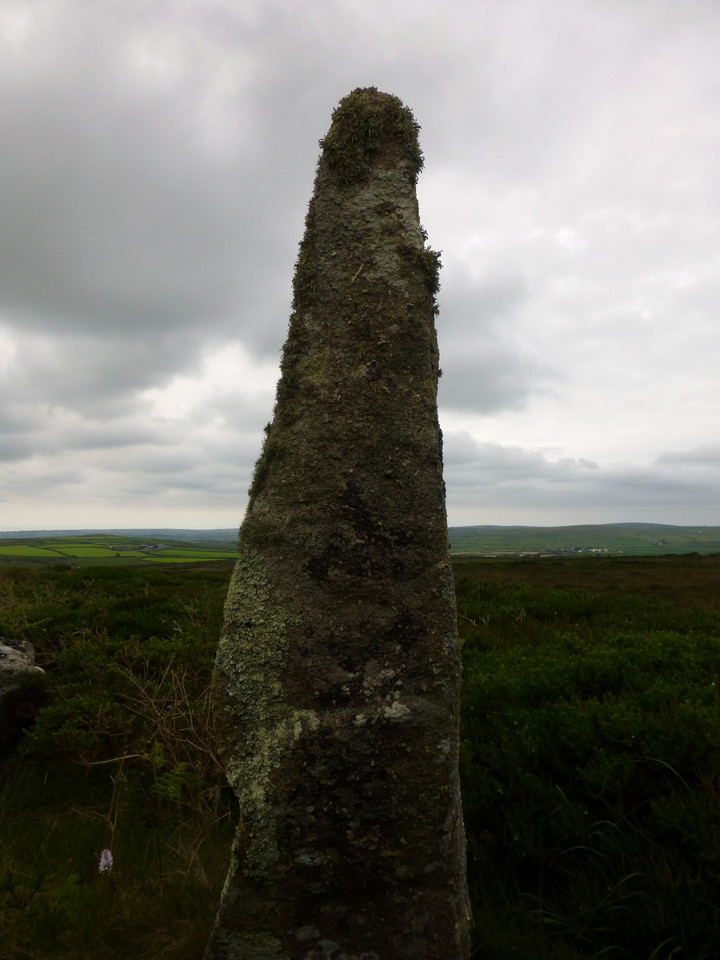
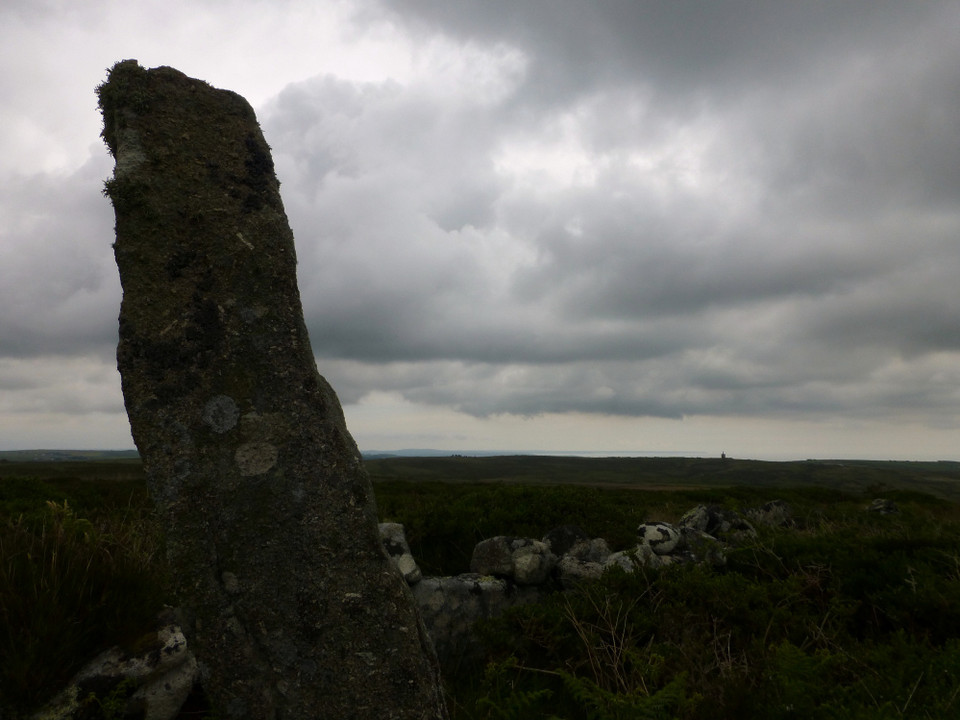
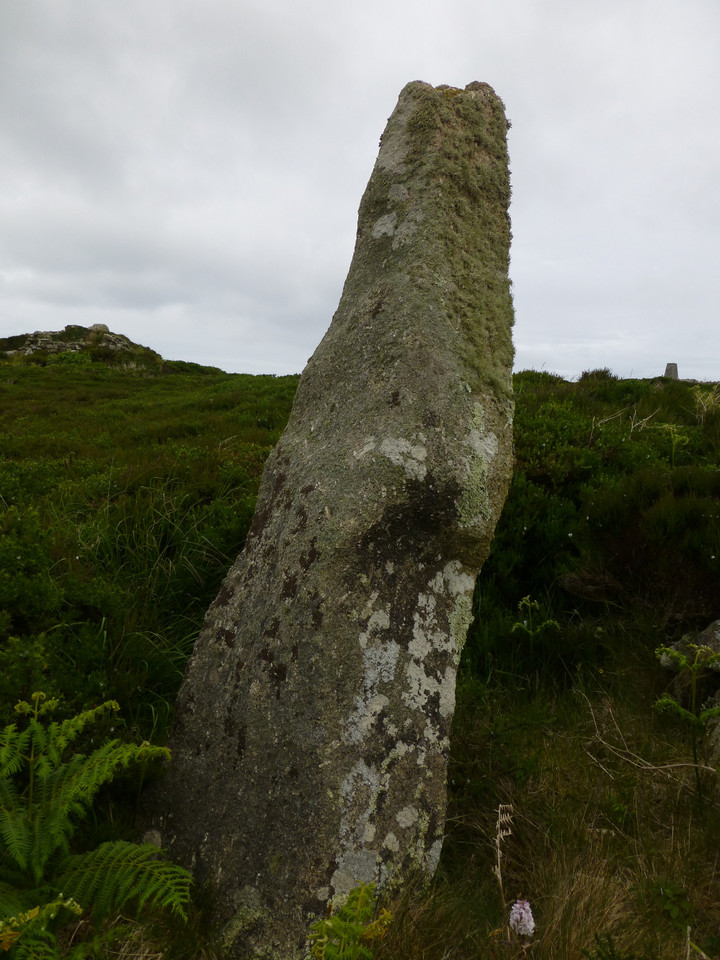
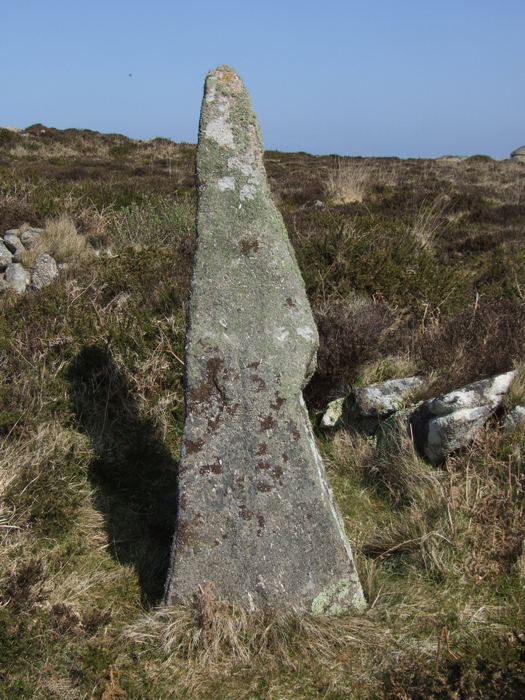
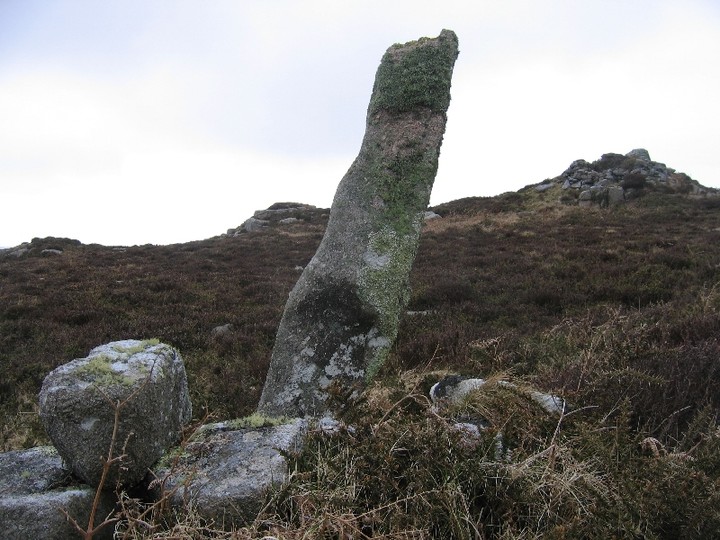
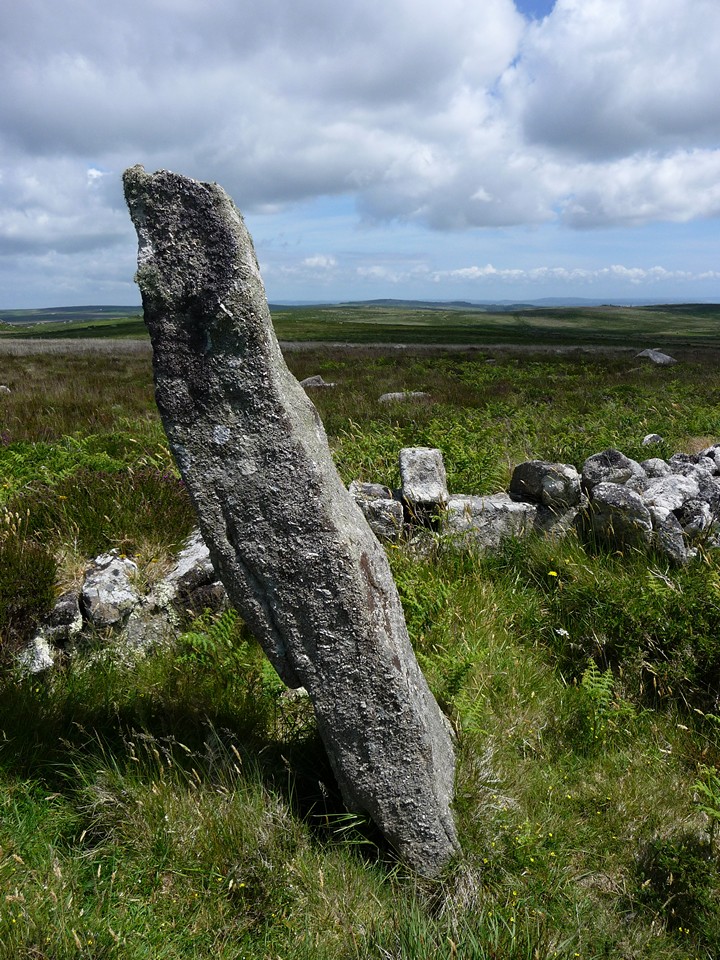
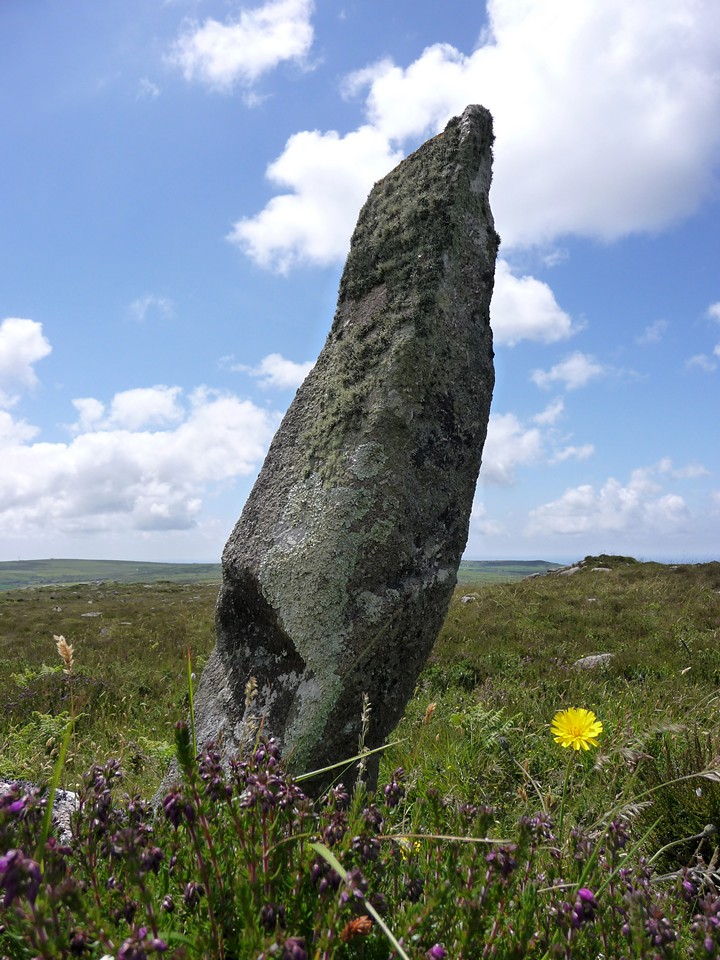
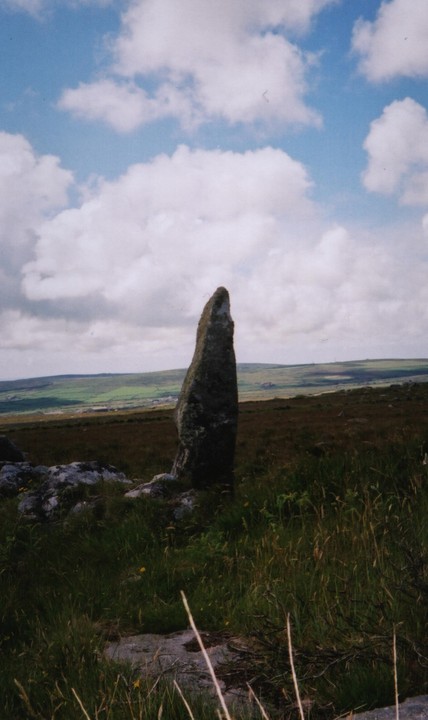
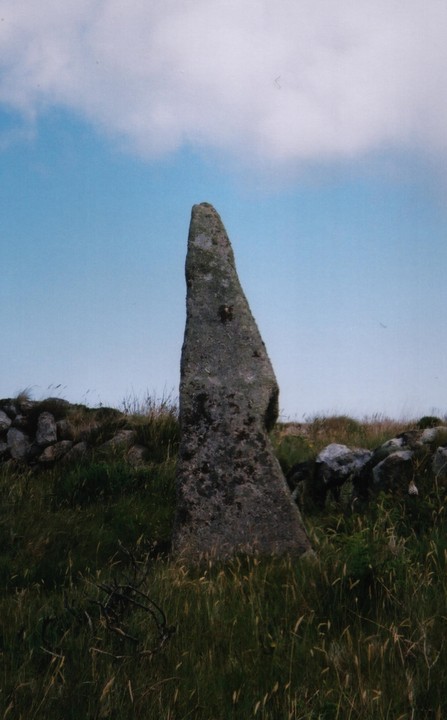
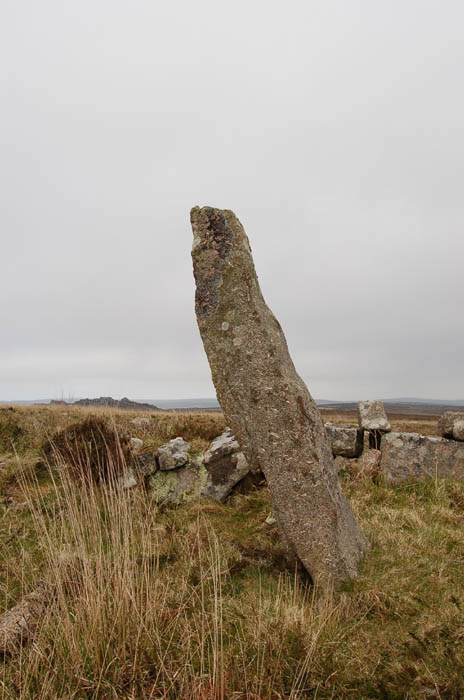
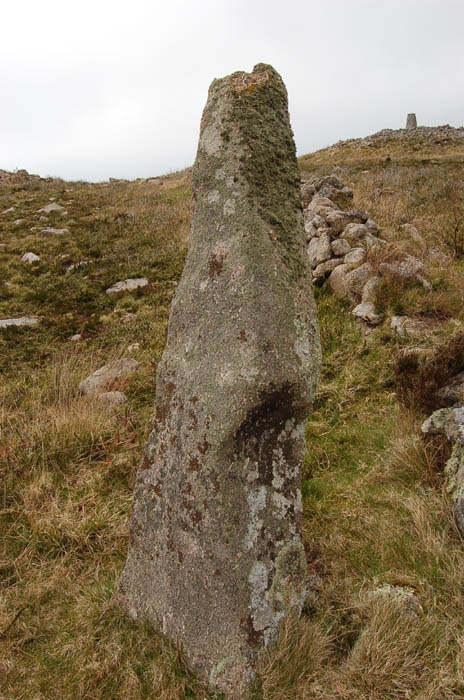
SW421357 - A slightly leaning 1.8m menhir, close to a triangulation pillar marking the highest point on the peninsula (252 metres). No finds or alignments have been recorded.
 Log in |
Register
Log in |
Register


 0 discussions


 Show map (inline Google Map)
 Add an image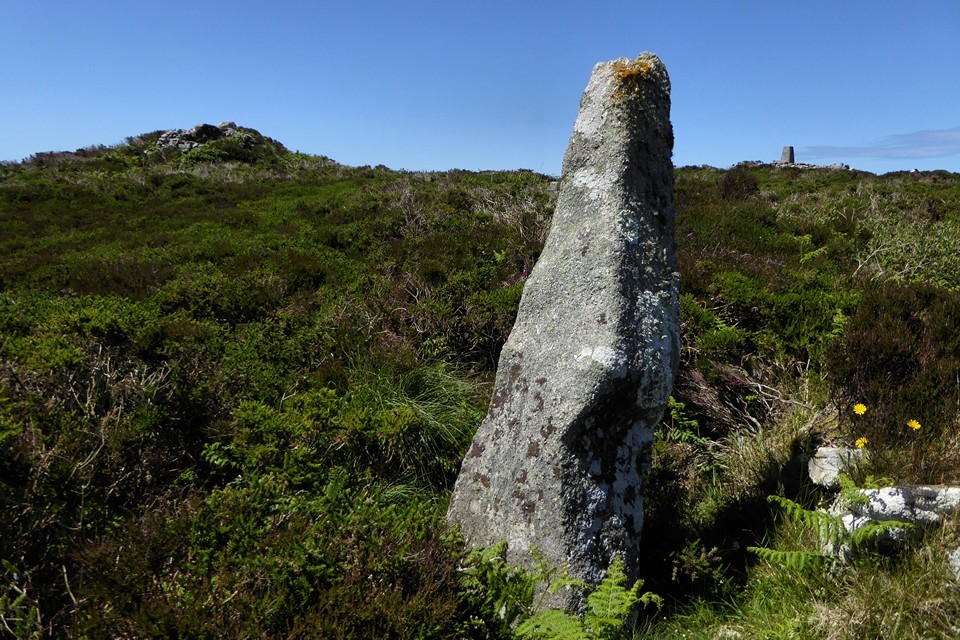


 Posted by Rhiannon
 Posted by pure joy
 Top of page