|
 Log in |
Register Log in |
Register
|

|
|


Hilda's WellSacred Well
|
||||||||||||||||||||||||


 0 discussions


 Show map (inline Google Map)
|
|
|
Images (click to view fullsize) |
 Add an image Add an image |
|
Fieldnotes |
Add fieldnotes |
|
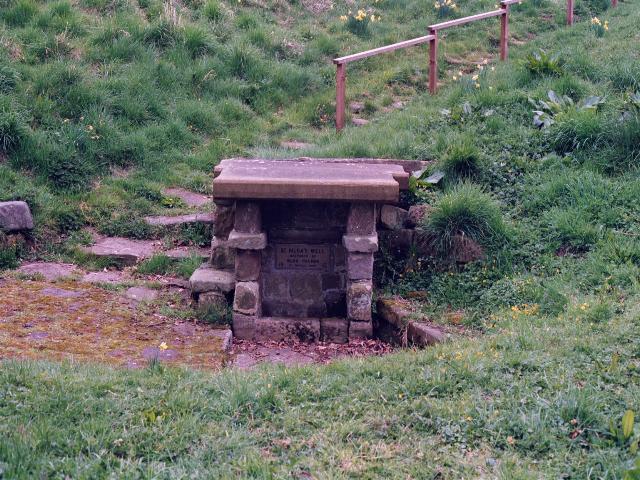
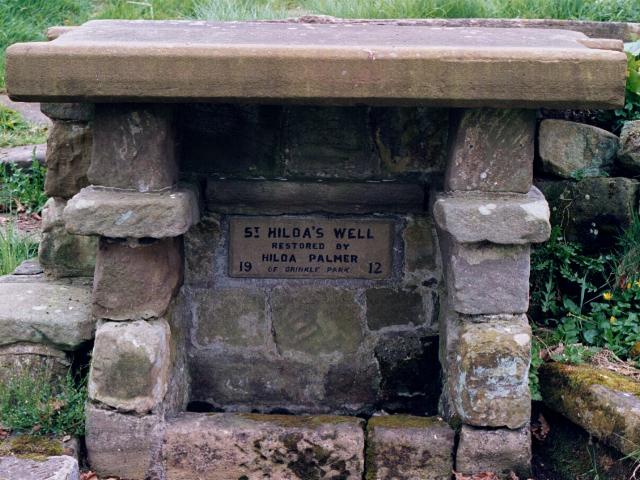
Visited 1.8.15 Directions: On the A174. Church and holy well is signposted. The well is easy enough to find at the back of the church. I wooden handrail assists the pilgrim down the grass slope. The restored well has a stone trough next to it which had a large collection of old rusting coins in it. Judging by the amount of coins in the bottom of the well this place gets a lot of visitors. The water did look clear but I didn't risk it. This is a very peaceful spot with only the sound of a wood pigeon for company. It is nice here. Unfortunately the church was locked so I couldn't have a look inside. Well (excuse the pun) worth a visit if you happen to be visiting the nearby lovely fishing village of Staithes. |
Posted by CARL 2nd August 2015ce |

|
Saint Hildas well is situated in the church yard of Saint Hilda in the village of Hinderwell which is said to be a corruption of Hilda's Well. The village was recorded in the Domesday book as Hindrevvelle. The well is supposedly where Hilda stopped to chill a while whilst travelling to become Abbess of Whitby. It's a pretty well and was restored in 1912. The water looks very clear. It is "dressed" by the local children once a year. |
 Posted by fitzcoraldo
13th April 2002ce |
Folklore |
Add folklore |
|
"Then Whitby's nuns exulting told, How to their house three barons bold must menial service do; They told how in their convent-cell A saxon princess once did dwell, The lovely Edelfled; And how of thousand snakes, each one Was changed into a coil of stone When holy Hilda pray'd - Themselves, within their holy round, Their stony folds had often found." Marmion, canto ii Sir Walter Scott. Ord comments on this " Sir Walter like all true antiquarians, had large faith. "These miracles" he says, "are much insisted on by all ancient writers who have occasion to mention Whitby or Saint Hilda. The relics of the snakes which infested the precincts of the convent, and were at the abbess's prayer not only beheaded but petrified, are still found about the rocks and are termed by protestant fossilists Ammonitae" The History and Antiquities of Cleveland J.W. Ord 1846 |
Posted by fitzcoraldo 7th October 2002ce |
Miscellaneous |
Add miscellaneous |
|
"The custom of giving names to wells and fountains is of remote antiquity, being common alike to earliest idolaters, to Jews and to Christians. In papal times, if a well had an awful situation, as at Rosebury; if it's waters were clear, and medicinal, as at Hilda's-well, it was the custom to dedicate it to some saint by name. To such an extent did this species of idolatry prevail, that it was forbidden in the canons of king Edgar A.D. 960, also in the canons of St. Anselm A.D. 1102. Notwithstanding, it prevailed without intermission till the Reformation, when many innocent customs and harmless superstitions were wholly extirpated because they savoured of popery." The History and Antiquities of Cleveland J. W. Ord 1846 Republished by Patrick & Shotton 1972 |
Posted by fitzcoraldo 6th September 2002ce |
 Top of page