|
 Log in |
Register Log in |
Register
|

|
|

Tumulus de RocherTumulus (France and Brittany)
|
||||||||||||||||||


 0 discussions


 Show map (inline Google Map)
|
|
|
Images (click to view fullsize) |
 Add an image Add an image |
|
Fieldnotes |
Add fieldnotes |
|
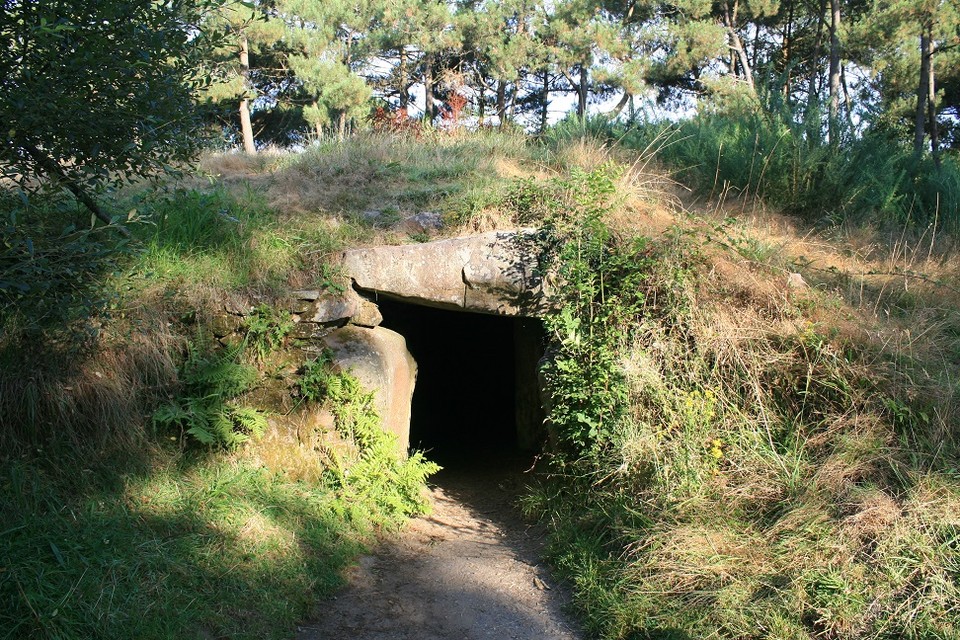
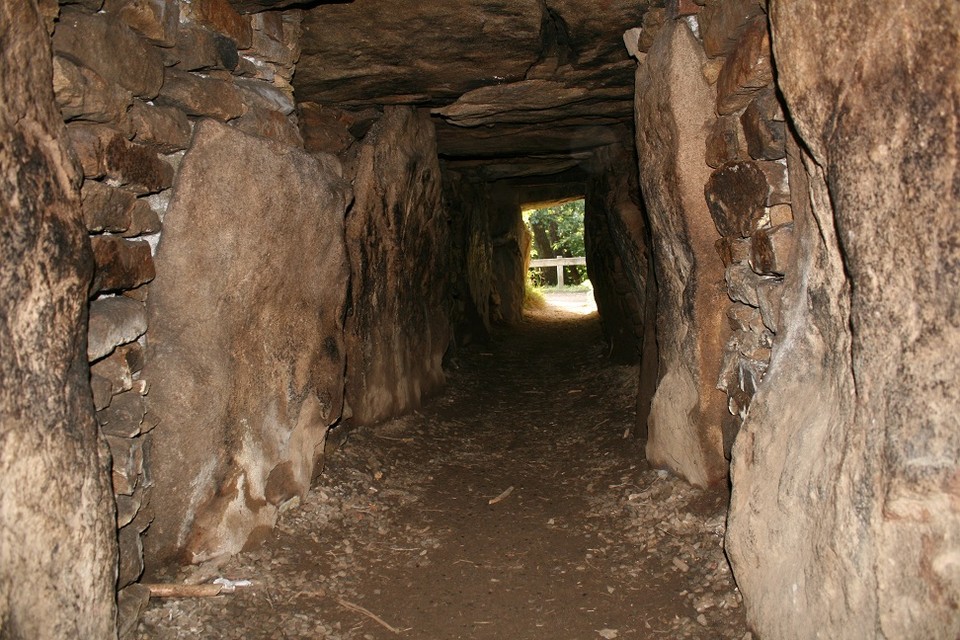
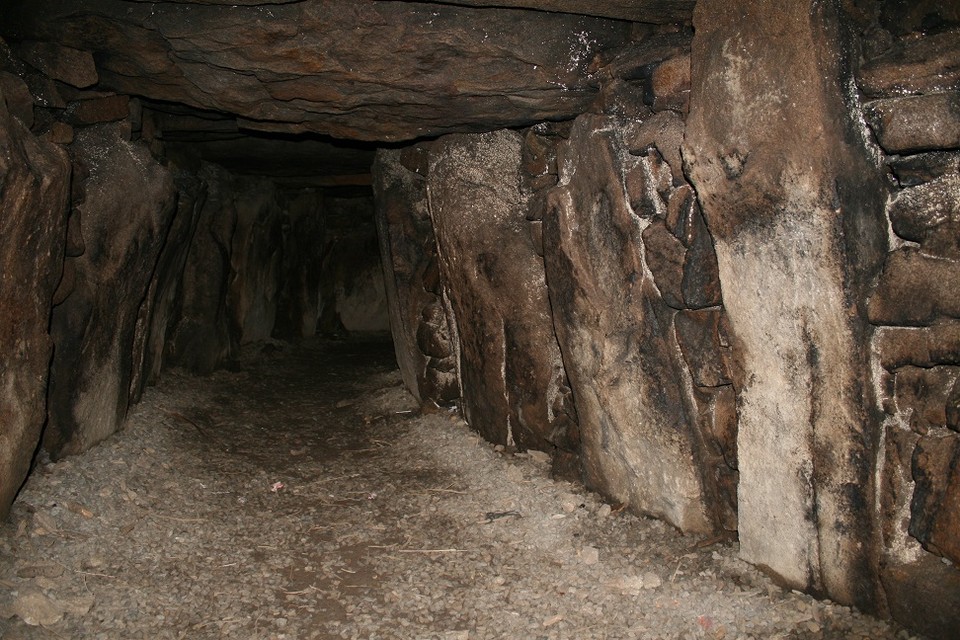
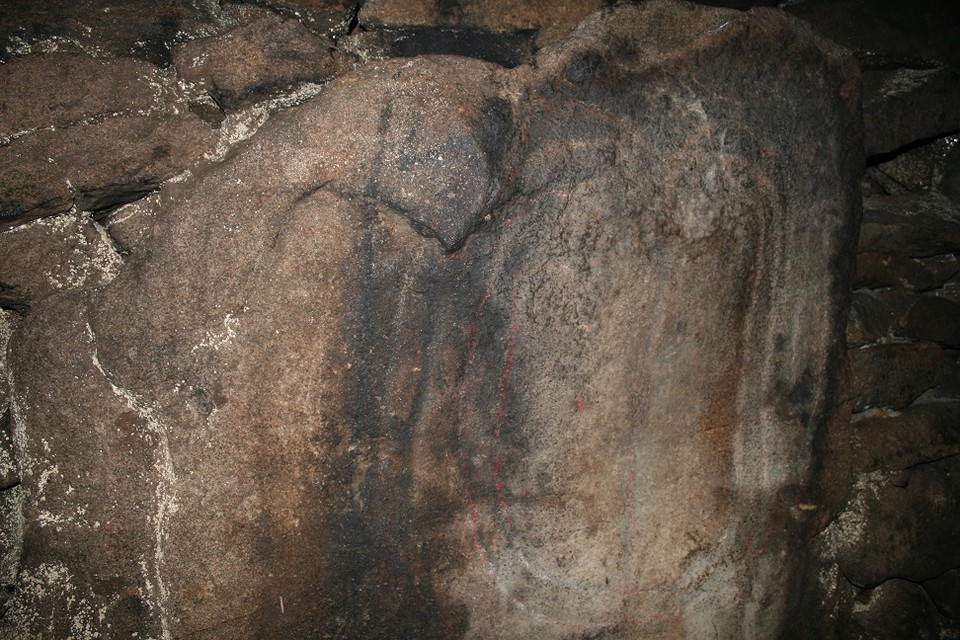
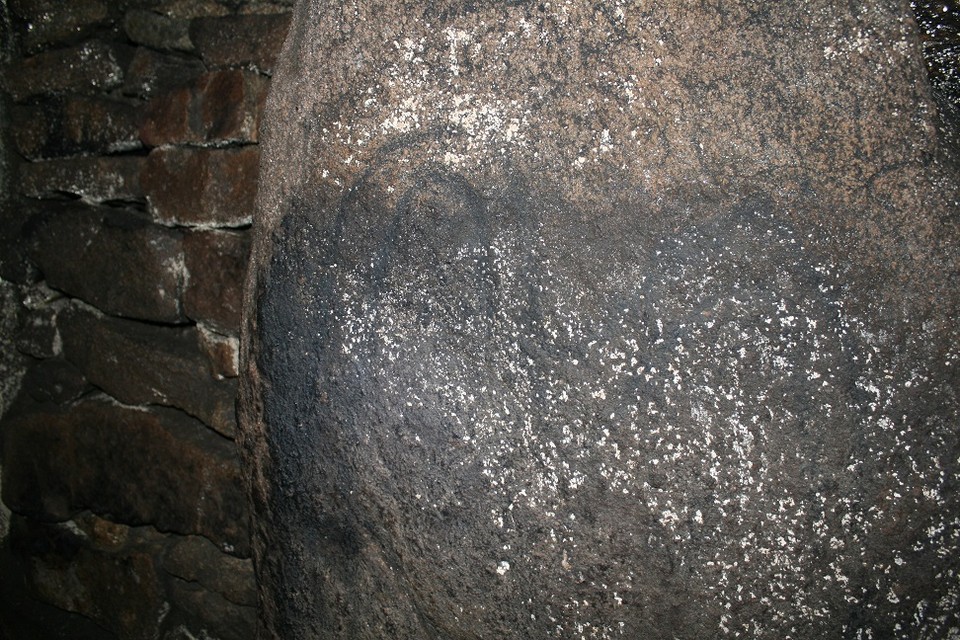
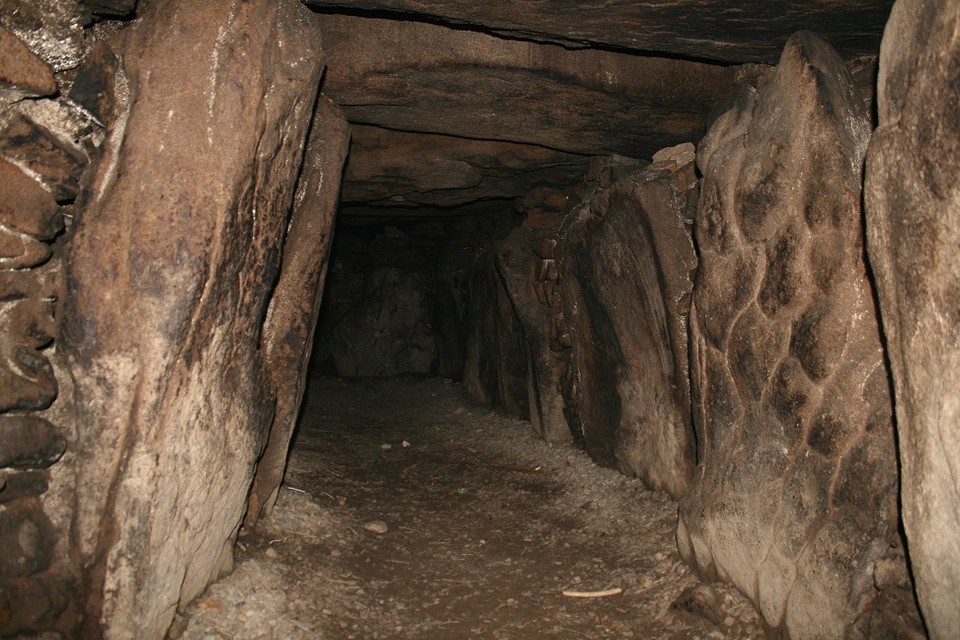
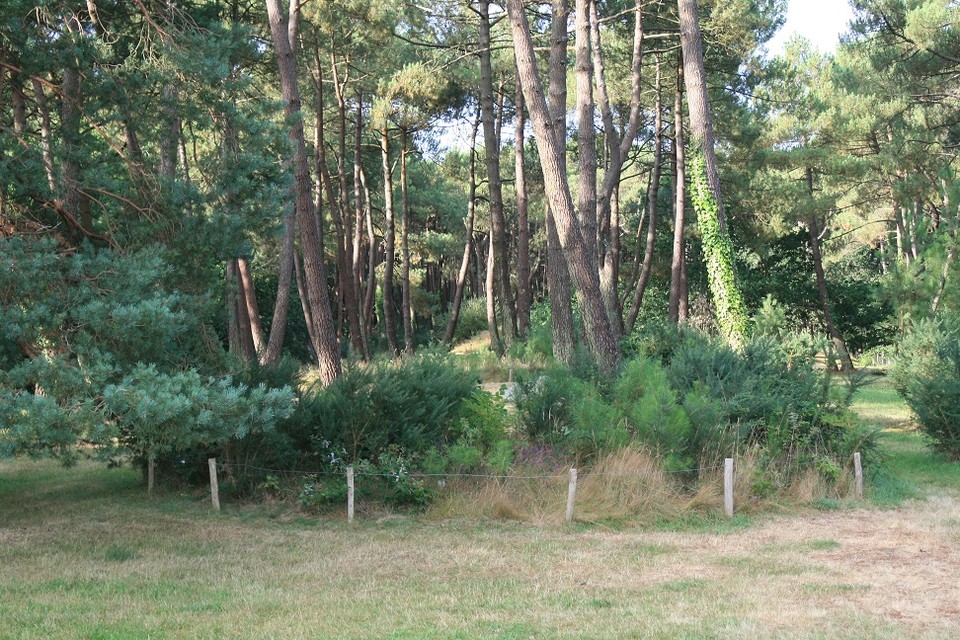
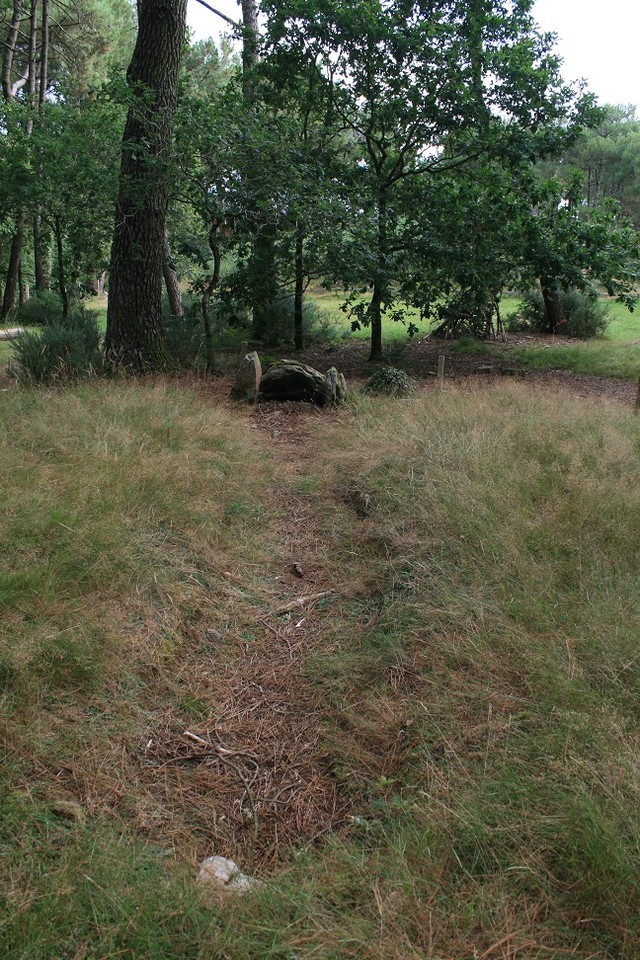
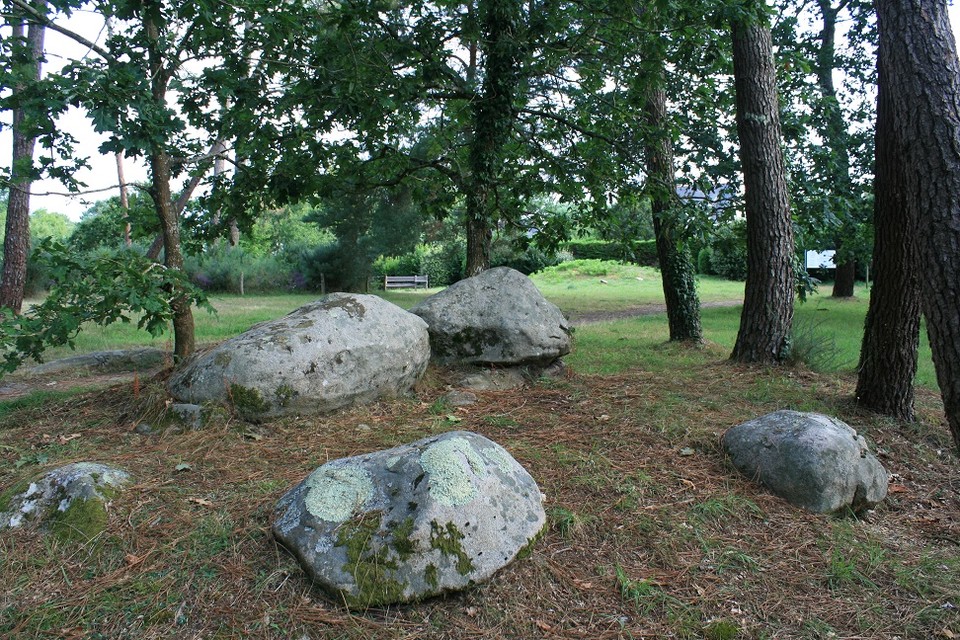
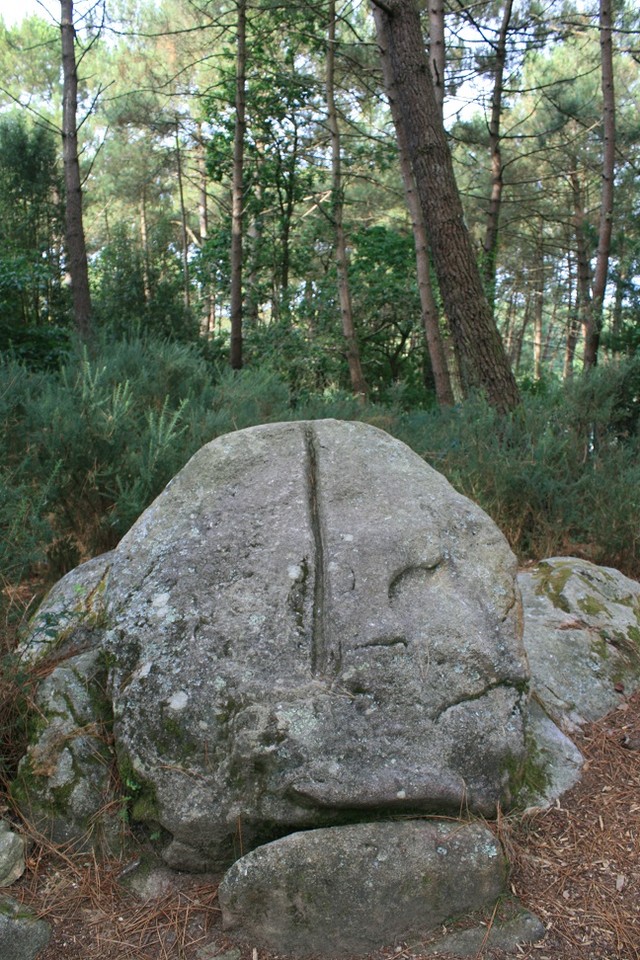
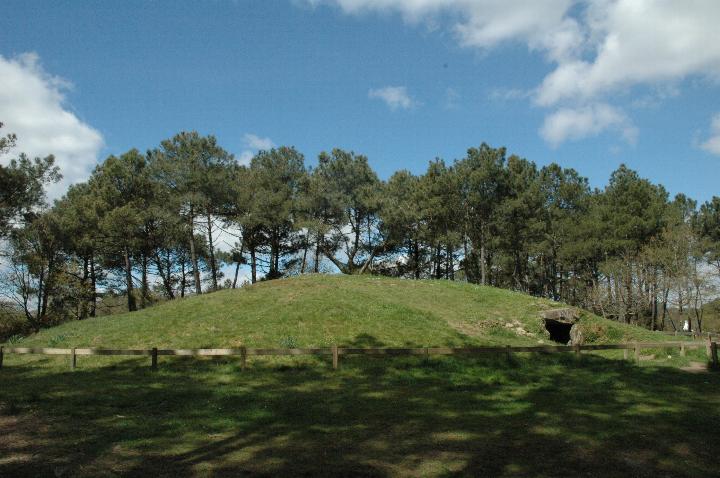
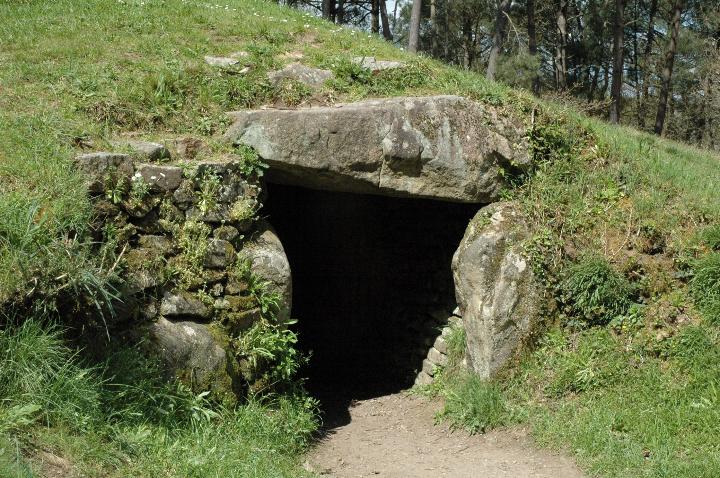
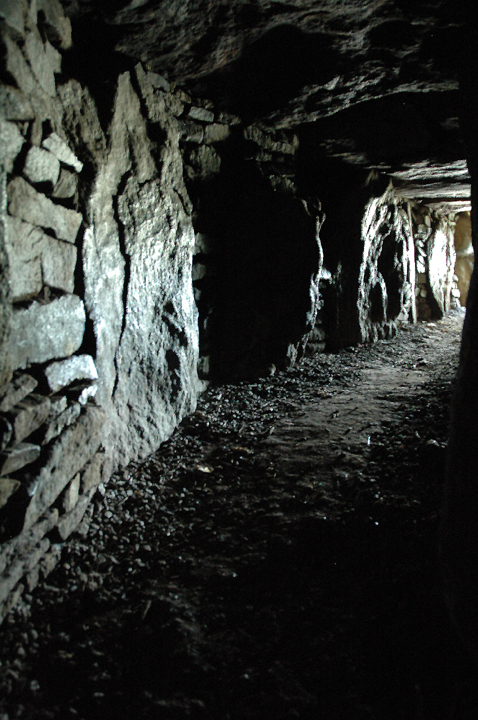
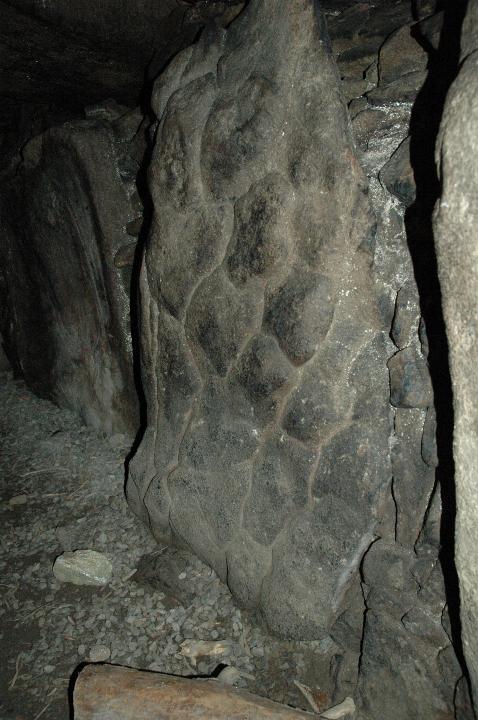
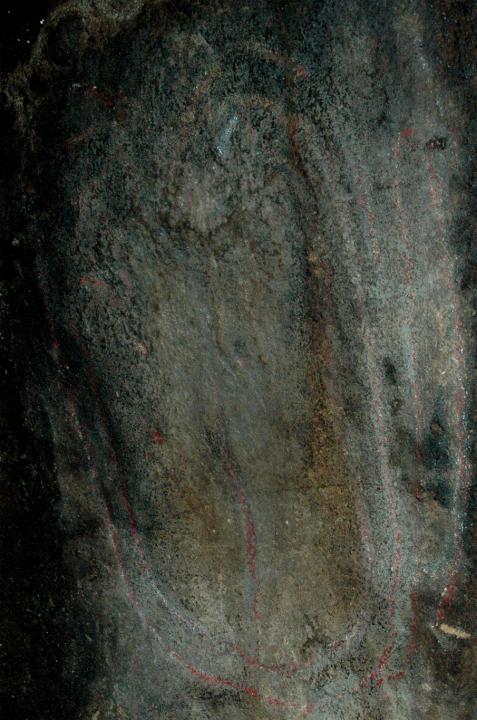
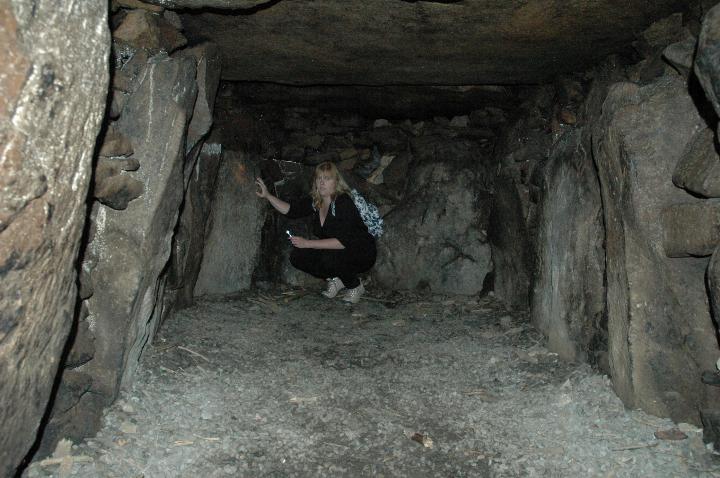
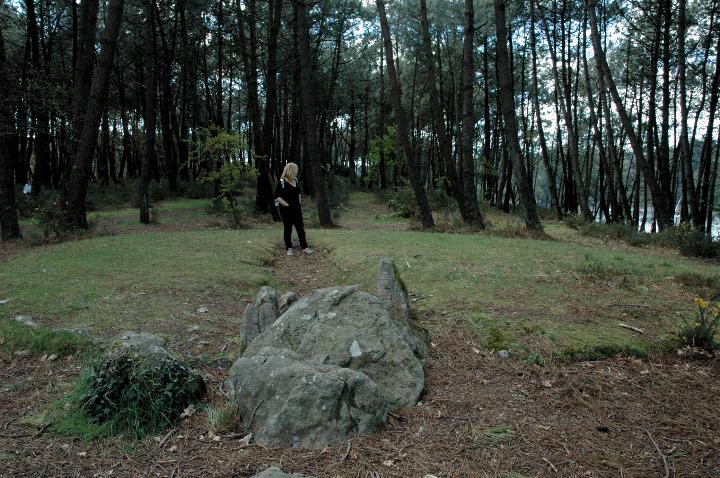
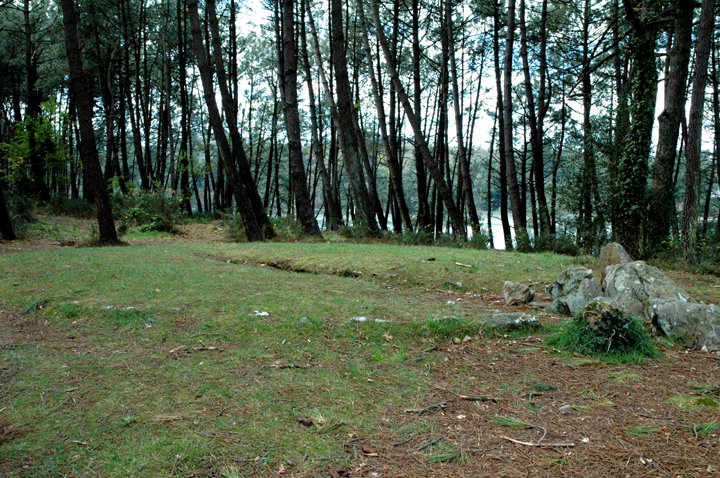
To my mind the word tumulus conjures up images of often low grassy chamberless mounds, but this most certainly is not what I'm used to. Heading towards Le Bono (no relation) on the D101 go over the bridge and turn right at the sign posted roundabout more or less as soon as you enter the non Dublin related town. The tumulus is down this road on the right, you cant miss the big car park. I decided to get out early before the kids get up and see this one, and as it was a beautiful morning and the car park was empty it was looking to be a good one. It's a short walk of fifty yards through pine woodland to the tumulus. I'll keep using the word tumulus, but only with a hoot of derision, and a snort of superiority, they might as well call it a pile of stones. I entered the clearing in the woods into glaring early morning sunshine, which as you'll know is the best kind, the entrance to the mound is facing me, that's a south east direction, vaguely with the summer solstice sunrise. Torch in hand I enter the passage with a stoop, having not done my homework properly I didn't know if there was any art work in there or not so I only half inspected the wall stones. Like Pierre Plats the passage bends to the left, well, here it's more of a right angle turn really, but still, do all angled passage graves bend to the left, which way does yours bend? Sitting at the end of the dry passage in the dark, it was quiet, cool of temperature, and cool of demeanor too. I mean how cool is it to travel somewhere in a 21st century vehicle through a 20th century town and in less than a minute your back in the stone age, in a place where few stone-agers have trod, or sat. But there is more to this ridge than just the big burial chamber, so I exit the tumulus and stroll north east to the information board, in doing so I've just walked past three Iron age Tombettes or tombelles. The one closest to the info board is what we'd see as a tumulus, a low grassy mound, but the two between it and the big one have kerb stones round them, unfortunately they have been cordoned off and the undergrowth left to grow, and grow it has. I decide to walk off in the other direction, south west. Here right next to the big one is what looks to be the best of the four definite tombettes I found. This one is a circular grassy platform, with a slight trench in it's centre, terminating at the circles edge with a recumbent and two flankers, which is weird because just over there is four boulders in a kind of none circular circle. Further into the woods are some big earthfast boulders, one of them has a carved linear groove upon it, another had the dubious pleasure of having me sit on it for a while whilst happily surveying the trees and seeing a Jay and a small bird of prey shooting after an even smaller scared little birdie. Now having read the information board I can say that there are some carved stones in the passage of the big one, specifically it says the twelfth stone on the left going in has a carving on it. It is rather faint and not as good as Pierre Plats' but I think I found at least one more. On the right, ten feet or so going in is a lovely rippled bubbly chocolate kind of stone, it is I presume natural but the one next to it is I think definitely carved as well. Only one person came past whilst I was there, Frenchie called over to me and said something in his native tongue, seeing as I know as much Klingon as I do french it was totally incomprehensible to me. Perhaps he was asking if I had a torch, or maybe watch out for the werewolf. Then a woman and her teenage kids came up the path, but I've had my go and it's time to go any way, were going karting this afternoon. I wonder if there's anywhere good to call in at on the way. Ha ! I know there is. |
 Posted by postman
13th August 2014ce Edited 13th August 2014ce |

|
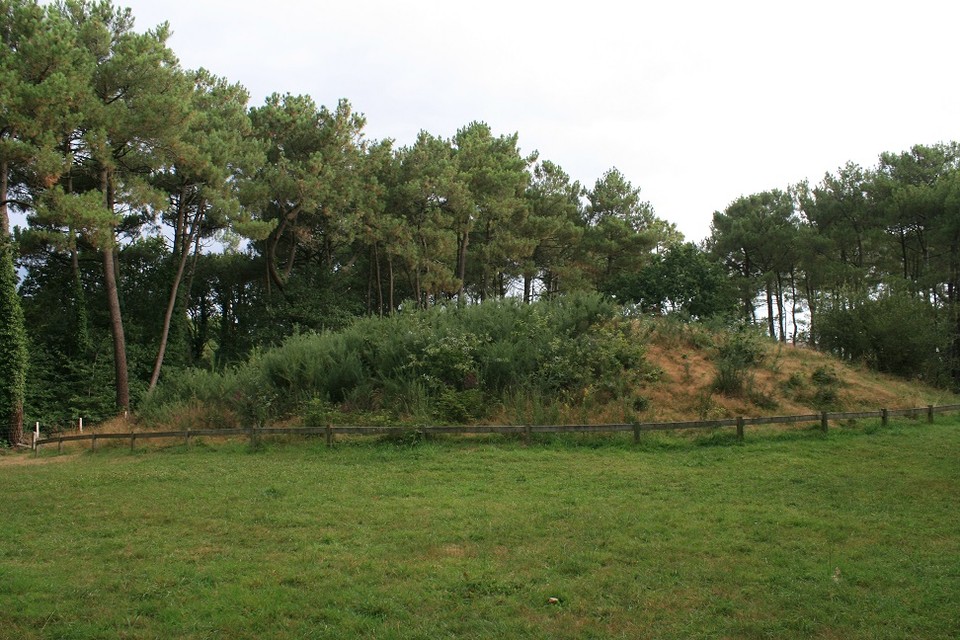
On the way around the bay towards Gavrinis, we stopped to take in this monument, tumulus Kernours, near Bono. This huge grassy mound, about the size of Duggleby Howe is built high up on a ridge among pine trees on the edge of the River d'Auray estuary. It has recently been tidied of gorsey undergrowth so much so that Moth, whohad been here before, didn't recognise it. By now I was getting the hang of this Carnac-tumulus-visiting stuff so I grabbed the torch and entered swiftly and with the enthusiasm of a ferret in a warren. Just like Les Pierre Plats, the long, long passageway swings round, banana-style, to the left. Lots of gorgeous large flat wall slabs but no arty carvings in this one. Right next to the mound is the outline of another small cairn which reminded me hugely of the pincushion cairns up on Porth Hellick downs on the Scillies. As we grubbed around among the pines needly, gorsey paths we spotted a number of large stones. Erratics? Or something else? Who knows… |
 Posted by Jane
3rd August 2007ce Edited 3rd August 2007ce |
|
14:08:03ce This Kercado sized tumulus outside the village of Le Bono is fascinating for a number of reasons. The great mound itself covers a very long passage of orthostats and drystone which bends through almost 90degrees partway along. This then opens out into a chamber with almost enough room to stand. The faint remains of carvings can be seen along the passage including a goddess figurine. This chamber, if required, could be pitch black at any time of day. Inspite of the condensation on the stones themselves the floor in here is remarkably dry. What is also fascinating though is the surroundings. Around the tumulus are a number of burial mounds dated to the Iron Age. However they are very much like megalithic structures, one still having, what Aubrey Burl describes as, a small dolmen like structure at its centre. South of the tumulus are a number of fantastic natural rock outcrops, maybe part shaped by man. Clearly this area was sacred for a long time. From the time before the megaliths to a time when they had long since ceased to be constructed. Were the pine trees not here there would be views out to the Gulf of Morbihan. But how did that area look back then when sea levels meant it was no sea at all… |
 Posted by Spaceship mark
30th July 2007ce |
 Top of page