


Nearly all the tombs we visited today had a tree sentinel.

The small, south-western tomb. There is no evidence left of a court.
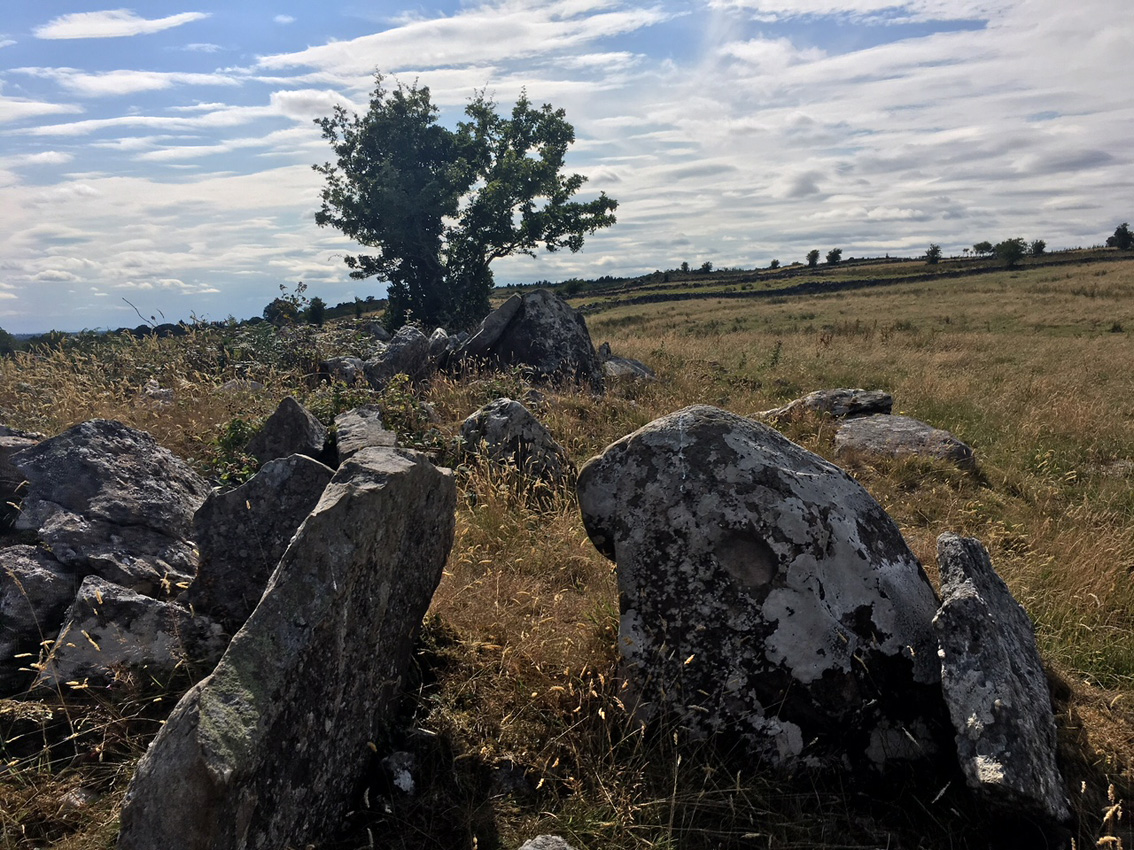

Pano of the remains. It’s pretty wrecked but fairly recognisable also.


Flaskagh More is a back-to-back dual-court tomb. Looking norteast over the small gallery of the south-western tomb. It’s backstone is immediately in front of us here. The next stone along is the backstone of the north-eastern tomb.
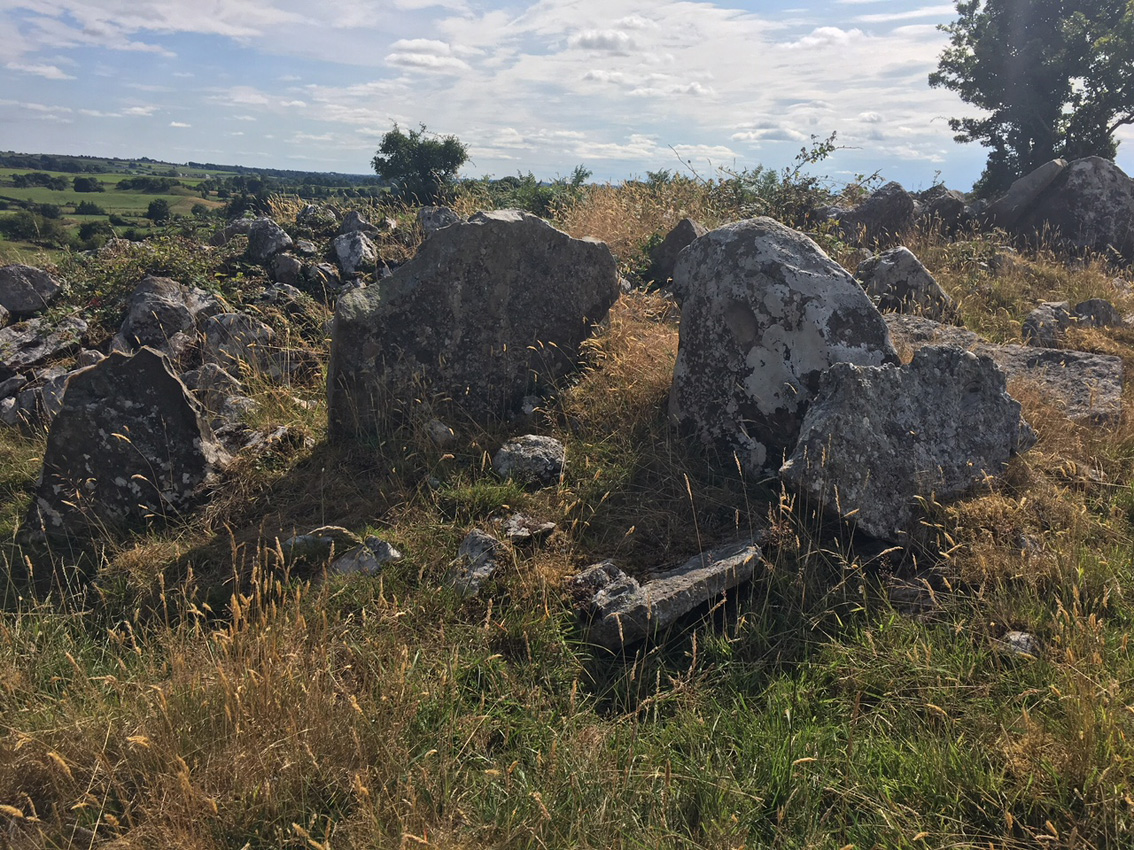
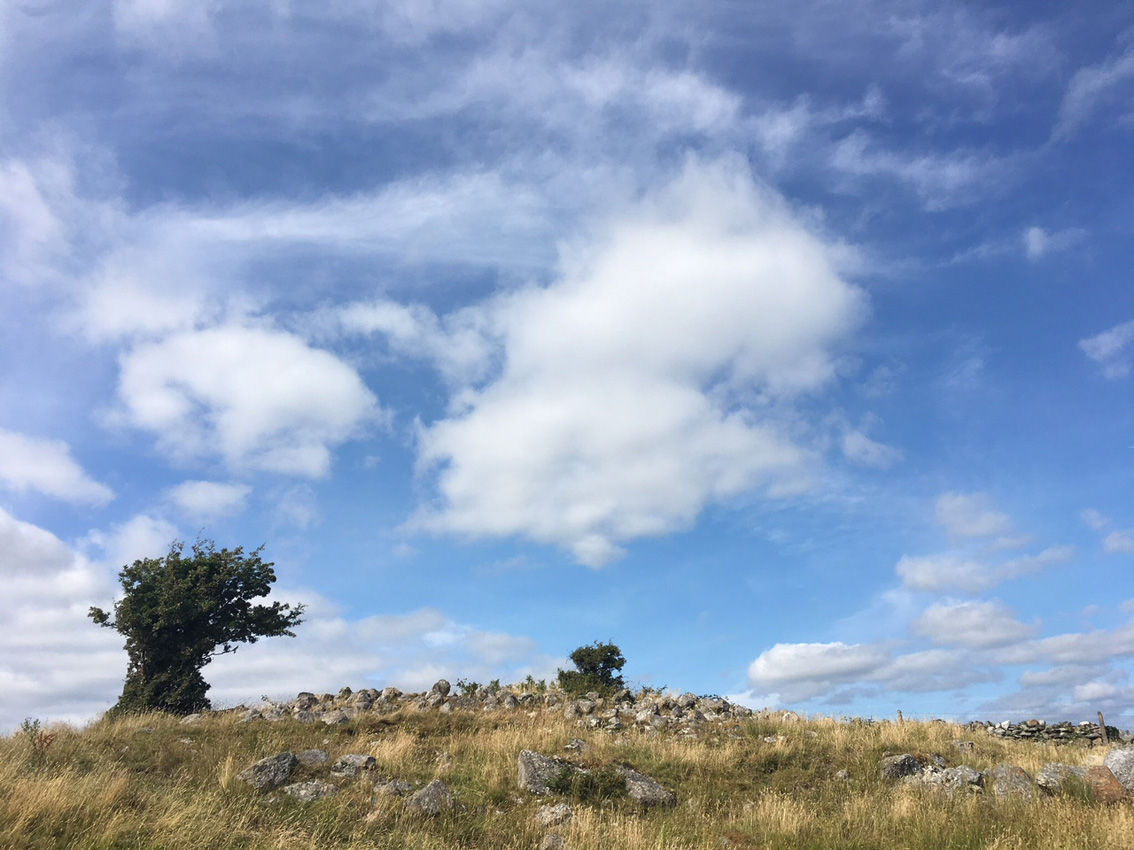


Again looking outwards towards the front of the tomb from almost at the rear.

Looking towards the front, along the gallery, with classic double-walling on the right.


Looking front on – as with all wedge tombs in this area, it’s aligned north-east/south-west.


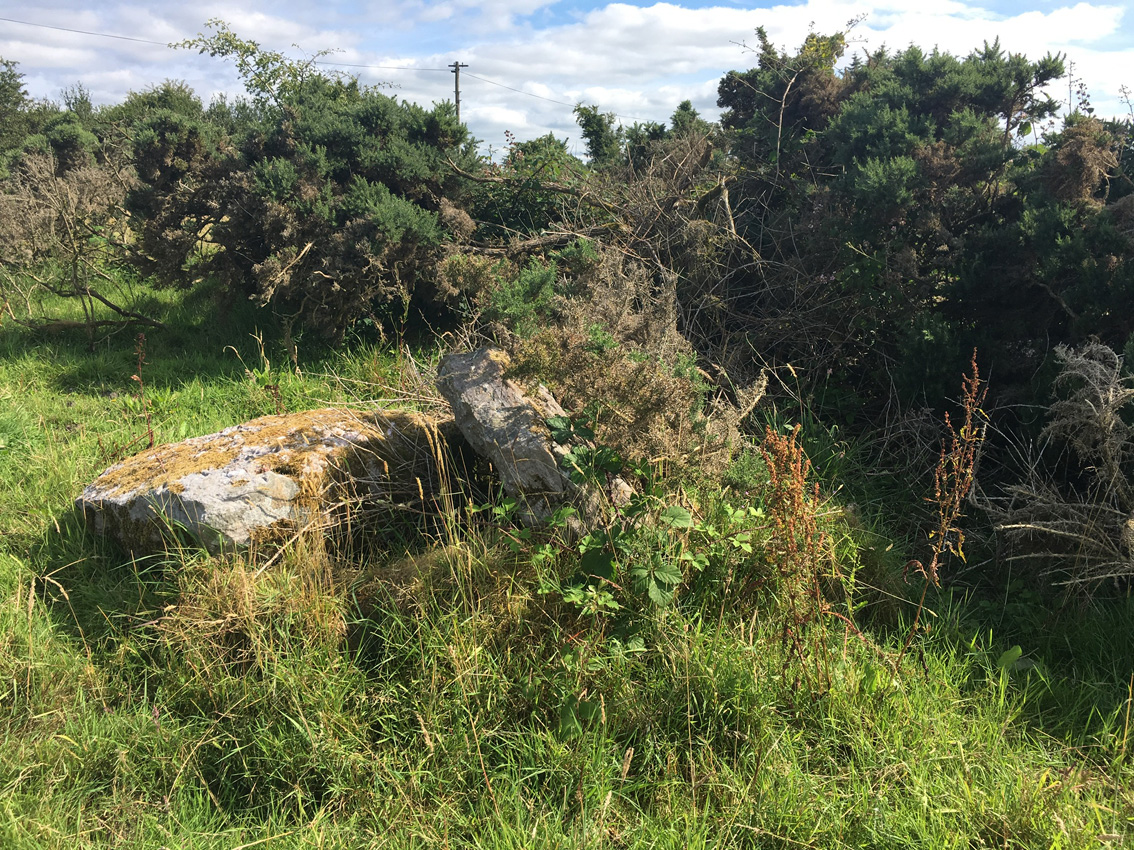
Listed as a wedge tomb in the Megalithic Tombs inventory, what’s left is little more than a cist.


This is a substantial wedge tomb – from the natural ground level to the top of the roofstone is about 2 metres.

We were surprised that this tomb is relatively unremarked on the web.

Looking directly at the front of the tomb. Most of this monument has survived intact, despite being in a pasture field.

The facade of the tomb. A rarity, much of the monument remains in its mound

From towards the rear of the tomb. Like most of the wedge tombs we visited today this one is oriented with the north-east/south-west.


A quartz encrusted, earthfast bulky boulder with a big bullaun. Just what I needed.

There is still water in the bowl even after our prolonged drought.

To date, two burial chambers have been discovered within the western part of the main passage.
A MEGALITHIC PASSAGE tomb cemetery dating back some 5,500 years has been unearthed beside Dowth Hall in Co Meath.
The discovery is within the Brú na Bóinne heritage site. The excavation is being carried out by agri-technology company Devenish in partnership with UCD’s School of Archaeology.
More: thejournal.ie/megalithic-passage-tomb-meath-4130419-Jul2018/
Anthony Murphy, founder of Mythical Ireland, made the discovery when flying drones in the Brú na Bóinne area yesterday evening.
A LARGE CIRCULAR enclosure, or henge, has been revealed near the UNESCO World Heritage Site close to Newgrange in Co Meath.
Anthony Murphy, founder of Mythical Ireland, made the discovery when flying drones in the Brú na Bóinne area yesterday evening with photographer Ken Williams.
More: thejournal.ie/newgrange-mythical-ireland-4123238-Jul2018/


Quick fieldnotes for Parknasilogue: This site is in danger of being lost forever. The land that it is on is being sold for housing development under the auspices of NAMA. The old thorn tree that used to stand guard over the chamber is gone and the site is inundated with brambles. See Fourwind’s shots here: megalithomania.com/show/site/16/parknasilog_kist.htm better than my own old ones on TMA. I couldn’t see into the impenetrable brambles to check if the tomb is still extant. In my opinion, this is to be added to a list of a few other endangered sites in the South Dublin/North Wicklow area, all under threat because of the mad dash for housing. Another example is at themodernantiquarian.com/site/1664/laughanstown.html where a new town is already under construction. Remember themodernantiquarian.com/site/1258/brittas.html

I really hope that the tomb/cist is still beneath the foliage.

This site is in danger, if not already recently destroyed.
Experts from the National Museum have begun an investigation into the exciting discovery of four prehistoric gold arm bands they believe date back to the Bronze Age.
The amazingly intact ornaments were found buried together several feet underground at an undisclosed location in Co Donegal earlier this week.
Maeve Sikora, keeper of Irish antiquities at the National Museum of Ireland, credited local Donegal residents for finding the treasures and immediately reporting them to officials at the Donegal County Museum, who in turn alerted them to the find yesterday.
“These people were so helpful and quick to report it,” she said.

The cairn under the mound during excavation.


