


East towards Kilcoole marshes and the sea.


Looking west towards the Great Sugar Loaf.

Just over one-and-a-half metres tall, it’s made of a pinky/redish conglomerate.


The prostrate stone may have been a fifth in the row.

The stones are all very low, the tallest at three quarters of a metre. What seems like packing stones are adjudged to be field clearance.

The hill in the distance with the mast is Corn Hill with its cairns. I’d be more convinced by this stone row were it aligned onto the hill, but prehistory doesn’t always fit into what you want.

The capstone is resting of the fallen backstone. This would have been a fine little dolmen in its day.


Cloonfinnan has its own ecosystem. It’s been long abandoned, hidden away among the forestry, the type of site I usually give up on, but hey, thank science for the technology that dropped me right on top of it.

Shattered portal and fallen capstone. This took an effort to find and was a tangled mess – the second time today that I did a bit of a clean-up.
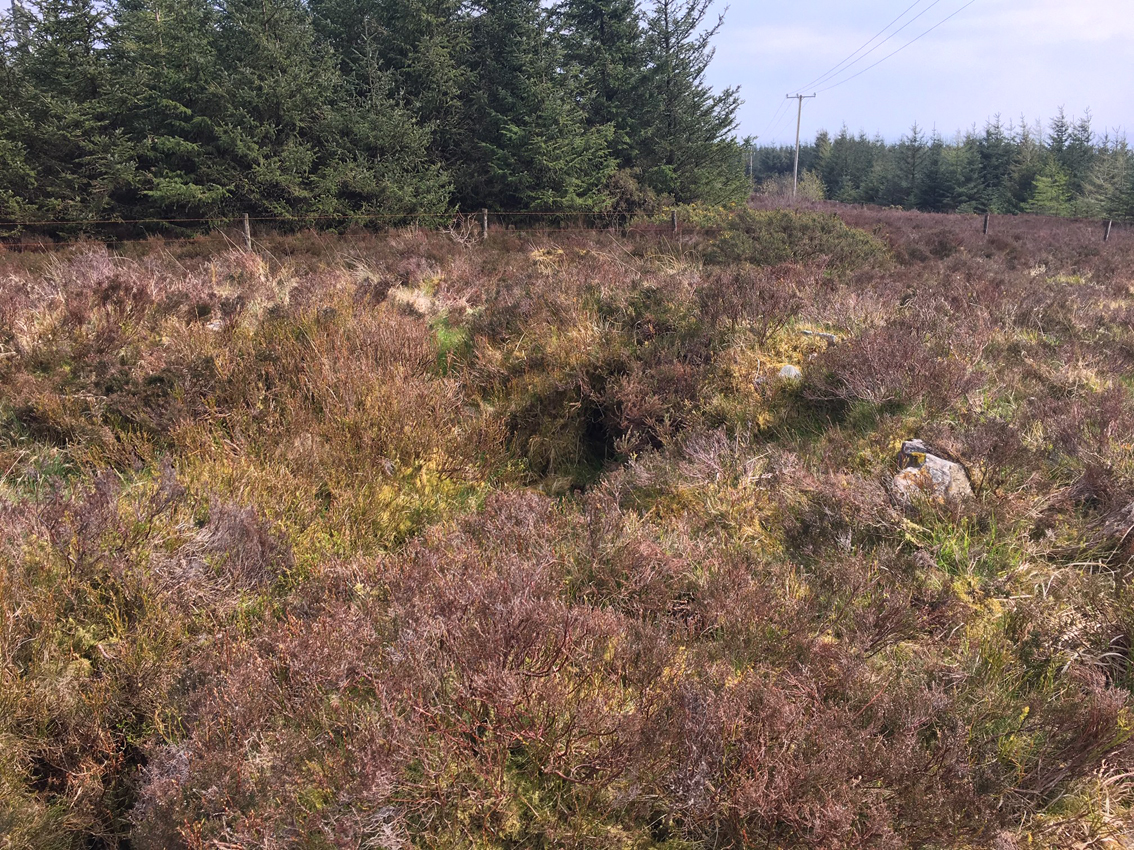
Herity published his book in 1974 and mentions recent digging here: “There are traces of recent digging in the centre. Mr. Lynch told me that no structure had come to light in the course of this digging.” I had a good root around under the heather and indeed, there is no sign of a chamber.
Exploring the archaeology of the World Heritage Site of Brú na Boinne

Shot taken from on top of the field bank, possibly partly the remains of the covering cairn.


Annaghmore portal tomb could not be closer to the road and is a survivor.


Looking east. This was a struggle to get to – the terrain is very rough and just south of here, in the direction of the second court tomb in the townland, it turns very marshy. The whole vicinity is up for sale, endangering these monuments.
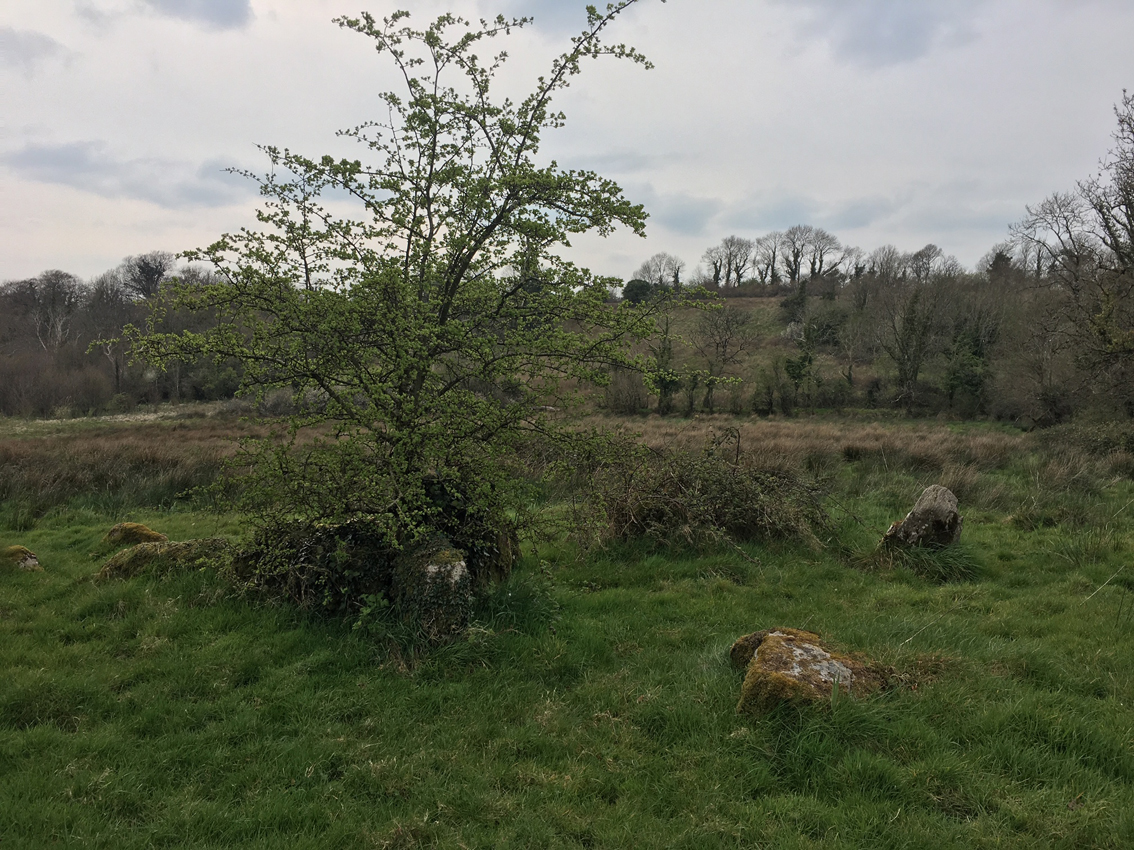
Looking west across the court. The prostrate stone in the foreground was probably part of the court.

The gallery entrance – the stone on the left very much jamb-like, the one on the right not so. Most of the court stones are missing and I reckon the second entrance jambstone is gone the same way.

From the back of the gallery looking out into the court. The ground level has probably risen since the tomb was built.

From just outside the court, south down the gallery. The massive beech tree is the dominant feature here at this diminutive Leitrim monument.

Another view, inside the chamber, of the notch in the sidestone.

I had to clean this monument up a little. i had gloves in the car and went after the ivy and brambles. I’m thinking of carrying a secateurs in future.

The backstone is missing and the capstone looks to be in a precarious state from this angle.


Left is the western portal. Maybe the eastern has been pushed outwards and is falling slowly under its own weight.

The capstone rests on the two sidestones and the western portal. It may never have rested on the eastern portal as it seems the eastern sidestone has a notch carved out to stop the capstone slipping.
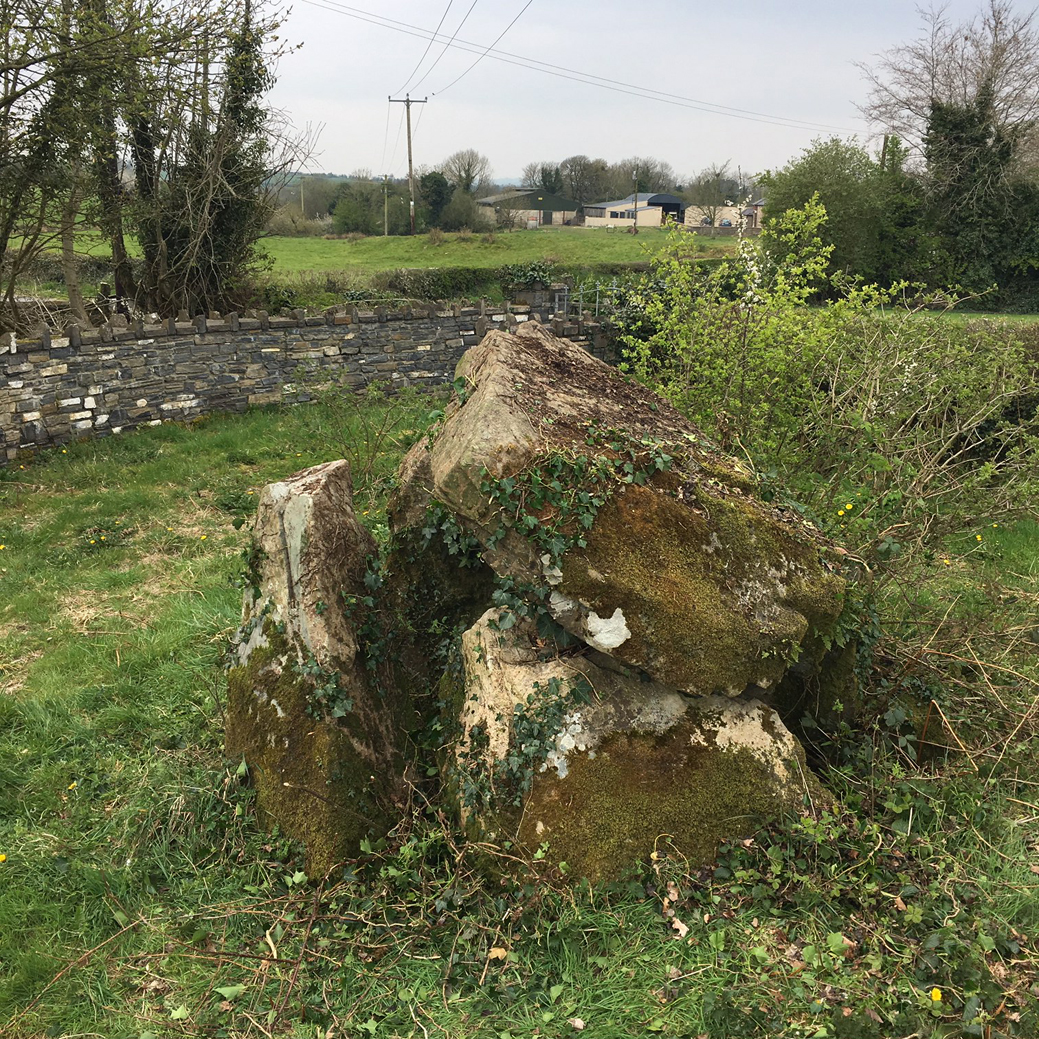

This is how I found it, in its own enclosure built in 2010, but obviously neglected ever since.
The ancestors of the people who built Stonehenge travelled west across the Mediterranean before reaching Britain, a study has shown.
Researchers in London compared DNA extracted from Neolithic human remains found in Britain with that of people alive at the same time in Europe.
The Neolithic inhabitants appear to have travelled from Anatolia (modern Turkey) to Iberia before winding their way north.
They reached Britain in about 4,000BC.
Details have been published in the journal Nature Ecology & Evolution.
The migration to Britain was just one part of a general, massive expansion of people out of Anatolia in 6,000BC that introduced farming to Europe.
Before that, Europe was populated by small, travelling groups which hunted animals and gathered wild plants and shellfish.
One group of early farmers followed the river Danube up into Central Europe, but another group travelled west across the Mediterranean.
DNA reveals that Neolithic Britons were largely descended from groups who took the Mediterranean route, either hugging the coast or hopping from island-to-island on boats.


Like its near neighbour at Middletown, one wonders if the capstone was ever supported by the portal stones.

The sidestone here is collapsing inwards into the chamber under the weight of the capstone.

This is from the rear of the tomb. The capstone rests on the backstone and one of the sidestones.

The front of the tomb. The people of the house are used to visitors.


That point where the upper capstone touches and presses down on the remaining portal stone.


