
archive.org/stream/churchesofwestco00blig#page/204/mode/1up
From ‘Churches of West Cornwall’.
Image credit: JT Blight (1885)

archive.org/stream/churchesofwestco00blig#page/204/mode/1up
From ‘Churches of West Cornwall’.

archive.org/stream/churchesofwestco00blig#page/203/mode/1up
From JT Blight’s 1885 edition of ‘Churches of West Cornwall’.

From: Churches of West Cornwall by J. T. Blight (1885).
archive.org/stream/churchesofwestco00blig#page/202/mode/1up

A nicely minimalist drawing in ‘The Natural History of England’.
archive.org/stream/naturalhistorye00martgoog#page/n32/mode/1up
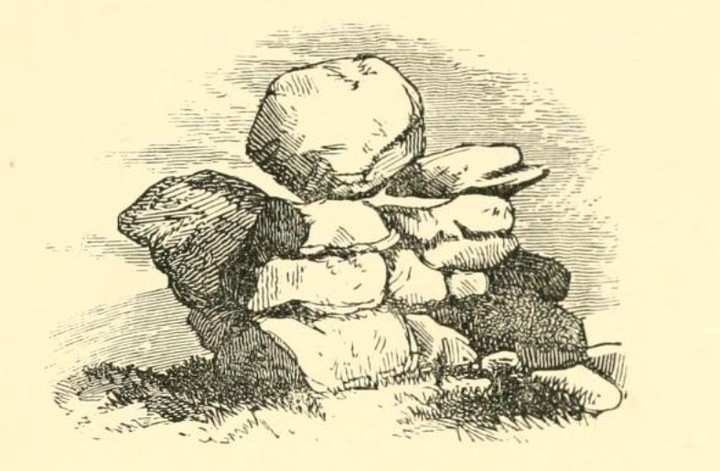
archive.org/stream/ancientcrossesot00blig#page/n146/mode/1up
“This stone is in the parish of Sithney, on the property of C.W. Popham, Esq., of Trevarno. It was formerly a logan-stone, but was thrown off its balance in the time of Cromwell, by Shrubshall, then governor of Pendennis. – The stone is 11 feet long from east to west; depth 4 feet. Men Amber is a corruption of Men-an-bar, which signifies, the top stone.”

From ‘Collections Historical and Archaeological Relating to Montgomeryshire’ v24 (1891).
archive.org/stream/collectionshisto24powyuoft#page/317/mode/1up

From ‘Collections Archaeological and Historical Relating to Montgomeryshire’ volume 17 (1884).
archive.org/stream/montycollections17powyuoft#page/371/mode/1up

From PSAS 1902/3 – an article on ‘Stone circles of North East Scotland’.
archive.org/stream/proceedingssoci04scotgoog#page/n152/mode/1up

archive.org/stream/discoveryoftombo00conwiala#page/2/mode/1up
From ‘Discovery of the tomb of Ollamh Fodhla’ (1873).

From ‘Rambles among the hills’.
archive.org/stream/ramblesamonghill00jenniala#page/33/mode/1up

The stones in 1894.
From the ‘interim excavation report’ in the Antiquaries Journal 1921.
archive.org/stream/antiquariesjour00unkngoog#page/n38/mode/2up

“Straightening the stones using jacks”.
From the ‘interim excavation report’ in the Antiquaries Journal 1921.
archive.org/stream/antiquariesjour00unkngoog#page/n38/mode/2up

“Straightening the stones using jacks”.
From the ‘interim excavation report’ in the Antiquaries Journal 1921.
archive.org/stream/antiquariesjour00unkngoog#page/n38/mode/2up

From Stukeley’s ‘Abury’ v2 (1743).

archive.org/stream/rudestonemonumen00ferg#page/n7/mode/2up
(hoping this is in the right place)


From a photograph of the urns, which were kindly reassembled by some patient Ladies.
From WCB’s Naenia Cornubiae (1871).


Collotype from ‘The Reliquary and Illustrated Archaeologist’, v12 (1907).
archive.org/stream/reliquaryandill03coxgoog#page/n59


From the July 1st issue, p13.

This drawing is accompanied by some Sensible Scientific explanation. “By the antiquary, it has always been considered as the work of art, being a Druidical monument employed in some of the ceremonies and superstitions practised by them [...]; the geologist, however, considers the Logan-rock to be the work of nature alone, as granite is well known naturally to disintegrate into masses of a somewhat [cubical] form [...] thus rude spheroidal blocks, like the Logan-rock, may occasionally be formed, although an exceedingly rare combination of circumstances will be required in order to produce a block possessing this peculiar property.”

A stormier view, from ‘Bow Bells’ magazine, April 5th, 1865.

From The Mirror of Literature, Amusement, and Instruction from November 13th, 1824.


Frontispiece of ‘The Town, College and Neighbourhood of Marlborough’ by F Edward Hume (1881).


Raising the fallen stone at Longstone Cove, Beckhampton, 1913. From photographs by Mr. Passmore and Captain Oakeley.
archive.org/stream/wiltshirearchaeo38wiltuoft#page/n13/mode/1up

Raising the fallen stone at Longstone Cove, Beckhampton, 1913. From photographs by Mr. Passmore and Captain Oakeley.
archive.org/stream/wiltshirearchaeo38wiltuoft#page/n13/mode/1up

From John MacLean’s article in the Transactions of the Bristol and Gloucestershire Archaeological Society for 1880-1.
archive.org/stream/transactionsbris05bris#page/n133

From
archive.org/stream/archaeologicaljo26brit#page/310/mode/2up
volume 26 of the Archaeological Journal (1869).

From W Wynn Williams’ article on Din Sylwy.
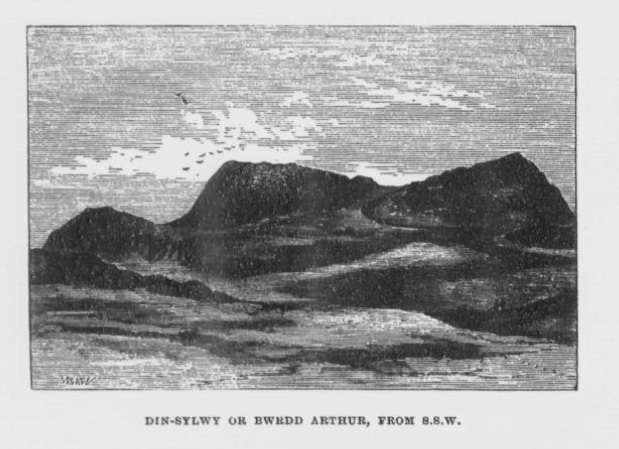
From W Wynn Williams’ article about Din Sylwy.

From ‘English Forests and Forest Trees’ (1853)
archive.org/stream/englishforestsa00unkngoog#page/n208/

From the Google Books image linked to below. You can’t help thinking that the person who did the etching hadn’t been there and was trying in vain to decipher someone else’s drawing.

From the Rev. Baring-Gould’s ‘Lives of the British Saints’, v1, 1907.
archive.org/stream/livesofbritishsa02bariuoft#page/96/mode/1up


The four remaining kings in more closely-grazed times.
From the Proceedings of the Society of Antiquaries of Newcastle:
archive.org/stream/newcastleser308sociuoft#page/246
“It is said respecting these, that the whole countryside around here belonged to five brothers who were five kings, and these stones were erected to their memory. I have been told that when the late Dr. Bruce* approached the ‘Five Kings’ he reverently uncovered his head.”
*John Collingwood Bruce – R*man wall expert.


From ‘Handbook to Cardiff’.
archive.org/stream/handbooktocardif00brit#page/n9/mode/2up

Drypoint by Albany E Howarth, in ‘Modern etchings, mezzotints and drypoints’ (1913).
archive.org/stream/cu31924064894607#page/n70/mode/1up


View of the rather impressive bonfire lit on top of Warden Law for the 1911 coronation.
From this gem of a book
openlibrary.org/books/OL24280394M/The_book_of_the_coronation_bonfires_...

“The Pech Stane near Billie Mains"by John Blair, 1887, in v1 of ‘The Birds of Berwickshire’ 1889.

A drawing (presumably of the Pech Stone) from ‘A History of Coldingham Priory’ by A A Carr (1806) – it’s available on Google Books.

From the Journal of the British Archaeological Association v3 (1847), showing the stones found at the south end of the barrow.
archive.org/stream/journalbritishar03brituoft#page/68/mode/1up

From an article in the Transactions of the Glasgow Archaeological Society v1 (1868).