
Capstone exposed in the middle of the northern cairn.
Image credit: A. Brookes (6.10.2017)

Capstone exposed in the middle of the northern cairn.

Northern cairn, looking towards Chun Castle and Carn Galva.
The Welsh Government’s historic environment service Cadw will remain part of Welsh Government for the foreseeable future, Culture Minister Lord Dafydd Elis-Thomas confirmed today.
As a government division, Cadw has put a greater focus on diversifying its appeal over recent years, becoming more economically sustainable and improving its ‘big 10’ attractions – something which has paid dividends, with record attendance numbers in 2017, up 8.4% on the previous summer.
Earlier this year a steering group report (Historic Wales – A roadmap towards Success, Resilience and Sustainability for the Heritage of Wales) included a specific recommendation relating to the future governance of Cadw. A robust business case was then taken forward to identify the best option.
The business case considered the steering group’s recommendations that Cadw should become ‘a charitable body or an executive agency outside of Welsh Government’. This was measured against the status quo, undertaking an in depth analysis of the functions of Cadw and the drivers for change.
The case was taken to Cabinet colleagues in October, with Dafydd Elis-Thomas happy to implement the decision to accept its core recommendation that the successes of Cadw are best built on and developed from within Government.
The Culture Minister said:
“I have long admired the good work done by Cadw in showcasing some of the magnificent heritage we have here in Wales, opening it up for all to enjoy.
“This has been done largely from within Government, and whilst it was appropriate at this juncture to explore all avenues as to how we can build on this success, I’m pleased to implement Cabinet’s decision to accept the business case’s clear recommendation that Cadw should remain part of Welsh Government.
“But it is also imperative that Cadw looks to evolve and progress, keeping up with best practices and having the flexibility and courage to make the best decisions for all its stakeholders and for the thousands of historic sites that comprise our unique historic environment.
“On this basis, I’m equally pleased to accept recommendations relating to increased autonomy for Cadw in certain aspects. These include establishing a formal system of delegation and internal freedoms, making best use of strategic partnerships between national organisations and establishing an internal operating board.
“These recommendations will maximise the contribution that Cadw can make to an accessible and well-protected historic environment for Wales. In particular they will help ensure that the public continues to have the best possible quality monuments, attractions and events to enjoy.”
Cadw is the Welsh Government’s Historic Environment Service, working for an accessible and well-protected historic environment for Wales. It looks after and opens to the public 129 monuments across Wales. Of these, 29 are staffed sites and the remainder are free open-access sites.
gov.wales/newsroom/culture-tourism-sport/2017/171121-cadw-to-remain-in-government/?skip=1&lang=en


Carn Brea just after sunrise, 6 October. Seen across the bay from St Ives.


Ancient field boundaries run up to the stone rampart.


From Porthmeor Cliff to the southwest.

Looking along the coast towards Pendeen Head.


Reverse view of the three pointy stones, this time from the up-slope end.

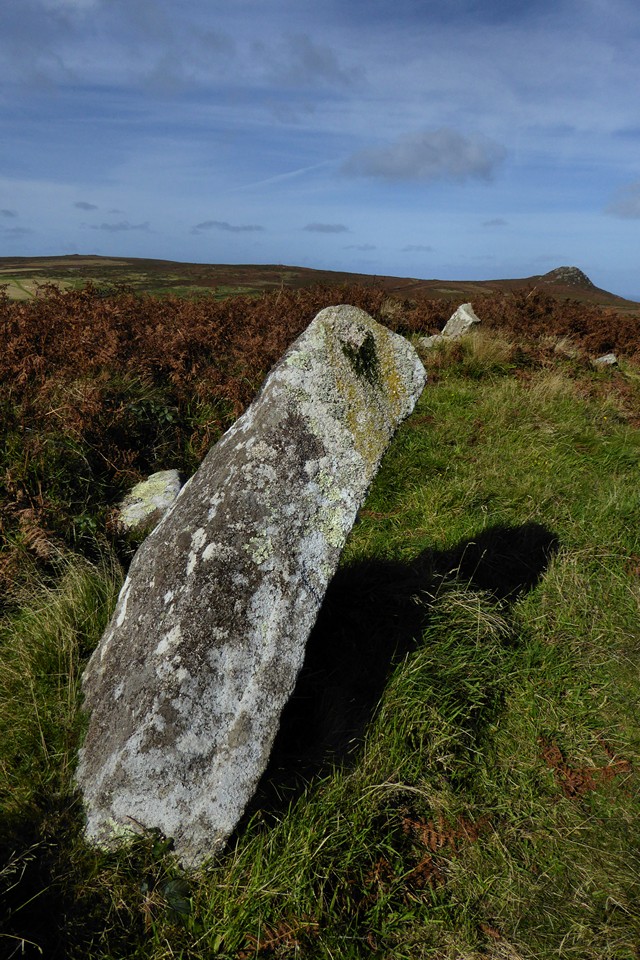
Between Carn Kenidjack and the holed stones we came across this line of three conspicuously pointy stones. They may be connected with the scant remains of a settlement and field system near here, or they may not.


The triangular stone in the bonkers “kerb”. The more places I visit, the more unusual the form of this monument seems.


Looking towards Zennor Hill.

Approaching across wet moors from the south.

The northern arc of the cairn’s kerb. The skyline backdrop stretches from Carn Kenidjack (left) to Watch Croft (right).

Looking east across the cairn to Zennor Hill.


Amidst dying bracken and clear autumn skies.

The stone and the lane to Ding Dong.
Archaeologists from Network Archaeology Ltd have teamed up with Lincolnshire Live to reveal more about the incredible artefacts from a dig along part of the route of Lincoln’s Eastern Bypass
lincolnshirelive.co.uk/news/local-news/archaeologists-unearth-massive-5000-year-603713.amp

Gurnard’s Head from Treveal Cliff to the east.

The field system to the north of the settlement extends all the way to the sea, its final boundaries run along the clifftop at Wicca Cliff.


Eve and Adam, Autumn Equinox evening.


Looking west across West Overton 9 barrow. Avebury is in the middle distance to the left of shot.

West Overton 9, to the north of the Herepath and next to the Ridgeway, which runs along the fence line in the shot.