Showing 1-50 of 1,633 posts. Most recent first | Next 50 
|
The chambered tomb mound can be seen on 2 photos in "Current Archaeology" April 2010 article on Ness of Brodgar : p.12 behind house, p.15 behind Lochview stones [if these were part of an avenue between the stone circles it would have to be fairly sinuous to go around the mound]
|
      
|
|
|
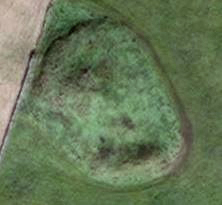
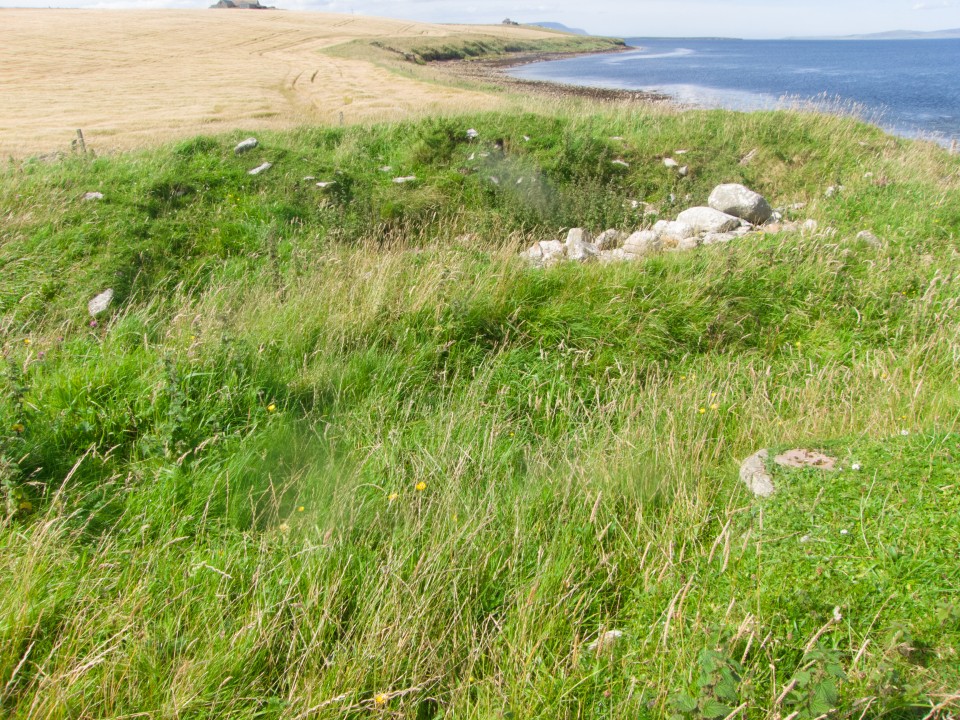
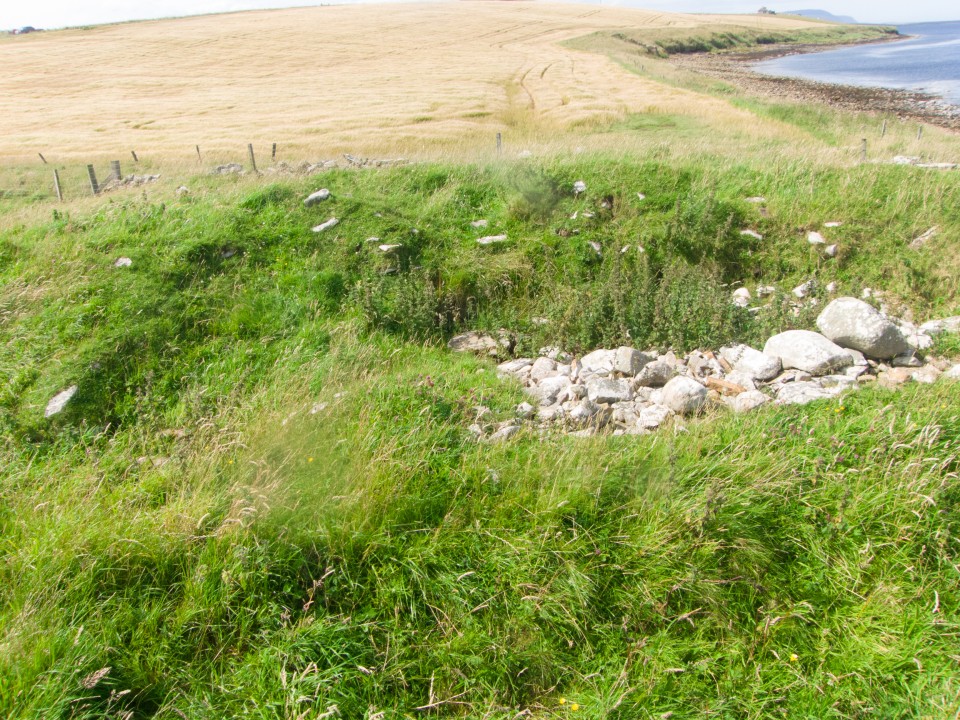
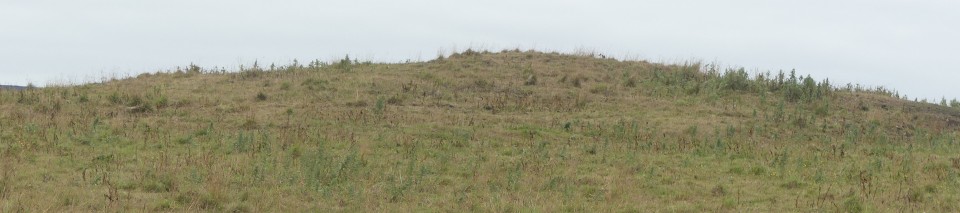
Still think this could be a much denuded Taing of Beeman like settlement even though the possible dividing orthostats run across the mound apparently on the edge of the southern half rather than strictly in-between. Definitely a game of two very different halves. Backing up from the northern edge of the 'upper' half to take it in I found that I seemed to be stepping back along some kind of small 'causeway' leading up to it. This half consists mostly of a circular depression with a few relaxed stones about it, whereas the southern half has a rather level top with several definite orthostats. Thinking of the Beeman settlement and how it was mistaken for a broch from the air I wondered if the now demoted 'disc barrow' nearby might not be still more settlement [with the bank meant to keep the inhabitants out of the myre].
|
  
|
|
|
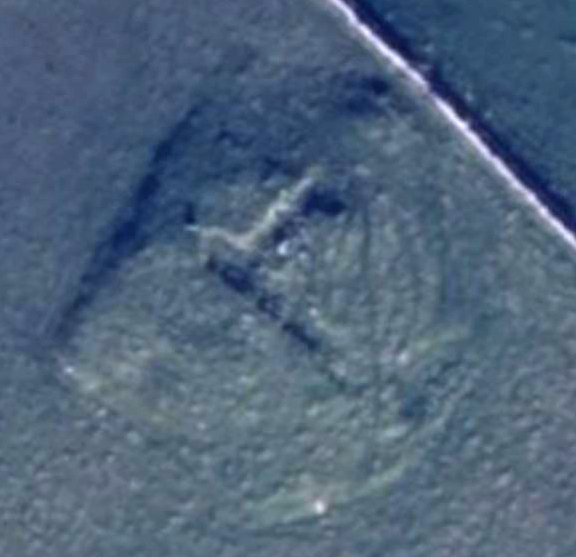
funding for underwater archaeology Orkneyjar's report here http://ow.ly/1eGbP - much clearer pics than "The Orcadian".
As the only other NMRS for Damsay is a site the excavator thought to be a Norse castle but is now believed to have been a broch it is probable that the orthostats in one photo could relate to this. Though a short talk was given on preliminary Rising Tide findings beside these nowt has appeared in print or in the report, so from memory the Bay of Firth has in it likely chambered mounds and (one or more) stone circles
|
|
Hedges regards the semi-circular structure with passage as perhaps Pictish
|
|
photo ID required if using Northlink Ferries or coming via Loganair (though a visitor found British Airways did not need this some of their routes use Loganair planes at times), so be warned using Scrabster-Stromness or Kirkwall Airport
|

|

|
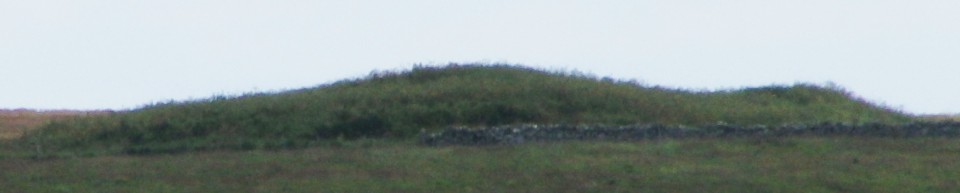
On the steep climb to the tomb you are grateful for a few flattish bits but don't pay much attention. Yesterday, however, whilst taking shots from Wideford Hill it was evident that these result from a couple of very large 'platforms' (seen in outline on the north side of the images). First thought was that these are connected with the tomb, which they dwarf almost as much as Heddle Hill. Second thought is cultivation terraces related to the nearby Neolithic settlements.
Prepared to be shot down in flames.
|
|
This site could have been important long before the henge as cones from postholes outside of this provided the unusually early date of 6000 BCE, long before Mona was settled
|
loads of photos taken from the new RCAHMS book of aerial photos, plenty to drool over
|
|
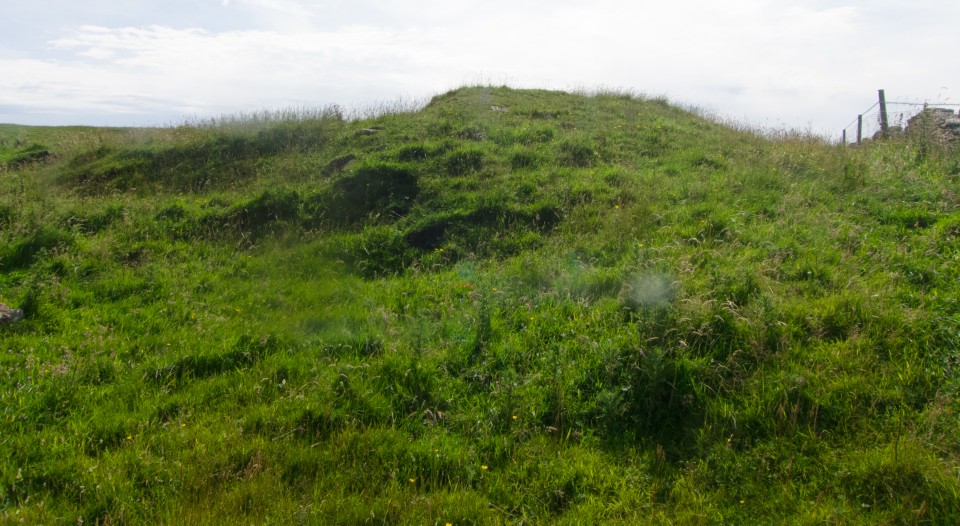
Leaving the Ring of Brodgar the next feature is the Dyke of Sean, the old Stenness-Sandwick boundary down to the loch - on the other side of the accompanying burn the Wasbister disc barrow sits in the far corner of a usually rather damp field. Looking up to the north look for the big green mound on the skyline in the uphill field. This is the Bookan tomb. Take note of the field as this isn't seen when you approach the fieldgate. Follow the field edge up to the tomb and just beyond take the track right that goes by the west side of the quarry with the various [?lesser] Bookan cairns along its sides. Leaving these looking northward and slightly downhill you see the Skae Frue mound. Above this is the field containing the Ring of Bookan. You reach the gate before coming to Skae Frue. Follow the track that passes east through two erect stones and in a few minutes the ring appears to your left. The easiest way into the surrounding ditch is on the right where this meets the field edge and then on the east side is the lower side of the mound. From on top you have a complete view of all the hills comprising the 'rim' of the 'bowl' within which the "Great Sacred Monuments" sit. More properly from any high point on the 'rim' the Ring of Bookan is visible, even when the monuments aren't. Ante- or post-quem, eh !
|
 
|
|
This is NOT visible from the Ring of Bookan, the skyline is the Bookan tomb with the mounds about the old quarry.
|
|
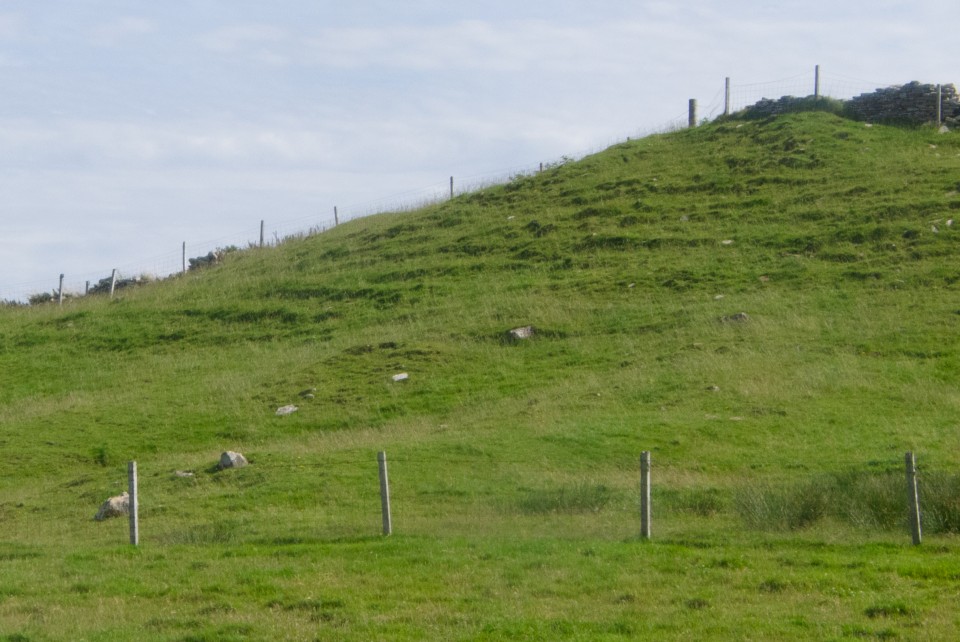
The beggars have boxed it in, trying the old direct route but instead had to do a circular one through three fieldgates before entering by one almost opposite Skae Frue. Alas, though the Comet Stone points to it the Warbuster hill hides the valley below even if you took away the Bookan cairns from around the old quarry. No, it is Bookan tomb that dominates the view of the monuments below. On the other hand you can see why they built here - from on top you can see an unobscured 360deg panorama of the hills.
|
|
In a book on the Breckness Estate there is a quote from 1830 of "a mound of stones on the sea beach, called the Castle of Sneusgarth" which means the castle is either this mound or (more likely) the broch [unless there was a now lost mound at the taing]. The castle is a moveable feast whichever way you read things.
|
|
At an OAS set of talks tonight audience shown an aerial photograph showing a cropmark [nearer Bockan than Buckan it looked] in a field on the opposite side of the road to the Ring of Bookan and being a circular feature of much the same dimensions to it. Given as a possibilty that this relates to a recorded flint scatter hereabouts, presumably a reference to the small brown & yellow mottled ground flint hammer from Bockan (NMRS record HY21SE 52). More to the point is that Bockan house was part of traditions centred round the two great circles and used to have some idols [possibly Iron Age, like those at e.g. Brecks of Netherbrough and Dale souterrain, rather than Neolithic ?]
|
There were once two mounds by the ring, excavated away by James Farrar in 1861 [or the remains flattened later]. Though he placed these at the west and east sides he more specifically locates them at the NW and NE extremities. An indication of their height is that his men dug 22' deep vertical trenches into the subsoil, the former nine feet square and the latter thereabouts. The only finds from the mounds themselves were animal bones, mostly in the upper parts, but deeply embedded stones were found around the bases.
source : July 27th 1861 "The Orcadian"
|
|
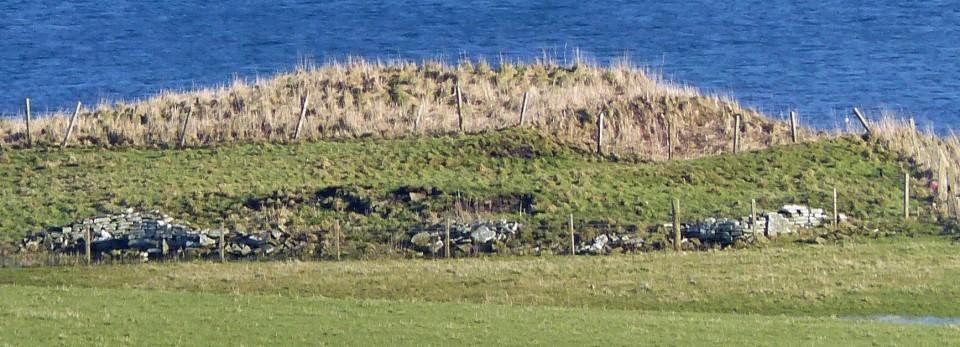
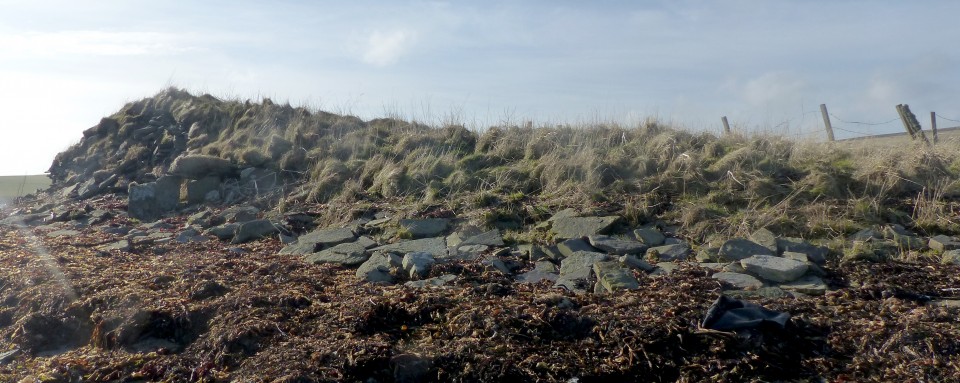
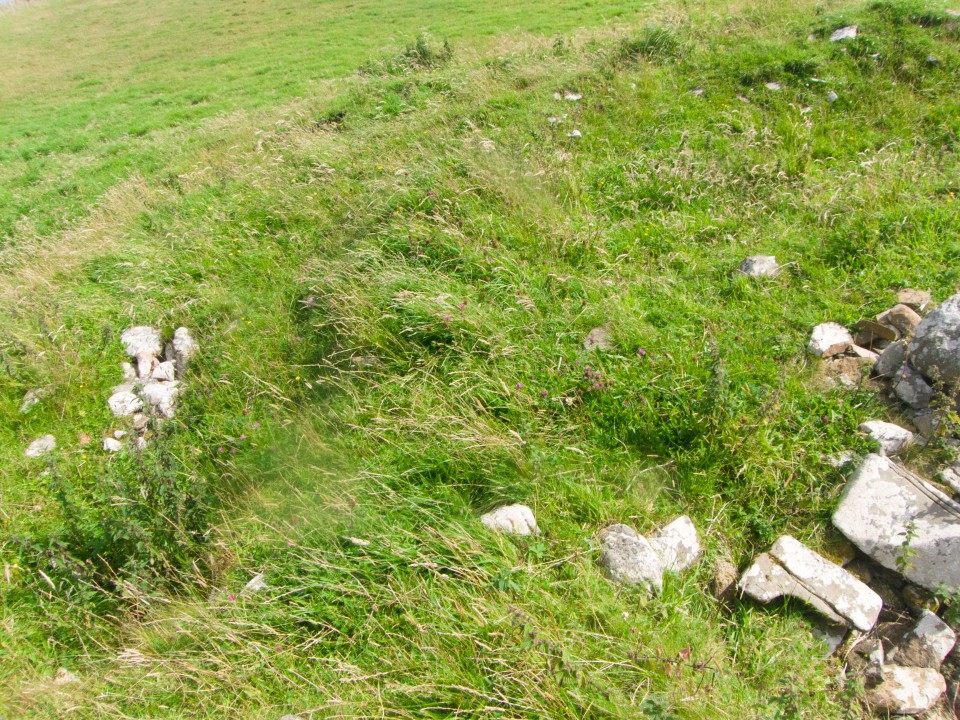
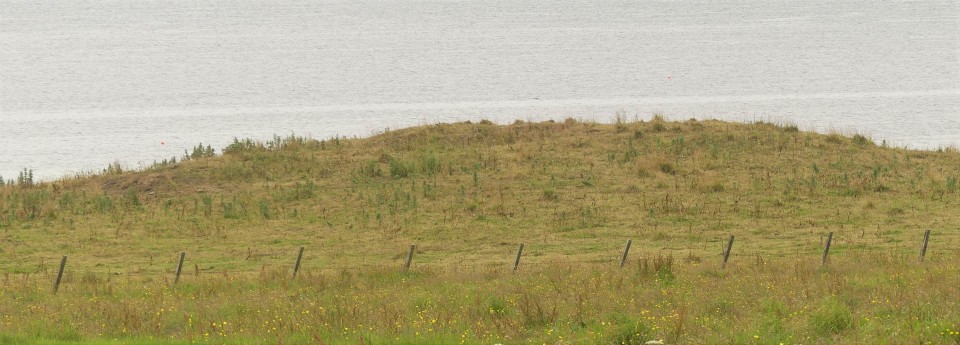
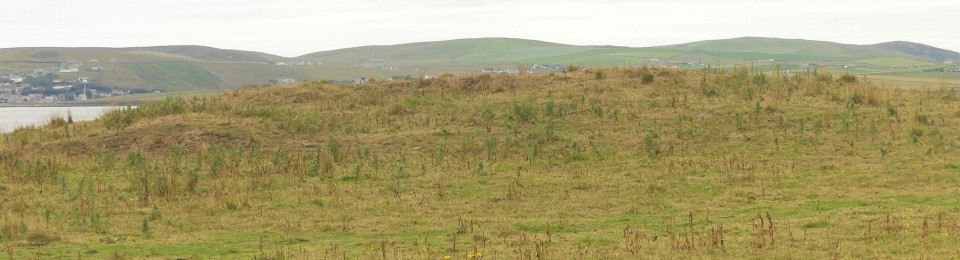
The fieldgate at the south had barbed wire either side of the top and the way there is spongy - so go through the farm. A small area of stones exposed in the eastern side has no order apparent unless the top few are a real line.
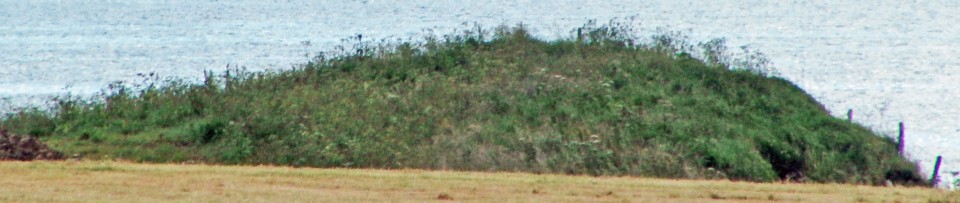
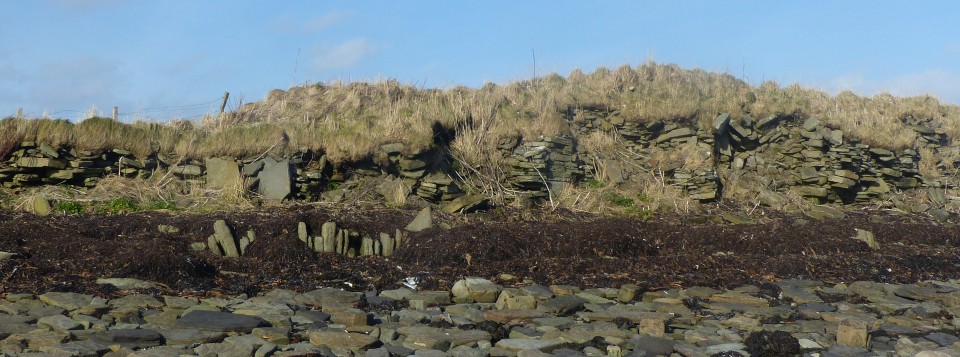
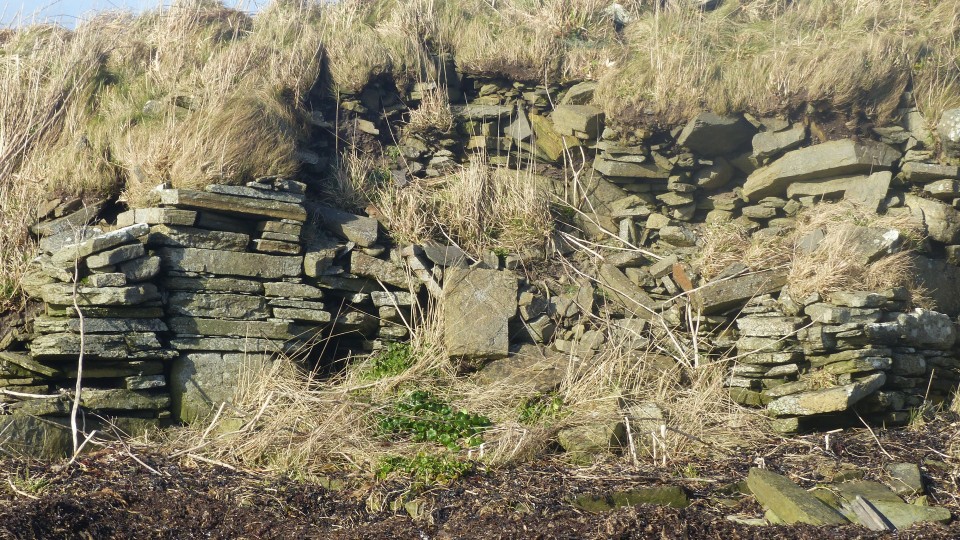
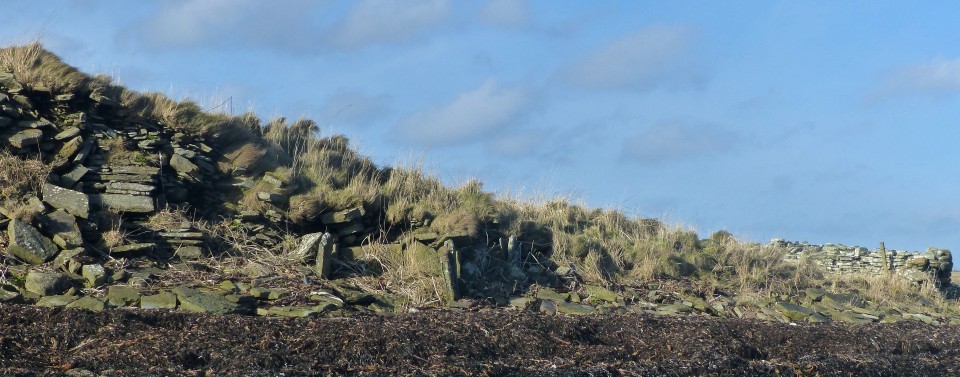
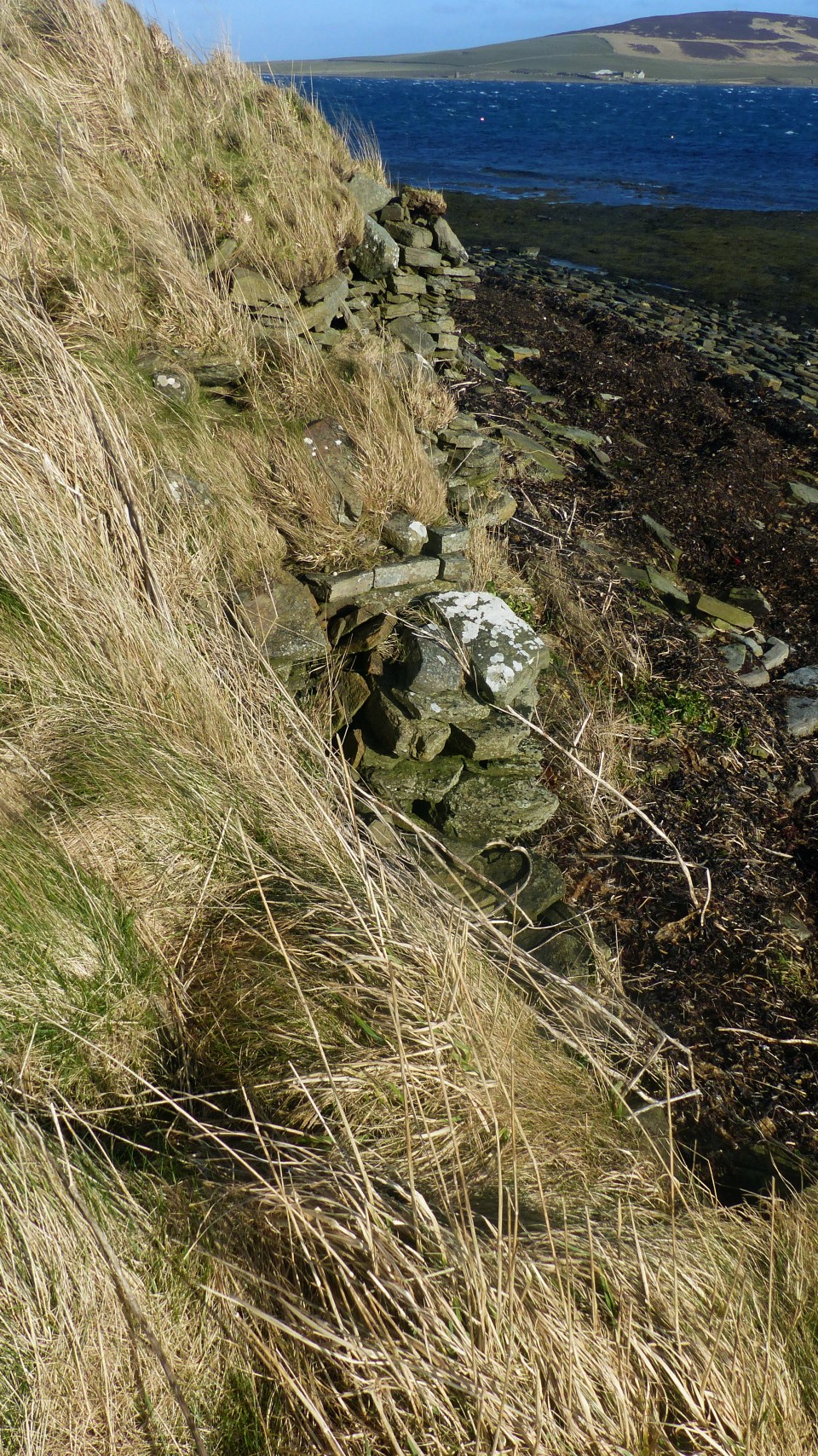
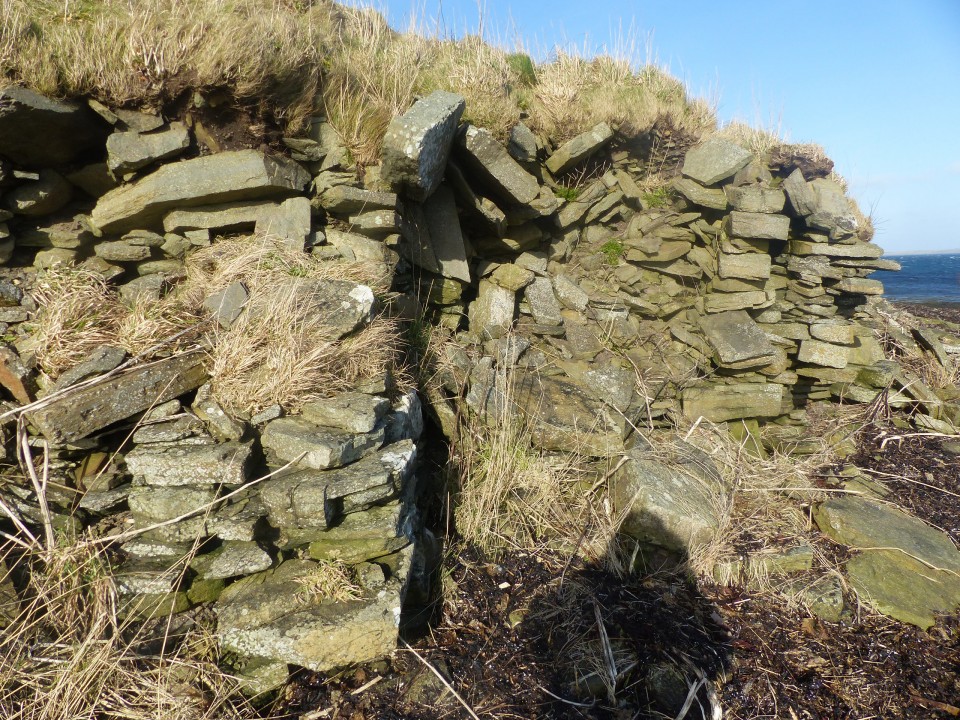
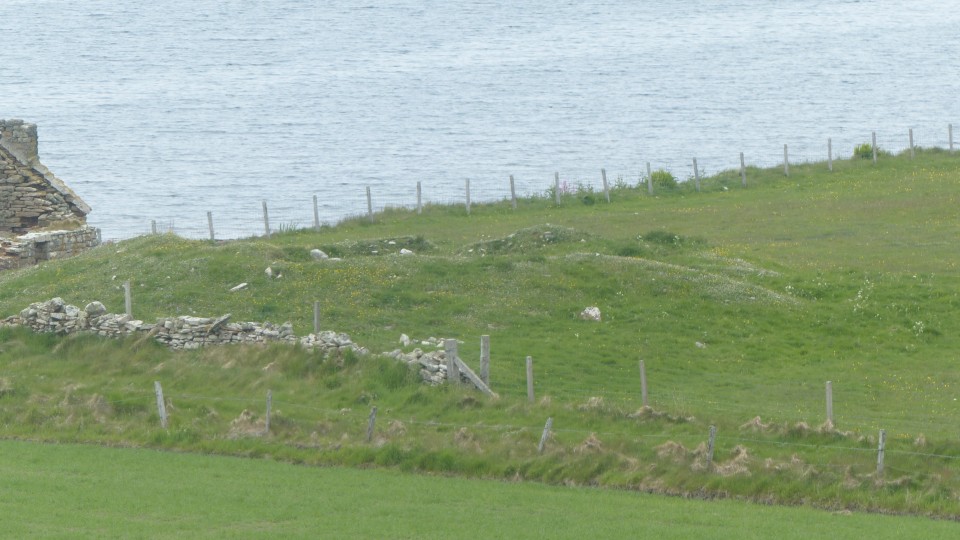
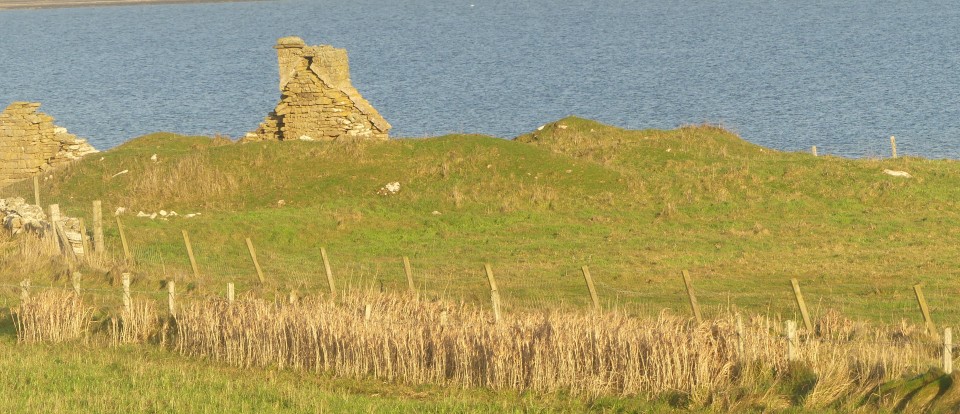
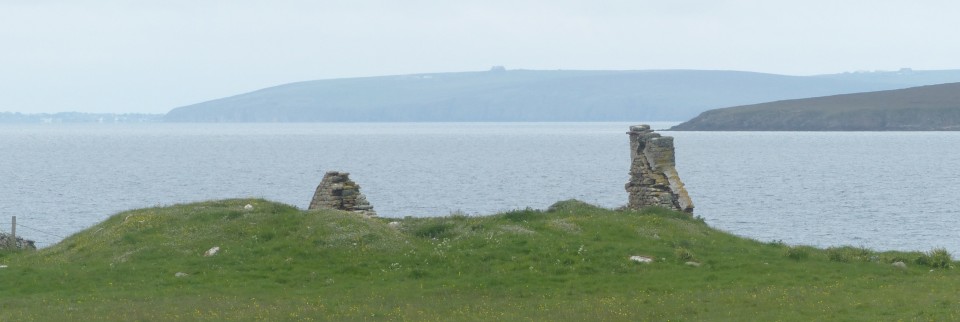
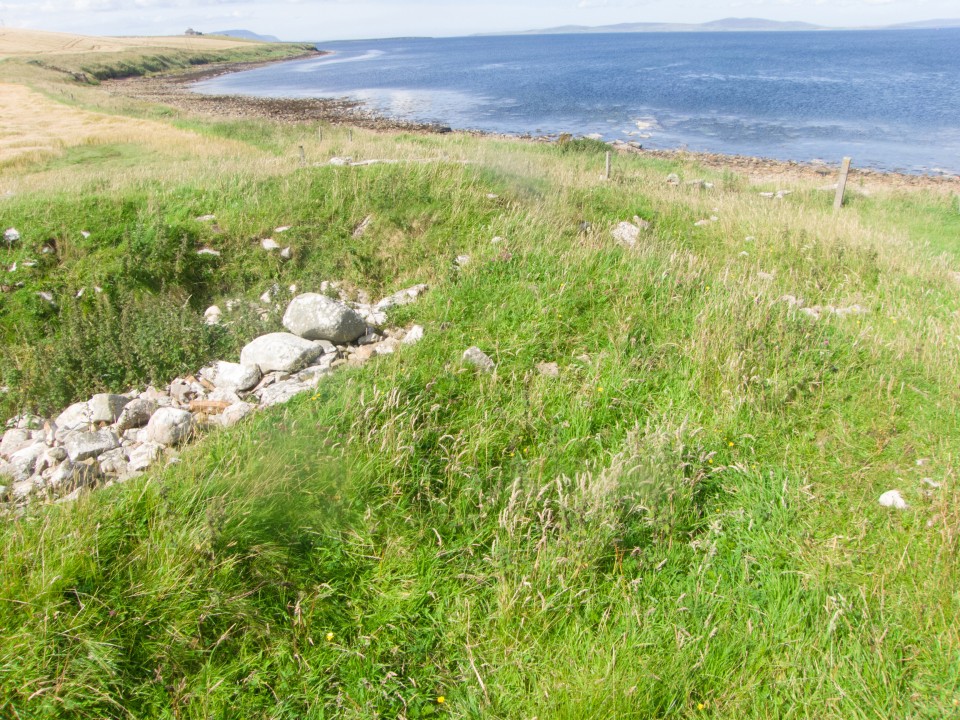
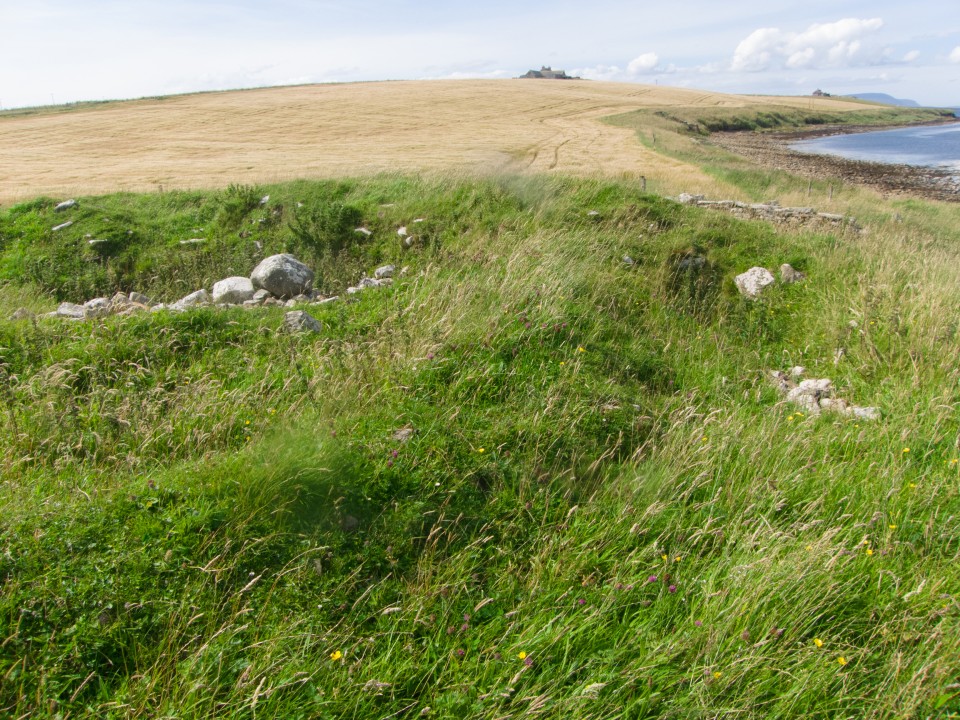
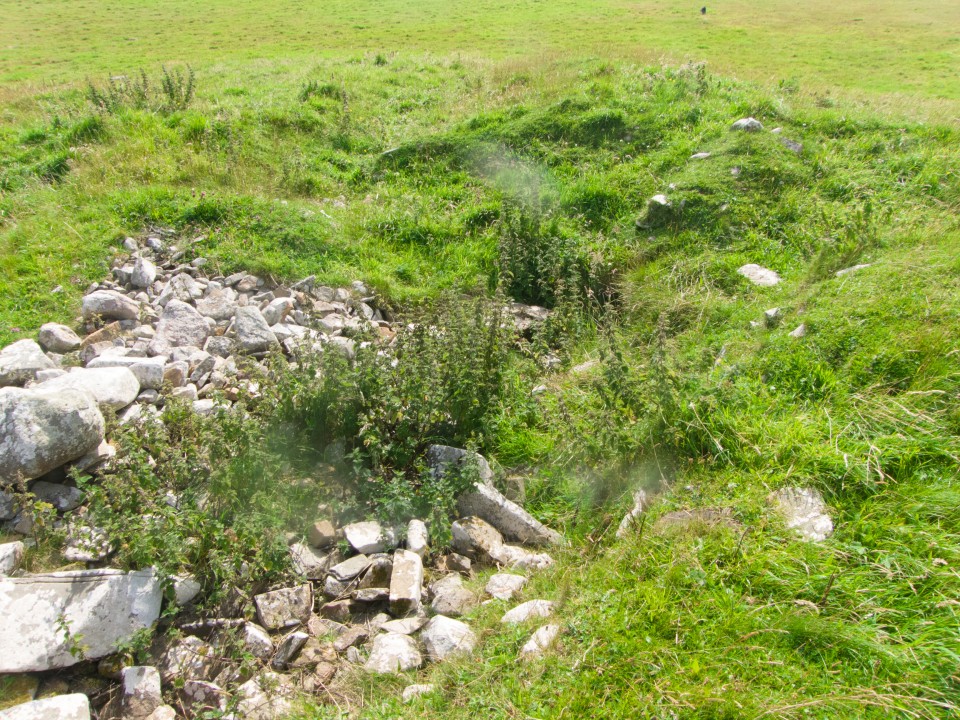
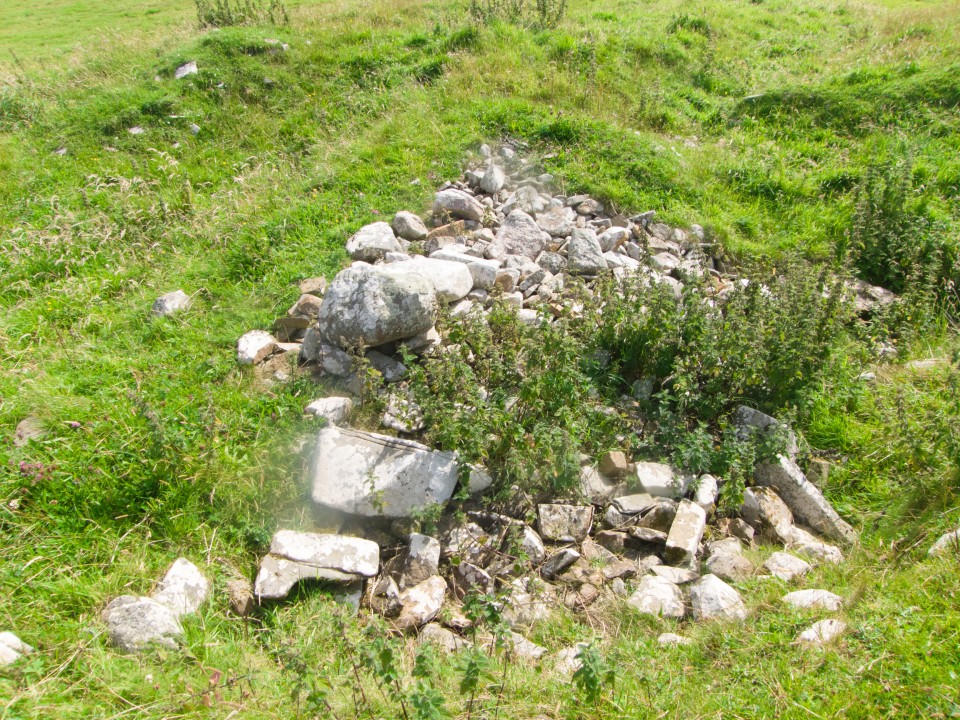
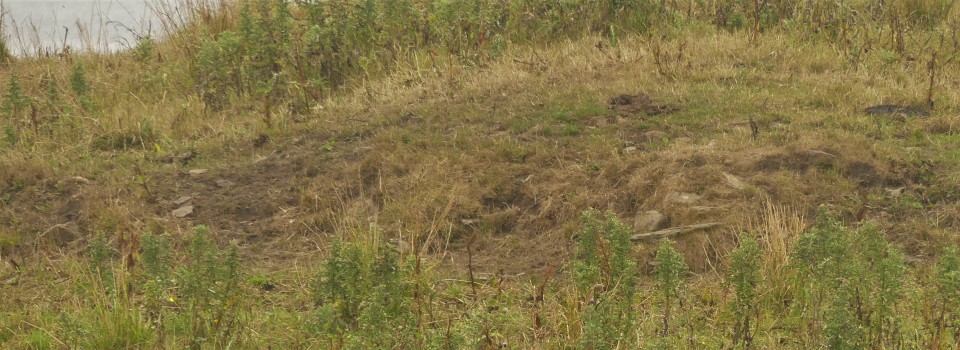
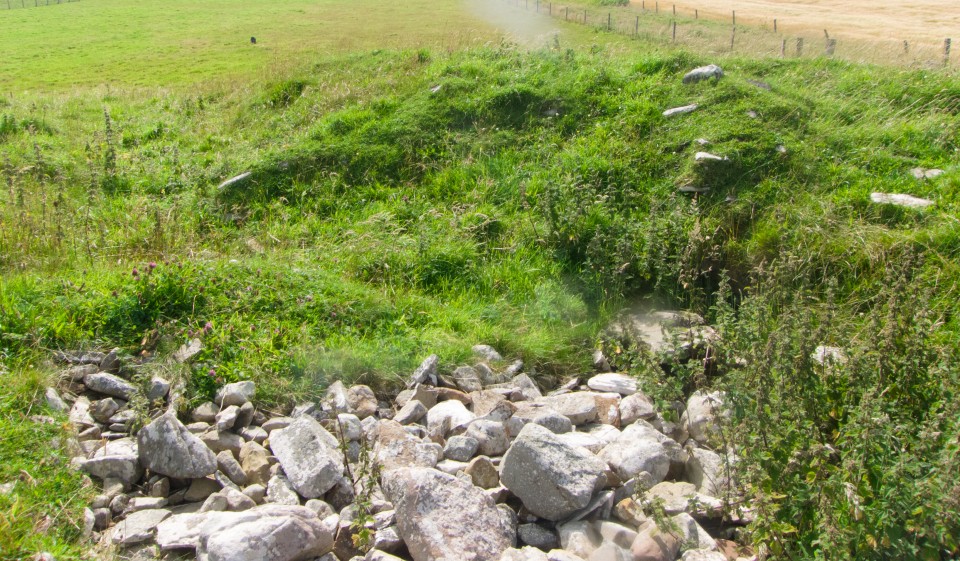
Finally able to have a good look at the cut in the northern end (no compass so, mound very roughly aligned with long axis NS but probably only following [present] cliff edge). Not even superficially a quarry, and Orkney has some decidedly rum bits mapped as this. Slightly more circular than rectangular when you're in it. Not sure if the back is a continuous arc, more like angled stone lines either side. And if these are a wall still unsure if truly curved or straight walls distorted by erosion. Probably artefact of unrecorded prior excavation or else resulting from digging out circular feature such as a round cairn
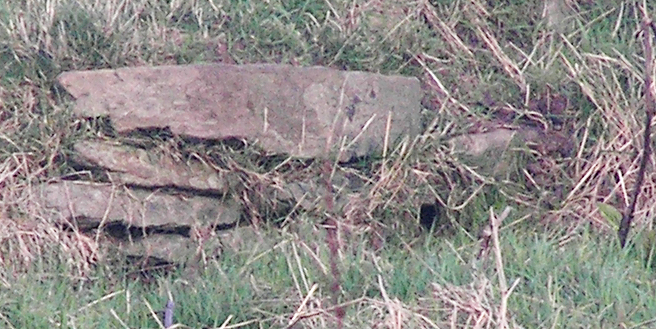
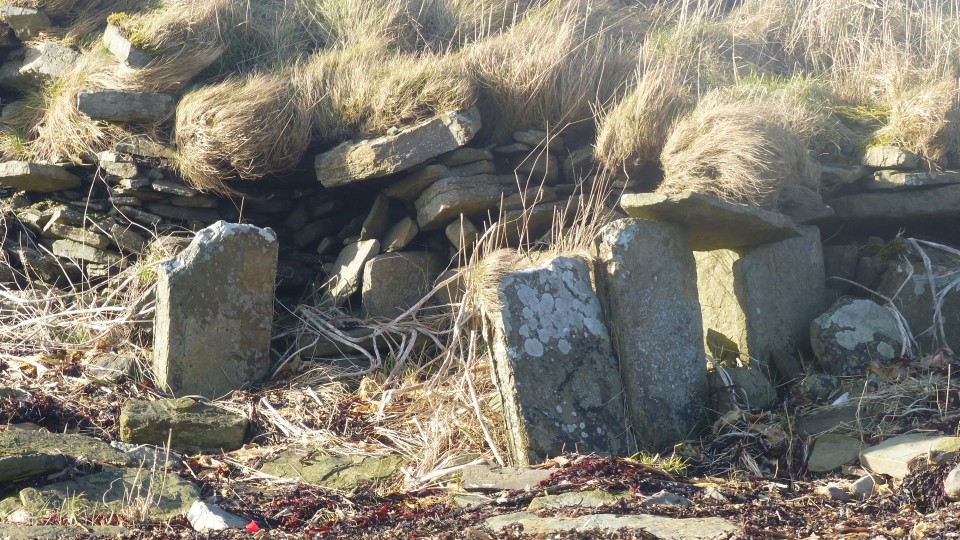
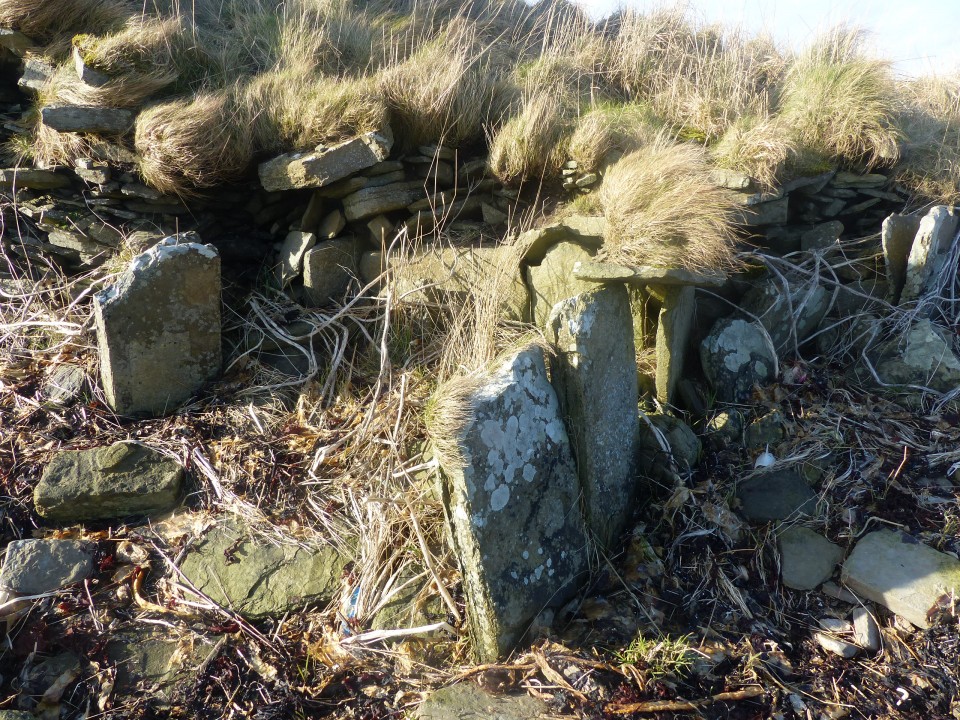
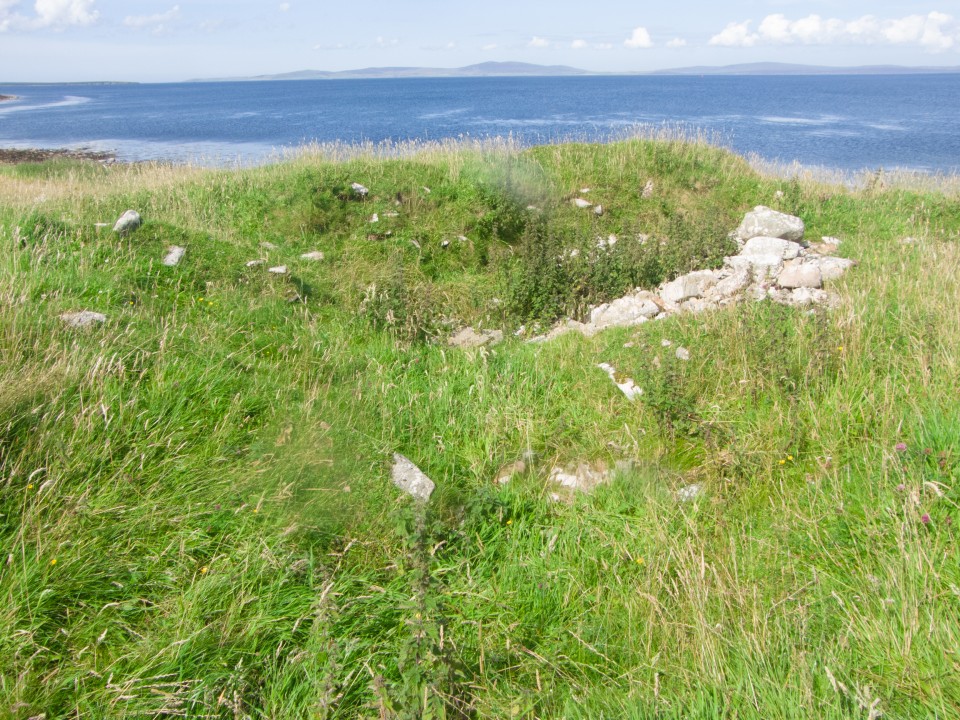
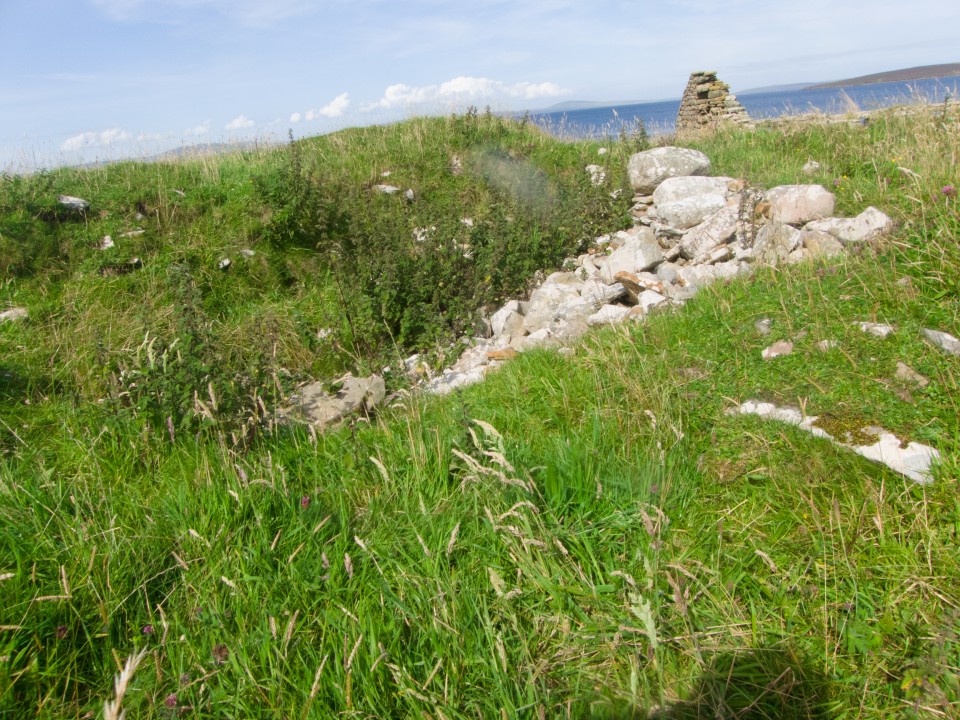
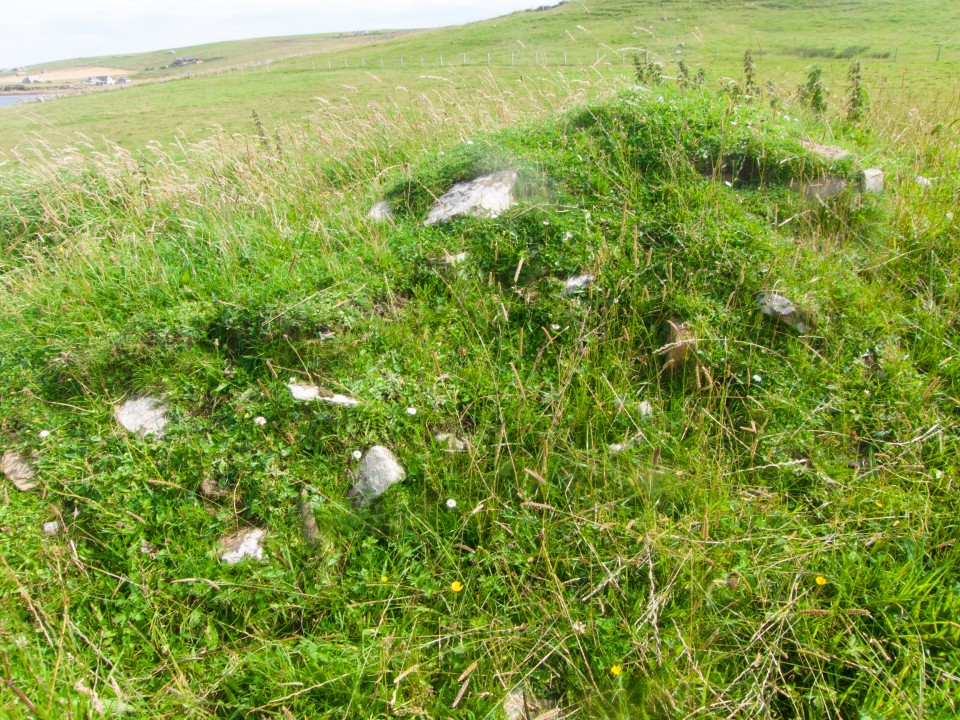
What I thought to be a decorated stone is more likely to be natural. Behind the cut is the reported 15m depression that has led to its identification as a possible broch. Then I was on top of the cut and not far from this is an orthostat seen from the coast. And it is part of a feature highly reminiscent of that at the top end of the round cairn inserted into Head of Work, which Davidson and Henshall contend is likely the top of a chamber. even if this is incorrect it is definitely nothing a Brochaholic would accept as to do with a roundhouse. What you first note are two orthostats of a size on order with that at the top of the cut - maybe half-a-metre or so high - and three feet across the pair, with a jumble of flat stones of various sizes tumbled in front for about five feet and layered. If these are the backstops the chamber is roughly aligned EW and running at right angles to the long axis- so unlike the Head of Work in this respect too. On closer inspection there are further orthostats a couple of inches behind the 'backstops', though rather than something like packing these may be more of the backstops themselves heavily fragmented, indicating depth to my mind.
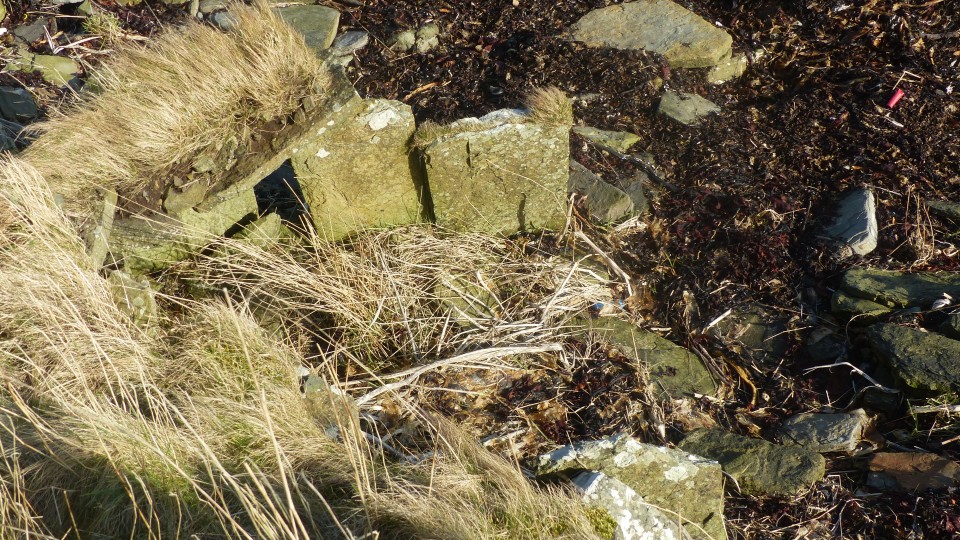
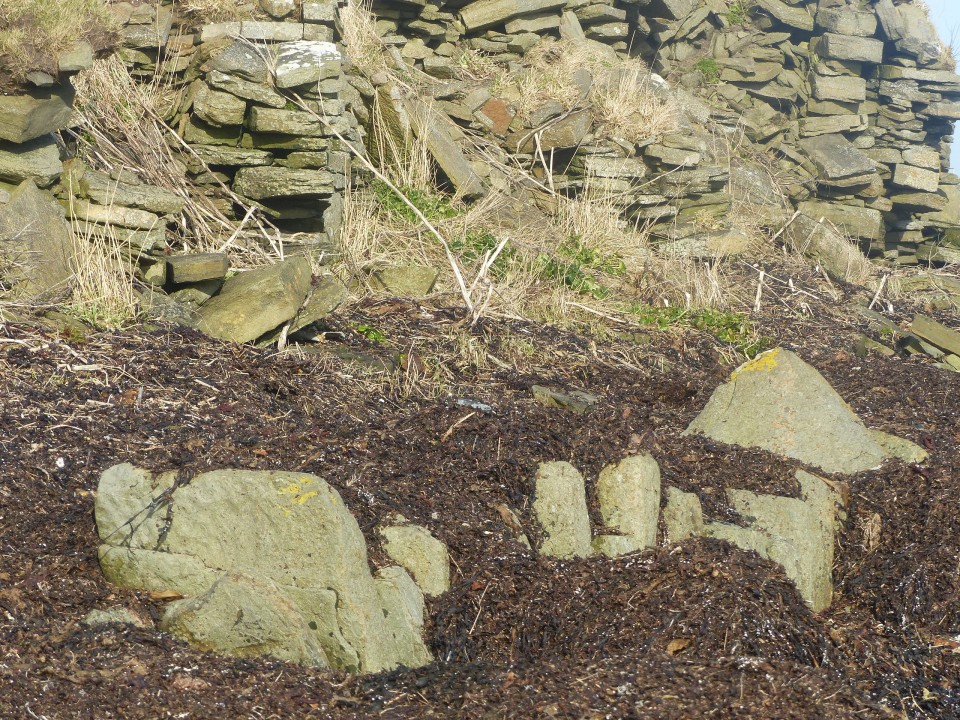
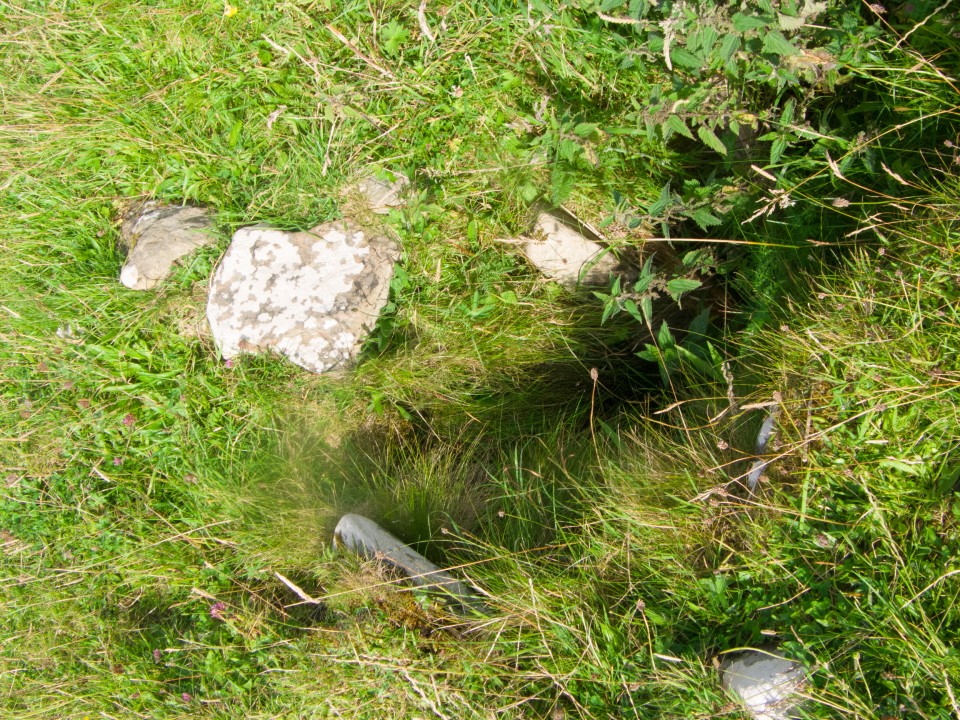
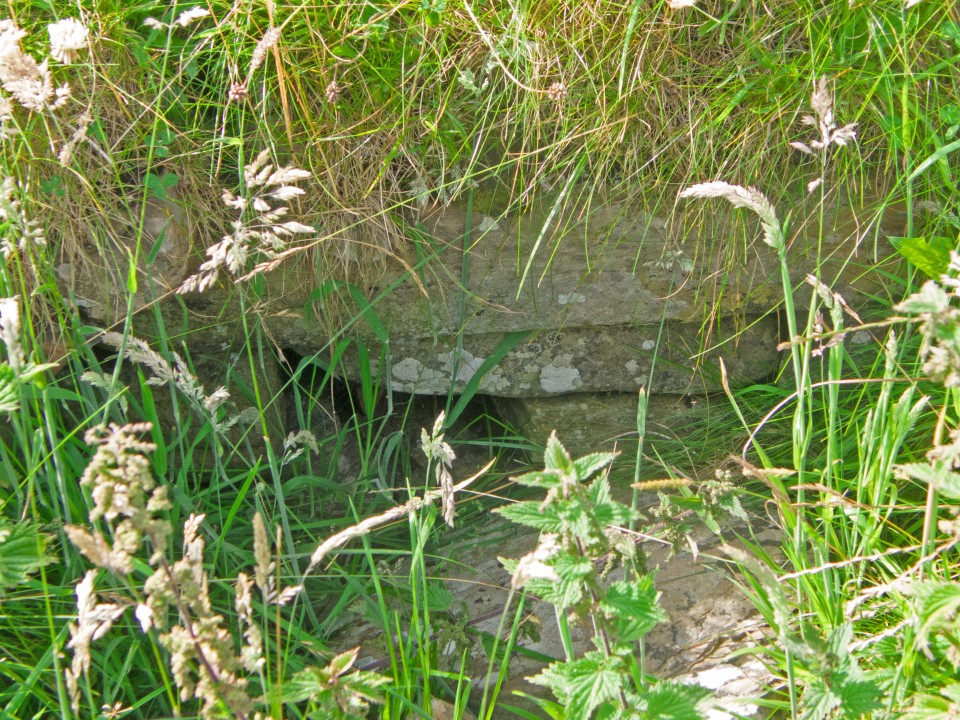
There's the top of a long rectangular stone that looks to form most of the southern edge, with a longitudinal split that indicated it goes down a fair piece - to the feature's floor perhaps. There are several other thick stones exposed, flat on the mound but partially buried nevertheless. Two of these solidly sunken near the eastern side, not flat but the tops of probable orthostats. These look to be at right angles to each other. Though they are exposed two or three inches away one from another they could well form a real pair under the earth.
|
| |