|
 Log in |
Register Log in |
Register
|

|
|


St Govan's Well and ChapelSacred Well
|
||||||||||||||||||||||||


 0 discussions


 Show map (inline Google Map)
|
|
|
Images (click to view fullsize) |
 Add an image Add an image |
|
Fieldnotes |
Add fieldnotes |
|
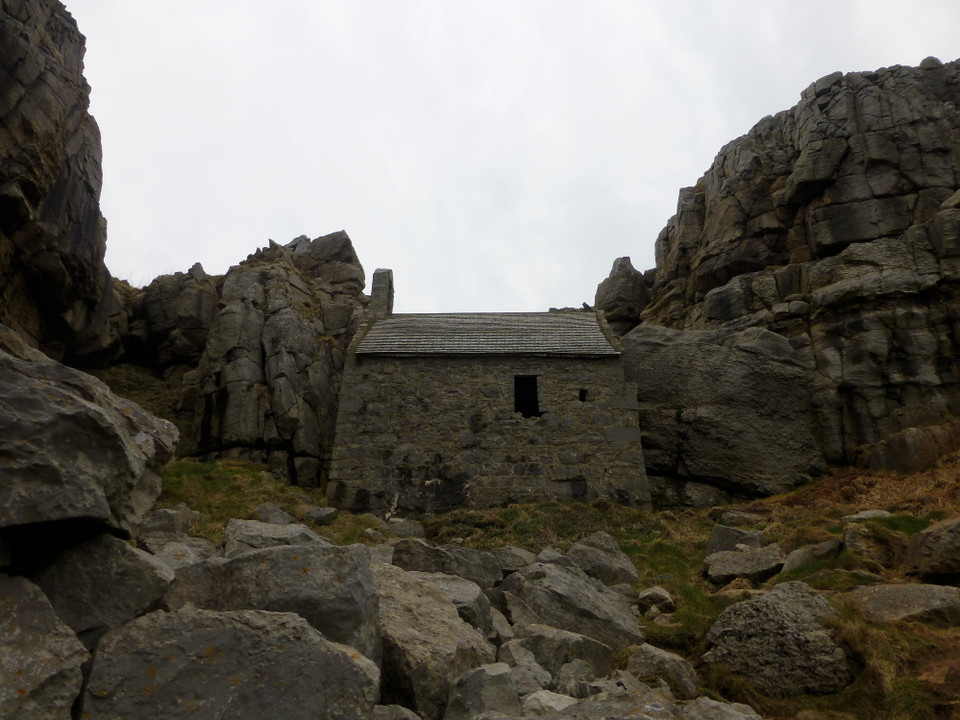
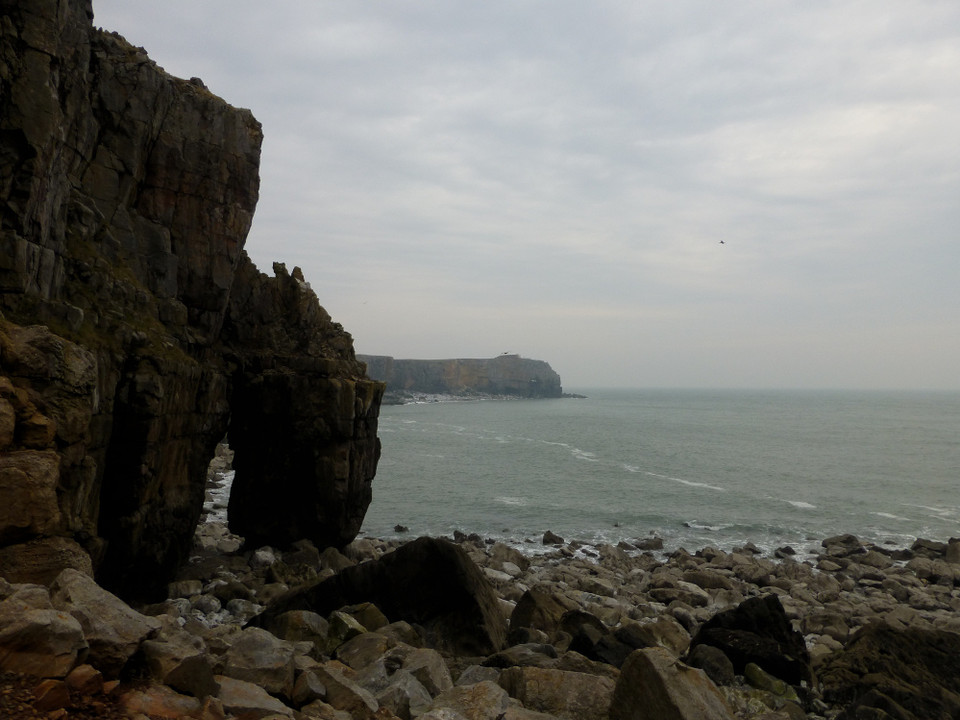
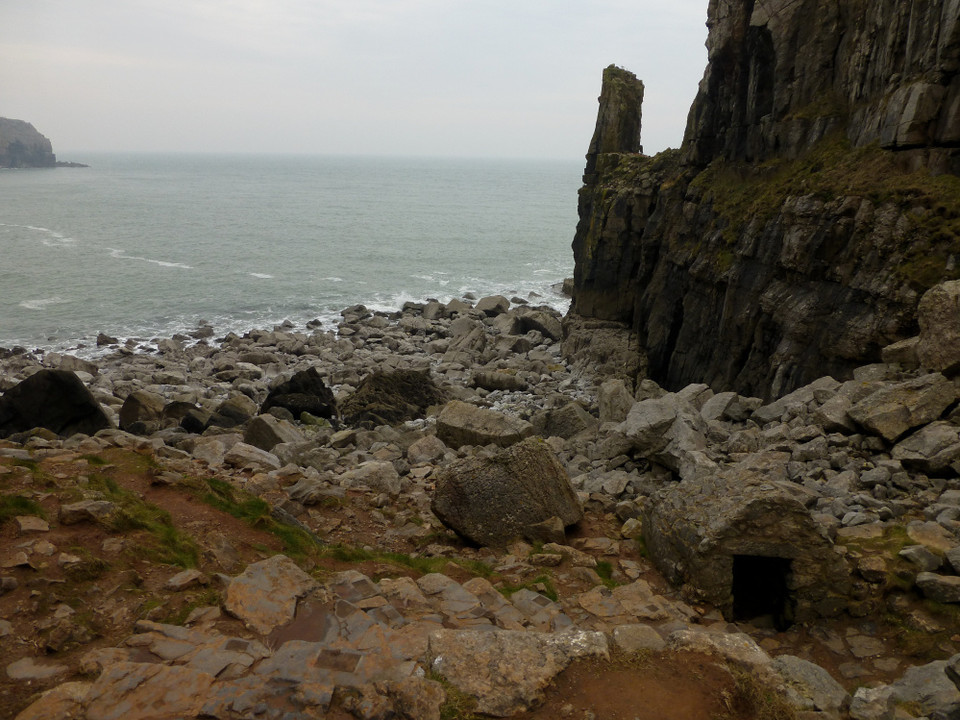
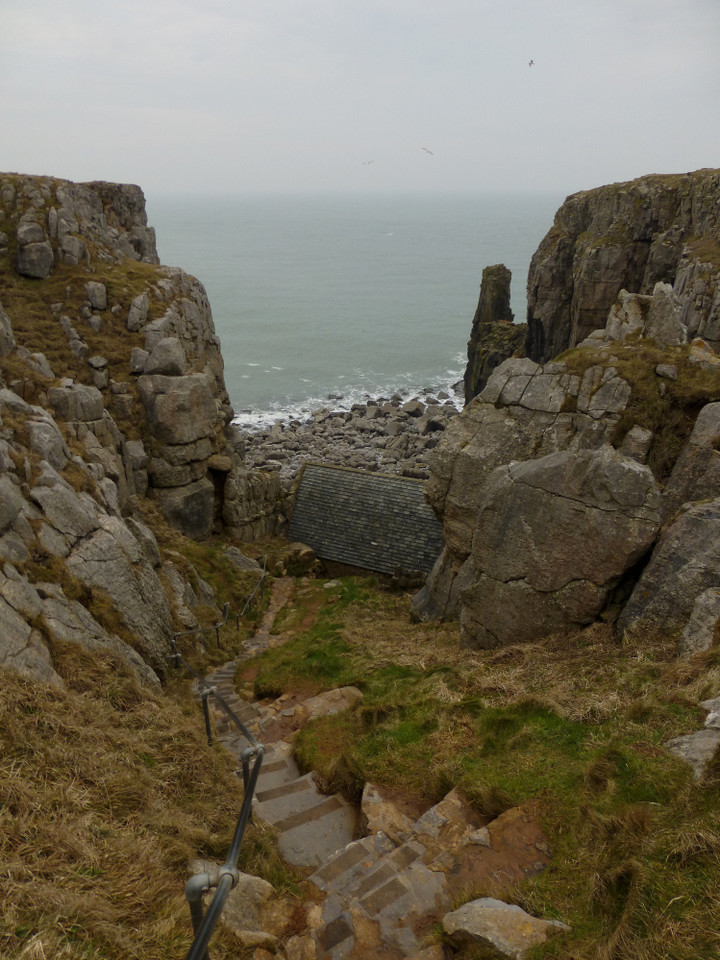
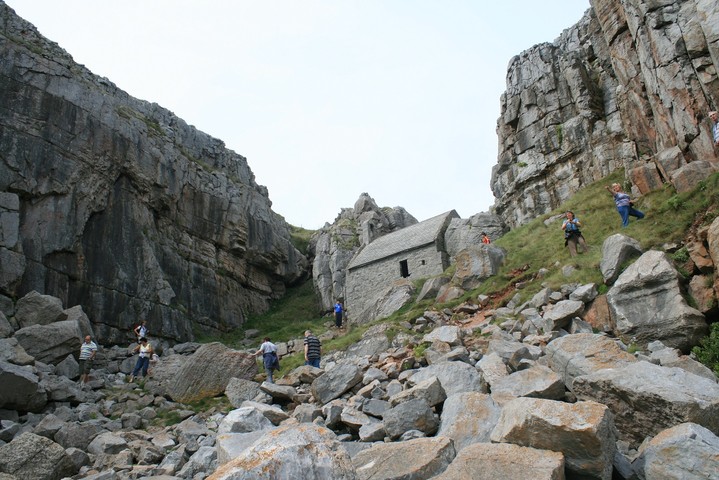
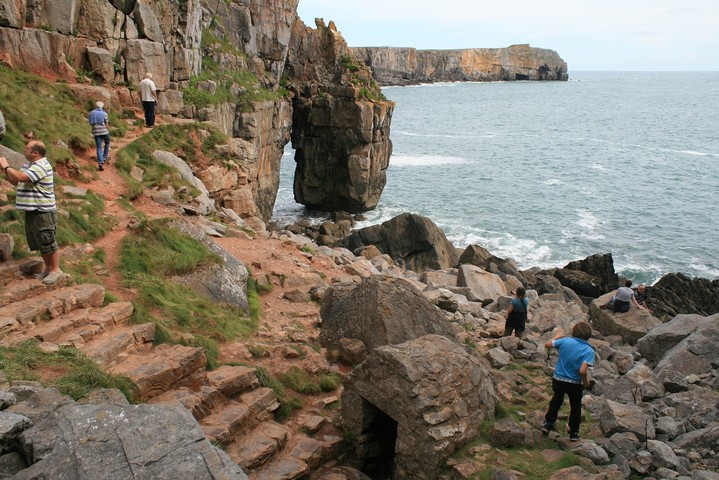
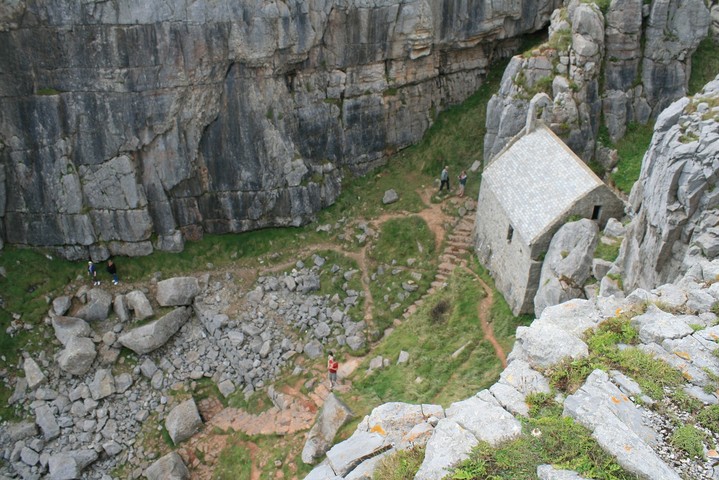
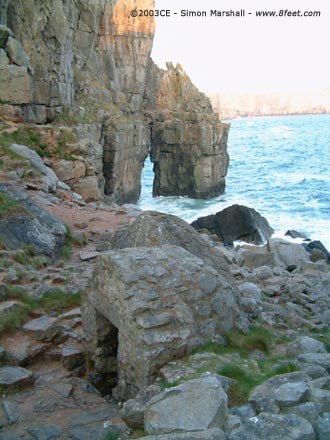
Visited 7.6.14 When in this part of Pembrokeshire a visit to St Govan’s well and Chapel is a must. The last time I came here Dafydd was a baby and Sophie not even a twinkle in the eye. Karen had visited here years before me. Where does the time go? This time all four of us headed down the steep stone steps from the car park to the chapel. Sophie didn’t like the inside as it was too dark for her and she was a little frightened – not like her. The little well was dry. We walked out the other side and were at the top of the rock strewn beach. I had a quick look at the tiny stone cell and scrambled down to the rocky shoreline. The waves were crashing in and I made my way towards the arch in the cliffs on the right. It was a surreal experience standing near one side of the arch and watching the water hurtling towards me from the other side – before quickly moving out of the way! The sky was blue overhead and the gulls were shrieking from their nests, high up on the cliff face. Dafydd was happily throwing stones into the water whilst Sophie and Karen watched from higher up the beach. St Govan’s is a special, unique place. It is one of those sites that everyone should visit at least once in their life. Once visited, never forgotten. |
Posted by CARL 10th June 2014ce |

|
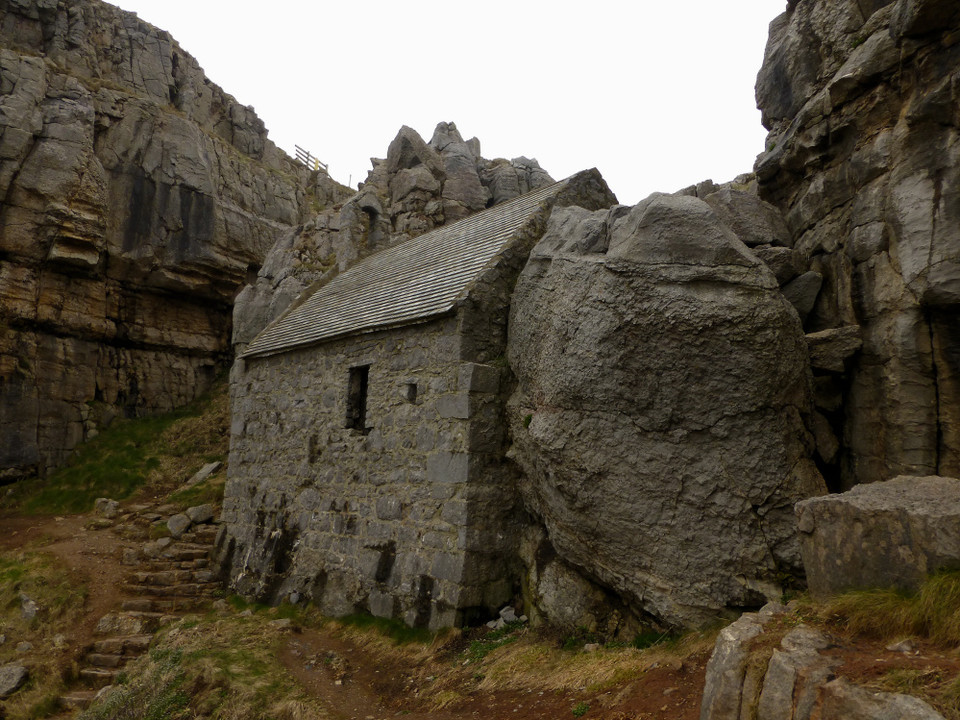
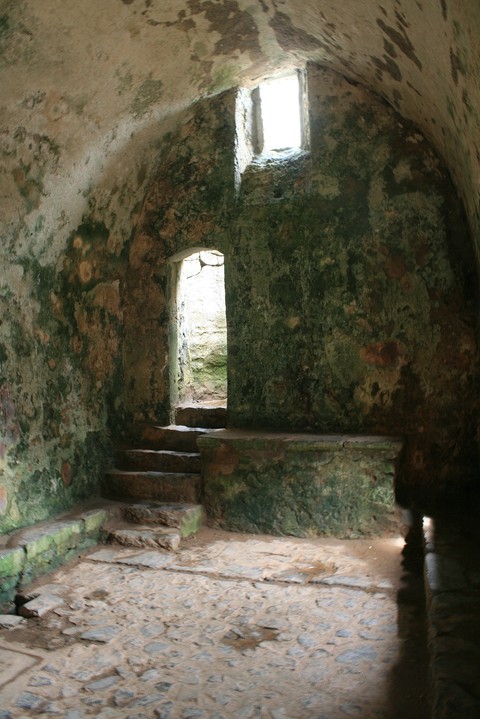
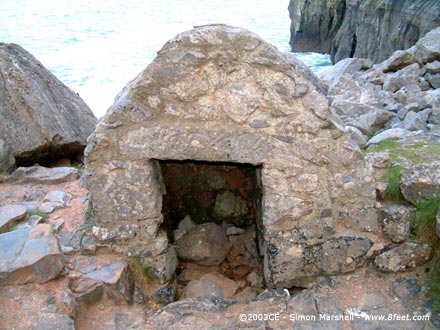
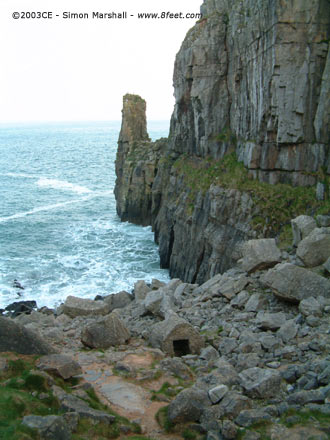
Having just been to the Lily ponds at Bosherston I couldn't not go here, there's maybe a mile in between them. Like Carl I'd wanted to come here for years, but I hadn't known exactly where it was, until I was looking into the hill fort barrows and stones near Bosherston. Parking was had in the big car park above the gorge and its well and chapel, we didn't have to pay, but i'm not sure if you had to or not. We start down the steps, and the first surprise came quickly, the chapel completely blocks the way down to the sea, you have to go in one door and out another, inside is a weird cell in the corner, it is basically a doorway to the bare rock of the gorge, many strange legends are attached to the rock. Out the other side of the chapel and it's big boulders down to the crashing waves, two types of boulders, one a volcanic dark rock the other a light grey colour. There is a very small hut, big enough for a ten year old to squeeze into, this is apparently a well, but has no water in it. By the sea on the left is a big natural arch, on the right a smaller longer natural arch and above it a tall rock spire. whilst we sat watching the waves bashing against the rocks two seals came by, they popped up took a look around then sank back down below the surface and were gone, Ive only ever seen seals once and that was on the isle of Mull, again. Brilliant. Superb site, even if it might not be old enough. |
 Posted by postman
27th August 2012ce Edited 28th August 2012ce |
|
Visited 25.4.10.. I have wanted to visit this site for many years and at last succeeded! It really is an amazing place to find a chapel and well worth a visit - the views are wonderful. I was surprised how easy it was to reach the capel, simply park at the car park on the headland (information board) and follow the steep stone steps down. For some reason I was expecting more of a hike but it wasn't far at all. Although it was a bit harder coming back up carrying a two year old! Signposted from the village of Bosherston. |
Posted by CARL 26th April 2010ce |
|
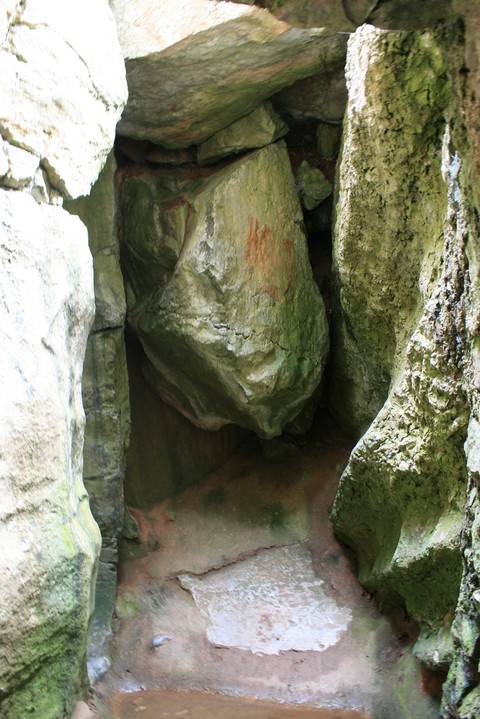
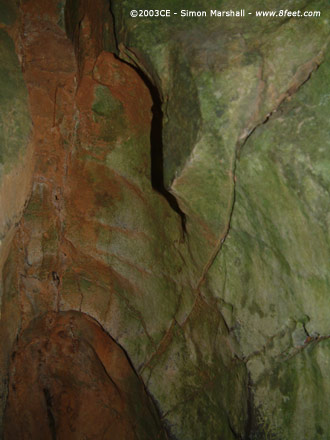
Visited 17th April 2003: This isn't the sort of site I usually post up on the Modern Antiquarian. I'm never all that sure about holy wells on a Web site about pre-history. Their credentials vary, and I can't claim any particular reason for thinking that the well at St. Govan's predates the chapel. Having done the scepticism thing, I can heartily recommend St. Govan's well and the nearby chapel as a place to visit. Both are, at the very least, amazing examples of Celtic Christian sites, and the setting is spectacular. If you can visit off season then you might get the place to yourself, which is something special. I've visited St. Govan's so many times, it feels comfortingly familiar. As well as the saint's well, there's also a smaller well inside the chapel. This is much less impressive and usually fills up with litter. Also part of the chapel is a strange roofless anteroom that has the natural rock face as two of its walls. Inside is a niche within which are unusual natural markings, presumably made by thousands of years of water erosion. Perhaps this place did represent something special to our pre-Christian ancestors. I'll have to try harder to image it all without the chapel. |
 Posted by Kammer
16th May 2003ce Edited 22nd June 2004ce |
Folklore |
Add folklore |
A steep and narrow path leads down to the sanctuary, but the descent is facilitated by a flight of steps cut in the rocks; fifty-two steps a man would say who went boring to work by the ordinary rules of calculation, but it is very well known in these parts, that you might as well attempt to count the grains of sand on the sea-shore as to tell the number of these mystic steps.The two adventurers then meet a girl and a boy who have been drinking the charmed water from the well (regrettably with no benefit). From A voyage round Great Britain, undertaken in the summer of the year 1813 by Richard Ayton and William Daniell. The authors also mention Bosherton Mere, an amazing natural spectacle very close to the chapel. You can see Sid Howells' picture here on geograph: http://www.geograph.org.uk/photo/1581454 |
 Posted by Rhiannon
3rd October 2012ce Edited 3rd October 2012ce |

A Wishing Cell. -- At St. Govain in Pembrokeshire there is a "wishing cell" in the rock. It is said that any one who turns round inside wishing for the same thing all the time, will get it before the end of the year. The place is still visited by young people who are in love.p157 in Notes on Welsh Folklore Jonathan Ceredig Davies Folklore, Vol. 30, No. 2. (Jun. 30, 1919), pp. 156-157. |
Posted by Rhiannon 2nd May 2007ce |
More, on the strange indentations that Kammer mentions.On this part of the coast of Pembrokeshire, between Tenby and the entrance to Milford Haven, is a small bay, steep in its sides, and so lashed by surf as rarely to permit a boat to land. Here is the hermitage (or chapel) of St Gawen, or Goven, in which there is a well, the water of which, and the clay near, is used for sore eyes. Besides this, a little below the chapel, is another well, with steps leading down to it, which is visited by persons from distant parts of the principality, for the cure of scrofula, paralysis, dropsy, and other complaints. Nor is it the poor alone who make this pilgrimage: a case came more immediately under my notice, where a lady, a person of some fortune, having been for some time a sufferer from a severe attack of paralysis, which prevented her putting her hand in her pocket, took up her quarters at a farm-house near the well, and after visiting it for some weeks daily, returned home perfectly cured.From p204 of 'Choice Notes from Notes and Queries - Folklore', 1859. |
Posted by Rhiannon 18th February 2007ce Edited 18th February 2007ce |
Some rock-related folklore for the spot. 'Ringing' rocks aren't an unusual motif?ST. GOVEN'S BELL.Originally in Vol xii, p201, this was included on p257 of 'Choice Notes from Notes and Queries - Folklore', 1859. |
Posted by Rhiannon 18th February 2007ce Edited 18th February 2007ce |
There's a great legend explaining the existence of the chapel, and more interesting, the unusual markings in the cliff face. The information board at the car park above the chapel only tells part of the story:Tradition says [St Govan] was pursued by pirates [or Vikings] to the cliff edge where the chapel now stands. Miraculously, a cleft in the rock opened for the Govan[sic] to hide in, closing again until the marauders had left.The place where St Govan hid is now the anteroom at the back of the chapel, and the strange markings in the cliff show where his ribs were pressed against the rock when God hid him. |
Posted by Kammer 16th May 2003ce Edited 22nd December 2003ce |
Miscellaneous |
Add miscellaneous |
The following text, from the information board at the car park, describes both St. Govan's well and the well inside the chapel:On the floor just inside the main door [of the chapel] is a simple, shallow well. The water, which could only be scooped with a small stone or limpet shell, was said to cure eye complaints, skin diseases and rheumatism. Located just outside the chapel, and covered by the stone arch, is the saint's holy well. Although it is now dry, it was known for both healing powers and as a wishing well.The well in the chapel is dissapointing (and usually filled with litter). |
Posted by Kammer 16th May 2003ce Edited 25th May 2004ce |
 Top of page