
The hole in the Heaven stone, a small target to aim for.
Image credit: Mark Johnstone

The hole in the Heaven stone, a small target to aim for.
An overall description of Trumpan Church and its stones. There is no reference to the Heaven Stone/Trying Stone.
I don’t own a copy of Ecclesiological notes on some of the islands of Scotland (1885) by TS Muir. I would hazard a guess that not many people do. However, the book is used as a reference in Canmore ID 10939 (go to Links) for Trumpan Church in Skye.
Therefore I would like to acknowledge Malcolm H Jones for a quote from pages 270-1 posted on MyCanmore Text in Canmore ID 10939. Canmore does not mention the Heaven Stone in its account however Muir has an account of the stone and its tradition.
Muir describes it as “a rude undressed pillar called ‘The Trying Stone,’ to which, according to local tradition, accused persons were taken, and there, through a venturesome appeal to the object, made manifest their innocence or their guilt. It is a massy whin, 4 ft. 8 in. in height, with a downwardly-bent cavity of an inch and a half in diameter near to its top. As the story goes, the appellant was placed within a certain distance of the stone, and then, approaching it blindfold, established his innocence only by unerringly putting his finger into the cavity.”

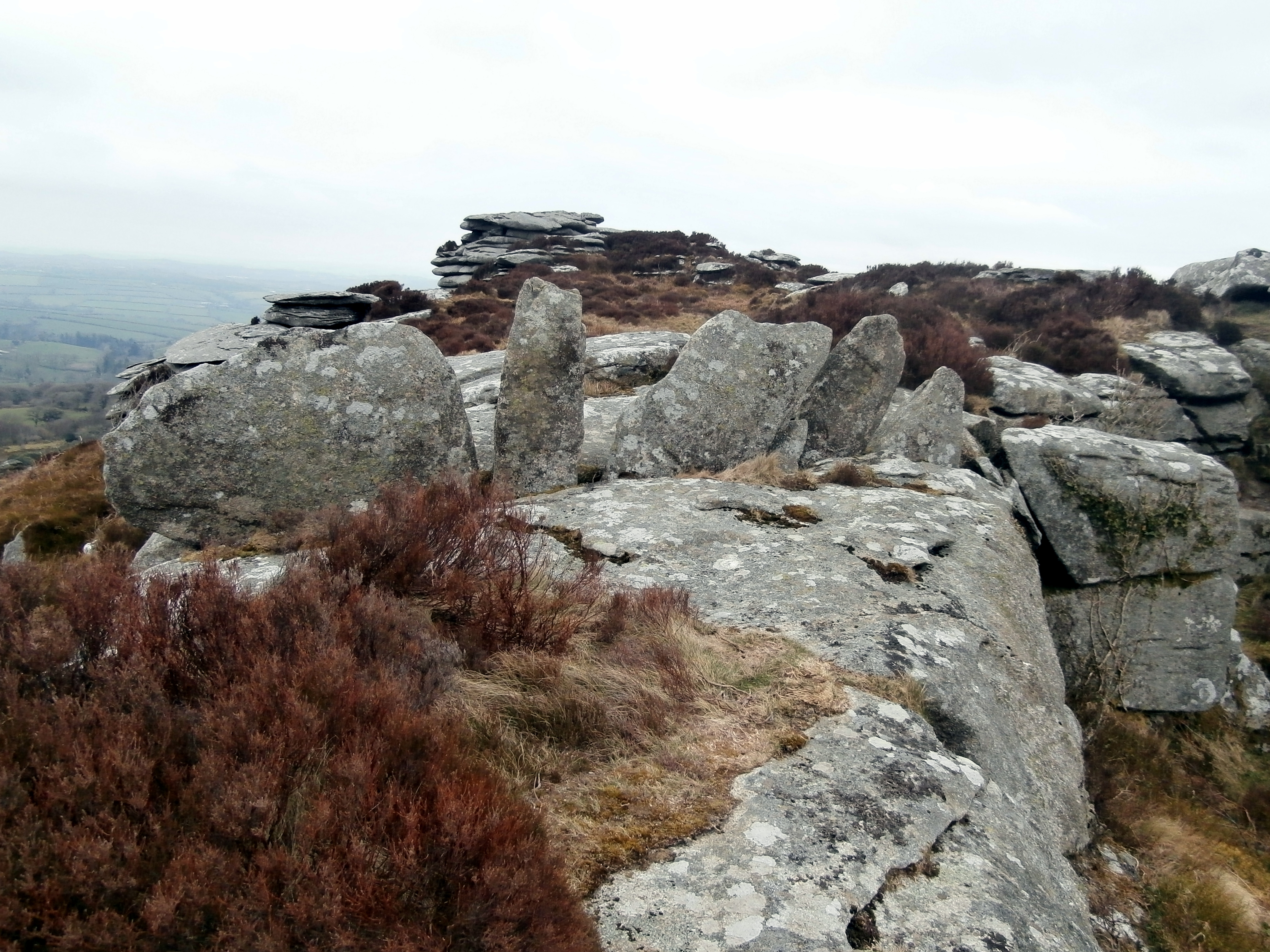
Hawk’s Tor proposed Stone Row viewed from SW.

Hawk’s Tor proposed Stone Row viewed from NE.
There is a proposal by The Stone Rows of Great Britain website that the row of small stones on top of Hawk’s Tor are a rare type of stone row. 5 stones up to 1m high have been carefully wedged into a rock crevice. This 5m row of stones runs from SE to NW. The stone row aligns with a prominent notch in an adjacent tor stack to the SE.
According to their calculations the midwinter sun viewed from the NW along the stone row will rise in the base of the notch.
The Stone Rows of Great Britain report (go to Links) gives a detailed survey of the site.
Proposed 5m stone row on summit of Hawk’s Tor


Barbay Hill summit, 127 m above sea level, the highest point on Great Cumbrae.


The Glaid Stone is a natural erratic stone deposited on top of Barbay Hill, 2 km N of Millport. It is c. 12 feet long with a 4x4 feet cross section. The Glaid Stone is quite impressive however the panorama from the summit is more impressive.
Barbay Hill is the highest point on Great Cumbrae at 127 m above sea level.
A minor road from Millport winds past the Glaid Stone completing a picturesque 7 km circuit back to Millport.


Giant’s Grave (Sma’ Glen) stone with a saddle stone at its base.

Graffiti on Giant’s Grave (Sma’ Glen) stone may record successful Saddlin the mare attempts.
‘Near to the entrance to the Glen were the grassy embankments of a Roman Camp, but a feature of the valley that interested me more than this relic of the dim past was a great boulder about a mile beyond. It stood a little aside from the highway, and a much used path leading to it was evidence that it had many visitors. What the attraction was, I could not have conjectured, had I not heard its story previously. It had a smooth, rounding top, and rose above the ground to a height of seven or eight feet. At its base lay three heavy stones, the largest about the size of a peck measure.
It was a common custom among travellers who happened into Glen Urtach to try ‘Saddling the Mare’ that is, to attempt putting the stones up on the boulder. They slid off with surprising ease, and few persons had the strength or cleverness to lodge all three. Still it was allowable to boast, even if you only succeeded with the two smaller ones. That the sport was a popular one was attested by the battered whiteness of the top of the boulder.’ The Land of Heather. Clifton Johnson (1903).
The above quote attests to the tradition of Saddlin the Mare when passing through the Sma’ Glen. There were three stones of increasing weight to place on the top slope of the stone without falling off. The route through the sma’ glen was a drovers road so the tradition may derive from ancient times.
There is a moderately sized stone at the base of the rock so it may be one of the original ‘saddles’. It is interesting that a stone is ‘saddled’ on top of the rock in Andy’s pictures so the tradition appears to be continuing.


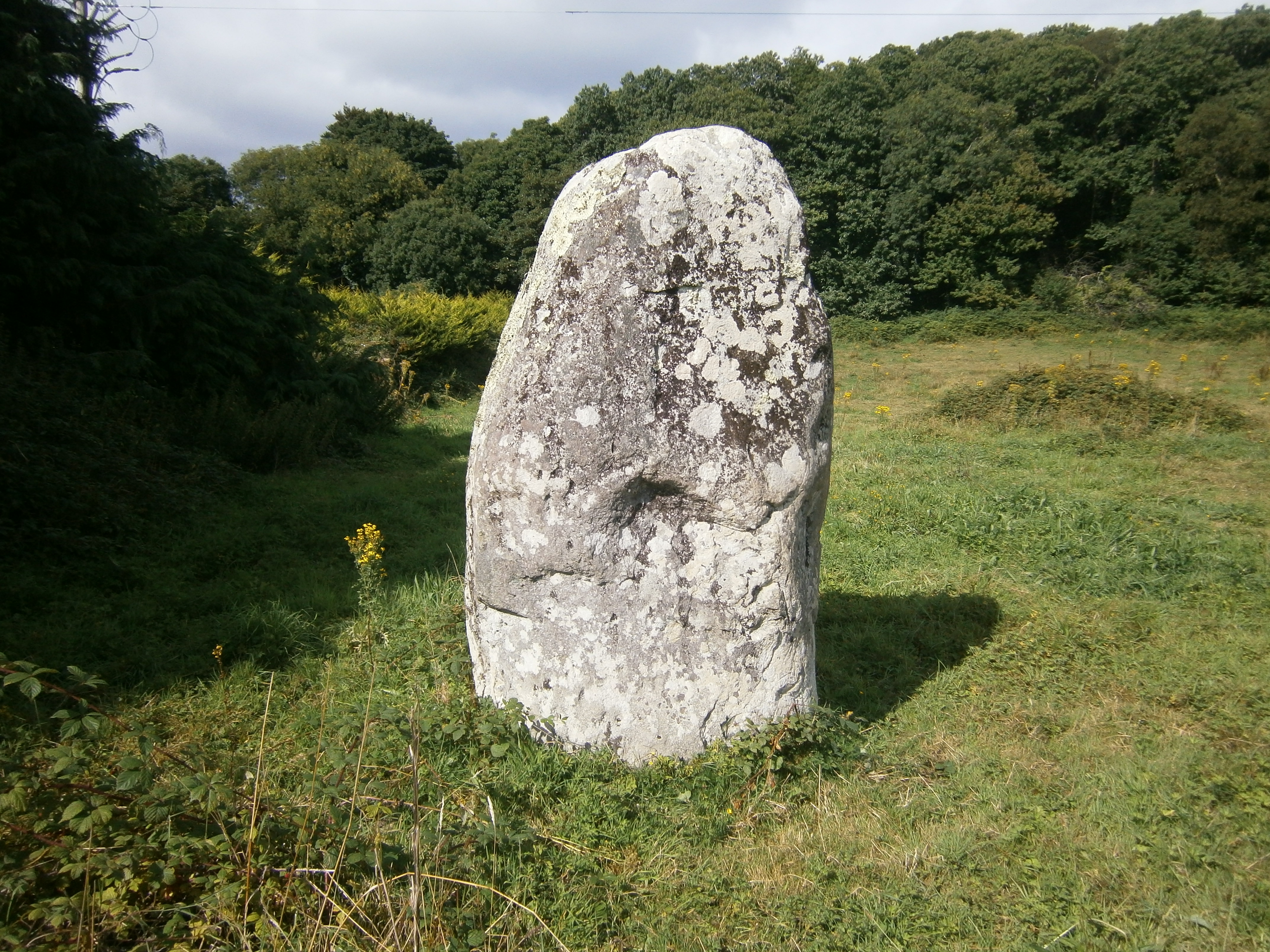
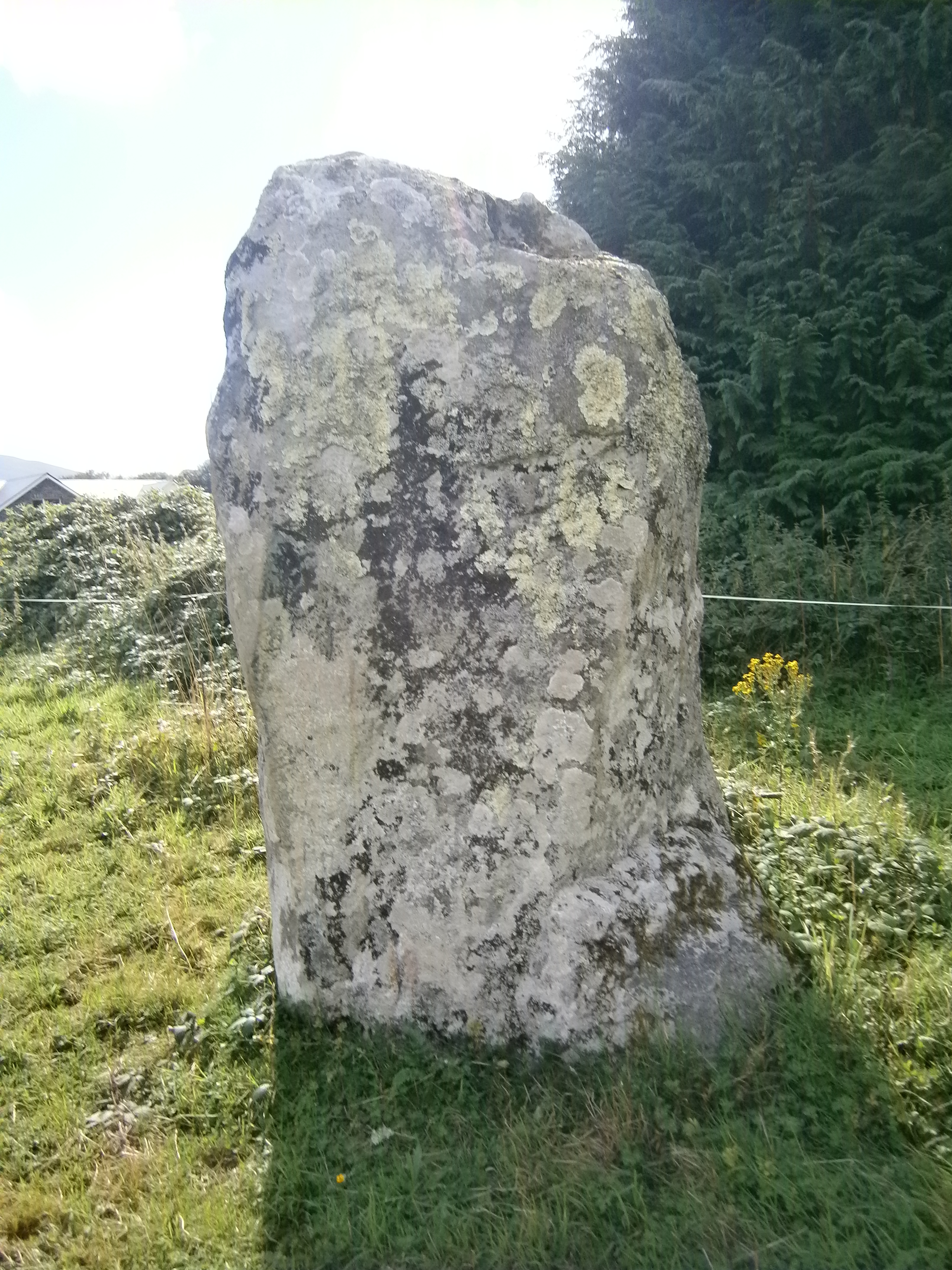
Finnarts Hill Standing Stones

Finnarts Hill Standing Stones alignment viewed from N.

Finnarts Hill Standing Stones alignment viewed from S.

Finnarts Hill Standing Stone A

Finnarts Hill Standing Stone B. The possible c. 30 degrees shear plane on top of the stone is evident.
Finnarts Hill Standing Stones are a small pair of stones on the Ayrshire Coastal Path (ACP) between Glen App and Ballantrae. Finnarts Hill lies on the Loch Ryan coast. The standing stones are small, 1 yard and 0.5 yards high respectively. The stones are 15 yards apart in a N-S alignment. They are situated in wet moorland adjacent to the ACP.
Canmore ID 60914 speculates that the smaller stone may be a stump of a taller broken stone. The top of the stone has a possible c. 30 degrees shear plane. However there are no other stones within a 10 yard radius.
Directions: Opposite Glenapp Church on the A75 there is a small car park at the start of the ACP. Follow the road S for over 0.5 miles until the ACP veers R off the road uphill onto a rough rocky track. After ascending for c. 1 mile the ACP reaches a pass between Finnarts Hill and Sandloch Hill. Finnarts Hill Standing Stones are on the L side around 20 yards from the track.
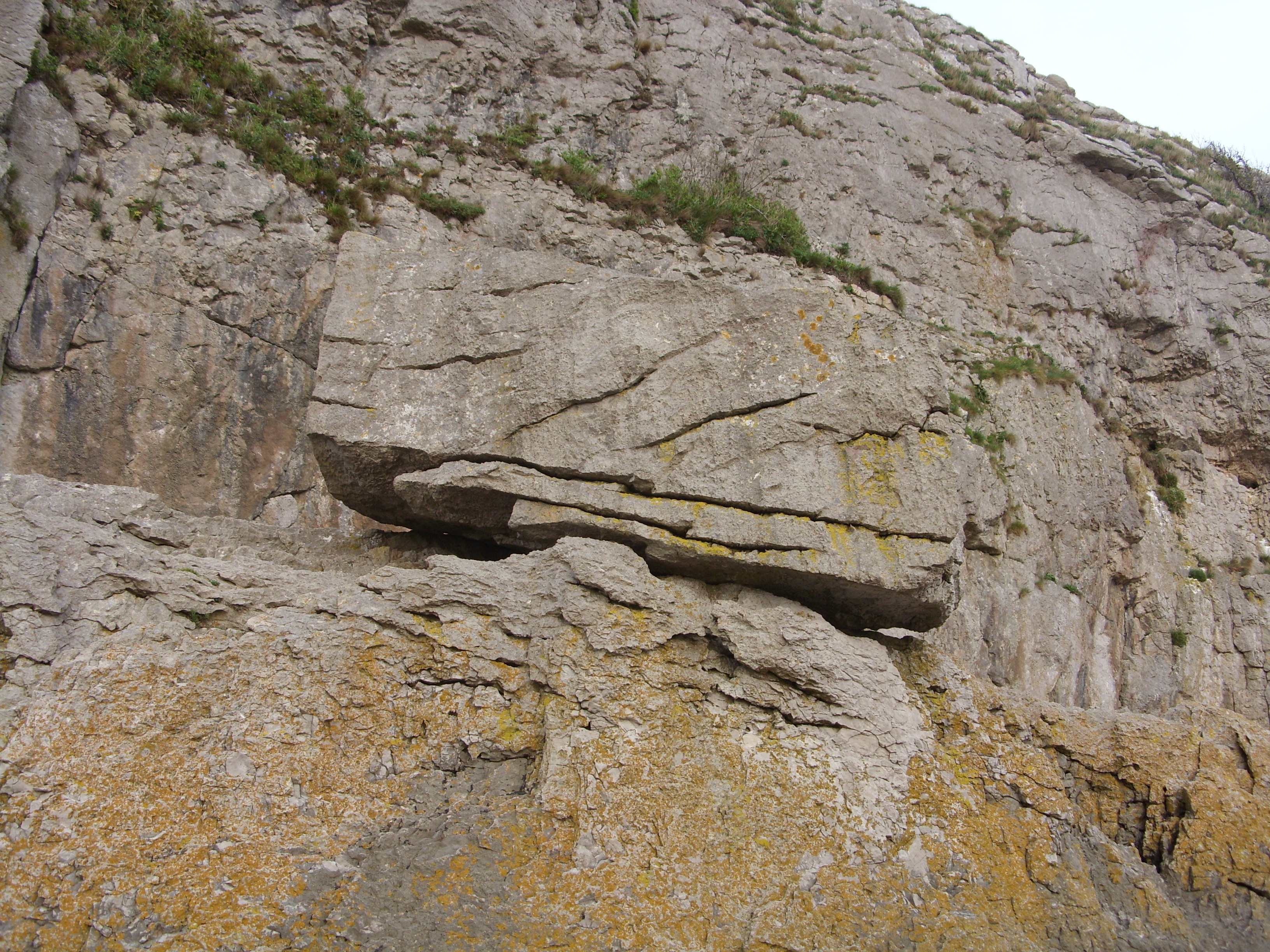
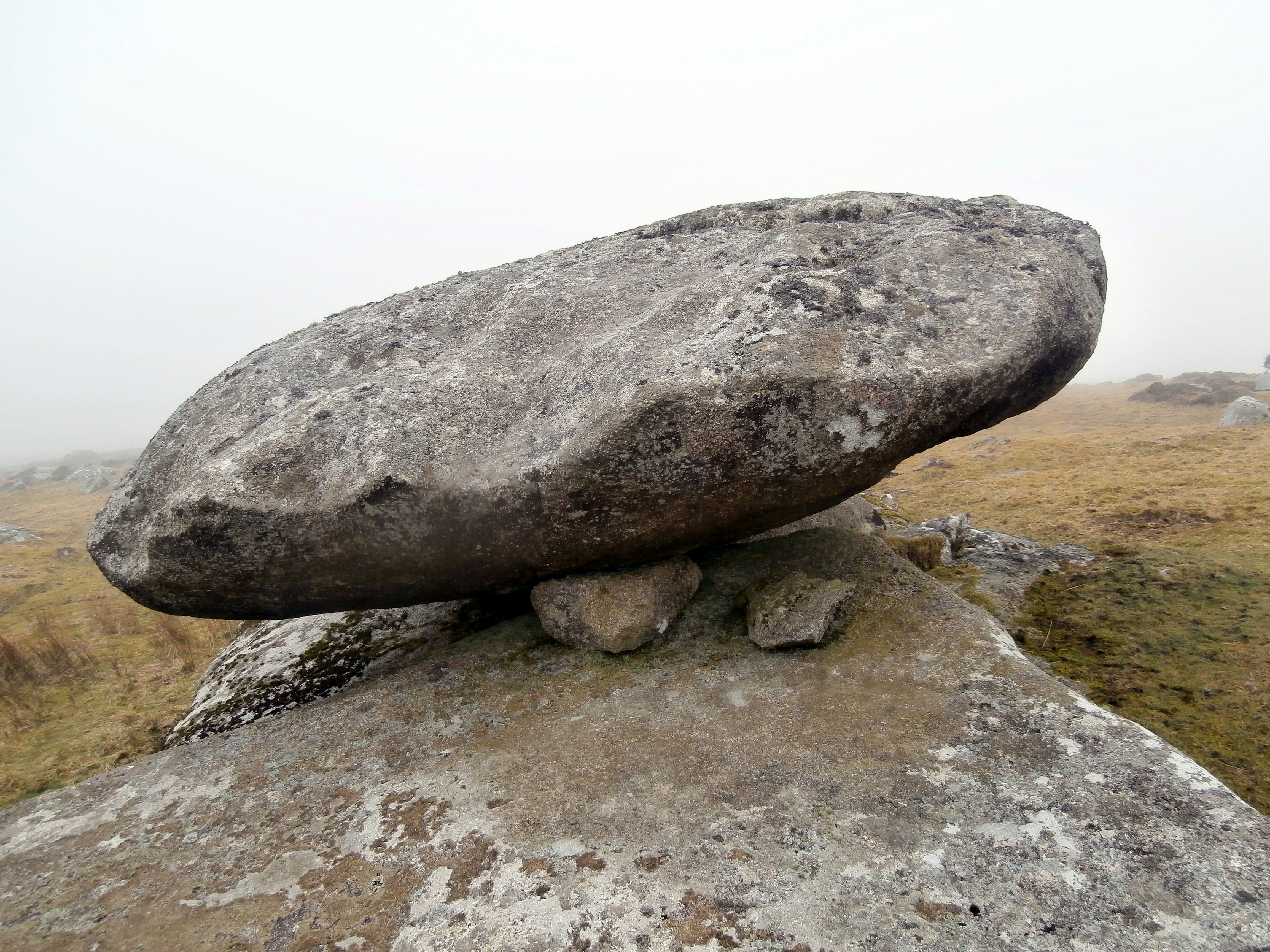
Elephant Rock (Hendra Downs)

Elephant Rock (Hendra Downs)
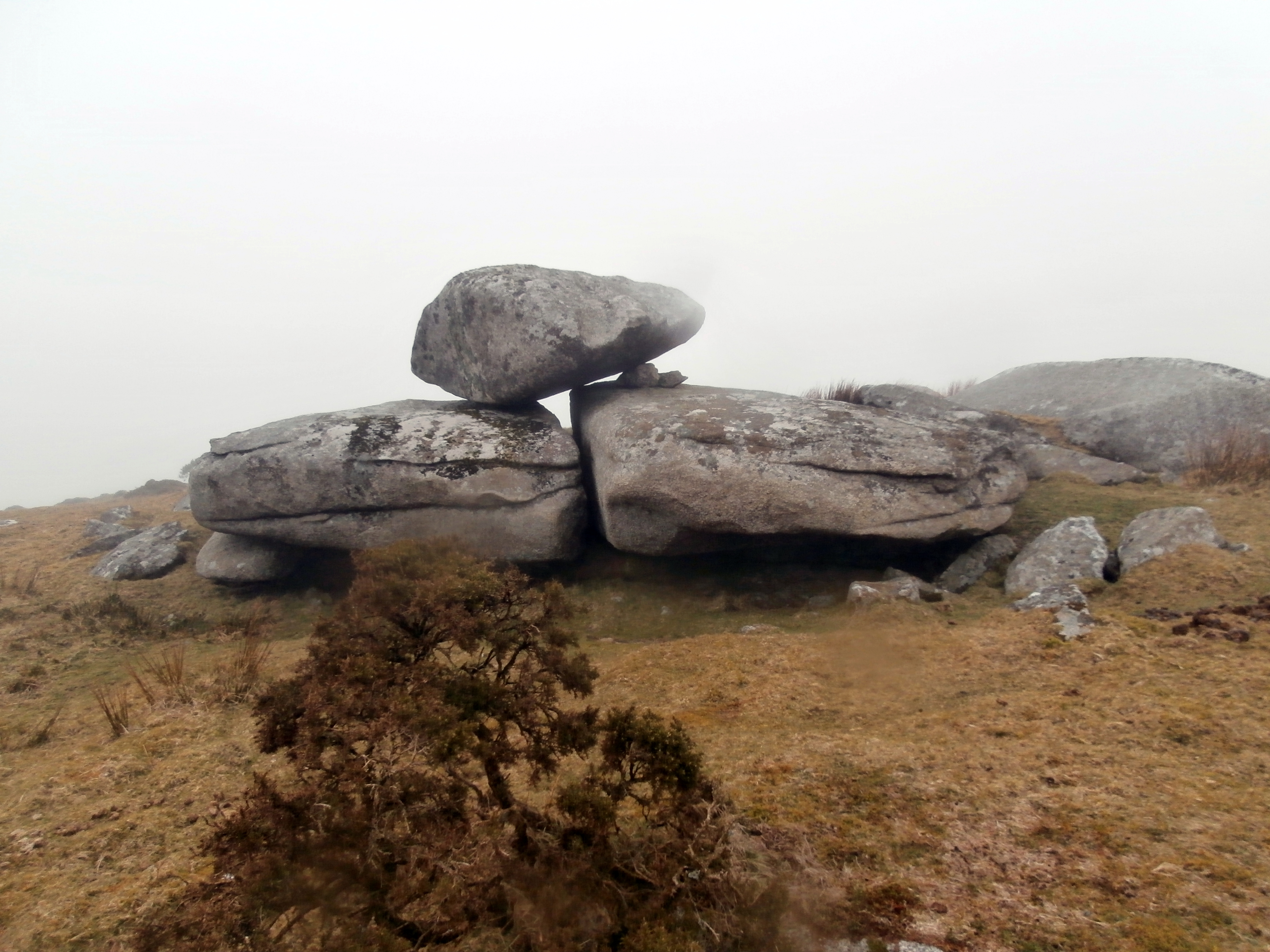
Elephant Rock (Hendra Downs) looking N to The Beacon summit.
Elephant Rock is a large boulder balanced precariously on two flat rocks around 250 yards S of The Beacon summit on Hendra Downs. The delicate balance of the rock may be an optical illusion as it has survived longer than many logan stones however I elected not to test this hypothesis. I wanted to preserve Elephant Rock for fellow TMAers.
Turn R at this junction for Balevullin Bay. Take next R
after 250 yards for blue Parking sign. Car park is 500 yards down a narrow track.

Dun Boraige Beag viewed from coastal path looking N.

SE arc of outer wall on Dun Boraige Beag.

Dun Boraige Beag viewed from S, possible SW entrance left centre of frame.

The grassy interior of Dun Boraige Beag dominated by a mysterious boulder.

The N arc of Dun Boraige Beag protected by the sea.
Dun Boraige Beag
Dun Boraige Beag is a ruined dun on Balevullin Bay in Tiree. It is sited on a rocky promontory barely above sea level. A course of large stones remains on the SE arc of Dun Boraige Beag. There is a gap in the outer wall on the SW quadrant, possibly the entrance to the dun. The grassy interior is around 10 yards in diameter, uneven ground with no obvious features save a large central stone. The purpose of this boulder measuring c. 5x3x3 feet is unclear.
Canmore ID 21447 (go to Links) furnishes further details on this site.
Directions: From Scarinish head N on the B8065 for around 7 miles until you reach Balevullin. At the road end follow the Baile a Mhuilinn sign R then 250 yards later turn R down a narrow lane signed with a blue parking sign. You will reach the car park in 500 yards. A rough track heads NW out of the car park. Follow this track round the coast for around 300 yards and look N for a low lying promontory with a line of large stones on the coast. Dun Boraige Moire is around 300 yards W of Dun Boraige Beag on a natural knoll 100 yards from the shore.
Dun Boraige Moire
Dun Edinbain

