
“The tomb is almost completely enveloped in peat.” Still.
Image credit: ryaner

“The tomb is almost completely enveloped in peat.” Still.

Looking south with Nephin looming over the end of the lane on the right.

Looking north-east into the ‘entrance’ of the portal tomb.

You would think that these uprights are two portal stones of an old, ruined dolmen.


Writing in 1961, De Valera and Nualláin have this to say: “The site, the most extensive megalithic monument known in Mayo, is well preserved.” They go on to describe a gigantic, multi-chambered, what is most likely, triple court tomb. There was no-one in at the cottage in whose garden the tomb resides so we didn’t feel confident to vault the fences and were left with this poor view from the adjoining field.

Kind of disappointed at the overgrown state of this monument, a theme that was to continue throughout the day. The landowner, Padraic Hanahoe, was a true gent and very accommodating, if a bit bemused by our knowledge of the tomb on his land.

The back of this badly overgrown monument (not uncommon in Co. Mayo). The location is dominated by the magnificent Nephin, 6 kilometres to the south.

Summer pond off the north-west shoulder of the mound.

On the eastern shoulder of the mound looking south-west towards Oweynagat.

Erosion on the eastern side of the monument shows the rubble-like construction of the mound.


Both portal stones have been removed and the capstone has fallen forward off the chamber.
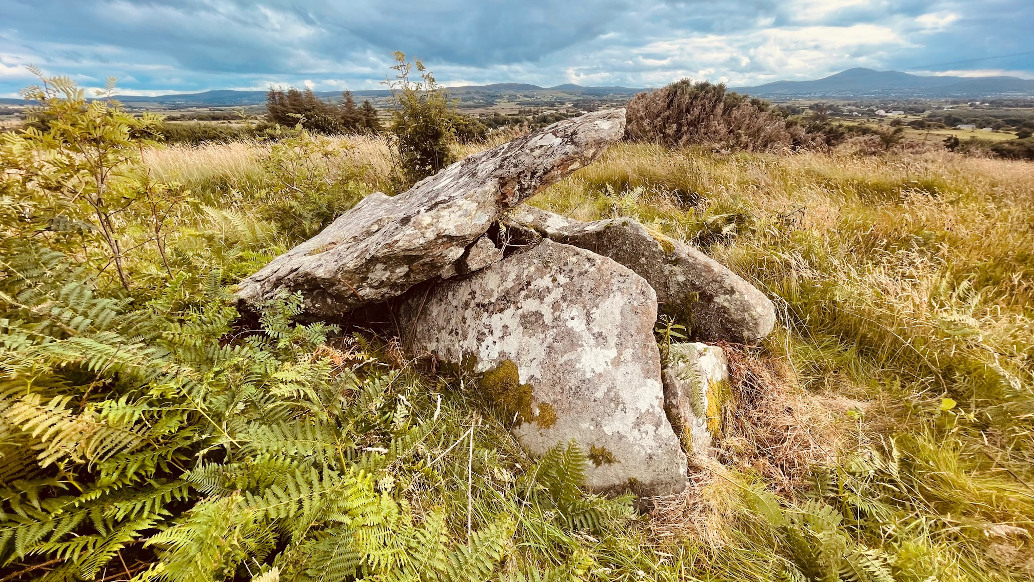

Both sidestones of the chamber are collapsing inwards – the gabled backstone, tilting to the left in this shot, is also falling inwards.

The front of the capstone is 2 metres wide at the front narrowing to 1.3 metres at the back.

This is the front of the tomb, the capstone having fallen forward. The environment has changed drastically since Bogman’s and Greywether’s visits, the field now an overgrown bog.

Over the front of the gallery – the entrance has unmatched double-jambs on both sides.

The large segmenting jambstones, divided by two septal stones, are a peculiarity.

Looks a bit trashed front-on with any sign of a court long gone.

The large stone at the front of the tomb is a possible lintel.

On top of Black Hill (75m), the views all round are pretty impressive. Bocan stone circle is a kilometre to the north-east.

Looking south-east – this is the rear of the tomb, the backstone of the second chamber now missing.

Sliabh Sneachta in the distance over the 2nd stone from the right.


Looking south-east – there seems to be a slight bank outside the circle to the right in this shot.


Much of the north-eastern quadrant is covered in field clearance, and what are possibly some of the thrown down circle stones.

Approaching from the south-west it looks impressive from here.

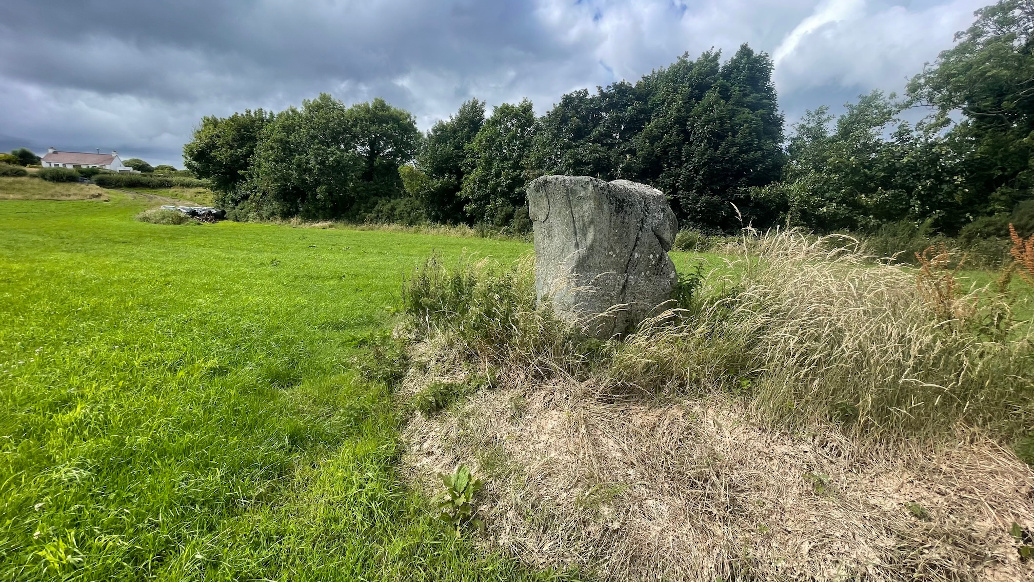
The stone has a wedge-shaped profile from this angle.


South-east towards Limavady and the hills of Derry.

1.6 metres tall, about 150 metres from the western shoreline of Lough Foyle.

Stones of the facade have collapsed outwards from the mound.

To the south-west, Leamcrossan Hill (392m) on the right and Crockglass (397m) beyond it. We were utterly charmed by this one. A gem.
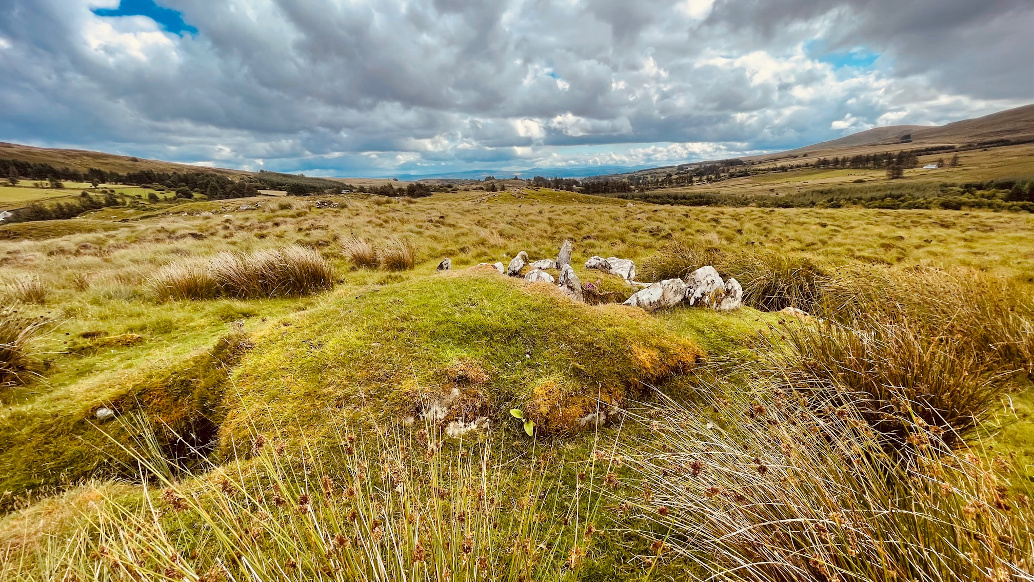
South-east down the valley towards Lough Foyle and the hills of north-west county Derry.

East over the tomb towards Creehennan Hill (351m). Much of the facade and de-roofed ante-chamber remains.

The front, south-west end of the tomb.

Under the roofstone from the south-west end of the covered part of the chamber.

From the back of the covered chamber. Amazing preservation.

Cave-like wedge tomb from this angle.

The rear of the tomb at the north-east is open. The turf-covered chamber is a charmer.

The jewel of the three wedge tombs in the townland – this is looking north over the SW/NE aligned monument. Much of the front of the tomb has collapsed down through the years and is partly embedded in the bog. The mountain to the right is Grinlieve (371m), that on the left is Sliabh Sneachta (615m).

Eastern sidestone and with the 2.3 metre long by 1.8 metre wide roofstone to its right. The knoll behind the tomb contains the enclosure with the same name posted here.

North over the tomb with Grinlieve in the distance.

One roofstone remains with the tomb embedded in the bog.

Still pretty much embedded in the turf.

South-east down towards Quigley’s Point and Lough Foyle.