


Taken from a high point to the south, looking for Garvard.

Looking north, over the bogs and wee hills is Dun Gallian and what could only be described as an interesting golf course.

Not quite down, one or two stones underneath trying hold the stone upright.


A bit of a nightmare to find due to underfoot conditions, this place more than anywhere else resembles the east coast of Harris.


The north outer wall leads to the dun’s highest point at the entrance.


From the entrance looking north, Dun Eibhinn in the far distance.


The quest for the origins of Stonehenge’s six-tonne Altar Stone continues as new research has found it did not come from mainland Orkney.
More info :


Looking south, Oronsay then Islay, to the left Jura.


West looking east towards the the beautiful Loch Cholla.


On the west side, to the far north with the flat top Dun Eibhinn.

Inside the dun looking south east, the hill is the impressive Dun Cholla.


Dun Gallain painted from near Tobar Fuar.


You go to a talk about bee-keeping in the nearby museum and you learn about this as well.


Beneath the west wall, a tad chancy, the houses of Kilchattan north of the headland.

Standing on remnants of the north wall looking north west.
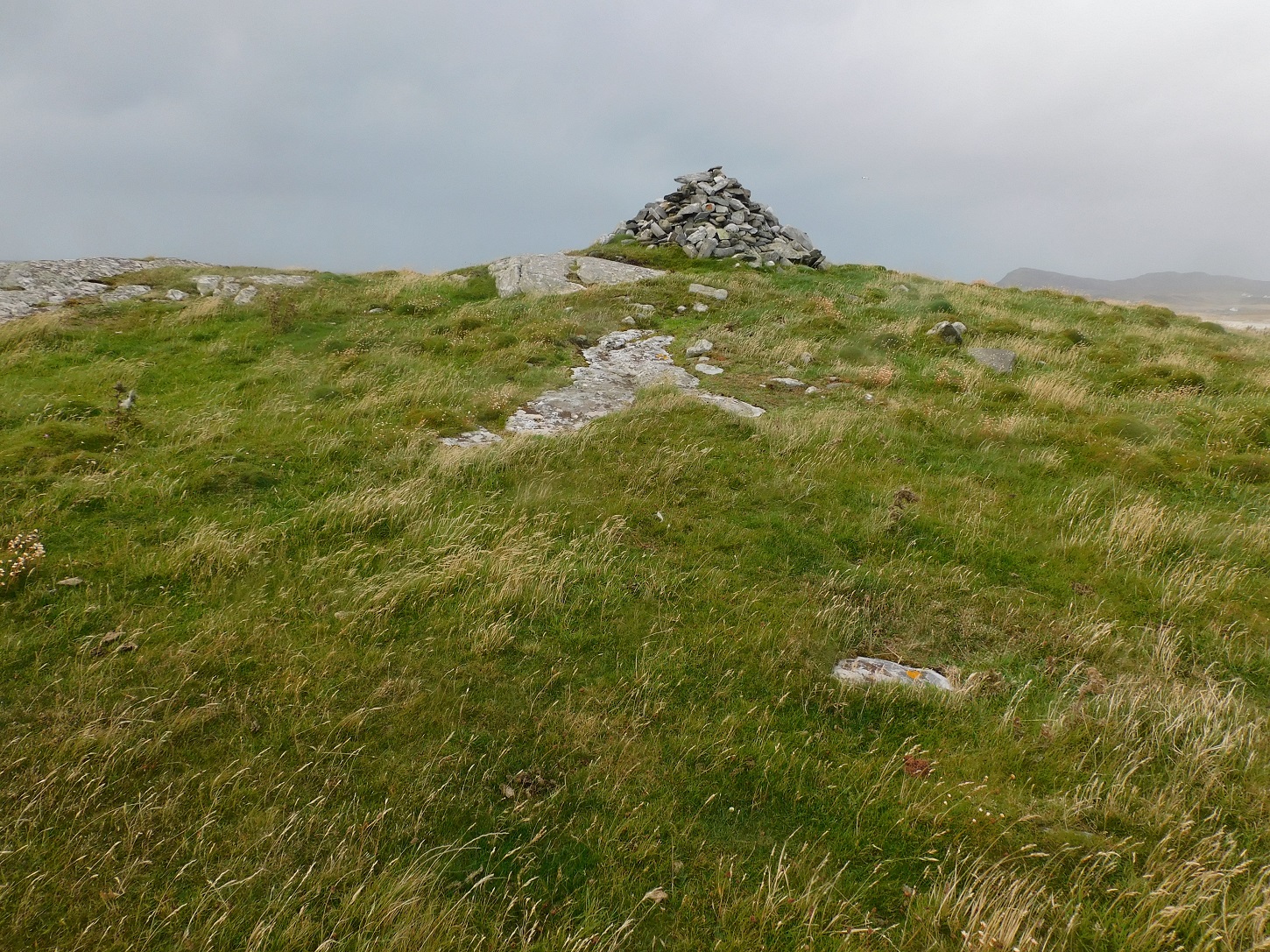


These must have been huge walls as it swings round to the west.

Outer defence on the south. Bits of excellent stonework still remain.
There are a number of folk tales associated with these particular caves. One story concerns the last of the MacPhee lairds of Colonsay who had been defeated by his enemies, the MacNeills. He took refuge, with his three dogs, from an approaching gang of MacNeills, in the Slochd dubh Mhic a Phi (MacPhee’s Dark Cave, or Pit).
This had an entrance from the sea and another from the land. At the sea end MacPhee placed his three dogs. He stood in the cave at a point where anyone trying to get in from the land entrance would have to get down on all fours to pass through. MacPhee cut the head off each MacNeill in turn as he crawled through. Eventually the MacNeills who waited outside suspected trouble and started to dig an entrance through the roof, whereupon MacPhee went out by the sea entrance and swam across the bay to a rock still known as the Black Skerry of the MacPhee.
Colonsay Cave Folklore
By Marg Greenwood