
Some of the barrows from the Cursus.
Image credit: A. Brookes (25.11.2017)

Some of the barrows from the Cursus.

Amesbury 56, the only barrow in the group inside the earthworks of the Cursus.

Amesbury 54, just to the south of the Cursus.

Amesbury 52 on the edge of Fargo Plantation. Amesbury 53 is over the fence to the left in a clearing.

Amesbury 48-51 have survived less well than the eastern group or the western group in and around Fargo Plantation. This image shows 50 in the foreground with 51 behind.

Amesbury 46, with 47 behind. These are the last of the well-preserved eastern part of the group.

Detail of the ditch and berm of Amesbury 45.

The magnificent Amesbury 45, despite the erosion scar an outstanding barrow.

The double mound of Amesbury 44, with Amesbury 43 behind. Stonehenge is in the distance, extreme right.

Amesbury 43 (foreground) at the eastern end of the group, with the double mound of 44 to the left and 45 far left.

Looking down the Avenue from the Stonehenge end.

Looking up the Avenue to Stonehenge.

Looking northwest across Amesbury 40 bowl barrow. The Avenue is below, The Cursus is further away before the trees.

Amesbury 40 bowl barrow (see miscellaneous post), looking WSW towards Stonehenge.


Amesbury 27. National Trust landrover under the trees to the right gives a sense of scale.


Amesbury 28 and lovely gnarled beeches.

Amesbury 28. These really are superb barrows.

Amesbury 29, with 28 visible in shadow to the right.

Amesbury 31 and 30. There’s a wider gap between 30 and 29 to the south.

Amesbury 31, second barrow from the north.

Amesbury 32, the northernmost barrow in the group.

The barrows provide a fine, elevated view of Stonehenge.
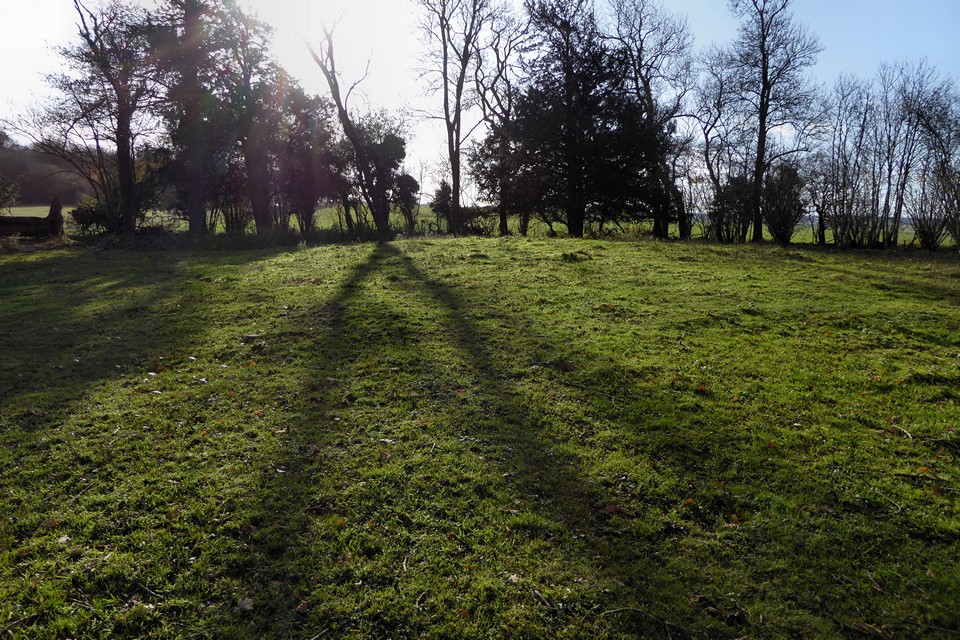
Amesbury 33, the southernmost and lowest of the group.


Amesbury 34, the second barrow from the south in a little coppice.

Amesbury 35, in the centre of the group.

Amesbury 36, with Amesbury 37 in the trees on the left.

Amesbury 36, crowned with fine beeches.


Amesbury 36, the second barrow from north in the group, and probably the best.

Amesbury 37, with Amesbury 36 visible far left.


Amesbury 37, the northernmost of the group.

Looking westwards along the Cursus. It goes all the way to the distant gap between the two plantations. The viewpoint is the site of the long barrow that formed the eastern terminus of the cursus.

Looking over the Cuckoo Stone towards Woodhenge, with Beacon Hill beyond.


Digging critters have thrown up chalk to illustrate the building material. Two figures over to the left show the scale of the bank behind them.


Looking across the site from the south. The bank in the foreground is the line of an old hedge rather than part of the monument.


Late autumn, late afternoon.
