
Hazleton South from the southeast.
Image credit: A. Brookes (26.4.2021)

Hazleton South from the southeast.

The low mound of Hazleton South from the west.

The lighter patch of limestone scatter running left to right across the centre of the image is all that remains of the excavated Hazleton North long barrow. Seen from the road to the west.

From the east as the sun came out.


From the northeast, showing the well-preserved mound from its less overgrown aspect.

The barrow from the southwest. The western end is covered in impenetrable shrubs and brambles.

Northeastern ramparts of the inner enclosure.

The ground drops sharply down to Selworthy Combe on the eastern side of the fort.


The inner enclosure ramparts. Dunkery Beacon rises on the skyline, right.

Looking towards the inner enclosure from the outer ramparts. There’s a big open area between the two sets of the earthworks. The distant Quantocks are framed between Bratton Ball on the left and Periton Hill on the right.

The northern end of the outer ramparts with Selworthy Beacon rises beyond.

Looking south towards the high Exmoor ridge along the ditch between the outer banks.

Outer earthworks in the foreground, looking towards the inner enclosure.

The outer (western) earthworks from the southwest.

After leaving the cairn and heading downhill, we came across what appears to be a small cairn on the grassy slopes.

Lots of stone but little in the way of obvious structure.

Looking northwest across the cairn. The South Walian coast is mostly lost in the haze over on the left.

The cairn is big but low, and is trying to hide behind the gorse.

Minehead Without 1, St George’s Day.

Minehead Without 1, the (possible) Bronze Age cairn on the summit of the hill, surmounted by a modern cairn.

The prominent Minehead Without 2, the western monument in the main group.

The very overgrown Minehead Without 3, looking across the Bristol Channel towards South Wales.

Minehead Without 6, one of the larger cairns in the group.

Minehead Without 7 in the foreground, one of the smaller cairns in the group. Looking west towards the summit of Selworthy Beacon.

Exposed stonework on the top of Minehead Without 9, near the eastern end of the group.Looking SSW towards Dunkery Beacon.
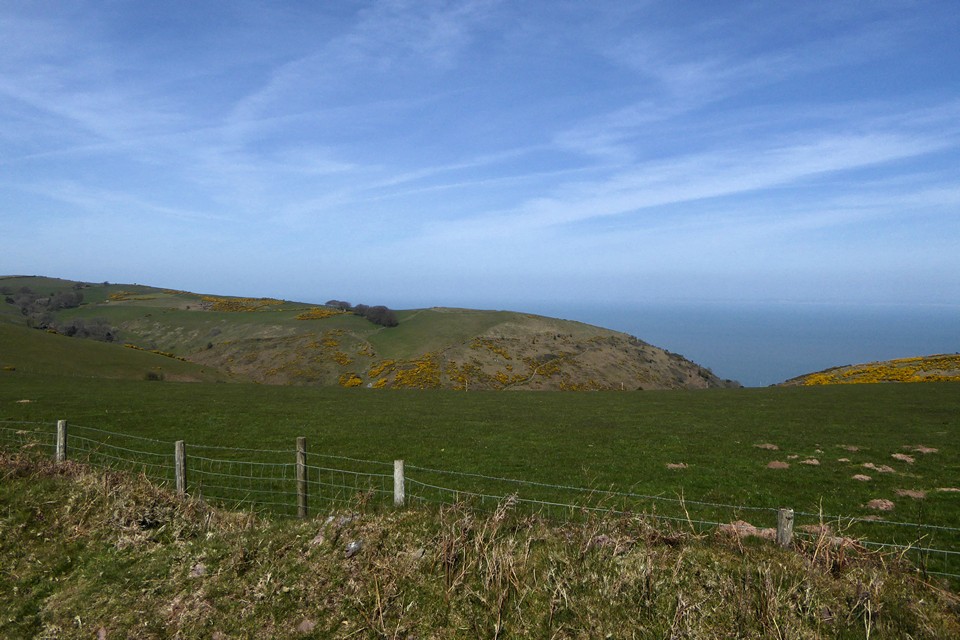
Landscape context on a very hazy St George’s Day. The fort (centre) is at the eastern end of a mile long spur on the seaward side of Selworthy Beacon. The grounds drops steeply away to Grexy Combe on the right.

Springtime, St Paul’s Epistle.

A quick and easy detour off the Gloucestershire Way for a revisit. The barrow gives great views over the Coln Valley, where I’m heading next.

Last time I came it was bitterly cold and the barrow was semi-clad in snow. It’s nice to return in beautiful Spring sunshine.

Landscape context, approaching the site from the southwest on the Gloucestershire Way, with Coldwell Bottom dropping away to the right. The barrow is in the centre of the image.

The southwestern barrow is in there, somewhere.


Wild garlic clothing the southwest barrow.

Lovely Spring weather and the excellent southwest barrow.

Looking along the eastern ramparts towards Barrow Wake and Birdlip Camp.


The overgrown limestone slab of the Devil’s Table, looking towards Cooper’s Hill with Gloucester and Robinswood Hill to the right.


A few chunky pieces of limestone protrude from the turf on the edges of the barrow, hinting at the construction materials used.

The scooped-out centre is much clearer of vegetation than on my previous visit a dozen years earlier.

Last light, New Year’s Eve 2020.

New Year’s Eve, as the sun sets on 2020.
