
In the background the walls of a graveyard.
Image credit: drew/AMJ

In the background the walls of a graveyard.
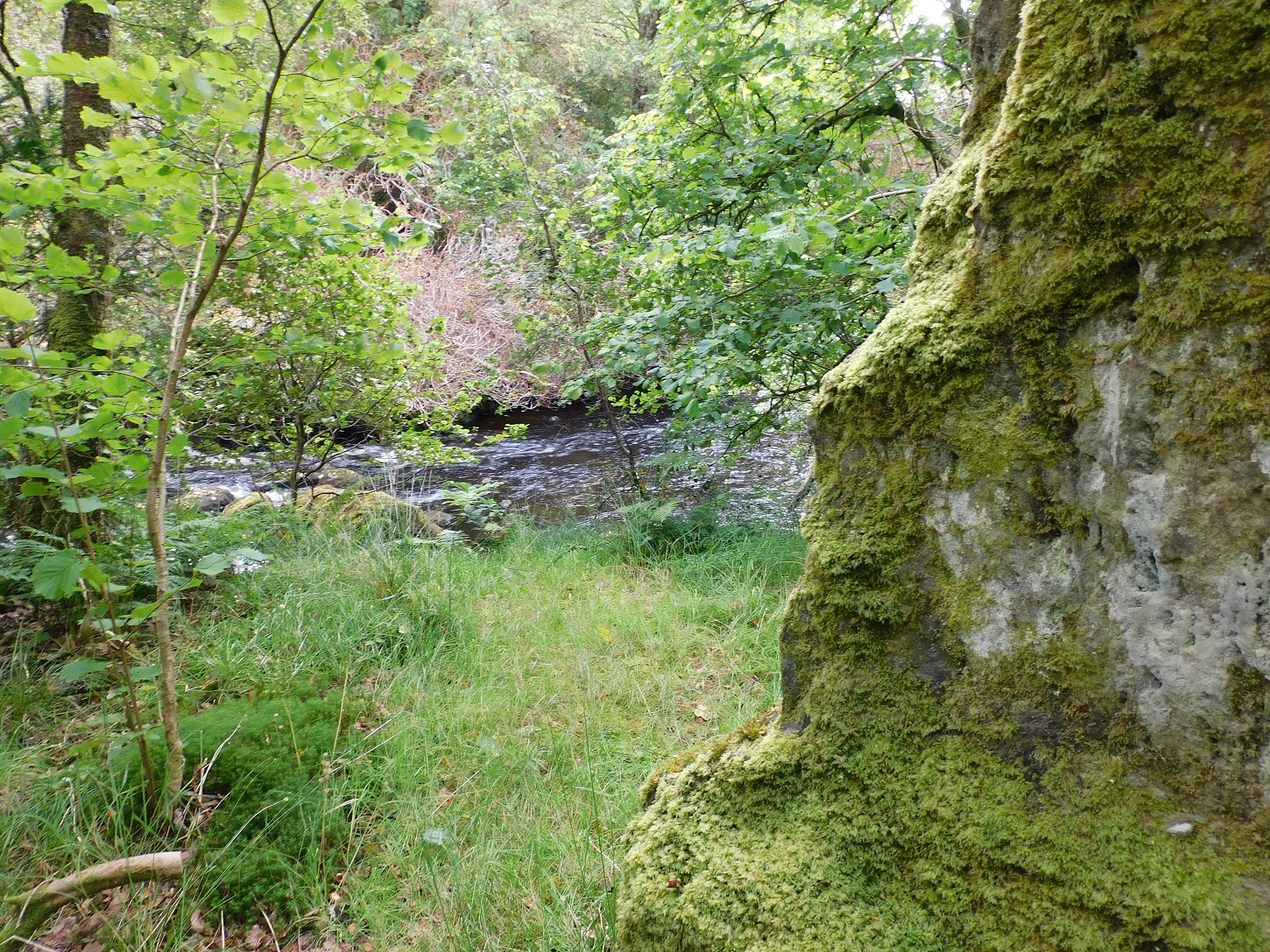
The stream is well up due to a lot of recent rain.

A beautiful standing stone, the Allt Cinn-Locha, the nearby stream / river.


A truly beautiful place. In the distance is Jura.

Looking out to Cretshangan Bay, no idea why this photo ended up like this, clouds rolled over is my guess.


A metre and a half tall and about 40 metres from the shoreline at the easternmost tip of the Cooley peninsula.


Over the mound and across the mouth of Carlingford Lough towards the magnificent Mournes.
There’s not much positive to say here, except that I’m glad I made the effort. The main remains of the tomb, a photo of which can be seen in the Archaeological Survey of County Louth, are in danger of being lost forever in a dense tangle of hazel, bramble and scrub vegetation.
The plan in the above mentioned book shows an interesting court tomb, with a main single-chambered gallery and three lateral chambers, these last being the only remains in any way visible. Shame really, and not unexpected, but disappointing all the same.

Stones of another of the lateral chambers, this at the south-west end of the tomb.

The stones at the foreground left are part of one of three lateral chambers towards the rear of the tomb, the main remains of which are completely inundated by dense vegetation and are in danger of being lost forever.

The rear of the tomb, narrowed to about a metre and a half.

The segmenting jambs between the second chamber and the small gap, before the tomb continues on to the third, narrow and longest of the three chambers.

The segmenting jambs between the first and second chambers.

The stones of the tomb are mostly rough-hewn and blocky and could almost be described as ugly.

The tomb is aligned north-east/south-west with the court at the north-east end. This looks over the monument south-west towards Dundalk Bay.
Sadly this cairn or barrow isn’t in the same league as some of its near neighbours in the Kilmartin area. Luckily, I spotted the site, to the east, when clambering down the hill from the Poltalloch Cists, Standing Stone etc.
At 21m wide and almost 1m tall it is probably more likely to be a barrow than cairn, just like its little mentioned friend at Ballymeanoch. (stone rows, henge and kerb / chamber cairns are the neighbours)
However some stone content does poke through, at least one stone is on edge, others are on the way to being covered in turf.
At least you can get to the site without standing in the bog and it’s easily spotted.
The track back to car at Poltalloch Lodge had become flooded, so it was back via the cists, standing stone I’d visited on the way.
Visited 12/04/2024.


