StoneGloves wrote:
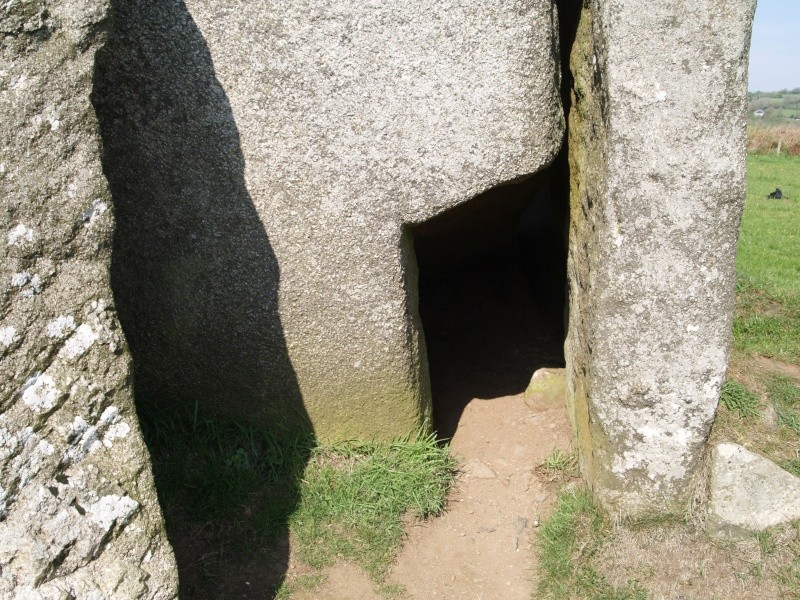
Yes. In one of your photographs there is what appears to be a dinge in the underside of the capstone. Toward the mid-line, form the aperture. When I look at other pictures the lump and the round depression seem on completely different planes. But after looking at the two links that Tiompan posted, to other dolmens, then it seems obvious which upright pointed stone has been used to support the capstone and to provide a pivot. I guess our ancestors were predominantly right-handed, as we are, and that would be the easiest direction to shift it into place (anticlockwise). I need to read some online material about these structures, but am presently researching prehistoric gold-working techniques. (Dem hair rings!)
Interesting that you mention right-handedness SG. The cat-flap in this photo is on the right hand side and the slope of the cut of the head obviously favours a right handed person when 'leaning in' to make or remove a deposit. http://i26.servimg.com/u/f26/16/16/85/69/p1010016.jpg