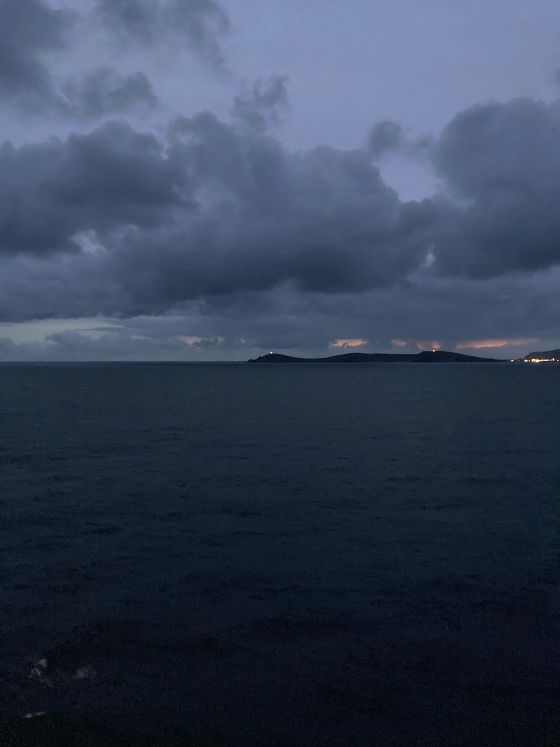
28/06/2023 – Setting sun behind Jarlshof. It was a nice evening.

28/06/2023 – Setting sun behind Jarlshof. It was a nice evening.

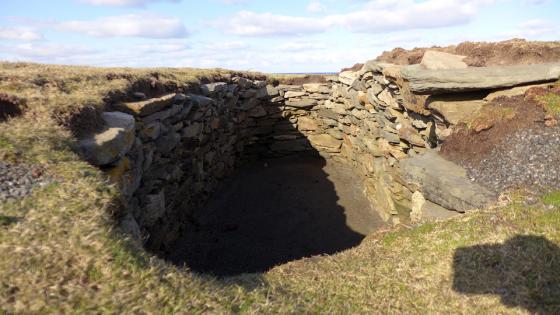
28/06/2023 – This place is wheelie good.

28/06/2023 – Between the inner and outer wall of the broch.

28/06/2023 – The broch wall. Full of lichen.

12/09/2021 – The ‘well’ inside the broch. Very much like the one at Broch of Gurness we had seen earlier in the week.

12/09/2021 – From inside the broch to the walls of the laird’s house above.

12/09/2021 – I love the colours. How these walls are still standing though!
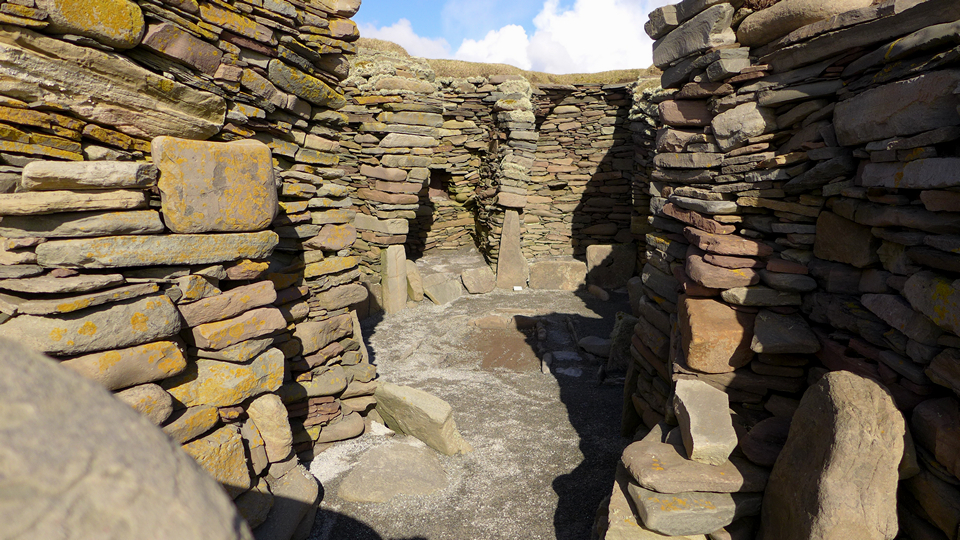
15/04/2017 – Felt good to be back at Jarlshof. We remembered to bring the sunshine with us so the stones looked just lovely. It’s a must see site.

23/09/2014 – Earliest dwellings with Medieval farms behind.

23/09/2014 – Jarlshof

23/09/2014 – The Iron Age settlement overlapping the Bronze Age settlement behind.

23/09/2014 – Looking inside the wheelhouses. Lovely colour of stones used everywhere.

23/09/2014 – Wheelhouse


The broch courtyard with the ‘aisled’ roundhouse in which wheelhouses and the rest of this village-like structure. Almost broke my neck hanging over the edge of the Laird’s House. On the far right part of the Norse settlement. Water beyond is the West Voe of Sumburgh. More on users.skynet.be/bert_saskia/travel/scotland/northernatlantic/index2.html


One of the extremely cramped Iron Age souterrains at Jarlshof (the most northerly one), view towards the entrance. About 1m in height, 3-4 m² – so, much smaller that the Grain Souterrain on Orkney. Only comparison standard is the tip & heel of my size 8 1/2 footprint near the entrance. Agreeably cool, but utterly humid. I couldn’t manage to squeeze myself in the other, so no pics there. More at users.skynet.be/bert_saskia/travel/scotland/northernatlantic/index2.html


Inside the wheelhouse at jarlshof. Just one of many buildings to have been uncovered.


View looking from the top of the ruined manor house towards the Jarlshof visitor centre.

The remains of the 17th century manor house from which the settlement takes its name. It was Walter Scott in his book ‘The Pirate’ that originally named the house (not the settlement it had not yet been discovered) and the name stuck.

Looking down into the wheelhouse at Jarlshof


12/09/2021 – Jarlshof – just saying the word out loud makes me happy. I love it round here. The whole area, Old Scatness, Ness of Burgi, Jarlshof and up to Sumburgh Head which has my favourite trigpoint. The beaches, cliffs, even the airport, hotel and coffee shop. The bottom bit of Shetland is just great. As fine a place for a long weekend as you could wish for. Summer’s best for birds. Even in mid September there’s stuff still about. We were lucky and saw minke whale the day before in the bay.
This was our first big adventure since March 2020 when half way through a trip to Wales, lockdown loomed and we had to head home. 18 months of not really mixing with folk, we were nervous setting off on our trip. Picked Orkney and Shetland as we love these places and thought they should be quiet. We had been lucky to visit Sumburgh a couple of times before. Ending our big trip at Jarlshof seemed perfect.
We stayed at the Sumburgh Hotel. It’s a really nice place. Proper friendly and right next to Jarlshof. Room 32 has a great view of the site and the bay.
We visited Jarlshof the day before in the rain. As today was our last day, we thought we’d go again. Visitor centre is closed at the moment but you can still walk round. We got up early. Jarlshof before breakfast sounded good to me.
Jarlshof has to be one of my favourite sites. The history here is amazing. It’s a 4000 year timeline that you get to walk around. But most of all, I love the stones. The colours and shapes are just so good. Revisiting places, you always see things you missed the first time. The broch has a ‘well’ like the one we had seen in Broch of Gurness just a few days back. I didn’t remember this from last time. I like all the twisting paths, doorways and curved walls. Very exciting to walk around. Soon it was time to head back and pack for our trip home. We stood for a while, looking out to sea, Sumburgh Head and far away Fair Isle. It felt good to be adventuring again.
23/09/2014 – After a lovely morning on St Ninian’s Isle we made our way south to Jarlshof. I hadn’t been that excited about it beforehand but within a few minutes of being there Jarlshof soon worked a little magic on us. The site has so much history it’s hard to get your head round whilst there. The timeline is amazing of all the buildings for such a relatively small site. The audio guide is great and very helpful. Being allowed to enter the buildings and walk round was a big bonus. If anything on Shetland is a must visit, for me this is it. I was so excited by the end I flipped into proper tourist mode and bought a Jarlshof tea towel in the gift shop on the way out.
Visited 11.6.12
My first Shetland site!
After catching the overnight ferry from Orkney we arrived early morning on Shetland.
After staying on board for breakfast it was time to go exploring.
Karen has been desperate to see puffins so we headed south to Sumburgh Head.
If you want to see puffins – this is the place to go all right! (yes – they are cute!)
After what seemed like a couple of hundred photos later it was time to head for Jarlshof.
We didn’t realise that you had to take the side road towards the hotel and instead we incorrectly parked near the beach / toilet block.
Karen stayed on the beach with the children while I walked around the headland and approached the H.S. site from the back. This involved jumping over a fence and walking over to the visitor centre to buy the guide book and use the portable audio device which was very good.
Coming out of the visitor centre the first thing you see are the remains of various houses dating back to the Neolithic through to the Iron Age.
It is a bit like Skara Brae – not so well preserved but you are free to wander around inside.
For me the highlight of the site are the Wheel Houses.
These are well preserved and give a good idea how they would have looked when lived in.
There is not much left of the Broch due to coastal erosion.
All in all, a complicated site which can be hard to understand.
I would strongly recommend using the audio guide as this makes things a lot clearer.
A guide book would also come in handy!
Well worth a visit when on Shetland.
After my wonderful visit to the Orkneys last week I visited the Shetlands and Jarlshof. It is similar though much bigger than Skara Brae and visitors are able to wander around freely. Also by the sea, the neolithic bit is now thought to be 7000 years old. Our guide, who was local, produced some oyster shells which had been found in the sandbanks along the shoreline – he told us oysters are not found in those waters so must they have been brought there by the neolthic settlers; these shells had been examined by photo luminescence which dates the last time daylight fell on minerals and were found to be 7000 years old.
Jarlshof reflects a settlement dating back to the Neolithic. In the earliest part of the village a Bronze-Age smithy can be seen.
There was a large Iron-Age roundhouse in the courtyard of the broch which was built about 2000 years ago.
Other additions to the village include a wheelhouse which was occupied until the Norsemen arrived plus the remains of stone buildings right up to the 17th century with the ruins of the laird’s house.
It is a wonderful and remote place not far from the stunning Sumborgh Head where I saw puffins close up for the first time in my life.
(I did take lots of photos but had difficulty posting them, will have another try when I get time)
Would recommend taking advantage of the audio guide which comes included in the admission fee, and does a very good job of explaining the various layers of settlement here. Takes about 30 mins for the basic package, though there are optional extras which would take it over an hour.
Discovered in 1905 when a tremendous storm uncovered parts of the village. Up until such time the only thing of note on the peninsula was the 17th century manor house.
The remains of many civilisations which inhabited the site have been found there, Picts and Vikings to name but a few.
The site is a wonderful place to look around but alas a lot of the clues that could have been present during the initial excavation were lost due to the innocent naievity of the archaeologists all those years ago.
Luckily a very similar site is at this moment being excavated not to far away at Old Scatness, this new site should help fill in the blanks about Jarlshof.
Here’s a bit of Jarlshof related trivia for you: apparently the misleadingly Norse name was made up by Walter Scott, who visited the site in 1814 and made it the setting for his novel ‘The Pirate’.
Gathered via Digital Digging, a short video on Jarlshof.
“A short computer generated film based upon kite aerial photography taken at the ancient settlement site of Jarlshof with interpretive reconstructions using imagery from various other locations across Scotland.
The project was an experiment to see how low altitude aerial photography could be used to capture the atmospheres as well as the structural details of our ancient heritage and how these images could be used to create an environment for interpretative reconstruction.”