
From the summit of the knoll, Abbottsbury castle to the left and Tulk’s hill to the right.
Image credit: Mike Rowland 22/07/2008.

From the summit of the knoll, Abbottsbury castle to the left and Tulk’s hill to the right.

The watch tower which sits on top of the barrow. It’s not the local shop from the league of gentlemen.

Sandy barrow from the top of Goggin’s barrow.

Goggin’s barrow looking south into the channel with Portland to the right in the photo.

The stone on the extreme left is reputed to be the “Devil’s Chair” or “Granny’s Armchair”.

A detail of the southern stones showing a hawthorn tree growing around the base of the lefthand stone.

The two large southern recumbent stones.

Five large stones to the west of the three standing stones.


The whole site looking north along the valley bottom.

A distant view of the two barrows from Drove hill, to the south.


The most eastern barrow with what looks like a sarsen on top of it.

Blacknoll hill from the west.


The small southern barrow from the east.


The western half of the bell barrow on Black hill clump.

A nicely preserved bowl barrow.

The smallest of the group.

This is the largest of the three, on the west of the site.

Tree covered barrow in the middle of a field, with rabbits if you’re eyesight is good enough.

The round barrow NNW of Field Barn.

Now a seat, was this once a standing stone?

A possible field margin or enclosure bank.
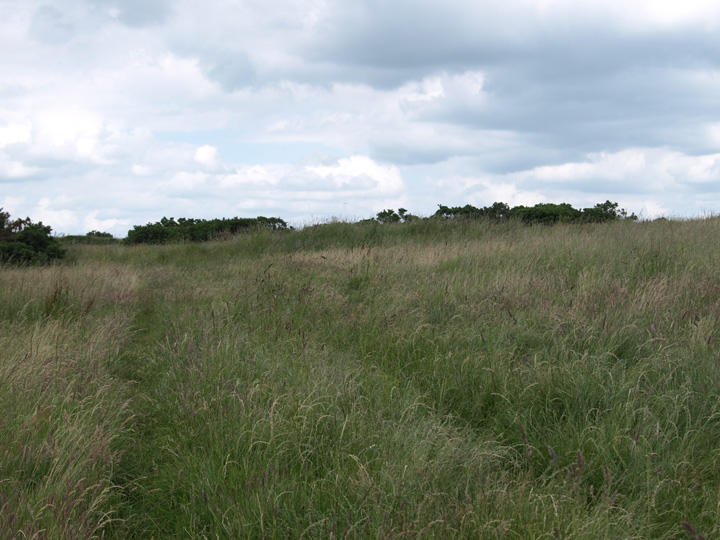
Part of the bank of an enclosure.

A very overgrown bowl barrow.

A nicely preserved bowl barrow inside a small wood.

A small bowl barrow, fenced off and covered in vegetation.

Two bell barrows, with a small low bowl barrow attached to the berm of the southern bell barrow.


A pair of bell barrows on the heath, with the Purbeck hills in the background.

A small barrow in the middle of a plowed field.

A small bowl barrow covered in foxgloves.


The eastern half of the bell barrow.

The western half of the bell barrow.

A small bowl barrow on the highest point of Canon hill.

Swyre head barrow, on the highest point of the Purbecks.

A small, low barrow to the north of Swyre head.

A large scar on the barrow, partly showing the construction.


Two large, low round barrows north of the long barrow, which can be seen in the darker grass.

The view from the barrow shows Came wood and at least 4 barrows on the hill to the south.

The eastern slope of the barrow.